
Plant Profile Full Sun, Part Sun

Obedient Plant

Physostegia virginiana

Where to find one ↓
Highlights

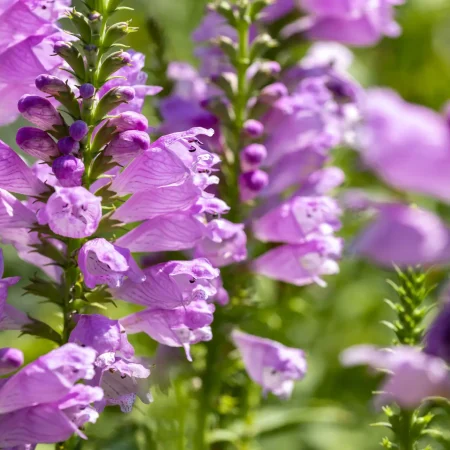
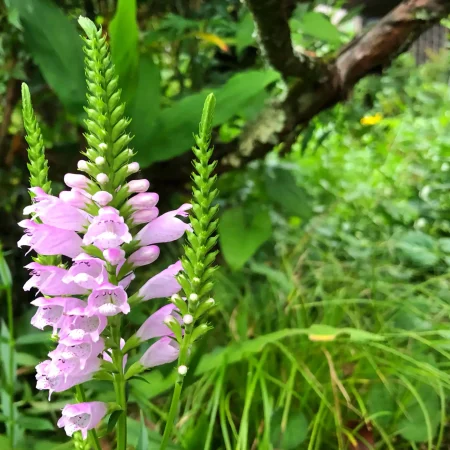
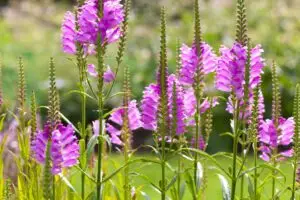
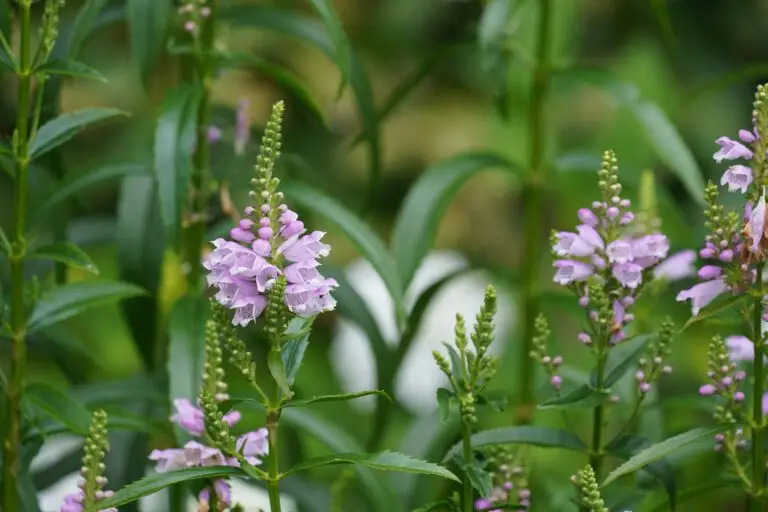
The name is so strange, but the plant is so beautiful! Obedient Plants send up tall (3-5 foot) stalks, then cover the stalks with a runway of pink or purple flowers, each the perfect-sized cup for a pollinator to dive into. Obedient Plants have a reputation for being invasive and taking over gardens, but taking care to divide or remove shoots in the spring can keep them in check. They love the sun, flower for a month in the summer, and are drought-tolerant. See below for tips and planting inspiration.

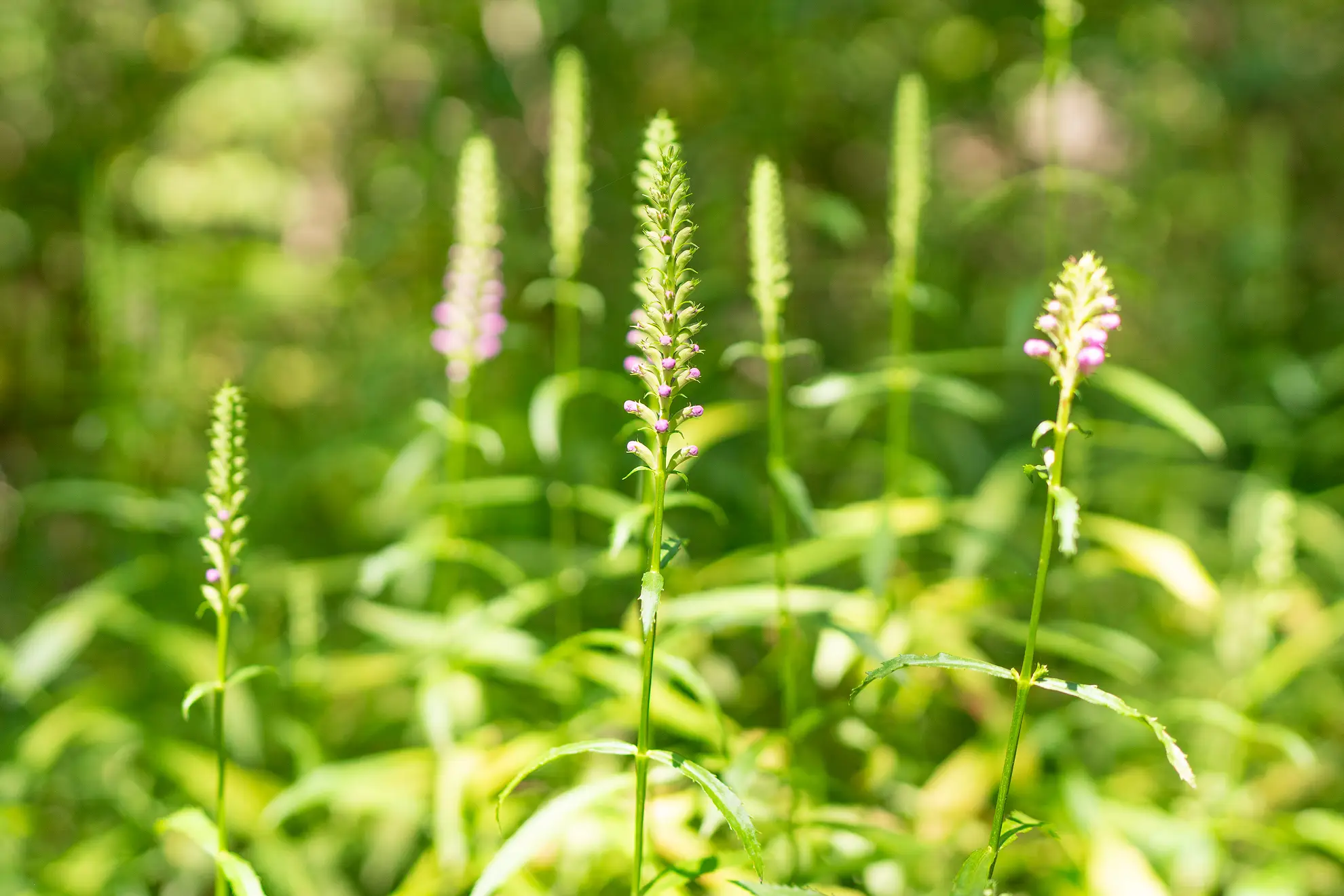
Even the green buds of the obedient plant are gorgeous
In This Guide

Get ready to add some show-stopping color and pollinator appeal to your garden with the stunning obedient plant (Physostegia virginiana)! Also known as false dragonhead and Virginia lionsheart, this native North American perennial is known for its striking tubular flowers in pink, white, and purple shades. In this article, we’ll explore everything you need to know about planting, caring for, and utilizing this must-have native flower.

Let’s start with a basic question:

Why is it called Obedient Plant?

The common name Obedient Plant comes from the ability to bend their flowers: you can (gently!) take an Obedient Plant’s flower and bend it to face upwards, downwards, or to the side. The plant will remain in that position for a few hours or days. Eventually, the flower moves back in the direction of the sunlight.

New to native?

Before lawns and landscaping, native plants were here. They’ve fed birds, bees, and butterflies for thousands of years—and they’ll do the same in your yard. The best part? They’re easier to grow than you think.

What are the benefits of planting obedient plants?

Obedient plants are striking for several reasons:

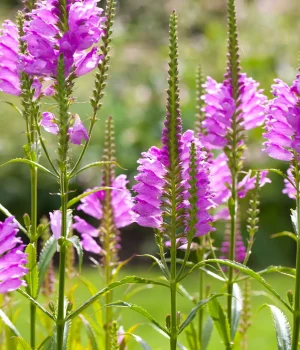
  • Obedient plants are tall. Each plant sends up a single tall stalk with sparse leaves. They are majestic, especially when a few are planted together. (There is are shorter cultivar versions, too.)
  • Their buds look celestialtheir green buds run to the top of the plant, resembling a comet streaking across the sky.
  • Their flowers look bridesmaid dress-inspired. Their flowers are long-lasting and gorgeous. Each petal cup is decorated with tiny freckles and a halo of lighter coloring.
  • Obedient plants are native plantsNative plants have grown in their home area for hundreds, thousands, and even millions of years. Their DNA knows their home area’s soil, climate, and wildlife better than that of other plants.

Where is obedient plant native?

Native to 38 US states, Washington, D.C., and 5 Canadian provinces (Manitoba, New Brunswick, Nova Scotia, Ontario, Quebec)

Native range
Not native

Source: USDA PLANTS Database
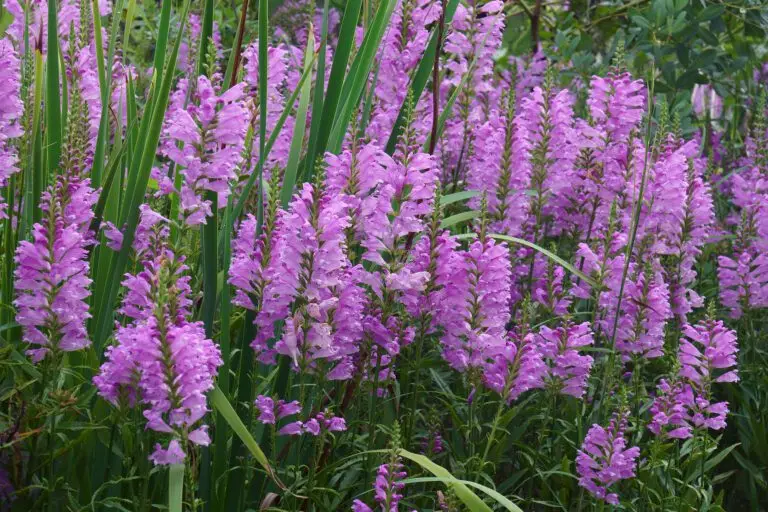
Plant a few and watch your neighbors stop by to take pictures

Obedient plants are beautiful, but they often come with a warning from gardeners about their ability to spread. 

Is Obedient Plant invasive?

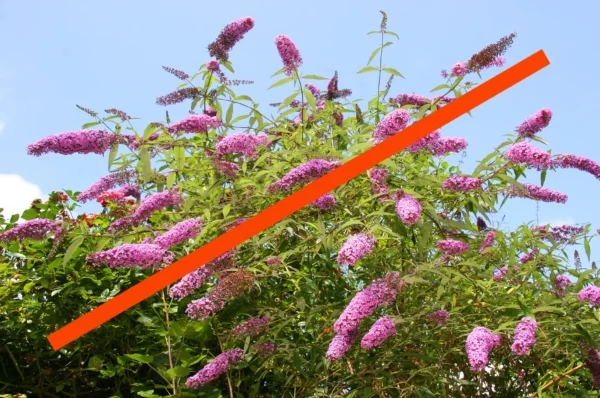
While obedient plant is generally a low-maintenance plant, there are some potential drawbacks. One of the main concerns is that the native species can spread aggressively. To help keep obedient plants from taking over your garden:

  • Divide the plant every few years (‘dividing’ means digging up some plants)
  • Pull up individual shoots + roots in the spring to ensure air and space for other plants

Both methods are still low maintenance—especially compared to lawn care.

If this yearly work seems annoying, we get it. Consider planting other natives that have less invasive tendencies, like coneflowers, rattlesnake master, Culver’s root, and purple prairie clover.

One more concern to mention:

Warning if planting near water!

If you’re planting the obedient plant in a wetland area, check with local authorities or your native plant society to ensure that it’s not considered an invasive species in your area. In a wetland area, it can be almost impossible to stop the seeds from spreading throughout the water source and its banks. Its invasive status changes throughout the United States; a quick Google search for your county or state + “obedient plant” should get you the answer.

Want to plant obedient plants and not worry about invasiveness?

Consider planting a cultivar:

Obedient plant cultivars

Obedient plant cultivars will help keep the plant’s spreading in check, as some cultivars have been bred not to spread as aggressively. (Wondering what a cultivar is? Here is a quick cultivar overview.) Here are some to consider:

purple-obedient-plant-vivid-cultivar-native-plant

Obedient Plant ‘Vivid’

‘Vivid’ is a purple-flowered long-bloomer that’s less tall than the native species (2′ in height). ‘Vivid’ is a long-blooming variety that often flowers well into autumn.

false-dragonhead-native-flower-pink-manners

Obedient Plant ‘Pink Manners’

‘Pink Manners’ is a non-spreading, clump-forming, native perennial that’s less tall than the native species (2′ in height), with long season of pink flowers (June-Sept).

Obedient Plant 'Miss Manners' getting ready for a month of blooms in the summer. Image © The Plant Native.

Garden Recipe™
Obedient Plant
Physostegia virginiana
Sun to part sun
Sun
Pretty easy
Effort
Medium (3-5') tall
2-3 ft wide
Size
Summer
Blooms
What it needs
Sunlight
Full to partial sun, 4+ hours The more sun the better, but it can handle some shade
Water
Not picky Average garden conditions work fine
Directions
Spacing
18-24 in About one arm's length apart
Watering
Weekly for the first season After that, rain is usually enough
Notes
Comes back?
Yes, every year Goes dormant in winter, that's normal. New growth each spring.
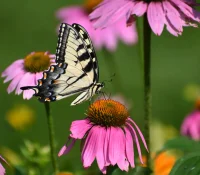
Hummingbird magnet. Hummingbirds love this one. Plant a few and you've basically hung a neon 'OPEN' sign for them.
How to grow obedient plants

Obedient Plant is a hardy plant that can tolerate a range of growing conditions, including sun, shade, and moist or dry soil. However, it prefers well-drained soil and full sun to part shade for optimal growth and blooming. (Just stay away from full shade for Obedient Plants.) 

Obedient Plant

Where can I find seeds and plants?

Finding native plants can be challenging (we partly blame King Louis XVI.) To make it easier, we’ve assembled four sourcing ideas.

Native Nursery List

300+ native nurseries make finding one a breeze

Online Native Nurseries

Explore 100+ native-friendly eCommerce sites

Find your Native Plant Society

Every state and province has a native plant society; find yours

Online Communities

Local Facebook groups are a great plant source

Online obedient plant seed sources

Many online seed shops sell obedient plant seeds, including:

What to plant with obedient plants

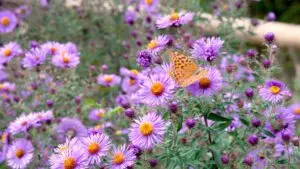
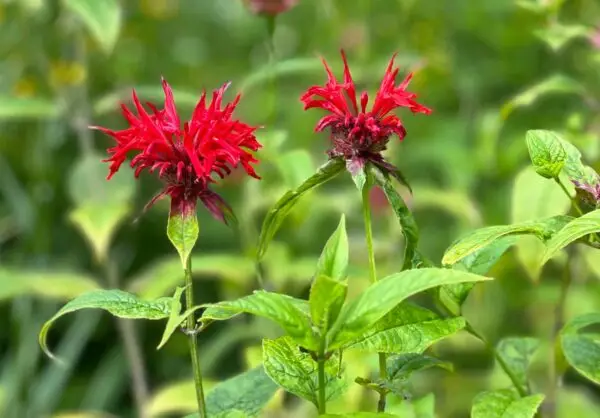
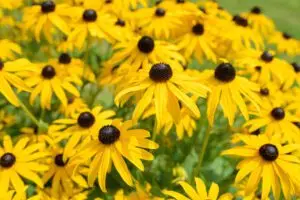
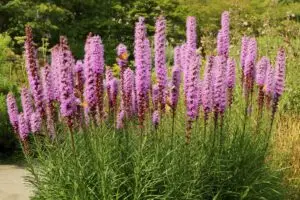
Obedient plants are excellent companions for other sun-loving native flowers like:

Obedient plants are beautiful and easy-to-grow plants that are a great choice for full-sun or partial-sun gardens. By following the simple care tips we’ve shared, you can enjoy its striking blooms for years to come. To get more ideas on native plant gardening, explore our native plant library. Happy planting!

Woman smiling in a light blue blouse standing among white coneflowers in a lush garden.

Written by

Emily Lessard

Founder & Editor, The Plant Native

Emily Lessard is the founder and editor of The Plant Native, the site that helps homeowners across North America get started with native plants. She holds a Sustainable Landscapes certificate through the Pennsylvania Landscape & Nursery Association, is finishing a Native Perennial Garden Design Certificate at Temple University, and is the author of World of Native Plants (Quarto, February 2027). She gardens outside Philadelphia in 8.3 Southeastern Plains ecoregion.

Meet Emily

Your phone could use more flowers.
We post the prettiest natives in North America. Come along.
UPDATED —
06/16/2026
In This Guide