

Highlights
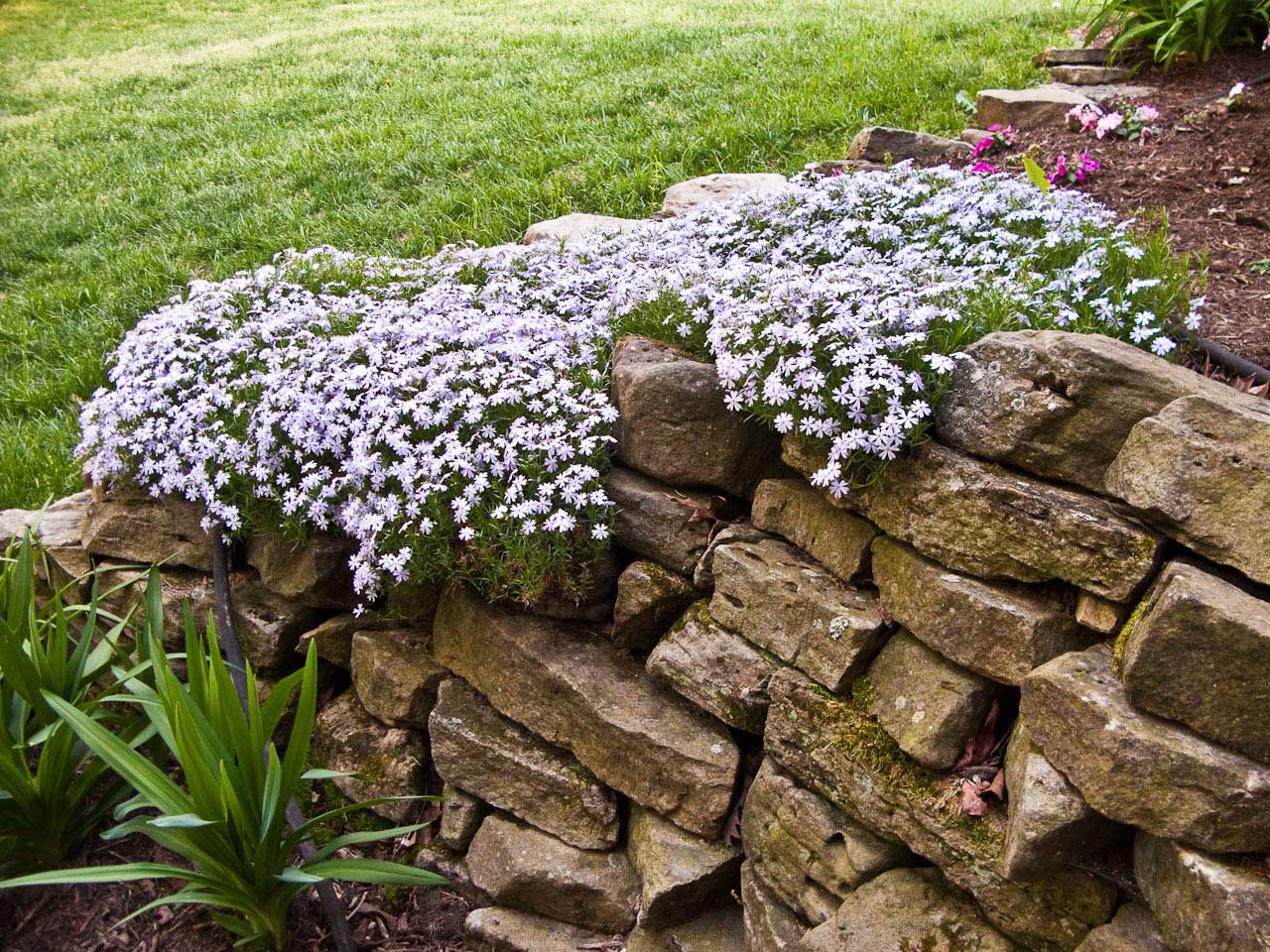
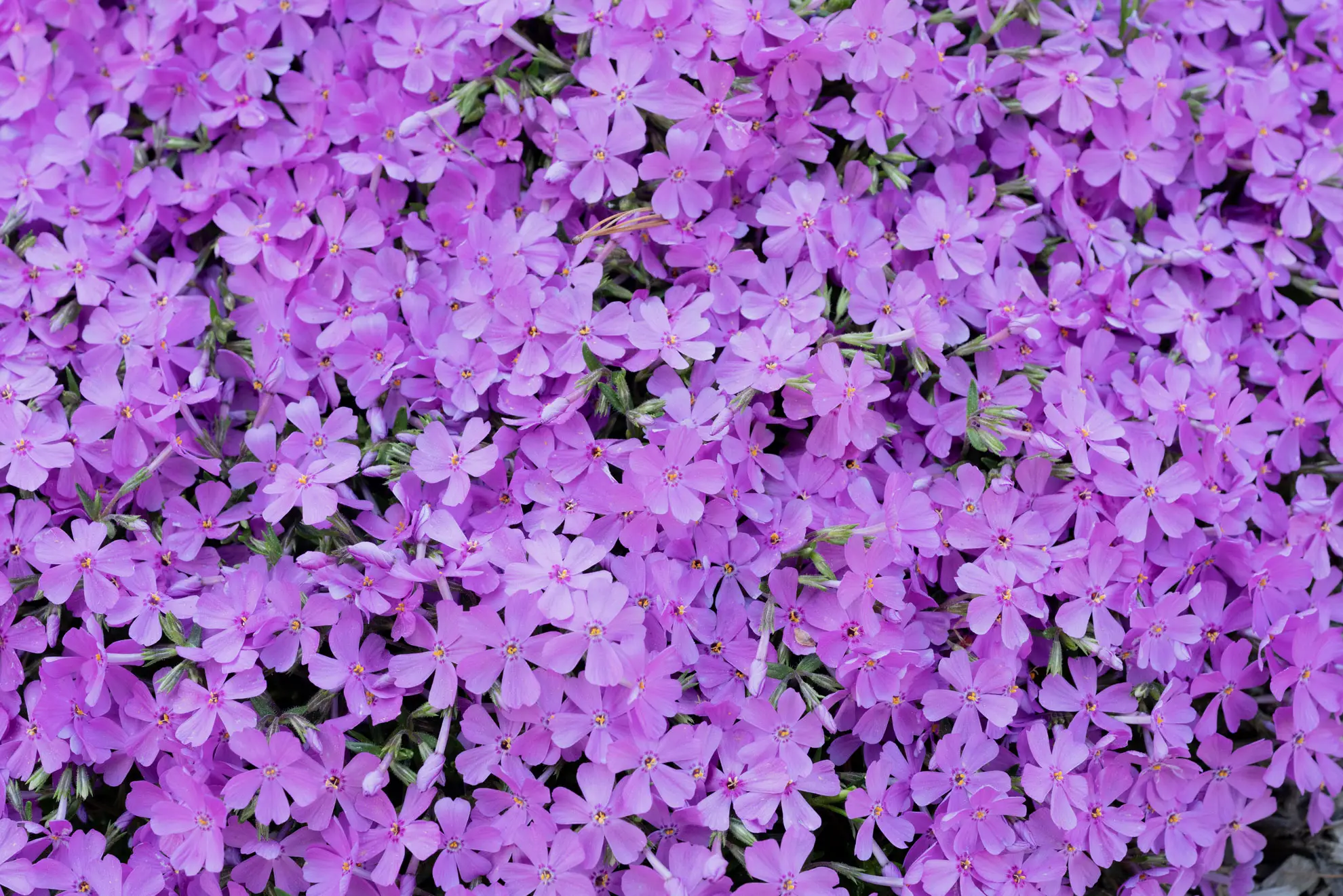
You’ve seen creeping phlox before, even if you didn’t know its name. It’s that low, mossy-looking plant that erupts into a solid sheet of color every April and May; tumbling over rock walls, spilling along walkways, turning ordinary garden edges into something that makes people slow their cars down. In the wild, it lives on rocky cliff ledges in the Appalachian Mountains, clinging to thin, gravelly soil where most other plants would quit. Phlox comes from the Greek word for “flame,” which is exactly right. In full bloom, it looks like someone set the ground on fire in the best possible way. Then it settles back into a dense, needle-leaved mat that stays green all year. Some sun, drainage, and the occasional haircut are all it needs.
Is creeping phlox a good choice for my yard?
Yes, if:
- You want a groundcover that earns its keep every spring with a ridiculous amount of color, then quietly stays green the rest of the year.
- You have a sunny spot with rocky, sandy, or well-drained soil.
- You’re looking for something to drape over a rock wall, edge a walkway, or fill in around stepping stones.
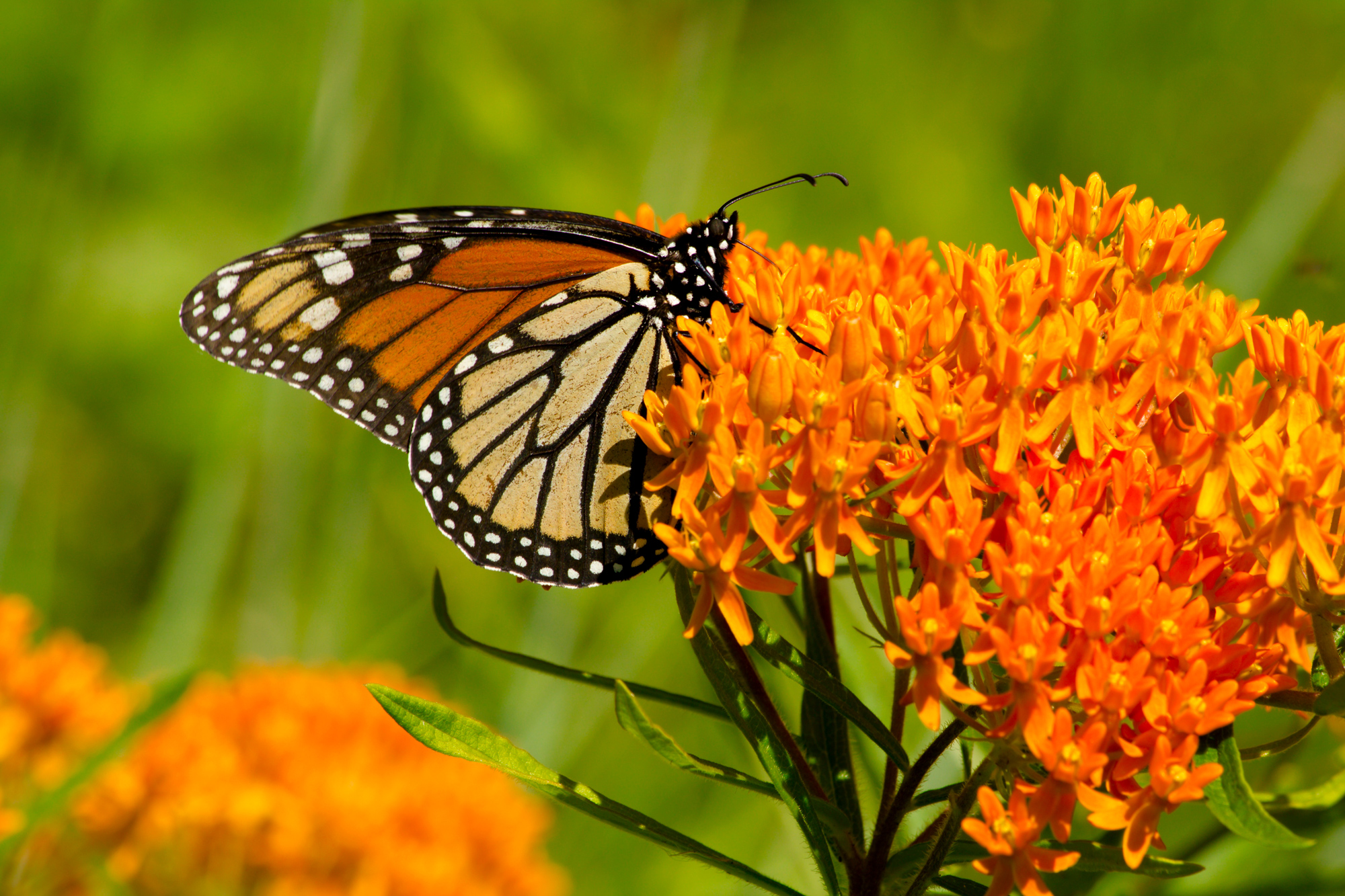
- You want to support native bees and butterflies with early spring nectar when not much else is blooming yet.
- You’re tired of mowing and want to replace a strip of lawn with something better.
How do I say phlox?
To pronounce this plant’s name, turn the ‘ph’ into an f-sound.
If it were spelled phonetically, it would be flox or flocks, and when said aloud, it rhymes with box. I want a box filled with phlox to look at while I eat lox—all the italicized words rhyme. (Ok, bad puns will stop there!)
Skip it if…
- Your soil stays wet or soggy. Creeping phlox evolved on cliff faces and shale outcrops; it needs drainage.
- You have deep shade. It’ll survive in part shade but won’t bloom well.
- You want something tall. This plant maxes out at about 6 inches. It’s a carpet, not a hedge.
Phlox evolved here, branched into 68 species here, and built relationships with native pollinators here.
Why creeping phlox matters
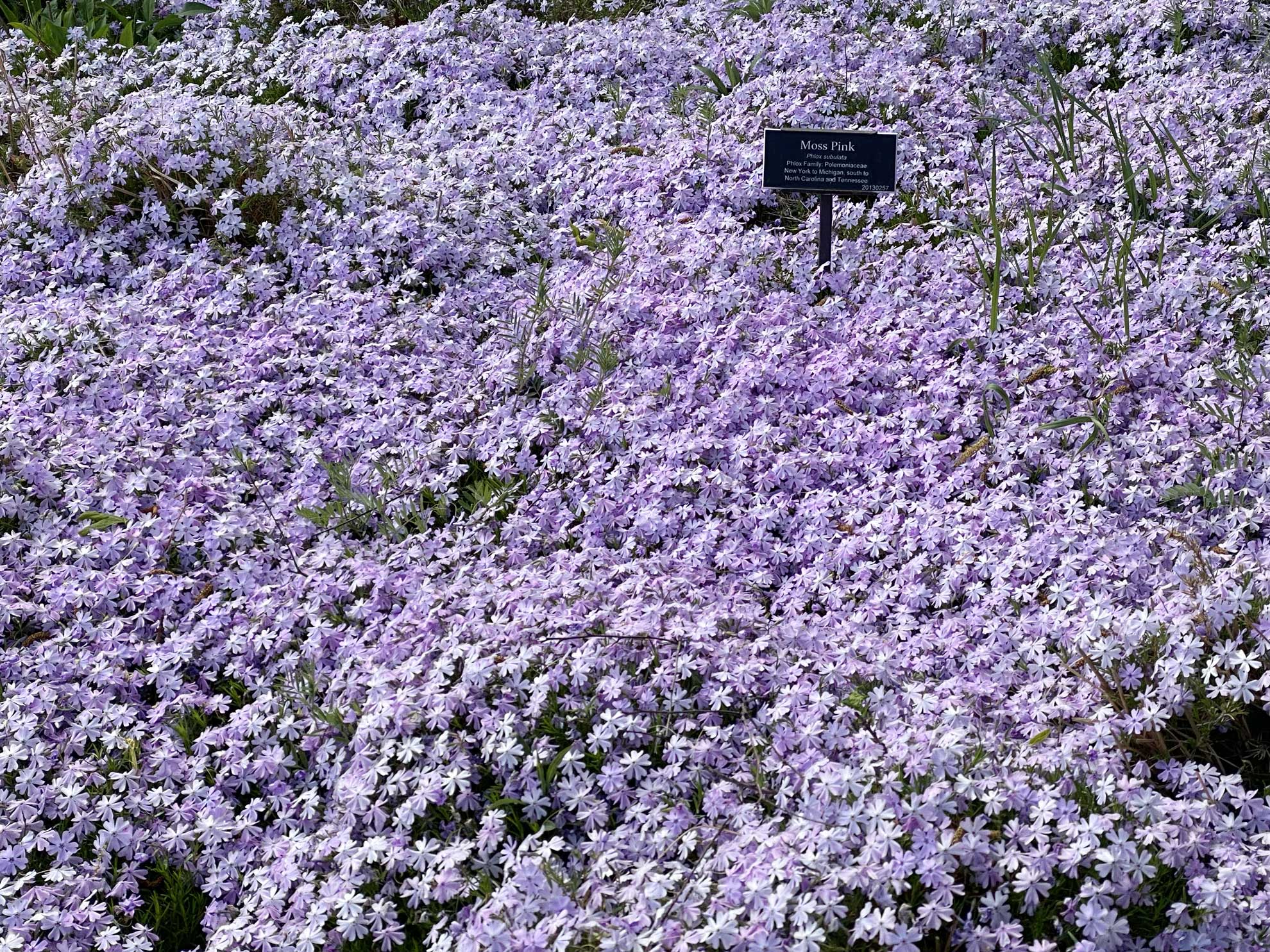
Creeping phlox blooms in April and May, which makes it one of the earliest significant nectar sources of the year. That timing matters. Native bees are just emerging from winter nests. Early butterflies are looking for fuel. Hawkmoths—these amazing sphinx moths that hover like tiny hummingbirds—visit the flowers at dusk, drawn by a fragrance that intensifies in the evening.
If you’ve ever noticed a patch of phlox that smells stronger at twilight than at noon, that’s not your imagination. The plant is literally calling in its night shift pollinators.
Creeping phlox is a host plant
Creeping phlox is also a host plant for at least six or seven moth species, including the phlox moth. The caterpillars feed on the needle-like leaves, which sounds unbelievable until you realize the plant shrugs it off. The dense mat grows back easily, and the moths get to continue existing. That’s the deal native plants make: they feed the local food web in ways that non-native groundcovers simply can’t.
Finally, this is a true North American gem
The entire genus Phlox is one of the most geographically concentrated plant groups in the world. Sixty-seven of 68 known species grow only in North America. (Only one species made it to Siberia. The rest are ours.)
Phlox evolved here, branched into 68 species here, and built relationships with native pollinators here. When European plant collectors encountered it, they brought it home and it became such a garden staple that people eventually forgot it was American. But it is completely, almost exclusively, ours. When you plant one, you’re plugging into a network that’s been running for a very long time.
Where is creeping phlox native?
Native to 15 US states
Sources: NatureServe, Royal Botanic Gardens, Kew (World Checklist of Vascular Plants) and the USDA PLANTS Database, compiled by The Plant Native. How we map native ranges
Because creeping phlox has such a wide native range, try to buy from a local nursery or plant sale. A plant grown from genetics close to your region will be best adapted to your climate and soil conditions. In other words…
Where creeping phlox shines in your yard
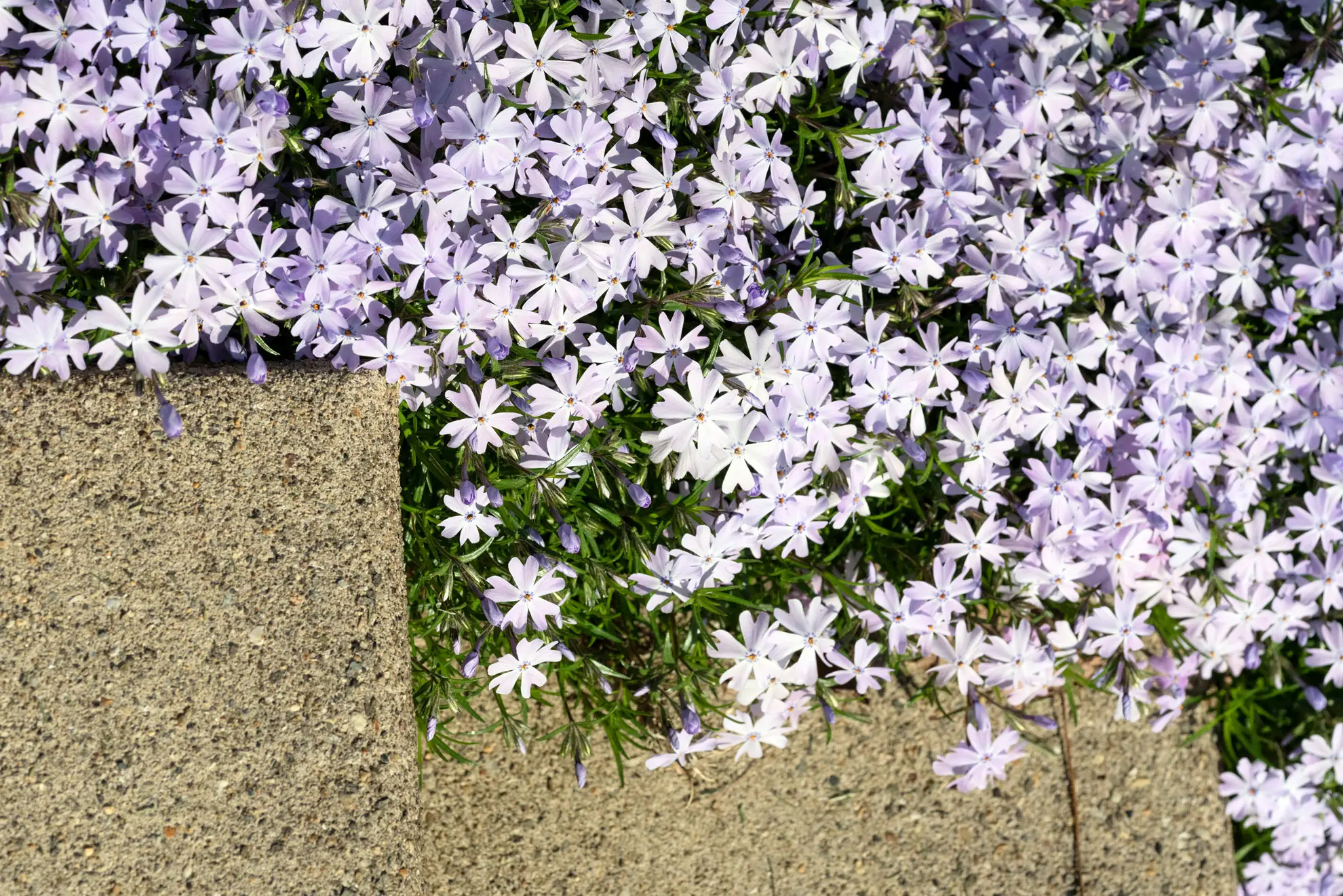
- Walkway and path edges: Low enough that it won’t block the path, colorful enough that it makes the path feel intentional. This is the classic creeping phlox move.
- Rock walls and slopes: Draping over a stone wall is what this plant was born to do. Gravity + phlox = extremely satisfying.
- Between stepping stones: It handles light foot traffic and fills in gaps with that mossy green texture.
- Mailbox and front door plantings: A little ring of creeping phlox around the base of a mailbox is the kind of small move that makes a whole house look more intentional.
- Rock gardens: It evolved on rocks. This is home territory.
- Replacing lawn strips: That narrow strip of grass between the sidewalk and the street that’s impossible to mow? Creeping phlox will cover it, stay green, and bloom every spring without you ever touching a mower.
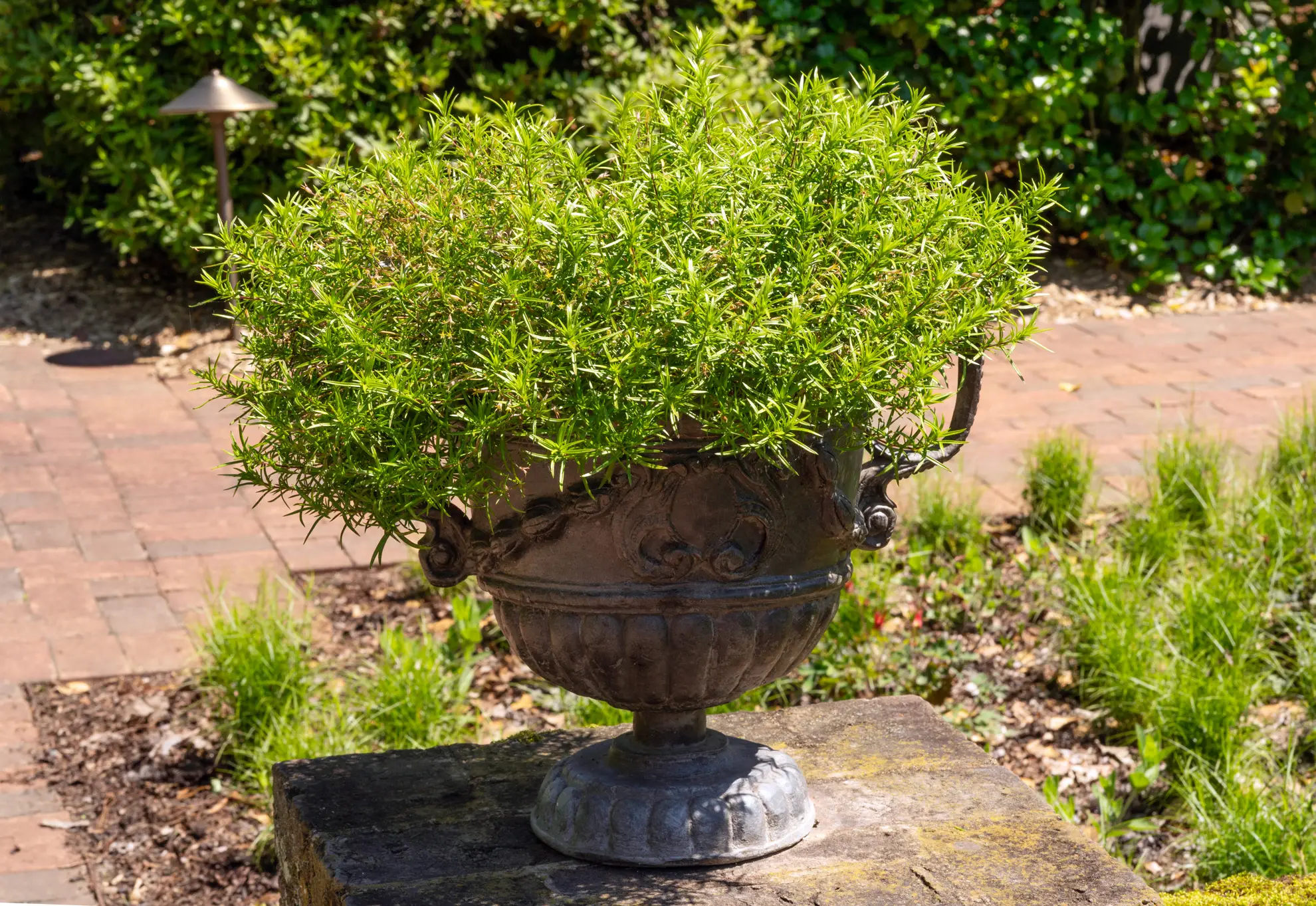
- Containers: Plant it in a pot and it’ll spill over the edge even after it’s done blooming. The trailing green mat looks good all season.

Plant nerd fact
This is a true North American local.
Of the 67 species in the genus Phlox, all but one are found exclusively in North America. The single exception, Phlox sibirica, barely made it to northeastern Asia. Every other phlox on Earth evolved here and stayed here.
When you plant creeping phlox, you’re not planting something that was imported and adapted. You’re planting something that has been working on this continent’s rocky slopes and open woodlands for a very long time, long before anyone was here to notice how good it looks in April.
How to grow creeping phlox
Soil
Creeping phlox is not fussy. In its dream scenario, it’d have well-drained, mildly rich soil. In reality, it’ll grow in rocky, sandy, gravelly, even poor soil, as long as it drains. The one thing it can’t handle is sitting in water. Think of the cliff faces where it grows wild: water hits the rock, runs off, and the roots never stay soggy. Recreate that in your yard and you’re good.
Sun
Full sun gives you the best bloom. In the South, some afternoon shade is fine and actually appreciated during the worst of summer heat. Full shade? This is not your plant. The plant will survive, but you’ll get leaves and very few flowers, which defeats the purpose.
Planting card
Phlox subulata
Water
Once established, creeping phlox is genuinely drought-hardy. After its first year in the ground, it should be able to survive on just rain in most climates. If you’re in the middle of a brutal dry spell, give it a drink. Otherwise, leave it alone. Overwatering is more dangerous than underwatering for this plant.
Maintenance
After the flowers fade in late spring, cut the whole mat back by about half. This sounds aggressive, but it’s the secret to keeping creeping phlox dense and healthy instead of leggy and thin in the middle. Use hedge shears or even a weed trimmer. It’s not delicate about this. New growth fills in within weeks
Beginner tip
Creeping phlox spreads by creeping stems that root where they touch soil. If you want it to fill in faster, press the stems gently into the ground and give them a drink. Within a few weeks, new roots will take hold and your patch just got bigger.
What are good creeping phlox pairings?
There are dozens of great natives to pair with creeping phlox. Here are some options that love the same similar good-drainage locations:


Where can I buy creeping phlox?
It can be hard to find native plants sometimes, but creeping phlox is one of the more widely available varieties. It can even be found for sale sometimes at big-box garden centers—check under the “perennials” section.
If you don’t see it there, we’ve compiled some more sources for native plants:
Seen lots of colors? Those are probably creeping phlox cultivars
A cultivar is a plant that has been changed or curated by humans (it stands for CULTivated VARiety—learn more about cultivars.) Cultivars offer beauty, but they cannot beat the ecological benefits of planting a true native species.
People have loved creeping phlox for so long that dozens of cultivars exist. The wild form blooms pale pink, but cultivated versions come in every color from deep magenta to icy white to lavender-blue to candy-striped. A few you might encounter:
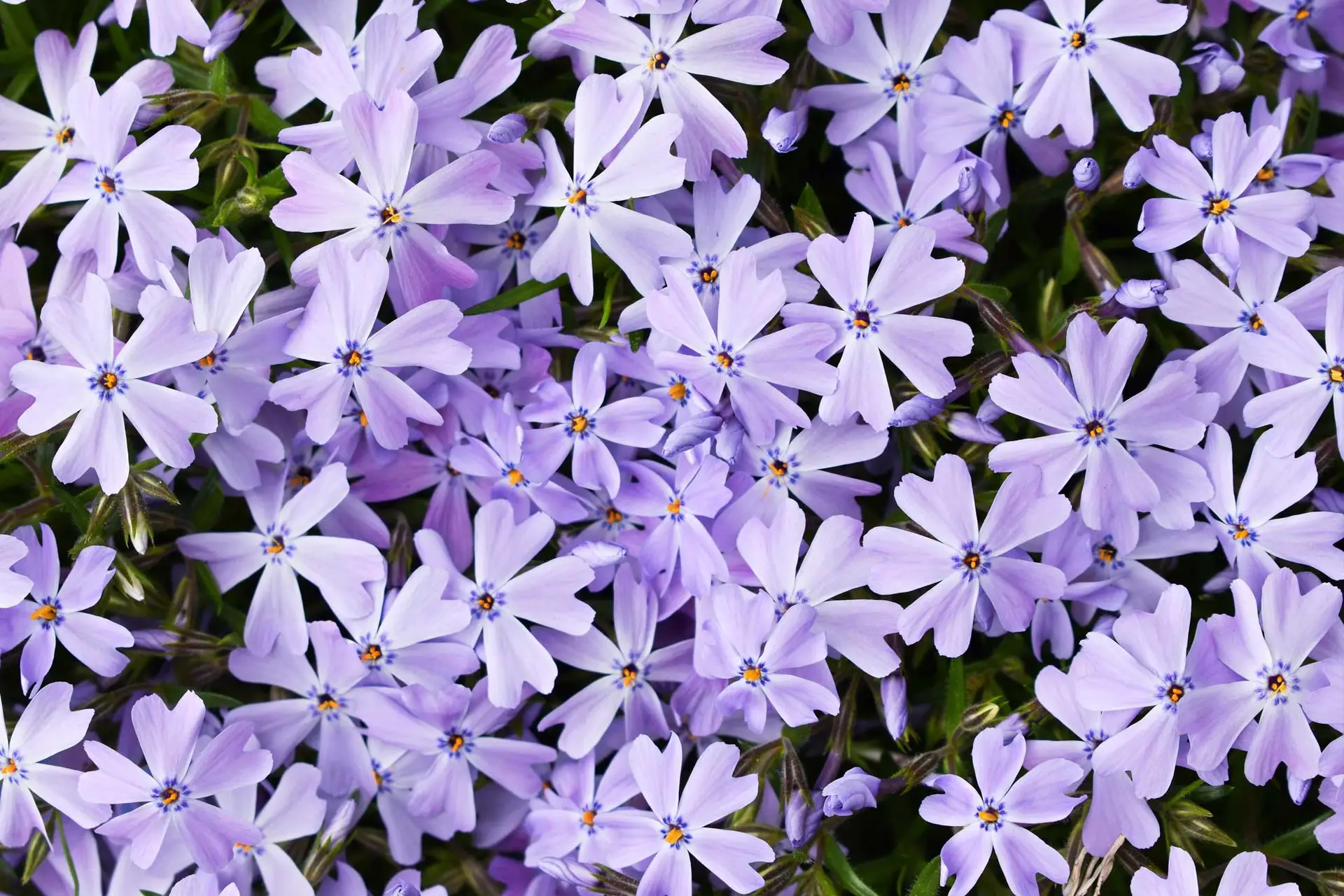
Phlox ‘Emerald Blue’
Phlox subulata ‘Emerald Blue’
The bright blue-purple cultivar of creeping phlox has been a garden staple for generations.
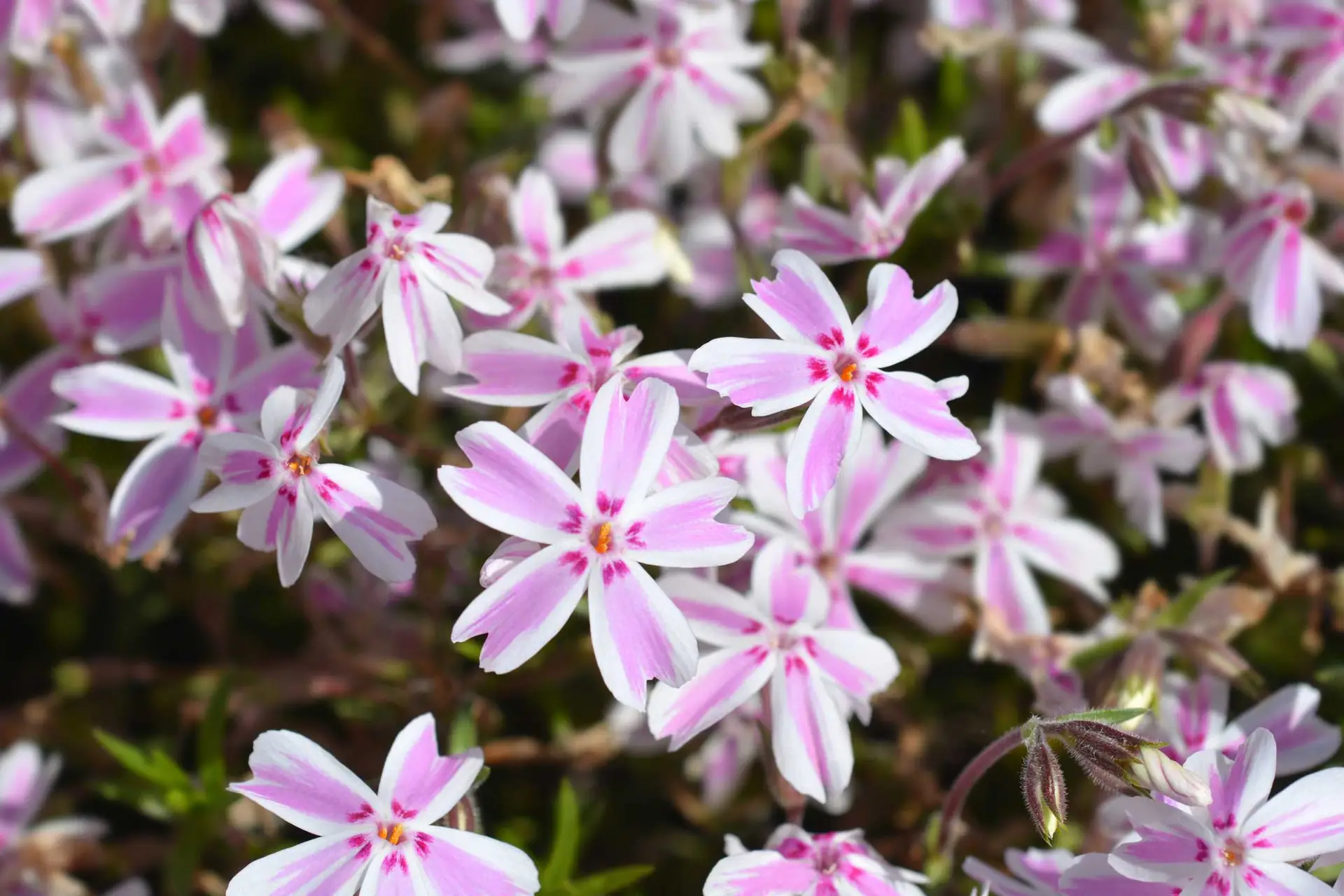
Phlox ‘Candy Stripe’
Phlox subulata ‘Candy Stripe’
The ‘Candy Stripe’ cultivar of phlox has a lovely pink and white striped flower.
FAQs
How fast does creeping phlox spread?
Expect a single plant to cover about 1–2 square feet within a couple of years. It spreads by creeping stems that root as they go. It’s not aggressive, it’s more like a slow, determined crawl. If you want faster coverage, plant multiple starts about 12 inches apart.
Can I walk on it?
Light foot traffic is fine. Think stepping stones, not a soccer field. It can handle being stepped on occasionally, but it’s not a lawn replacement for high-traffic areas.
Does creeping phlox stay green all winter?
Mostly. In mild climates, it stays green year-round. In colder areas (Zones 3–5), the leaves may brown at the tips but remain on the plant. Fresh spring growth covers any winter damage fast.
Do I have to cut it back?
Technically no, but you really should. A good shearing after flowering—cutting the mat back by about half—keeps it dense and prevents the leggy, thin center problem. It takes ten minutes and it’s the difference between a phlox that looks lush and one that looks tired.
Will deer eat creeping phlox?
Generally no. Creeping phlox is considered deer-resistant, which is gardener-speak for “deer prefer other things but will eat anything if they’re hungry enough.” In most situations, deer leave it alone.
Creeping phlox is one of those plants that gives you a lot for very little. Three to four weeks of jaw-dropping spring color. A semi-evergreen mat the rest of the year. Almost zero maintenance after that first-year establishment. Drought-hardiness that would put most garden plants to shame. And a quiet, steady contribution to the local food web, feeding native bees in April, hosting moth caterpillars in summer, and keeping your garden from looking bare in January.
It belongs on cliff faces in Appalachia and it belongs in your front yard. Plant it along the walkway, drape it over a wall, tuck it between stepping stones. Then stand back in April and watch it catch fire.
Creeping phlox is just one of the sixty species of phlox native to North America. Want to meet a few other phlox cousins? Visit our Beginner’s Guide to Native Phlox to learn more. Happy planting!
Sources
- Brandes, Kate. Native Plants for the Small Yard: Easy, Beautiful Home Gardens that Support Local Ecology. Maxfield Design, 2024. lgnc.org.
- Bruce, Hal. How to Grow Wildflowers and Wild Shrubs and Trees in Your Own Garden. New York: Alfred A. Knopf, 1976, 79–82. abebooks.com.
- Johnson, Lorraine. 100 Easy-to-Grow Native Plants for American Gardens in Temperate Zones. Toronto: Random House Canada, 1999, 44. amazon.com.
- Missouri Botanical Garden. “Phlox subulata.” Plant Finder. Accessed February 22, 2026. missouribotanicalgarden.org.
- North Carolina State University Extension. “Phlox subulata.” NC State Extension Gardener Plant Toolbox. Accessed February 22, 2026. plants.ces.ncsu.edu.
- Hilty, John. “Moss Phlox (Phlox subulata).” Illinois Wildflowers. Accessed February 22, 2026. illinoiswildflowers.info.
- Mt. Cuba Center. “Moss Phlox (Phlox subulata).” Mt. Cuba Center Plant Finder. Accessed February 22, 2026. mtcubacenter.org.
- Penn State Extension. “Phlox in the Home Garden.” Penn State College of Agricultural Sciences. Accessed February 22, 2026. extension.psu.edu.
- University of Maryland Extension. “Moss Phlox (Phlox subulata).” University of Maryland College of Agriculture and Natural Resources. Accessed February 22, 2026. extension.umd.edu.
- USDA Natural Resources Conservation Service. “Phlox subulata L.” PLANTS Database. Accessed February 22, 2026. plants.usda.gov.
- Lady Bird Johnson Wildflower Center. “Phlox subulata.” Native Plant Database. University of Texas at Austin. Accessed February 22, 2026. wildflower.org.
- Native Plant Trust. “Phlox subulata.” Go Botany. Framingham, MA. Accessed February 22, 2026. gobotany.nativeplanttrust.org.
- Virginia Department of Conservation and Recreation. “Central Appalachian Shale Barrens.” Virginia Natural Heritage Program. Accessed February 22, 2026. dcr.virginia.gov.
Similar plants
-
 Bee Balm
-
 Hummingbird Mint
-
 Obedient Plant
-
 Great Blue Lobelia
-
 Cardinal Flower
-
 Butterfly Weed
-
 Lilies
-
 Penstemons
-
 Alum Root (Heuchera)
Updated Find more: Pink Purple Evergreen Flower Hummingbird Favorite Spring Full Sun Part Sun
The ads on this site help pay real native plant nerds to research and write these guides.
Garden notes
Notes from people who’ve grown it
Tips, wins, and the occasional disaster. If you’ve grown creeping phlox, share the advice you’d give to a neighbor.

I cannot believe how easy this plant is to grow. It's doubled in size in a year, and it looks great even in the snow. Highly recommend.
Tap anywhere to close


