California fuchsia is one of those plants that feels like a cheat code. When everything else is fading in late summer, it lights up with electric red-orange flowers and pulls hummingbirds out of thin air. Native to California and parts of the West, this plant is built for heat, drought, and poor soils, and it gets better when you leave it alone. Scroll on for how to plant it once and enjoy it for years.
Evolution made California fuchsias into the perfect hummingbird feeder
Is California fuchsia a good choice for my yard?
Yes, if…
You want a late-summer bloomer that feeds hummingbirds
You garden with well-drained soil
You want a plant you don’t have to water once it’s established
You like plants that spread gently and fill space over time
California fuchsia’s light needs differ depending on where you live.
If you live near the coast or in the northern part of its range, full sun is great.
For more inland, hotter areas, part-sun works better. If it’s in full sun, give it extra water during hot summer days.
New to native?
Before lawns and landscaping, native plants were here. They’ve fed birds, bees, and butterflies for thousands of years—and they’ll do the same in your yard. The best part? They’re easier to grow than you think.
Late-season lifeline: Flowers when many native plants are done for the year
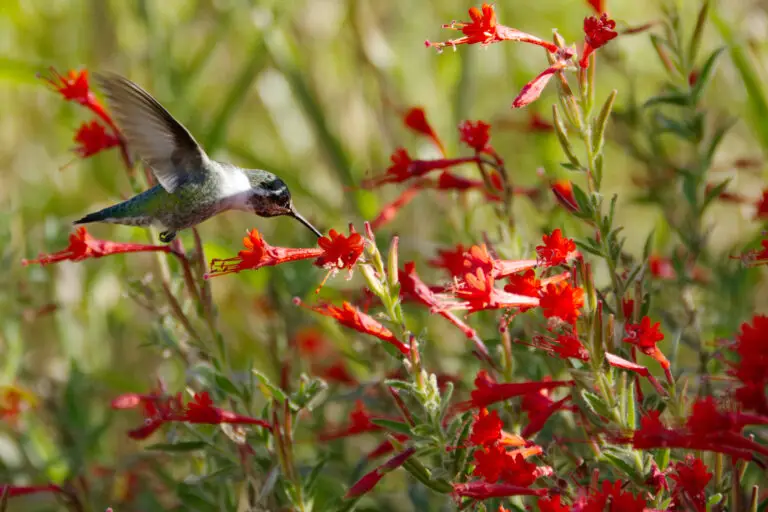
Hummingbird favorite: Tubular flowers are perfectly shaped for long bills
Drought-tough: Thrives on rainfall alone once established
Low effort: No fertilizer, no fuss, no weekly care schedule (prune to the ground after they’ve bloomed and that’s it)
One plant, hundreds of flowers
These plants are maximalists when it comes to flowers. The USDA sums up California fuchsia’s commitment to flowering nicely (our bolding): “The plant often has over 250 blooms per flower blooming at one time.”
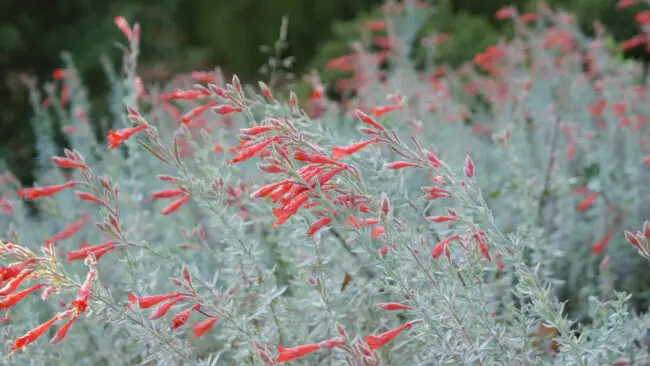
Native California fuchsia in its blooming, end-of-summer glory
Where California fuchsia grows naturally
In the wild, California fuchsia grows in dry, sunny places across California and into parts of Oregon, Nevada, and Arizona. You’ll find it on rocky slopes, open hillsides, coastal bluffs, and canyon edges. All these places share excellent drainage and long, dry summers.
In a yard, that translates to sunny, well-drained spots where other plants might struggle. Slopes, borders, hellstrips, and gravelly areas are all fair game.
A quick note about the name (because it’s confusing)
Despite the name, California fuchsia is not a true fuchsia (it would need to be in the Fuchsia genus to be an official fuchsia). The flowers just look similarish. Botanically, it belongs to the evening primrose family (Onagraceae). The “fuchsia” common name comes from its looks, not lineage.
California fuchsias are hummingbird sippy cups
California fuchsia and hummingbirds: a multi-millennia partnership
California fuchsia isn’t just “popular with hummingbirds.” It’s a textbook example of hummingbird pollination, backed by decades of field research.
California fuchsias are bird-pollinated
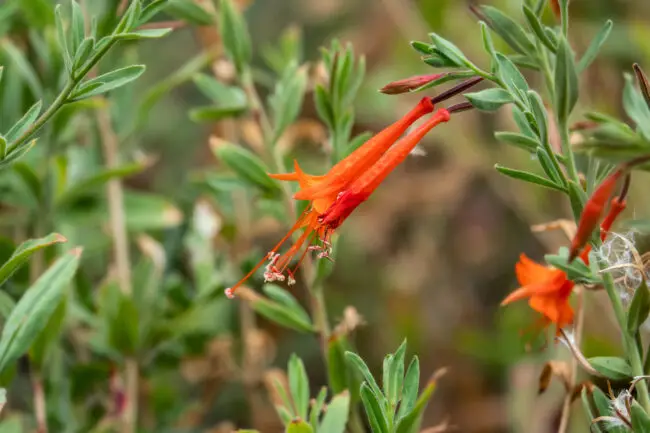
When we think of pollinators, we often think of bees. But California fuchsia’s bright red, tubular flowers are shaped to match a hummingbird’s bill, not a bee’s body. Nectar sits deep inside the flower, accessible to hovering birds but difficult for most insects to reach. As hummingbirds feed, pollen brushes onto their foreheads and bills, then gets carried directly to the next flower. Pollination biologists classify California fuchsia as ornithophilous, meaning bird-pollinated.
“
In other words: California fuchsia isn’t just hummingbird-friendly. It’s hummingbird co-evolved
”
See California fuchsia blooming? Watch out for hummingbird migrations
Timing matters too. California fuchsia blooms from late summer into fall, a period when many other nectar sources have faded. Research on hummingbird foraging shows that late-season flowers play an outsized role in supporting resident and migrating hummingbirds, especially in dry regions where resources drop sharply by August.
In other words: California fuchsia isn’t just hummingbird-friendly. It’s hummingbird co-evolved, offering the right color, shape, nectar access, and timing to keep both plant and pollinator thriving.
Sun: Full sun is best for compact growth and heavy flowering
Soil: Well-drained soil is key; rocky or sandy soils are ideal
Water: Water during the first growing season only; then it should be fine on its own*
Pruning: According to CalSCAPE, “Best to cut it back to the ground as soon as the flowers are spent, and it will come back lush and healthy in the spring.”
Spacing: Give it room to spread—many forms slowly creep and fill in
If California fuchsia flops, sulks, or doesn’t flower much, it’s usually getting too much water or too much shade. Avoid planting it in irrigated lawns or heavily watered beds.
*A watering note for inland gardens: this plant may need some water during the height of summer, especially if planted in full sun.
Growing San Diego has a helpful video that shows what to look for and how to plant California fuschias:
Where California fuchsia shines in your yard
California fuchsia is perfect for well-drained sunny areas. Use it along sunny edges, on slopes, or anywhere you want a low, spreading plant that looks intentional without constant care. The USDA sums it up nicely:, “The plants are extremely drought tolerant and withstand sun, heat, and wind, making them ideal plants for dry sunny slopes.”
California fuchsia is especially powerful when planted where you can watch hummingbirds hover and feed up close: near patios, windows, or walkways.
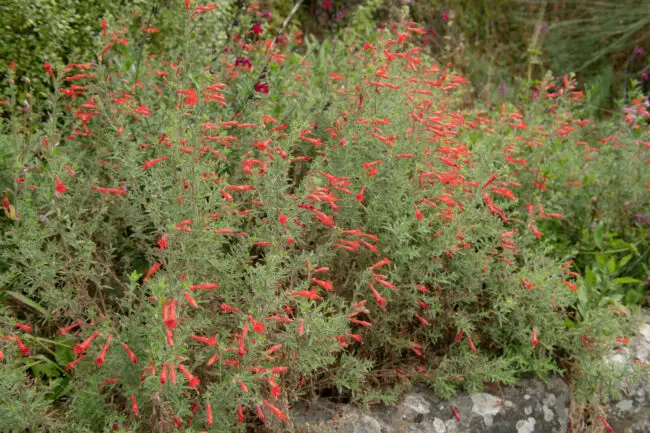
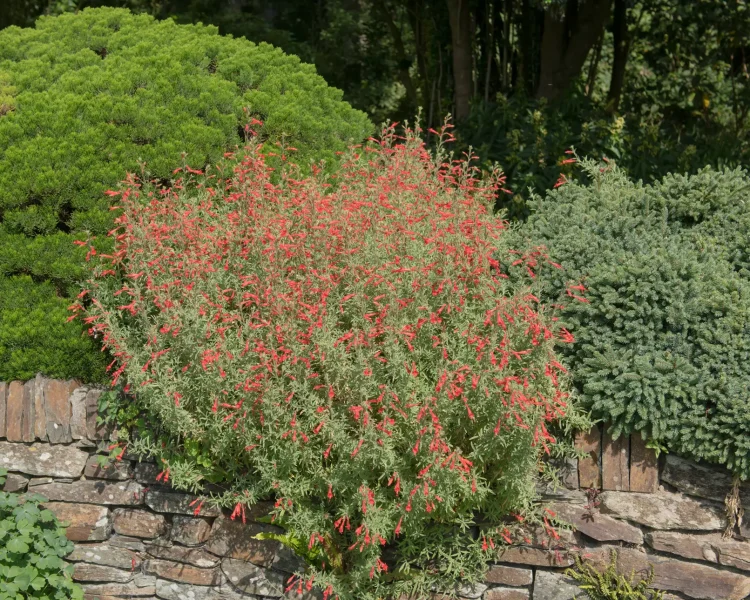
With California fuchsia, drainage is key. Seen here thriving atop a rock wall.
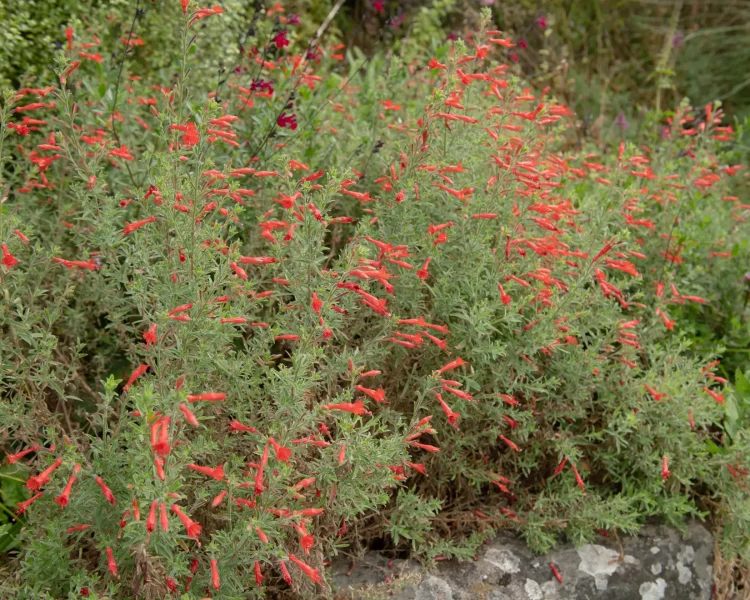
When not in bloom, it might remind you a little of rosemary bushes
California fuchsia cultivars
There are many California fuchsia varieties and cultivars available. (A cultivar is a plant curated, selected, or bred by humans for characteristics like color, height, etc. Here’s a quick cultivar overview.) Some California fuchsia cultivars you may encounter include:
Lots of native advocates have strong opinions about cultivars. Reading posts on Reddit or comments on Facebook might make you wonder:
Are California fuchsia cultivars bad?
Cultivars are complicated, hot topics within the botanical and native plant communities. A cultivar like ‘Solidarity Pink’ is a good example of why cultivars are worthy of discussion.
Hummingbirds have evolved to have heightened sensitivity to seeing red and yellow. When we plant a cultivar that has pink flowers, we may be inadvertently making it harder for migrating hummingbirds to find the California fuchsia blossoms and the nectar within. Some botanists and ecologists also argue that it’s best to leave nature and evolution alone and stick to planting “straight species,” or native species untouched or curated by humans.
What to do? Well, The Plant Native’s POV (if you care! totally fine if you don’t!) is to strive to plant straight species native to your area. That said, let’s not make our gardening choices feel like botany exams. Native cultivars (sometimes called nativars) are always better choices than lawn or non-native plants.
Garden Recipe™
California Fuchsia
Epilobium canum
Full sun
Sun
Pretty easy
Effort
Medium (3-5') tall 2-3 ft wide
Size
Summer
Blooms
What it needs
Sunlight
Full sun, 6+ hoursSouth- or west-facing is ideal
Directions
Spacing
18-24 inAbout one arm's length apart
Watering
Weekly for the first seasonAfter that, rain is usually enough
Notes
Comes back?
Yes, every yearGoes dormant in winter, that's normal. New growth each spring.
Hummingbird magnet. Hummingbirds love this one. Plant a few and you've basically hung a neon 'OPEN' sign for them.
California fuchsia often goes dormant in summer drought, especially in hotter inland areas. Leaves may yellow or drop entirely. This isn’t stress—it’s strategy.
The plant conserves energy underground, then comes roaring back with flowers when conditions line up (and hummingbirds need the nectar). If it looks messy in midsummer, don’t panic. It’s just pacing itself.
Where can I get California fuchsia?
California fuchsia is widely available at native plant nurseries in the western U.S. Look for straight species or locally sourced forms adapted to your region. Here are some ideas on where you can find your own:
California Fuchsia
Where can I find seeds and plants?
Finding native plants can be challenging (we partly blame King Louis XVI.) To make it easier, we’ve assembled four sourcing ideas.
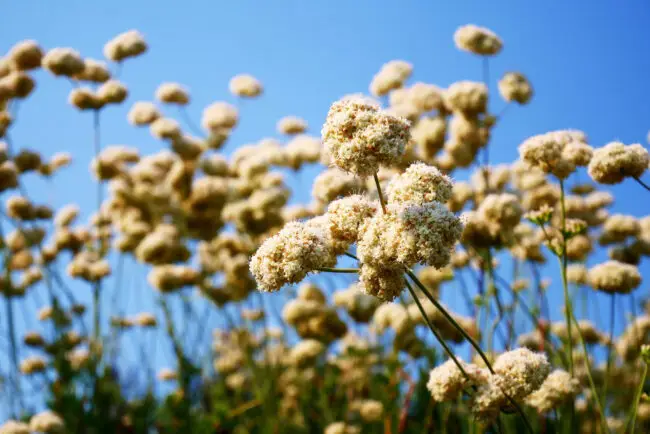
Pair California fuchsia with other sun-loving, low-water natives that won’t crowd it or demand extra irrigation. Native bunchgrasses, goldenrods, buckwheats, and sages/salvias make great companions. The goal is a planting that offers something for pollinators throughout the season and thrives in similar, well-drained, sunny spots.
California fuchsia proves that low effort doesn’t mean low impact. Plant it in sun, give it a year to settle in, and then step back. When late summer hits and hummingbirds show up on schedule, you’ll understand why this native earns its reputation year after year. The only care you’ll need is to cut it back after it flowers, and it will be back next year to start the show again. Where to next? Can we recommend our Beginner’s Guide to Native Salviasor our Beginner’s Guide to Native Manzanitas? Happy planting!
Emily Lessard is the founder and editor of The Plant Native, the site that helps homeowners across North America get started with native plants. She holds a Sustainable Landscapes certificate through the Pennsylvania Landscape & Nursery Association, is finishing a Native Perennial Garden Design Certificate at Temple University, and is the author of Plant Native:A Practical Guide to Over 100 Native Plants of North America (Quarto, February 2027). She gardens outside Philadelphia in the 8.3 Southeastern Plains ecoregion.