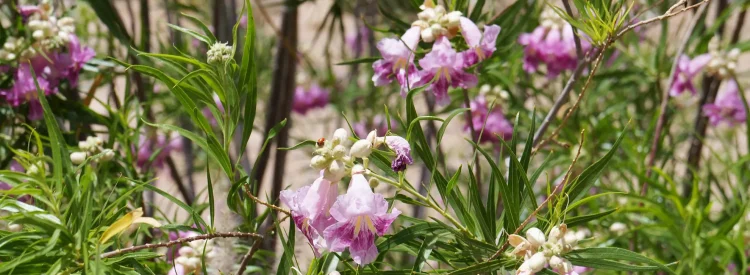
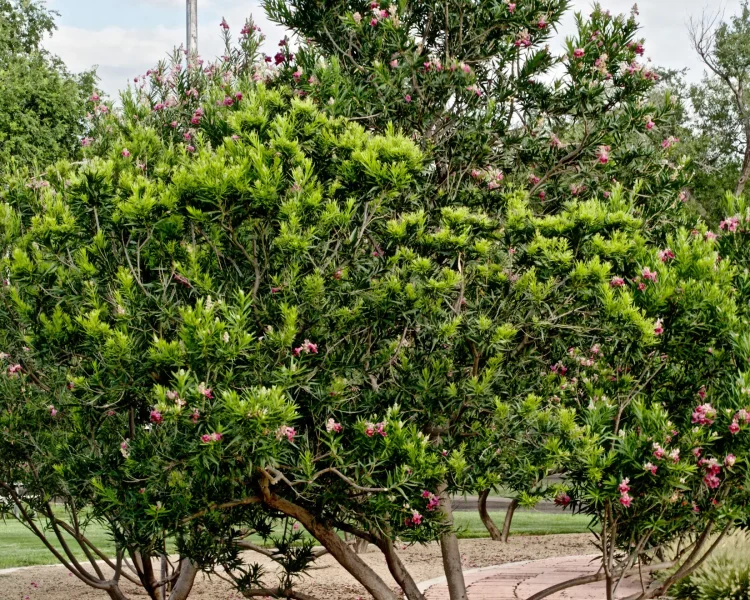
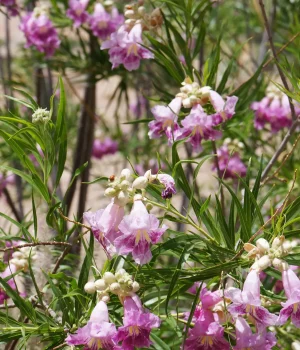
Desert willow is a small native tree (or shrub) that thrives in heat, drought, and tough soils while putting on a long floral show from late spring through summer—and sometimes into fall. Its trumpet-shaped flowers, often pink, lavender, or white, are fragrant and irresistible to hummingbirds and native bees. Despite the name, desert willow is not a willow at all. It’s part of the trumpet vine family and is built for dry landscapes where other trees struggle. Scroll on for planting tips and to see where this tree really shines.
Is desert willow a good choice for my yard?
Yes, if…
- You live in a hot, dry, or inland climate (scroll on to see its native range).
- You want a small tree or medium-sized shrub rather than a large shade canopy.
- You have full sun and well-drained soil.
- You want flowers that bloom over a long season, not just a few weeks.
- You’re looking for a low-water, low-maintenance native shrub/tree.
- You want to support hummingbirds, bees, and birds.
Why desert willow matters
- Heat- and drought-ready: Built for arid climates and extreme summer temperatures.
- Long bloom season: Flowers appear from late spring through summer, sometimes into fall.
- Pollinator support: Nectar-rich blooms attract hummingbirds, native bees, and butterflies.
- Bird value: Birds use the tree for nesting and eat the seeds.
- Time-saver: Once established, desert willow thrives with little to no supplemental water.
And one more reason to plant desert willow…
Desert willow is a host plant for white-winged moths. Planting host plants in our yards helps us enjoy beauty while helping the wildlife of our areas thrive.
Where it grows naturally
In the wild, desert willow grows along dry washes, desert streams, floodplains, and ravines across the southwestern United States and northern Mexico. These areas often have underground moisture but experience intense heat, seasonal flooding, and long dry stretches.
In a yard that looks like open, sunny spaces with fast-draining soil, especially in inland or desert-adjacent regions. Planting desert willow in these conditions recreates the natural setting it evolved in.
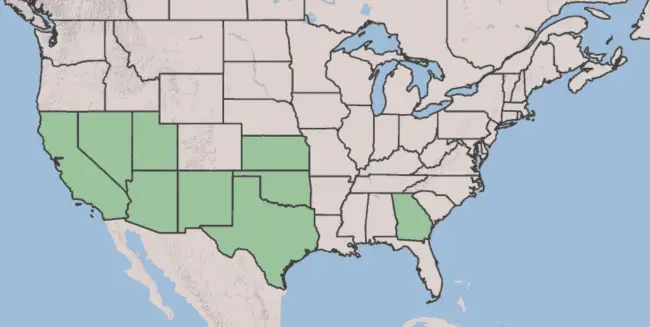
Where is desert willow native?
Desert willow is native to the southwestern United States, including the arid regions of the Mojave Desert. Wondering about seeing Kansas and Oklahoma here? The USDA notes in their desert willow profile that these are “naturalized from introduced populations in southwest Kansas and the western half of Oklahoma, subspecies linearis.”
How to grow desert willow
There are a few things to note as you consider planting desert willow in your yard:
- Sun matters. Desert willow needs full sun to bloom well.
- Drainage matters. Desert willow tolerates many soil types and even short-term flooding, but it does not tolerate constantly wet soil.
- Water to establish, then back off. Regular water the first year helps roots settle; after that, rainfall is usually enough.
- Go easy on fertilizer. Too much fertilizer leads to weak, unruly growth.
Once established, desert willow is tougher than it looks and more cold-hardy than early plant tags suggested.
Pruning helps desert willow shine
Desert willow blooms on new growth, not old wood. That means branches that formed last year will leaf out in spring, but they won’t flower. The blooms come from fresh growth that emerges after pruning.
If you want a desert willow covered in flowers, prune during winter dormancy, when the tree is leafless. Cutting back then encourages strong new growth in spring, which leads directly to more blooms.
In their excellent book Native Gardens for Dry Gardens, Sally and Andy Wasowski write, “It grows so quickly that you might have to reshape it three times the first year, but probably not at all by the fifth year.”
Shrub or tree? You get to choose.
Pruning also lets you decide how your desert willow grows:
- For a tree form: Gradually remove lower branches over time to create one or a few main trunks.
- For a shrub form: Cut them back almost to the ground to keep them within a 3 to 10-foot range and covered with flowers.
There’s no wrong choice here. Desert willow naturally grows as a multi-stemmed plant, but it adapts easily to either form depending on how you prune it early on.
One note of restraint: avoid heavy pruning during the growing season. It can reduce flowering and lead to weak, unruly growth. A little winter pruning goes a long way, and the plant does the rest.
Desert willow is actually *not* a willow, but it does have an east coast cousin
Despite the name, desert willow is not a true willow. The name comes from its narrow, willow-like leaves, not its family tree.
Botanically speaking, it belongs to the trumpet vine family (Bignoniaceae), alongside its east coast plant cousins: catalpa and trumpet vine. The flowers give it away: just like desert willow, they are long, tubular, and built for pollinators.
Where desert willow shines in your yard
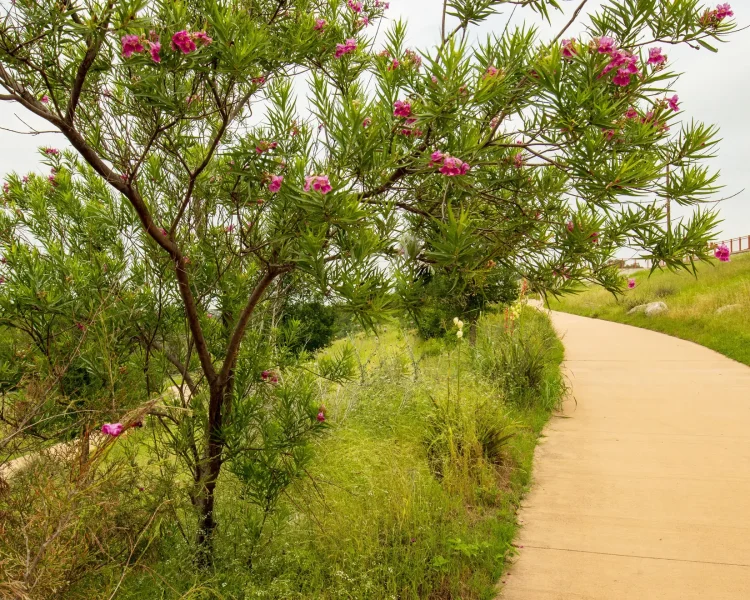
Desert willow is ideal as a patio tree, courtyard focal point, or accent near driveways and property edges. Its open branching creates light shade rather than deep darkness, making it easy to plant beneath or around.
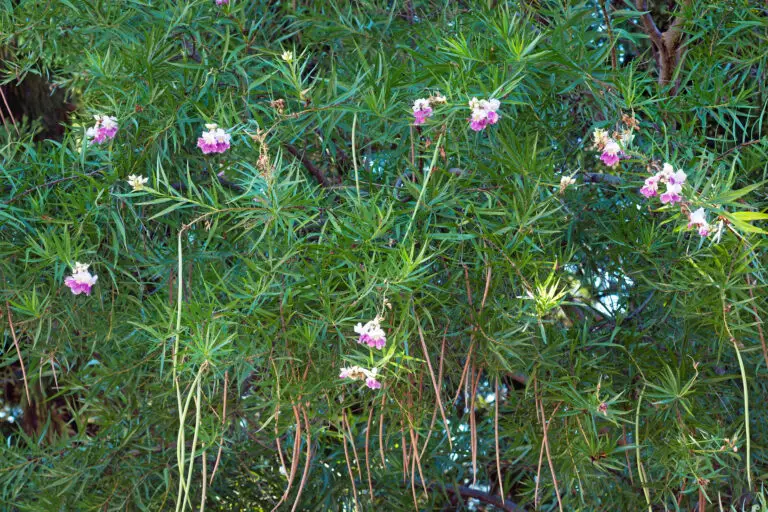
Because it blooms on new wood, light pruning keeps it compact and flower-heavy. Long seed pods add structure after it blooms, making it look interesting even when its flowers fade.
There are also a few desert willow cultivars
A cultivar is a plant that has been selected or bred for specific characteristics; cultivar is a shortening of CULTIvated VARiety. Sometimes cultivars are discovered in nature and propagated, while others are intentionally created through cross-breeding or other scientific methods. Here is a quick cultivar overview to learn more.
Desert willows have more than a dozen cultivars. The Waterwise Garden Planner lists a few, as does the North Carolina Gardener Extension’s desert willow profile. A few cultivar options include:
- Desert willow C. linearis ‘Burgundy’: 20-25 ft. tall with high contrast purple flowers
- Desert willow C. linearis ‘Warren Jones’: 20 ft., “has an open branching habit and shaggy bark, and light pink flowers have ruffled edges”
- Desert willow C. linearis ‘White Storm’: smaller (15 ft.) with white flowers.
Are cultivars bad?
Opinions on cultivars depend on who you ask. Some native plant experts believe that planting only straight native species that ideally represent the DNA in your area is the only way to plant native. Others, including well-known arboretums, embrace desert willow cultivars in their landscapes.
Our take? (If you care, and totally fine if you don’t!) Planting straight species is the ideal, but plant the natives that you love. Planting a native plant—even a cultivar—is vastly better than planting a non-native species.
How can I know if it’s a cultivar (or not?)
You can always spot a cultivar when you see a cheeky marketing name non-italicized in ‘single quotes.’ If you see only the Latin botanical name in italics—in this case, Chilopsis linearis—it’s most likely the straight species that grows naturally in the wild. To be even more sure, source your plants from a native plant nursery.
Which is a perfect segway…
Where can I find desert willow?
Thankfully, these native trees have been widely embraced in the landscaping trade for their beauty and resilience. You can often find them at native nurseries. If you live in California, the California Native Plant Society (CalSCAPE) has made it even easier by creating a nursery map that lists nurseries that carry desert willow.
Otherwise, we’ve assembled four other resources to help you find the desert willow of your dreams:
What are good pairings for desert willow?
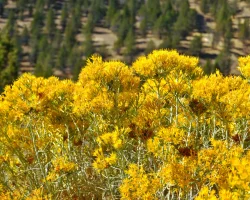
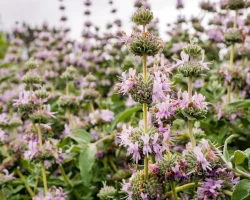
Desert willow pairs best with other drought-tolerant natives that share its love of sun.
And that wraps up our beginner’s guide to desert willow. This native tree proves that low water doesn’t mean low impact. With a long bloom season, high wildlife value, and easy care, desert willow earns its place in hot, sunny landscapes. Plant it once, give it space, and let it do what it’s always done best—thrive. Happy planting!