Plant Profile • Part Sun, Full Shade

Green-and-Gold

Chrysogonum virginianum

Low-growing sunshine for shady spots.

Where to find one ↓
Highlights

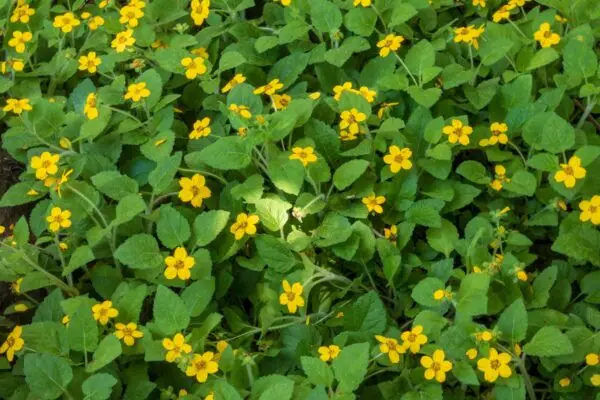
This shade-loving native groundcover fills itself with bright yellow flowers in the spring. Once it starts flowering can keep going for 2+ months! In warmer climates, it can start blooming again in the fall. It’s a good native replacement for the you-see-them-everywhere petunias or impatients, both of which are non-native and annuals, so they have to be replanted every year. Skip those and plant some Green-and-Gold perennials to have beautiful yellow runways for years to come. Scroll on for planting tips!

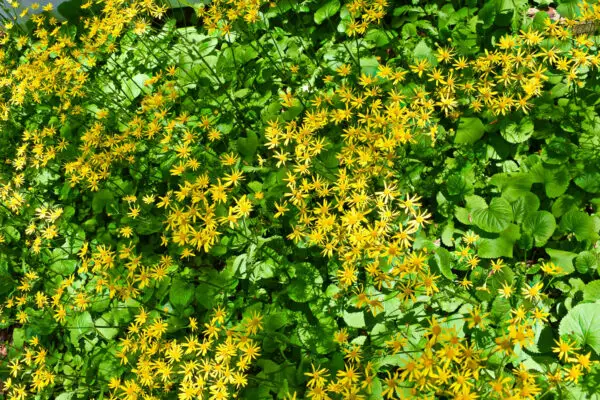
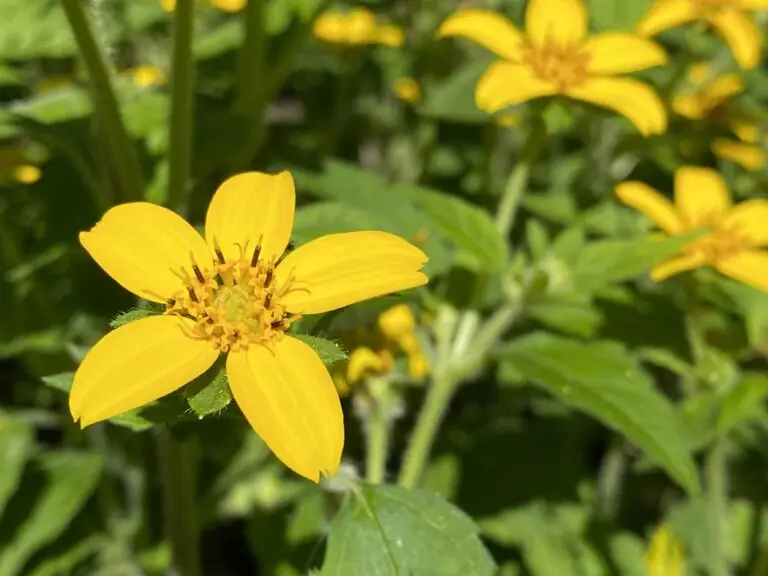
Up close, a Green-and-Gold flower looks very much like its sunflower cousins

What are the benefits of planting Green-and-Gold?

Green-and-Gold is an amazing native plant that has grown in the Southeast United States since before Columbus arrived. Growing native plants like Green-and-Gold is important and easy for gardeners for many reasons, including:

  1. Native plants save time and money: after the first year of getting established, native plants like Green-and-Gold are happy with rain
  2. Green-and-Gold gives iconic animals like butterflies and other pollinators the food or homes needed to survive
  3. Native Green-and-Gold plants bloom in spring and sometimes again in fall, offering cinematic beauty with minimal work.
  4. Green-and-Gold is deer-resistant! Worried about your garden being eaten? This is a great plant for you!
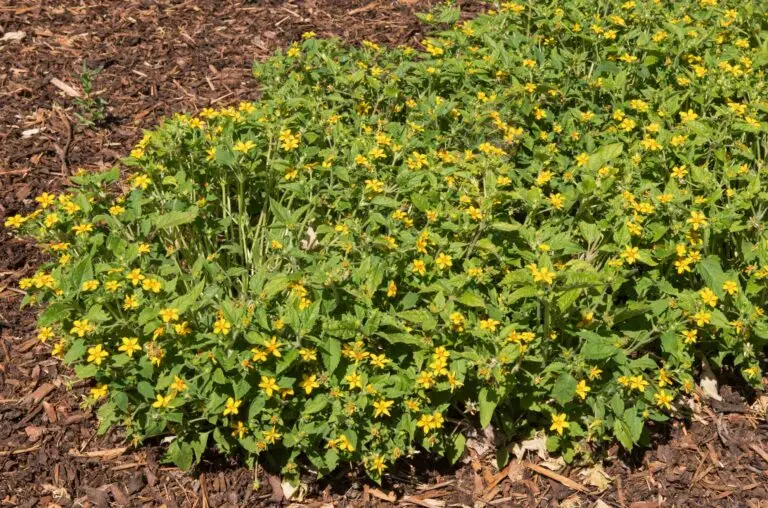
You can see how short and bright Green-and-Gold gets from this picture—a perfect border choice!

FAQs

Green-and-Gold blooms in the spring and sometimes again in the fall, depending on the area. In warmer climates—like the South, and frequently the Mid-Atlantic due to climate change—Green-and-Gold reblooms in the fall. 

Green-and-Gold is considered semi-evergreen: its leaves stay green and visible for most of the year. During the coldest spring months, leaves will die back until the new leaves emerge in the spring.

Yes! Green-and-Gold spreads by seed, enlarging its area every year. 

Although Green-and-Gold seeds itself, it is NOT considered an invasive plant. This is because it’s so easy to pull out plants to stop them from overtaking an area. This is a big difference from a truly invasive species, which takes a herculean effort to remove once it gets itself going. 

Where is green-and-gold native?

Native to 15 US states and Washington, D.C.

Native range
Not native

Source: USDA PLANTS Database

How do you grow Green-and-Gold?

These are very easy native flowers to grow. Don’t take our word for it! Here are two independent sources explaining Green-and-Gold’s easy-going nature:

According to the Ladybird Johnson Wildflower Center, “Plants seems to grow better if neglected than if pampered.”

And according to Master Gardener Patricia A. Taylor in her fantastic book, Easy Care Native Plants, “Just give this groundcover moist, humusy soil to get it started and then you can sit back and never have to do a thing with it except admire its long blooming period.”

We will always take beauty for minimal work. Here’s how to ensure Green-and-Gold can be planted and forgotten:

Garden Recipe™
Green-and-Gold
Chrysogonum virginianum
Part sun to shade
Sun
Some work
Effort
Short (under 3') tall
1-2 ft wide
Size
Spring
Blooms
What it needs
Sunlight
Partial sun to shade Dappled light or a few hours of gentle sun
Water
Likes it moist Pick a low spot, or plan to water often
Directions
Spacing
12-18 in About one forearm apart
Watering
Weekly for the first season After that, rain is usually enough
Notes
Comes back?
Yes, every year Goes dormant in winter, that's normal. New growth each spring.
Deer resistant. Deer usually walk right past this one. If they've been snacking on your other plants, this one should be safe.

Light

Green-and-Gold thrives in a part shade to full shade. In warmer climates—like the South—ensure that your Green-and-Gold has some shade cover in the hot afternoons. (In nature, it lives underneath shrubs and trees on the edges of glades.)

Green-and-Gold can be planted in partly sunny areas if it gets consistent water. If planting in a sunnier area, be sure to give it water during hot and dry spells. If this seems like too much work, ensure your Green-and-Gold gets some shade.

Water

Green-and-Gold like consistent moisture to thrive and keep a long bloom period. While it likes consistent water, it does not like to be water-logged. During the first year of planting—while it’s getting established—give your Green-and-Gold water during hot or dry periods.

More good news:

Green-and-Gold is deer-resistant

Deer do NOT normally eat Green-and-Gold. If you’re worried about deer nibbling your garden, planting Green-and-Gold is a good native gardening choice.

A note: this plant can be hard to find in plant nurseries

This native plant is lovely and should be everywhere in the Mid-Atlantic and South. Sadly, it’s not as popular as it should be. It can take a few calls to different plant nurseries to find Green-and-Gold for your garden.

Your best bet may be Master Gardener Plant Sales in your county (frequently held in the spring) or going to a native-specific nursery.

There are a few places online that will ship Green-and-Gold plant starts. Pick plants from nurseries as close as possible to ensure the plants you’re getting will be used to your climate. Some online sources include:

Green-and-Gold

Where can I find seeds and plants?

Finding native plants can be challenging (we partly blame King Louis XVI.) To make it easier, we’ve assembled four sourcing ideas.

Native Nursery List

300+ native nurseries make finding one a breeze

Online Native Nurseries

Explore 100+ native-friendly eCommerce sites

Find your Native Plant Society

Every state and province has a native plant society; find yours

Online Communities

Local Facebook groups are a great plant source

Where green-and-gold shines in your yard

The Soil Shepherds have a great overview video with three different landscaping ideas using Green-and-Gold. 

What are good pairings for Green-and-Gold?

Pair this gorgeous native flower with other native flowers that thrive in similar light and soil. Some favorites include Bee Balm, Nodding Onion, Mountain Mint, Goldenrod, Joe Pye Weed, and native asters.

And now you know how and where to plant this native perennial flower! Planting native plants like Green-and-Gold helps our gardens become gorgeous while saving us time and water (especially compared to lawns or non-native plants.) Green-and-Gold is a perfect groundcover flower to swap out for short non-native flowers (like petunias or impatients). Because they are a perennial, plant once and watch them come back year after year. No matter if you live in the Mid-Atlantic or South, Green-and-Gold is a great native flower for you. Happy planting!

Woman smiling in a light blue blouse standing among white coneflowers in a lush garden.

Written by

Emily Lessard

Founder & Editor, The Plant Native

Emily Lessard is the founder and editor of The Plant Native, the site that helps homeowners across North America get started with native plants. She holds a Sustainable Landscapes certificate through the Pennsylvania Landscape & Nursery Association, is finishing a Native Perennial Garden Design Certificate at Temple University, and is the author of World of Native Plants (Quarto, February 2027). She gardens outside Philadelphia in the 8.3 Southeastern Plains ecoregion.
Meet Emily

UPDATED —
06/19/2026
In This Guide