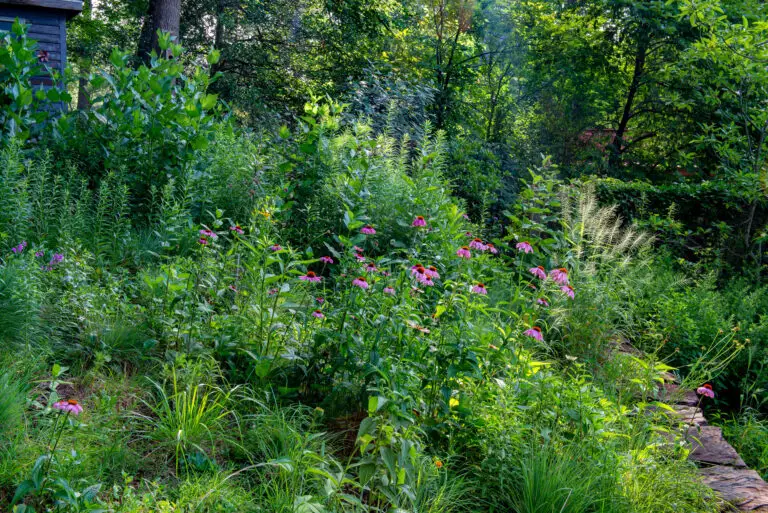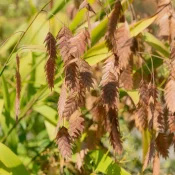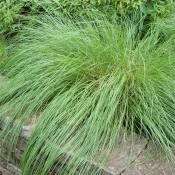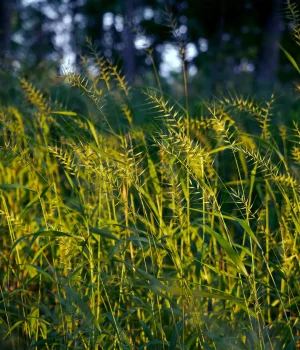

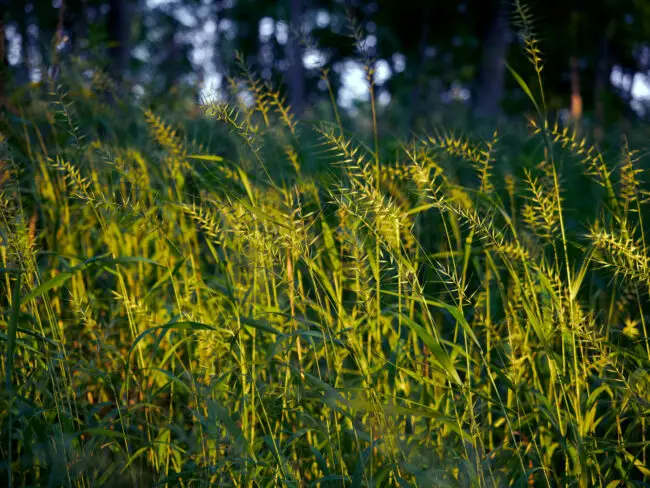
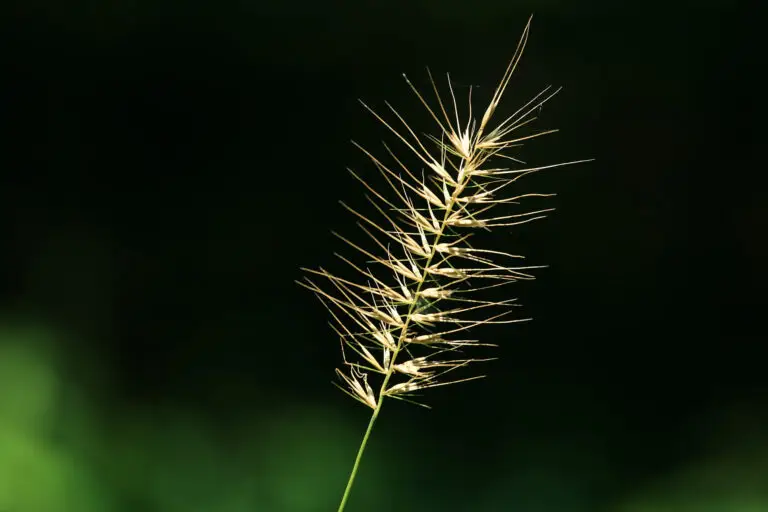
Bottlebrush grass is a cool-season native grass that thrives in dry shade—yes, even those under-tree, root-heavy, lawn-failure zones. Its tall, airy bottlebrush-shaped seedheads glow in summer and fall, adding movement and texture where color can be hard to come by. It’s architectural, low-maintenance, and one of the easiest native grasses you can grow.
Where it grows naturally
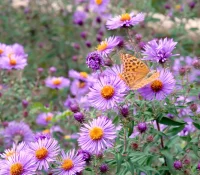
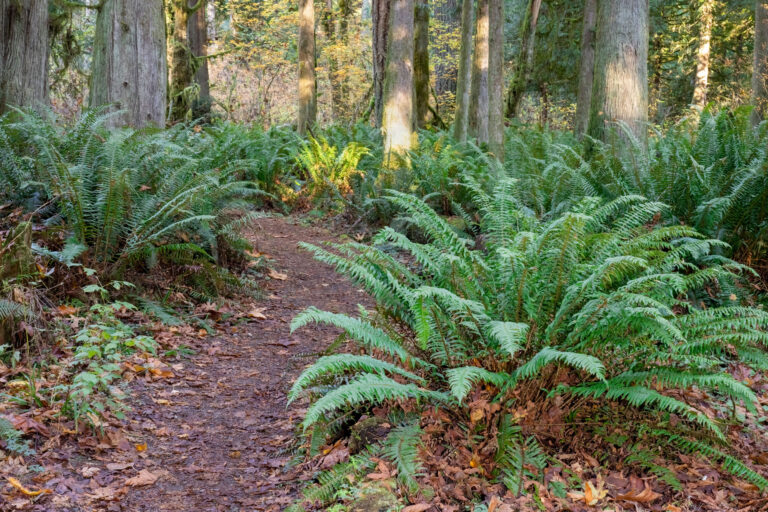
In the wild, bottlebrush grass grows along woodland edges, dry slopes, and open forests. You’ll spot it in dappled shade under oaks, hickories, and maples, where soil is thin and moisture is inconsistent. It often appears alongside woodland perennials, such as wild geranium, zigzag goldenrod, and white woodland asters—plants that thrive in the filtered light of mature trees.
Translating that to a yard: think under trees, beside sheds or fences, along shady side yards, or in any spot where turf grass refuses to survive. Plant bottlebrush grass there and you’re recreating the open woodland community it naturally belongs to.
Where bottlebrush grass shines in your yard
Bottlebrush grass is a shade hero. It handles dry, compacted soil that makes most plants sulk, and it’s one of the few native grasses that actually prefers part shade. Use it to bring height and movement to woodland gardens, soften the edges of shaded patios, or add structure under trees where you need something taller than groundcovers but not overwhelming.
In summer and fall, the pale-green seedheads angle outward like tiny bottlebrushes, catching light and bringing subtle drama to areas that tend to look flat or dark. Leave them standing through winter for texture (and for wildlife).
How to grow bottlebrush grass
A few notes before you plant:
- Shade is its comfort zone. Bottlebrush grass thrives in part to full shade. It tolerates morning sun but doesn’t want full, exposed afternoons.
- Low water, low fuss. Once established, it handles dry shade beautifully. Water only during long droughts.
- Leave it up for winter. The dried seedheads add winter interest and provide shelter for beneficial insects.
- Cut back in early spring. Trim dried stems before new growth emerges.
Are there other native grasses to consider?
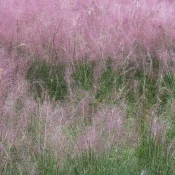
Yes! What about a pink or purple grass? Or something that looks blue in the spring?
Where is bottlebrush grass native?
Bottlebrush grass is native to half of North America, from Nova Scotia to the Midwest United States.
Where can I find bottlebrush grass?
We are not going to lie and say that finding this native grass hero is going to be as simple as driving to your closest plant nursery. It might take a little extra energy to find, but it is worth it! Here are some recommendations for sourcing this native plant:
Where can I find seeds and plants?
Finding native plants can be challenging (we partly blame Marie Antoinette.) To make it easier, we’ve assembled four sourcing ideas.
300+ native nurseries make finding one a breeze
Explore 100+ native-friendly eCommerce sites
Every state and province has a native plant society; find yours
Online Communities
Local Facebook groups are a great plant source
What are good pairings for bottlebrush grass?
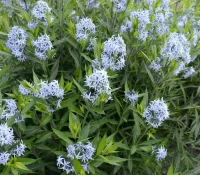
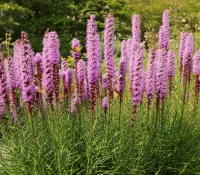
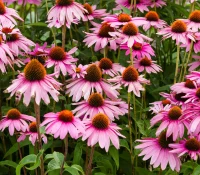
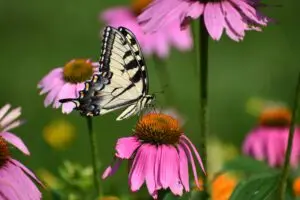
It depends on the light conditions you’re pairing it with. You can pair with sun or part-sun lovers like blazing star and purple coneflowers, or go with a part-sun pairing like amsonia.

Pairs well with
Bottlebrush grass is one of the easiest wins for shady suburban yards. It brings texture where flowers struggle, thrives in tree-root chaos, and makes every breeze visible. If you’ve been staring at a dry, lifeless patch of shade and wondering what could possibly survive there, bottlebrush grass may be the plant that finally changes the story. Interested in meeting some other native grasses? Head over to our Beginner’s Guide to Native Grasses and Sedges. Or, head over to another stellar shade favorite with our Beginner’s Guide to Heuchera. Happy planting!
Sources
- Drugs.com. “Boneset Uses, Benefits & Side Effects Herbal Database,” n.d. https://www.drugs.com/npc/boneset.html.
- Missouri Department of Conservation. “Thoroughworts (Bonesets),” n.d. https://mdc.mo.gov/discover-nature/field-guide/thoroughworts-bonesets.
- Britannica, T. Editors of Encyclopaedia. “Eupatorium.” Encyclopedia Britannica, September 7, 2016. https://www.britannica.com/plant/Eupatorium.
- United States Department of Agriculture, Boneset Fact Sheet (PDF).
- Georgia Southern University. “Boneset | Facilities Services” January 3, 2020. https://www.georgiasouthern.edu/finops/facilities/landscape-services/arboretum/major-collections/physic-garden/boneset/.
- “Eupatorium Perfoliatum (American Boneset, Boneset, Bonset, Feverwort, Thoroughwort).” North Carolina Extension Gardener Plant Toolbox, n.d. https://plants.ces.ncsu.edu/plants/eupatorium-perfoliatum/.
- Clayton, John. Virginia Native Plant Society. “Boneset – August 2016 Wildflower of the Month.” https://vnps.org/johnclayton/2016/09/13/boneset-august-2016-wildflower-of-the-month/.
- Wikipedia contributors. “Mithridates VI Eupator.” Wikipedia, July 26, 2024.
- Jersey-Friendly Yards. “Eupatorium Perfoliatum,” November 16, 2021.
- Tallamy, Doug. University of Delaware, “20 Most Valuable Woody and Perennials Native Plant Genera in Terms of Supporting Biodiversity in the Mid-Atlantic Region.”
- National Wildlife Foundation. “Plant Information – Native Plants Finder,” 2015.
- Butterfliesandmoths.org. “Ruby Tiger Moth Phragmatobia Fuliginosa (Linnaeus, 1758) | Butterflies and Moths of North America,” 2024.
- Butterfliesandmoths.org. “Clymene Moth Haploa Clymene (Brown, 1776) | Butterflies and Moths of North America,” 2025.