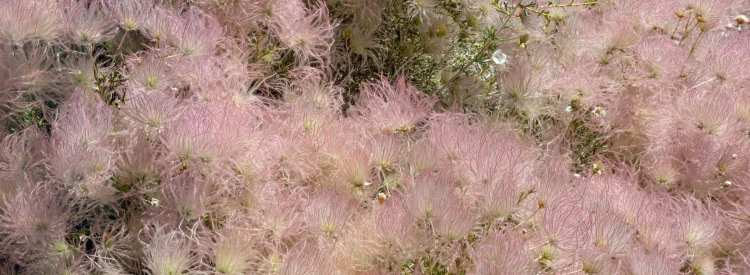
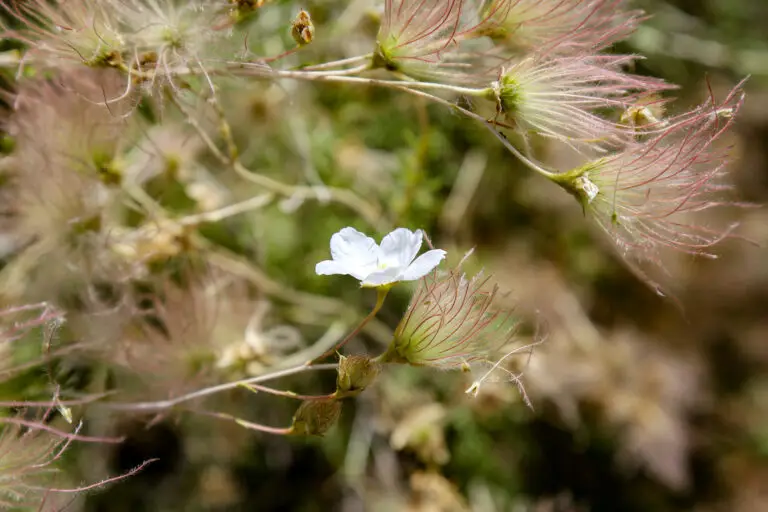
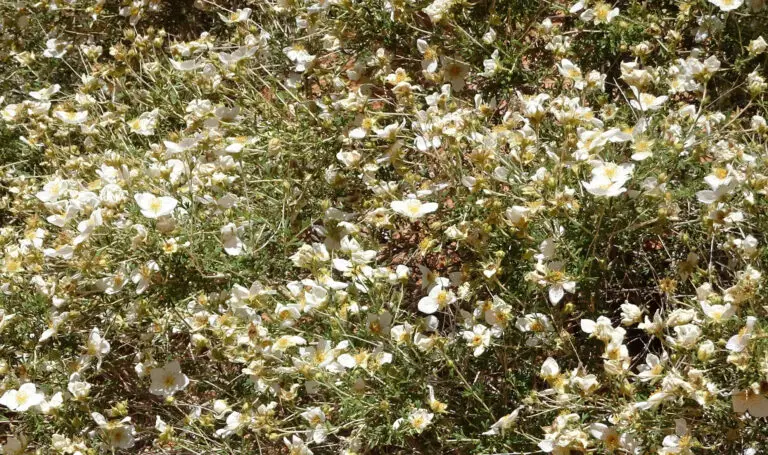
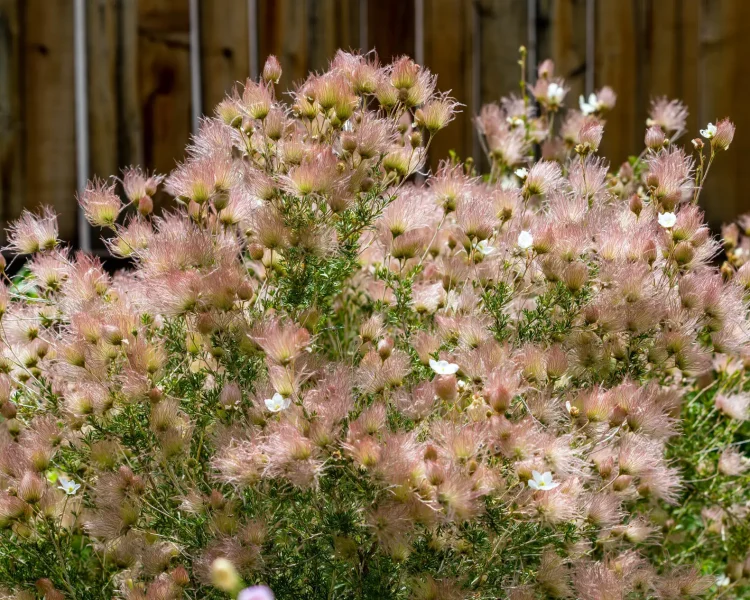
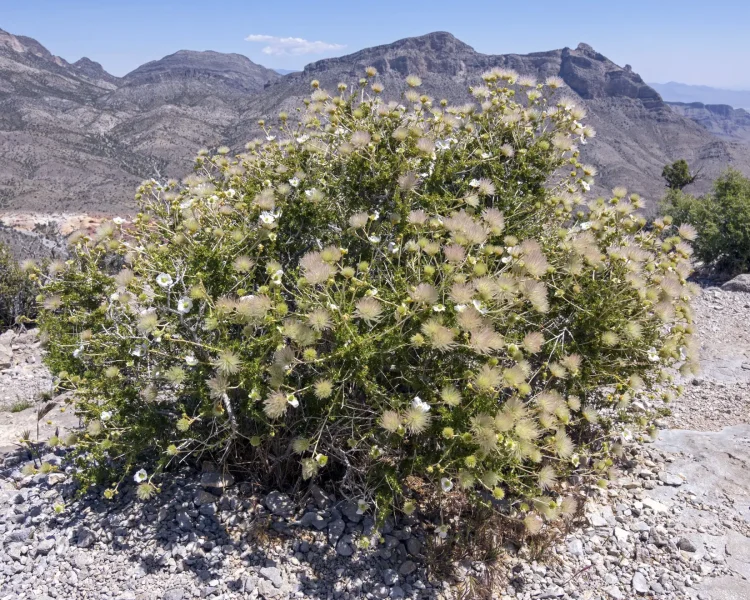
Apache plume is a tough, sun-loving native shrub with white, rose-like flowers in spring and early summer, followed by its signature fluffy pink seed “plumes” that glow in the landscape. It’s built for dry washes, slopes, and rocky soils and it bounces back fast after pruning. If you’re gardening in the Southwest and want a plant that looks dramatic without asking for extra water, this one belongs on your shortlist.
Is Apache plume a good choice for my yard?
Yes, if…
- You have full sun and you want a shrub that can handle real heat.
- Your soil is rocky, sandy, or “meh” and you don’t want to baby it.
- You want a native that changes dramatically throughout the seasons: spring flowers, summer plumes, evergreen foliage.
- You’re planting a slope, edge, or tough spot and want roots that hold.
- You’re okay with a shrub that can spread and fill in over time.
Why Apache plume matters
- Drought-ready: Adapted to dry landscapes and coarse soils.
- Pollinator support: Flowers attract native bees and other insects in bloom season.
- Rebounds after disturbance: A vigorous resprouter that can come back after fire or a hard pruning.
- Erosion helper: Useful on slopes and washes where soil movement is the norm.
- Time-saver: Once established, it’s a low-water, low-fuss shrub.
Where it grows naturally
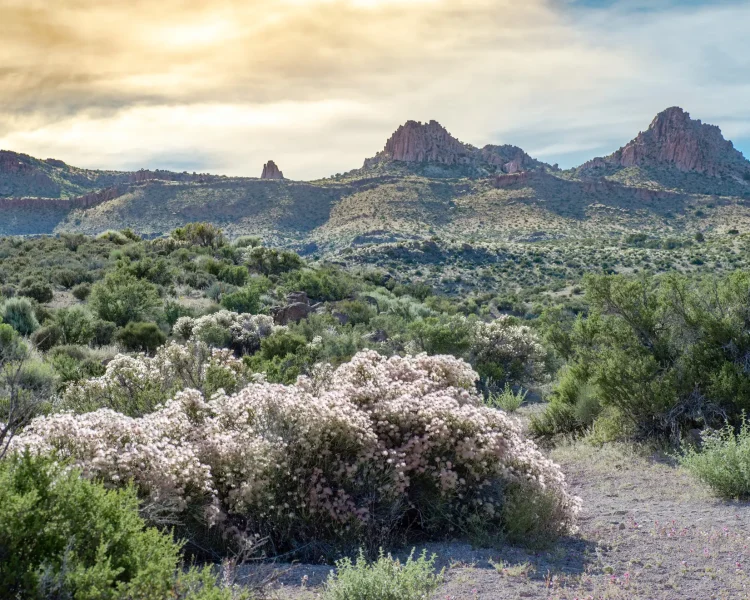
In the wild, Apache plume is a classic plant of washes, canyons, benches, and desert scrub, often on coarse soils where water moves through quickly instead of sitting around. You’ll also see it in desert shrub communities and into pinyon–juniper country.
In a yard, that looks like sunny slopes, rocky borders, dry edges, and “nothing grows here” spots that bake all summer.
How to grow Apache plume
There are a few things to note as you consider planting Apache plume in your yard:
- Give it sun. Full sun is where it performs best.
- Prioritize drainage. It’s adapted to places where water passes through. Occasional storm runoff is fine, but avoid soggy, constantly wet soil.
- Water to establish. Regular water the first season helps roots settle. After that, taper down.
- Prune for shape or to keep it small (or don’t.) You can keep it compact and encourage fresh growth by pruning in the winter, or let it sprawl naturally.
- Know it can spread. Apache plume can form thickets over time, especially in the right conditions. Plant it where it has room.
A love letter (and caution) about Apache plume seeds
Those fluffy, otherworldly seed plumes act a lot like desert dandelions. Apache plume seeds are built for wind dispersal.
These plume-like styles have evolved to work very well. Translation: if you plant Apache plume, expect a few volunteers to pop up nearby. Think of it as the plant doing what it’s always done: finding open ground and settling in.
If it spreads more than you’d like:
Seedlings are easy to pull when young, especially after rain. You can also trim off the plumes before they fully dry if you want to limit self-seeding (but you’ll lose the puffy look!) Planting Apache plume where it has room to wander is the simplest fix.
A genus of one, with a midwestern dupe
Apache plume belongs to the genus Fallugia, and it’s a genus of exactly one. While most native plant genera in North America include dozens—or even hundreds—of species, Fallugia contains a single plant: Apache plume (Fallugia paradoxa).
That doesn’t mean Apache plume’s look is unique. If you garden east of the Rockies, Apache plume may remind you of prairie smoke (Geum triflorum). It’s a much smaller native plant, but it shares the same airy, feathery seedheads. Different plants, different climates, but same stop-you-in-your-tracks visual idea, shaped by place.
Where is Apache plume native?
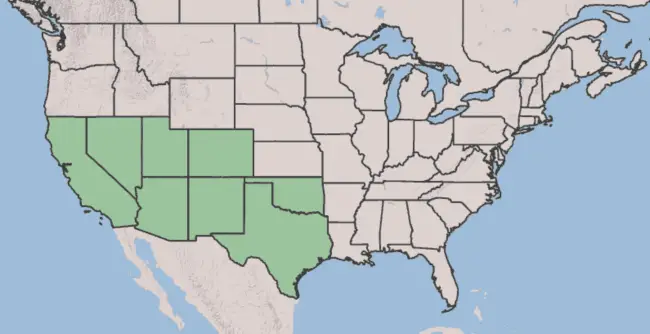
Apache plume is native across the Southwestern United States and northern Mexico.
Where Apache plume shines in your yard
Apache plume is a standout for hot, bright, low-water landscapes. Use it to anchor a dry border, stabilize a slope, or add texture where you want year-round structure without irrigation guilt. The spring flowers read sweet up close; the summer plumes bring the drama from across the yard.
It also plays well in “desert modern” yards where you want softness and movement without turning your hose into a lifestyle.
Where can I find Apache plume?
Thankfully, many native nurseries in the Southwest carry this plant! (Skip the big-box nurseries, though…they can often treat their stock with no-go pesticides and herbicides.) If you live in California, CalScape lists 18 nurseries that carry Apache plume. If you’re elsewhere, here are some trusted sources for finding this Southwestern native gem for your yard:
What are good pairings for Apache plume?
So glad you asked. Pair this desert showstopper with other natives that love the full sun, lots-of-drainage environment. Some recommendations include:
And that wraps up our beginner’s guide to Apache plume. This is one of those plants that makes a sun-soaked yard look intentional and otherworldly. Give it sun, give it space, and let it do what it evolved to do over thousands of years: bloom, plume, and keep going when everything else taps out. Where to next? Can we recommend our Beginner’s Guide to Native Penstemons or our Beginner’s Guide to Rubber Rabbitbrush? Happy planting!