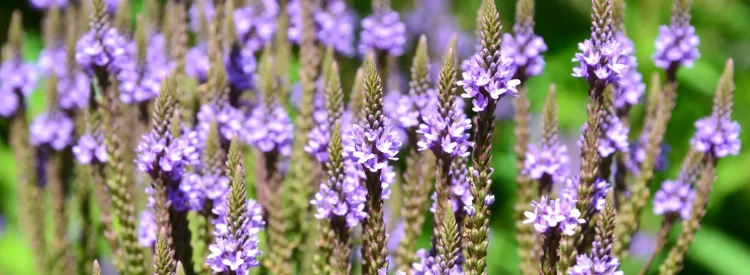
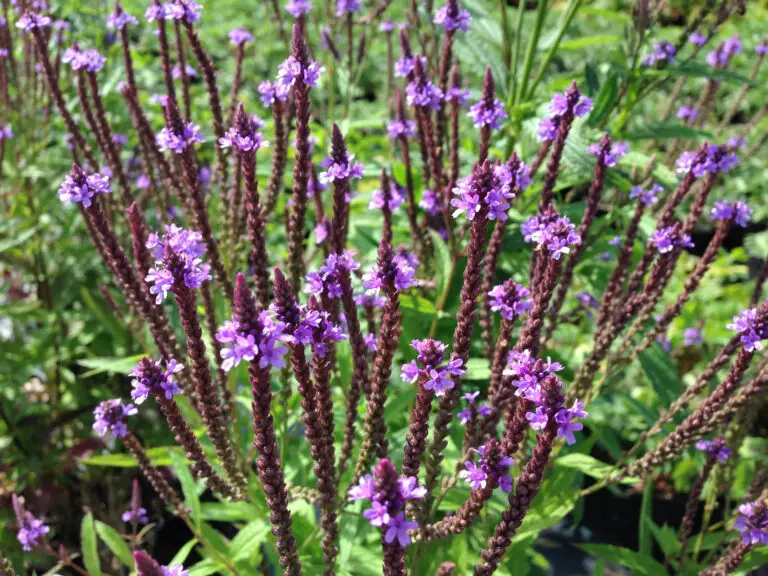
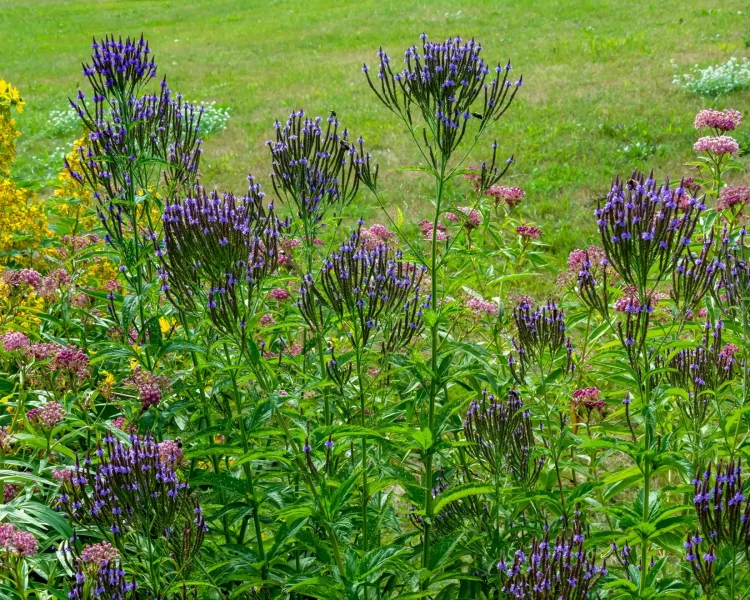
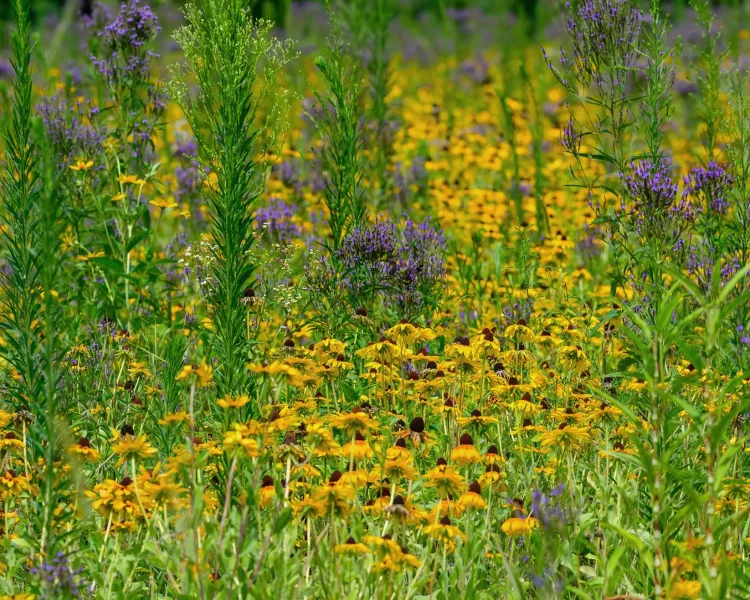
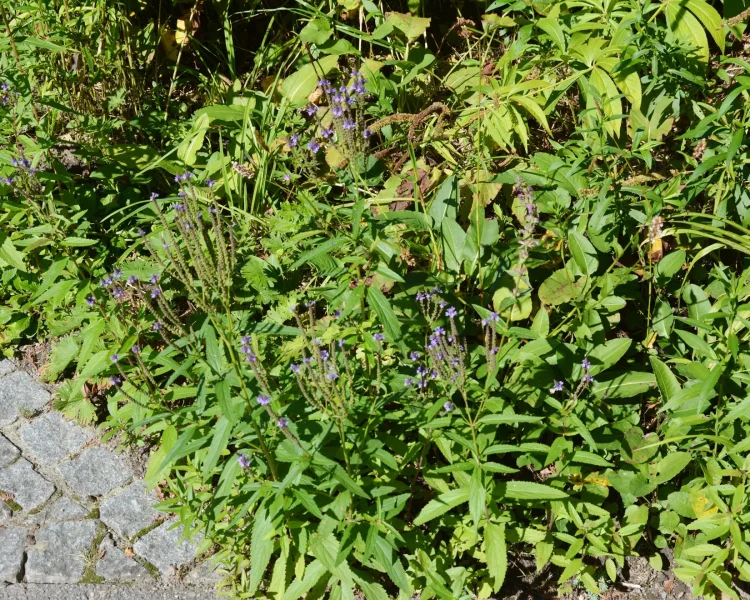
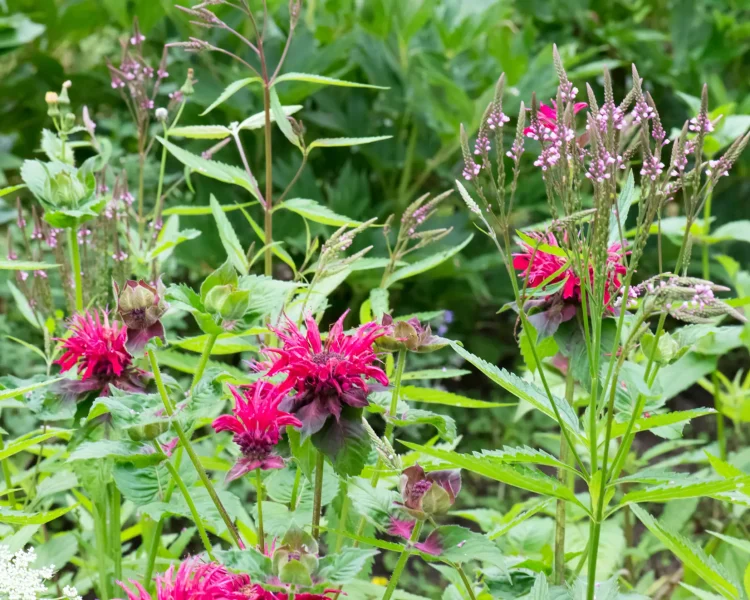
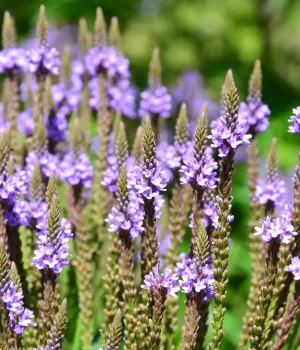
Blue vervain is a tall, graceful, easy-to-grow native plant that has pretty purple flowers on candelabra-like stems. If you’re looking for a plant that is an absolute bonanza for endangered native pollinators, and is guaranteed to make your neighbors ask What is that flower?, read on to learn more about blue vervain.
What is blue vervain?
Blue vervain is one of the coolest flowers you never see around. It’s native to a large swath of the US, including the Northeast, Midwest, Great Plains, and parts of the West—see if it’s native to your area here. It likes moist soil, so in the wild it is often found around ponds or streams.
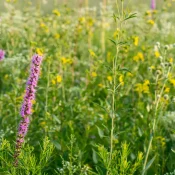
With lovely purple flowers in summer in an interesting candelabra shape, blue vervain would be beautiful even if it wasn’t also a superstar for wildlife. Pollinators love to visit the flowers, and birds love the seeds.
Why grow blue vervain?
Four great reasons:
Blue vervain is pretty. The blue-violet flowers appear in July and bloom from the bottom up, lasting for a month or more. After it’s done blooming, the stalks stick around as an interesting vertical accent in fall and winter.
Blue vervain is a high-value wildlife plant. The flowers are rich with nectar and can feed many native bees, several of which are endangered. (In fact, the nectar is so good that there’s a species of bee that only feeds on Blue Vervain and its cousins). And after it’s done flowering, the seeds are eaten by many birds, including cardinals and juncos.
It’s deer resistant! Blue vervain is very unappetizing to most mammals.
And one more reason to plant…
It’s a host plant for a beautiful butterfly
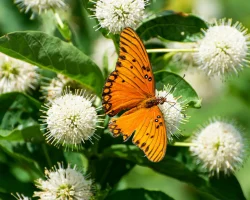
The buckeye butterfly depends on this plant as a caterpillar—it’s their equivalent of milkweed for monarchs.
Where is blue vervain native?
Blue vervain has one of the most enormous native ranges of any native plant. Gardens from Canada to almost all of the continental United States can plant this plant.
How to grow blue vervain
- Light: Full sun to part sun
- Soil: Moist to wet; tolerates temporary flooding
- Water: Keep consistently moist, especially the first year while getting established
Blue vervain is happiest in naturally damp spots—but it will also grow in average soil as long as it doesn’t completely dry out.
Where blue vervain shines in your yard
You can buy blue vervain as a plant, but you can also easily grow it from seed. Just sprinkle the seeds in the soil in late winter or early spring.
Here are some ideas for where to plant it…
- Blue vervain is an excellent candidate for a rain garden or around a pond.
- It’s a perfect addition to a cottage-style garden or meadow.
- Plant it anywhere you’ve had trouble with deer eating your plants.
- Use it to add a nice vertical aspect to gardens.
- Add it to a pollinator or songbird garden.
Blue vervain plays the long game
Blue vervain is quietly strategic. Each flower spike is packed with dozens of tiny flowers that open from the bottom up, not all at once. This staggered bloom stretches nectar availability over weeks instead of days, making it a reliable food source for pollinators during the height of summer.
It’s also a prolific seed producer. In the wild, blue vervain often shows up in disturbed soils—floodplains, ditches, old fields—because its seeds are ready to take advantage of open ground. That combination of extended bloom time and steady reseeding is why it’s so good at holding space and feeding insects year after year.
Where can I get blue vervain?
It’s not always as easy as it should be to find native plants (though things are getting better all the time). To help you, we’ve compiled a list of sources:
What are good pairings for blue vervain?
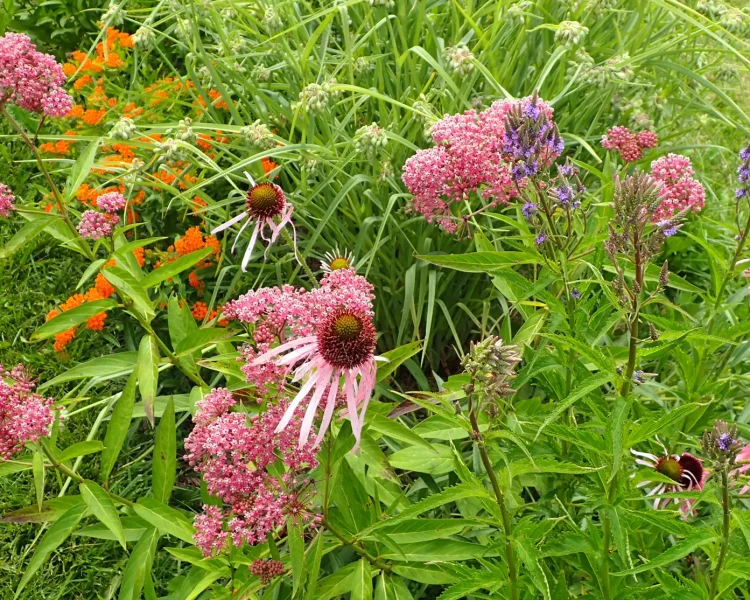
Blue vervain goes wonderfully with other moist-soil-loving native flowers. It’s great paired with swamp milkweed, or if you want to extend how long your garden is in bloom, Virginia iris—blue vervain will bloom after the iris is done. And here are more ideas for plants to fill out your rain garden.
We hope you’ve enjoyed this guide to blue vervain, a pretty native flower that deserves to be grown more often. If you have wet soil or are putting together a rain garden, it’s the plant for you. For more ideas, check out our guide to Native plants for a rain garden, or find more host plants for butterflies. Happy planting!