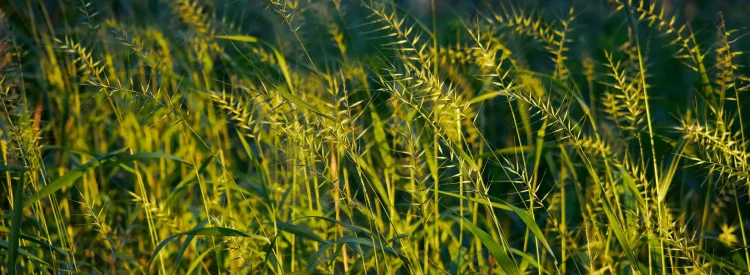
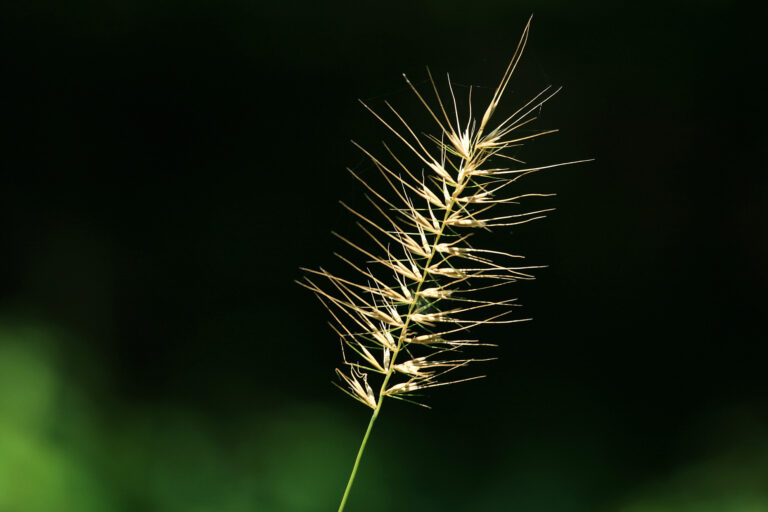
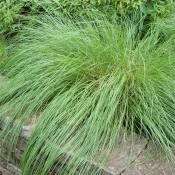
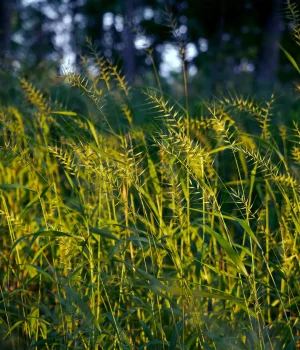
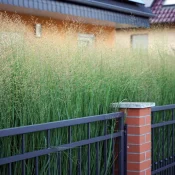
Bottlebrush grass is a cool-season native grass that thrives in dry shade—yes, even those under-tree, root-heavy, lawn-failure zones. Its tall, airy bottlebrush-shaped seedheads glow in summer and fall, adding movement and texture where color can be hard to come by. It’s architectural, low-maintenance, and one of the easiest native grasses you can grow.
Where it grows naturally
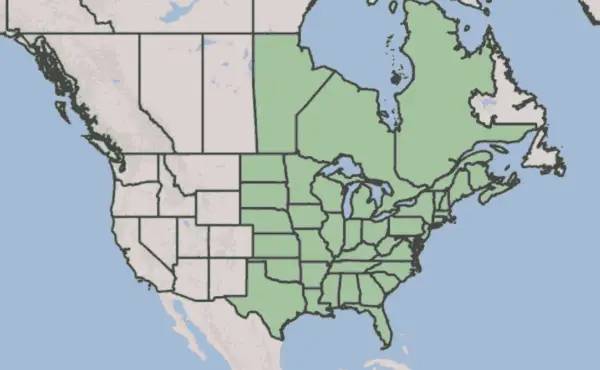
In the wild, bottlebrush grass grows along woodland edges, dry slopes, and open forests. You’ll spot it in dappled shade under oaks, hickories, and maples, where soil is thin and moisture is inconsistent. It often appears alongside woodland perennials, such as wild geranium, zigzag goldenrod, and white woodland asters—plants that thrive in the filtered light of mature trees.
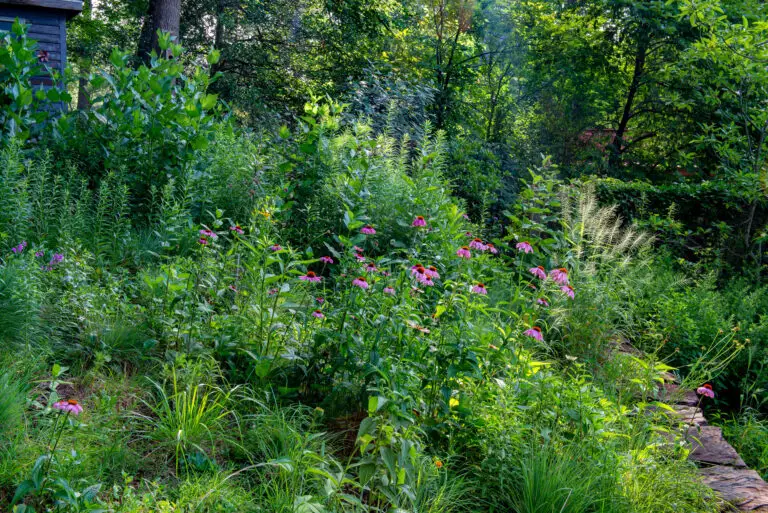
Translating that to a yard: think under trees, beside sheds or fences, along shady side yards, or in any spot where turf grass refuses to survive. Plant bottlebrush grass there and you’re recreating the open woodland community it naturally belongs to.
Where bottlebrush grass shines in your yard
Bottlebrush grass is a shade hero. It handles dry, compacted soil that makes most plants sulk, and it’s one of the few native grasses that actually prefers part shade. Use it to bring height and movement to woodland gardens, soften the edges of shaded patios, or add structure under trees where you need something taller than groundcovers but not overwhelming.
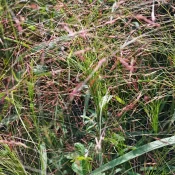
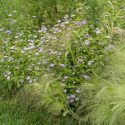
In summer and fall, the pale-green seedheads angle outward like tiny bottlebrushes, catching light and bringing subtle drama to areas that tend to look flat or dark. Leave them standing through winter for texture (and for wildlife).
Where can I find bottlebrush grass?
We are not going to lie and say that finding this native grass hero is going to be as simple as driving to your closest plant nursery. It might take a little extra energy to find, but it is worth it! Here are some recommendations for sourcing this native plant:
Bottlebrush grass is one of the easiest wins for shady suburban yards. It brings texture where flowers struggle, thrives in tree-root chaos, and makes every breeze visible. If you’ve been staring at a dry, lifeless patch of shade and wondering what could possibly survive there, bottlebrush grass may be the plant that finally changes the story. Interested in meeting some other native grasses? Head over to our Beginner’s Guide to Native Grasses and Sedges. Or, head over to another stellar shade favorite with our Beginner’s Guide to Heuchera. Happy planting!