Salvias (sometimes also called ‘sages’) are one of those plant groups that feel familiar even if you don’t know their name. Spiky flowers. Buzzing bees. Leaves that smell incredible when you brush past. Salvia is an enormous genus that includes ~1000 species found worldwide, including dozens of options native to North America. Scroll on to meet some native salvias perfect for your garden.
Why this genus punches so far above its weight
What makes salvias special is how much they do with so little. Most native salvias are sun-loving, drought-tolerant once established, and absolutely loaded with pollinator value. They’re also wildly diverse, ranging from low, spreading plants to shrub-sized anchors, which makes them easy to slot into all kinds of yards.
If you’re new to native plants and want something reliable, showy, and low-fuss, salvias are an excellent place to start.
Salvia…or sage?
Salvia is the botanical genus but sage is the common name used for many of the native North American salvias.
Feeling a little confused? We felt the same way. To make sure you’re looking at a native, North American salvia, look at the Latin botanical name. Every plant has only one Latin name. Scroll on to meet some native salvias with their singular Latin names.
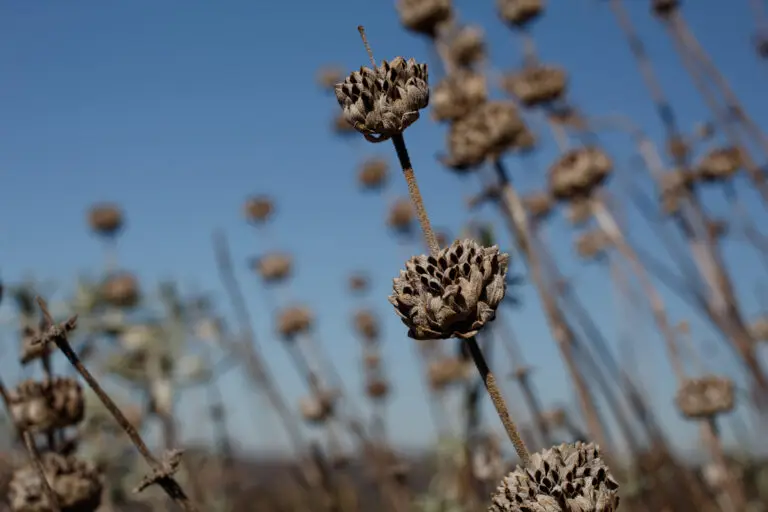
Why native salvias matter
- Pollinator powerhouses: Salvias are especially important for bees, including larger native bees that need sturdy flowers. Many species are also visited by butterflies and hummingbirds.
- Built for heat: Most native salvias evolved in sunny, dry conditions and don’t need constant watering once established.
- Long bloom windows: Many bloom for weeks (or months), not days.
- Design-friendly: Spikes, mounds, and shrubs all exist within this one genus, which makes mixing and matching easy.
New to native?
Before lawns and landscaping, native plants were here. They’ve fed birds, bees, and butterflies for thousands of years—and they’ll do the same in your yard. The best part? They’re easier to grow than you think.
Native salvias for the West
There’s no doubt—Western gardeners are spoiled for choice when it comes to Salvia species. You’ll find flowers in all colors and sizes.
Most salvias/sages love to be dry and hot—in fact, you can easily kill desert salvias by watering them too much. After the first year, most sages shouldn’t get watered in summer at all.

White Sage
Salvia apiana
Best for: Southern California
White sage is a silvery, aromatic shrub native to Southern California and Baja California. It thrives in full sun and fast-draining soil and sends up tall flower stalks in late spring and summer that are buzzing with life. This is a plant that wants you to water it to get established, then leave it alone.
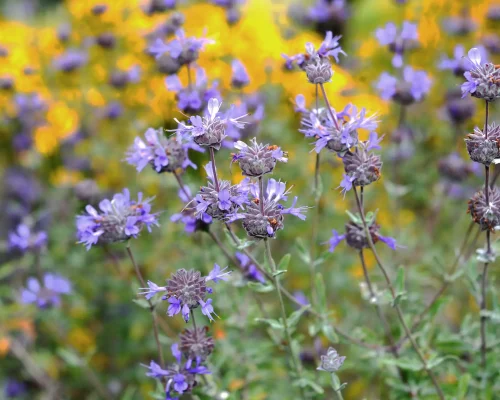
Purple Sage
Salvia leucophylla
Best for: California coastal and foothill regions
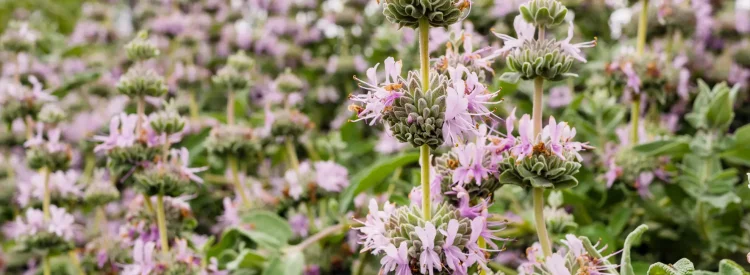
Purple sage is a tough, spreading shrub with pale purple flowers and soft gray-green leaves. It’s a classic plant of coastal sage scrub and works well on slopes and larger spaces where it has room to spread. Bees love it. So do gardeners who don’t want to hover.

Autumn Sage
Salvia greggii
Best for: Southwest, Texas, and warm inland regions
Autumn sage is smaller and more compact than white or purple sage, with bright red, pink, or coral flowers that bloom for a long stretch. Native to parts of the Southwest, and can be evergreen in warmer climates.
Native sages for the East and Midwest
We don’t have quite as many Salvia species as the West, since salvias/sages tend to specialize in dry and hot conditions, but there are still lovely options.
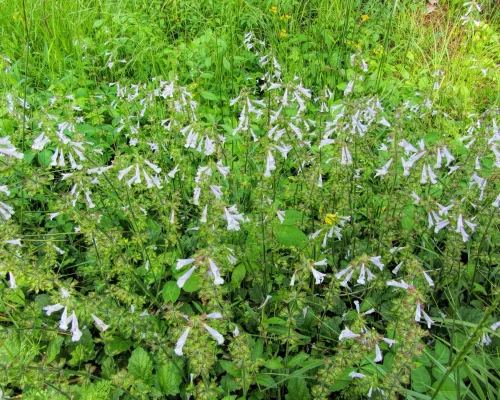
Lyreleaf Sage
Salvia lyrata
Best for: Eastern and southeastern United States
Lyreleaf sage is a low-growing native that works more like a groundcover. It has purple-tinged leaves and spring flower spikes that pop up above the foliage. According to Betsy Washington with the Virginia Native Plant Society, it makes a good substitute for the non-native groundcover bugleweed.

Blue Pitcher Sage
Salvia azurea
Best for: Southeast and Great Plains
Blue pitcher sage is a cold-hardy and easy-to-grow plant that blooms in late summer into fall, which makes it valuable to lots of butterflies, such as monarchs, looking for nectar to fuel their migrations south.
Blue pitcher sage is tall—it grows to 5 feet, so place it in the back of a flowerbed or mix it with other tall species and grasses that will hold it up. Or you can look for cultivars such as ‘Nekan,’ which only grows to 3 feet.

Scarlet Sage
Salvia coccinea
Best for: Southeastern United States
Scarlet sage is a short-lived native with bright red flowers that bloom over a long stretch of summer. It thrives in sun to part sun, handles heat and humidity, and readily self-seeds, making it an easy way to add color and pollinator support.
And there’s more…
Dozens of salvias are native to North America. Here’s several more, along with the five we just met:
Salvias native to North America
| Common name | Latin name | Native region(s) | Typical height |
|---|---|---|---|
| Black sage | Salvia mellifera | California | 3–5 ft |
| Hummingbird sage | Salvia spathacea | California | 1–3 ft |
| Purple sage | Salvia leucophylla | California | 3–5+ ft |
| Thistle sage | Salvia carduacea | California | 1–3 ft |
| Cleveland sage | Salvia clevelandii | Southern California | 3–5 ft |
| White sage | Salvia apiana | Southern California | 3–6 ft |
| Desert sage | Salvia dorrii | Great Basin and interior West | 2–3 ft |
| Chia | Salvia columbariae | Western United States | 1–2 ft |
| Autumn sage | Salvia greggii | Southwest and Texas | 2–4 ft |
| Mealycup sage | Salvia farinacea | South-central United States | 2–3 ft |
| Azure blue sage | Salvia azurea | Central United States | 3–5 ft |
| Blue sage (lanceleaf sage) | Salvia reflexa | Central United States | 1–2.5 ft |
| Lyreleaf sage | Salvia lyrata | Eastern and southeastern United States | 1–2 ft |
| Nettleleaf sage | Salvia urticifolia | Eastern United States | 1–3 ft |
| Scarlet sage | Salvia coccinea | Southeastern United States | 2–3 ft |
Do these salvias come back every year?
If you plant salvias that are rated to survive in your climate zone, they should come back if they’re happy! Many salvias, however, are planted as annuals in northern zones, meaning they will not come back unless they drop seeds that happen to re-sprout. Scarlet sage is an example of a plant that people often plant in gardens in the North just for the summer.
Can you eat native salvias?
All Salvia species are generally regarded as technically edible, though you may want to start with just a little nibble—some are bitter or so intense that they pack a flavor wallop. Some that are commonly eaten are lyre-leaf sage and autumn sage. The leaves can be used for teas or to flavor jams, jellies, and syrups; the flowers can add a little minty surprise to salads.
What are native salvias that make good groundcovers?
Groundcovers are plants that spread easily and crowd out weeds. Many native salvias make excellent groundcovers for hot, dry areas. In the Southeast and elsewhere in the East, try lyreleaf sage.
How to choose the right native salvia
Instead of asking “which salvia is best,” ask:
- Where do I live? Look for salvias that are local to your region.
- How much sun do I actually have?
- Do I want a low plant or a shrub?
Native salvias are region-specific. A salvia that thrives in California may struggle in the Midwest, and vice versa. Local matters. (Speaking of California, Las Pilitas has a great guide to native California sages.)
Salvias have a built-in pollination trick
Salvia flowers aren’t just pretty. Many species use a lever mechanism inside the flower that dusts visiting bees with pollen when they push inside for nectar. It’s an elegant, mechanical solution evolved over millions of years, and one reason salvias are so effective at feeding pollinators.
In other words: those buzzing bees aren’t just visiting. They’re being precisely engineered into the pollination process.
Where can I find native salvias?
We are not going to lie and say that finding boneset is going to be as simple as driving to your closest plant nursery. It might take a little extra energy to find this native gem, but it is worth it! Here are some recommendations for sourcing this native plant:
Where can I find seeds and plants?
Finding native plants can be challenging (we partly blame Marie Antoinette.) To make it easier, we’ve assembled four sourcing ideas.
300+ native nurseries make finding one a breeze
Explore 100+ native-friendly eCommerce sites
Every state and province has a native plant society; find yours
Online Communities
Local Facebook groups are a great plant source
What pairs well with native salvias?
You probably already guessed the answer: it depends on where you live!
That said, there are some plants that have lots of regional options, similar to salvias. Here are some options with region-specific species:
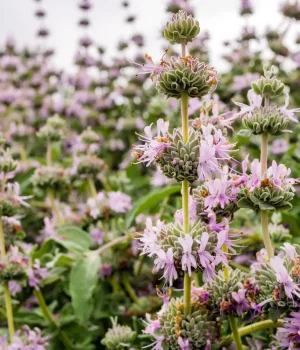
Pairs well with
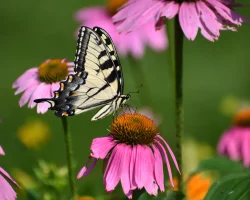
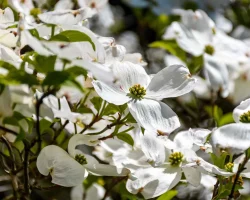
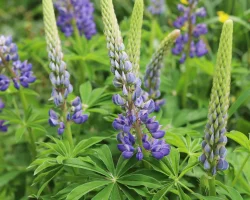
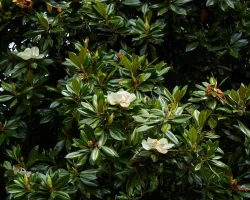
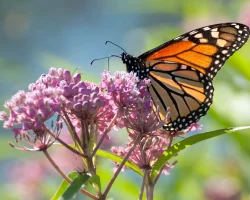
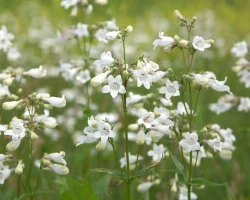
If native plants feel intimidating, salvias are proof they don’t have to be. This genus offers long blooms, real ecological value, and plants that look good without constant attention. Pick the right one for your region, plant it in sun, give it decent drainage, and let it do what it’s always done. Can we recommend visiting our Beginner’s Guide to Native Coneflowers or our Beginner’s Guide to Native Milkweed as your next stop? Happy planting!
Sources
- Claßen-Bockhoff, Regine, Thomas Speck, Elisabeth Tweraser, Petra Wester, Sabine Thimm, and Melanie Reith. “The Staminal Lever Mechanism in Salvia L. (Lamiaceae): A Key Innovation for Adaptive Radiation?” Organisms, Diversity & Evolution 4 (2004): 189–205.
- Montalvo, Arlee M., and Jan L. Beyers. Plant Profile for Salvia apiana. Native Plant Recommendations for Southern California Ecoregions. U.S. Department of Agriculture Forest Service, Pacific Southwest Research Station, and Riverside-Corona Resource Conservation District, 2010. PDF.
- Wester, Petra, and Regine Claßen-Bockhoff. “Floral Diversity and Pollen Transfer Mechanisms in Bird-Pollinated Salvia Species.” Annals of Botany 100, no. 2 (2007): 401–421.
- Zhang, Bo, Regine Classen-Bockhoff, Zhi-Qiang Zhang, Shan Sun, Yan-Jiang Luo, and Qing-Jun Li. “Functional Implications of the Staminal Lever Mechanism in Salvia cyclostegia (Lamiaceae).” Annals of Botany 107, no. 4 (2011): 621–628.
- University of California, Berkeley, and Jepson Herbaria. “Salvia.” Jepson eFlora. Accessed December 24, 2025.
- University of California, Berkeley, and Jepson Herbaria. “Salvia mellifera.” Jepson eFlora. Accessed December 24, 2025.
- University of California, Berkeley, and Jepson Herbaria. “Salvia leucophylla.” Jepson eFlora. Accessed December 24, 2025.
- Lady Bird Johnson Wildflower Center. “Salvia coccinea (Scarlet Sage).” Native Plant Information Network. Accessed December 24, 2025.
- Lady Bird Johnson Wildflower Center. “Salvia greggii (Autumn Sage).” Native Plant Information Network. Accessed December 24, 2025.
- Lady Bird Johnson Wildflower Center. “Salvia farinacea (Mealy Blue Sage).” Native Plant Information Network. Accessed December 24, 2025.
- Lady Bird Johnson Wildflower Center. “Salvia lyrata (Lyreleaf Sage).” Native Plant Information Network. Accessed December 24, 2025.
- North Carolina State University Extension. “Salvia lyrata (Lyreleaf Sage).” Plant Toolbox. Accessed December 24, 2025.
What if your feed was actually good for your mental health?
Give your algorithm a breath of fresh air and follow us.