

Highlights
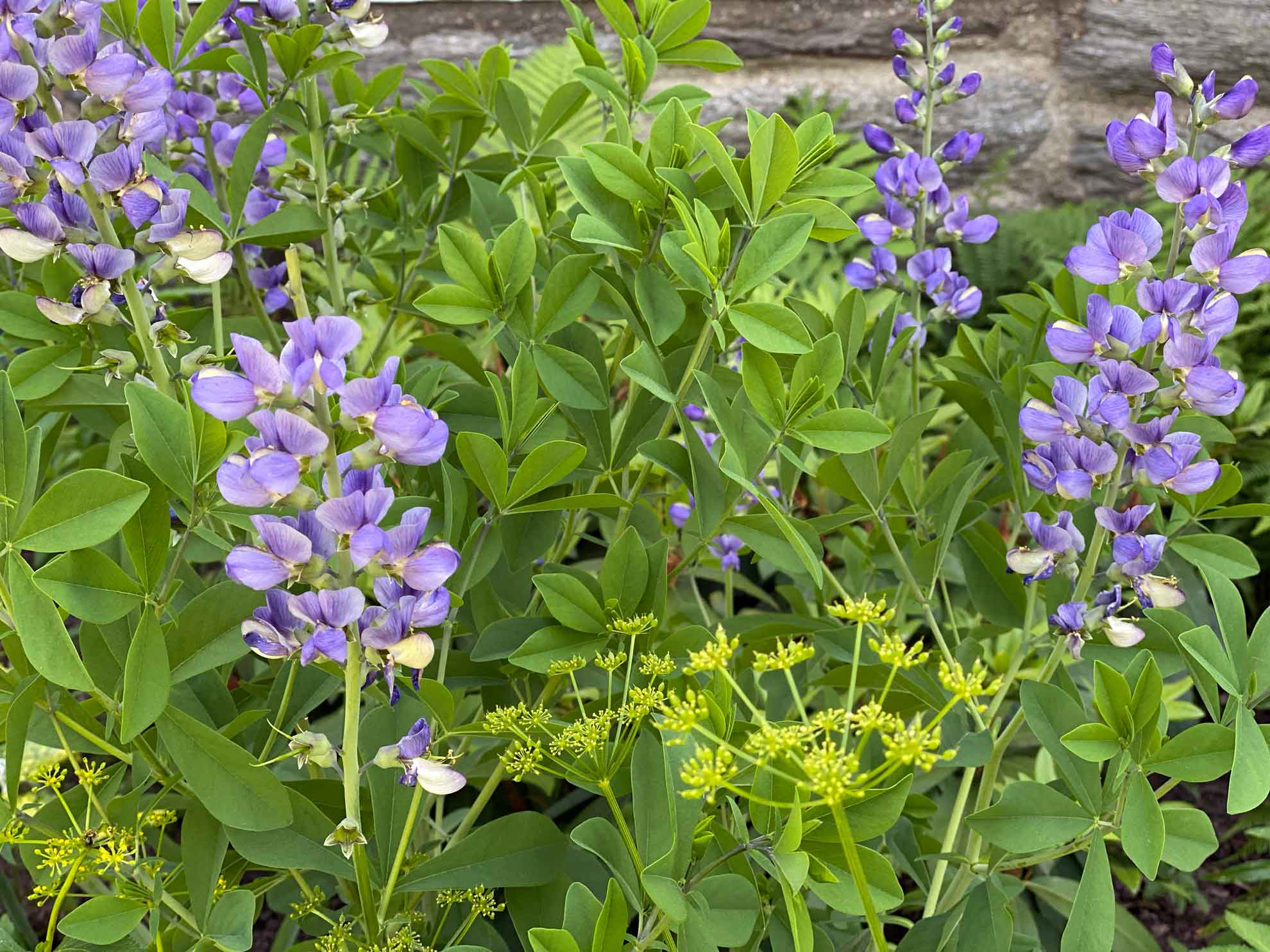
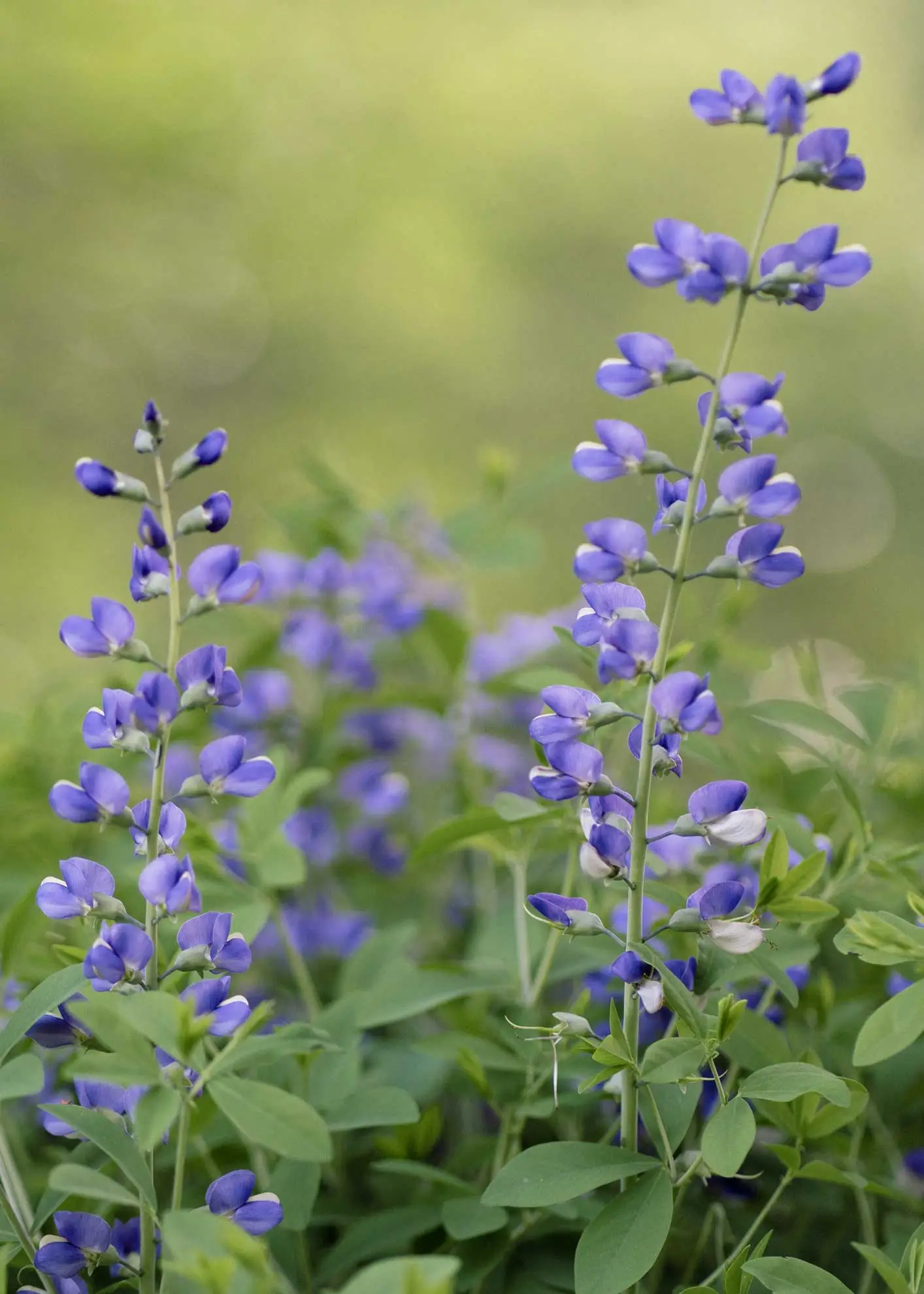
False blue indigo is one of those plants that rewards patience. It spends its first year or two growing a deep taproot, quietly storing energy underground, and then it takes off. By year three, you’ve got a 3-to-4-foot shrubby plant covered in spikes of blue-violet, pea-shaped flowers every May and June. The flowers are gorgeous in a vase. The black seed pods rattle in the wind all winter. And here’s the part you can’t see: it’s a nitrogen fixer, partnering with soil bacteria to fertilize everything around it. Deer leave it alone. It’s drought-tough once established. And it can live for decades.
Is false blue indigo a good choice for my yard?
Yes, if…
- You want a long-lived, low-maintenance plant. Once established, false blue indigo comes back bigger and better every year for decades. It barely needs water and never needs fertilizer (it makes its own).
- You want to support butterflies. False blue indigo is the host plant for the wild indigo duskywing, a small, dark skipper butterfly whose caterpillars feed exclusively on its leaves.
- You want deer resistance. Deer almost never touch it.
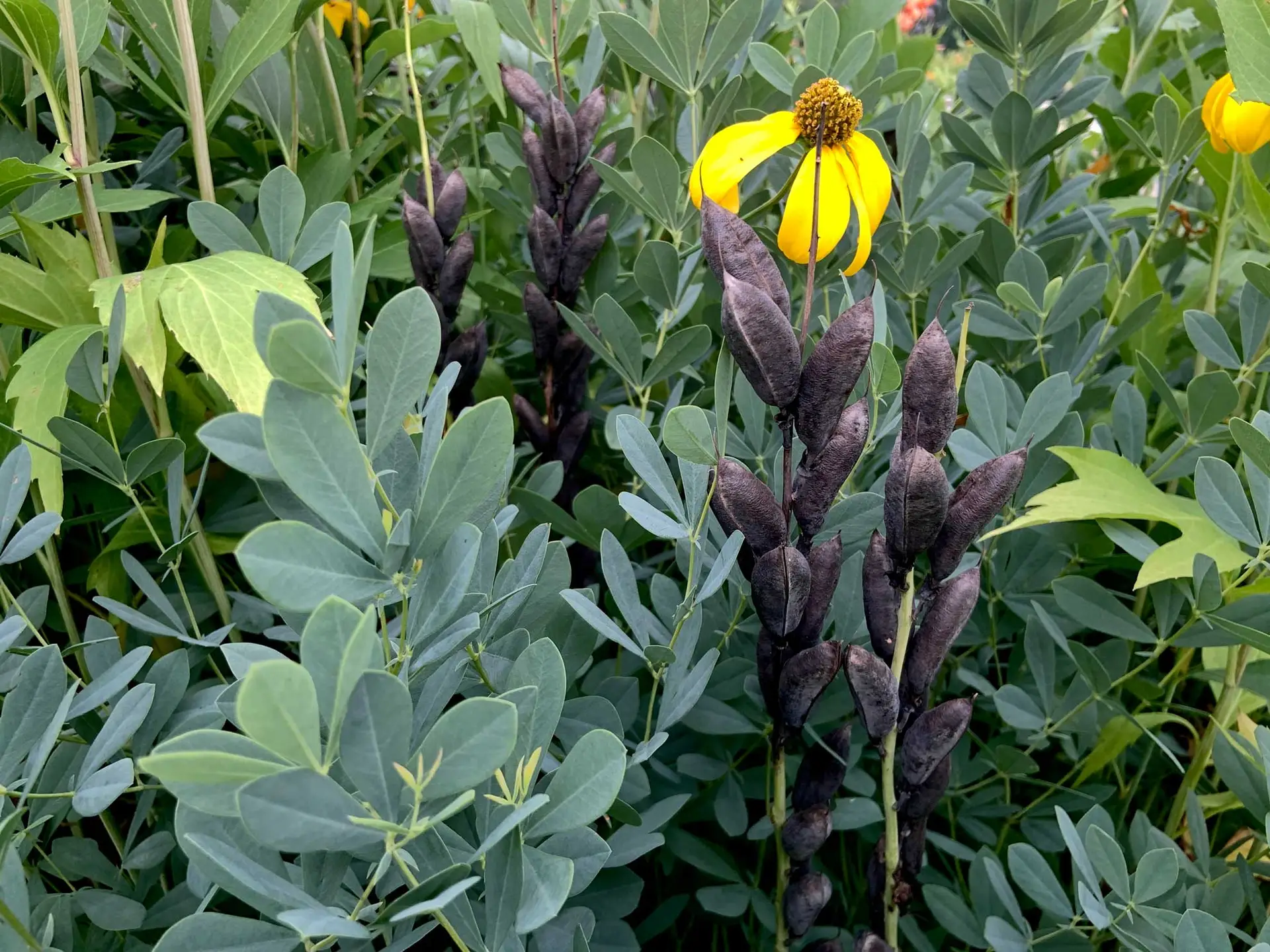
- You want spring flowers followed by winter interest. Blue-violet flower spikes in May and June, then rattling black seed pods that persist through winter.
- You want to improve your soil. The nitrogen-fixing ability means false blue indigo literally enriches the ground around it.
Skip it if…
- You want instant gratification. False blue indigo takes 2 to 3 years from seed to reach full flowering size. It’s building that massive taproot first. Buy a larger container plant if you want blooms sooner.
- You need to move plants around. That deep taproot (it can reach 12 feet) makes false blue indigo extremely difficult to transplant once established. Pick your spot carefully.
- You have wet, soggy soil. False blue indigo needs good drainage. Soggy soil will rot the roots.
The bacteria live in tiny nodules on its roots, and the whole setup works like an underground fertilizer factory, quietly feeding everything around it.
Why false blue indigo matters
It’s a nitrogen factory
False blue indigo does something most plants can’t: it converts nitrogen from the air into a form plants can use, naturally enriching the soil around it.
You might be thinking, “Can’t all plants do that?”
Nope. Nitrogen makes up 78% of the air around us, but almost no plants can use it in that form. They have to wait for it to show up in the soil instead, delivered by rain, decomposition, or a bag of fertilizer from the hardware store. Only a handful of special plants, mostly legumes (pea family), partner with Rhizobium bacteria in their roots to pull nitrogen straight out of the air.
False blue indigo is one of those plants. The bacteria live in tiny nodules on its roots, and the whole setup works like an underground fertilizer factory, quietly feeding everything around it.
It’s a home for the wild indigo duskywing
The wild indigo duskywing (Erynnis baptisiae) is a small, dark skipper butterfly that depends on Baptisia species as its host plant. The caterpillars feed on the leaves, building tiny silk shelters to hide in between meals. No false blue indigo, no duskywing.
False blue indigo also hosts frosted elfin, orange sulphur, clouded sulphur, and eastern tailed-blue butterflies. Bumble bees are the primary pollinators of the flowers. The blossoms are shaped like little pea flowers, and bumble bees are one of the few insects strong enough to pry them open.
This plant outlasts everything
False blue indigo is famously long-lived. Individual plants can live for decades in the same spot, getting larger and more flower-filled each year. The Clemson Home and Garden Information Center describes false blue indigo as “unusually long-lived perennials” that “can continue to grow and bloom for decades in the same location.”
Their taproot is the secret. It stores water and energy deep underground, making the plant nearly indestructible once established.
False blue indigo throughout the seasons
False blue indigo offers visual interest throughout the seasons:
Spring
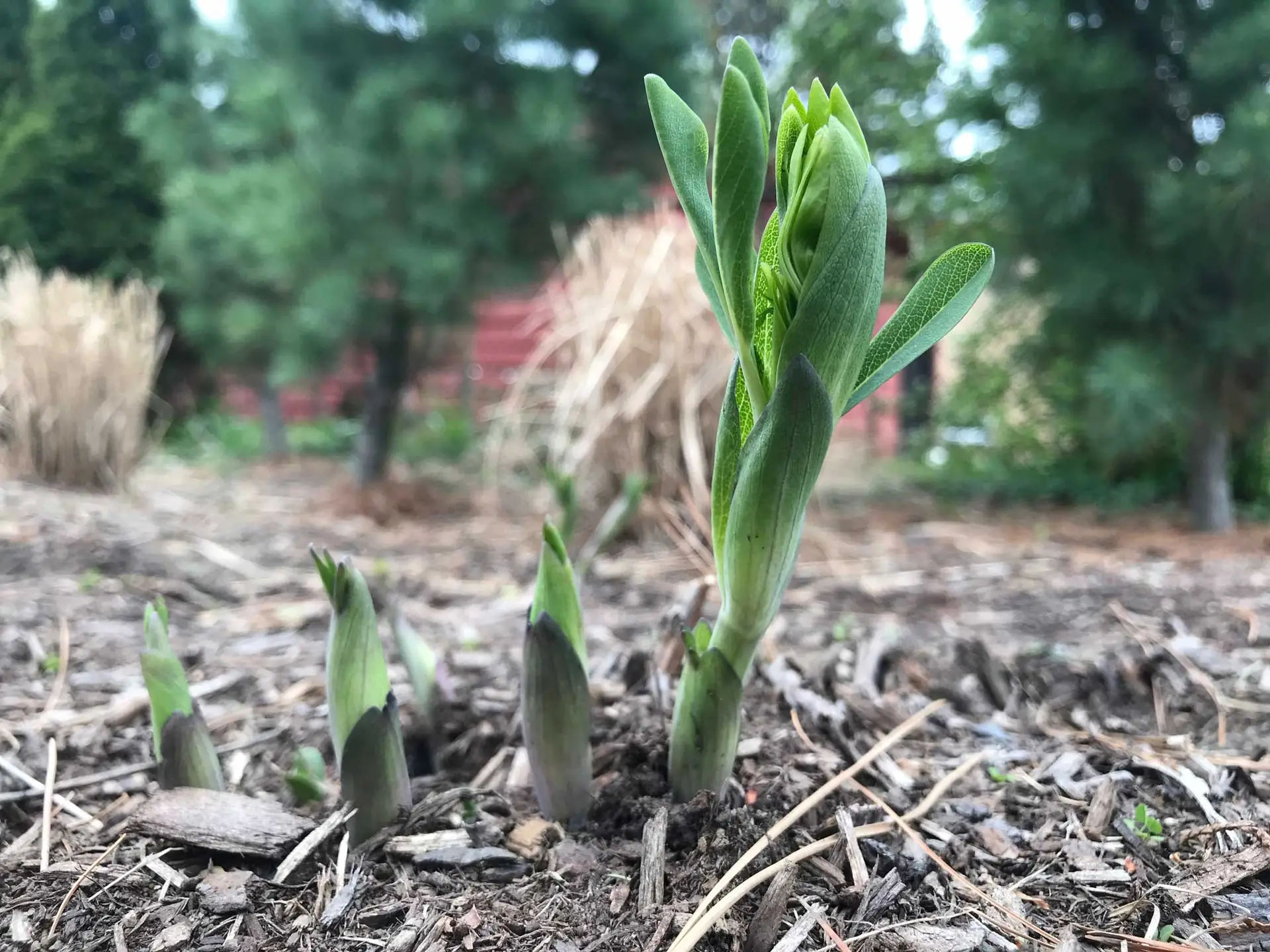
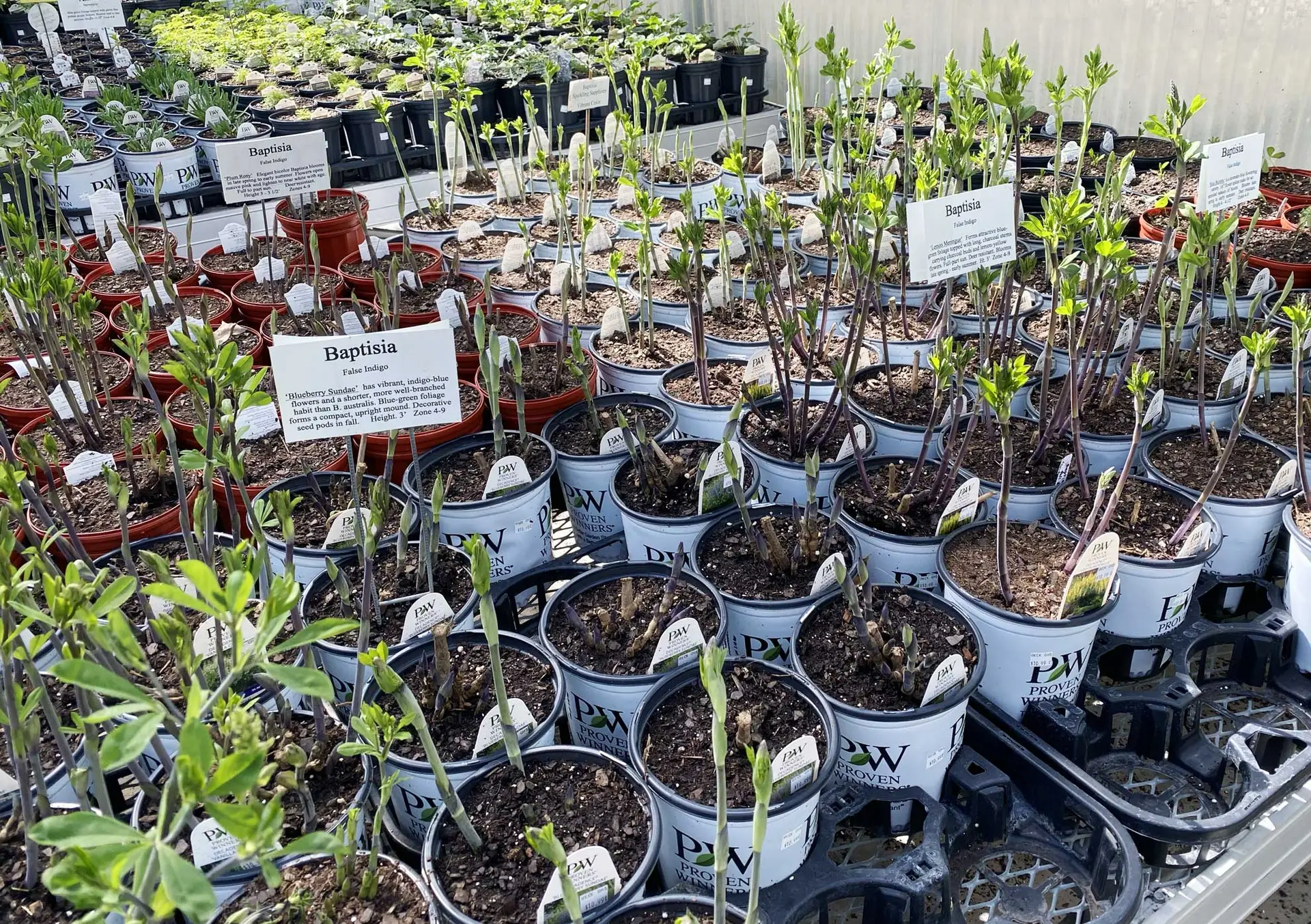
False blue indigo sends up blue-green shoots in the spring. They grow extremely fast—sometimes multiple inches in a single day. It looks similar to asparagus as it pops up.
Late-spring/early summer
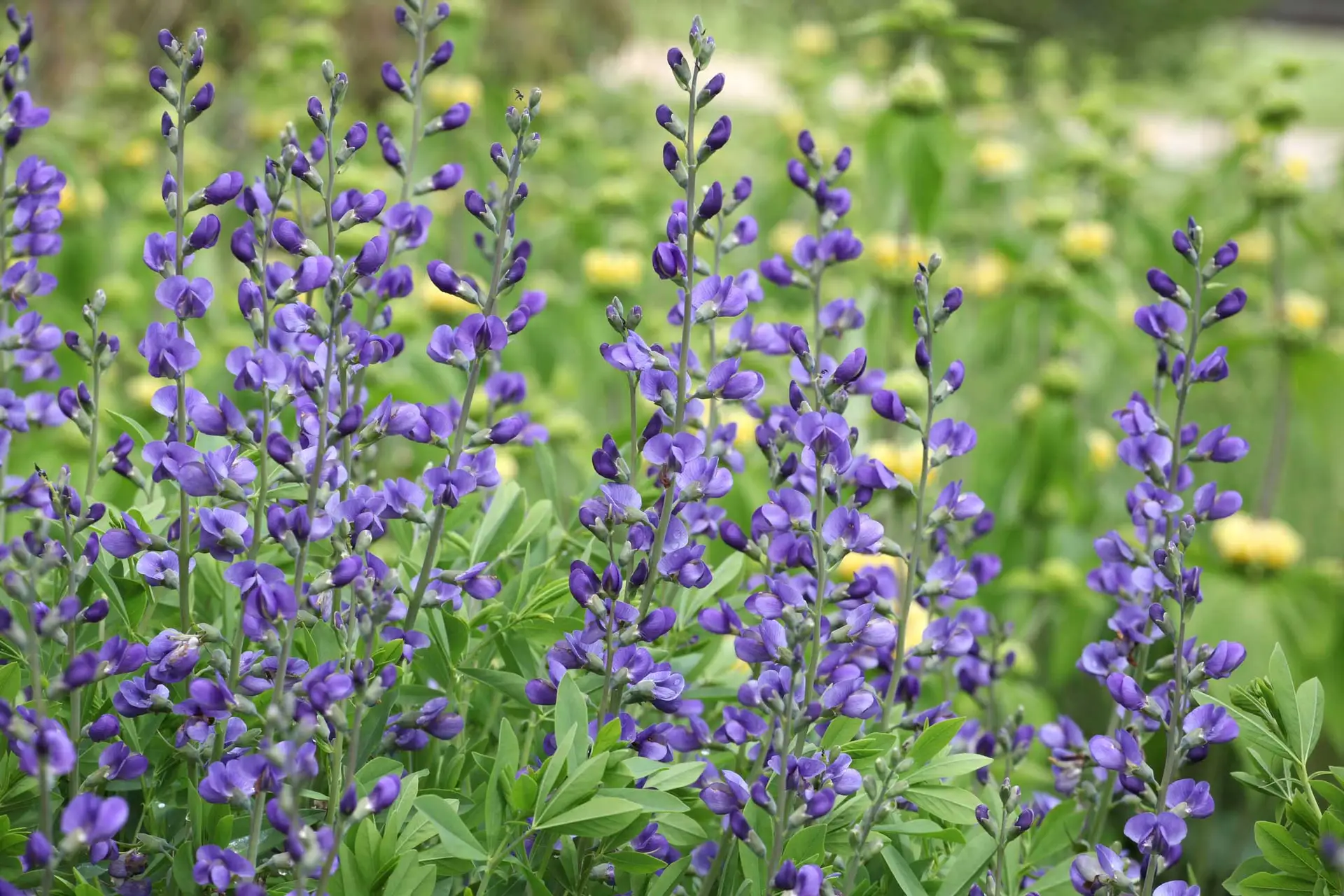
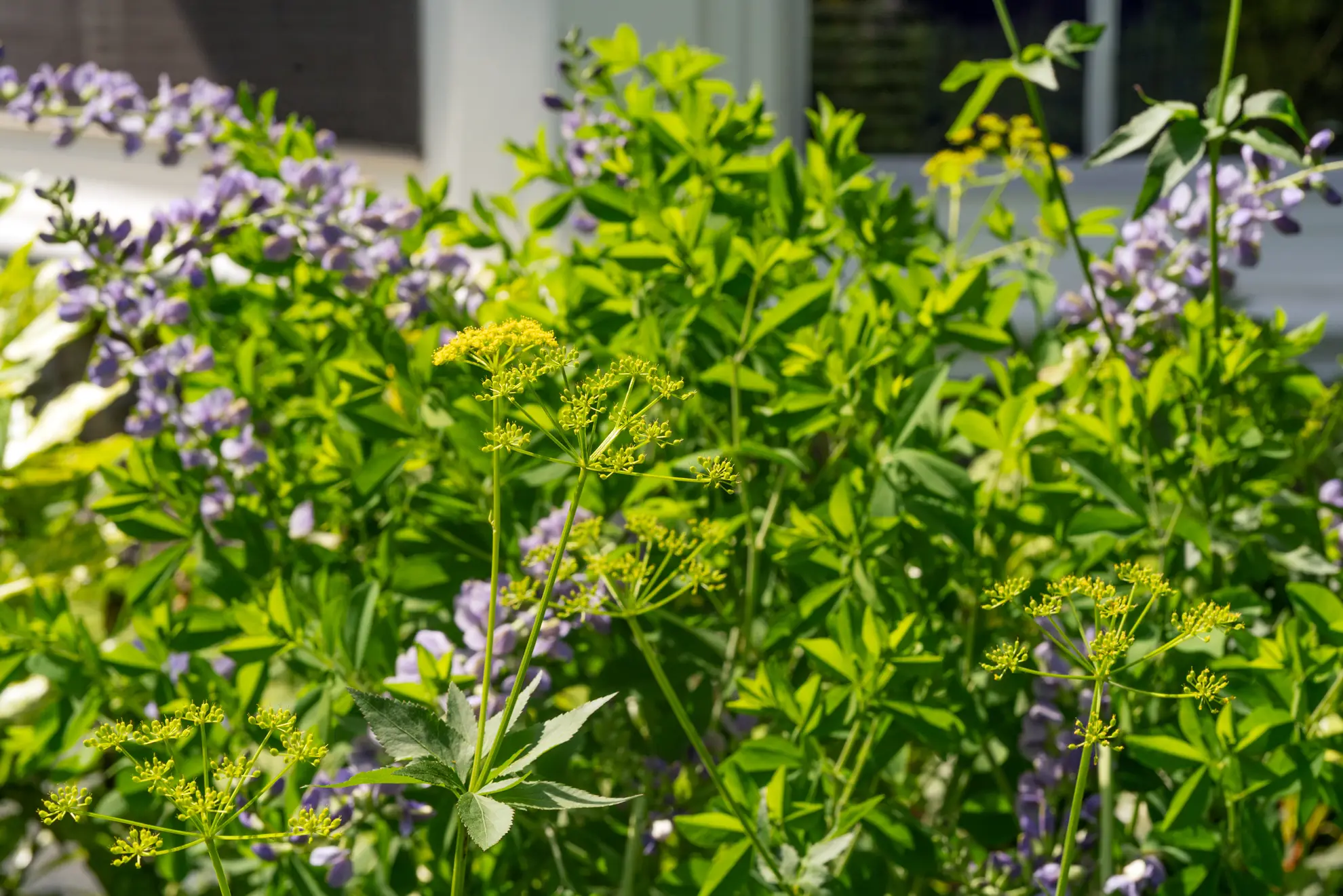
In the late spring and early summer, false blue indigo covers its tall stems in rows of flowers. They are excellent cut flowers; they will last a week in a vase.
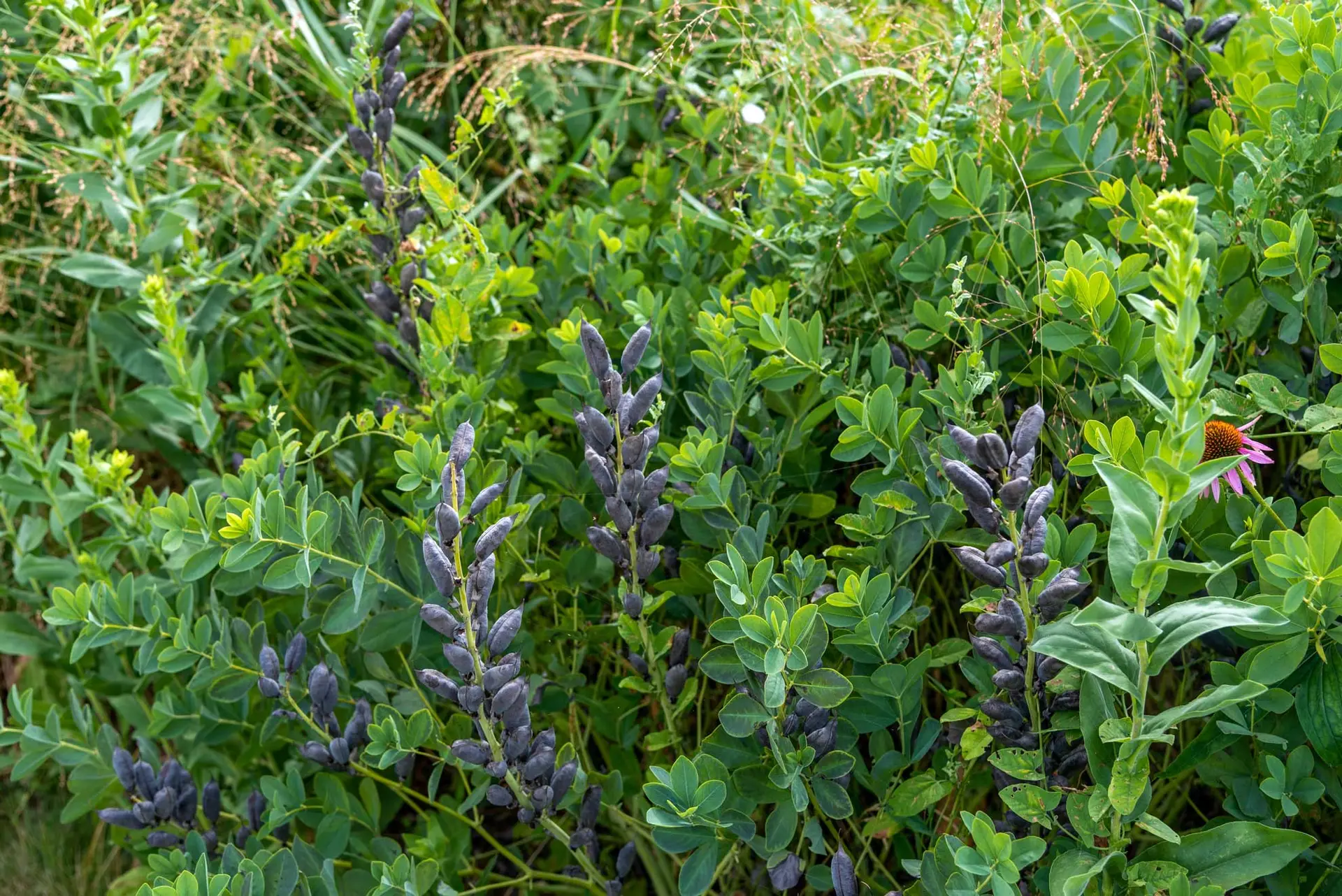
Late summer/fall
The flowers turn into stately seed pods—a favorite of black-capped chickadees. The leaves stay green and lush and provide food for caterpillars.
Where is false blue indigo native?
Native to 17 US states and Washington, D.C.
Sources: NatureServe, Royal Botanic Gardens, Kew (World Checklist of Vascular Plants) and the USDA PLANTS Database, compiled by The Plant Native. How we map native ranges
Where false blue indigo shines in your yard
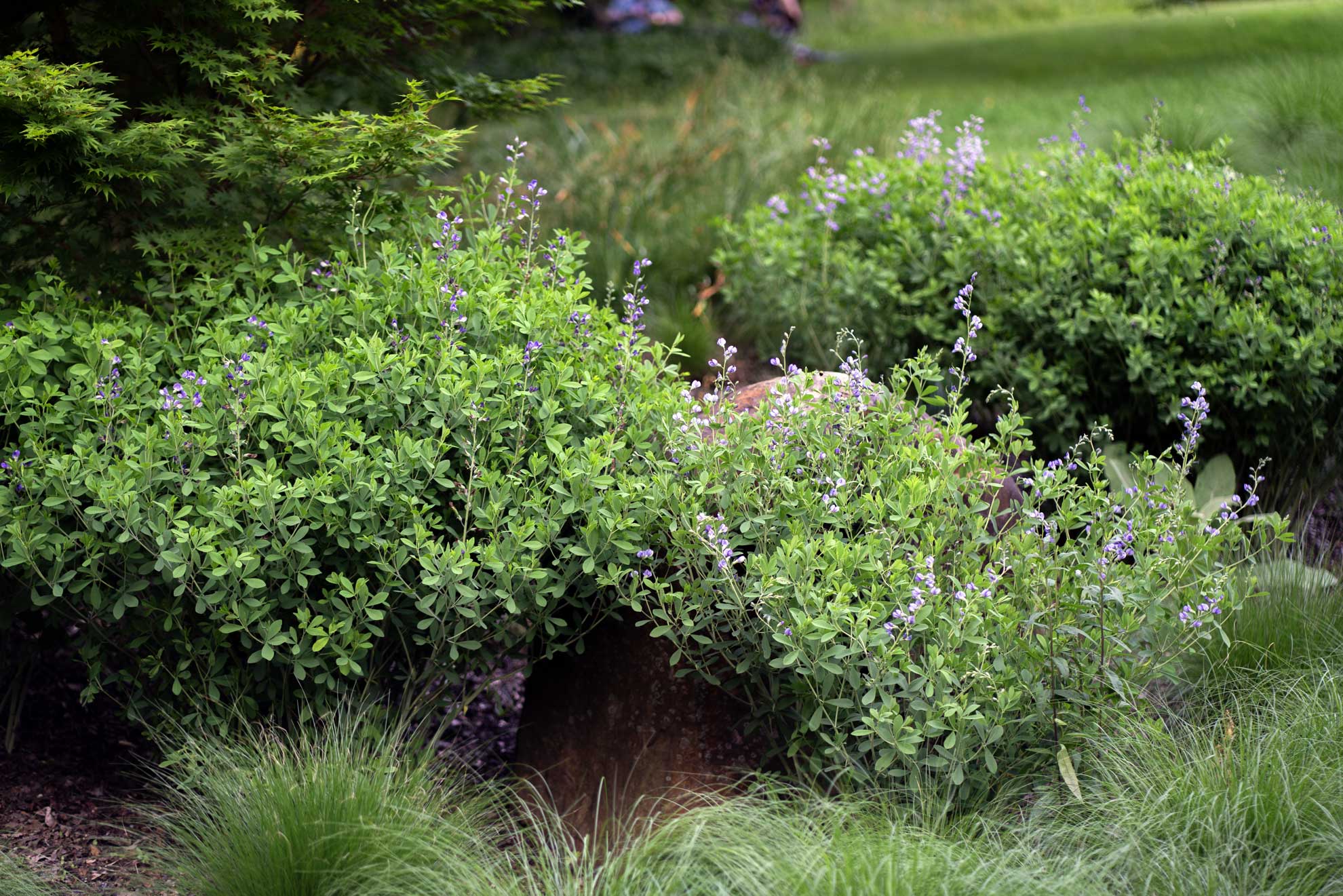
- Flower-filled borders: False blue indigo’s dense, rounded shape works as a backdrop or anchor plant. The blue-green leaves look good even after the flowers finish.
- Pollinator gardens: The spring flowers bring bumble bees and butterflies. Plant it with later-blooming natives for season-long pollinator support.
- Deer-resistant gardens: One of the most reliably deer-resistant native perennials. If deer are a major problem, false blue indigo is a safe bet.
- Low-maintenance landscapes: No fertilizer, minimal water once established, no pruning required. It practically takes care of itself.
- Single-plant groupings: False blue indigo is stunning planted in a mass. Three to five plants together create a dramatic sweep of blue in late spring.
Because false blue indigo looks so good planted in a group, we’ve included it in our round-up of Single-Plant Gardens, which are landscaping ideas driven by a single plant (aka one-stop landscaping.)
How to grow false blue indigo
Soil
Well-drained is the key requirement. Sandy, gravelly, or average garden soil all work. False blue indigo fixes its own nitrogen, so it actually prefers soil that isn’t too rich. Skip the compost. The USDA sums it up well: “[false blue indigo] does well without watering, requires no fertilizer or pesticide treatments and needs no pruning.”
Sun
Full sun for the best flowers and the sturdiest stems. Part sun is okay, but plants will get taller, leggier, and more prone to flopping.
Beginner tip
Pick your spot carefully. That taproot can reach 7 feet deep, which means false blue indigo does not like being moved once established. Choose a permanent location with full sun and good drainage, and plan to leave it there for decades.
Water
Water new plants through the first growing season while the taproot establishes. After that, false blue indigo is remarkably drought-friendly. That deep taproot taps moisture other plants can’t reach.
Patience
This is the most important growing tip. False blue indigo spends its first year or two growing roots, not flowers. A first-year plant from seed may not bloom at all. By year three, you’ll wonder what took so long. If you want flowers sooner, buy a larger container plant from a native nursery.
Plant nerd fact
Why is it ‘false’?
The name “false blue indigo” tells you exactly what this plant isn’t. True indigo (Indigofera tinctoria), native to southern Asia, was one of the most valuable dye plants in history. It makes a brilliant, rich blue.
Early European settlers in North America, desperate for blue dye and unable to grow true indigo in the North American climate, tried Baptisia australis instead.
It worked, sort of.
The dye from false blue indigo is a muted grayish-blue, not the vivid blue that made true indigo a global sensation.
Here’s the detail that makes botanists smile: if you snap a stem of false blue indigo, the sap turns dark blue when exposed to air. It’s like the plant is reminding you what it almost was.
False blue indigo is tall
False blue indigo can get tall—sometimes up to five feet. Remember how big it can get when you plant, and provide adequate space for its growth. You may have to add a few stakes to help it not flop over if it gets too tall.
False blue indigo needs air
Another challenge lies in maintaining good airflow around the foliage to prevent powdery mildew, a common issue with false blue indigo. To minimize this, ensure proper spacing between plants and choose a location with good air circulation. Additionally, avoid overhead watering, as damp leaves can lead to fungal diseases.
And now to share some good news…
Planting card
Baptisia australis
What are good pairings for false blue indigo?
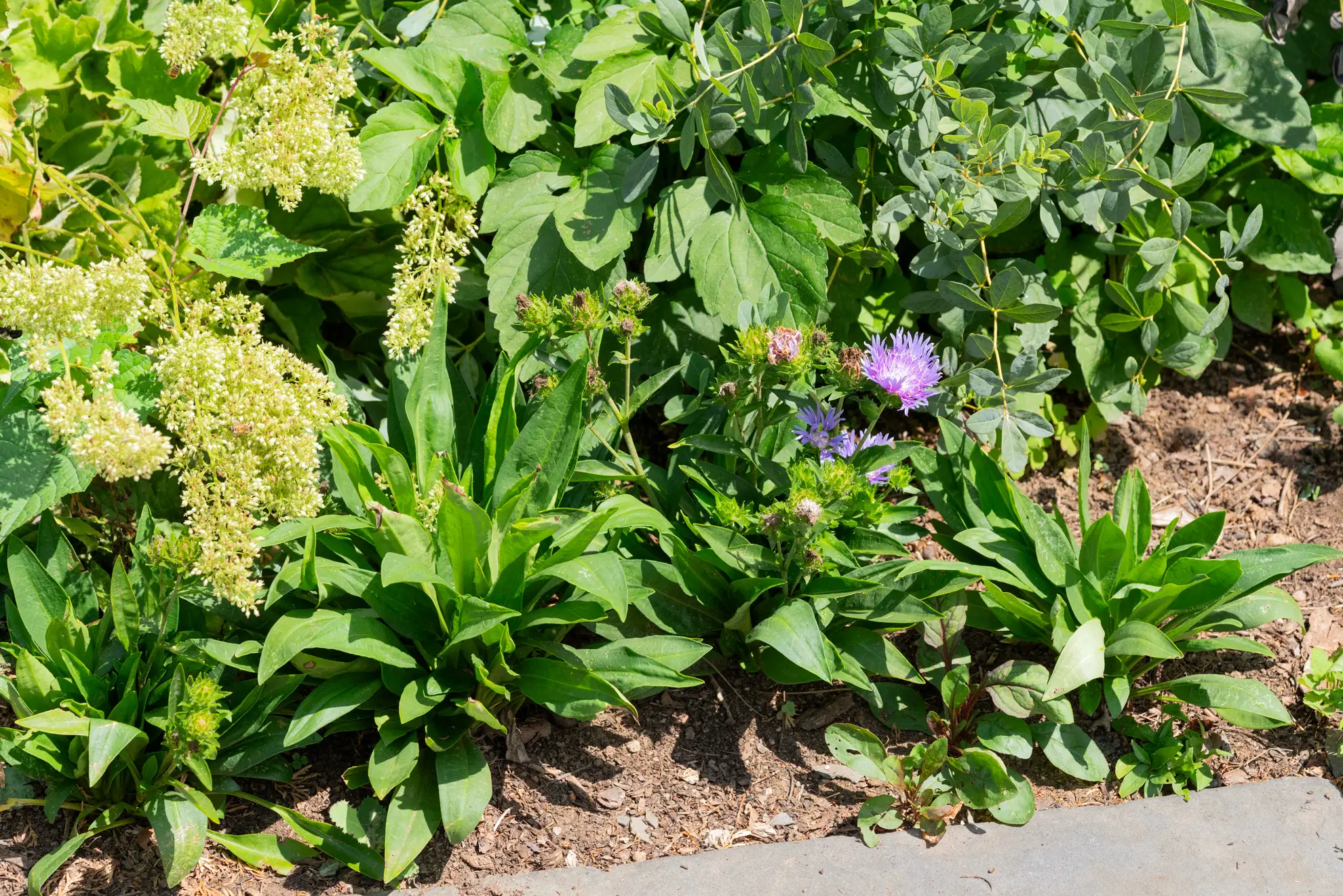
False blue indigo leaves have a lovely silvery blue-green color. Even without flowers, they look gorgeous. Plant them with natives that bloom in the summer and fall, so pollinators always have something to eat.


Where can I buy false blue indigo?
Sadly, finding specific native plants can be difficult, especially at conventional plant nurseries. To help make this challenge less cumbersome, we’ve put together four sources for finding native plants like false blue indigo.
If you’re looking for other gardening ideas for false blue indigo, be sure to read our Single-Plant Gardens, Three-Color Landscaping Guide, or Guide to Butterfly Host Plants. Each offers simplified ways to pick native plants for your garden. (And if you’re worried about making a gardening mistake—read this!)
False blue indigo is one of the best long-term investments you can make in your garden. It asks for three basic things (sun, drainage, patience) and gives back for decades: spring flowers, winter seed pods, butterfly habitat, and free nitrogen for its neighbors. It’s perfect for Northeast, Mid-Atlantic, Midwest, and southern gardens. Happy planting!
Sources
- Clemson Home and Garden Information Center. “Baptisia: False or Wild Indigo.”
- Exploring Birds. “Birds Attracted to Wild Blue Indigo.”
- Harstad, Carolyn. Go Native! Gardening with Native Plants and Wildflowers in the Lower Midwest (1999), 209–210.
- House Digest. “Your Baptisia Plant Has a Big Problem Under the Soil (But There’s a Silver Lining).”
- Illinois Extension. “Baptisia: Bold, Beautiful, and Underused Native Perennials.” University of Illinois.
- Lady Bird Johnson Wildflower Center. “Baptisia australis.” University of Texas at Austin.
- Missouri Botanical Garden. “Baptisia australis.”
- NC State Extension Gardener Plant Toolbox. “Baptisia australis.” NC State University.
- Nelson, Gil. Best Native Plants for Southern Gardens: A Handbook for Gardeners, Homeowners, and Professionals (2010).
- USDA NRCS. “Blue Wild Indigo Plant Guide” (PDF).
- Walters Gardens, Inc. “Baptisia australis.”
- Wisconsin Horticulture Extension. “Blue False Indigo.” University of Wisconsin-Madison.
- Xerces Society. “Bumble Bees and Baptisia: A Pollination Story.”
- American Beauties Native Plants. “False Indigo: A Native Plant with Rich Color and Richer History.”
- Cornell Botanic Gardens. “Indigo: Plant of Culture and Color.”
- JSTOR Daily. “Plant of the Month: Indigo.”
- My Cherokee Garden. “Blue Wild Indigo (Baptisia australis).”
- NC State Extension Gardener Plant Toolbox. “Indigofera tinctoria.” NC State University.
Similar plants
-
 Irises
-
 Blue-Eyed Grass
-
 Golden Alexander
-
 Mountain Mints
-
 Nodding Onion
-
 Blue Vervain
-
 Hummingbird Mint
-
 Spring Beauty
-
 Golden Ragwort
Updated Find more: Blue Deer Resistant Flower Spring Full Sun Part Sun
The ads on this site help pay real native plant nerds to research and write these guides.
Garden notes
Notes from people who’ve grown it
Tips, wins, and the occasional disaster. If you’ve grown false blue indigo, share the advice you’d give to a neighbor.
No notes yet. Yours could be the first.
Grown false blue indigo? Tell the next person what you wish someone had told you.
Tap anywhere to close


