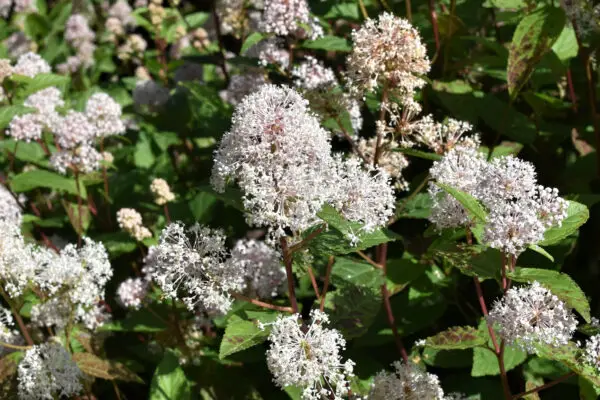
New Jersey tea is one of those native plants that sounds like it was made up by a committee of overachievers. It’s a compact, three-foot shrub that covers itself in sweet-smelling white flower clusters every June. It fixes nitrogen from the air, which is something only a tiny fraction of plants on Earth can do. Its roots contain compounds that help blood clot, which the Ojibwe, Cherokee, and other Indigenous peoples figured out centuries before anyone put on a lab coat. It’s a host plant for over 40 species of butterflies and moths. Plant something beautiful that also has an absurd résumé.
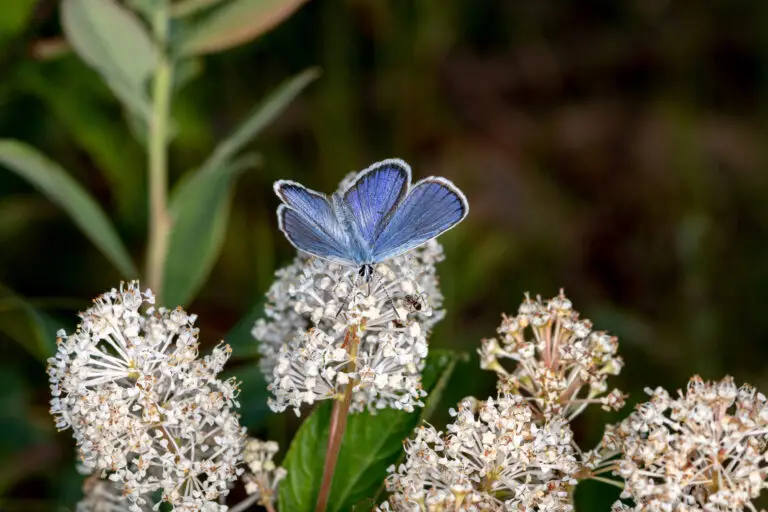
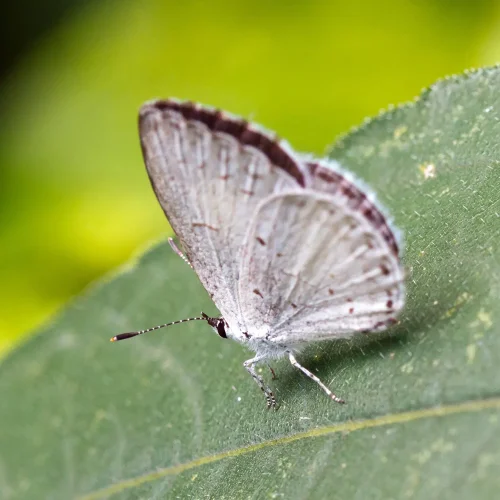
New Jersey tea is a host plant for iconic butterflies like this spring azure
Is New Jersey tea a good fit for my yard?
Yes, if…
You want a compact shrub that doesn’t need pruning, doesn’t need fertilizer (it makes its own!), and blooms every summer.
You have a sunny spot with decent drainage; sandy or rocky soil is actually ideal.
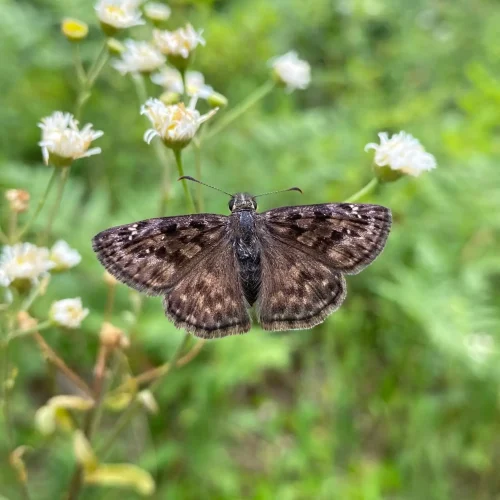
You want to support butterflies. Seriously: over 40 species of butterflies and moths use this as a host plant, including the endangered mottled duskywing.
You’re building a native pollinator garden and need a summer bloomer to bridge the gap between spring and fall flowers.
You want a plant that improves the soil around it. Nitrogen-fixing plants are like that friend who always brings a dish to the potluck: they make everyone’s situation better.
New to native?
Before lawns and landscaping, native plants were here. They’ve fed birds, bees, and butterflies for thousands of years—and they’ll do the same in your yard. The best part? They’re easier to grow than you think.
Your soil stays wet. New Jersey tea evolved in well-drained prairies and sandy woodlands. Soggy soil can cause root rot, which is the one thing that reliably kills it.
You have a deer problem and no way to protect new plantings. Deer love this shrub. Sadly, so do rabbits.
You want instant gratification. New Jersey tea spends its first year or two building a massive taproot, so above-ground growth starts slow. It’s worth the wait, but you have to actually wait.
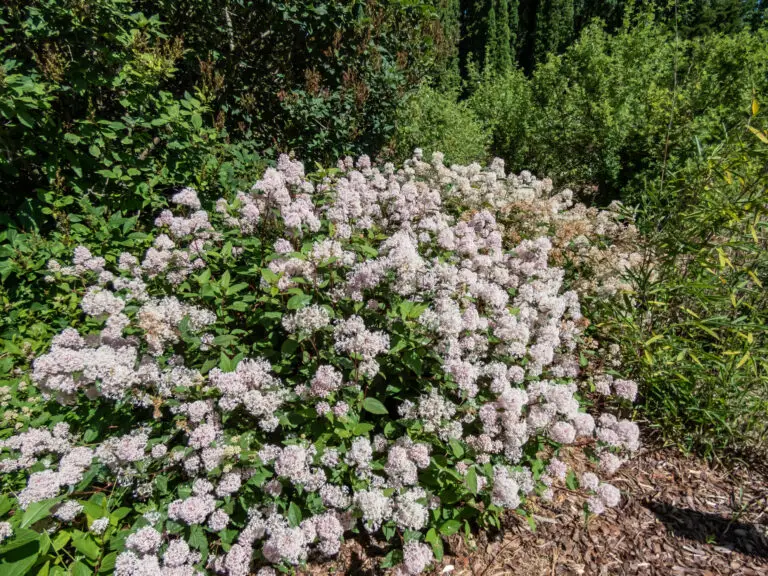
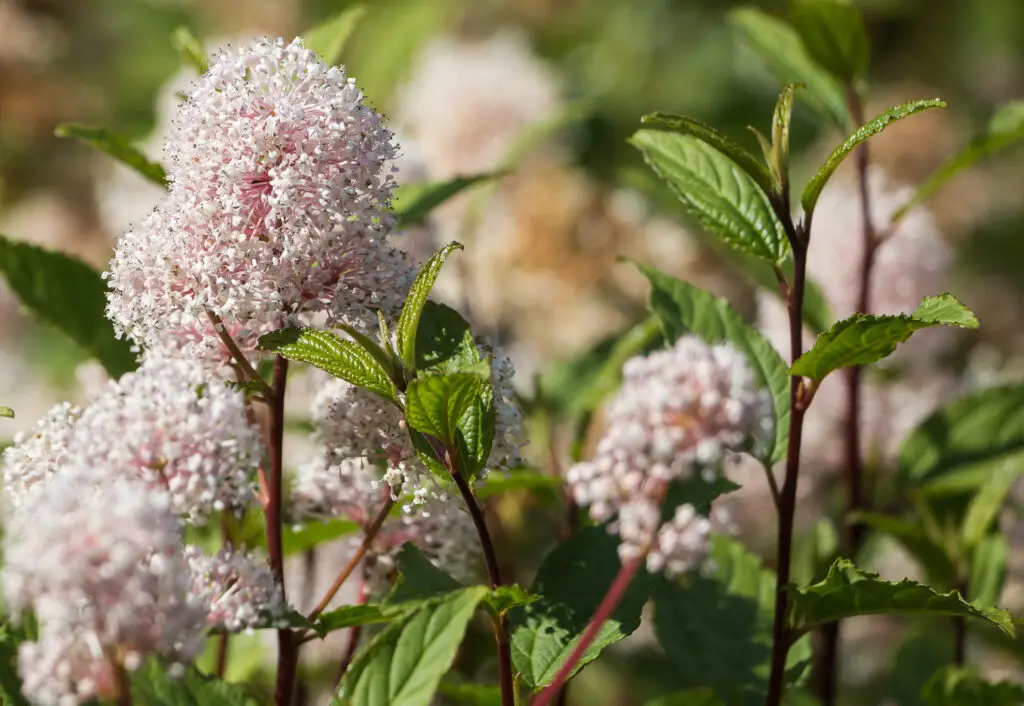
At its largest, New Jersey tea shrubs get around three feet high and wide
Why New Jersey tea matters
Let’s start with the butterflies. New Jersey tea is a host plant for 180 species of butterflies and moths, including spring azures, summer azures, dreamy duskywings, and the increasingly rare mottled duskywing. When you plant a New Jersey tea, you’re not just adding a shrub to your garden. You’re opening a nursery.
New Jersey tea helps all these butterflies:
Spring azure butterfly
Summer azure butterfly
Endangered mottled duskywing
New Jersey tea helps fertilize itself and everything around it
Then there’s the nitrogen. Most plants pull nutrients from the soil. New Jersey tea pulls nitrogen from the air. It partners with a bacteria called Frankia that lives in nodules on its roots and converts atmospheric nitrogen into a form the plant can use, and that the surrounding soil benefits from.
This is the same trick that legumes like beans and clover pull, except New Jersey tea isn’t a legume.
It’s one of only about 220 plant species on Earth that can do this through a partnership with Frankia. Plant one and you’re not just growing a shrub, you’re quietly improving the dirt for everything around it.
Where is new jersey tea native?
Native to 35 US states, Washington, D.C., and 2 Canadian provinces (Ontario, Quebec)
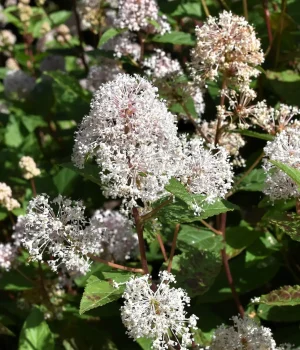
The flower clusters appear at the end of branches, similar to hydrangeas
Beginner Tip
If your New Jersey tea looks dead in April, give it time. This plant is famously late to emerge in spring. It’s not dead, it’s just not a morning person.
How to grow New Jersey tea
Soil
Well-drained is the magic word. Sandy, rocky, loamy are all fine. New Jersey tea evolved in prairies and sandy woodlands where water moves through the soil quickly.
It does not want to sit in puddles. If your yard has heavy clay that pools water after rain, either pick a different spot or build a raised bed. Root rot is the one disease that reliably takes this plant down, and it’s caused entirely by soggy soil.
Sun
Full sun is ideal. Part sun works but you’ll get fewer flowers. In full shade, don’t bother; it needs light to bloom well.
Fertilizer
Don’t. This plant makes its own nitrogen through its partnership with Frankia bacteria. Adding fertilizer is like bringing a casserole to someone who’s already cooked dinner: unnecessary and potentially annoying. Rich, heavily fertilized soil can actually cause leggy, weak growth.
Garden Recipe™
New Jersey Tea
Ceanothus americanus
Sun to part sun
Sun
Easy
Effort
Small Shrub (3-5') tall 3-5 ft wide
Size
Early summer
Blooms
What it needs
Sunlight
Full to partial sun, 4+ hoursThe more sun the better, but it can handle some shade
Water
Likes it dryPick a spot that doesn't stay soggy after rain
Directions
Spacing
3-5 ftAbout one big step apart
Watering
Weekly for the first seasonAfter that, rain is usually enough
Notes
Comes back?
Yes, every yearGoes dormant in winter, that's normal. New growth each spring.
Butterfly host plant. Certain butterflies depend on this plant to reproduce. It's one of the specific species their caterpillars need to survive.
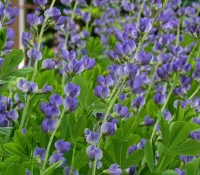
Once established, New Jersey tea is genuinely drought-hardy, thanks to that enormous taproot. Plants with taproots store water and nutrients in their thick roots they can pull from during periods of drought. (Think of a taproot like a plant’s water bottle.) Other plants with taproots include false blue indigo and butterfly weed.
This taproot makes it difficult to move once its established
When planting New Jersey tea, take a moment to plan where you place it. That taproot does not like being disturbed. Moving a New Jersey tea once it’s growing happily can either weaken or kill the plant.
Northeastern Native Plant Digest has a nice overview video that shows the plant’s shape alongside planting tips:
FAQs
Can I make tea from New Jersey tea?
Yes! New Jersey Tea’s green leaves have indeed been used for tea. According to the USDA, “Tribes of the Missouri River region used the leaves for tea and the roots for fuel on hunting trips. Tribes of the Great Lakes Bioregion ascribed great power to its treatment of bowel troubles…It was used by colonists during the Revolutionary War as a substitute for tea even though the leaves contained no caffeine.”
Recently, New Jersey tea’s roots have been found to have blood-clotting abilities. It shows how powerful native plants are and will continue to be.
What does New Jersey Tea tea taste like?
Its tea tastes a little like pepperminty black tea.
Why is it called New Jersey tea and not, say, Delaware tea?
Why New Jersey and not Pennsylvania or Florida, where it’s also native? The Blog Eat the Weeds explains that prior to the Revolutionary War, this plant was known as ‘Red Root Tea.’ Its common name became ‘New Jersey Tea’ because it was so common in the New Jersey Pine Barrons region.
Can I grow New Jersey tea in a container?
It’s possible but not ideal. The deep taproot wants to go straight down, and containers limit that. If you try, use a deep pot and expect slower growth. In the ground is much better for this plant.
Plant Nerd Fact
New Jersey tea is fireproof.
Well, almost fireproof.
New Jersey tea has an incredibly resilient root crown that comes back after a myriad of takedowns: drought, fire, deer browsing, etc.
When wildfire passes, the plant resproots vigorously from its root crown and starts growing again, sometimes faster than before. Even better: the seeds in the soil actually germinate better after exposure to heat. The ideal temperature for triggering germination is around 90–100°C, which aligns with the temperature of a passing grass fire.
Put this together, and New Jersey tea has a dual survival strategy. The existing plant regrows from its roots (fast recovery), and dormant seeds in the soil wake up from the heat and grow new plants (long-term population recovery). It’s like having both a backup generator and a second backup generator. This is why New Jersey tea is one of the most reliable shrubs in native prairies: fire is part of its DNA.
Where can I find New Jersey tea?
Finding a specific native plant can be a little challenging if you look in the big-box garden centers. We’re here to give some ideas on better places to look.
Here are four reliable ways to source native plants like New Jersey tea:
New Jersey Tea
Where can I find seeds and plants?
Finding native plants can be challenging (we partly blame King Louis XVI.) To make it easier, we’ve assembled four sourcing ideas.
Deer love to nibble this plant. And it’s not only deer that nibble it; other wildlife, like rabbits, can nibble it, too. This may be partly why New Jersey tea regenerates its shoots in the spring (after dying back in the winter). Perhaps the plant has evolved to know it might be snacked on and knows to grow back every year.
Maybe we should call it deer phoenix shrub?
Because New Jersey tea has such a vast range, it is helpful to find plants from sellers or sources closest to you. As you can imagine, a New Jersey tea with generations of DNA from New Hampshire might not have the heat resiliency of a New Jersey tea from Arkansas.
Plants and seeds grown close to home are tuned to your soil, weather, and pollinators. Stay within 500 miles—or about a day’s drive—to help your garden thrive naturally.
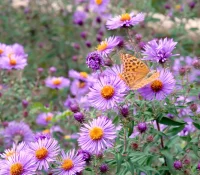
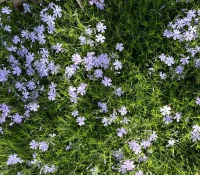
A great rule of thumb when planting a garden is to pick native plants that bloom from spring to fall, so that pollinators always have a treat. Since New Jersey tea blooms in the summer, pick some other great natives that bloom in the spring and fall to plant alongside. Some ideas include:
New Jersey tea is one of those native plants that quietly does everything. It feeds over 40 species of butterflies and moths. It fixes nitrogen and improves the soil for its neighbors. It brews into a decent cup of tea. It survives wildfire. It blooms every summer with fragrant white clusters that pull in bees, butterflies, and hummingbirds. And it stays under three feet tall without ever needing a trim.
If you’re looking for a compact native shrub that punches way above its weight, this is it. Pair it with creeping phlox and asters for spring-to-fall color, tuck it among native grasses for a prairie look, or plant it near the house where you can watch the butterflies up close. Check out our profiles on false blue indigo, asters, and serviceberry for more native plants that pair beautifully with New Jersey tea. Or go meet other butterfly marvels in our Best Native Host Plants. Happy planting!
Emily Lessard is the founder and editor of The Plant Native, the site that helps homeowners across North America get started with native plants. She holds a Sustainable Landscapes certificate through the Pennsylvania Landscape & Nursery Association, is finishing a Native Perennial Garden Design Certificate at Temple University, and is the author of Plant Native:A Practical Guide to Over 100 Native Plants of North America (Quarto, February 2027). She gardens outside Philadelphia in the 8.3 Southeastern Plains ecoregion.