
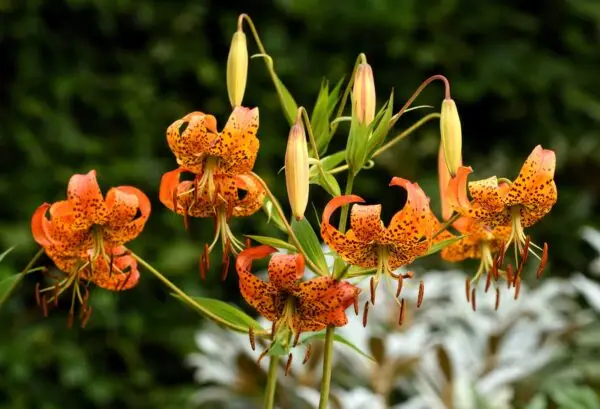
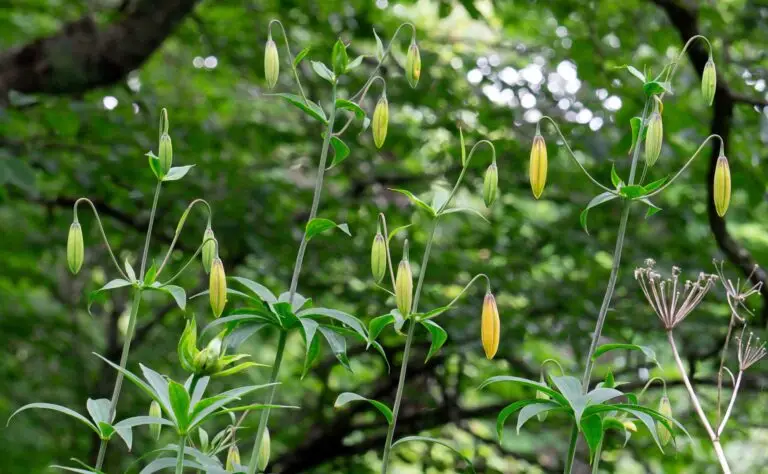
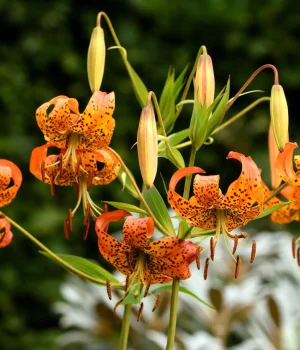
Woah. That’s the best way to describe this native showstopper. Turk’s cap lily grows an astonishing 4-10 feet and puts out multiple rows of hanging bright orange flowers. When in bloom, it looks like a $100k sculpture. It’s a real mystery why non-native lilies have overtaken most gardens when this native flower has been growing in North America for millennia. Let’s turn that trend around and plant our own flowering candelabras. Scroll on for planting tips.

Turk's Cap Lily
Part of our Beginner’s Guide to Native Lilies
This plant is one of the species featured in our Beginner’s Guide to Native Lilies.
Head to the complete guide for planting basics, species comparisons, and beginner-friendly tips.
Is Turk’s cap lily right for my yard?
Plant it if…
- You want something that makes people stop on the sidewalk. At 6 to 8 feet tall with dozens of hanging orange flowers, Turk’s cap lily is the kind of plant that gets your neighbors to knock on your door and ask what it is.
- You have a moist, partly shady spot that needs a midsummer glow-up. Most spring-blooming natives have faded by July. Turk’s cap lily picks up right where they left off with a dramatic show of color.
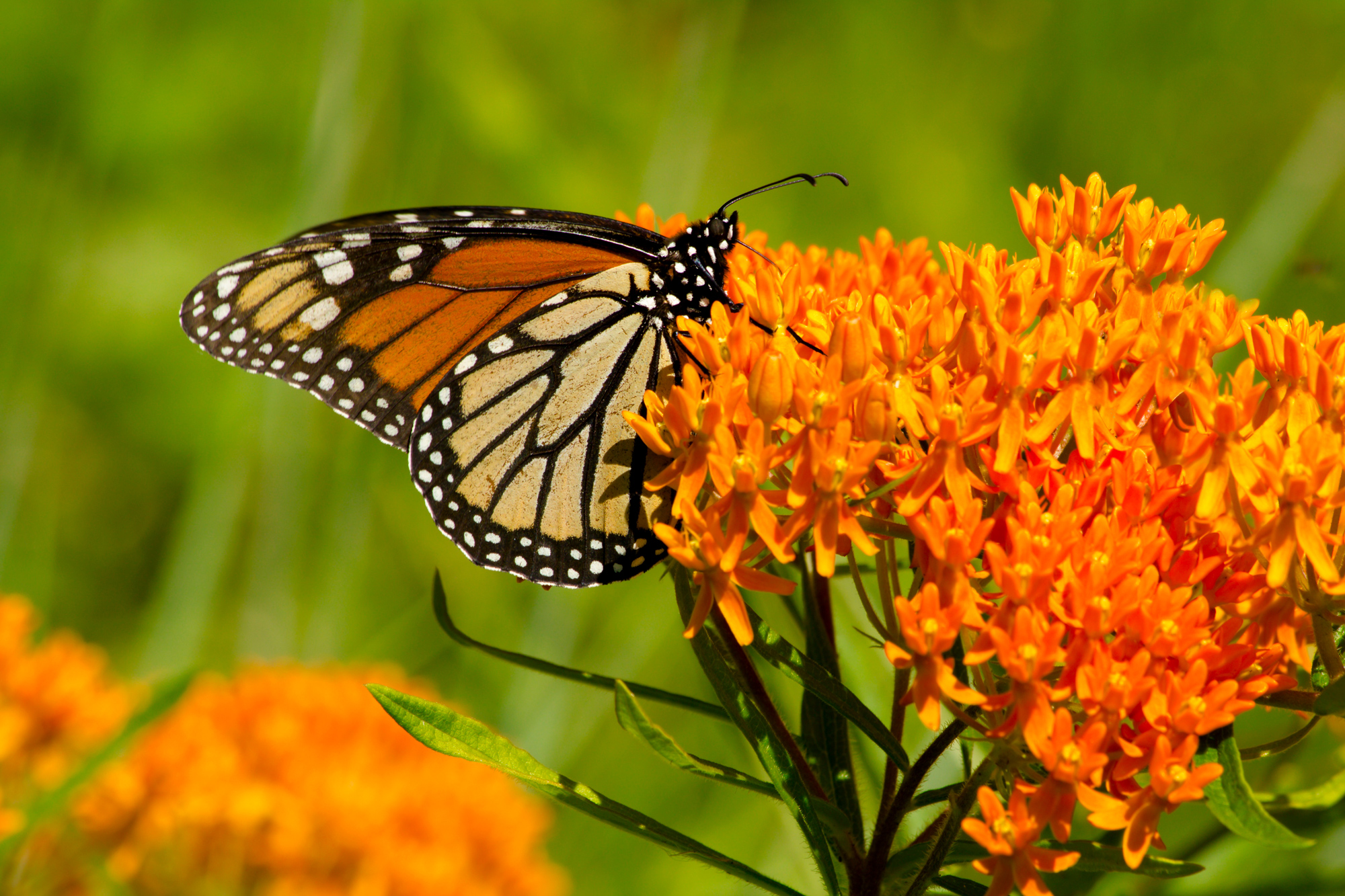
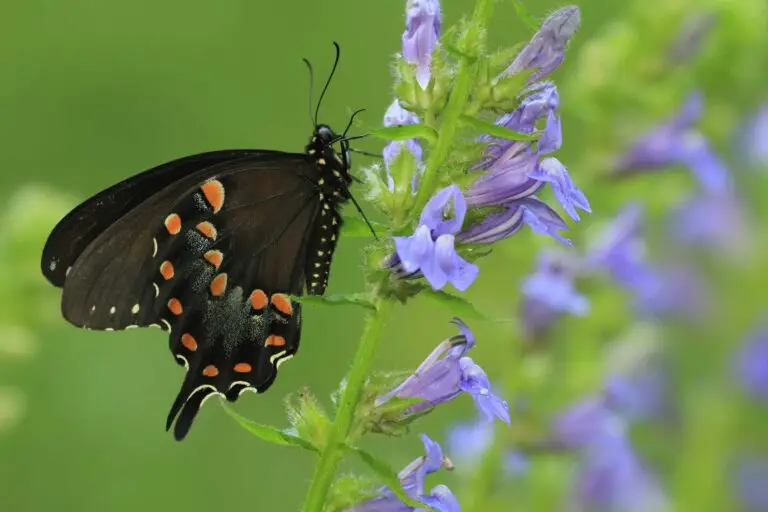
- You want to bring in hummingbirds and butterflies. Eastern tiger swallowtails, spicebush swallowtails, and ruby-throated hummingbirds all visit the flowers. Plant a few and your yard becomes a destination.
- You want the bragging rights. Thomas Jefferson grew this plant at Monticello. You’d be planting the same species that one of America’s most famous gardeners treasured.
New to native?
Before lawns and landscaping, native plants were here. They’ve fed birds, bees, and butterflies for thousands of years—and they’ll do the same in your yard. The best part? They’re easier to grow than you think.
Skip it if…
- You need something short for a border edge. At up to 8 feet, this lily will tower over everything around it. Plan for its height or it’ll block the plants behind it.
- You can’t keep the soil moist. Turk’s cap lily needs consistent moisture, especially during its growing season. Dry, compacted soil in full sun is a dealbreaker.
- You want instant results. If you buy a nursery plant, it may bloom the first or second summer. But if you’re starting from a small bulb, it can take years to reach flowering size. This is patience with a big payoff.
Why Turk’s cap lily matters
A midsummer feast
By July, most of the big spring pollinator plants have finished blooming. That’s exactly when Turk’s cap lily arrives. It’s loaded with nectar, and the Virginia Native Plant Society notes that great spangled fritillaries, swallowtail butterflies, and hummingbirds all visit the flowers. The Kentucky Native Plant Society adds that this lily is self-incompatible, meaning it can’t pollinate itself. It depends entirely on these visiting pollinators to set seed. That’s a relationship that goes both ways.
A plant that spreads on its own
Turk’s cap lily spreads slowly through underground stems called stolons. One bulb becomes two, and over time a single plant can grow into a small colony. The University of Tennessee Extension notes that it naturalizes under the right conditions. You plant one, and the garden takes it from there.
Made for the places you already have
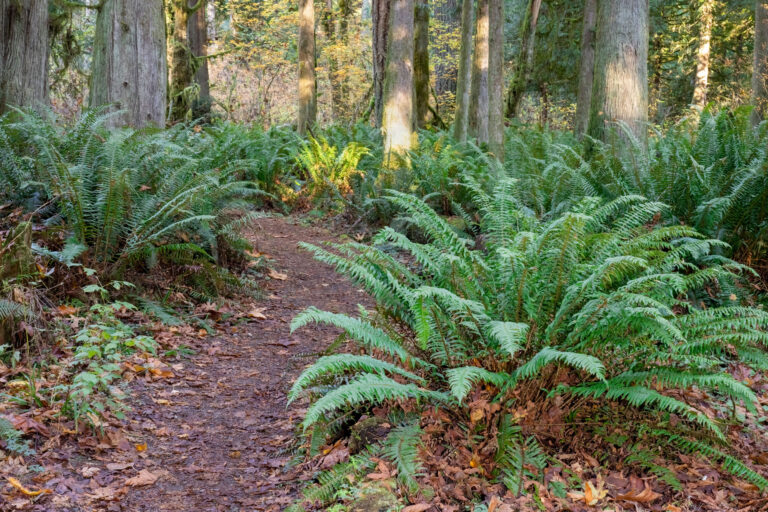
Most yards have at least one moist, partly shady corner that’s hard to fill. The edge of a treeline, the spot near the downspout, the low area by the fence. These are exactly the conditions Turk’s cap lily evolved in. Instead of fighting that damp shade with plants that don’t want to be there, lean into it.
Where is turk’s cap lily native?
Native to 23 US states and Washington, D.C.
Source: USDA PLANTS Database
Where Turk’s cap lily shines in your yard
- At the edge of a treeline: This is where it grows in the wild, and it’s where it looks most natural in a yard. A few tall stems rising from the shade of the tree canopy into the sunlight is a stunning effect.
- Near water: Rain gardens, pond edges, stream banks, and the low spot by the downspout. Turk’s cap lily loves consistent moisture, and these areas give it exactly that.
- Behind a mixed native border: Let it tower above everything else in the back row. Pair it with mid-height natives like bee balm and black-eyed Susan in front, and the layered effect looks like a professionally designed garden.
- Anywhere you want hummingbirds: Ruby-throated hummingbirds are drawn to the bright orange flowers. Plant Turk’s cap near a window and you’ll have a show all July.
New York’s Waterman Conservation Center has a nice overview video that shows these spectacular flowers in a garden:
FAQs
How tall does Turk's cap lily actually get?
The Missouri Botanical Garden says it typically reaches 4 to 6 feet, with exceptional plants hitting 8 feet. Height depends on moisture, light, and soil quality.
The happier the plant, the taller it grows. In a moist, partly shady spot with rich soil, you’re likely to see the upper end of that range.
When does it bloom?
July through August in most areas. This is one of the things that makes Turk’s cap lily so valuable. Most showy native plants bloom in spring. Having something this dramatic in midsummer fills a real gap in the garden calendar.
Is Turk's cap lily the same as the invasive tiger lily?
No. Tiger lily (Lilium lancifolium, sometimes called L. tigrinum) is a non-native species from Asia. It looks somewhat similar, with spotted orange flowers, but the growth habit and ecological role are completely different. Turk’s cap lily is the real deal: a North American native that belongs in your garden.
How do I say ‘superbum’
You may have noticed that this plant’s Latin name is Lilium superbum, and perhaps giggled a bit. Wondering how to say it?
It’s pronounced superb-um (not, super-bum). 🍑
Where can I buy Turk’s cap lily?
This native plant requires a little bit of sleuthing to find—but it’s worth it! Some online sellers for Turk’s cap lily include:
- Native Wildflowers Online (Tennessee)
- Keystone Wildflowers (Robesonia, Pennsylvania; pick-up only)
- Plant Delights (North Carolina)
- Mid-Atlantic Native Plant Farm (Cobbs Creek, Virginia)
Turk's cap lily can't reproduce without help.
Unlike many plants, Turk’s cap lily is self-incompatible, which means a single plant can’t pollinate itself no matter how many flowers it has. Every seed depends on a butterfly or hummingbird carrying pollen from a completely different plant.
So when you see a swallowtail hanging upside down from one of those orange flowers in July, it’s not just feeding. It’s keeping the species alive.
What are good pairings for Turk’s cap lily?
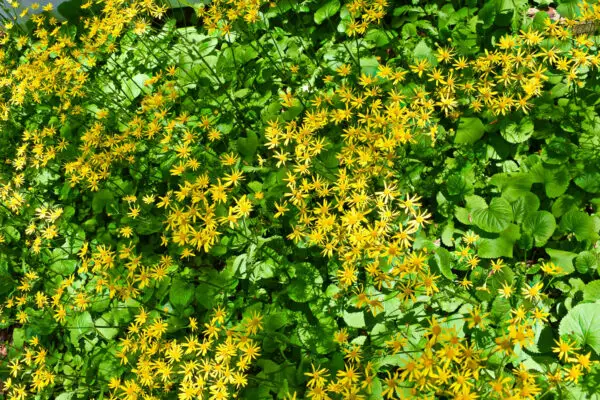
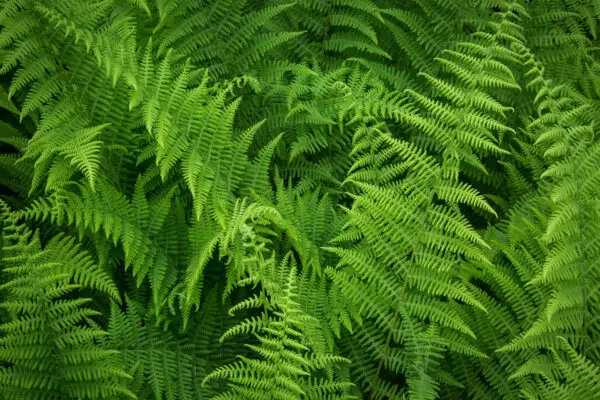
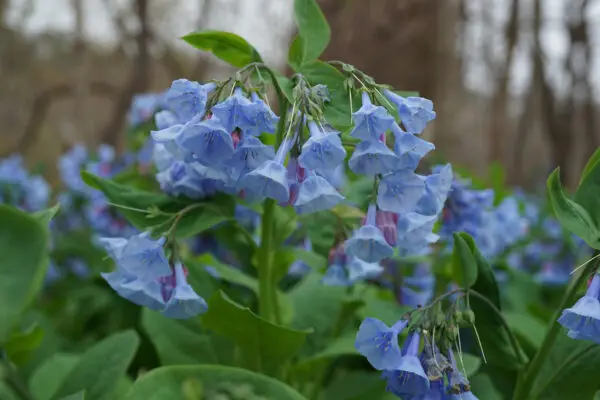
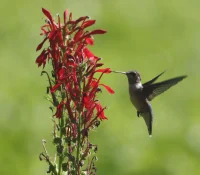
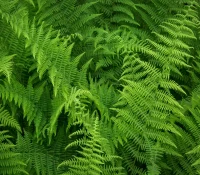
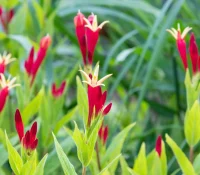
There are many other native plants that love the same moisture-rich, part-sun environments.
Pairs well with
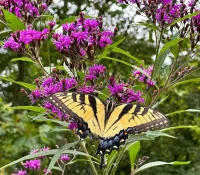
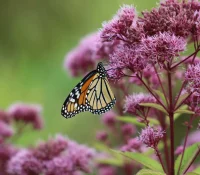
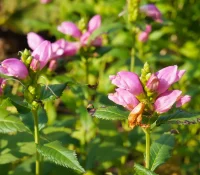
Turk’s cap lily is one of those plants that makes you rethink what a garden can look like. It’s tall, dramatic, covered in hummingbirds and butterflies, and it’s native to your part of the country. It won’t need special care or fancy fertilizers. It just needs a moist spot with some shade and a gardener willing to wait for the show.
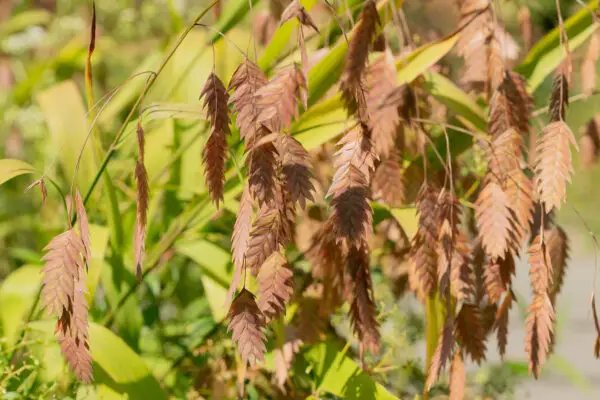
Put a few bulbs in the ground this fall, tuck some shorter natives in front, and give it time. In a few years, when those tall stems light up with orange flowers in July and a hummingbird buzzes in to investigate, you’ll understand why its Latin name includes superb. Make sure to add a garden nametag, because your neighbors will want to know how they can plant some, too. Happy planting!
Wondering what other lilies are native? Explore our Beginner’s Guide to Native Lilies.
Written by Emily Lessard. Emily is the founder and editor of The Plant Native. She is a Sustainable Landscapes-certified gardener through the Pennsylvania Landscape & Nursery Association, is finishing a Native Plant Landscaping certificate at Temple University, and is the author of The World of Native Plants (Quarto, February 2027).
Sources
- Dunlap, Robert. “Native Spotlight: Turk’s Cap Lilies.” Kentucky Native Plant Society, August 25, 2023. https://www.knps.org/native-spotlight-turks-cap-lilies-lilium-superbum/. Accessed March 15, 2026.
- Lady Bird Johnson Wildflower Center. “Lilium superbum.” University of Texas at Austin. https://www.wildflower.org/plants/result.php?id_plant=lisu. Accessed March 15, 2026.
- Missouri Botanical Garden. “Lilium superbum.” Plant Finder. https://www.missouribotanicalgarden.org/PlantFinder/PlantFinderDetails.aspx?kempercode=d880. Accessed March 15, 2026.
- Mt. Cuba Center. “Turk’s Cap Lily.” Last modified December 11, 2023. https://mtcubacenter.org/plants/turks-cap-lily/. Accessed March 15, 2026.
- North Carolina Extension Toolbox. “Lilium superbum.” NC State University. https://plants.ces.ncsu.edu/plants/lilium-superbum/. Accessed March 15, 2026.
- Plant Delights Nursery. “Lilium superbum.” https://www.plantdelights.com/products/lilium-superbum. Accessed March 15, 2026.
- Thomas Jefferson’s Monticello. “Turk’s Cap Lily.” https://www.monticello.org/house-gardens/in-bloom-at-monticello/turk-s-cap-lily/. Accessed March 15, 2026.
- University of Maryland Extension. “Turk’s Cap Lily.” https://extension.umd.edu/resource/turks-cap-lily/. Accessed March 15, 2026.
- University of Tennessee Smart Yards. “Lilium superbum.” Last modified February 11, 2021. https://tnyards.utk.edu/lilium-superbum/. Accessed March 15, 2026.
- USDA. “Turk’s Cap Lily.” USDA Plants Database. https://plants.usda.gov/home/plantProfile?symbol=LISU. Accessed March 15, 2026.
- Virginia Native Plant Society. “Turk’s Cap Lily Stuns in Summer.” July 25, 2022. https://vnps.org/turks-cap-lily-stuns-in-summer/. Accessed March 15, 2026.
- Breed, Martin F., Peter A. Harrison, Armin Bischoff, Paula Durruty, Nick J. C. Gellie, Emily K. Gonzales, Kayri Havens, Marion Karmann, Francis F. Kilkenny, Siegfried L. Krauss, Andrew J. Lowe, Pedro Marques, Paul G. Nevill, Pati L. Vitt, and Anna Bucharova. “Priority Actions to Improve Provenance Decision-Making.” BioScience 68, no. 7 (July 2018): 510–16. https://doi.org/10.1093/biosci/biy050.