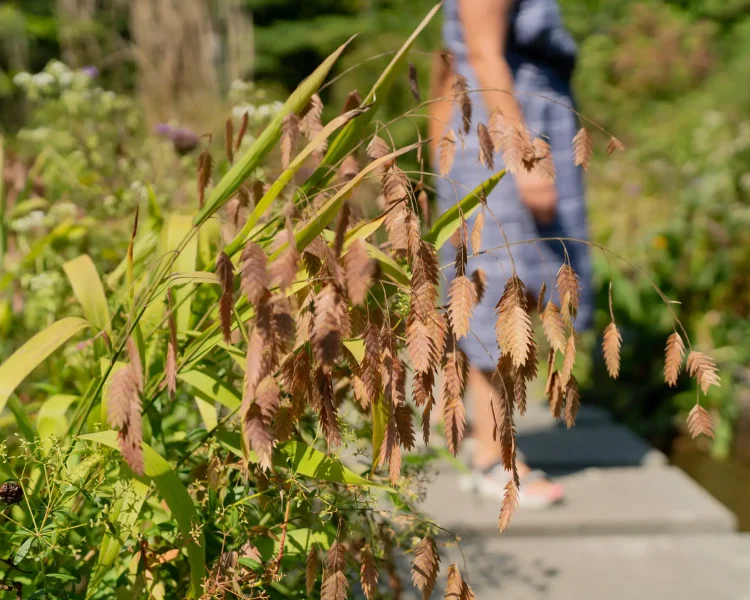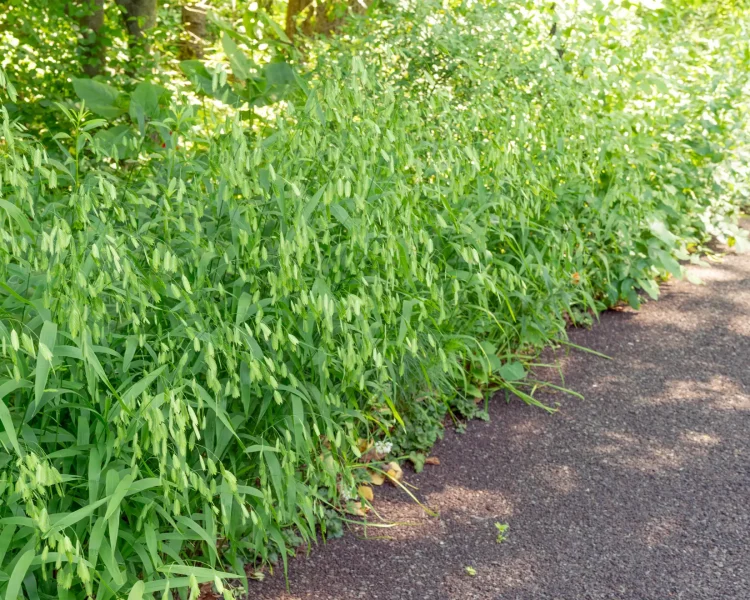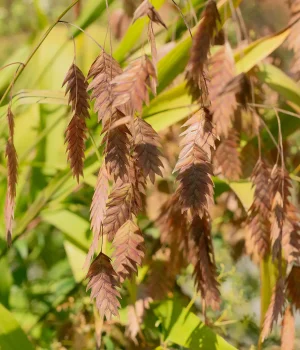

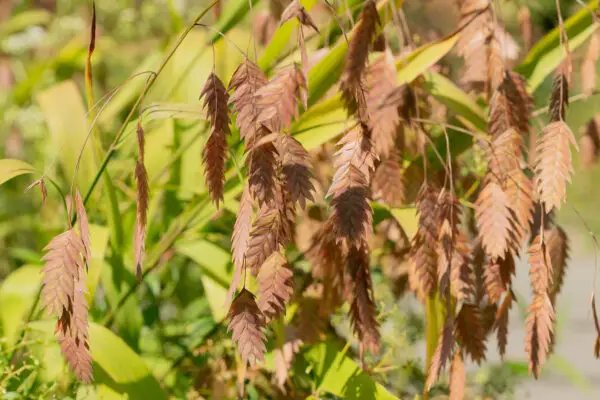
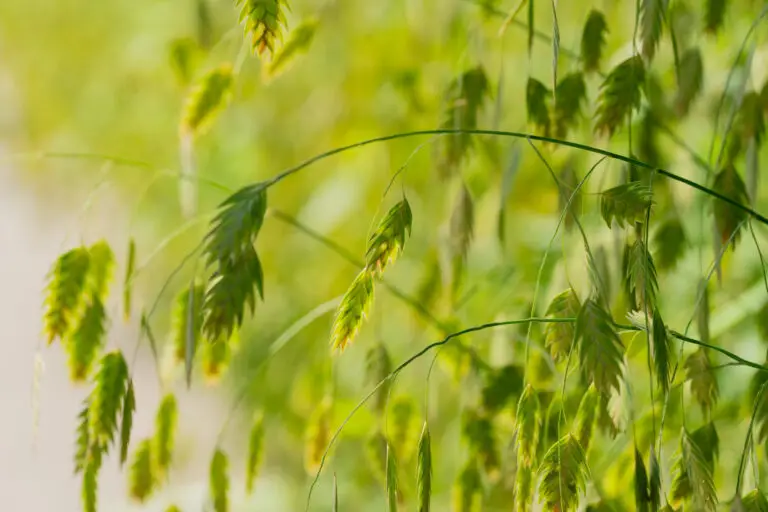
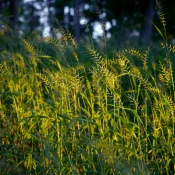
This native grass has a memorable, almost prehistoric charm since its nodding seed heads resemble tiny trilobite fossils. In spring, northern sea oats sends up bright green blades, thriving as temperatures rise. By late summer, delicate, flat seed heads emerge, arching gracefully before shifting to rich bronze tones in fall. Northern sea oats grows in both part sun and shade, making it an excellent choice for beginner gardeners. Scroll on for planting tips.
Is northern sea oats a good choice for my yard?
Adding native grasses, such as northern sea oats, is one of the easiest ways to create a garden that feels layered and intentional without requiring additional work.
Yes, it’s a good choice, if…
- You have part sun or light shade, especially under trees or along fences.
- You want movement and texture, not just flowers.
- You’re dealing with dry or average soil and don’t want to irrigate.
- You want a plant that looks good from summer through winter.
- You like plants that self-sow lightly and fill in an area over time.
Why northern sea oats matters
- Season-spanning structure: Flat seedheads appear in late summer and stay as garden sculptures well into winter.
- Shade-tolerant native grass: One of the few grasses that grows well without full sun.
- Low-maintenance: No fertilizer, minimal watering, and no special soil prep.
- Erosion control: Fibrous roots help hold soil on slopes and along edges.
- Wildlife value: Seeds are eaten by birds, especially in fall and winter when food can be scarce.
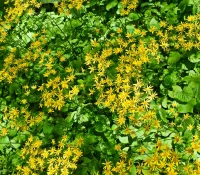
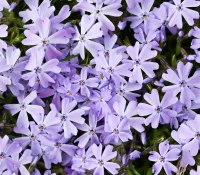
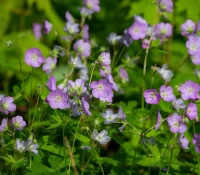
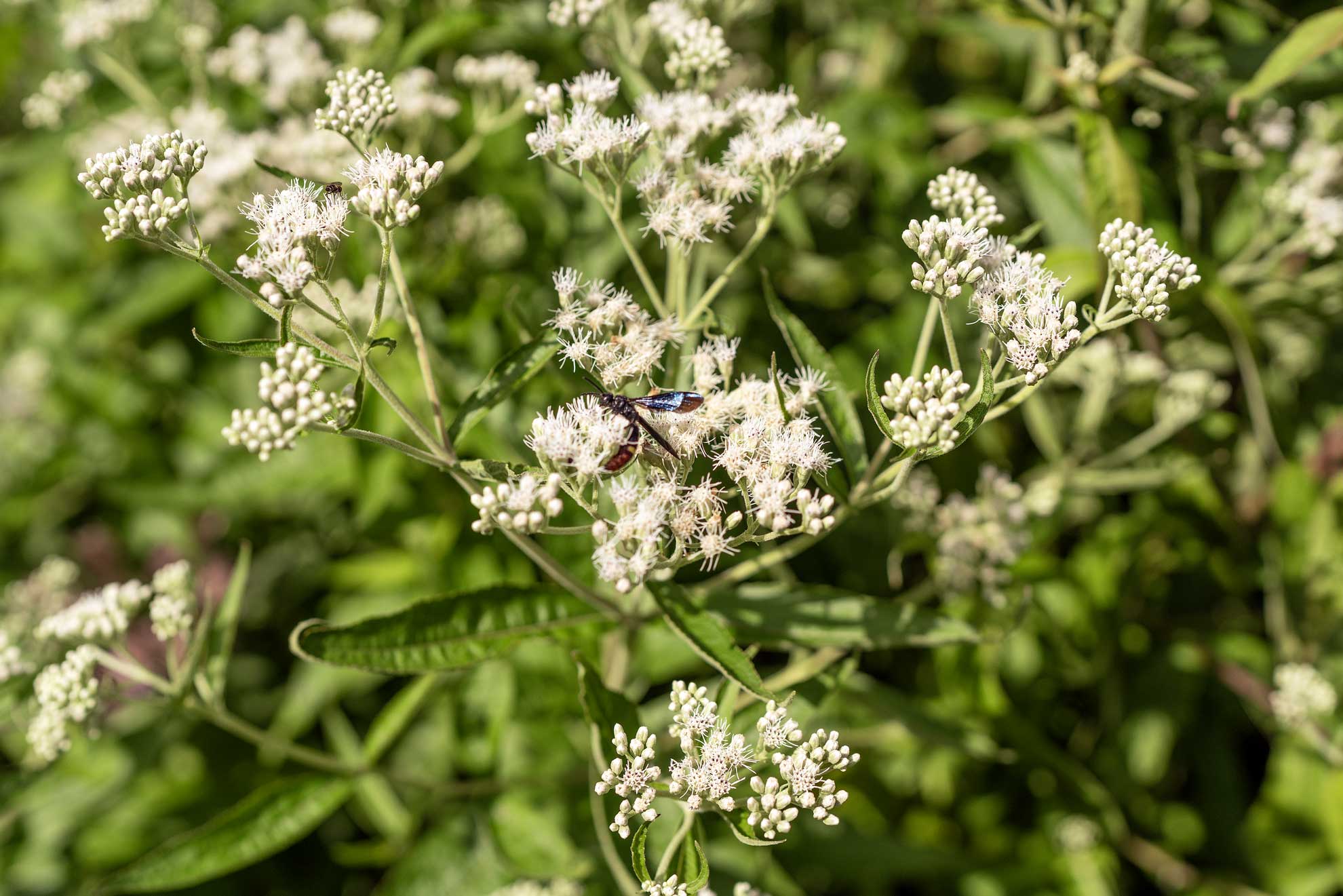
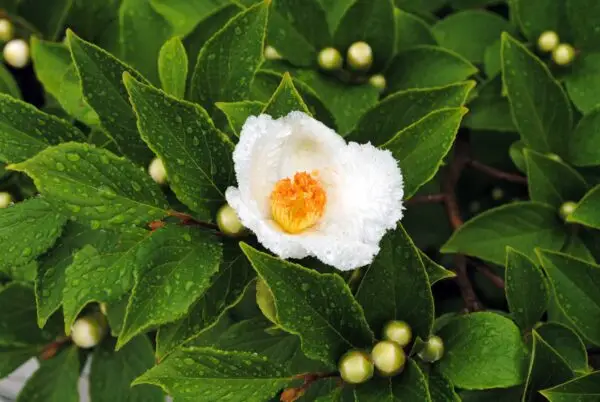
Does it remind you of another plant? There are a few native flowers in the same genus or that have similar flower shapes. Here are some similar natives:
Meet some other native grasses
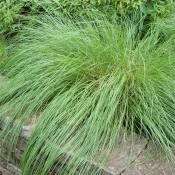
Getting into native grasses? Here are some others to introduce you to:
Where it grows naturally
In the wild, northern sea oats grows along woodland edges, forest openings, streambanks, and slopes. You’ll find it in areas with filtered light and well-drained soil, often beneath trees where grasses are rare.
In a yard, that looks like shady side yards, under tree canopies, along paths, or at the back of mixed beds where sun is limited. Planting it there mirrors the woodland-edge conditions it’s adapted to.
Where is northern sea oats native?
This beautiful grass has a huge native range, from New Jersey all the way to Arizona.
Where northern sea oats shines in your yard
Northern sea oats is a workhorse for part-shade gardens. Use it to soften fences, fill awkward gaps, or add height behind lower-growing plants. Its oat-like seedheads catch light and sway with the slightest breeze, bringing motion to still corners of the yard.
It’s especially effective when planted in drifts, where the seedheads overlap and create a layered, almost woven effect from late summer into fall.


How to grow northern sea oats
- Sun: Part shade is ideal; tolerates full sun with enough moisture.
- Soil: Average to dry, well-drained soil. Stay away from wet, soggy areas.
- Water: Regular water the first year; drought-tolerant once established.
- Maintenance: Cut back in late winter or early spring before new growth starts for a tidy look (or take a page from nature and leave it!)
A note on spreading
Northern sea oats self-seeds. In most gardens, this is manageable, but if you want to limit the spread, trim the seedheads before they drop.
The seedheads also look great in floral arrangements. To keep them from shedding and making a mess, lightly spray the dried seedheads with hairspray before using them.
Where can I find northern sea oats?
Skip the big-box nurseries and head straight to a native-friendly source to find this gem. Here are four sources (and lots of links!) to help you find some northern sea oats for your yard:
Where can I find seeds and plants?
Finding native plants can be challenging (we partly blame Marie Antoinette.) To make it easier, we’ve assembled four sourcing ideas.
300+ native nurseries make finding one a breeze
Explore 100+ native-friendly eCommerce sites
Every state and province has a native plant society; find yours
Online Communities
Local Facebook groups are a great plant source
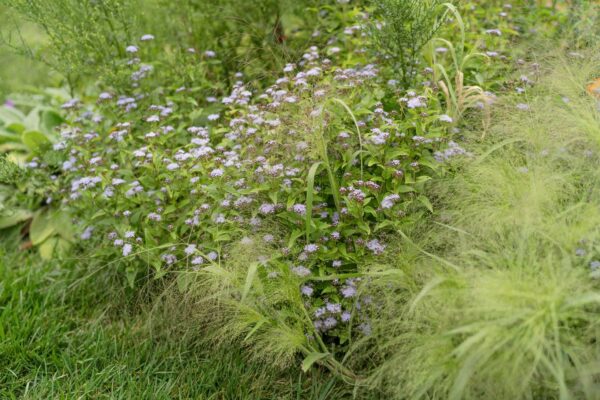
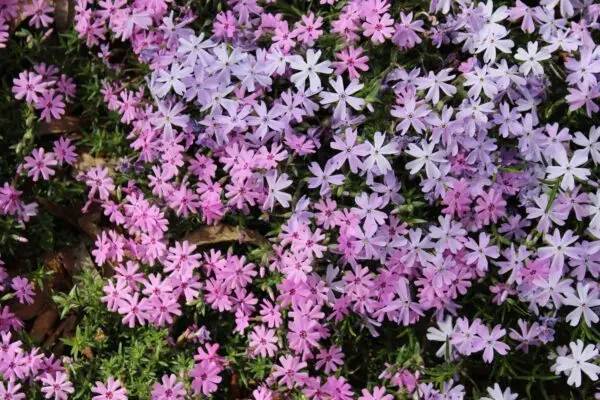
What are good pairings for northern sea oats?
There are a zillion great options for northern sea oats, including some iconic native plants that like the same part sun/shade mix. Here are some suggestions:

Pairs well with
Northern sea oats proves that grasses don’t have to be background players. It brings movement to shade, texture to quiet spaces, and structure that lasts long after flowers fade. If you’re trying to move beyond mulch-heavy beds or struggling with low-light areas, this is a plant that meets you halfway—and then keeps showing up. Where to next? Can we recommend meeting some other hiding-in-plain-sight native gems profiled in our Beginner’s Guide to Native Columbines, or our Beginner’s Guide to Native Viburnums? Happy planting!
Sources
- Ncsu.edu. “Chasmanthium Latifolium (Indian Wood Oats, Inland Sea Oats, Northern Sea Oats, River Oats, Wild Oats, Wood-Oat).” North Carolina Extension Gardener Plant Toolbox, n.d.
- Missouribotanicalgarden.org. “Chasmanthium Latifolium – Plant Finder,” n.d.
- Wildflower.org, Lady Bird Johnson Wildflower Center – the University of Texas at Austin, “Chasmanthium latifolium,” 2023.
- The Morton Arboretum. “Northern Sea-Oats,” March 28, 2024.