

Highlights
Golden ragwort is one of the first native wildflowers to bloom each spring—bursting into bright yellow daisy-like flowers just as the garden is waking up. It spreads quickly to form lush, semi-evergreen mats of heart-shaped leaves, creating an easy, living groundcover for damp or partly shady spots.
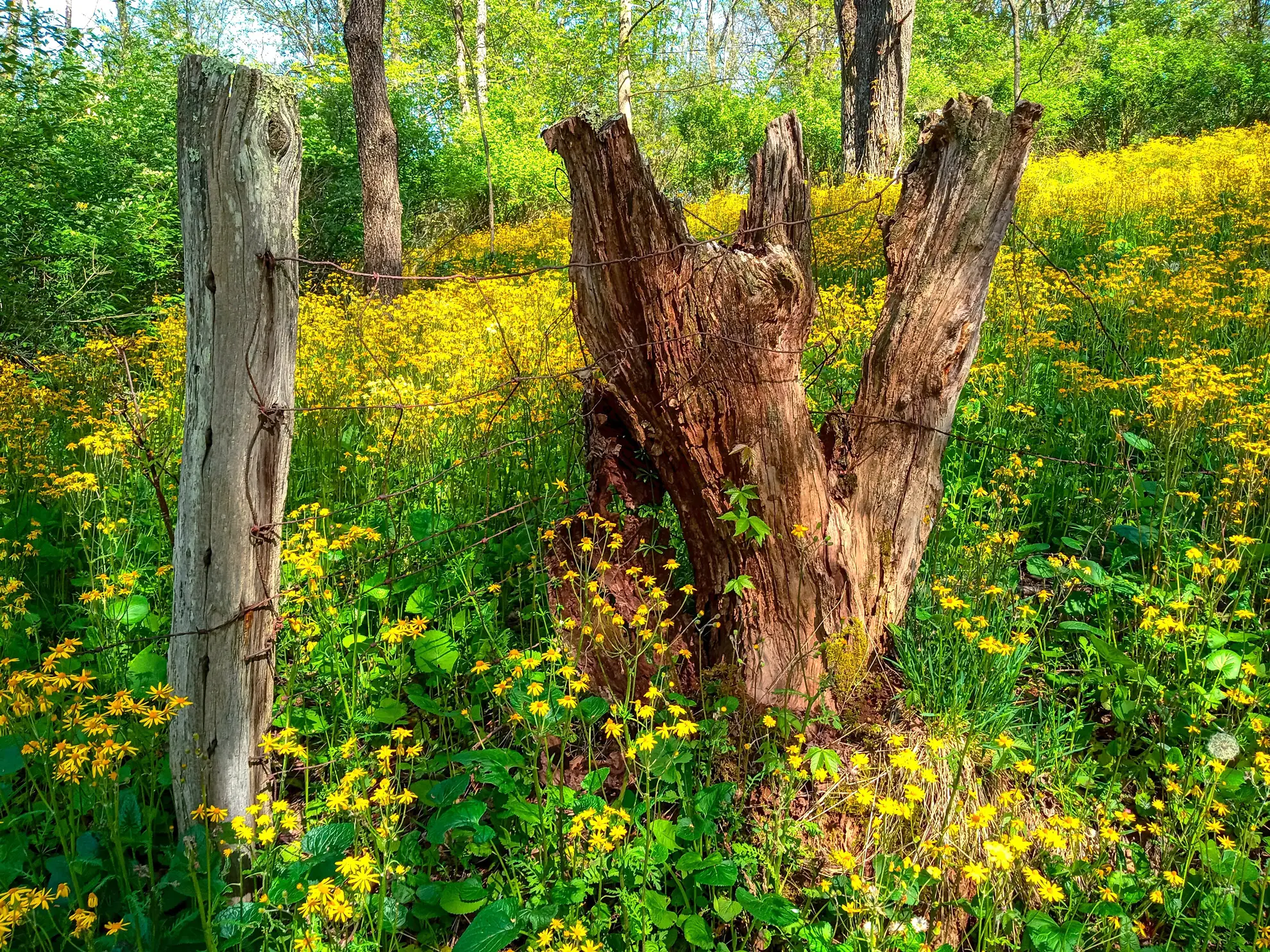
Is golden ragwort a good choice for my yard?
Yes, if:
- You want a fast-spreading native groundcover that handles wet feet and shade.
- You want color in April when everything else still looks asleep.
- You’re replacing invasive groundcovers like English ivy or periwinkle.
Where it grows naturally
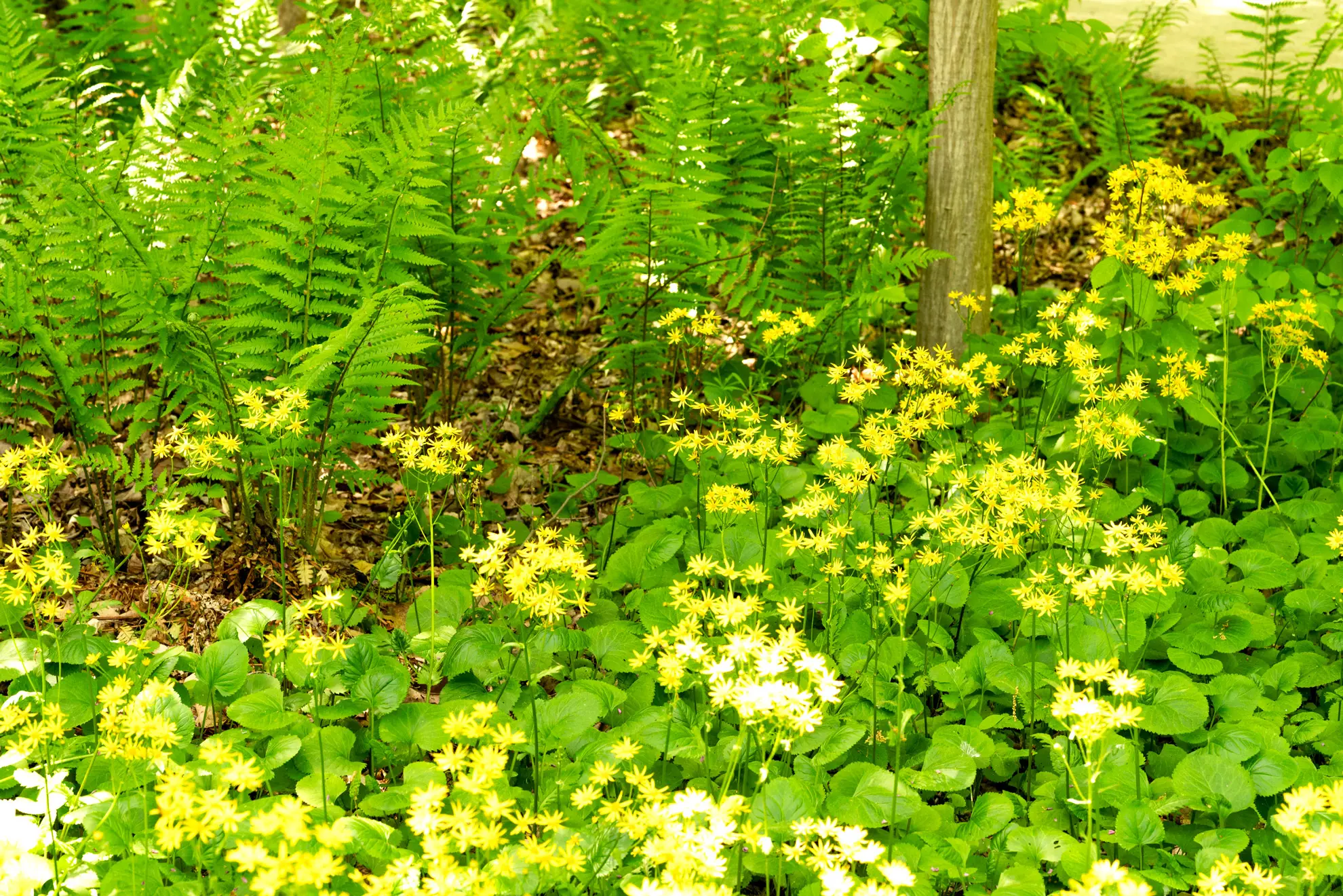
In the wild, golden ragwort thrives in moist woodlands, streambanks, and low-lying meadows—places where the ground stays damp but not flooded. You’ll often find it growing with ferns, blue flag iris, and wild geranium, forming lush green carpets beneath taller perennials and shrubs.
In a yard, that translates to shaded borders, rain gardens, or the soggy corner of your lawn that never fully dries out. Planting golden ragwort there recreates that natural woodland edge community—an early-spring refuge for pollinators and a bright burst of gold when the rest of the garden is still waking up.
Where is golden ragwort native?
Native to 32 US states, Washington, D.C., and 7 Canadian provinces (Manitoba, New Brunswick, Newfoundland and Labrador, Nova Scotia, Ontario, Prince Edward Island, Quebec)
Sources: NatureServe, Royal Botanic Gardens, Kew (World Checklist of Vascular Plants) and the USDA PLANTS Database, compiled by The Plant Native. How we map native ranges
So the name ragwort literally translates to “ragged plant.” Thanks for nothing, early colonial copywriters!
Why golden ragwort matters
When most gardens are still gray from winter, golden ragwort is already at work—feeding emerging pollinators like early bees and flies. Its dense foliage also suppresses weeds naturally, offering a low-maintenance alternative to mulch in shady or wet areas. And while “ragwort” sounds weedy, this native gem is anything but: it’s hardy, adaptable, and beautiful in bloom.
Where golden ragwort shines in your yard
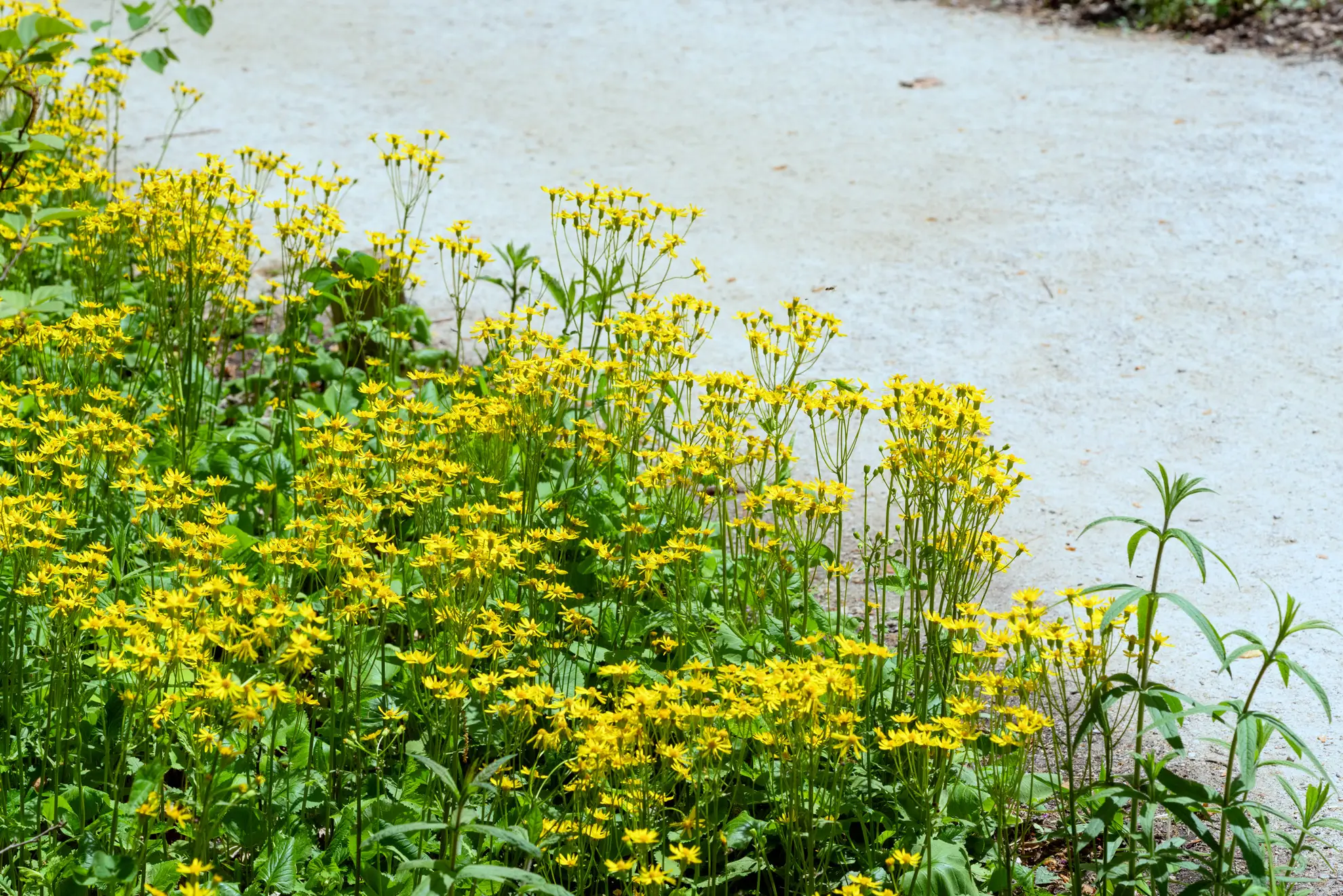
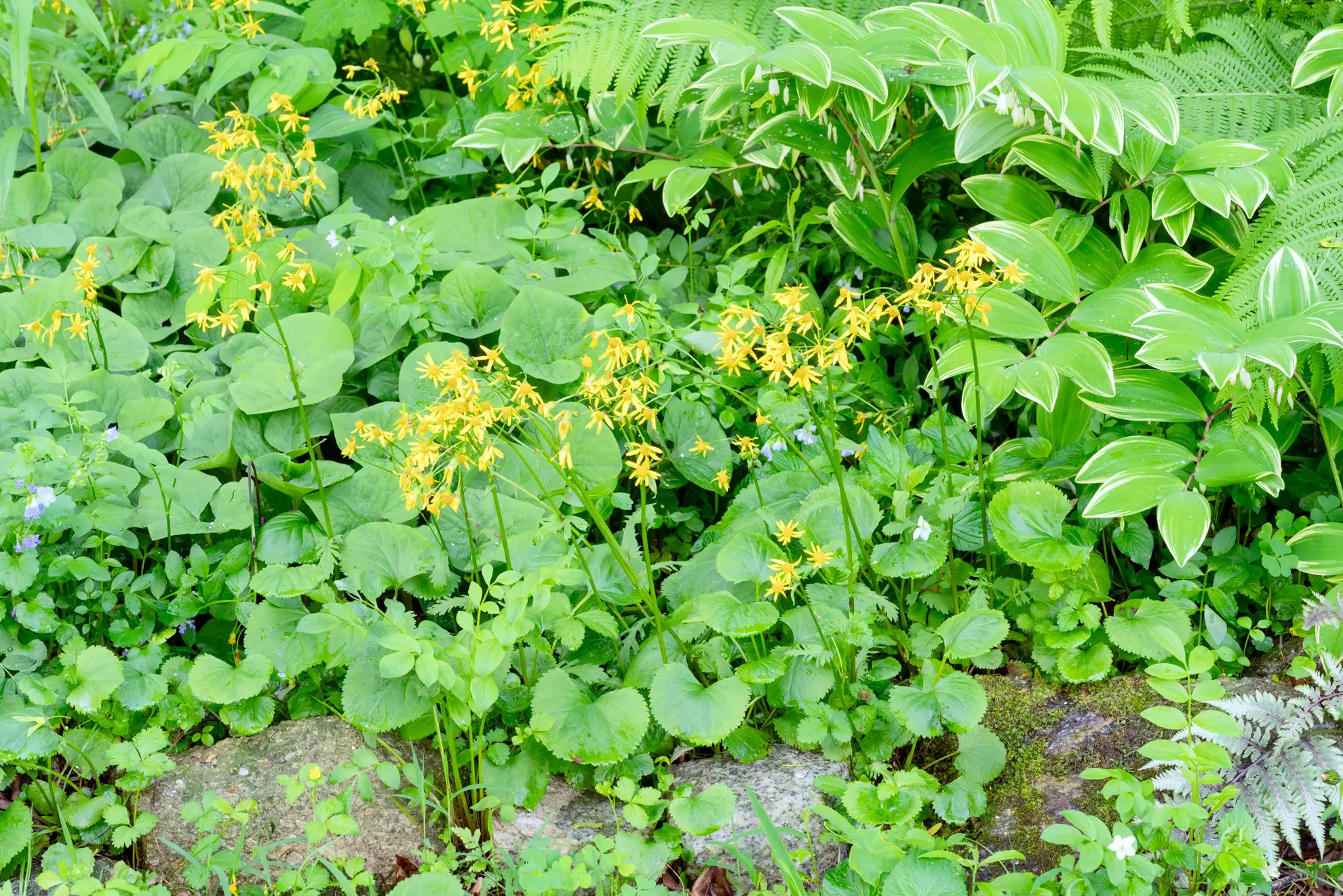
Golden ragwort is a natural fit for rain gardens, shady borders, and damp low spots where lawns tend to fail. Its heart-shaped leaves form a dense, weed-smothering carpet that stays green most of the year, while bright yellow blooms bring early color to the spring garden.
Though it prefers moisture, golden ragwort is surprisingly adaptable—once established, it can thrive in average garden soil and even light sun.
Use it to fill gaps under shrubs, edge a woodland path, or create a golden sweep at the edge of a pond. In bloom, it lights up the shade and offers one of the first big meals of the season for emerging pollinators.
How to grow golden ragwort
A few notes before planting golden ragwort in your yard:
- Moisture is key. In nature, it thrives in consistently damp soil. Choose a spot that stays moist after rain, or near downspouts and low areas.
- Give it room. Golden ragwort spreads quickly by rhizomes, forming a dense groundcover over time. It’s perfect for filling in tricky areas but can overwhelm delicate neighbors.
- Tolerates more than you think. While it loves moisture, established plants handle average garden soil and short dry spells surprisingly well.
- Cut back if needed. After flowering, you can trim the bloom stalks to tidy the look or prevent self-seeding.
Plant nerd fact
Why is it called ragwort? It sounds awful!
The common name ragwort comes straight out of Old English.
The word wort (from wyrt) simply meant “plant” or “herb,” and appears in many old plant names, like another gorgeous native plant: spiderwort. The rag part comes from the ragged or irregular shape of the leaves.
So the name ragwort literally translates to “ragged plant.” Thanks for nothing, early colonial copywriters!
Sadly, there are plenty of bad names for gorgeous natives. Visit our Terrible Names, Beautiful Natives to meet some others. Maybe plant a garden based on crazy native names…?
Once established, golden ragwort is one of the easiest natives you can grow—low effort, big payoff, and a reliable sign that spring has truly arrived.
Planting card
Packera aurea
What are good pairings for golden ragwort?
Golden ragwort likes consistent moisture and shade (part shade to full shade). Pair with other natives that thrive in this environment, like:


Where can I buy golden ragwort?
We are not going to lie and say that finding golden ragwort is going to be as simple as driving to your closest plant nursery. It might take a little extra energy to find this native gem, but it is worth it! Here are some sources for this native plant:
Golden ragwort is one of those plants that quietly earns its keep. It fills the bare, damp corners most plants avoid, then greets spring with a burst of gold that feels like sunshine breaking through the trees. It asks for almost nothing—no fertilizer, no fuss—and rewards you with months of green and weeks of color. Whether you’re building a rain garden, softening the edge of a woodland, or just tired of staring at mulch, golden ragwort will happily step in. It’s proof that even the most practical plants can be beautiful. Looking to explore some other strangely named plants? Head over to our Terrible Names, Beautiful Natives, or meet another wort in our Beginner’s Guide to Spiderwort. Happy planting!
Sources
- Missouri Department of Conservation. “Ragworts (Groundsels),” 2025. https://mdc.mo.gov/discover-nature/field-guide/ragworts-groundsels.
- United States Department of Agriculture; Natural Resources Conservation Service (Usda.gov.) “Packera aurea (L.) Á. Löve & D. Löve,” n.d. https://plants.usda.gov/plant-profile/PAAU3.
- Etymonline. “Ragwort.” Online Etymology Dictionary.
- Etymonline. “Wort.” Online Etymology Dictionary.
- Using Georgia Native Plants. “The Rise of Ragworts.” May 2022.
Similar plants
-
 Spring Beauty
-
 Golden Alexander
-
 Irises
-
 Blue-Eyed Grass
-
 Mountain Mints
-
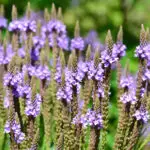 Blue Vervain
-
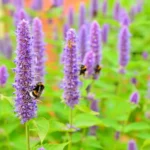 Hummingbird Mint
-
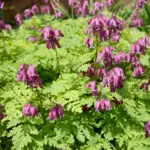 Bleeding Heart
-
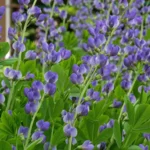 False Blue Indigo

Updated Find more: Yellow Deer Resistant Flower Spring Part Sun Full Shade
The ads on this site help pay real native plant nerds to research and write these guides.
Garden notes
Notes from people who’ve grown it
Tips, wins, and the occasional disaster. If you’ve grown golden ragwort, share the advice you’d give to a neighbor.
No notes yet. Yours could be the first.
Grown golden ragwort? Tell the next person what you wish someone had told you.
Tap anywhere to close


