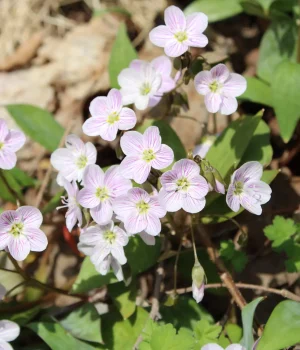
One of the earliest native U.S. wildflowers is the delicate charmer known as spring beauty. These flowers greet spring with a show of elegant white flowers with tiny pink pinstripes. And because they’re so early, the blooms provide a crucial source of food for native pollinators as they wake up hungry from hibernation.
If you have a good spot, you can grow these iconic flowers yourself. Scroll on to learn more.
What is spring beauty?
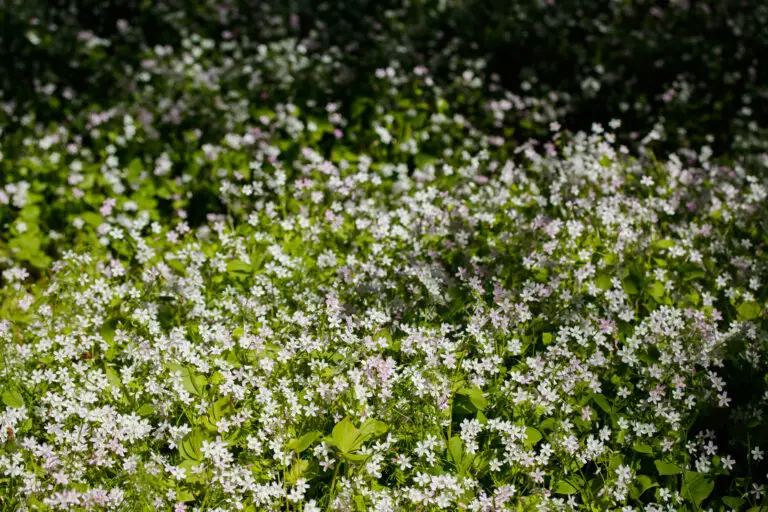
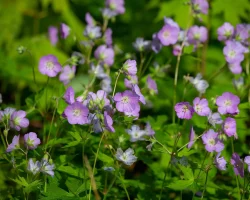
If you’ve ever been walking in the woods in the spring in eastern North America, you may have encountered carpets of wildflowers with the most delicate pale pink blooms. These little plants, which are aptly named spring beauties, grow just six to eight inches tall.
You can think of them as the native version of crocuses. With one crucial difference—they are a lifeline for lots of native pollinators!
Because they bloom so early, spring beauties are visited by many types of native bees and other pollinators. Some of these species are increasingly rare or endangered. In fact, there is a species of bee that evolved to pollinate only this flower—known as the spring beauty mining bee.
Despite their delicate appearance, spring beauties are one of the tougher wildflowers, often surviving even when their habitat is damaged. If you have a spot with good soil in your yard, you can grow these eastern North American gems.
How to grow spring beauty
The most important part of growing spring beauties is choosing where to plant them.
In the wild, spring beauties grow in woodlands and along streambeds. They like rich soil such as you’d find in the woods underneath trees where lots of leaves have decomposed over time. If you have a spot in your yard or garden like this, it’s perfect for spring beauties.
Illinois Wildflowers says that spring beauties can even be grown in semi-shaded areas of lawns if you delay mowing in the spring.
Spring beauty plants are usually for sale in spring, so look for them then. Keep them well-watered after you transplant them. But after they’ve got a year or two under their belts, they can survive on just rainwater.
If they’re happy, spring beauties will slowly spread.
Hey, where did she go?
Like many wildflowers, spring beauties will usually die back naturally to the ground in the summer after they’re done flowering. Don’t worry—if they’re planted in a good spot, they should reappear next spring, just like daffodils and crocus do. Just make sure to mark the spot where they’re planted so you don’t accidentally disturb them while they’re sleeping.
To help spring beauties come back year after year, leave the leaves in fall! It’s important for native pollinators who overwinter on fallen leaves, plus, the nutrients in the leaves break down into soil that’s perfect for woodland plants like spring beauty.
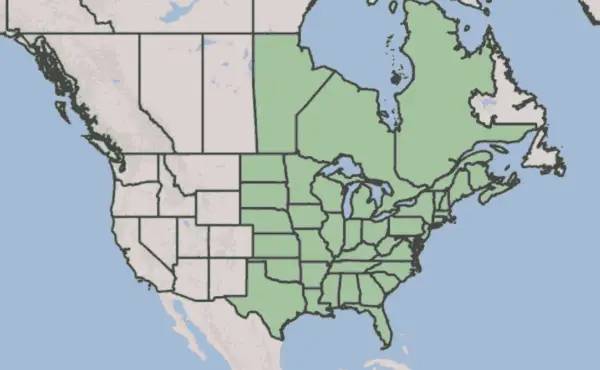
Where is spring beauty native?
Spring beauties are native to half of North America, from Nova Scotia to the Midwest United States.
Can I grow spring beauty from seed?
You can grow spring beauty from seeds…but it will take a while. Like a lot of other spring wildflowers, in order to sprout, spring beauty seeds need a period of being in warm and moist conditions followed by a period of cold, moist conditions. (This will happen naturally if you sow the seeds outdoors in the spring or summer.) Then it will take a year or two after that for them to get large enough to bloom.
Our advice is to compromise: buy a plant or two so that you see the blooms sooner, but also scatter some seeds for the future.
Do deer eat spring beauty?
Unfortunately, deer do sometimes eat bpring beauty, though it’s not usually their top favorite food. If you have a lot of deer in your area, they might browse your spring beauty plants. However, if you can protect them for the first year or so, the plants will usually be able to store enough energy to come back even if the leaves are eaten.
Where spring beauties shine in your yard
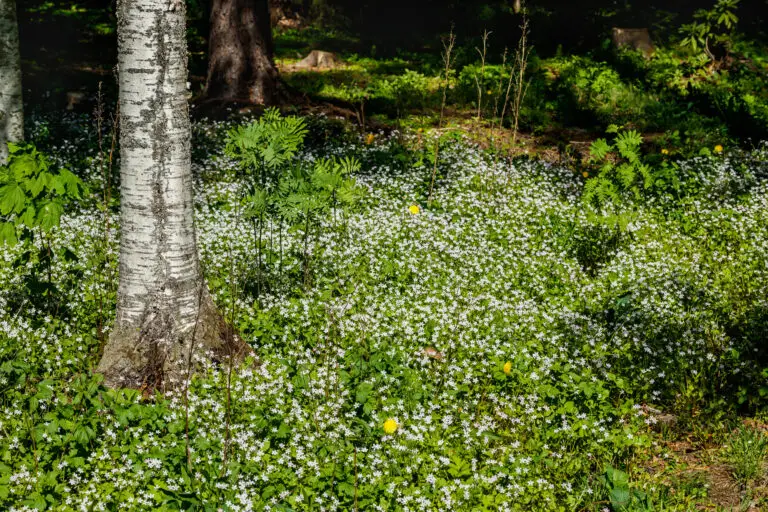
Because spring beauties are ephemeal flowers—here for the spring and gone for the summer—they are often planted in lawns. You can also plant spring beauties underneath deciduous trees (trees that lose their leaves) paired with other springtime native ephemerals like trout lily and trilliums.
Here is some spring beauty landscaping inspo:
Where can I find spring beauties?
We’re not going to lie, it can be a little hard to find native plants, especially the less common ones. But don’t worry, we’ve compiled a list of handy resources to find you your own spring beauties:
What are good pairings for spring beauties?
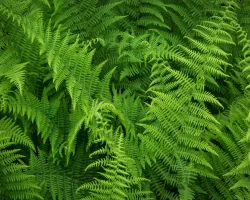
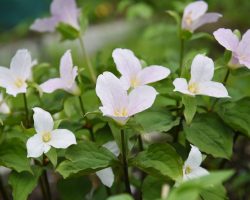
Good companion plants for spring beauty include other native spring woodland flowers, like trillium, Jack-in-the-pulpit, or trout lily. They also look lovely paired with small to medium ferns (check out our guide to native ferns) and other woodland plants that can grow over and fill the gaps when spring beauty dies back for the year.
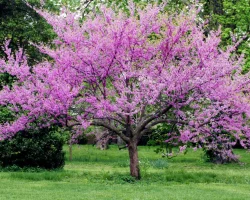
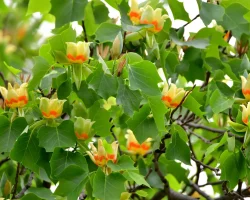
Spring beauty also loves to grow under trees and shrubs. Plant them around native maples, oaks, tulip poplars, redbuds, or other trees (meet a few of our favorite native trees here).
Spring beauties are one of the joys of spring. If you live in the eastern U.S. and have a nice semi-shaded spot underneath trees, plant some spring beauties and you can sit back and enjoy the show for years to come.
Next, if you’d like to meet some more native spring wildflowers you can grow in your own yard, head over to our guides to trilliums and trout lily. For even more, check out our guide to native spring flowering trees, shrubs, and plants. Happy planting!