
Highlights
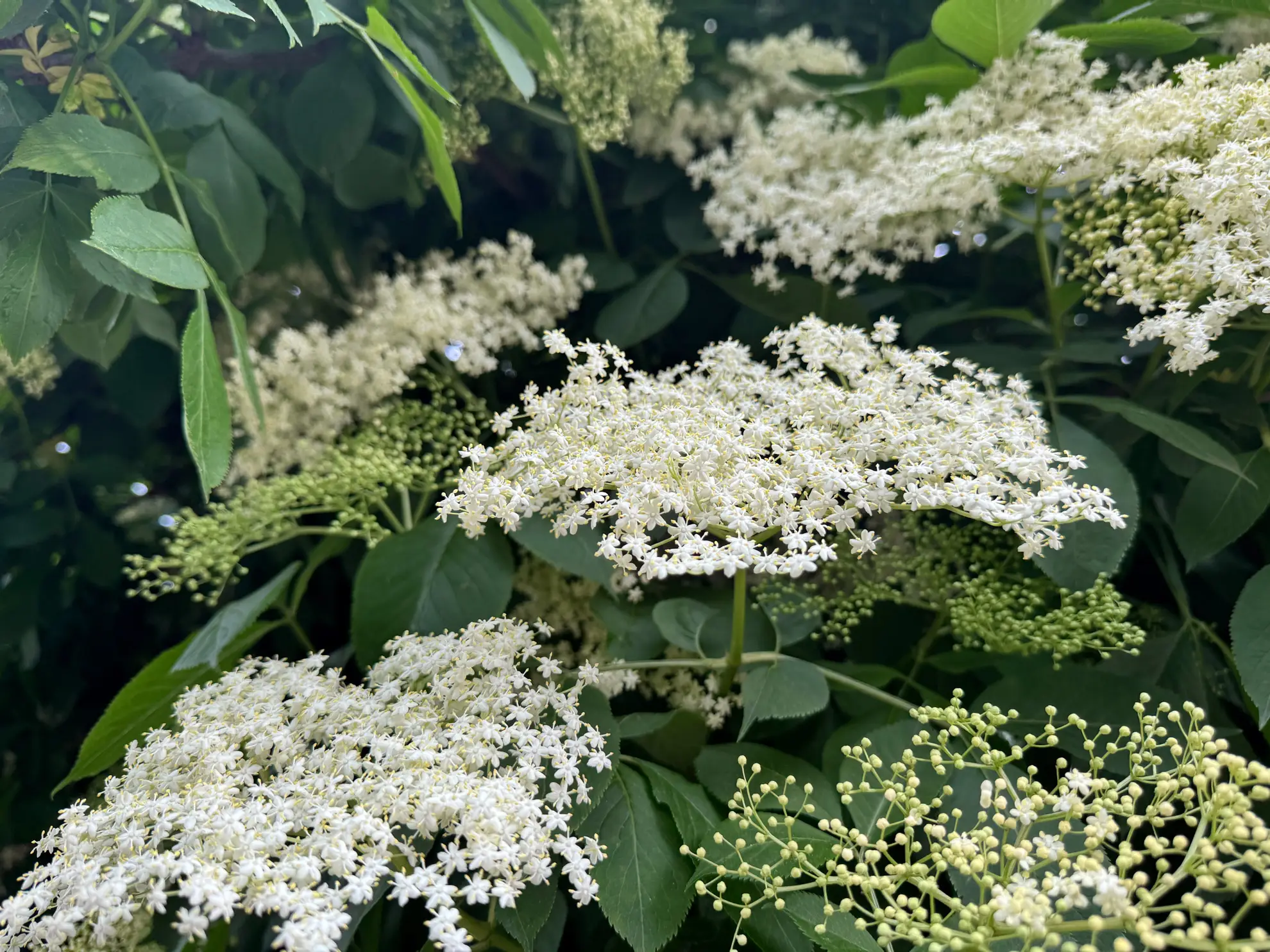
American elderberry might just be the most famous native shrub you’ve never planted. You’ve seen it in syrups, gummies, and wellness shots at the grocery store—but this plant isn’t some trendy import. It’s a North American native that’s been growing here for thousands of years. Fast-growing, loaded with clusters of white spring flowers, and dripping with dark purple berries by late summer, American elderberry is equal parts beautiful and useful.

Is American elderberry a good choice for my yard?
Yes, if…
- You have full sun to part shade: American elderberry is flexible but fruits best with plenty of sun.
- Your soil is moist or get consistently wet; it thrives along streams, ponds, and low spots but will also grow in average garden soil.
- You’re okay with a large, fast grower: plants can reach 6–12 feet tall and wide and grows quickly in a few years.
- You like showy flowers and fruit; flat clusters of white blooms in early summer followed by purple-black berries.
- You want to support wildlife; birds love the berries, and the flowers draw in pollinators.
- You’re interested in harvesting and processing fruit — the berries can be cooked into jams, syrups, or wine (never eat raw).
What other natives are edible?
Our Guide to Edible Native Plants has a great overview, which includes:


Give them a little care up front, and they’ll reward you with years of blooms for pollinators and berry clusters for birds (and your kitchen, if you like to make syrups or jams).
How to grow American elderberry
There are a few things to keep in mind if you’re considering planting American elderberry in your yard:
- Moisture matters. In the wild, American elderberry often grows in damp meadows, along streams, and at woodland edges. It thrives in consistently moist, well-drained soil.
- Sunlight. Plant American elderberry in full sun to part shade. More sun means more flowers and berries, while too much shade can limit production.
- Space. American elderberry is a fast grower and can reach 6–12 feet tall and just as wide. Give it plenty of room to spread, or plan to prune it back.
Pair planting. For maximum berry production, you’ll need at least two different elderberry plants for cross-pollination.
Once established, American elderberries are surprisingly tough. While they prefer moisture, mature shrubs can handle periods of dryness. Give them a little care up front, and they’ll reward you with years of blooms for pollinators and berry clusters for birds (and your kitchen, if you like to make syrups or jams).
Planting card
Sambucus nigra ssp. canadensis
Which elderberry is which?
“Elderberry” is a catch-all name that covers several species. To be sure you’re planting a native, check the Latin name.
Nurseries may carry:
- Sambucus nigra ssp. canadensis (American elderberry) — the classic native east of the Rockies.
- Sambucus racemosa (Red elderberry) — also native, found widely across the U.S. and Canada.
- Sambucus nigra (European elderberry) — common in plant nurseries, but not native.
- Sambucus nigra ssp. cerulea (often called Sambucus mexicana, Blue elderberry) — native to the western U.S.
If you’re aiming for native, look for Sambucus nigra ssp. canadensis in the east or Sambucus cerulea in the west.
Where is American elderberry native?
Native to 37 US states, Washington, D.C., and 5 Canadian provinces (Manitoba, New Brunswick, Nova Scotia, Prince Edward Island, Quebec)
Sources: NatureServe, Royal Botanic Gardens, Kew (World Checklist of Vascular Plants) and the USDA PLANTS Database, compiled by The Plant Native. How we map native ranges
What are good pairings for American elderberry?
American elderberry likes consistent moisture (in nature, you’ll find it along streams, lakes, and ponds.) Pair with other natives that thrive in this environment, like Joe Pye weed and cardinal flower.


Where can I buy American elderberry?
Finding true American elderberry can take more effort than grabbing a shrub from the nearest big-box nursery—but it’s worth it. Try:
And that wraps up our beginner’s guide to American elderberry. Forget the supermarket syrups—this native shrub has been here all along, feeding pollinators with clouds of white spring flowers and offering birds (and careful gardeners) clusters of rich purple berries by late summer. Plant it once, give it space, and it will reward you for years. Want to explore more berry-loving natives? Check out our guide to Edible Native Plants. Or build a whole garden for birds and visit our Best Native Plants for Birds. Happy planting!
Sources
- UC Agriculture and Natural Resources. “Blue Elderberry Compared to Black | UC Agriculture and Natural Resources,” June 6, 2025. https://ucanr.edu/site/california-elderberries/blue-elderberry-compared-black.
- Adkinsarboretum.org. “Elderberry : Indigenous Peoples’ Perspective Project : Programs | Events : Adkins Arboretum,” 2021.
- Missouribotanicalgarden.org. “Sambucus Canadensis – Plant Finder,” 2025.
- United States Department of Agriculture (USDA). “Plant Guide COMMON ELDERBERRY Plant Symbol = SANIC4,” n.d.
- Minnesotawildflowers.info. “Sambucus Canadensis (Common Elderberry): Minnesota Wildflowers,” 2015.
Similar plants
-
 American Plum
-
 Roses
Roses
-
 Highbush Blueberry
-
 Hackberry
-
 Serviceberry
-
 Ninebark
-
 Viburnums
-
 Spicebush
-
 Buttonbush
Updated Find more: White Edible Flowering Shrub Spring Full Sun Part Sun
The ads on this site help pay real native plant nerds to research and write these guides.
Garden notes
Notes from people who’ve grown it
Tips, wins, and the occasional disaster. If you’ve grown American elderberry, share the advice you’d give to a neighbor.
No notes yet. Yours could be the first.
Grown American elderberry? Tell the next person what you wish someone had told you.
Tap anywhere to close


