Plant Profile Full Sun

Rose Mallow

Hibiscus moscheutos

Dinner plate-sized flowers for wet gardens.

Where to find one ↓
Highlights

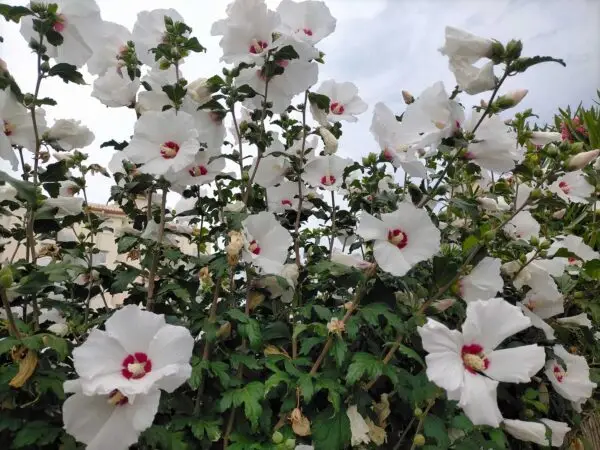
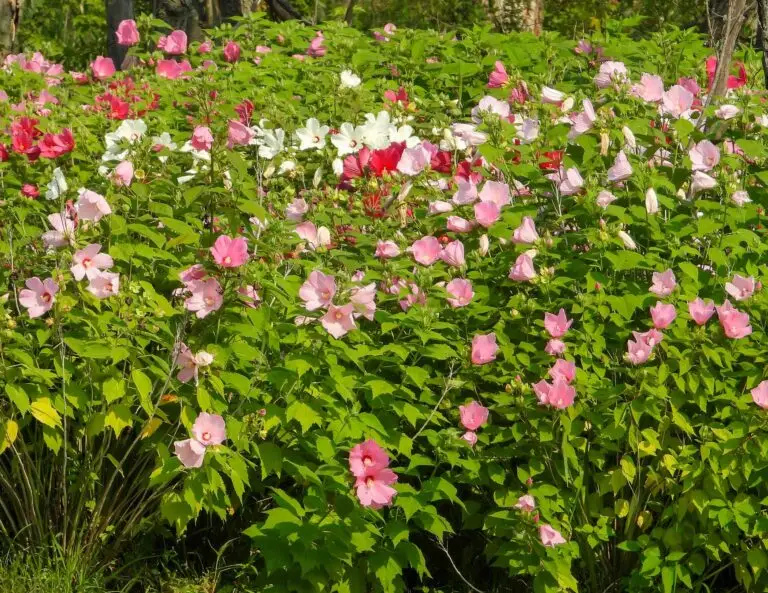
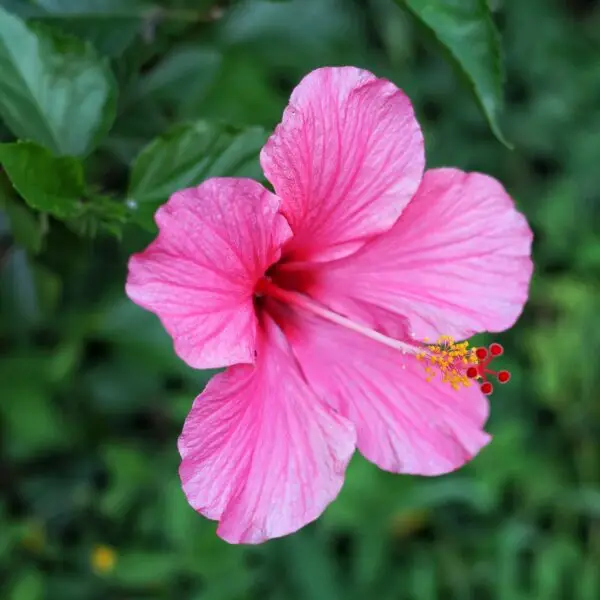
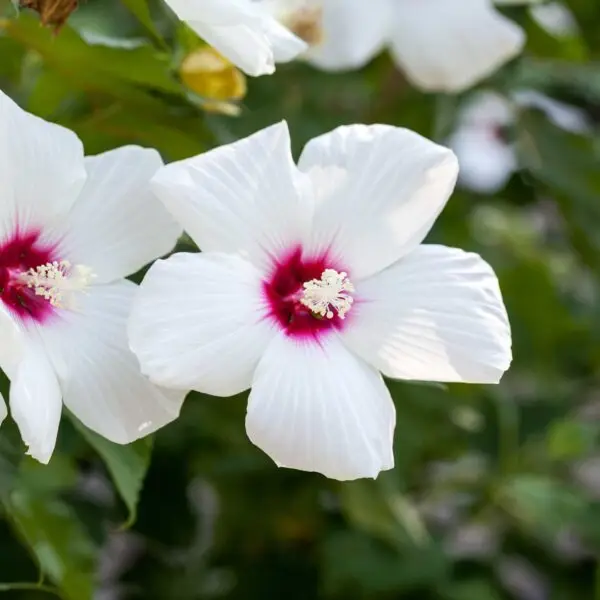
Rose mallow is the native cousin of the hibiscus you’ll find at big-box stores. With flowers as large as dinner plates in shades of pink, red, and white, it’s a showstopper that also happens to be a pollinator powerhouse. Unlike its tropical relative, rose mallow is hardy, perennial, and comes back year after year. Plant it once, and it will reward you with towering stems and weeks of giant blooms.

Native rose mallows come in many colors (white to pink) and cultivars offer even more variety

Is rose mallow a good choice for my yard?

Yes, if…

  • You want huge, hibiscus-like flowers that return every summer.
  • You have a sunny, moist spot—like a low-lying area, rain garden, or pond edge.
  • You want a tall, dramatic perennial for the back of a border.
  • You’re looking for a host plant that supports butterflies and moths.

New to native?

Before lawns and landscaping, native plants were here. They’ve fed birds, bees, and butterflies for thousands of years—and they’ll do the same in your yard. The best part? They’re easier to grow than you think.

Why rose mallow matters

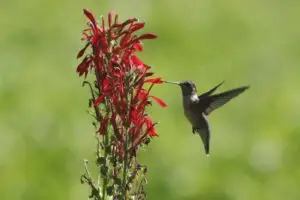
  • Pollinator magnet: Its massive blooms draw bees, butterflies, and hummingbirds.
  • Perennial beauty: Plant once and enjoy flowers year after year.
  • Native alternative: Unlike tropical hibiscus (H. rosa-sinensis), which dies after frost, rose mallow belongs here.
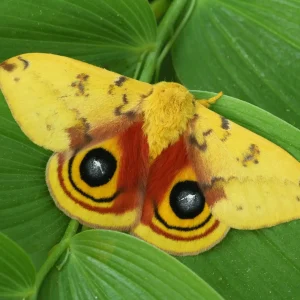
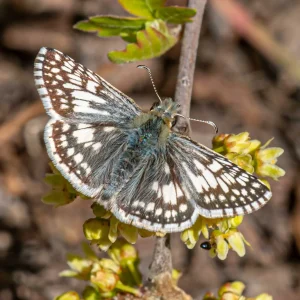
  • Host plant: Supports caterpillars of species like the io moth and common checkered skipper.
#image_title
The iconic io moth lays its eggs on native rose mallow leaves
common-checkered-skipper-butterfly-native-host-plant
Common checkered skippers use rose mallow for caterpillar food

Are hibiscus and rose mallow the same?

No, hibiscus and rose mallow are not the same plant. The plant commonly called “hibiscus” has the Latin name Hibiscus rosa-sinensisand also goes by the common name Chinese hibiscus (as you can guess, it’s native to Asia). Here are their differences in a nutshell:

Hibiscus vs. Rose Mallow

Although their Latin names start with Hibiscus, these are different species.

Hibiscus

  • Hibiscus rosa-sinensis
  • Native to Asia
  • Dies after a frost; needs to be replanted next year
  • Super long stamen emerges from the center

Rose Mallow

  • Hibiscus moscheutos
  • Native to North America
  • Perennial and frost-resilient: plant once, comes back year after year
  • Stamen is shorter than non-native cousin

How can I make sure I’m buying native rose mallow?

Look at the Latin botantical name. Latin names were invented for exactly this reason: every plant has only one Latin name. To ensure you’re getting the right native plant, check the tag. If you see Hibiscus moscheutos, you’ve got the native plant. 

Don’t see the Latin name on the plant tag? Ask a staff member if they can help you. To find a specific native plant more easily, visit a native plant nursery in your area.

Where is rose mallow native?

Native to 28 US states, Washington, D.C., and 1 Canadian province (Ontario)

Native range
Not native

Source: USDA PLANTS Database

How to grow rose mallow

Give rose mallow full sun and moist soil, and it will thrive. It’s perfect for rain gardens, low spots in the yard, or the edges of ponds. In winter, stems die back to the ground, but don’t worry! New shoots emerge in spring. Each bloom lasts only a day or so, but plants produce many flowers over several weeks.

Does rose mallow come back every year?

Yes! Rose mallow is a perennial, meaning plant once, and it will return year after year. Rose mallow will die back in the winter when frost comes (the leaves will fall off, and the stem will die), but then re-emerge triumphantly to make new stems, leaves, and flowers from its roots in the spring.

Garden Recipe™
Rose Mallow
Hibiscus moscheutos
Full sun
Sun
Some work
Effort
Tall (5'+) tall
2-4 ft wide
Size
Summer
Blooms
What it needs
Sunlight
Full sun, 6+ hours South- or west-facing is ideal
Water
Likes it moist Pick a low spot, or plan to water often
Directions
Spacing
24-36 in About one arm's length apart
Watering
Weekly for the first season After that, rain is usually enough
Notes
Comes back?
Yes, every year Goes dormant in winter, that's normal. New growth each spring.
Hummingbird magnet. Hummingbirds love this one. Plant a few and you've basically hung a neon 'OPEN' sign for them.
Where rose mallow shines in your yard

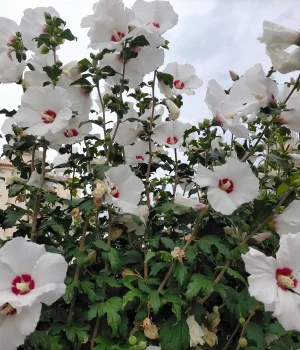
Use rose mallow as a dramatic vertical element at the back of borders, in rain gardens, or along fences where you want a wall of summer color. Its oversized blooms stand out against finer-textured plants and pair beautifully with yellows and purples. If you’ve got a sunny wet patch, rose mallow can turn it into the highlight of your yard.

What are good pairings for rose mallow?

Rose mallow is perfectly paired with other southern native plants that like wet areas. Some ideas for pairings include:

And that sums up our love letter to the incredible native flower rose mallow. These stunning flowers are epic in their height and their beauty. While each flower only lasts a few days, each plant puts out several, making the bloom time last a month or more. Finally, these are excellent choices for butterfly gardens since they are the host plant for several beloved ones—including the common checkered skipper and io moth. If you’re looking to add these to a rain garden, be sure to visit our Best Native Plants for Rain Gardens for more inspiration. Happy planting!

Woman smiling in a light blue blouse standing among white coneflowers in a lush garden.

Written by

Emily Lessard

Founder & Editor, The Plant Native

Emily Lessard is the founder and editor of The Plant Native, the site that helps homeowners across North America get started with native plants. She holds a Sustainable Landscapes certificate through the Pennsylvania Landscape & Nursery Association, is finishing a Native Perennial Garden Design Certificate at Temple University, and is the author of World of Native Plants (Quarto, February 2027). She gardens outside Philadelphia in the 8.3 Southeastern Plains ecoregion.
Meet Emily

UPDATED —
07/04/2026
In This Guide
Welcome to the helpful part of the internet:
How much time does native gardening take?
Way less work than a lawn.
Got space for a meadow? Blazing stars, rattlesnake masters, and native grasses are for you
Why are native plants hard to find?
Long story short: we forgot them.
#image_title
Why plant native?
Less work. More life.
Mix purple coneflowers with native grasses for lots of garden textures