

Highlights
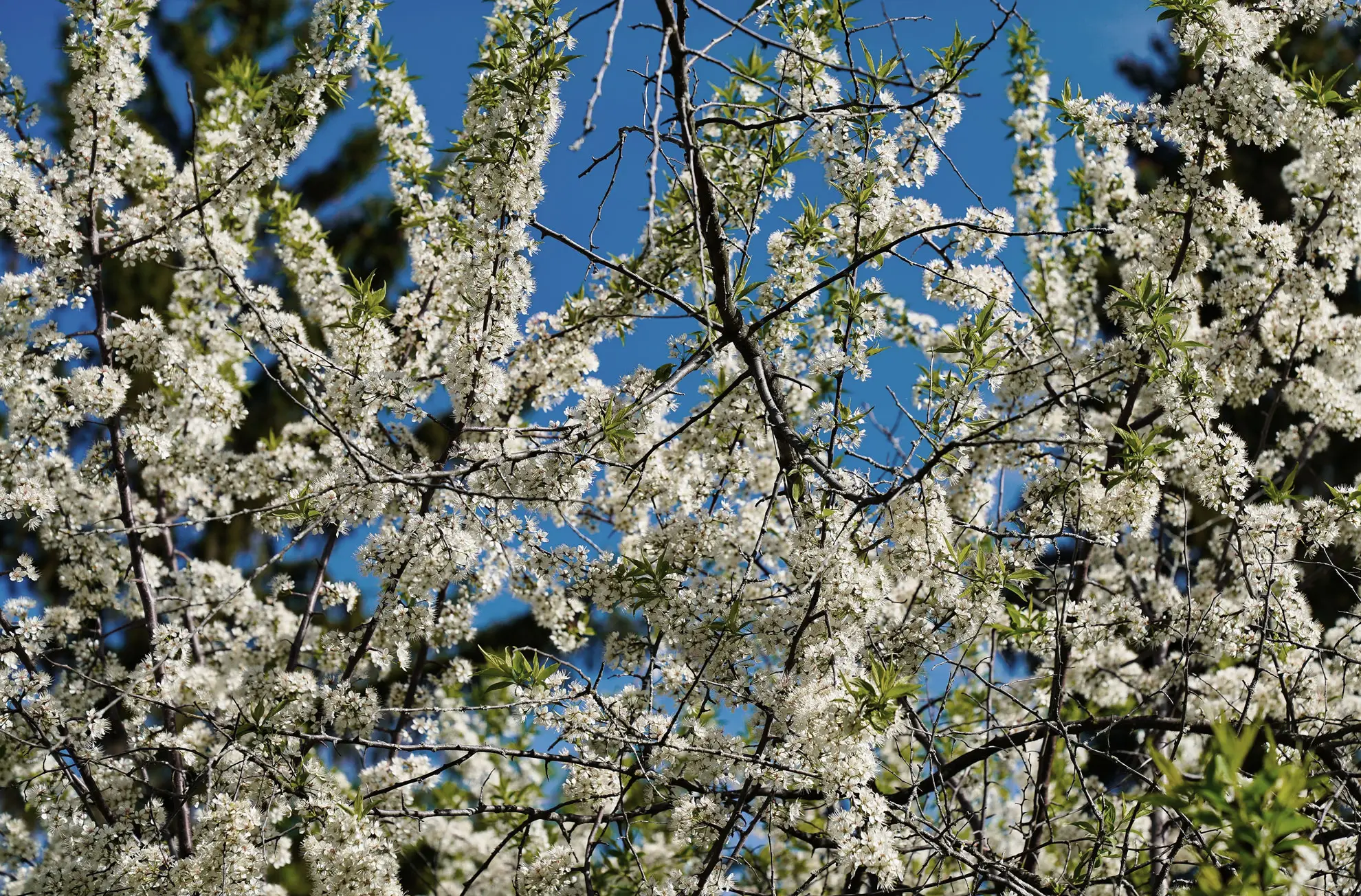
American plum is a small native tree that blooms before almost anything else. We are talking late March to early April, when the rest of the yard is still half-asleep. The branches disappear under dense clusters of white flowers, with a sweet, slightly honeyed scent that drifts across the yard. When summer arrives, the pollinated flowers become fruit: small, round, red-to-yellow plums with a sweet-tart punch that makes them perfect for jam, jelly, and eating straight off the branch. But you’ll need to beat the birds.
Is American plum right for my yard?
Plant it if…
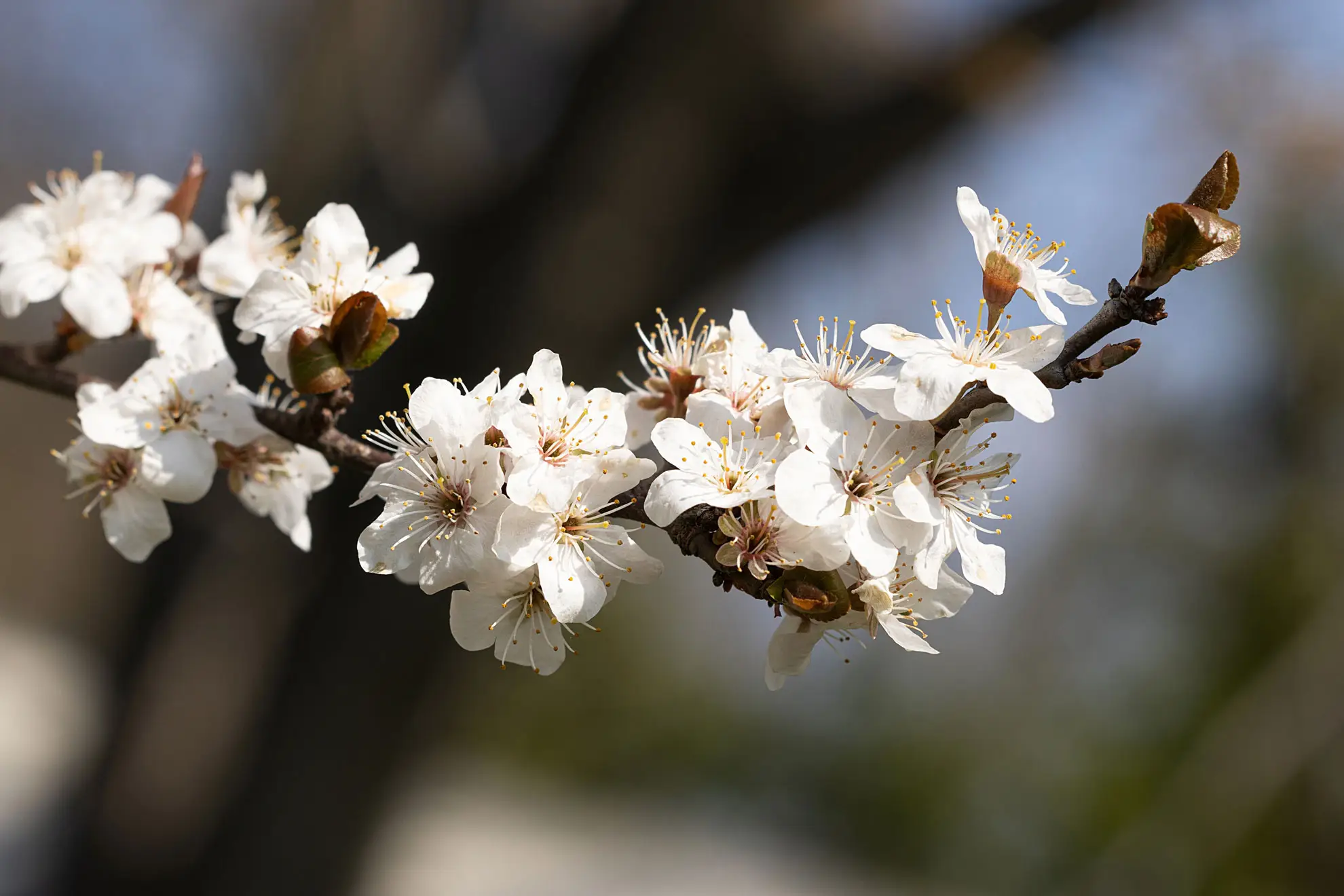
- You want a tree that blooms when almost nothing else does. American plum is one of the earliest spring-flowering natives, and those white blossoms are a lifeline for bees and butterflies just waking up.
- You have a sunny edge, a fence line, or a property boundary that could use a living screen. American plum forms dense thickets over time, and those thorny branches make a hedge that no one walks through uninvited.
- You like the idea of picking fruit from your own yard. The plums are small but intensely delicious, and they make a jam that will make store-bought become forever disappointing.
- You want to feed birds. The fruit attracts over 20 species, and the dense thickets give songbirds safe nesting spots away from hawks and cats.
- You live anywhere in zones 3 to 8. This tree has one of the widest native ranges of any North American fruit tree; scroll down for the native map.
Skip it if…
- You want a tidy, single-trunk specimen tree that stays put. American plum suckers from the roots and will slowly spread into a thicket over time. That is a feature if you want a hedgerow; it is a headache if you want a neat, single tree.
- You have a very small yard with no room for spread. A mature American plum colony can cover a lot of ground over the years.
- You do not want thorns. The branches have sharp thorns, which are fantastic for protecting nesting birds but less fantastic when you are pruning in a T-shirt or have kids.
- You want a large shade tree. American plum tops out at about 25 feet. If you need a shade canopy, look at Quercus (oaks) or Acer saccharum (sugar maple) instead.
Where is American plum native?
Native to 40 US states, Washington, D.C., and 3 Canadian provinces (Manitoba, Ontario, Saskatchewan)
Sources: NatureServe, Royal Botanic Gardens, Kew (World Checklist of Vascular Plants) and the USDA PLANTS Database, compiled by The Plant Native. How we map native ranges
This tree gets around
American plum has a range that makes most native trees jealous. It grows natively from Saskatchewan and Manitoba across to Quebec, south through the Great Plains and the eastern United States, and then all the way to northern Florida, and west to New Mexico.
That is a staggering spread of climate and zip codes. You can find it in tallgrass prairies, in Iowa hedgerows, in rocky valleys in Oklahoma, and at woodland edges in Vermont. It is the Duane “The Rock’ Johnson of fruit trees: surprisingly at home in millions of yards in most of North America.
American plum is a pioneer species, one of the first woody plants to move into disturbed ground after a fire, a flood, or a field that has been left alone. It thrives in the messy, in-between spaces: the edge of the woods, the back of the pasture, the strip between the road and the creek. This is a tree that does not need a manicured site with fancy irrigation. It needs light, and it can take it from there.
In simpler terms: butterflies and moths depend on plums, cherries, and their relatives more than you would expect, and losing them from a landscape hits caterpillar populations hard.
Why American plum matters
It’s a keystone species
If you are keeping score at home, there is a short list of native plants that do the most heavy lifting for wildlife. The genus Prunus is on that list. Research by researchers published in Nature Communications identified Prunus as a keystone genus, meaning it supports a disproportionately large number of butterfly and moth species.
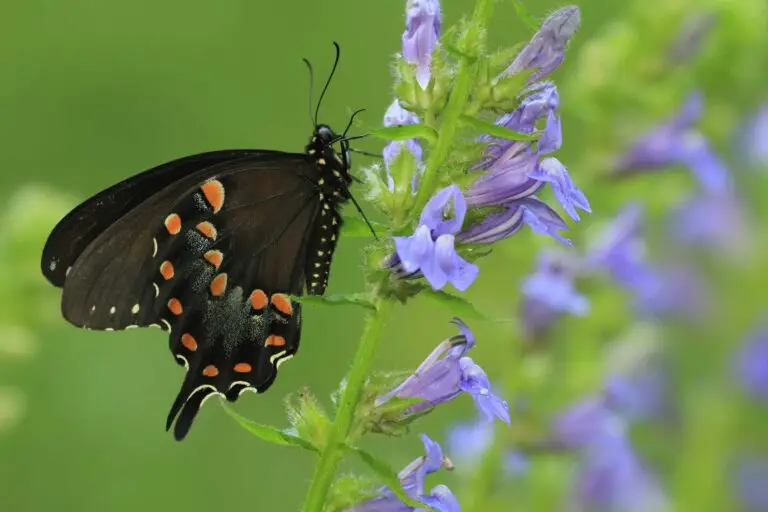
In simpler terms: butterflies and moths depend on plums, cherries, and their relatives more than you would expect, and losing them from a landscape hits caterpillar populations hard. Earlier work by Tallamy and Shropshire (2009) ranked Prunus among the top native woody plant genera for butterfly and moth host value. But it’s not just about caterpillars. The caterpillars feed baby birds. A yard with a plum tree in it is a yard where chickadees can actually raise their young.
This tree is also a pollinator favorite
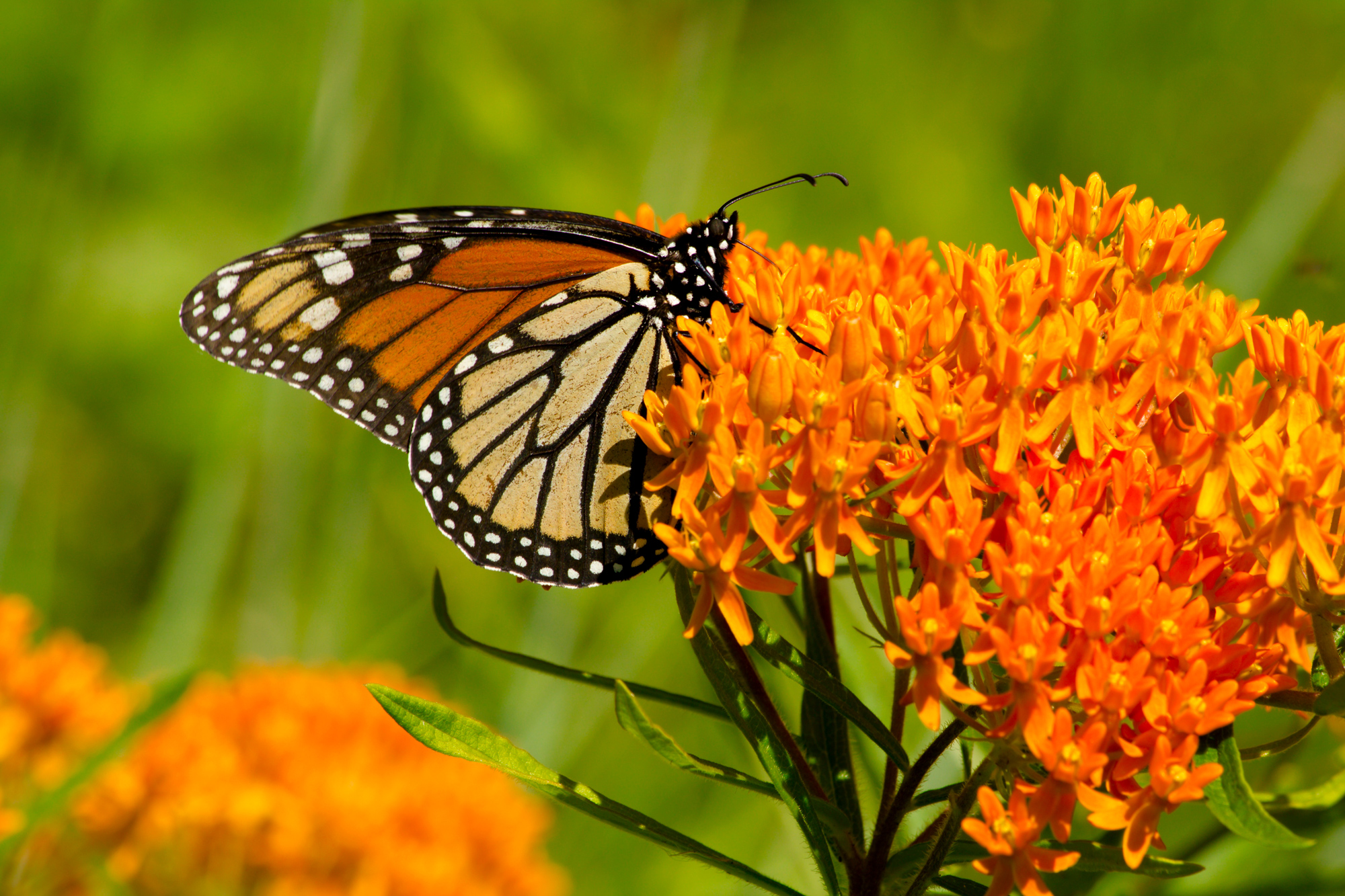
But American plum does not stop at caterpillars. Those early spring flowers are some of the first nectar and pollen available to native bees, mining bees, bumble bee queens, and other pollinators that emerge when nights are still cold and pickings are slim. Its bloom timing is purposeful. For pollinators, a late-March bloom in the Midwest must be like having your favorite food truck show up right when you wake up from a really good nap.
And it’s edible
Then there is the fruit. More than 20 bird species—and humans!—eat American plum fruit. The bird list itself is super fun: northern flickers, American robins, cedar waxwings, and gray catbirds. Many birds tuck themselves into the thorny branches where predators cannot easily bother. American plum is not just a tree. It is a wildlife apartment building with a cafeteria on the ground floor.
Where American plum shines in your yard
- Hedgerows and property lines. This is the classic use. American plum’s suckering habit and thorny branches create a dense, living fence that looks natural, feeds wildlife, and keeps unwanted visitors (four-legged and two-legged) from cutting through your yard.
- Wildlife corridors. If you have a strip of land connecting two wooded areas, or a buffer between your yard and a road, American plum thickets create safe passage for birds and small mammals moving through the landscape.
- Pollinator gardens. The early bloom time fills a critical gap when few other plants are flowering. Pair it with later-blooming natives like goldenrods and asters and you have nectar and pollen from March through October.
- Edible landscapes. A fruit tree that does not need spraying, fertilizing, or coddling? That is American plum. Visit our Best Native Edible Plants for more tasty inspo.
- Erosion control on slopes. The suckering root system holds soil in place, and the dense top growth slows water runoff. If you have a hillside that washes out every spring, this tree will grab on and hold.
- Naturalized areas. American plum is perfect for the part of your yard where you want something beautiful and useful but do not want to mow, water, or maintain. Plant it and walk away.
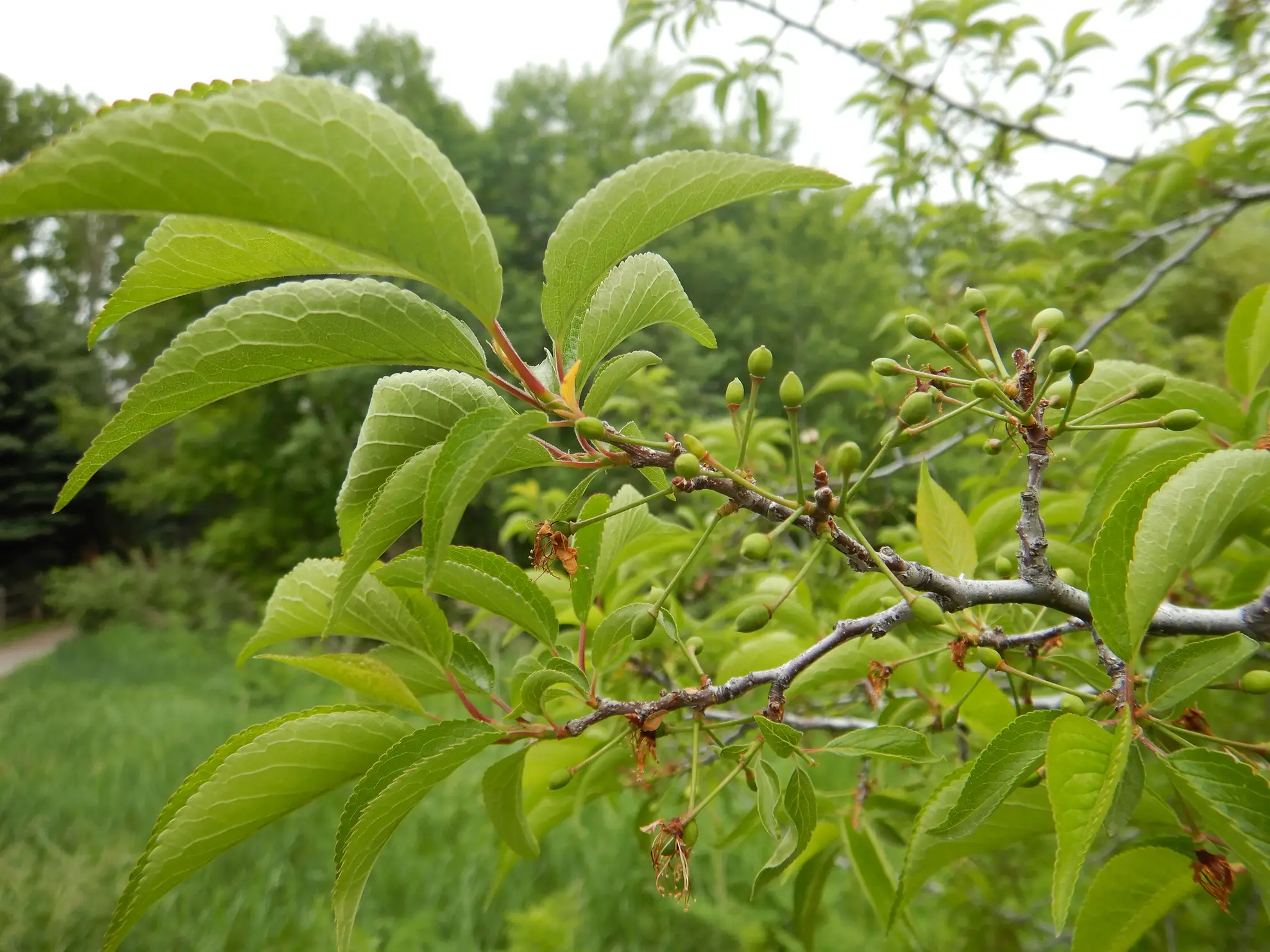
American plum through the year
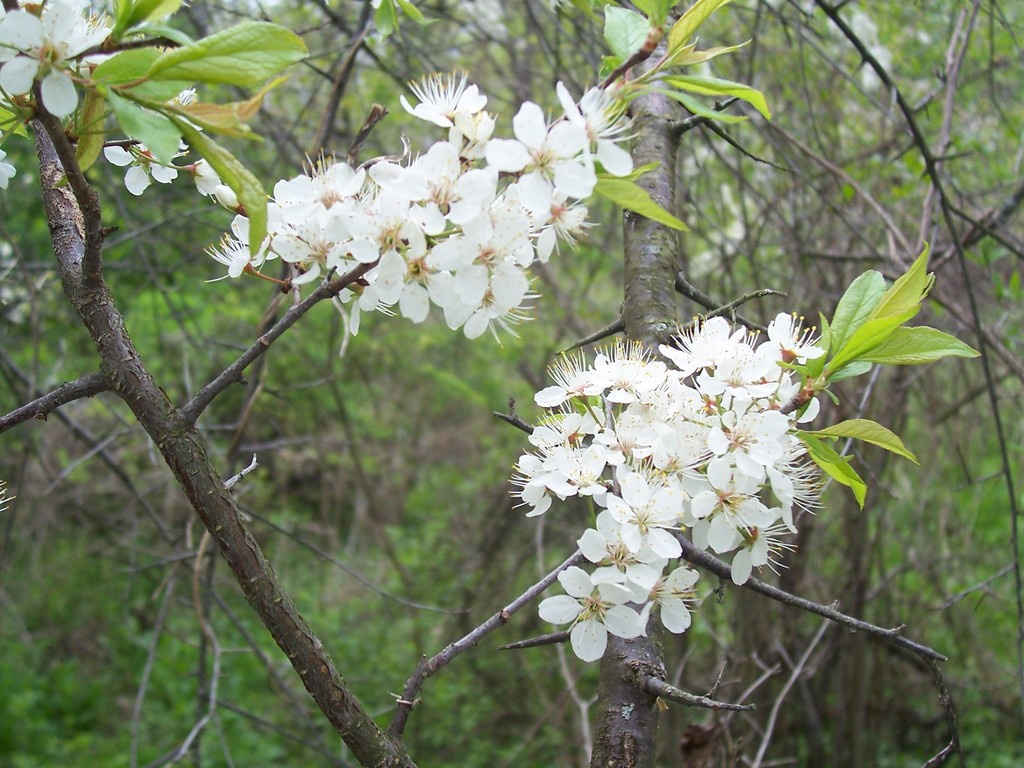
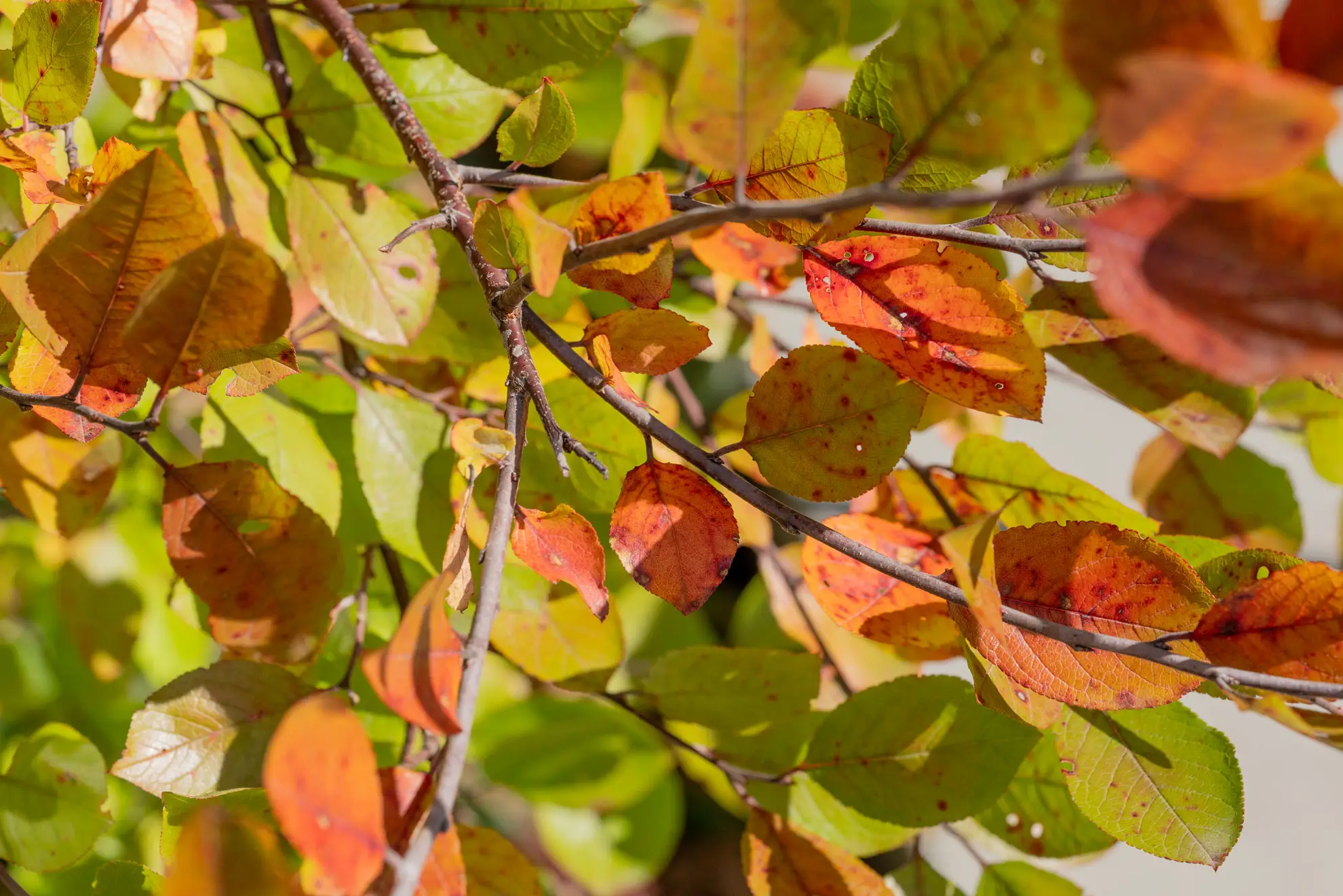
Spring
Dave Behm · iNaturalist · CC0
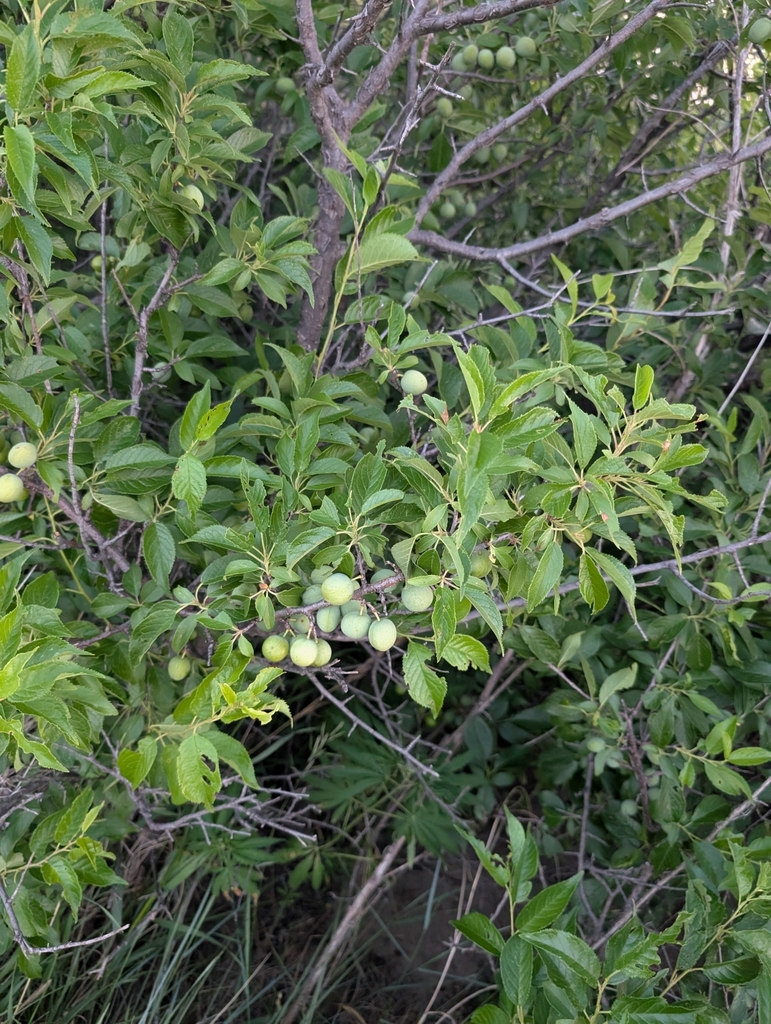
Summer
Jeff Hansen · iNaturalist · CC BY · cropped
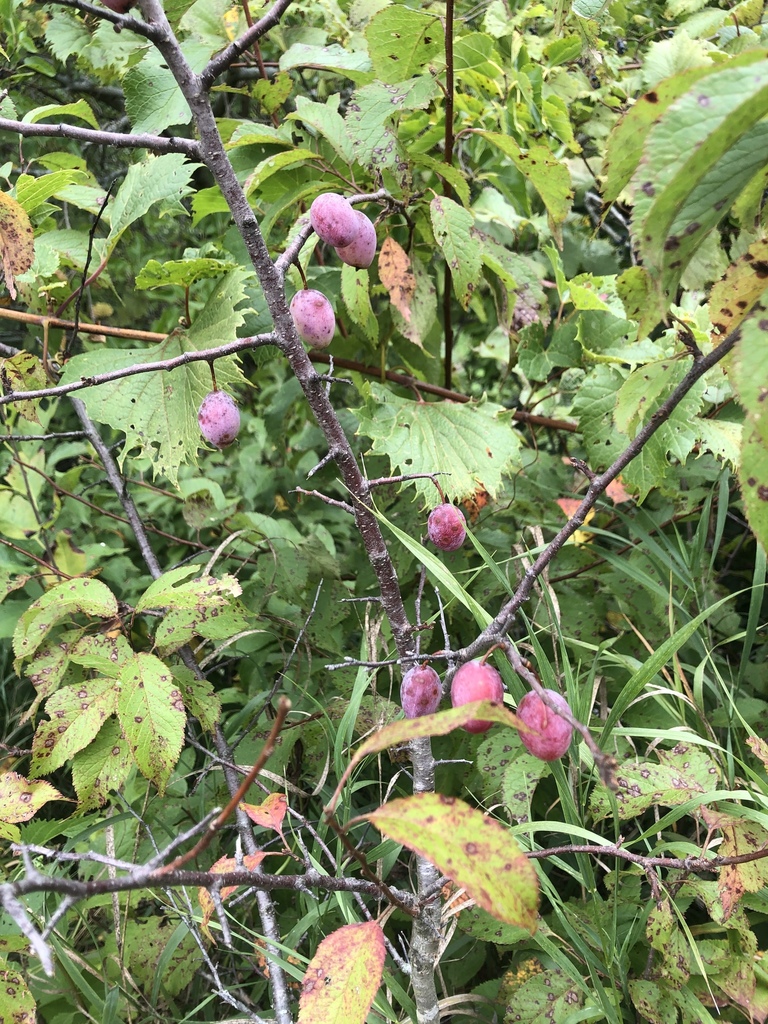
Late Summer into Fall
Andrea Grover · iNaturalist · CC BY · cropped
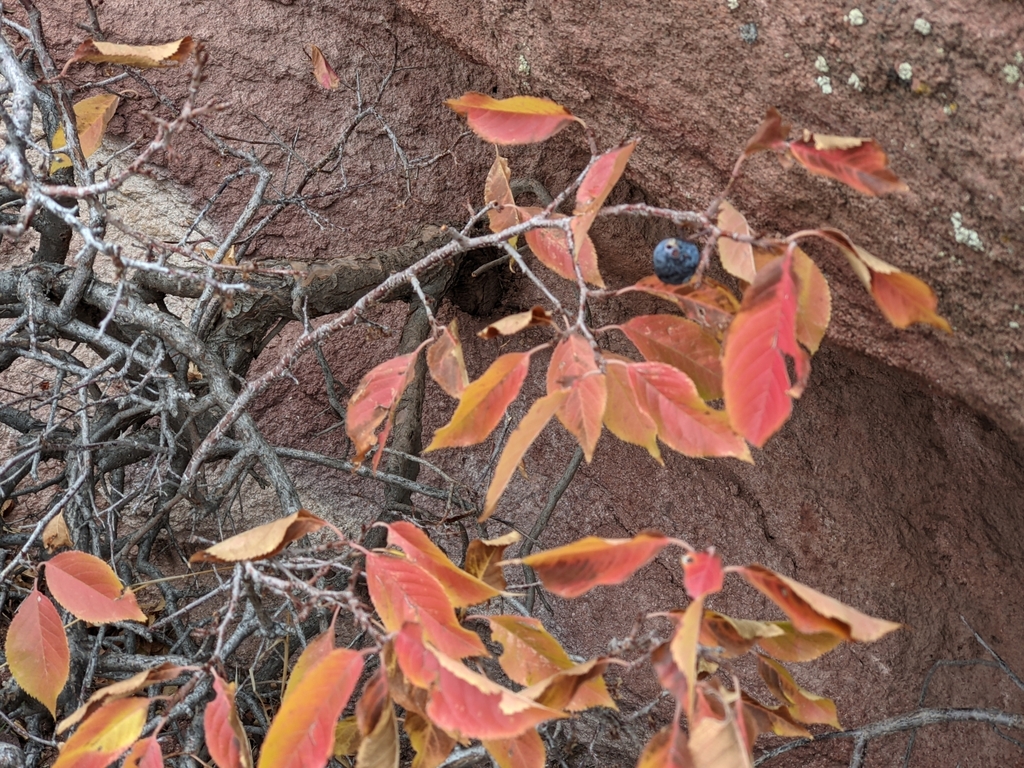
Fall
Zac Peterson · iNaturalist · CC BY · cropped
How to grow American plum
Where to plant
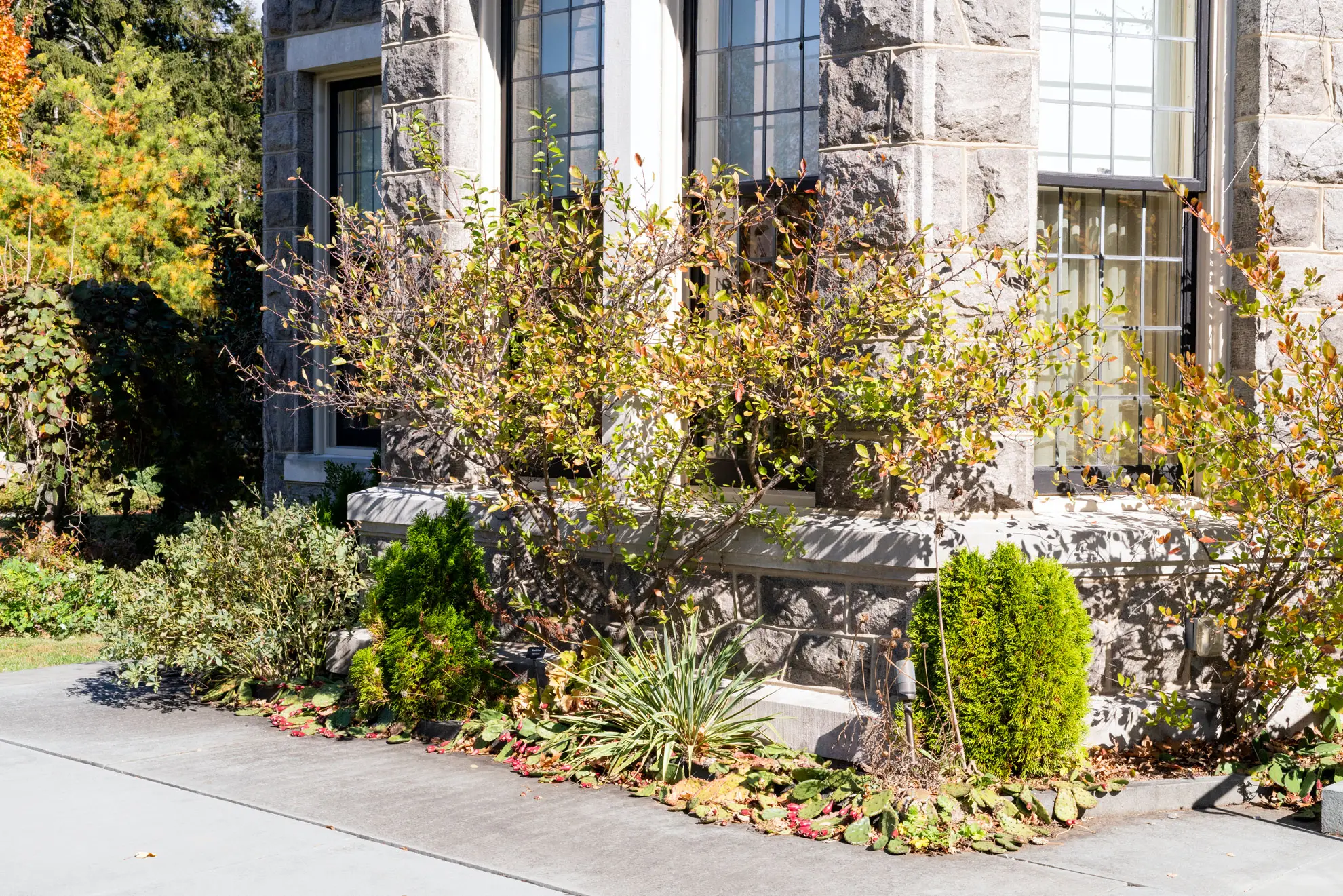
American plum wants sun. Full sun is ideal; part shade is workable but means fewer flowers and less fruit. Plant it along a property line, at the edge of a yard, in a hedgerow, or at the border between a mowed area and a wilder one. It handles a remarkable range of soils, from heavy clay to sandy ground, and it is unfazed by both moist and somewhat dry conditions. According to the Lady Bird Johnson Wildflower Center, American plum is highly adaptable to site conditions and thrives in full sun with well-drained soil. If you have a sunny spot and some room, this tree will be happy.
Spacing
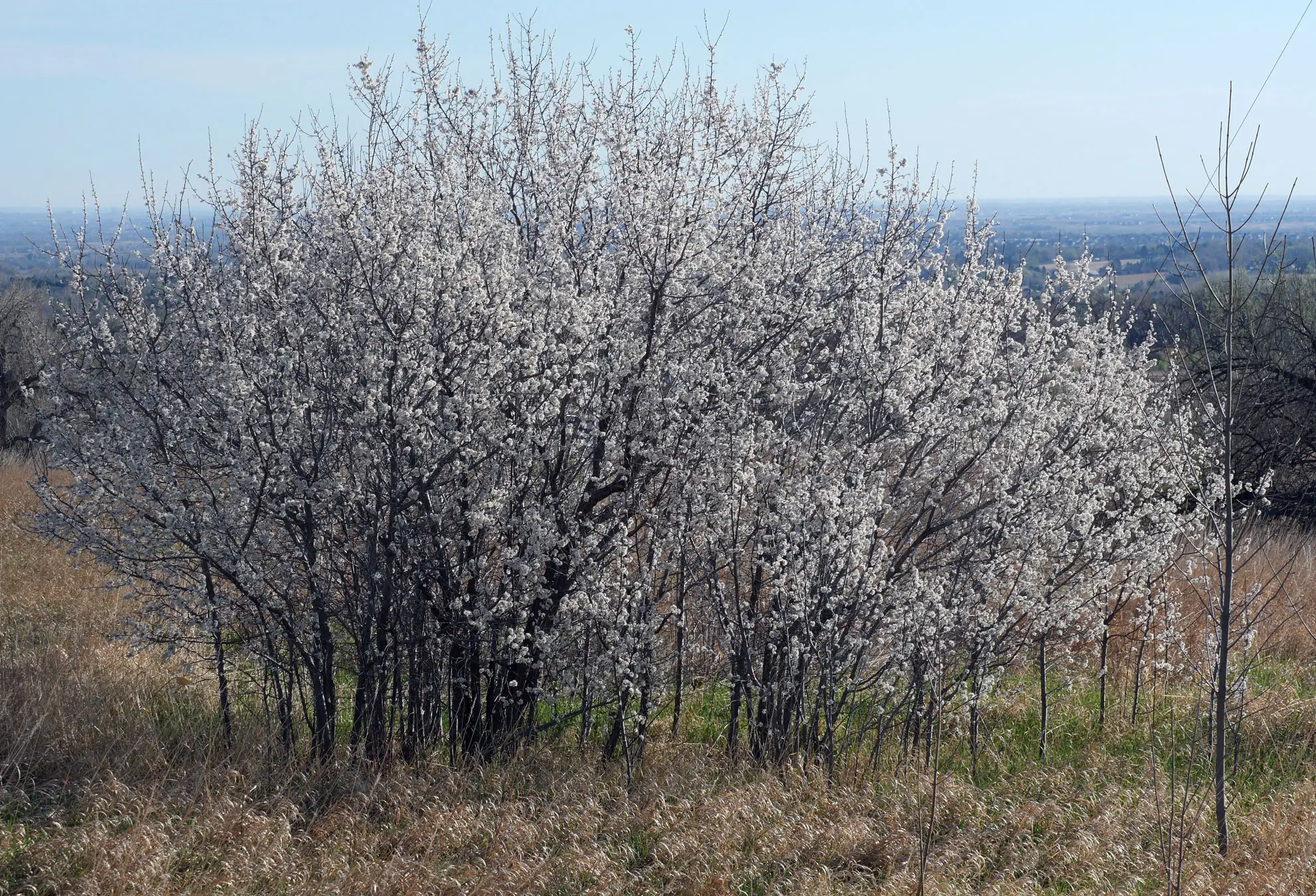
If you want a hedgerow or wildlife thicket (which is one of the best uses for this tree), plant individuals 8 to 10 feet apart and let them fill in by suckering. Within a few years, you will have a dense, connected screen that looks like it has been there forever. Skip the single specimen; these plants make colonies.
Watering
American plum is remarkably self-sufficient once established. Water it regularly during the first growing season to help the roots get going, then step back. Mature trees handle dry spells without complaint. In fact, American plum does better with neglect than with fussing. You can skip the irrigation drip and the fertilizer. This tree evolved in prairies and along fencerows, not in pampered garden beds.
Planting card
Prunus americana
When to plant
Plant American plum in early spring or fall. Spring planting gives the tree a full growing season to send out roots before winter. Fall planting works if you do it early enough for the roots to settle in before the ground freezes, generally six to eight weeks before your average first hard frost date.
Pruning
If you want a single-trunk tree, you will need to remove suckers regularly, because American plum sends up root sprouts with abandon. Cut suckers at ground level in late summer. If you want a thicket or hedgerow, do nothing! Let the tree do what it does naturally. If you do need to prune, do it in late winter while the tree is dormant. Remove dead, crossing, or inward-growing branches. Wear thick gloves. Those thorns are not decorative.
Beginner tip
If you are buying American plum from a nursery, ask whether the tree is grown from local seed. Locally sourced trees are better adapted to your climate, your soil, and your frost dates. If your local native plant nursery does not carry it, check Prairie Moon Nursery for bare-root trees and seeds.
What pairs well with American plum?
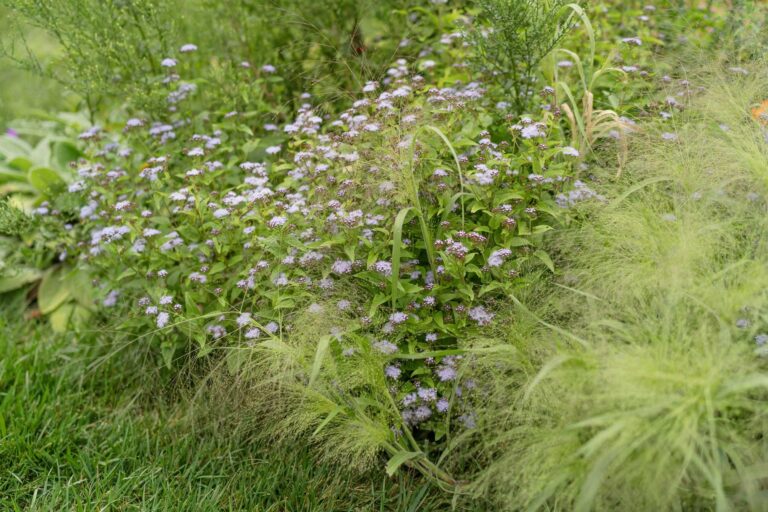
American plum grows naturally in the transitional spaces between open ground and forest. These companions share its preference for sun to part sun and pair well in hedgerows, wildlife plantings, and yard edges.


Where can I buy an American plum?
Native plants are sadly not as easy to find as many non-native gardening staples. But! We can make the search much easier, especially when you visit a native plant nursery. Here are four reliable ways to find an American plum for your yard:
Potential challenges with American plum
Suckering
This is the number one thing people bring up about American plum, which is why we’ve mentioned it already 4x in this article. American plum spreads by sending up root sprouts, and over time a single tree becomes a patch. If you want a hedgerow, this is good news. If you want a tidy single specimen in the front yard, this is probably not your tree. Check out redbuds, magnolias, and fringe trees for other native trees that play a little nicer.
If you are OK with a little work to keep it in check, pull up suckers regularly, or plant it where spreading is welcome. A sunny back boundary, a wildlife corridor, or an area you do not mow all work.
Thorns
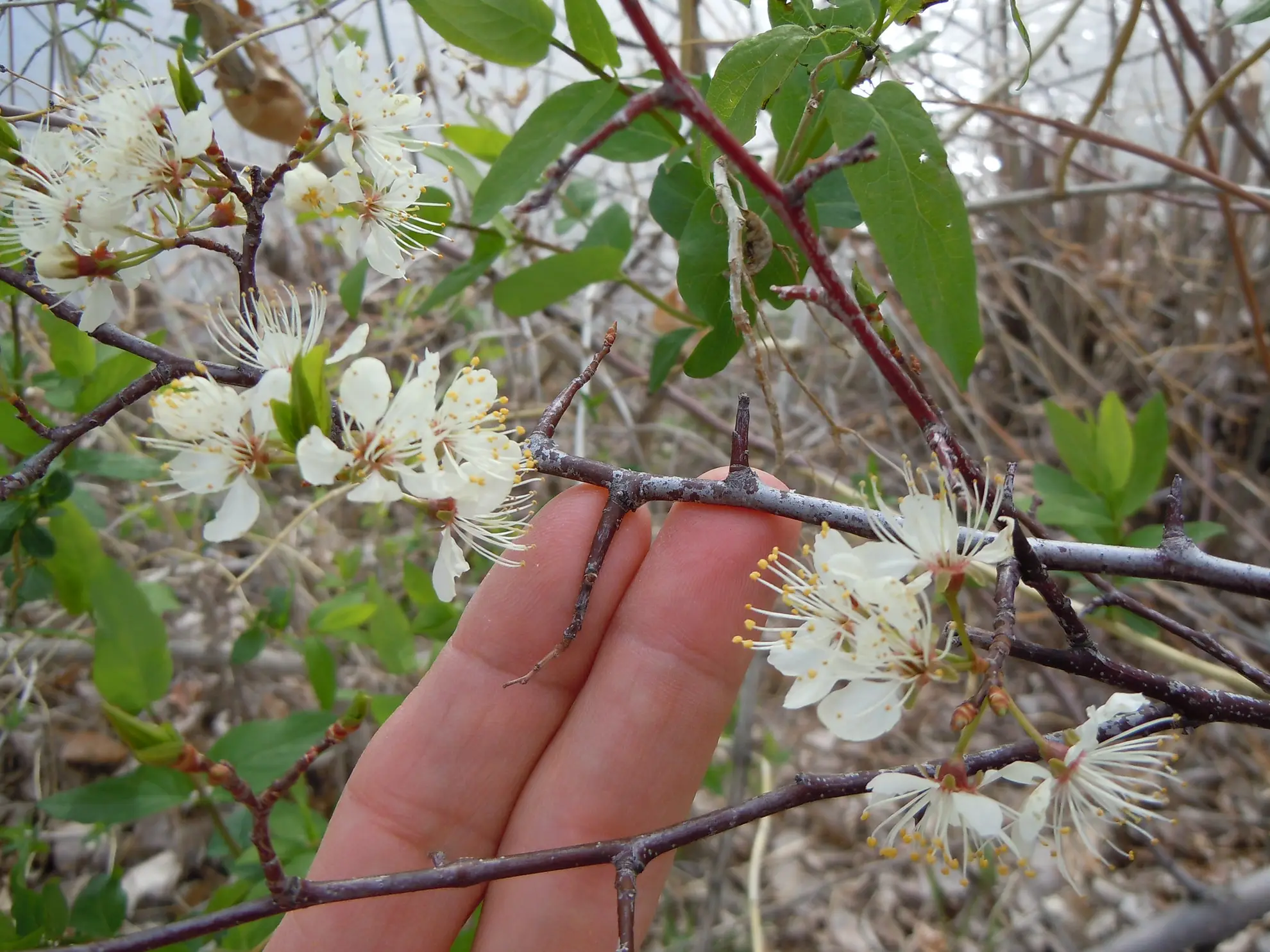
The branches of American plum have thorns. This is one of its best features if you are a nesting bird, and one of its worst if you are a person doing yard work in shorts. The thorns are real, they will scratch you, and they are the reason pruning this tree requires gloves and long sleeves.
Accept the thorns. They are the price of admission for a tree that gives nesting birds built-in protection from predators. Just do not plant it next to a walkway where bare arms will brush against it.
Black knot fungus
Black knot (Apiosporina morbosa) is a fungal disease that affects Prunus species, including American plum. It shows up as hard, black, swollen growths on branches, and it can spread from branch to branch over time.
The good news: black knot is manageable. Prune off infected branches at least 4 inches below the visible knot, disinfect your pruners between cuts, and remove the pruned material from the area. A healthy, well-sited tree in an open, sunny spot with good air circulation is much less likely to develop serious problems. According to the NC State Extension, keeping the tree well-pruned and removing infected wood quickly is the best defense.
Fruit drop
When the plums ripen in late summer, the ones you do not pick will drop. If your tree is planted over a patio or a walkway, this means stepping on squished plums in August. The solution: plant American plum where the fruit can fall onto ground, mulch, or a naturalized area, not on pavement you care about. Or just pick the fruit and make the jam.
Short flowering window
The spring bloom is stunning, but it lasts about two weeks. If a late frost hits during that window, you may lose the flowers and, with them, much of that year’s fruit crop. This is more of a risk in the northern end of the range. You cannot control the weather, but planting on a slight slope (where cold air drains away) rather than in a frost pocket can improve your odds.
FAQs
Can I eat American plum fruit?
Absolutely. The fruit is edible and delicious, with a sweet-tart flavor that intensifies when cooked. American plum makes exceptional jam, jelly, preserves, and pie filling. The flavor is more concentrated than commercial plums, with a brightness that works beautifully with sugar. Pick the plums when they are fully colored and slightly soft to the touch. Taste one first. If it makes your mouth pucker and then smile, it is ready.
Will American plum take over my yard?
It can spread by root suckers, yes. But “take over” is an exaggeration unless you plant it in an open field and never mow around it. In a typical yard, mowing around the base of the tree keeps suckers in check. If you plant it in a hedgerow or along a property line where spreading is welcome, the suckering is a benefit: it fills in the row without you buying more trees.
How fast does American plum grow?
Moderately fast. Expect 12 to 18 inches of height per year in good conditions, with fruit appearing as early as the third or fourth year. That is fast enough to feel like you are making progress and slow enough that the wood is solid.
Will American plum grow in my state?
Almost certainly, if you are in the continental United States. American plum is native from the Great Plains to the East Coast and from Saskatchewan to northern Florida. Check the USDA PLANTS Database map for your county to be sure. If it is not native to your specific area, look for a regional Prunus species like chickasaw plum or chokecherry.
Do I need two trees for fruit?
Yes. American plum generally needs cross-pollination from a different individual to set fruit. Plant at least two trees, ideally from different seed sources, within 50 feet of each other. The good news is that many native plum species can cross-pollinate each other, so a nearby chokecherry or chickasaw plum may do the job. If your neighbor has a wild plum growing in their hedgerow, you may already have a pollination partner.
Are the thorns a problem?
Only if you plant the tree next to a pathway or a play area. The thorns are sharp but small, and they are concentrated on younger branches. Place the tree where people will not brush against it, and the thorns become purely an asset: they protect nesting birds from predators. Many songbirds actively seek out thorny shrubs for exactly this reason.
Is American plum messy?
During fruit drop in late summer, yes. Ripe plums fall from the tree over a few weeks, and any that land on hard surfaces will get squished. Plant the tree over soil, mulch, or a naturalized area rather than a patio, and the mess becomes a wildlife buffet instead of a cleanup chore. The spring petal drop is light and brief.
Plant nerd fact
A flowering strategy for easy visibility.
All the plants in the Prunus genus share a trait: their flowers appear before the leaves do.
Why? Early-spring pollinators, especially native bees and bumble bee queens, are foraging in cool temperatures when most plants have not started flowering yet.
By blooming on bare branches, American plum makes its flowers visible and accessible, with no leaves blocking the flight path or shading the blossoms. A few other natives share this flowers-before-leaves look, including redbuds, eastern flowering dogwood, and native azaleas.
You have to wonder why we have so many cherry festivals when we have a similarly beautiful, flowering native that also returns edible fruit. American plum has a lot going for it: white flowers in early spring when everything else is dormant. Fruit in summer that you can turn into the best jam anyone in your family has ever tasted. On top of this: It is not a fussy tree. It does not need perfect soil or constant attention. It needs sun, some room, and you did it.
Pair it with bee balm, black-eyed Susan, or little bluestem at its feet, and you have a planting that looks beautiful, feeds wildlife from spring through winter, and gets better every year. Where to next? How about our Best Edible Native Plants or our Beginner’s Guide to Native Dogwoods? Happy planting!
Sources
- Lady Bird Johnson Wildflower Center. “Prunus americana (American Plum).”
University of Texas at Austin. https://www.wildflower.org/
plants/result.php?id_plant=pram. Accessed April 25, 2026. - Narango, D. L., D. W. Tallamy, and K. J. Shropshire. “Few Keystone Plant
Genera Support the Majority of Lepidoptera Species.” Nature Communications
11, 5751 (2020). https://www.nature.com/articles/
s41467-020-19565-4. Accessed April 25, 2026. - North Carolina State Extension. “Prunus americana (American Plum).” NC State
University. https://plants.ces.ncsu.edu/plants/
prunus-americana/. Accessed April 25, 2026. - Tallamy, D. W., and K. J. Shropshire. “Ranking Lepidopteran Use of Native
Versus Introduced Plants.” Conservation Biology 23, no. 4 (2009):
941-947. https://doi.org/10.1111/
j.1523-1739.2009.01202.x. Accessed April 25, 2026. - US Fish & Wildlife Service. “American Plum (Prunus americana).”
https://www.fws.gov/species/
american-plum-prunus-americana. Accessed April 25, 2026. - USDA Natural Resources Conservation Service. “Plant Guide: American Plum
(Prunus americana).” https://plants.sc.egov.
usda.gov/DocumentLibrary/plantguide/pdf/cs_pram.pdf.
Accessed April 25, 2026. - USDA PLANTS Database. “Prunus americana.” United States Department of
Agriculture. https://plants.usda.gov/home/
plantProfile?symbol=PRAM. Accessed April 25, 2026.
Similar plants
Updated Find more: White Edible Flower Flowering Shrub Keystone Shrub Tree Spring Full Sun Part Sun Moist Dry Drought-Tolerant
The ads on this site help pay real native plant nerds to research and write these guides.
Garden notes
Notes from people who’ve grown it
Tips, wins, and the occasional disaster. If you’ve grown American plum, share the advice you’d give to a neighbor.
No notes yet. Yours could be the first.
Grown American plum? Tell the next person what you wish someone had told you.
Tap anywhere to close


