





Highlights
Native dogwood trees are beloved trees, especially when blooming in the spring. Dogwoods are known for their gorgeous flowers, berries loved by birds, and their fiery leaf color in the fall. There are 50+ dogwood species worldwide; approximately 12 dogwoods are native to the United States and Canada (including some of the most gorgeous ones!) Learn how to plant and care for them and how to spot these iconic native trees below.

North America’s native dogwoods are a beloved part of American storytelling and gardening, including being planted by both George Washington and Thomas Jefferson.
Let’s start with a basic question:
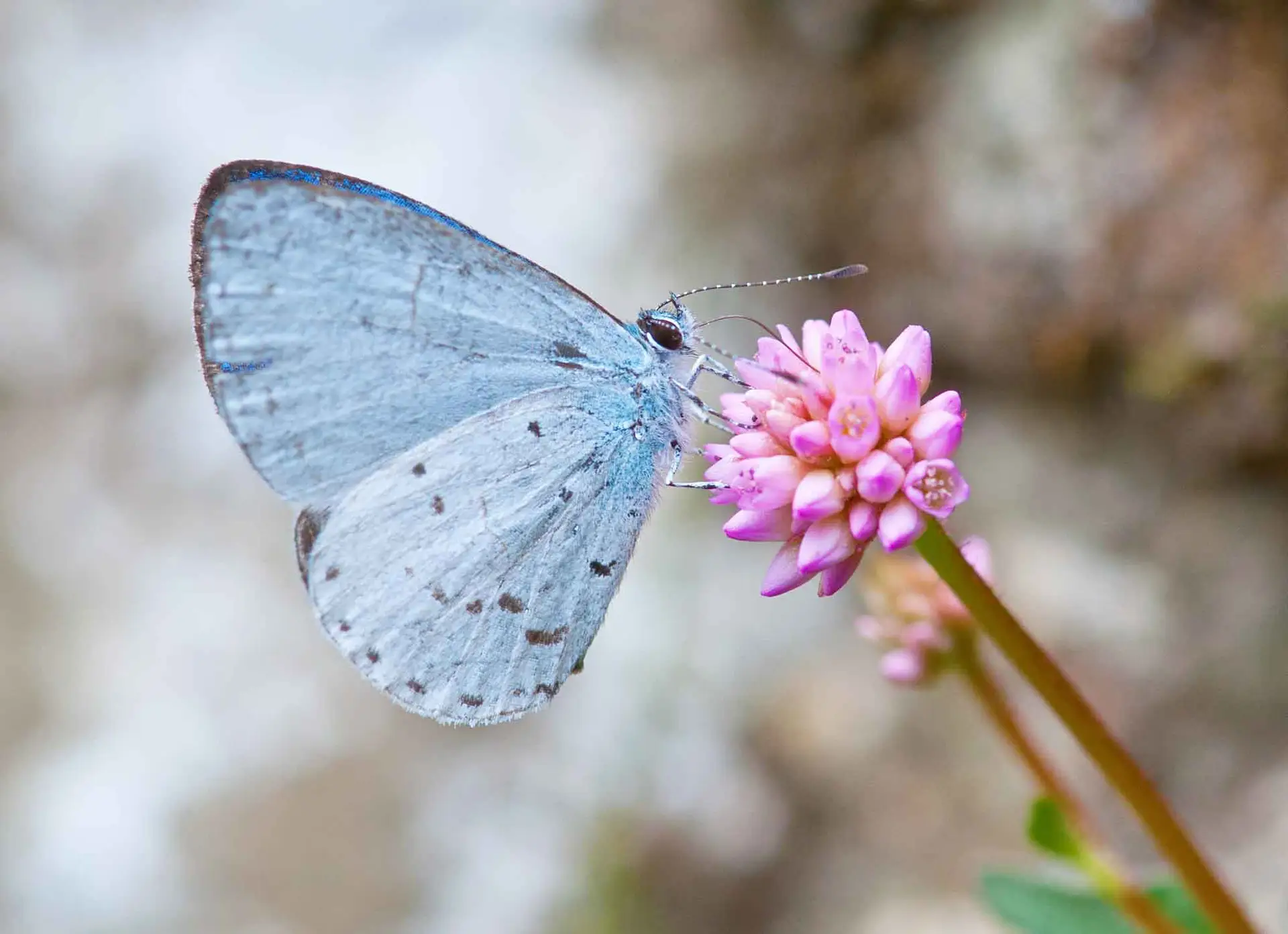
Native dogwoods (especially eastern flowering dogwoods) are host plants for dozens of butterflies, including the stunning spring azure and summer azure.
What are the benefits of planting native dogwoods?
Planting native dogwoods deliver a lot of benefits, including:
- Attract Pollinators and Wildlife: Native dogwoods provide essential nectar for pollinators like bees and butterflies, and berries in the fall that sustain migrating birds and other wildlife.
- Year-Round Beauty: With spring blooms, vibrant fall foliage, and bright berries in winter, native dogwoods add interest to your yard all year.
- Low Maintenance and Adaptable: Perfectly suited to local conditions, native dogwoods thrive with minimal care and require fewer resources than non-native alternatives.
And one more reason to plant native dogwoods… 🦋
Dogwoods are host plants
Native dogwoods (especially eastern flowering dogwoods) are host plants for dozens of butterflies, including the stunning spring azure and summer azure. If you need one more reason why we should plant native dogwoods over non-native trees or shrubs, this is it.
Planting native dogwoods ensures that our gardens and landscapes look amazing and that wildlife has the food and homes it needs to thrive.
Meet the native dogwood species
These native dogwoods are all worthy of planting in our gardens ASAP. We’ve organized them into two groups: single flowers and clumps of flowers.
Native dogwoods with single flowers
BTW, technically, these are not flowers.
These three dogwood “flowers” are bracts. A bract is a modified leaf that looks like a petal. Another plant with bract “flowers” is the poinsettia.
1. Eastern flowering dogwood
Cornus florida
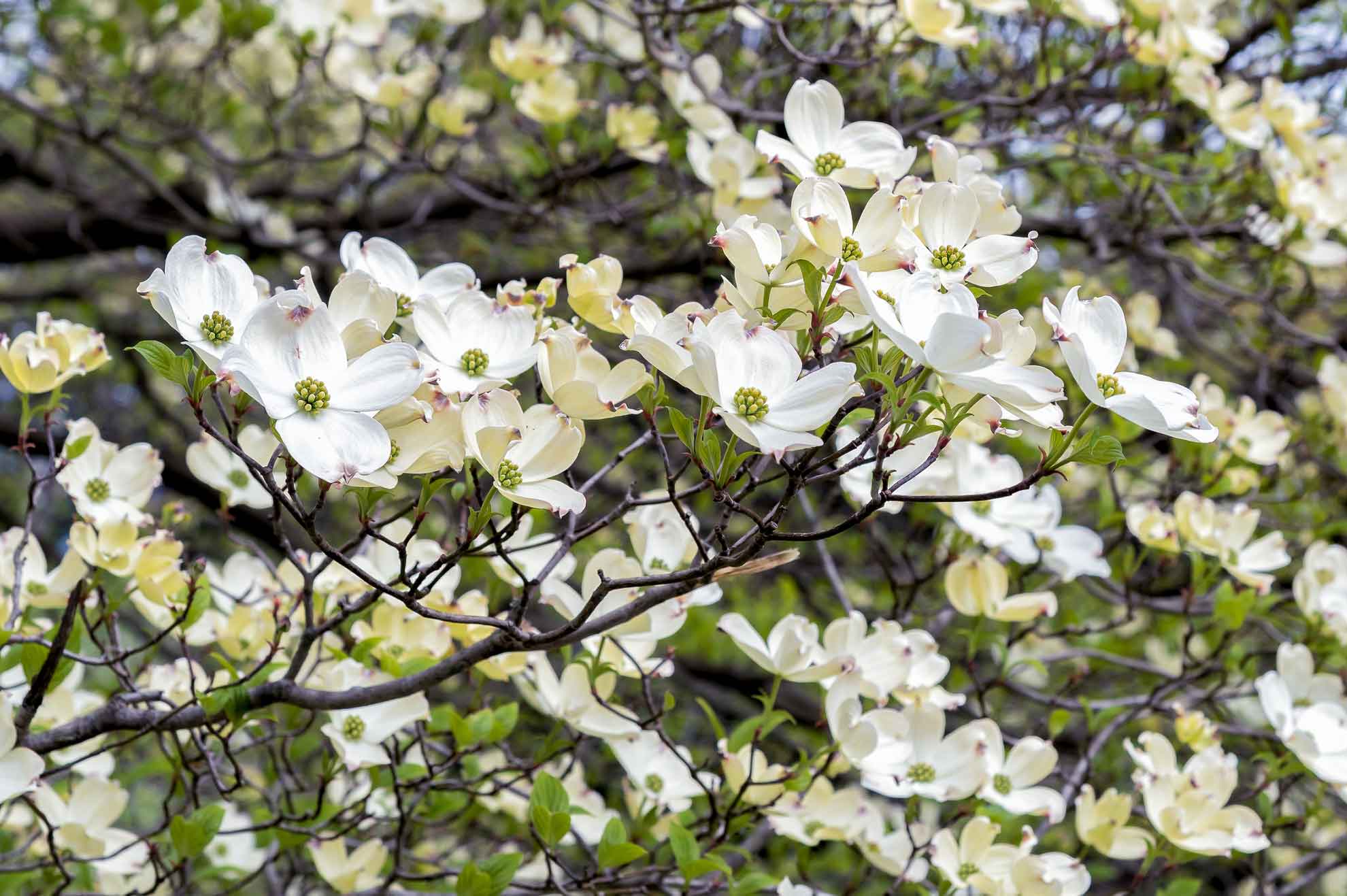
If you’ve been on the East Coast and seen a gorgeous small tree covered in rounded four-petaled flowers, it was probably an eastern flowering dogwood. This native tree covers itself in flowers in the mid to late spring. In the fall, its leaves turn beautiful dark red. It is a perfect statement tree. (Trivia bonus: the Latin species name Florida doesn’t come from the state—florida is Latin for flowering.)

2. Pacific dogwood
Cornus nuttallii
Pacific dogwood has showy white bracts and is the official flower of British Columbia, Canada. It looks very similar to the eastern flowering dogwood but—as you probably guessed—is native to the west coast.

3. Bunchberry or creeping dogwood
Cornus canadensis
Bunchberry or creeping dogwood is the shortest of the dogwoods, at only 6″ high. It is a lovely groundcover option. In the spring, it covers itself in the four-petaled flowers seen in Pacific and Eastern Flowering Dogwood trees. A perfect choice for shady areas.
Native dogwoods with clumps of flowers

4. Alternate-leafed or pagoda dogwood
Cornus alternifolia
Alternative-leaf dogwoods grow branches in long horizontal layers, almost like a cake, giving an architectural elegance. They cover these branches with creamy small flowers in the late spring/early summer, turning into dark blue berries in the early fall. These fruits are bird favorites. They are a perfect statement tree.

5. Gray dogwood
Cornus racemosa
Looking for a verdant privacy fence that will be covered in birds? Gray dogwoods are for you. Gray dogwoods form thick walls of shrubbery, which are then covered in flowers, tiny white berries, and brightly covered stems. Gray dogwoods like a wide range of soil, making them perfect for beginner gardeners. It’s a four-season stunner that’s a no-brainer to plant.
6. Red osier dogwood
Cornus sericea
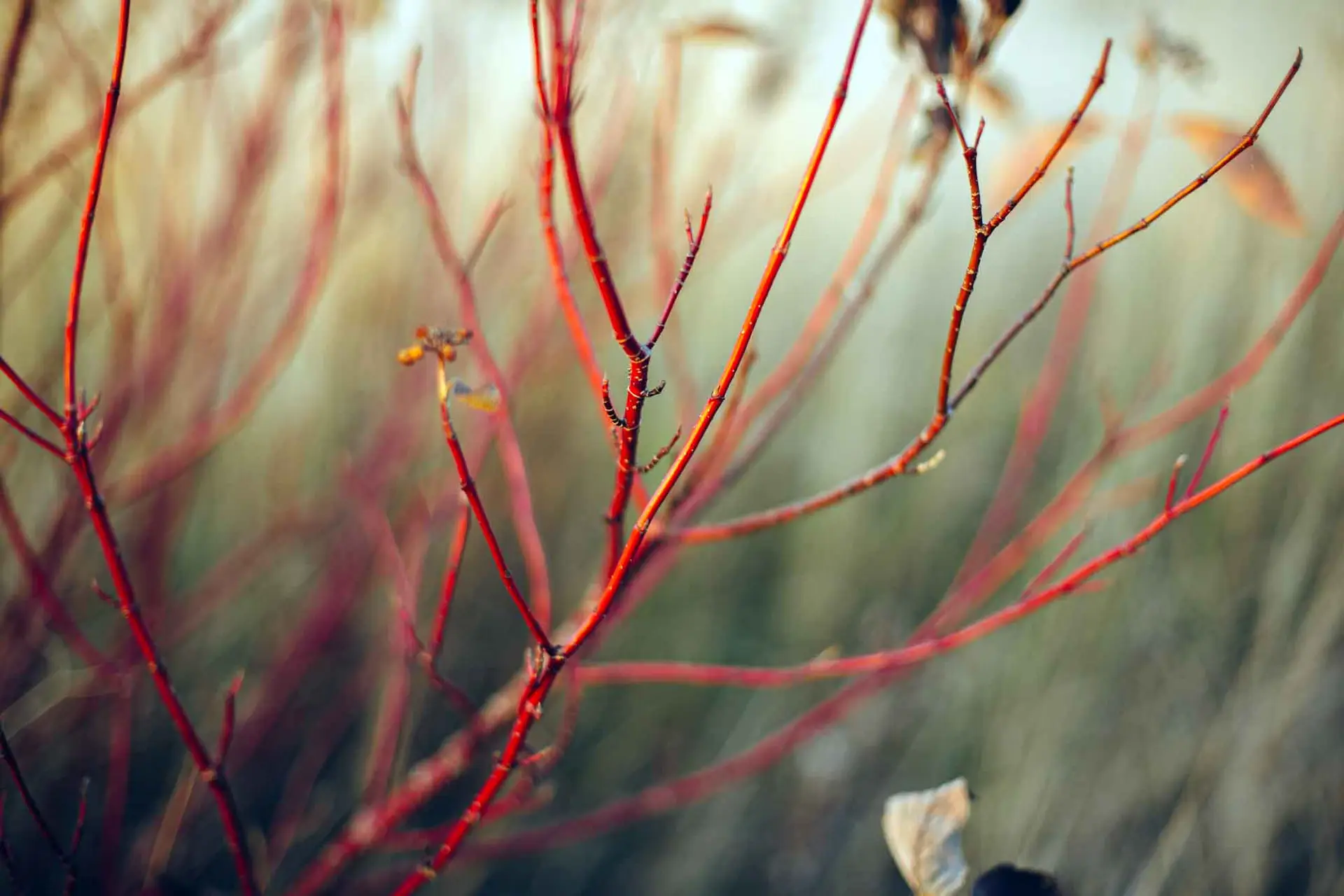
Red osiers’ stems look hand-dipped in red paint when their leaves fall in the winter. Red osiers flower in the late spring to early summer with lightly scented white flowers. In the fall, leaves turn orange. Red osiers prefers wetter areas (perfect for rain gardens.)

7. Round-leaved dogwood
Cornus rugosa
Round-leaved dogwood shrubs can quickly thrive and create dense growth, thanks to their ability to expand via suckers. Their leaves offer beautiful dappled shade. White flowers and white berries offer food for both pollinators and birds.
8. Silky dogwood
Cornus amomum
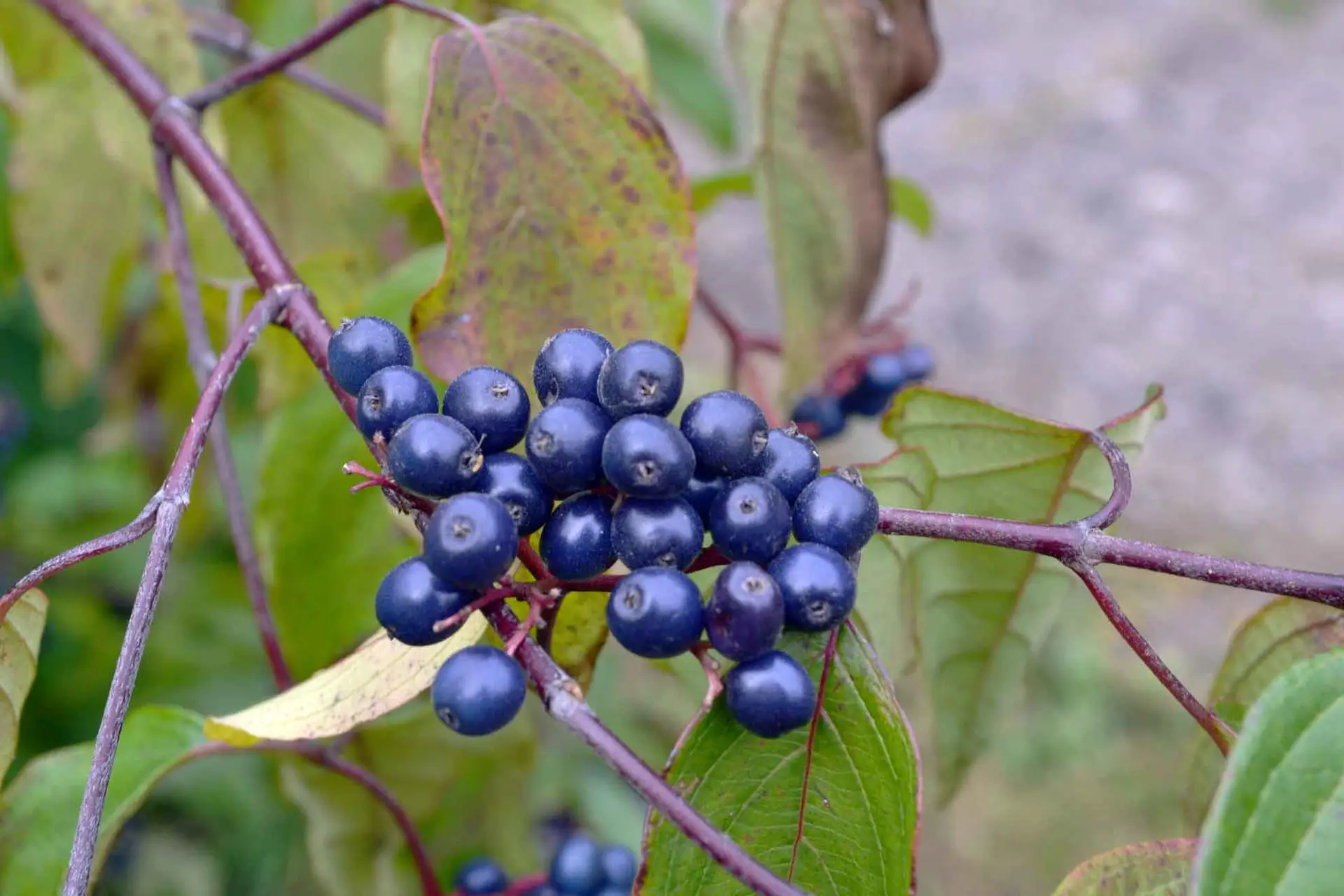
Silky dogwood showcases silky-haired leaves, white flowers, and vibrant blue fruit. (Sorry, the fruit is edible only to birds.)
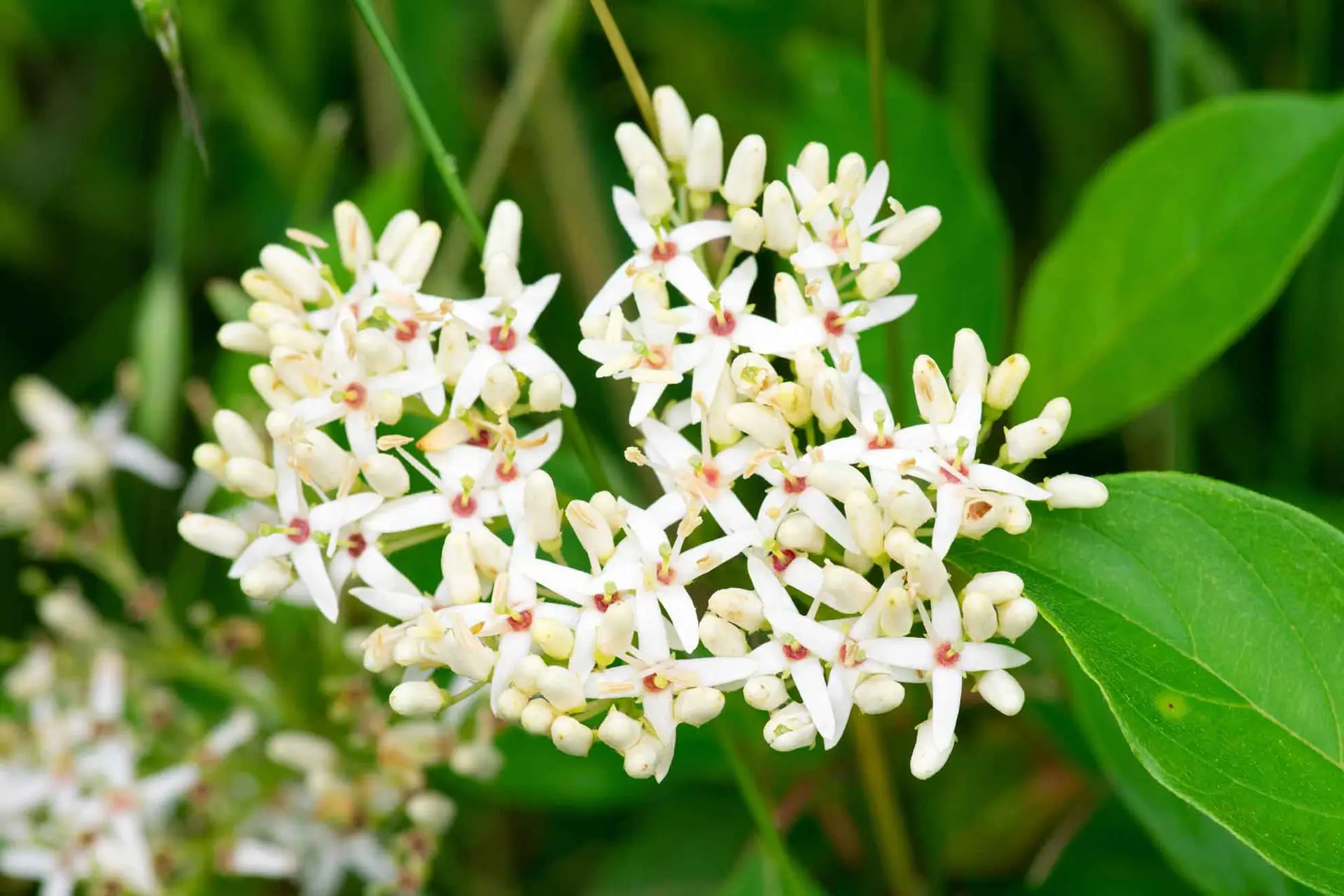
9. Swamp or stiff dogwood
Cornus foemina
Swamp or stiff dogwood thrives in wet areas and can handle a range of soil conditions. Swamp dogwood is perfect for rain gardens.
Other native dogwood species
Besides these nine species of native dogwood, here are three more:
- Rough-leaved dogwood (Cornus drummondii): Features rough-textured leaves, creamy white blooms, and bluish-black fruit.
- Blue-fruited dogwood (Cornus obliqua), this plant also goes by the common name silky dogwood—another reason why Latin names are a big help—native to the Northeast and Midwest.
- Blackfruit dogwood (Cornus sessilis) is native only to California.
What dogwood species are not native?
As mentioned earlier, there are around 50 dogwood species worldwide. We have already met North American natives. The rest are native to Asia and Europe. You often encounter some of the non-native species in yards and plant nurseries, including:
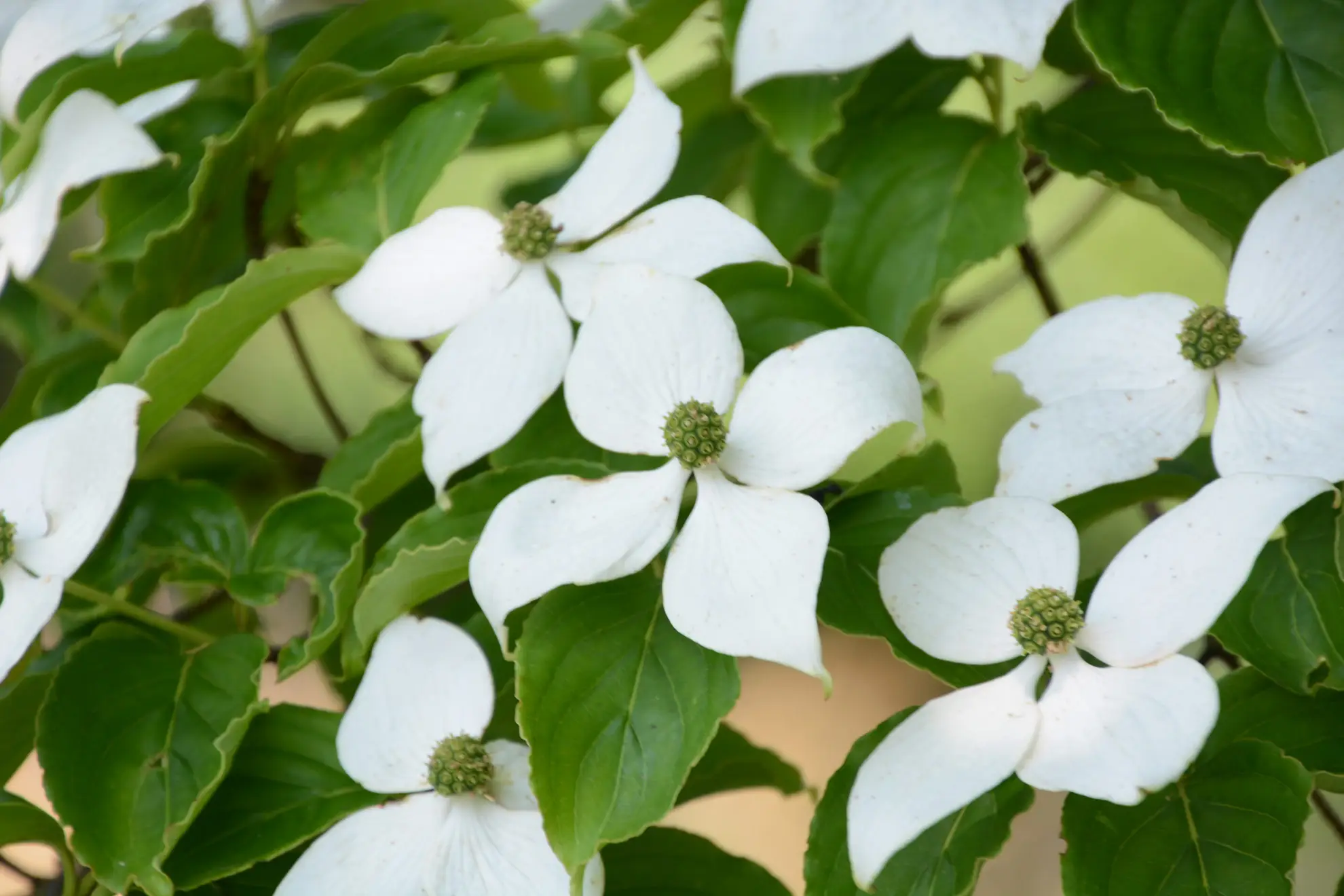
Kousa dogwood
Cornus kousa
- White flowers with pointy ends
- Native to Japan
- Kousa flowers turn into bumpy, bright orange fruits in the fall, making a mess that attracts ants
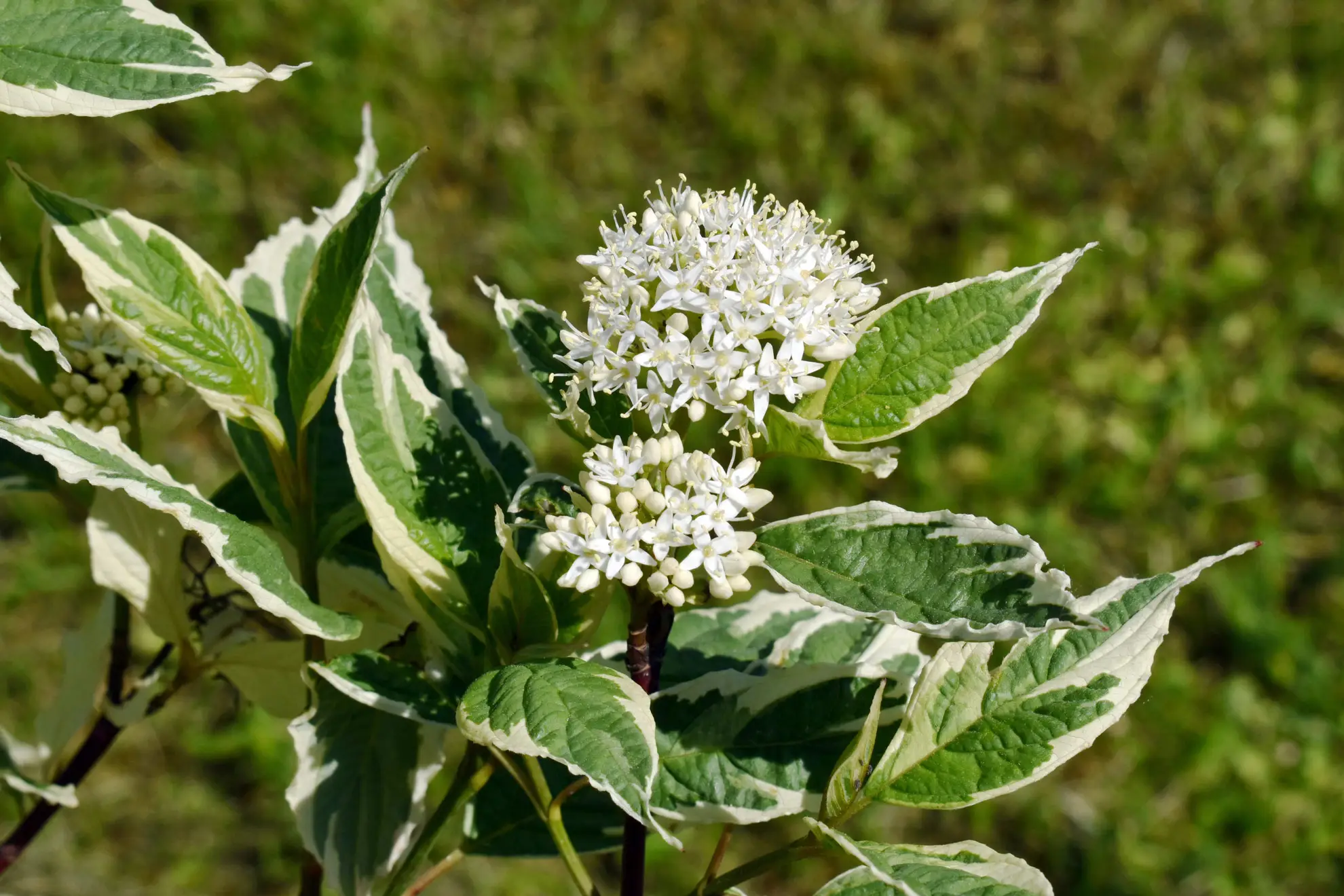
Siberian dogwood
Cornus alba
- Known for its red stems in winter
- Native to eastern and central Asia
- When stressed, it can get sick with powdery mildew, leaf spot, canker, root rot, and leaf and twig blight
Why are these non-native dogwoods everywhere when we have native dupes available?
- No more Kousas: Eastern flowering and Pacific dogwoods are just as gorgeous
- No more Siberian dogwoods: red osiers offer the same bright red stems in winter
Have questions about planting, care, or choosing the right native dogwood? We’ve got you covered—explore the FAQs below to get started.
What pairs well with native dogwoods?
When it comes to finding friends for your dogwood, there are many native plants to pick from. Favorite flowering trees like native magnolias, redbud, tulip poplars, Carolina silverbell, franklin trees, and pawpaws are gorgeous, alongside flowering shrubs like oakleaf hydrangea, sweetshrub, mountain laurel, and native azaleas.


Where can I buy native dogwoods?
Finding native plants for your garden is easy if you know where to look! Here are four resources we put together to make finding native dogwoods a breeze:
FAQs
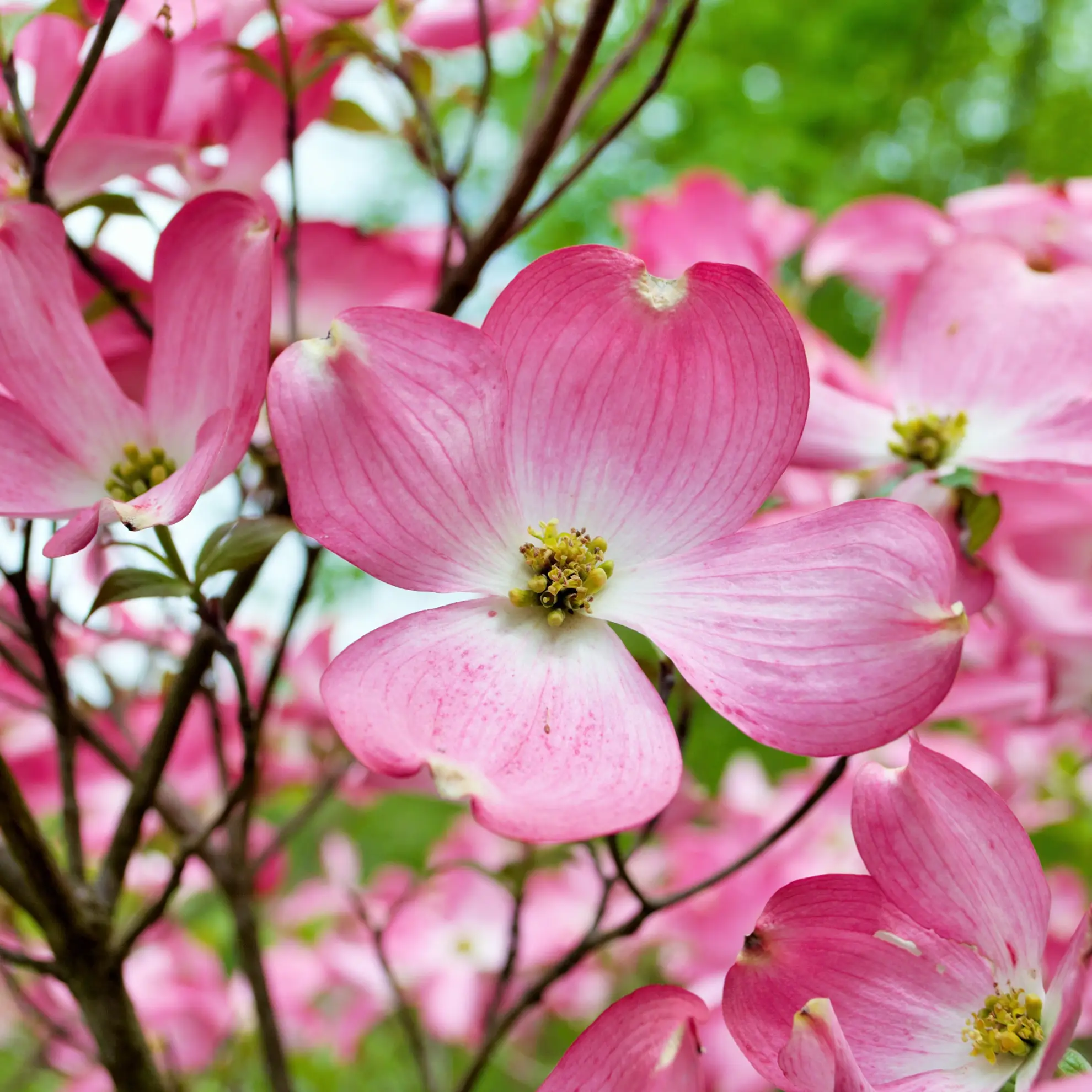
What about a dogwood with pink flowers?
That is probably a pink dogwood, a variety of the Eastern Flowering Dogwood. You’ll know they are related by their Latin name: Cornus Florida variety rubra. (Sometimes the term ‘variety’ is shortened to ‘var.’)
The term variety describes plants curated by humans to look/behave in a certain way. To learn where varieties come from, read our quick overview on cultivars, which also explains varieties.
Where did the name dogwood come from?
The name ‘dogwood’ has a fun, culinary backstory. The name comes from its smooth, straight twigs that long-ago generations used as skewers for cooking meat.
These skewers were once called ‘dags’ or ‘dogs’, so essentially, dogwood means ‘skewer wood.’
Can I eat native dogwood berries?
No. The USDA says it clearly:
WARNING: The fruit of flowering dogwood is poisonous to humans.
We can’t get any more clear than that.
However…
Dogwood berries are a favorite of migrating birds
Dogwood berries are a crucial food source for birds migrating south in the fall. Eastern Flowering Dogwoods, in particular, produce berries that are packed with fats and calcium, giving birds the energy and nutrients they need for their journey.
Congratulations, you’ve met North America’s stunning native dogwoods! Celebrated for their iconic beauty, these trees are ready to thrive in your yard. With various species to suit your region and gardening needs, you’re sure to find the perfect match. Visit your local native nursery, explore your options, and welcome the four-season beauty of dogwoods into your landscape. Want to discover more about native trees? Check out our Beginner’s Guide to Native Magnolias or our Best Native Trees for Front Yards, and keep growing your native garden. Happy planting!
Sources
- Fernandes, Cara. “Creature Feature: Spring Azure (Celastrina Ladon) – Quogue Wildlife Refuge.” Quogue Wildlife Refuge, March 15, 2021. https://quoguewildliferefuge.org/news/creature-feature-spring-azure-celastrina-ladon.
- Nelson, Gil. Best Native Plants for Southern Gardens: A Handbook for Gardeners, Homeowners, and Professionals, (2010).
- Reese, Carol. “Three Kinds of Redtwig Dogwoods.” Horticulture, February 3, 2009. https://www.hortmag.com/plants/redtwigdogwoods.
- Woodman, Robert. “Damn Good Plants – Red Twig Dogwoods, Part Two.” Thebritishgardener.com. Blogger, December 29, 2012. http://www.thebritishgardener.com/2012/12/damn-good-plants-red-twig-dogwoods-part_29.html.
- Environmental Horticulture Department, UF/IFAS Extension, “Cornus Florida, Var. Rubra.” Edward F. Gilman, professor, Environmental Horticulture Department; Dennis G. Watson, former associate professor, Agricultural Engineering Department, UF/IFAS Extension, Gainesville FL 32611. (PDF.)
- McLemore, B. F. “Flowering Dogwood – Southern Research Station,” n.d. United States Forest Service.
- Ladybird Johnson Wildflower Center. “Cornus sericea (Red Osier Dogwood) | Native Plants of North America,” n.d. https://www.wildflower.org/plants/result.php?id_plant=cose16.
- USDA Plants Database Plant Profile, Cornus obliqua. n.d. https://plants.usda.gov/plant-profile/COOB9.
- Plants of the World Online. “Cornus Drummondii C.A.Mey. | Plants of the World Online | Kew Science,” 2016. https://powo.science.kew.org/taxon/urn:lsid:ipni.org:names:271556-1.
- Plants of the World Online. “Cornus Florida L. | Plants of the World Online | Kew Science,” 2016. https://powo.science.kew.org/taxon/urn:lsid:ipni.org:names:271574-1.
- Plants of the World Online. “Cornus Foemina Mill. | Plants of the World Online | Kew Science,” 2016. https://powo.science.kew.org/taxon/urn:lsid:ipni.org:names:271575-1.
- Plants of the World Online. “Cornus L. | Plants of the World Online | Kew Science,” 2022. https://powo.science.kew.org/taxon/urn:lsid:ipni.org:names:330228-2#children.
- Butterflies and Moths of North America. “Spring Azure Celastrina Ladon (Cramer, 1780),” 2024. https://www.butterfliesandmoths.org/species/Celastrina-ladon.
- University of southern Florida, Alabama Butterfly Atlas. “Spring Azure,” 2021. https://alabama.butterflyatlas.usf.edu/species/details/36/spring-azure.
- Wennerberg, Sarah. “Plant Guide FLOWERING DOGWOOD Cornus Florida,” United States Department of Agriculture, n.d. (PDF.)
Similar plants

Updated Find more: White Beginner Guide Keystone Statement Tree Tree Spring Full Sun Part Sun
The ads on this site help pay real native plant nerds to research and write these guides.
Garden notes
Notes from people who’ve grown it
Tips, wins, and the occasional disaster. If you’ve grown dogwoods, share the advice you’d give to a neighbor.
No notes yet. Yours could be the first.
Grown dogwoods? Tell the next person what you wish someone had told you.
Tap anywhere to close


