

Highlights
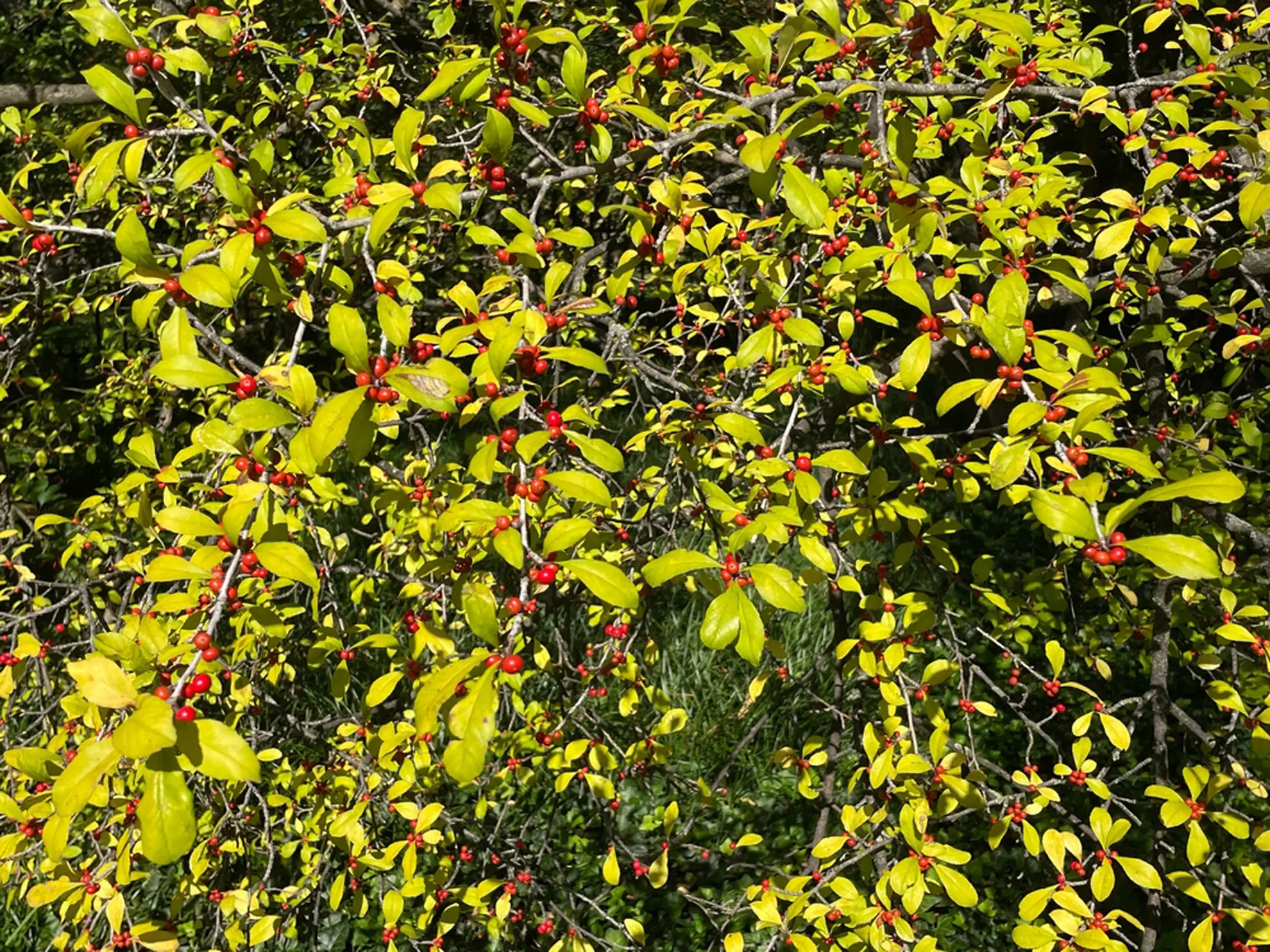
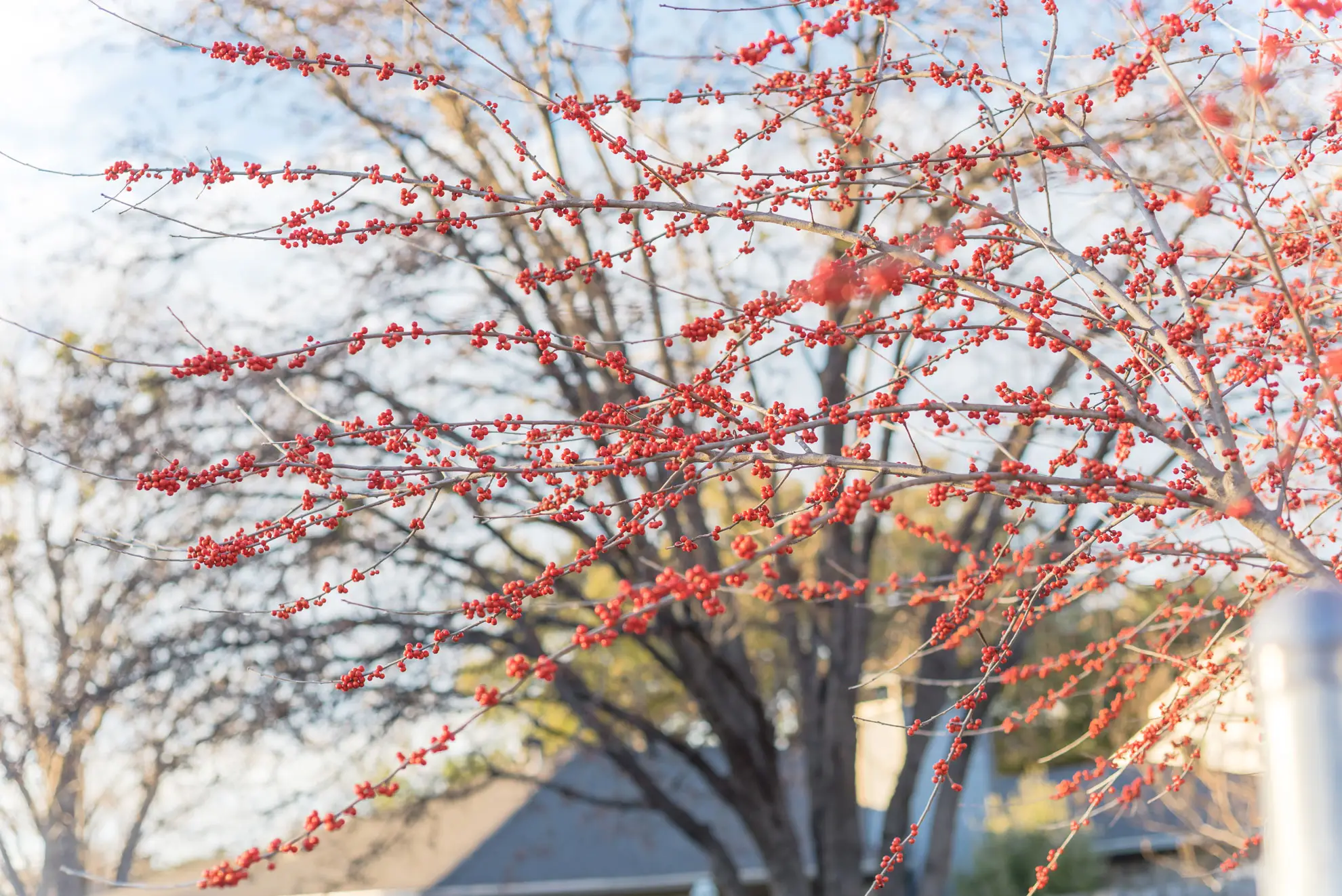
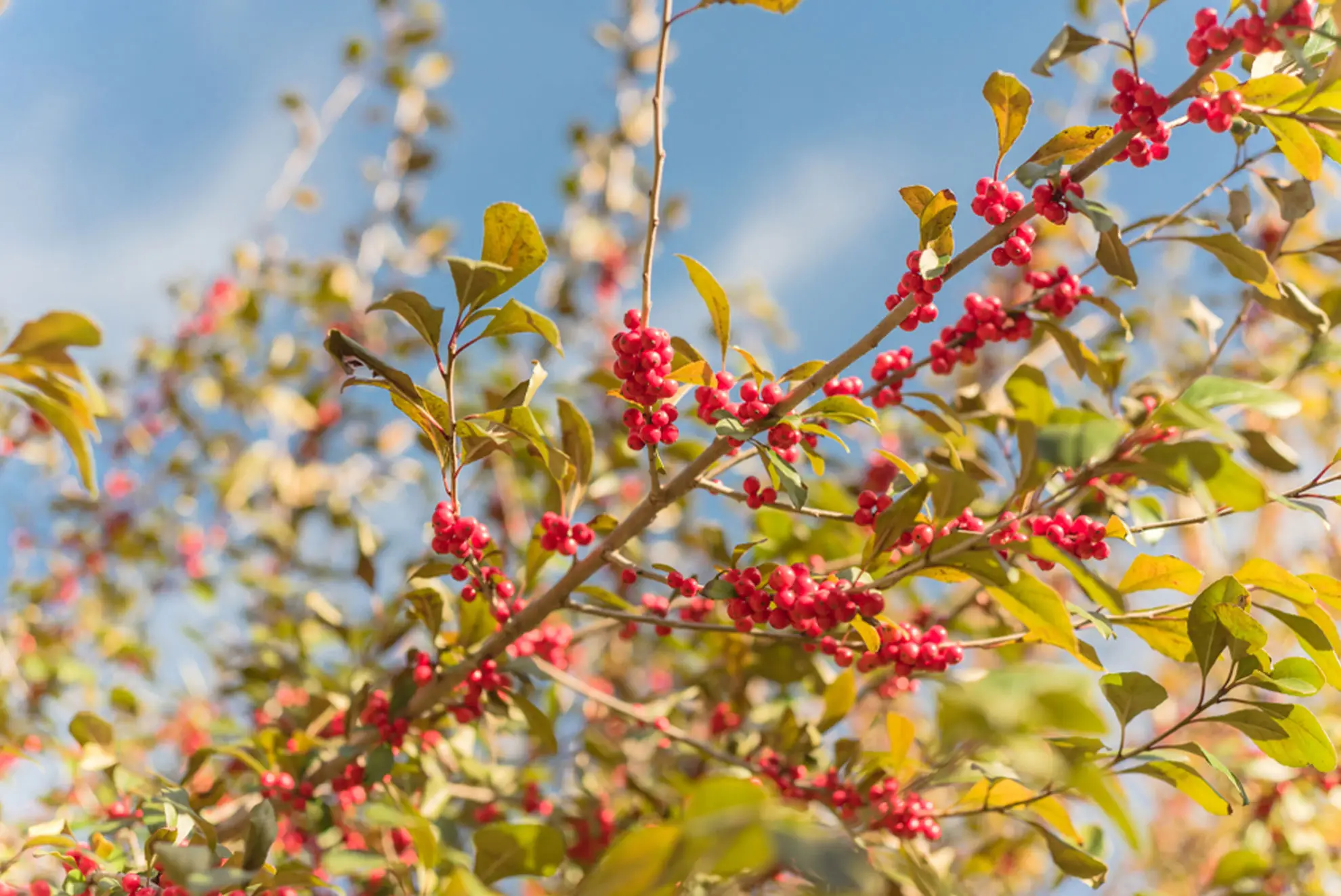
Possumhaw is a deciduous native holly, which means it drops its leaves in fall. Once the leaves are gone, you’re left with graceful gray branches absolutely loaded with bright berries that last throughout the winter. It’s one of the most eye-catching winter plants you can grow in North America. Birds, especially cedar waxwings and eastern bluebirds, rely on those berries when other food is scarce. And for you? It’s a low-fuss plant that basically takes care of itself once it settles in.
Is possumhaw a good choice for my yard?
Yes, if…
- You want a winter showstopper. Possumhaw’s berry-covered bare branches are genuinely stunning, especially against snow or a dark evergreen backdrop.
- You have a wet spot, rain garden, or low area that stays damp. This plant is right at home in soggy conditions.
- You want to feed birds through winter. Over 35 species eat possumhaw berries, including cedar waxwings, eastern bluebirds, and wild turkeys.
- You’re looking for something low-maintenance. Once established, possumhaw needs very little attention.
- You live anywhere from Virginia to Illinois to Texas. That’s a lot of ground.
Skip it if…
- You don’t have room for female and male plants. Possumhaw is dioecious (separate male and female plants), so you need a male within about 50 feet for berry production.
- You want year-round green. Possumhaw drops its leaves. That’s the feature, not the bug, but if evergreen is a must, look at inkberry or American holly instead.
- You need something that stays small and tidy. Possumhaw can reach 15 feet tall and wide, and its natural habit is a bit open and leggy at the base.
- You’re in a very dry, very alkaline spot. Possumhaw prefers moist, slightly acidic soil.
Why possumhaw matters
Most berry-producing plants have fruit in late summer or early fall. Possumhaw does the opposite. Its berries ripen in September but stay on the branches deep into winter, often lasting until March. That timing is critical for birds that overwinter or migrate through your area when food options are at their lowest.
At least 35 bird species eat possumhaw berries, including cedar waxwings, American robins, eastern bluebirds, wild turkeys, and northern bobwhite. Mammals like raccoons and opossums eat them too (hence the name).
And one more reason to plant a possumhaw… 🦋
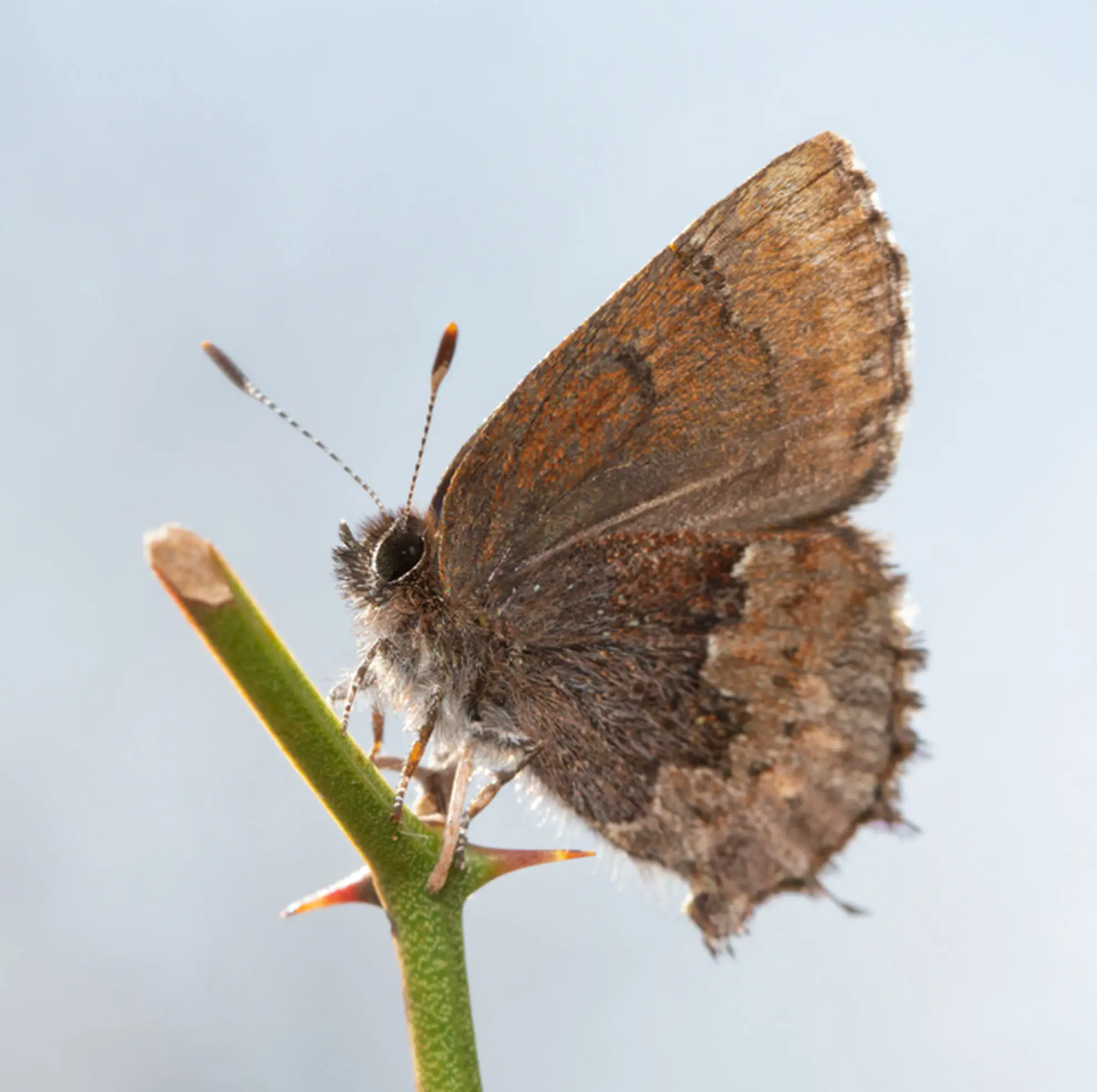
Possumhaw is also a host plant for the Henry’s elfin butterfly
Henry’s elfin butterfly lays its eggs on holly leaves so its caterpillars can feed on them. That’s a relationship that only works with native hollies. And in spring, the small white flowers are loaded with nectar for native bees, including specialist bees specifically seek out holly blooms.
Where is possumhaw native?
Native to 18 US states and Washington, D.C.
Sources: NatureServe, Royal Botanic Gardens, Kew (World Checklist of Vascular Plants) and the USDA PLANTS Database, compiled by The Plant Native. How we map native ranges
Where possumhaw shines in your yard
- Winter focal point: Put it where you and the neighbors can admire those berries. A front yard specimen or a spot near a window is ideal so you can watch the birds while you have your morning coffee.
- Rain garden or wet area: Possumhaw thrives in low spots that stay damp or occasionally flood. It’s a natural fit for rain gardens.
- Mixed native border: Combine it with evergreen hollies like inkberry or American holly for a layered look that has something going on in every season.
- Understory planting: Possumhaw naturally grows at the edges of forests. It does well under taller canopy trees where it gets filtered light.
- Streambank or pond edge: Its love of moist soil makes it a great pick for planting near water features or along streams
How to grow possumhaw
Where to plant
Full sun gives you the most berries. Part shade works too, but expect fewer fruits. Possumhaw likes moist, slightly acidic soil (pH 5.5–6.5). It’s very happy in clay or loamy ground and handles occasional flooding without complaint.
When to plant
Fall or early spring, while the plant is dormant or just waking up.
The male/female thing
Possumhaw is dioecious, meaning you need a male and a female plant for berries. Only the female makes fruit, but she needs a male within about 50 feet so bees can move pollen between them.
The cultivar ‘Red Escort’ is the go-to male pollinator. One male can help pollinate multiple females. When you’re shopping, ask the nursery which male pairs with the female cultivar you want.
Possumhaw is dioecious, meaning you need a male and a female plant for berries. Only the female makes fruit, but she needs a male within about 50 feet so bees can move pollen between them.
Spacing
Give it room. Plan for 10–15 feet of spread at maturity, and space plants 8–12 feet apart if you’re planting a group or screen.
Watering
Keep it consistently moist through the first growing season while roots get established. After that, possumhaw is fairly self-sufficient. Water during long dry spells, but don’t stress about it.
Mulching
A 2–3 inch layer of mulch around the base helps hold moisture and keep roots cool. Keep it a few inches away from the trunk.
Beginner tip
Plant possumhaw where you can see it from a window. The winter berry display is the main event, and you’ll want a front-row seat. A spot visible from the kitchen or living room is perfect.
Pruning
Possumhaw has a naturally graceful shape and doesn’t need much pruning. If you want to clean it up, do it in late winter or early spring before new growth starts. Some people remove lower branches to show off the trunk and create more of a small tree form, which also highlights the winter berries.
Planting card
Ilex decidua
What are good pairings for possumhaw?
Possumhaw is perfectly paired with other native plants that like wetter areas, like cardinal flower, ironweed, and rose mallow.


Where can I buy a possumhaw?
Many native plants can be challenging to find at conventional plant nurseries. We made sourcing a possumhaw easier by compiling 625+ native nurseries, organized by state. Here are some other ideas on where you can better find your own:
FAQs
Is possumhaw the same as winterberry?
Nope. They’re related (both are deciduous native hollies in the Ilex genus), but they’re different species.
Possumhaw (Ilex decidua) handles more heat and drought than winterberry (Ilex verticillata), and its range extends further south and west. If you’re in the Southeast or south-central U.S., possumhaw is often the better pick. Check out our full winterberry profile for more on that one.
Do I really need a male plant for berries?
Yes. Possumhaw is dioecious, meaning male and female flowers are on separate plants. No male nearby means no berries.
The good news: one male can pollinate several females within about 50 feet, and a neighbor’s male holly might already be doing the job.
How fast does possumhaw grow?
Moderate, about 1–2 feet per year. It’s not a speed demon. Give it a few years to settle in and start putting on a real berry show. The wait is worth it.
Why is it called possumhaw?
“Haw” is an old English word for a small fruit, like the berries on a hawthorn.
“Possum” refers to what you think it does: the Virginia opossum, which eats the berries.
So possumhaw basically means “the berries that opossums eat.” Straightforward naming for once! Much better than spiderwort, bladderpod, or tickseed.
Plant nerd fact
Why do the berries stick around for so long?
Possumhaw berries have a built-in time-release system. When they ripen in September, they’re loaded with bitter compounds that make them unappetizing to most animals. This is a smart move: it keeps the berries on the branches instead of getting eaten right away. (Other natives with tasty berries like serviceberries, hackberries, and highbush blueberries get gobbled up quickly.)
Then, after several rounds of freezing and thawing through winter, those compounds break down and the berries soften into a palatable meal, right when birds need food the most. The plant gets its seeds dispersed far and wide (via bird droppings in late winter, when birds are ranging further for food), and birds get a critical calorie boost at the worst time of year. It’s a perfectly timed partnership, evolved over thousands of years.
Possumhaw is one of those plants that earns its spot in your yard every single winter. It asks for very little, handles wet and tricky conditions better than most, and puts on a berry show that genuinely makes people stop and look. Pair it with winterberry and other native hollies for maximum winter drama, tuck an inkberry hedge nearby for evergreen contrast, or let it stand alone as a winter focal point. If you’re new to native plants, our What is a native plant? page is a great place to start. And if you want the full picture on the holly family, check out our native hollies overview. Or plant for water and check out our Best Native Plants for Rain Gardens. However you use it, possumhaw is a plant that gives back way more than it asks for. Happy planting!
Sources
- “Ilex decidua (Possumhaw Holly).” Lady Bird Johnson Wildflower Center, University of Texas at Austin. Accessed 2025. https://www.wildflower.org/plants/result.php?id_plant=ilde.
- “Ilex decidua.” North Carolina Extension Gardener Plant Toolbox, NC State University. Accessed 2025. https://plants.ces.ncsu.edu/plants/ilex-decidua/.
- Coladonato, Milo. “Ilex decidua.” In Fire Effects Information System. U.S. Department of Agriculture, Forest Service, Rocky Mountain Research Station, Fire Sciences Laboratory, 1993. https://www.fs.usda.gov/database/feis/plants/tree/iledec/all.html.
- “Ilex decidua.” Plant Finder. Missouri Botanical Garden. Accessed 2025. https://www.missouribotanicalgarden.org/PlantFinder/PlantFinderDetails.aspx?kempercode=k630.
- “Possum-Haw.” The Morton Arboretum. Accessed 2025. https://mortonarb.org/plant-and-protect/trees-and-plants/possum-haw/.
- “Henry’s elfin (Callophrys henrici).” Butterflies and Moths of North America. Accessed 2025. https://www.butterfliesandmoths.org/species/Callophrys-henrici.
- “Possumhaw: A Deciduous Holly.” Backyard Ecology. Accessed 2025. https://www.backyardecology.net/possumhaw-a-deciduous-holly/.
- “Possumhaw Holly (Ilex decidua).” Dallas County Master Gardeners. Accessed 2025. https://dallascountymastergardeners.org/possumhaw-holly-ilex-decidua/.
- “Holly Diseases and Insect Pests.” Clemson Cooperative Extension, Home and Garden Information Center. Accessed 2025. https://hgic.clemson.edu/factsheet/holly-diseases-insect-pests/.
- “Beyond the Bird Feeder: Holly.” Wild Ones: Native Plants, Natural Landscapes. Accessed 2025. https://wildones.org/beyond-the-bird-feeder-holly/.
Similar plants
-
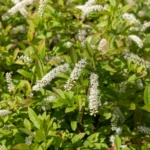 Virginia Sweetspire
-
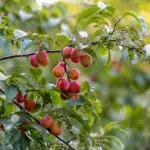 American Plum
-
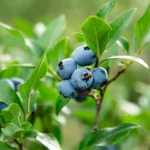 Highbush Blueberry
-
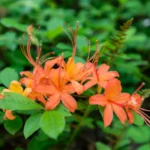 Azaleas
-
 Ninebark
-
 Mountain Laurels
-
 Spicebush
-
 Viburnums
-
 Serviceberry
Updated Find more: White Acidic Flowering Shrub Shrub Statement Tree Tree Spring Full Sun Part Sun Wet Rain Garden
The ads on this site help pay real native plant nerds to research and write these guides.
Garden notes
Notes from people who’ve grown it
Tips, wins, and the occasional disaster. If you’ve grown possumhaw, share the advice you’d give to a neighbor.
No notes yet. Yours could be the first.
Grown possumhaw? Tell the next person what you wish someone had told you.
Tap anywhere to close


