
Highlights
When you picture a holly, you might think of what you see on Christmas cards: glossy green leaves, bright red berries, maybe a little prickle. That’s one kind of holly—and yes, some of those are native. But the holly family (Ilex) is way bigger and weirder than that. There are towering trees, shrubs perfect for front yards, and types that drop their leaves in fall to show off the most electric red berries you’ve ever seen. All native hollies are tough, look good year-round, and provide crucial bird food in the winter. Need privacy screening? Winter color? A way to feed songbirds when nothing else is fruiting? There’s a native holly for that.
We’re going to introduce half a dozen native hollies that are ideal for landscaping. Before we meet some individual kinds, let’s briefly touch on what makes a holly a holly, and then discuss why native options are the best options for your yard.
What makes a holly a holly?
The world is filled with hollies: there are hundreds of species within the holly genus (Ilex), found on almost every continent.
No matter what, here are five ways to spot a holly:
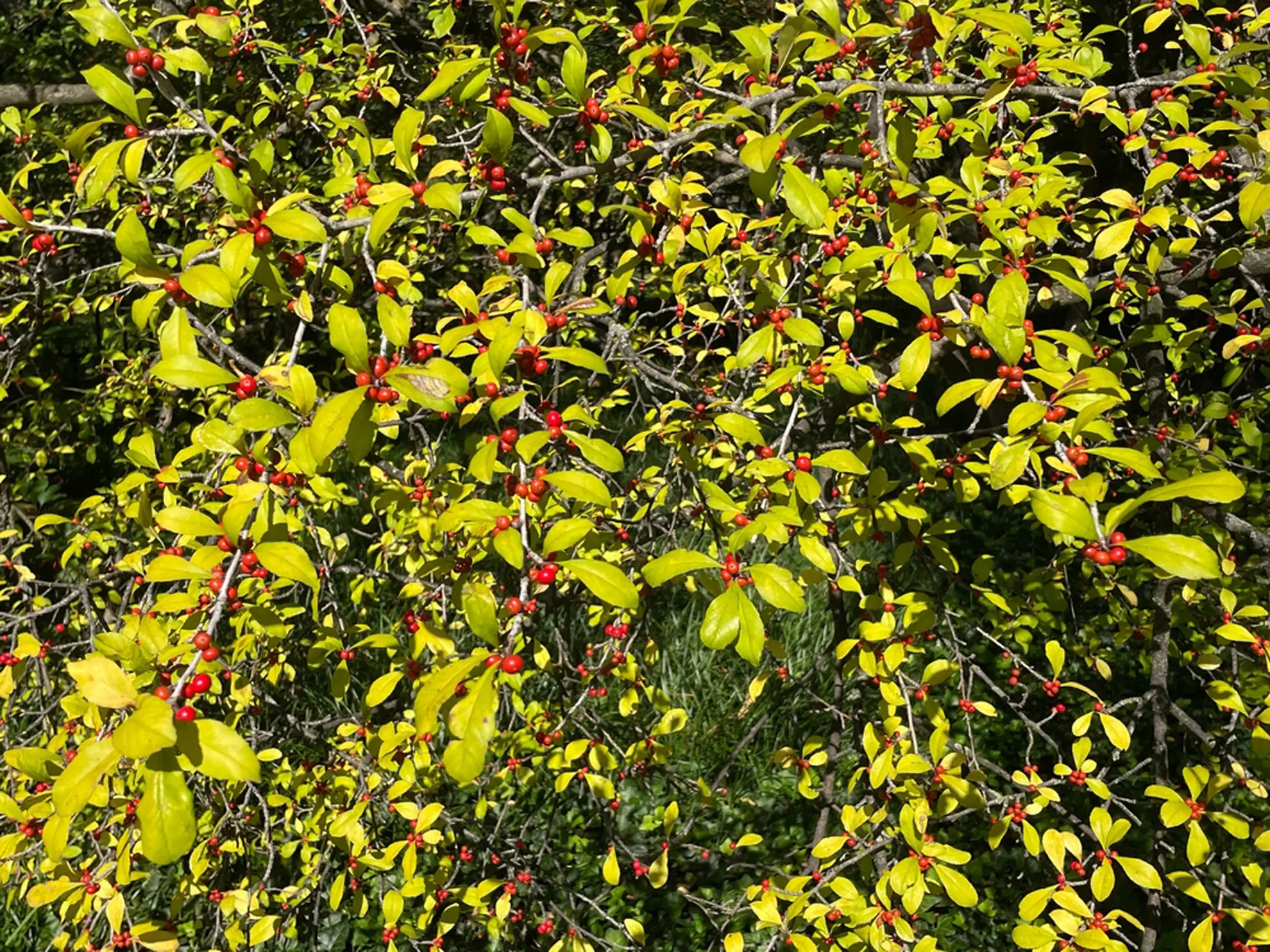
1. All hollies have thick, waxy leaves
Every plant in the Ilex genus has leaves with a waxy coating. Why this coating? It helps the plant hold onto water. Plants naturally release water through their leaves, but that waxy layer slows it down, kind of like how a lid on a pot keeps steam from escaping as fast. It’s one reason hollies are so tough once established.
In general, the thicker and waxier the leaf, the more water-conserving the plant. That’s why a lot of evergreens and drought-tolerant plants have a thick, leathery, waxy look: it’s an adaptation for surviving when water is scarce or hard to access.
2. All hollies produce berries that persist through winter
All hollies make berries (on female plants only—males don’t fruit). The berries ripen in late summer or fall and stay on the branches well into winter, sometimes lasting until early spring. They’re a critical food source for robins, cedar waxwings, bluebirds, and other songbirds during the coldest months. Many birds won’t even touch them until after a few frosts sweeten them up.
Only female holly plants produce berries, and they need a male plant nearby (usually within 40 feet) for pollination. If you want berries, you need both.
3. Almost all hollies have separate male and female plants
Almost all hollies are dioecious, meaning individual plants are either male or female. Only female holly plants produce berries, and they need a male plant nearby (usually within 40 feet) for pollination. If you want berries, you need both.
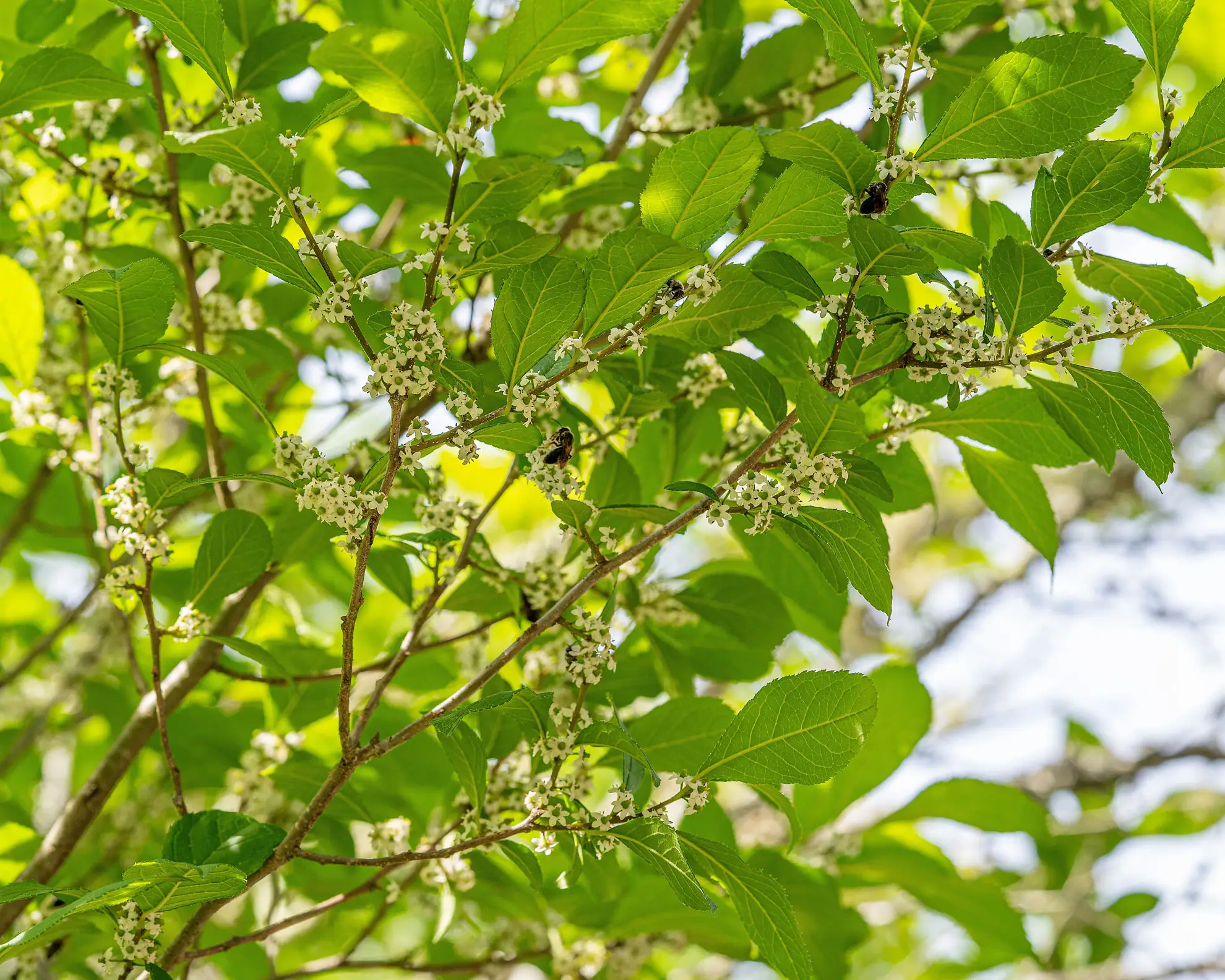
4. All hollies have small, hidden flowers
Holly flowers are tiny—usually white or greenish-white—and bloom in late spring to early summer. They’re easy to miss. The real show comes months later when the berries arrive.
Those are some similarities. There is a surprising difference between hollies:
Some holly leaves are evergreen; some are not
Several hollies have the iconic, thick, spiky, evergreen leaves. American holly and non-native hollies like Chinese or English holly fit that description perfectly. Native inkberry (Ilex glabra) is also evergreen, though its leaves are smooth instead of spiky. All stay green through winter.
But not all hollies keep their leaves. Some are deciduous, meaning they drop their leaves in the fall, just like a maple or an oak. And here’s what sets these leaf-dropping hollies apart: the berries stay.
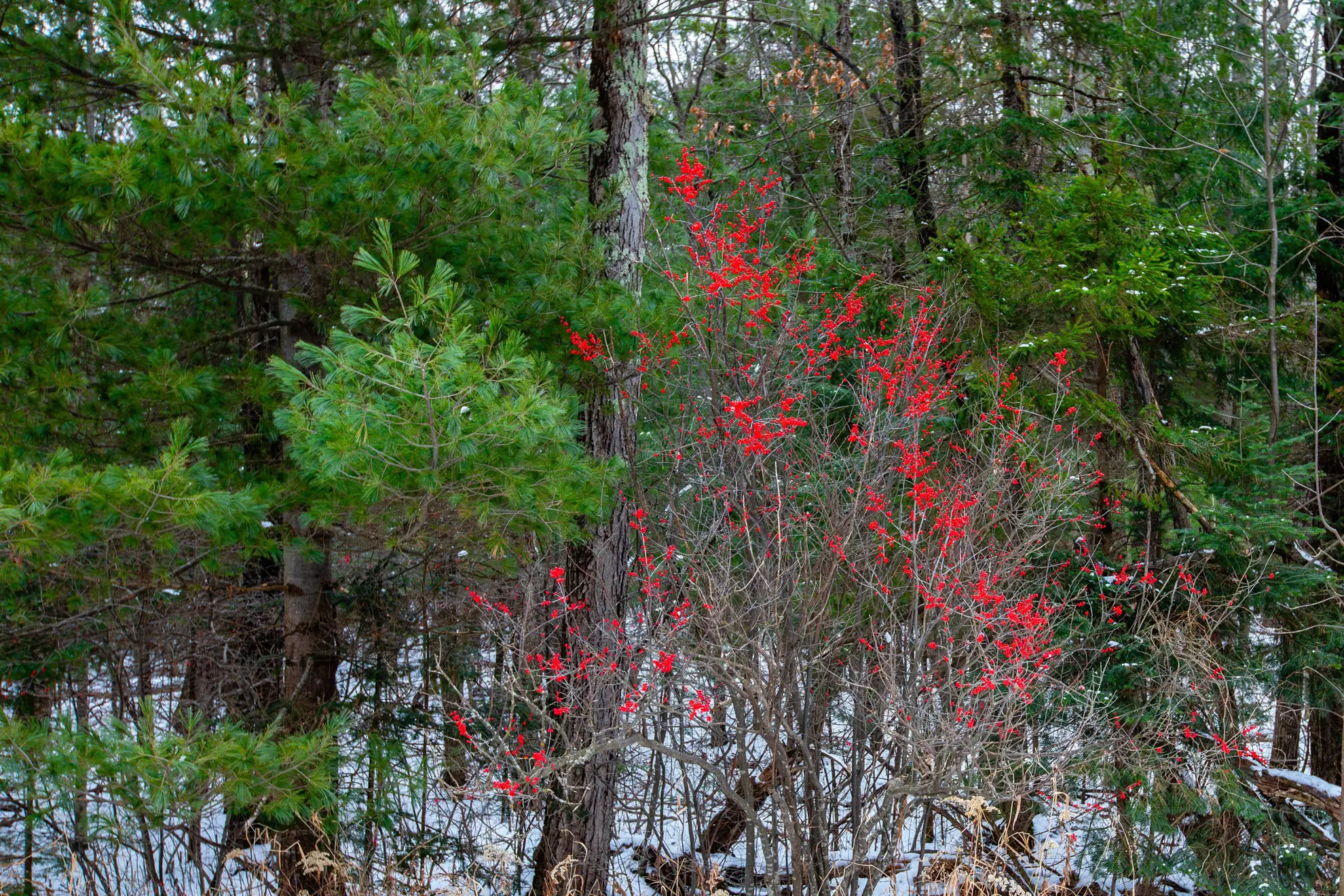
Winterberry (Ilex verticillata) is the star of this group. Once the leaves fall, brilliant red berries light up the bare branches all winter long, giving needed jolts of color. It’s a welcome sight at the end of winter, especially in colder regions when yards are gray and brown.
Five native hollies to know
We already mentioned a few native stars; here are five native species worth knowing.
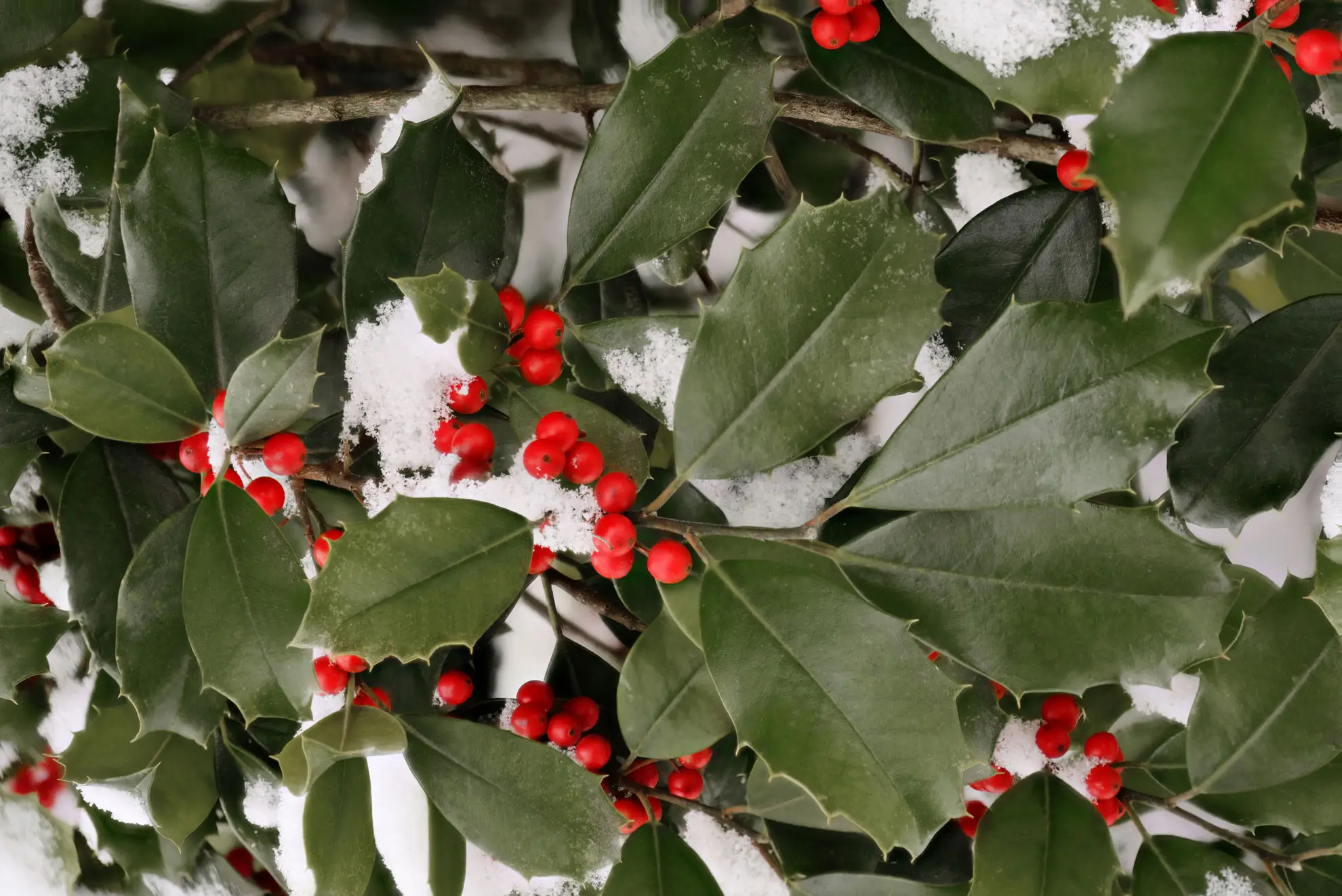
American holly
Ilex opaca
This holly turns into an epic, towering giant of a tree, reaching 60′ at its happiest.
American holly is native from Massachusetts down through Florida and over to Texas, so it covers a lot of ground. At least 18 bird species eat its berries, and its dense branches give birds a place to shelter in winter storms. Best in full sun (that’s where you get the most berries), but it handles part sun just fine.

Winterberry
Ilex verticillata
This is the holly that puts the spotlight on the berries, which also feed the birds at the very end of winter. It’s deciduous, which means it drops its leaves in fall. And that’s the whole trick: once the leaves are gone, its stems are absolutely covered in bright red berries. It’s stunning against a snowy backdrop.
We’ve got a full profile on winterberry if you want the deep dive.
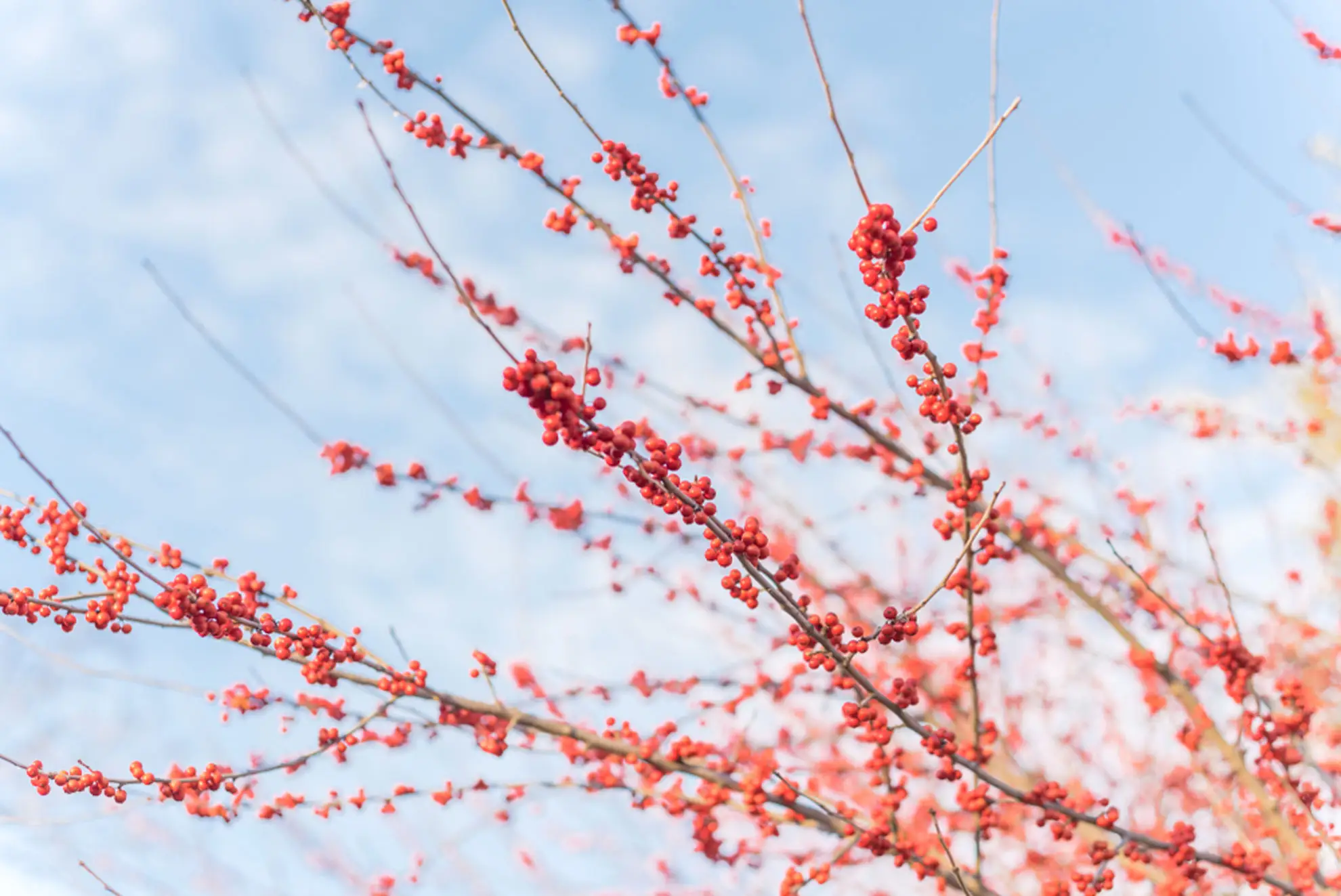
Possumhaw
Ilex decidua
Possumhaw is winterberry’s southern cousin. Like winterberry, it’s deciduous, and once its leaves drop, you’re left with gorgeous orange-red berries lining the bare stems.
It’s native from Virginia to Texas and thrives in floodplain edges, wet woods, and even drier spots than winterberry can handle. Bluebirds, wild turkeys, and quail all eat the fruits. It’s an excellent choice if you want that dramatic winter berry look but live in a hotter, drier climate than winterberry prefers.
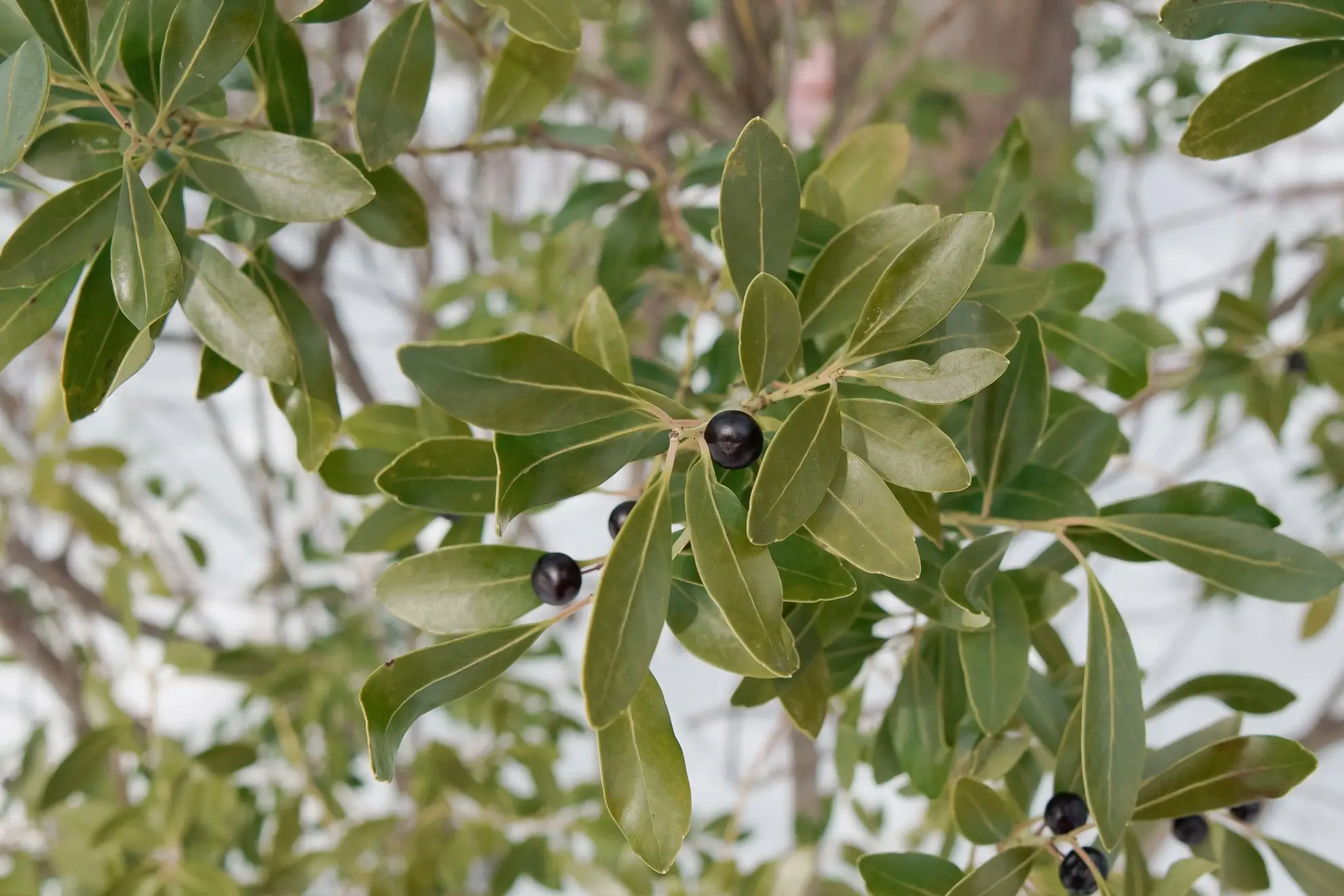
Inkberry
Ilex glabra
This is the native dupe for the boring non-native landscaping staple: boxwoods. Inkberry stays evergreen, prunes nicely into a tidy hedge, and feeds birds with its inky, dark berries.
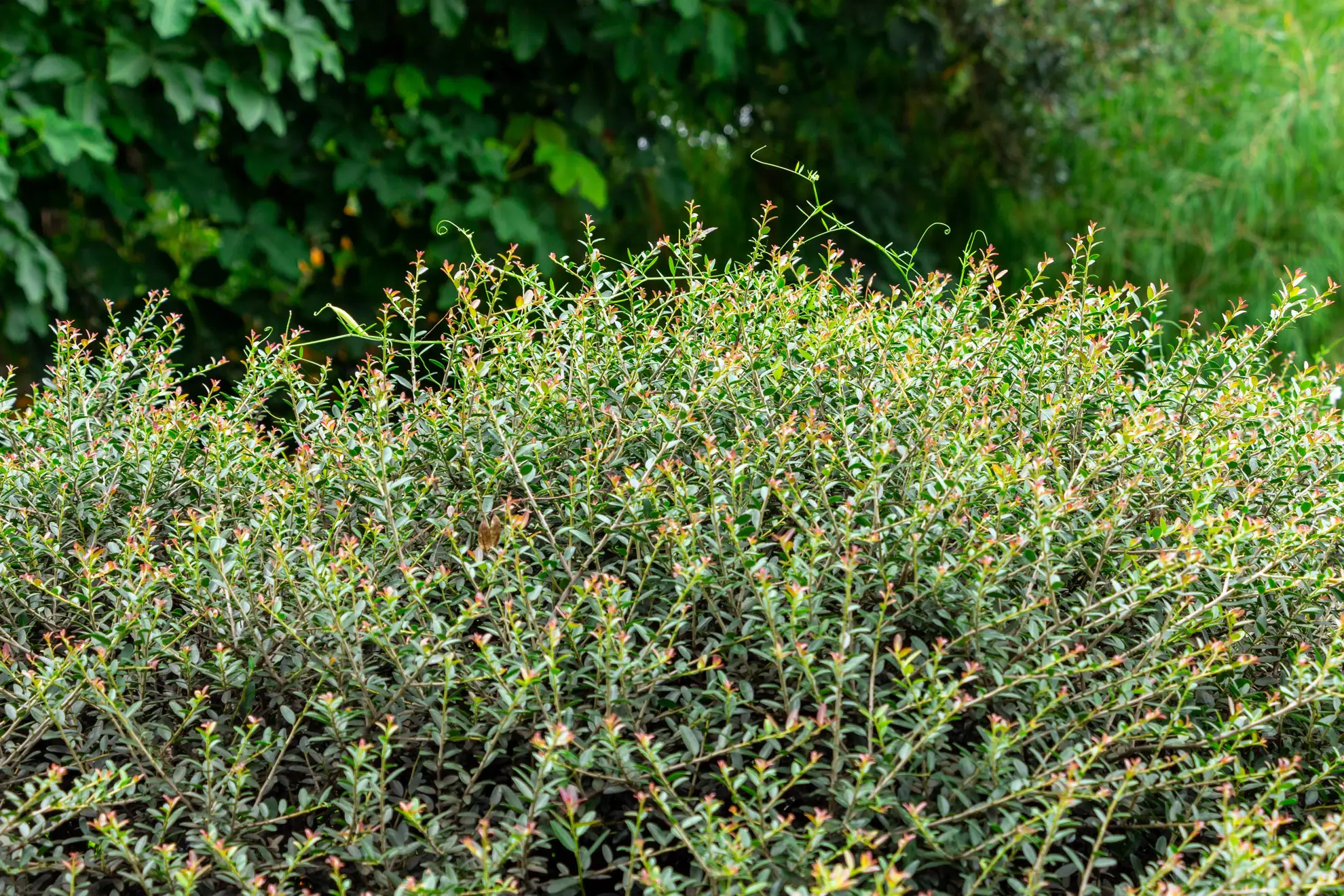
Yaupon holly
Ilex vomitoria
Don’t let the unfortunate botanical name scare you. (Vomitoria comes from a misunderstanding by European colonists. The plant doesn’t actually cause vomiting.)
Yaupon holly is incredibly tough, handles everything from drought to salt spray to deep shade, and is native across the Southeast from Virginia to Texas. The dwarf cultivar (‘Nana’) stays compact at 3–5 feet and makes a great low hedge or foundation plant.
You’ve met some native holly options! How, let’s talk about how to grow them, where to find them, and what to pair them with.
How to grow native hollies
Where to plant
Most native hollies like full sun to part shade and moist, acidic soil. Check the needs of your specific species. Yaupon is the most flexible and will grow in almost anything. Winterberry and possumhaw want consistently moist conditions. American holly likes moist, well-drained soil and doesn’t do well in alkaline or limestone-heavy ground.
When to plant
Spring or fall, when the weather is mild and the plant can settle in before summer heat or winter cold.
The male/female thing
If you want berries (and you do), make sure you’re planting at least one male holly of the same species within about 200 feet of your females. One male can pollinate several females. Many nurseries sell named male cultivars specifically for pollination. Ask before you buy.
Beginner tip
When shopping for hollies, ask the nursery which male variety pollinates the female you’re buying. They’re usually sold in pairs or clearly labeled. This one question will save you years of wondering why your holly has zero berries.
Watering
Keep new plantings consistently moist for the first year. Once established, most native hollies are pretty self-sufficient, especially if you’ve matched the right species to your site’s moisture level.
Mulching
A couple inches of mulch around the base helps keep moisture in and keeps roots cool. Don’t pile it against the trunk.
Pruning
Most native hollies have a naturally nice shape and don’t need much pruning. If you want to shape them, do it in late winter or early spring before new growth starts.
Plant nerd fact
Spot the difference: English holly vs. American holly
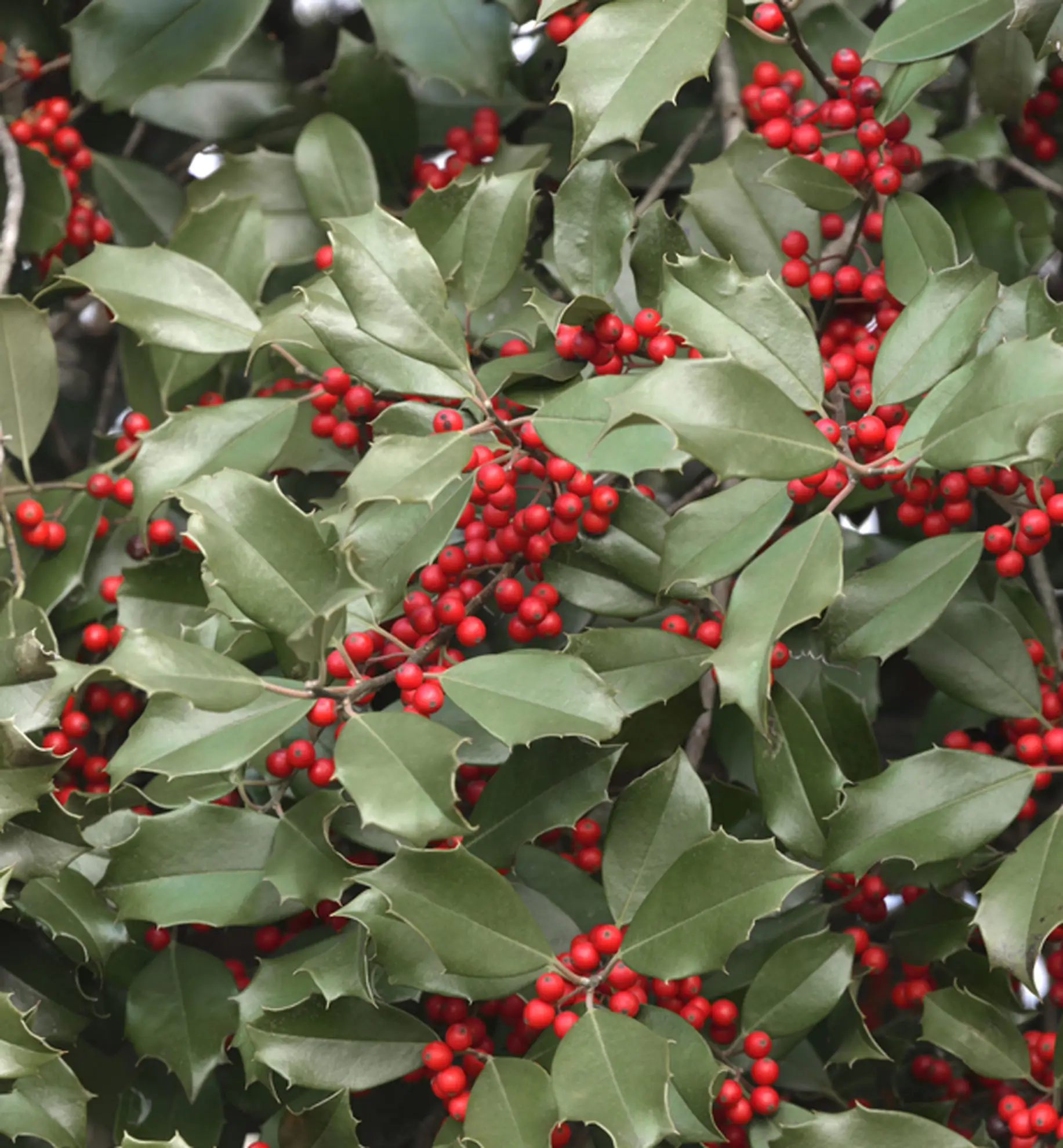
This is the one that trips people up. English holly (Ilex aquifolium) looks a lot like American holly (Ilex opaca) at first glance. Both have spiny leaves and red berries. But they’re very different plants, and English holly is actually invasive in parts of North America, especially the Pacific Northwest, where it crowds out native species in forests.
The easiest shortcut? Check the leaf shine.
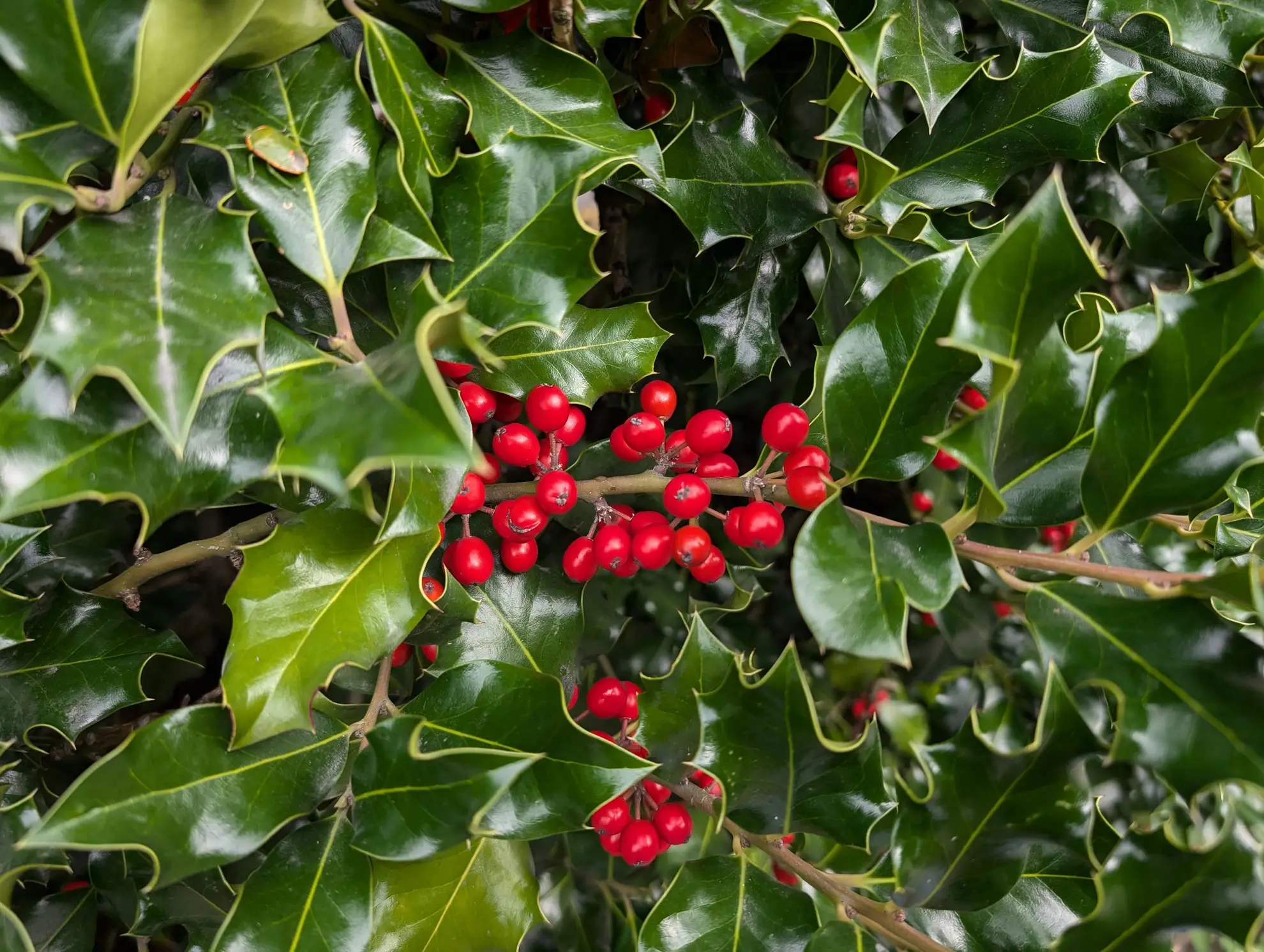
- If the leaves are super glossy and almost look wet, it’s probably English holly.
- If they’re more of a matte, flat green, you’re likely looking at American holly.
English holly also tends to have wavier leaf edges with sharper, more aggressive spines.
Why does this matter?
English holly is listed as invasive in Oregon and is a problem species across the Pacific Northwest and parts of California. Birds eat the berries and spread seeds into forests, where English holly forms dense shade that chokes out native plants. If you’ve got English holly in your yard, consider swapping it out for American holly or another native Ilex species. Same look, better results for your local ecosystem.
What are good pairings for native hollies?
No matter the holly species, all hollies love an acidic soil. Thankfully, there are lots of other natives that thrive in similar environments. Some stellar recommendations include:


Where can I buy a native holly?
We have one helpful suggestion for finding a native holly, no matter the species: visit a plant nursery that specializes in native plants. Our list of 625+ native nurseries, organized by region and state, helps make your holly quest a little easier. We also have a few other sourcing ideas to share:
Native hollies are plants that make you wonder why more people don’t plant them. They’re tough, they look great in every season, and they’re basically a bird feeder that runs itself all winter. Whether you go with a stately American holly, a berry-packed winterberry (check out our full winterberry profile), a tidy inkberry hedge (here’s our inkberry profile), or an incredibly adaptable yaupon, you’re choosing a plant that belongs in your yard. Start with one. You’ll probably end up with three. Happy planting!
Sources
- “Ilex opaca (American Holly).” Lady Bird Johnson Wildflower Center, University of Texas at Austin. Accessed 2025. https://www.wildflower.org/plants/result.php?id_plant=ILOP.
- “Ilex opaca.” North Carolina Extension Gardener Plant Toolbox, NC State University. Accessed 2025. https://plants.ces.ncsu.edu/plants/ilex-opaca/.
- “Ilex verticillata.” North Carolina Extension Gardener Plant Toolbox, NC State University. Accessed 2025. https://plants.ces.ncsu.edu/plants/ilex-verticillata/.
- “Ilex glabra (Inkberry Holly).” Plant Guide. U.S. Department of Agriculture, Natural Resources Conservation Service. Accessed 2025. https://plants.usda.gov/DocumentLibrary/plantguide/pdf/pg_ilgl.pdf.
- “Ilex vomitoria (Yaupon Holly).” Plant Fact Sheet. U.S. Department of Agriculture, Natural Resources Conservation Service. Accessed 2025. https://plants.usda.gov/DocumentLibrary/factsheet/pdf/fs_ilvo.pdf.
- “Ilex decidua.” Lady Bird Johnson Wildflower Center, University of Texas at Austin. Accessed 2025. https://www.wildflower.org/plants/result.php?id_plant=ilde.
- Sullivan, Janet. “Ilex opaca.” In Fire Effects Information System. U.S. Department of Agriculture, Forest Service, Rocky Mountain Research Station, Fire Sciences Laboratory, 1993. https://www.fs.usda.gov/database/feis/plants/tree/ileopa/all.html.
- Kapadia, Silloo. “Why Doesn’t My Holly Have Berries?” Penn State Extension. Accessed 2025. https://extension.psu.edu/why-doesnt-my-holly-have-berries.
- “Ilex aquifolium (English Holly).” Invasive Plant Atlas of the United States. Accessed 2025. https://www.invasiveplantatlas.org/subject.html?sub=5744.
- “Ilex aquifolium (English Holly).” California Invasive Plant Council. Accessed 2025. https://www.cal-ipc.org/plants/profile/ilex-aquifolium-profile/.
Similar plants
Updated Find more: White Acidic Beginner Guide Deer Resistant Evergreen Evergreen Tree Shrub Tree Spring Full Sun Part Sun
The ads on this site help pay real native plant nerds to research and write these guides.
Garden notes
Notes from people who’ve grown it
Tips, wins, and the occasional disaster. If you’ve grown holly, share the advice you’d give to a neighbor.
No notes yet. Yours could be the first.
Grown holly? Tell the next person what you wish someone had told you.
Tap anywhere to close


