





Highlights
The passionflower may be one of the top five flowers in the entire world. There are several species of passionflower that are native to the southern United States (particularly Florida). Native Passionflowers put out a leafy vine that flowers in the spring and summer. Passionflowers are host plants for the Gulf fritillary butterfly, meaning every passionflower vine planted helps these butterfly populations thrive. If you live in the South, plant one (or a few) and enjoy their beauty while feeding butterflies.
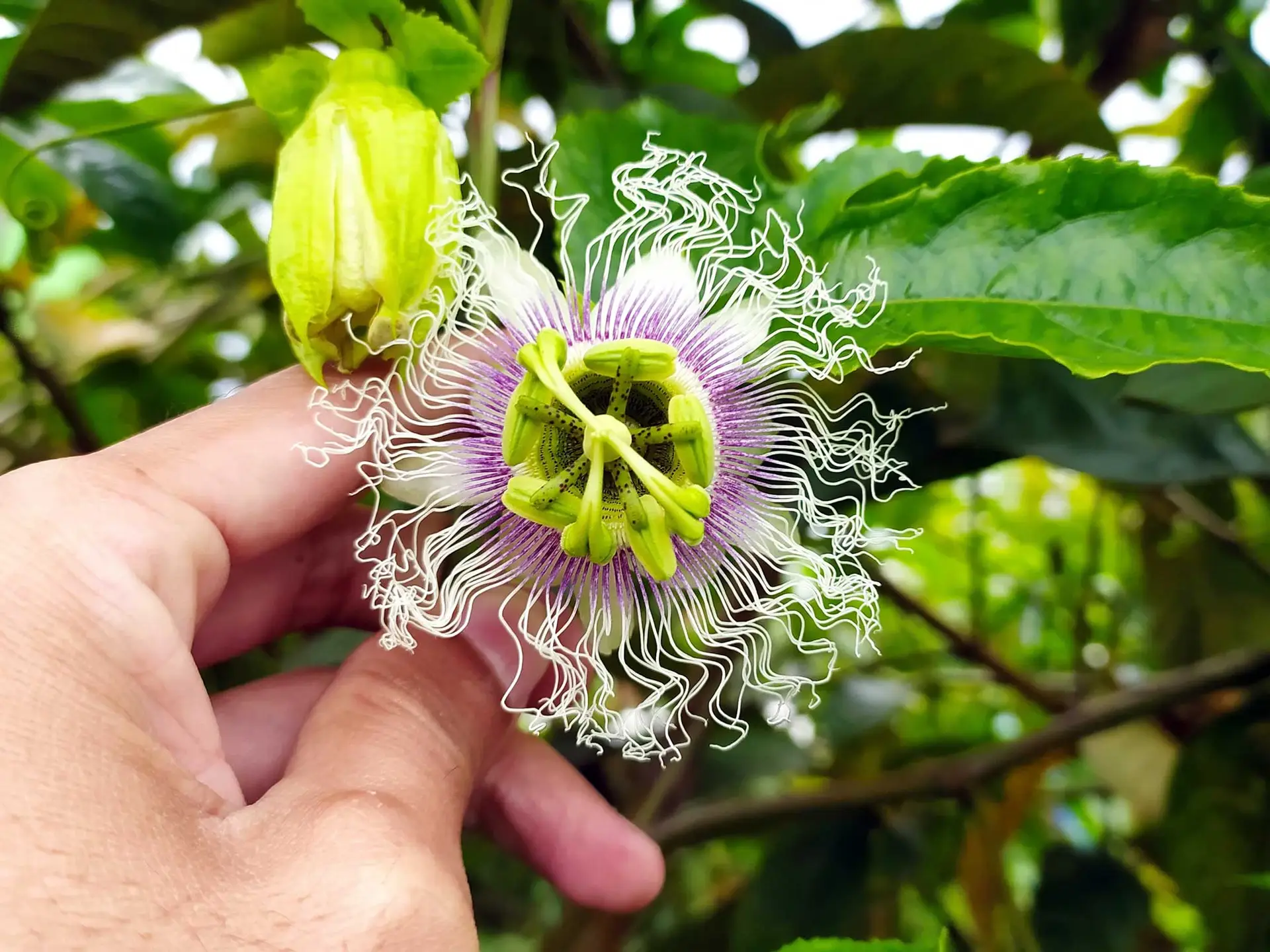
Several species of passionflower vines are native to North America, including the Maypop (Passiflora incarnata), Purple passionflower (Passiflora incarnata), and Gulf Coast passionflower (Passiflora lutea). All of these species feature unique and intricate flowers and come in a range of colors, from purple to pink to white. Let’s dig into the benefits (there are so many!) of planting passionflower vines.
To say it clearly: without the passionflower vine, there would be no Gulf fritillary butterflies.
Passionflower vines are host plants
Passionflowers = Gulf fritillary butterflies
Passionflower vines are the host plant for Gulf fritillary butterflies. Host plants are very special plants, in that they are the only plant a species of butterfly will lay their eggs on, and the only plant their caterpillars will eat. Caterpillars can be very picky eaters!
Planting passionflower vines ensures that Gulf fritillary butterfly moms will have a place to lay their eggs, and babies will have enough food to survive into butterfly adulthood. To say it clearly: without the passionflower vine, there would be no Gulf fritillary butterflies.
Where is passionflower native?
Native to 22 US states and Washington, D.C.
Sources: NatureServe, Royal Botanic Gardens, Kew (World Checklist of Vascular Plants) and the USDA PLANTS Database, compiled by The Plant Native. How we map native ranges
How to grow passionflower
These plants are happy in a wide range of sun—full sun to partial shade—and well-draining soil. They prefer to climb on trellises, fences, or other support structures, so make sure to provide them with something to climb on. Native plants are also relatively low maintenance and don’t require much fertilizer, making them a great addition to any garden.
What are some other native vines?
You’ve got quite a few options! Here are some others to consider:


Planting card
Passiflora incarnata, P. lutea
What to plant with passionflower vine
There are so many native plants that pair well with passionflower vines, including Carolina jessamine, American beautyberry, azaleas, and buttonbush.


Passionflower vines are stunning native plants that help feed butterflies and pollinators while also looking amazing. If you live in the south, these are musts for your garden. Happy planting!
Sources
- Nelson, Gil. Best Native Plants for Southern Gardens: A Handbook for Gardeners, Homeowners, and Professionals. (1999), 266-267.
Where can I buy passionflower?
Most big-box garden centers don’t carry true natives, but passionflower is easier to find than you might think. Your best bets are a native plant nursery near you, a native plant society sale, or a trusted online grower that ships to your region.
Explore host plants
-
 Coral Honeysuckle
-
 Trumpet Vine
-
 American Wisteria
-
 Blue Vervain
-
 Joe Pye Weed
-
 Coneflowers
-
 Umbrella Magnolia
-
 Hackberry
-
 Crabapples

Updated Find more: Purple Vine Summer Full Sun Part Sun Host Plant
The ads on this site help pay real native plant nerds to research and write these guides.
Garden notes
Notes from people who’ve grown it
Tips, wins, and the occasional disaster. If you’ve grown passionflower, share the advice you’d give to a neighbor.
No notes yet. Yours could be the first.
Grown passionflower? Tell the next person what you wish someone had told you.
Tap anywhere to close


