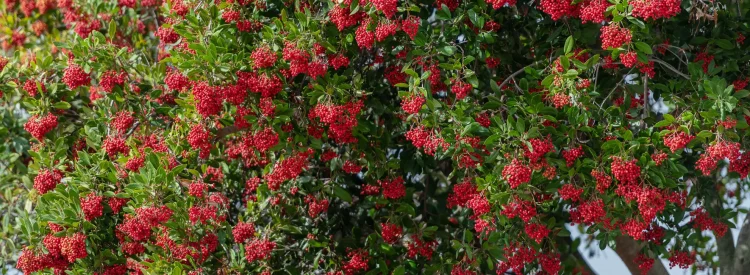
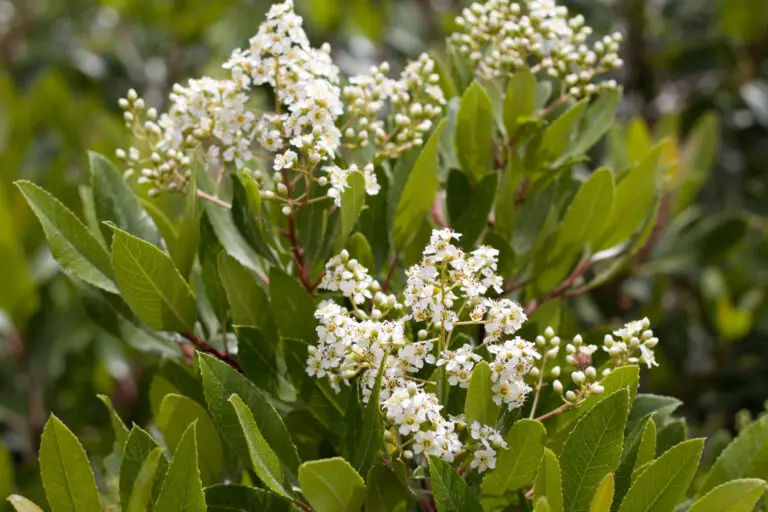
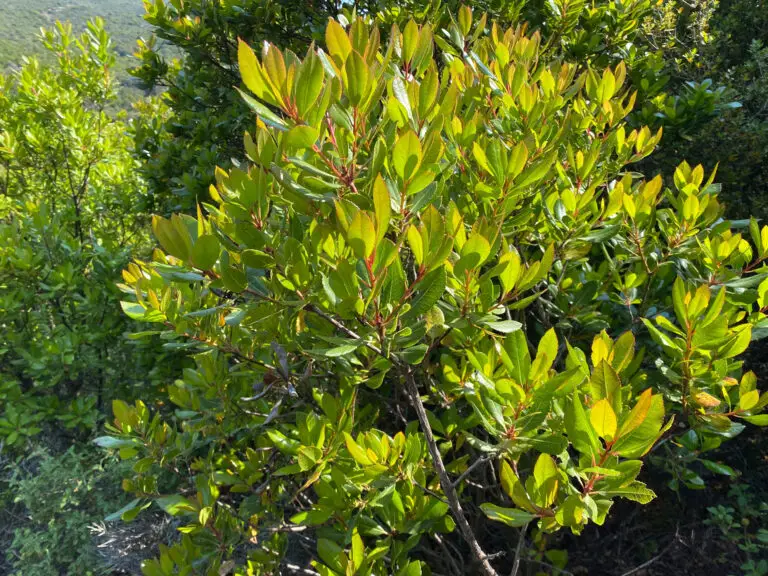
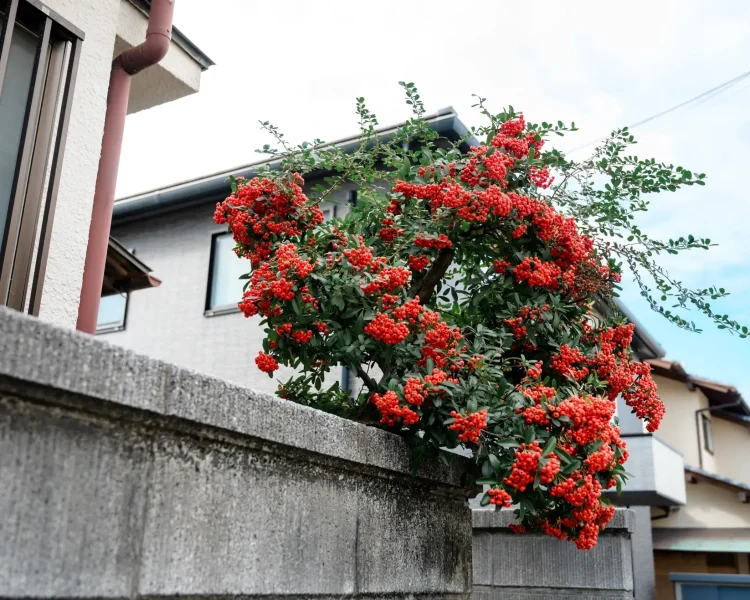
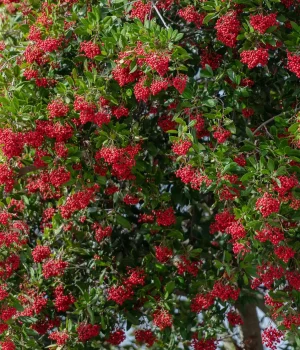
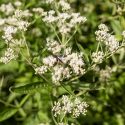
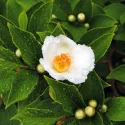
Toyon is an evergreen native shrub (or small tree) known for its glossy leaves, clusters of white flowers, and bright red berries that persist into winter. It’s tough, adaptable, and deeply tied to California landscapes, supporting pollinators in spring and birds through the lean months. Once established, toyon thrives with little water and almost no maintenance. Scroll on for planting tips and where it shines.
Where it grows naturally
In the wild, toyon grows across coastal scrub, chaparral, oak woodland edges, and foothills throughout much of California. You’ll find it on slopes and in open woodlands, thriving in areas with wet winters and long, dry summers.
In a yard, that looks like sunny slopes, dry borders, or mixed shrub plantings where irrigation is minimal. Planting toyon in these conditions mirrors the environment it evolved in; use these thousands of years of evolution to your lazy-gardening advantage.
How to grow toyon
There are a few things to note as you consider planting toyon in your yard:
- Sun: Full sun to part sun produces the best growth and berries.
- Soil: Well-drained soil is key; toyon tolerates clay, loam, and sandy soils.
- Water: Water regularly the first year until it gets established.
- Pruning: Prune lightly after flowering or in late winter to shape as needed.
- Patience pays off: Growth is moderate, but the plant becomes increasingly resilient over the years.
Once established, toyon is extremely drought tolerant and long-lived.
A few tips about pruning toyon:
If you want a tree, remove the lower branches in winters to help it continue upward growth.
If you want a bushy shrub, prune closer to the ground; trimmed stems will branch.
According to the USDA’s toyon overview, pruning might even be good! “Trimming may increase the abundance of berries by increasing the amount of year-old wood.”
This is a perfect segway to talk about how old these plants get. According to an article about toyons in the Topanga New Times:
“Toyons weather periods of drought by conserving resources and only produce abundant fruit in years with adequate rain. Toyon can live for more than a hundred years, possibly as much as two hundred when conditions are right.”
Talk about lazy, beautiful gardening! Plant a toyon in a day, ensure it’s established during the first year, and then enjoy this plant for generations.
The origin of the name toyon is more complex—and honestly more American—than a single tidy definition. Linguistic and ethnobotanical research documents related Indigenous words for this plant in Costanoan/Ohlone languages, including totchon (Rumsen dialect) and tyottyoni (Mutsun dialect).
The name toyon likely emerged through layers of Indigenous language, Spanish, and later English use—a kind of linguistic game of telephone that played out over centuries. Could there be a more American naming system?
To meet another native with a similarly blended backstory, visit our Beginner’s Guide to Native Pawpaws.
It also goes by the name Christmas berry
Toyon is also known as California holly or California Christmas berry. That’s because its bright red berries ripen in late fall and early winter. (Despite the nickname, toyon is not related to hollies.)
These berries were once very popular. In the early 1900s, toyon branches were harvested for holiday decorations across the West Coast. The demand became so frenzied that wild toyon plants were in danger of being wiped out. In response, California passed CA Penal Code 384a in the 1920s, making it illegal to cut or remove plants from state lands. The law helped protect toyon and countless other native plant gems in California landscapes, and is still the law of the land today.
Where toyon shines in your yard
Toyon works beautifully as a large evergreen screen, a backdrop in mixed plantings, or a small multi-trunk tree. It’s especially effective on slopes, along property lines, or anywhere you want year-round structure without heavy watering.
Because it flowers in spring and fruits in fall, toyon quietly supports wildlife across multiple seasons—without demanding attention from you.
And that wraps up our beginner’s guide to toyon. Evergreen, resilient, and deeply rooted in California landscapes, toyon proves that low-water planting doesn’t mean sacrificing beauty or wildlife value. Plant it once, give it time, and let it do what it’s always done best: show up year after year, for 100+ years or more. Where to next? Can we recommend our Beginner’s Guide to Desert Willow? Or help the California monarchs and plant some milkweed! Happy planting!