The short version: no. The longer version is more interesting, and it involves a tiny gray bird eating roughly nine thousand caterpillars in your yard. Let’s get into it.
It’s a reasonable question to ask. We have spent years being told that a healthy yard is a spotless one, that the chewed leaf is a problem and a chemical is the solution. When you hear a suggestion to stop, the skepticism is real.
Pesticides impact good bugs, too
Chemicals are not smart
Pesticides do not know the difference between the bugs chewing your plants and the bugs that hunt the bugs chewing your plants. They kill and negatively impact everything.
Yes, the aphids vanish. But so do the ladybugs, lacewings, and tiny wasps that were quietly eating those aphids. These helpful big bug eaters reproduce slower than the small ones. So the small pests (like aphids) bounce back first, springing into a yard with nothing left to keep them in check.
That is the loop a lot of sprayed gardens get stuck in: you spray, you get a clean week, the pests come roaring back, you spray again.
When you stop, commit to some patience to let something else move in. The bug hunters return. And the single biggest hunter you can recruit is not an insect at all. It is a bird.
“
That works out to a parent bird delivering more than 400 caterpillars a day, back and forth, dawn to dark, dropping a green worm into a screaming mouth roughly every couple of minutes.
”
Meet your new pest control crew
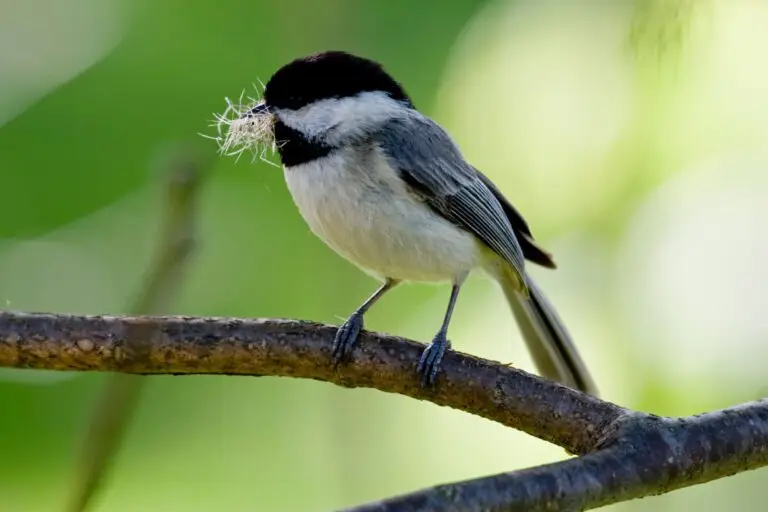
Here is the number that changes how you see your yard. A pair of Carolina chickadees, those round little black-capped birds at every feeder in the eastern half of the country, needs between 6,000 and 9,000 caterpillars to raise one single brood of chicks. Not for the year. For one batch of babies, over the two or three weeks they are in the nest.
That works out to a parent bird delivering more than 400 caterpillars a day, back and forth, dawn to dark, dropping a green worm into a screaming mouth roughly every couple of minutes. Multiply that across the chickadees, wrens, warblers, and cardinals working your block, and you start to see it: the appetite for “pests” in a single backyard is enormous, and it is already out there looking for work. You don’t need to add pest control. You just need to get out of its way.
This is not a folksy estimate—it’s backed by science. It comes from ecologist Doug Tallamy and a team at the University of Delaware and the Smithsonian Migratory Bird Center, who spent two years tracking chickadees around Washington, D.C. to connect what the birds ate to the plants their food came from. This work has become important data for the Audubon, the Smithsonian, and the Cornell Lab.
Why native plants are the part that matters
You might be thinking: fine, but if I want birds to eat my bugs, don’t I need bugs first, and isn’t that the thing I was afraid of?
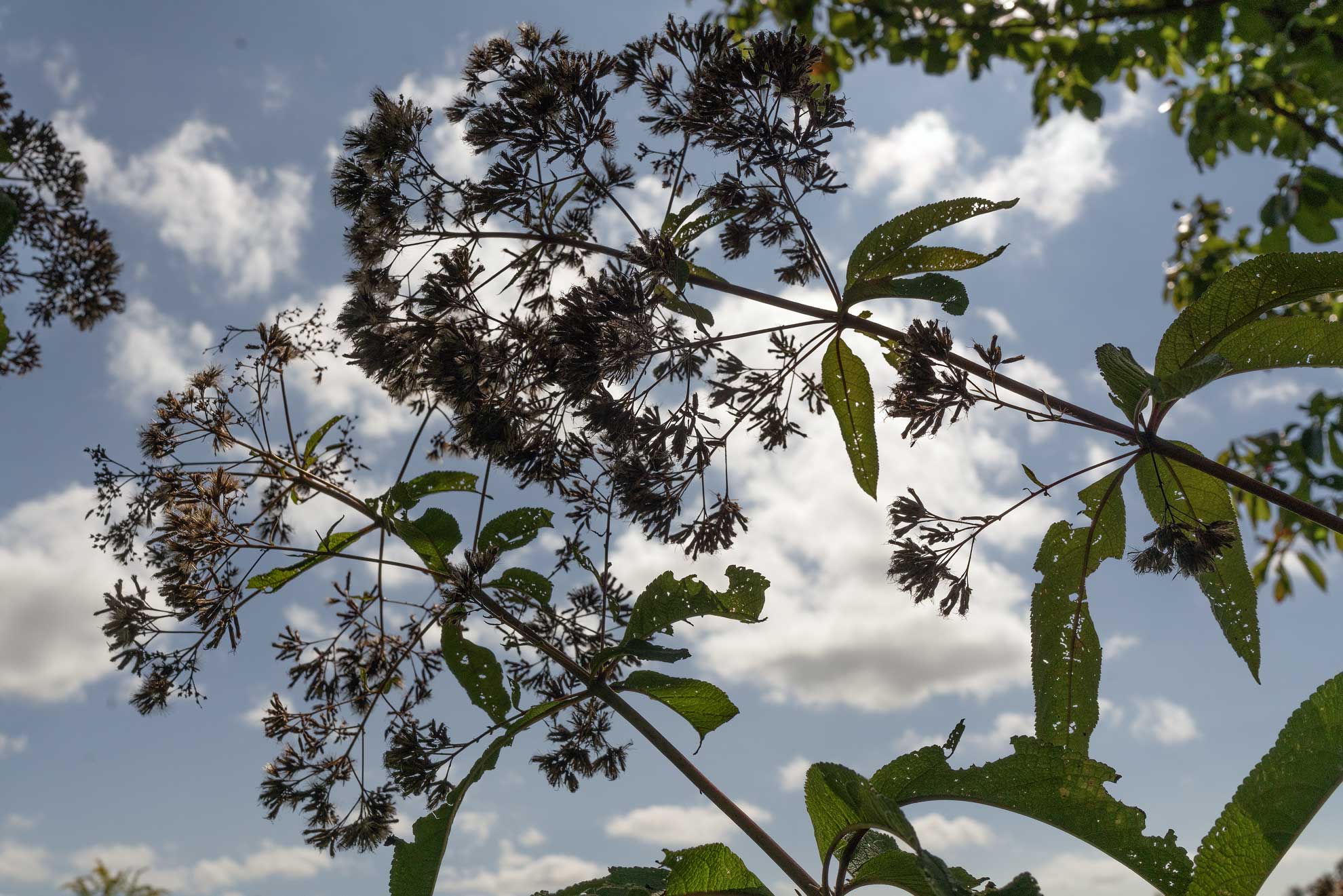
Here is the twist. Birds cannot raise their young on just any bug, and bugs do not show up for just any plant. Most of our caterpillars, the soft green protein that nearly every backyard bird feeds its chicks, can only eat the native plants they evolved alongside. A leaf is not a neutral salad. It is loaded with chemistry meant to keep insects from eating it, and only the local insects have cracked the code for the local plants. Drop in a shrub from another continent and most of our caterpillars simply cannot digest it. The plant stays glossy and untouched, and it is also, quietly, a desert for birds.
The Delaware team found a hard line in their data. A yard needs to be made of at least 70 percent native plants for chickadees to raise enough young to sustain their numbers. Below that line, the birds keep nesting but cannot find enough food, and the local population slowly fades out. Above it, they have a real shot. The best food plants they named are the familiar giants: oaks, native cherries, native willows, native elms, and native birches. An oak alone can feed hundreds of caterpillar species. The Norway maple beside it feeds almost none.
The new chain of events in your garden looks like this:
- Native plants feed the caterpillars
- The caterpillars feed the birds
- The birds keep the caterpillars from ever becoming a serious problem
Plant native, and you are not choosing between “bugs” and “no bugs.” You are building the whole self-correcting loop, the diners and the things that eat them, in your own front yard.
The part nobody tells you: some bug-eating is the goal
Now for the reframe. If you plant the right things, you actually want a few chewed leaves. You should be a little proud of them.
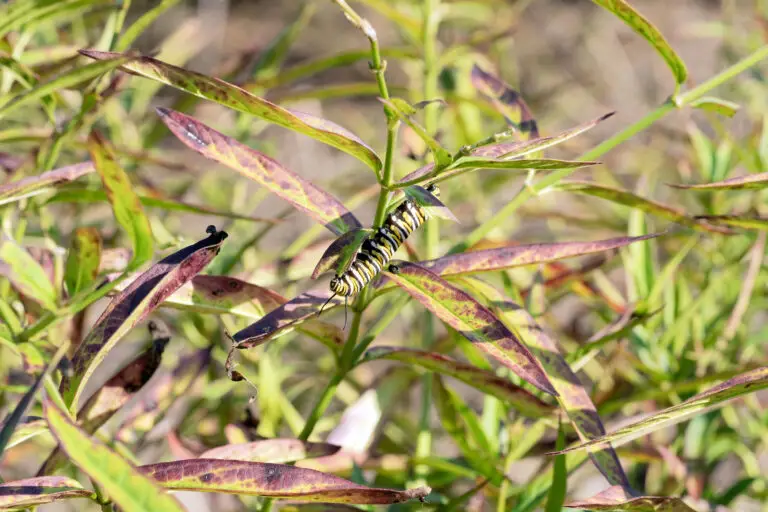
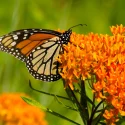
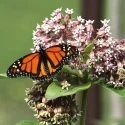
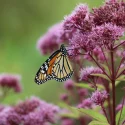
A plant that feeds caterpillars is called a host plant, and the most famous one is milkweed, the only thing a monarch caterpillar can eat. Here is the thing: a milkweed with no chew marks on it is a milkweed that failed at its one job. Those holes are not damage. They are the monarchs you said you wanted, in their toddler phase. Same with the spicebush that a swallowtail folds itself inside, or the oak quietly raising the caterpillars that become next spring’s birds.
This is the mental shift that makes native gardening click. On a host plant, the chewing is the point. A leaf with a few holes in it is a leaf doing its job, and it is a sign your yard is feeding something, which is the entire reason to do this. The caterpillars eat a little, the birds eat the caterpillars, and the plant, which evolved with all of this, shrugs it off and leafs out again next year. Nobody loses. You just have to retrain the part of your brain that learned to read a hole as a failure.
Beginner Tip
There are over 100 milkweed species in North America. If you want to plant host plants for monarchs and invite some good bugs into your yard, you have lots to pick from.
What this looks like in your yard
Let’s say the question directly, because it is a fair question.
Will your garden look chewed to pieces and ragged without pesticides?
No. Not with a majority of native plants. Aim for 70% for ideal pest balance.
Native gardens that welcome the birds and beneficial insects back in residence tend to settle into a quiet balance within a season or two. You will see some leaf damage if you look closely, but not the kind the neighbors notice from the sidewalk. What you will also see is more life: more goldfinches, more hummingbirds, more of that low hum that means a place is alive.
If you want to ease into it, you do not have to convert the whole yard or swear off intervention forever. Start with one bed. Pull out the one plant nothing visits and put in a native that earns its keep, then leave the spray in the garage and watch for a season. You can always pick a single stubborn pest off by hand. What you are really doing is hiring a workforce of 400-caterpillar-a-day birds and letting them do the job you used to pay for.