
Highlights
Eastern flowering dogwoods are the stuff of springtime dreams: beloved, iconic, and unforgettable when you see them in full bloom. But these native beauties don’t stop there. In the fall, they dazzle with fiery foliage and offer high-nutrient berries to fuel migrating songbirds. Even their fallen leaves do their part, enriching the soil with calcium. Ready to fall in love with this stunning tree? Scroll on to learn more.
What are the benefits of planting an eastern flowering dogwood?
Eastern flowering dogwoods are one of the 12 native dogwood species found in North America—meet all of them in our guide to native dogwoods. Planting native dogwoods delivers a lot of benefits, including:
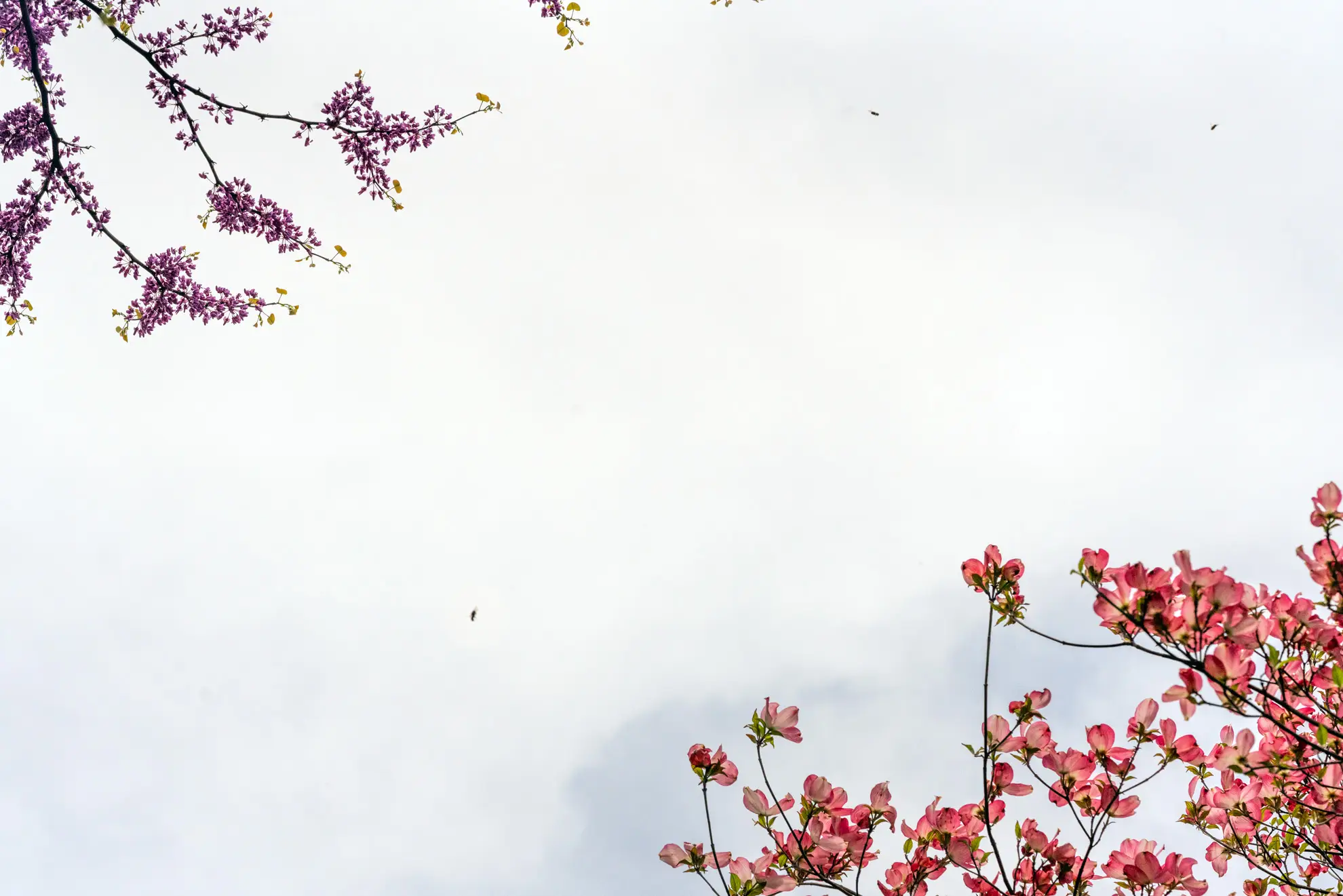
- Support Pollinators and Wildlife: Native dogwoods provide essential nectar for pollinators like bees and butterflies in the spring and berries that sustain birds and other wildlife in the fall.
- Year-Round Beauty: Spring flowers, bright red fall leaves and bright berries in the fall add interest to your yard all year.
- Low Maintenance: Once established, native dogwoods thrive with minimal care and require fewer resources than non-native alternatives.
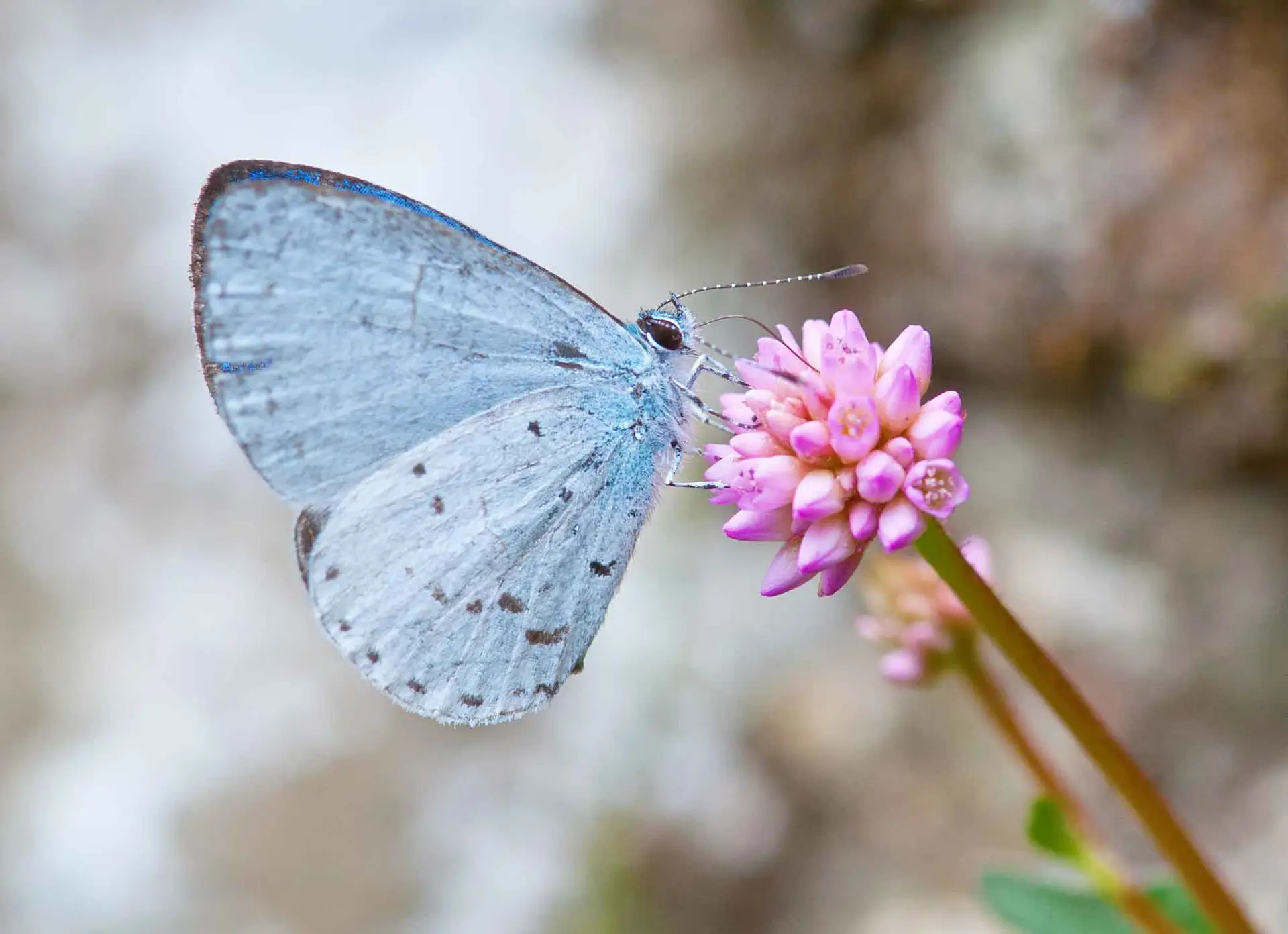
And one more reason to plant an eastern flowering dogwood… 🦋
These are cinematic trees, whose beauty changes with each passing season.
Eastern flowering dogwood throughout the seasons
These are cinematic trees, whose beauty changes with each passing season.
Spring
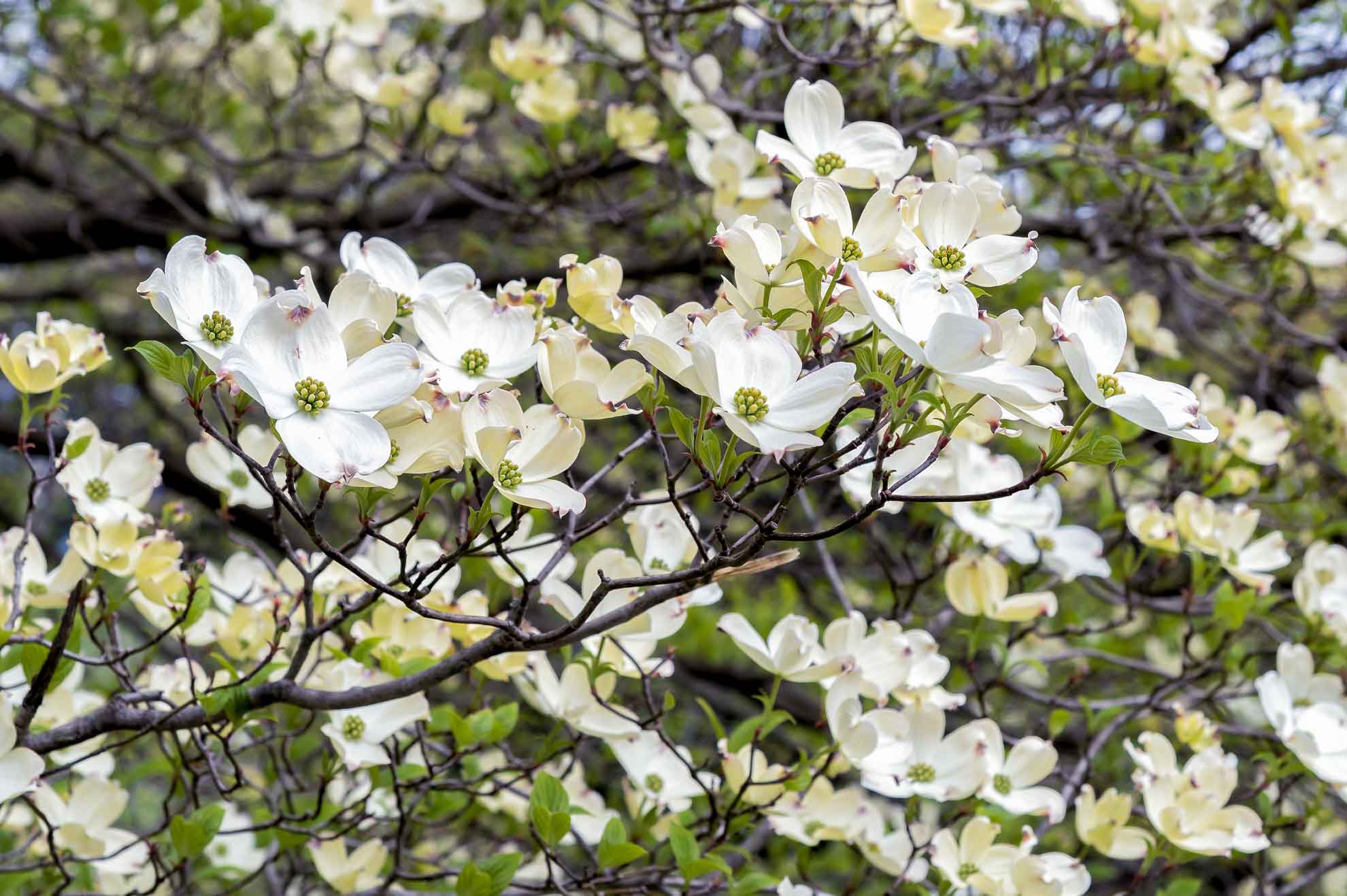
Eastern flowering dogwoods cover themselves with palm-sized flowers in the spring. It’s iconic when you see one.
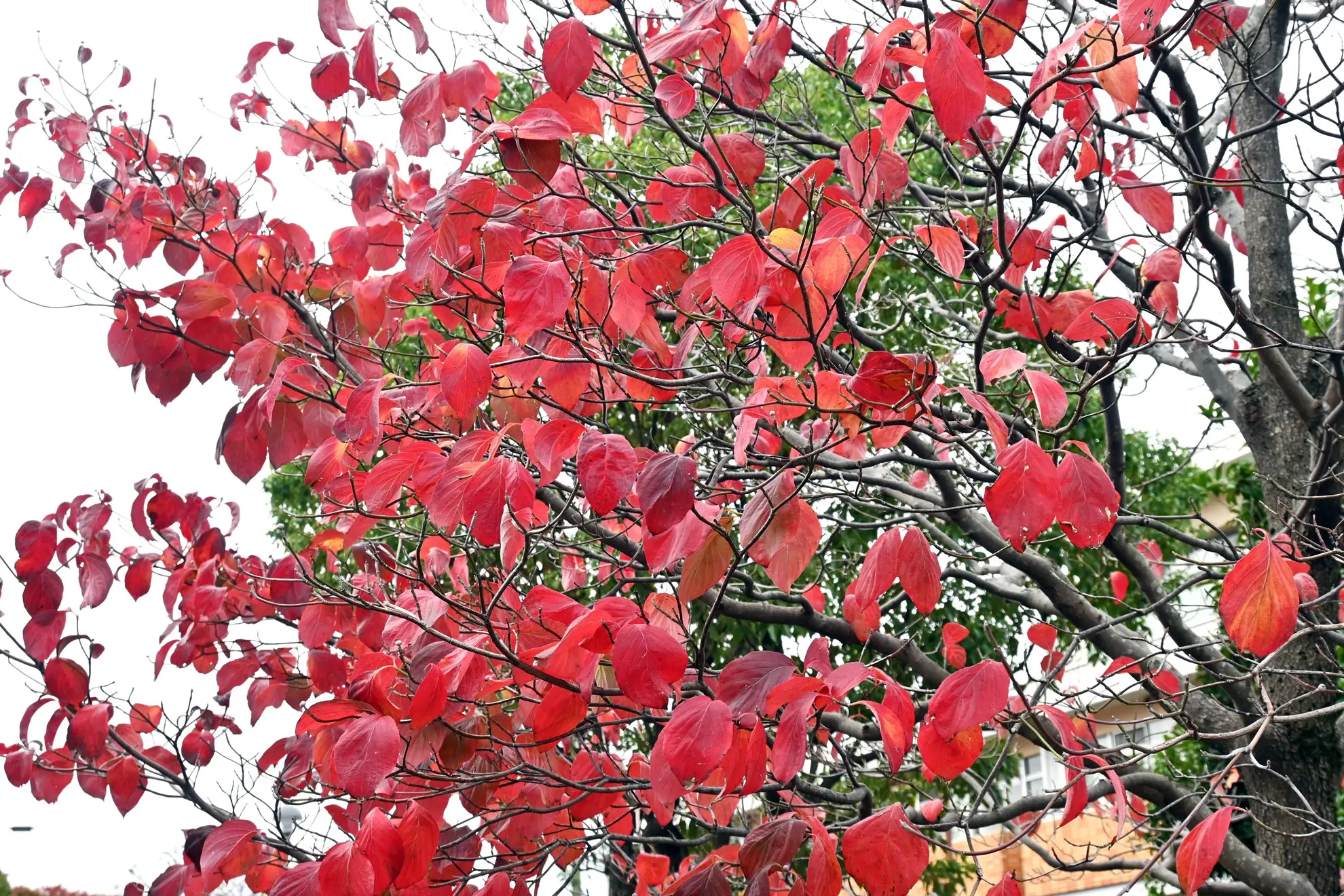
Fall
Eastern flowering dogwoods turn fiery shades of red before dropping. They’re not just clutter; they’re natural fertilizer. As the leaves decompose, their high calcium content enriches the soil, boosting nutrients for nearby plants. So, embrace your inner lazy gardener and let nature take care of the fertilizing.
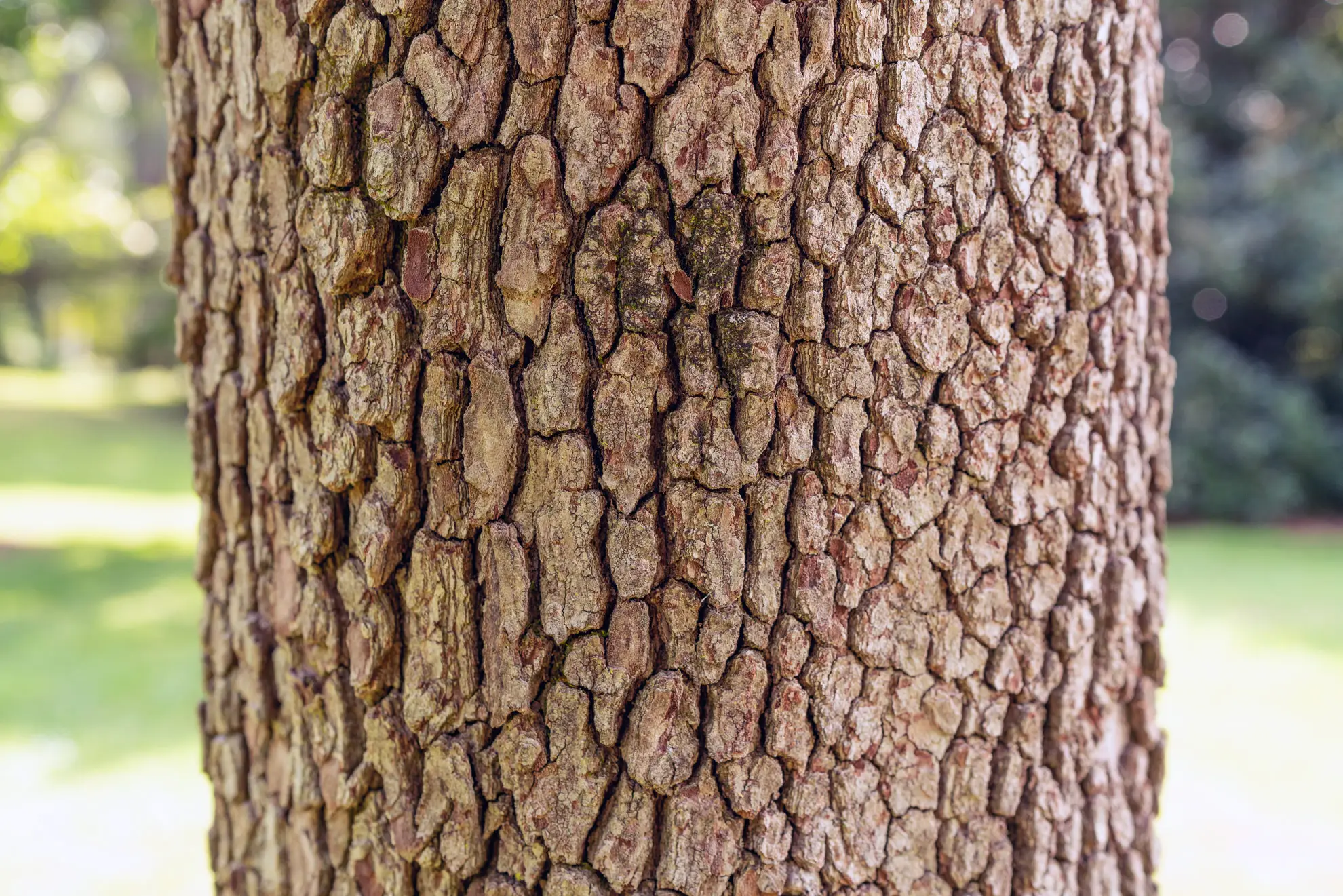
Winter
Enjoy the sculptural details of the bark and branches in the winter. Don’t forget to look closely to see the jigsaw-puzzle-pieced bark (this is another way to identify this native tree). And then it’s back to the iconic white flowers!
Where is eastern flowering dogwood native?
Native to 31 US states, Washington, D.C., and 1 Canadian province (Ontario)
Sources: NatureServe, Royal Botanic Gardens, Kew (World Checklist of Vascular Plants) and the USDA PLANTS Database, compiled by The Plant Native. How we map native ranges
Pairs well with


Plant nerd fact
Eastern flowering dogwood white petals are actually leaves
If you’re into a tiny bit of botany to drop into conversation, here’s a good fact. Technically, the white petals on eastern dogwood flowers are not petals: they are bracts. A bract is a modified leaf that looks like a petal.
The pollen is contained within tiny flowers in the center:
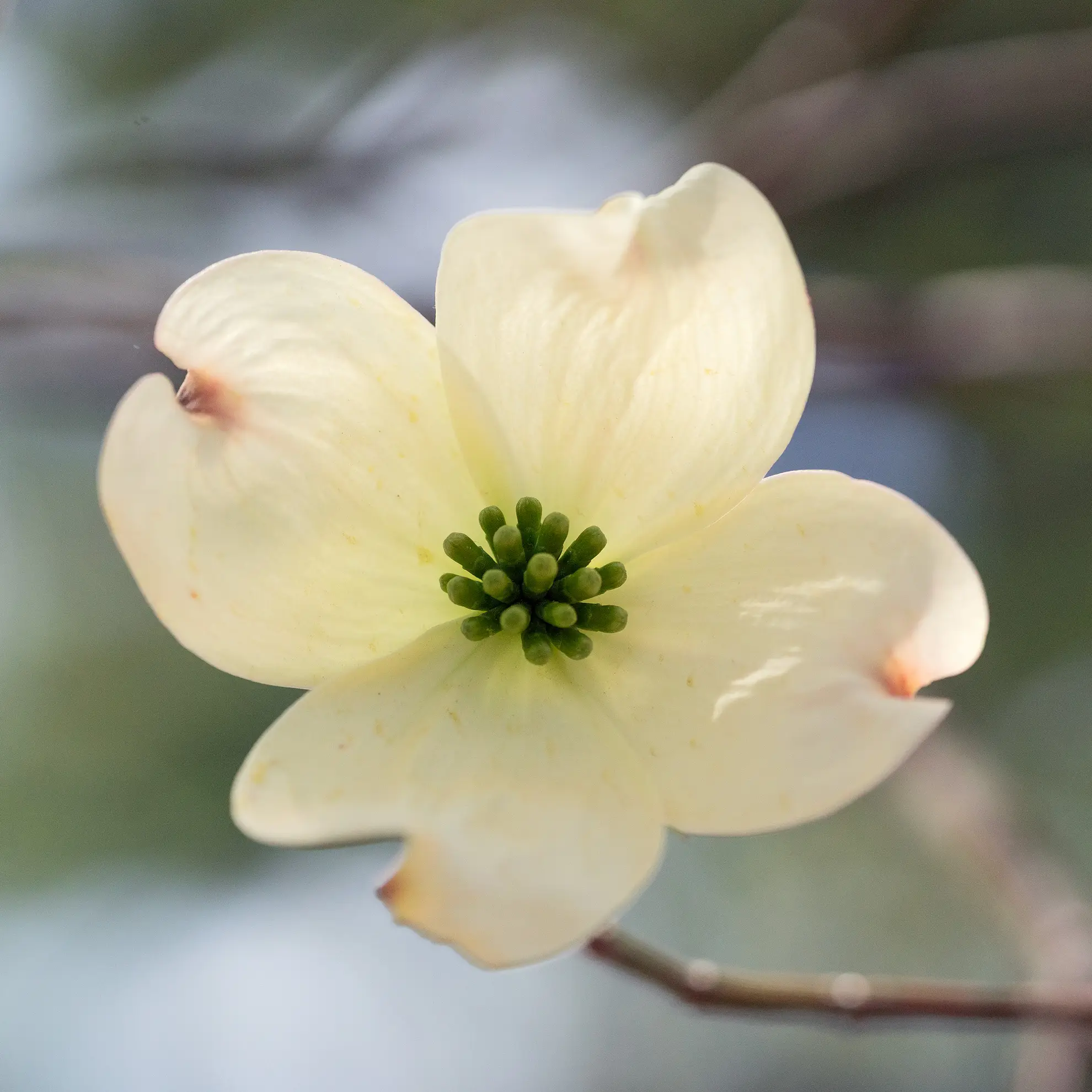
Another plant you know already that has bract “flowers” is a poinsettia.
Where can I buy an eastern flowering dogwood to buy?
Thankfully, this native tree is so widespread that it’s easy to source once. Here are four foolproof ways to ensure you find a native gem for your yard:
FAQs
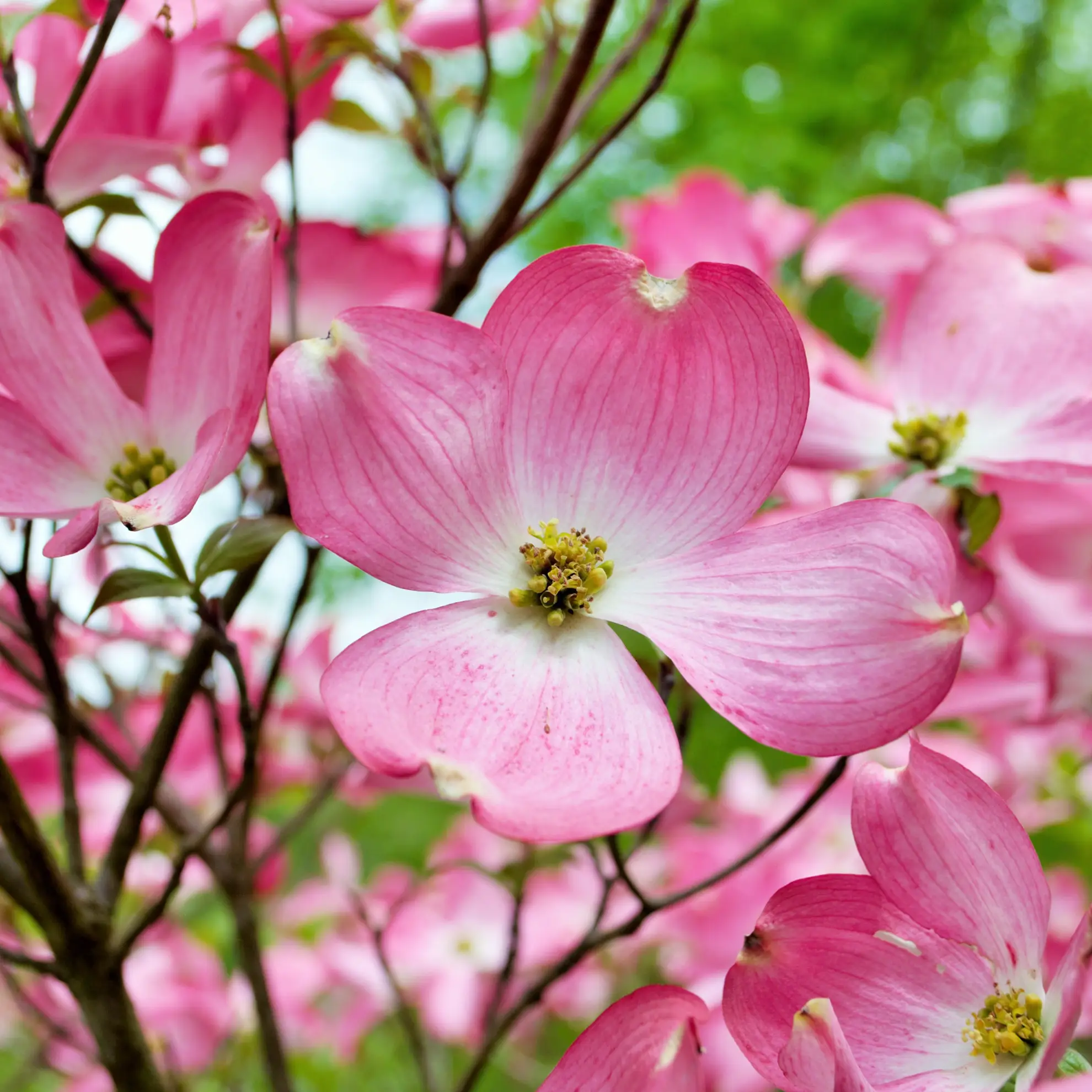
What about a dogwood with pink flowers?
That is probably a pink dogwood, a variety of the eastern flowering dogwood. You’ll know they are related by their Latin name: Cornus florida variety rubra. (Sometimes the term ‘variety’ is shortened to ‘var.’)
The term ‘variety’ describes plants curated by humans to look/behave in a certain way. To learn where varieties come from, read our quick overview on cultivars, which also explains varieties.
Where did the name dogwood come from?
The name ‘dogwood’ has a fun, culinary backstory. The name comes from its smooth, straight twigs that long-ago generations used as skewers for cooking meat.
These skewers were once called ‘dags’ or ‘dogs’, so essentially, dogwood means ‘skewer wood.’
Can I eat eastern flowering dogwood berries?
No. The USDA says it clearly:
WARNING: The fruit of flowering dogwood is poisonous to humans.
We can’t get any more clear than that.
However…
Dogwood berries are a favorite of migrating birds
Dogwood berries are a crucial food source for birds migrating south in the fall. Eastern flowering dogwoods, in particular, produce berries that are packed with fats and calcium, giving birds the energy and nutrients they need for their journey.
Planting card
Cornus florida
And that wraps up our love letter to eastern flowering dogwoods. These iconic trees are celebrated for their beautiful “flowers” (technically, bracts!), but now you know they provide four seasons of beauty and support to the world around them. The world is filled with dogwoods, so let’s plant the native species and ensure we contribute meaningfully to our communities and ecosystems. Visit our Guide to Native Dogwoods to learn about the other species. Or check out our Best Native Host Plants for Butterflies. Happy planting!
Sources
- Nelson, Gil. Best Native Plants for Southern Gardens: A Handbook for Gardeners, Homeowners, and Professionals, (2010).
- Environmental Horticulture Department, UF/IFAS Extension, “Cornus Florida, Var. Rubra.” Edward F. Gilman, professor, Environmental Horticulture Department; Dennis G. Watson, former associate professor, Agricultural Engineering Department, UF/IFAS Extension, Gainesville FL 32611. (PDF.)
- Flowering Dogwood – Southern Research Station – USDA.
- C. Borer, Sarah Grace Sapp and L. H. Hutchinson. “Flowering dogwood (Cornus florida L.) as mediator of calcium cycling: new insights are revealed by analysis of foliar partitioning.” Trees, 27 (2013): 841 – 849. https://doi.org/10.1007/s00468-012-0838-9.
Similar plants
-
 Hackberry
-
 Fringe Tree
-
 Serviceberry
-
 Witch Hazels
-
 Crabapples
-
 Possumhaw
-
 Magnolias
-
 Redbud
-
 Carolina Silverbell
Updated Find more: White Statement Tree Spring Full Sun Part Sun Moist Host Plant
The ads on this site help pay real native plant nerds to research and write these guides.
Garden notes
Notes from people who’ve grown it
Tips, wins, and the occasional disaster. If you’ve grown eastern flowering dogwood, share the advice you’d give to a neighbor.
No notes yet. Yours could be the first.
Grown eastern flowering dogwood? Tell the next person what you wish someone had told you.
Tap anywhere to close


