
Highlights
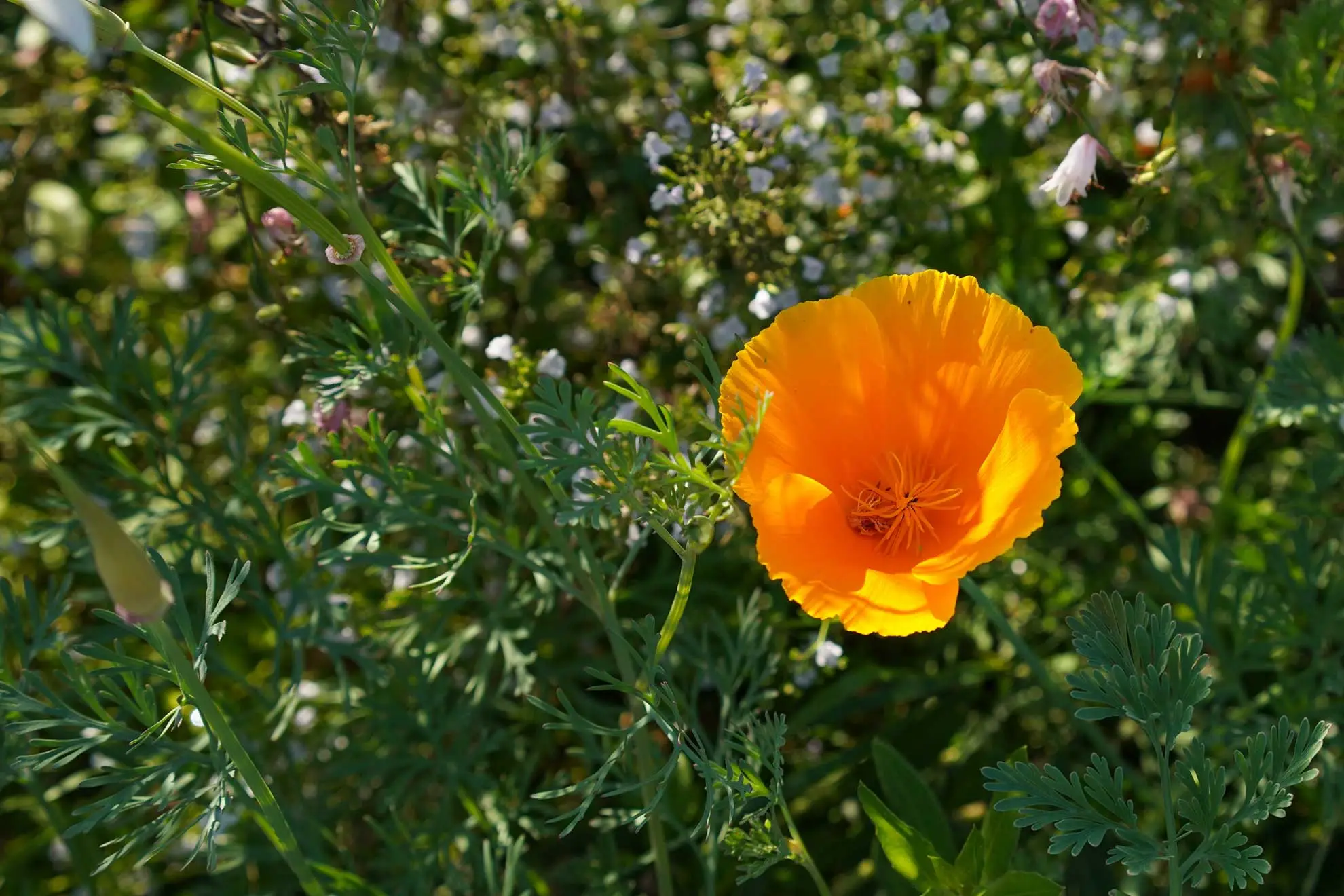
You know and already love this plant. California poppies look like they were happily drawn by a four-year-old with a new box of crayons. Look closely at the leaves, and you’ll wonder if they are related to parsley or cilantro (they are not, but they look very similar.) Drought-tolerant, in bloom for months, and happily returns year after year. It comes as no surprise that it’s the state flower of California. Scroll on for planting tips.
Is California poppy right for my yard?
Plant it if…
- You have a hot, sunny spot with lousy soil. California poppies actually prefer poor, sandy ground. Rich soil makes them leggy and less floriferous.
- You want color without effort. Scatter seeds in fall or early spring, water lightly until they sprout, and walk away. They do the rest.
- You’re looking for a ground-level border or a meadow-style planting. At 6 to 12 inches, California poppies fill in beautifully along paths, driveways, and the front of beds.
- You want a plant that comes back on its own. California poppies self-seed generously. One planting can keep a patch going for years.
- Deer or rabbits are a problem. They generally leave California poppies alone.
Skip it if…
- Your soil stays wet. California poppies need sharp drainage. Soggy soil will rot them.
- You want a tidy, controlled garden. These plants self-seed freely and will pop up in gravel, cracks, and places you didn’t plan.
- You’re in deep shade. They need at least 6 hours of sun to bloom well.
- You want tall plants. California poppies stay low to the ground. They’re a foreground plant, not a backdrop.
- You’re on the East Coast and planting for native wildlife value. California poppy is not native east of the Great Plains. It’ll grow there, but it won’t feed the specialized local pollinators that native eastern plants support.
Why California poppy matters
The superbloom star
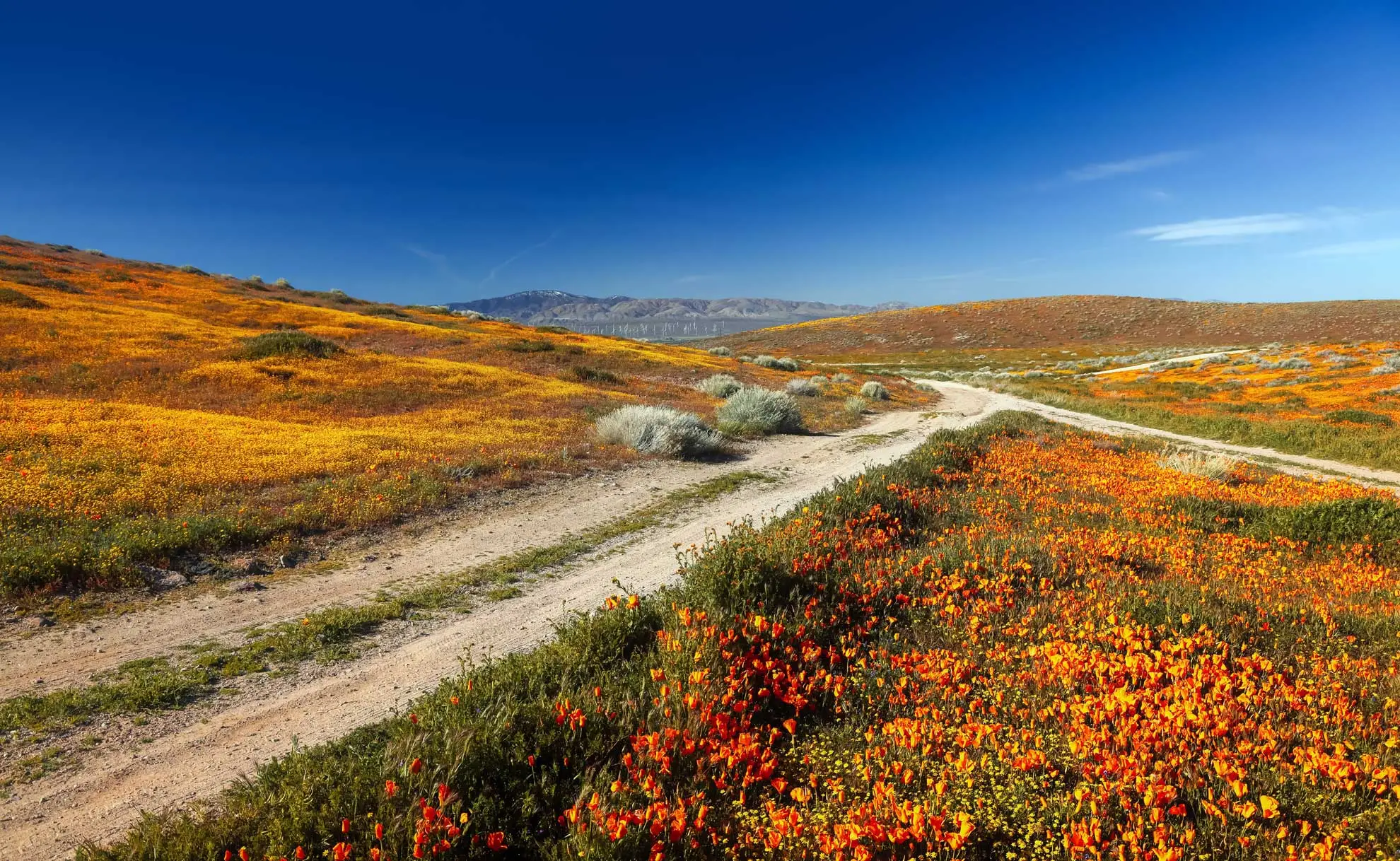
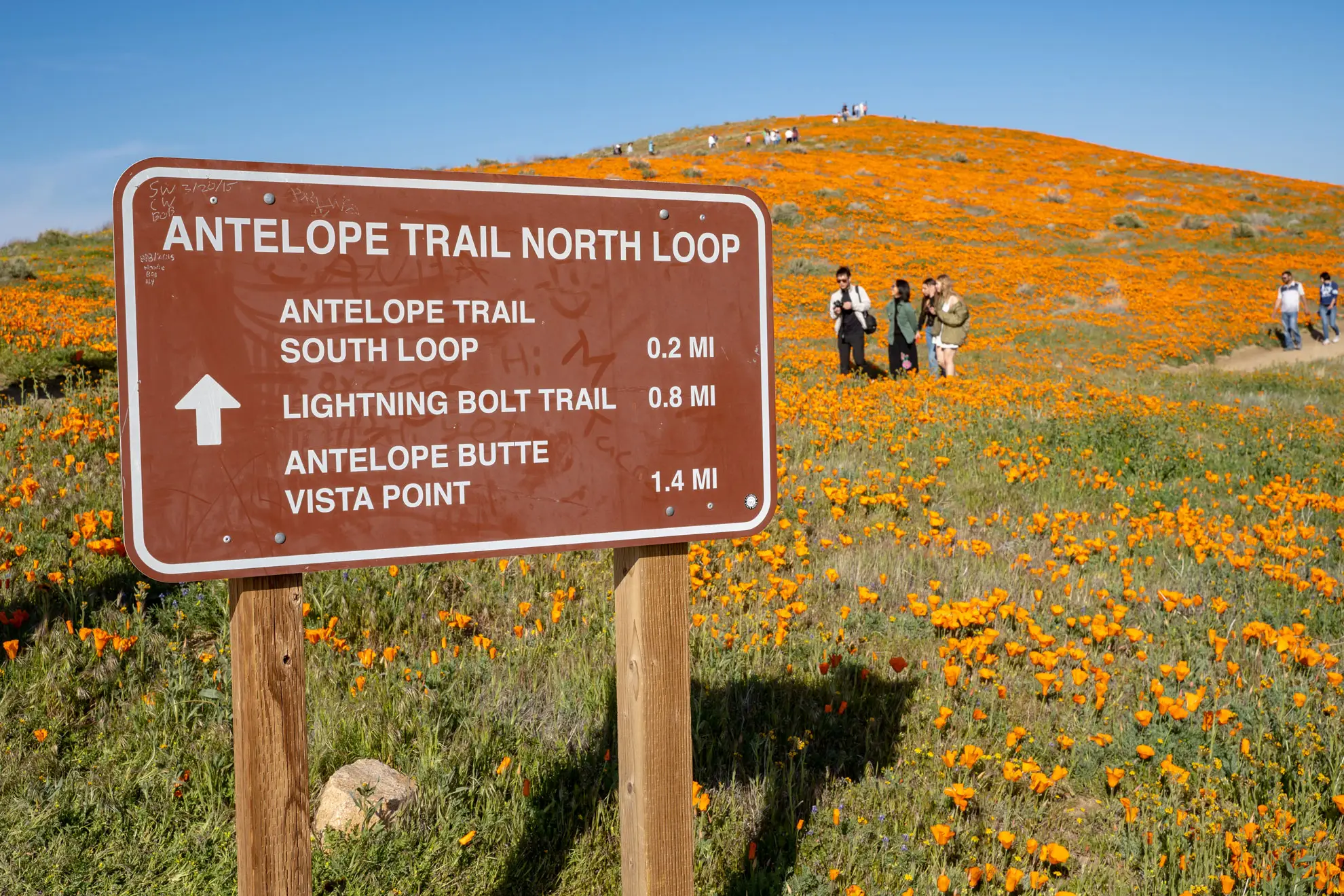
A superbloom happens when millions of wildflowers blossom at the exact same time. These events make international news and are what Instagram was made for. Entire hillsides turn orange, visible from space, drawing visitors from around the world. If you’re looking to see this IRL, the Antelope Valley California Poppy Reserve is one iconic site. But you don’t need a valley. A patch of California poppies in your front yard creates the same magic on a smaller scale.
Pollinator fuel
California poppies are an important early-season nectar and pollen source for native bees, especially in western landscapes where they bloom when little else is flowering. The USDA Forest Service notes that the flowers are visited by a wide range of native pollinators, including sweat bees, mining bees, hoverflies, and beetles. Pollen is the main draw. California poppies don’t produce nectar in large quantities, but they make up for it with abundant, protein-rich pollen that native bees depend on.
Tough by nature
California poppies evolved in some of the driest, most nutrient-poor landscapes in North America. That’s why they’re so easy to grow. They don’t want fertilizer, they don’t want extra water once established, and they actually grow worse in rich garden soil. For anyone trying to cut back on watering, skip the lawn chemicals, or garden more simply, California poppies are a natural fit.
Where is California poppy native?
Native to 7 US states
Sources: NatureServe, Royal Botanic Gardens, Kew (World Checklist of Vascular Plants) and the USDA PLANTS Database, compiled by The Plant Native. How we map native ranges
California poppies have some regionally-specific cousins
As you can imagine for an area as enormous as North America, there are several naturally occuring varieties of California poppies. The differences between them are subtle, mostly visible in genetics rather than appearance. All of them have those signature orange flowers. Varieties include:
- California poppy (Eschscholzia californica) is the non-sub-species variety, native to California.
- Coastal California poppy (Eschscholzia californica var. maritime). As you can guess from its common name, these California poppies thrive along the Pacific coastline.
- Mexican California poppy (Eschscholzia californica ssp. mexicana). These grow from California to Texas, and south throughout Mexico.
California poppy seeds and plants are sold at garden centers nationwide, but this plant is only native to the western United States. It will grow on the East Coast in the right conditions (full sun, fast drainage), but it won’t support the specialized native pollinators it feeds out west.
Why do I see seeds and plants for California poppies on the East Coast?
California poppy seeds and plants are sold at garden centers nationwide, but this plant is only native to the western United States. It will grow on the East Coast in the right conditions (full sun, fast drainage), but it won’t support the specialized native pollinators it feeds out west.
If you’re gardening east of the Great Plains, consider planting the natives that evolved in your region for the biggest wildlife impact. California poppy can still be a lovely addition, but it’s not a substitute for locally native plants. Bright, drought-tolerant flowers for eastern North America include black-eyed Susans, coneflowers, and sunflowers.

Where California poppy shines in your yard
- Borders and edges: At 6 to 12 inches, California poppies make a bright, low border along walkways, driveways, and garden beds.
- Meadow-style plantings: Mix California poppy seeds with native grasses and other annual flowers for a low-maintenance meadow look.
- Hellstrips: That baking-hot strip between the sidewalk and street? California poppies love it.
- Rock gardens and slopes: Fast-draining, lean, and sunny. Exactly what they want.
- New gardens with poor soil: Just moved into a house with compacted, gravelly dirt? California poppies will bloom there while you figure out what else to plant.
- Containers: They work well in pots and window boxes. Use a gritty, fast-draining mix and go easy on the water.
Plant nerd fact
Eschscholzia?! Was this plant named for maximum Scrabble points?
The Latin genus name for California poppy is notoriously ridiculous. Good luck spelling Eschscholzia on the first try. The name honors Johann Friedrich von Eschscholtz, a 19th-century Estonian-German botanist and surgeon who explored the Pacific coast with a Russian expedition. (The double sch in the middle trips up nearly everyone, including botanists.)
It’s especially disappointing that this California icon is named after a European who visited only a few times, rather than the Native Americans who knew this plant for millennia. Sadly, this is pretty common for North American Latin botanical names. Rudbeckia (AKA black-eyed Susans) and magnolias are named after Europeans who “discovered” North America’s plants.
How to grow California poppy
Where to plant
Full sun. The more sun, the better the bloom. Missouri Botanical Garden notes that California poppies grow best in poor to average, well-drained soil. Rich, fertile soil actually works against them, making the plants lanky with fewer flowers. Sandy soil, gravelly soil, slopes, and hellstrips are ideal.
When to plant
Sow seeds directly outdoors in fall (best in mild climates) or very early spring (best in cold climates). California poppy seeds need a period of cool, moist conditions to germinate, and they resent transplanting. Direct sowing is the way to go. Scatter seeds on the soil surface, press them in lightly, and water gently until they sprout.
California poppy seeds are super tiny and hard to spread evenly. Mix seeds with sand before scattering. The sand helps you see where you’ve sown and keeps the seeds from clumping. For detailed growing instructions, the USDA Plant Guide is an excellent reference (it’s a little scientific and dense—skip to page 5 for the planting details).
Planting card
Eschscholzia californica
Spacing
Thin seedlings to about 6 to 8 inches apart. In a meadow-style planting, don’t worry about exact spacing. They’ll sort themselves out.
Watering
Water lightly until seedlings are established (a few weeks). After that, stop. California poppies are extremely drought-friendly and do not want supplemental water in most climates. Overwatering is the fastest way to kill them.
Fertilizer
None. Do not fertilize. California poppies want lean, hungry soil. Fertilizer pushes leafy growth at the expense of flowers. Skip fussy gardening chores and enjoy some time back.
What are good pairings for California poppies?
There are SO MANY amazing native plants that pair beautifully with California poppies. Some inspiration for pairings include:


Where can I buy California poppy?
Most big-box garden centers don’t carry true natives, but California poppy is easier to find than you might think. Your best bets are a native plant nursery near you, a native plant society sale, or a trusted online grower that ships to your region.
California poppies are proof that beautiful things don’t have to be fussy. Give them sun, poor soil, and a little bit of benign neglect, and they’ll fill your yard with bright orange from spring into summer. They come back on their own, they feed native pollinators, and they look like pure sunshine.
Pair them with lupines for the classic superbloom look, or scatter them along a border for easy, low-maintenance color. For more ideas, check out our Native Plant Profiles page. Happy planting!
Sources
- USDA Plants Database, California Poppy
- USDA Plants Database, California Poppy Plant Profile (PDF)
- USDA Plants Database, Mexican California Poppy
- California Department of Fish and Wildlife, California poppy
- NC State Extension, California Poppy
- Missouri Botanic Garden, California poppy
- California Native Plant Society, California Poppy
- USDA Forest Service, California Poppy
- Native Plant Trust: Go Botany, California poppy
Similar plants
-
 Prairie Smoke
-
 Broadleaf Stonecrop
-
 Bigleaf Lupine
-
 Red Twig Dogwood
-
 Golden Alexander
-
 Milkweeds
-
Lupines
-
 Black-Eyed Susans
-
 Irises
Updated Find more: Orange Flower Spring Full Sun Part Sun Drought-Tolerant
The ads on this site help pay real native plant nerds to research and write these guides.
Garden notes
Notes from people who’ve grown it
Tips, wins, and the occasional disaster. If you’ve grown California poppy, share the advice you’d give to a neighbor.
No notes yet. Yours could be the first.
Grown California poppy? Tell the next person what you wish someone had told you.
Tap anywhere to close


