


Highlights
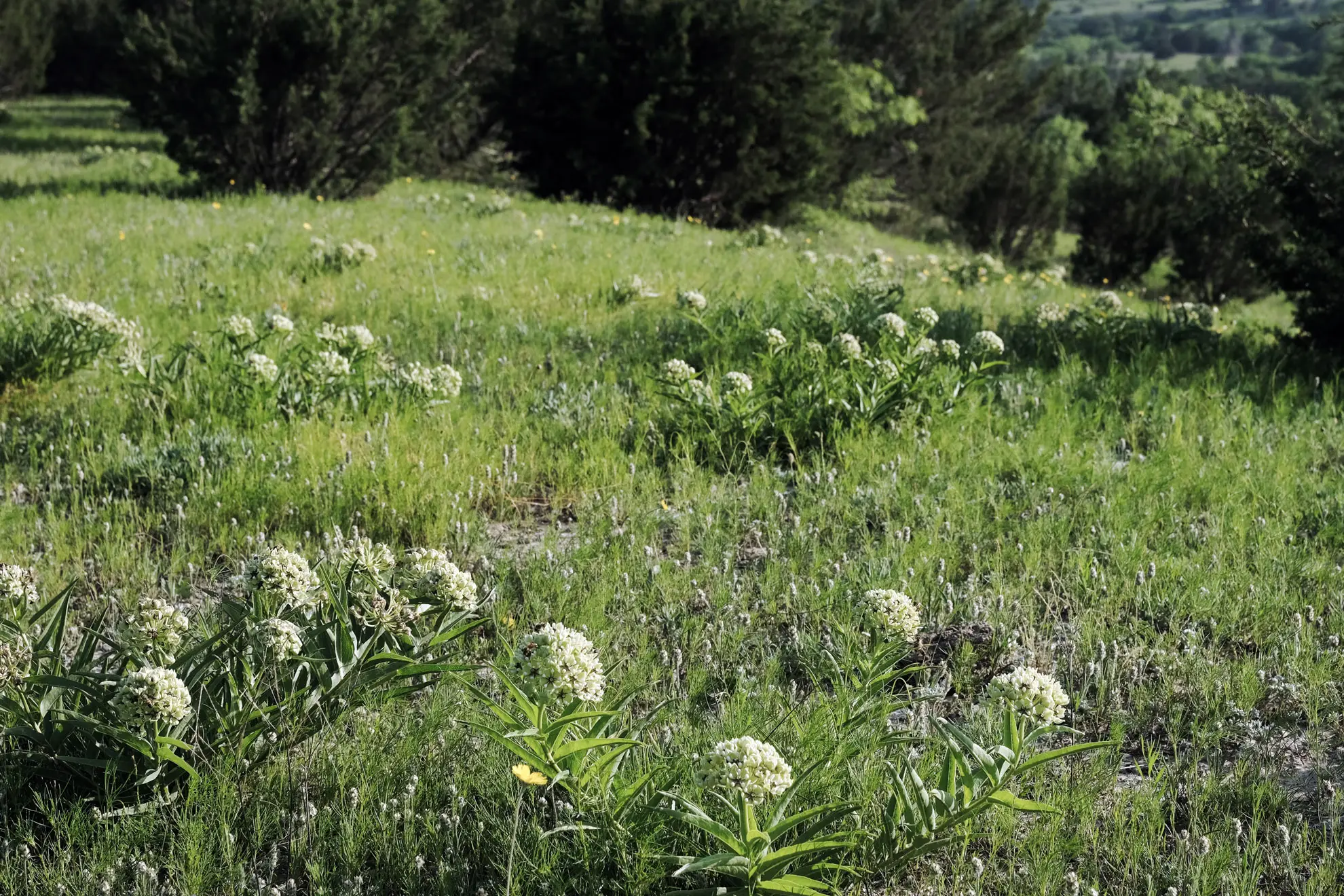
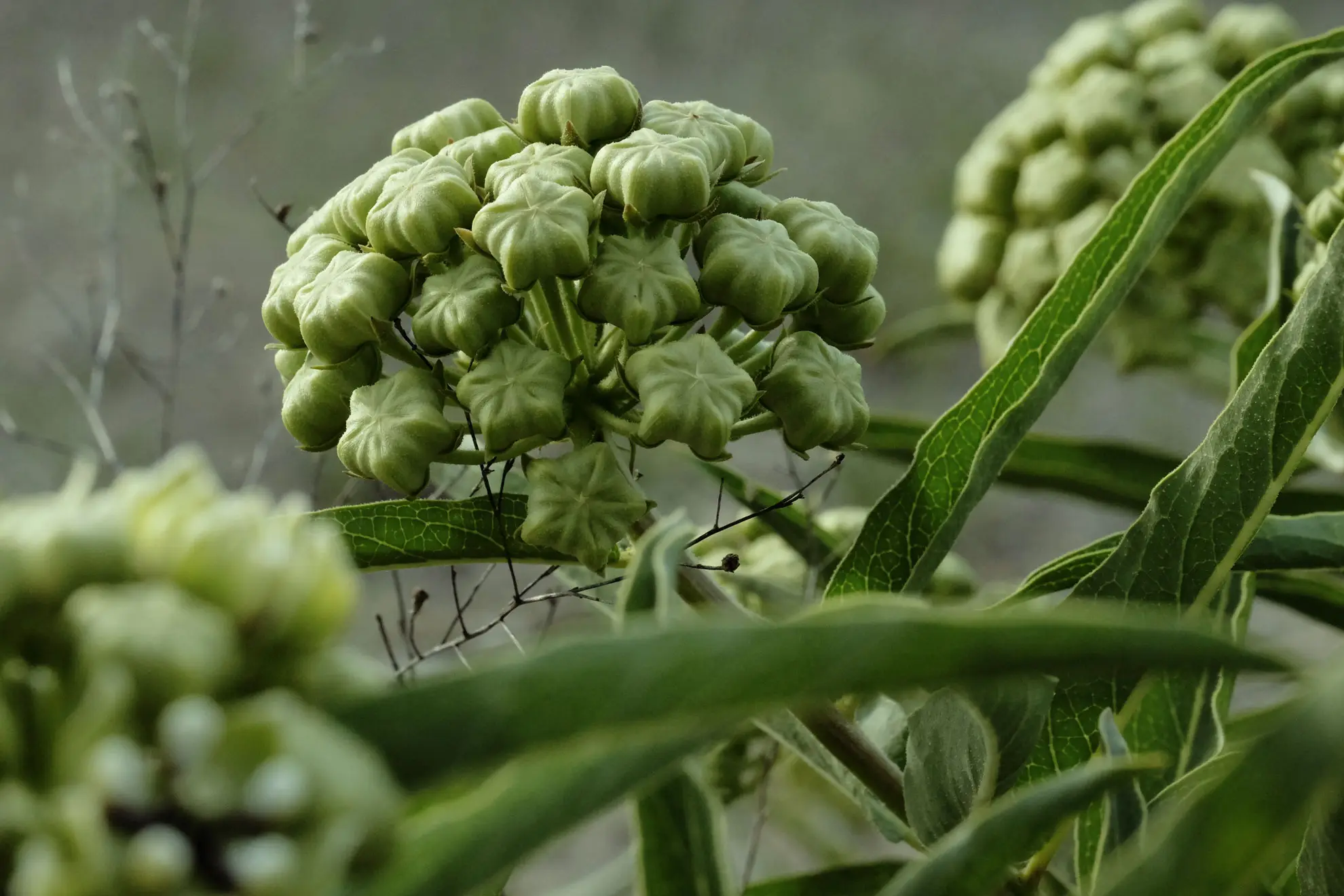
Antelope horns milkweed is not what you might picture when you hear the word milkweed. There are no pink pompom flowers on tall stems. No cheerful orange clusters. What you get instead is a low, spreading plant with orb-shaped flower clusters that look like something assembled by a very precise and slightly eccentric sculptor.
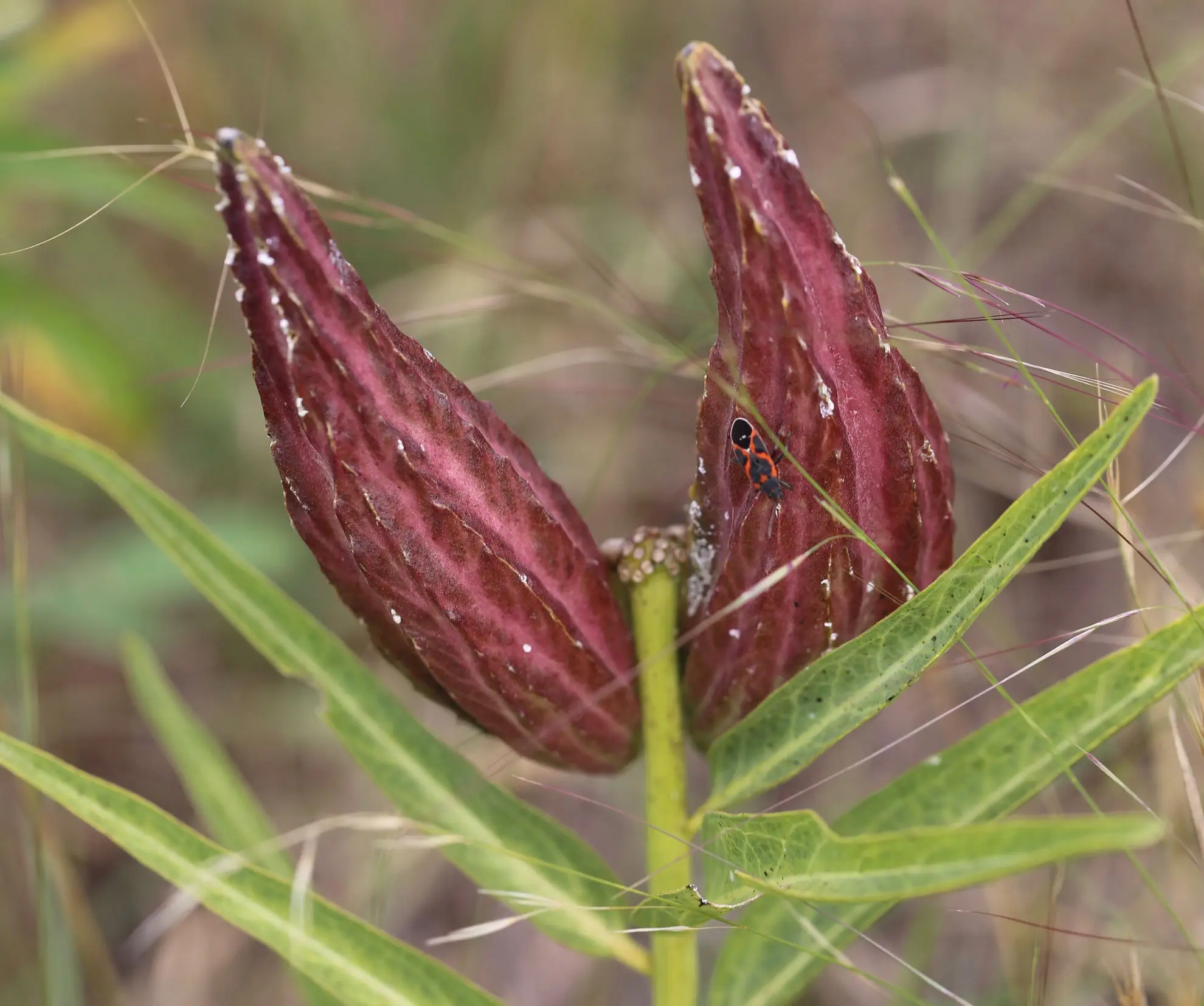
Then the seed pods arrive. Long, curved, standing upright, they surprise you with how antelope-y they look. Once established, antelope horns milkweed handles desert heat, rocky soil, and long stretches without rain without complaint. Scroll on to meet this desert icon.
Is antelope horns milkweed right for my yard?
Plant it if…
- You’re in the native range: Texas, New Mexico, Arizona, Oklahoma, Kansas, Colorado, or southeastern California. This plant is for the arid and semi-arid Southwest.
- Your soil is dry, rocky, sandy, or poor. Antelope horns is one of the few milkweeds that genuinely prefers difficult conditions.
- You want to support monarch and queen butterflies in the Southwest specifically, where these two species overlap.
- You have a xeriscape, rock garden, or naturalistic desert planting where most nursery plants look out of place.
- You’re interested in a low-growing milkweed that won’t block views or overwhelm a small garden space.
- You’re comfortable with a plant that goes semi-dormant and looks rough in summer heat. It’s not dead. It’s waiting.
Skip it if…
- Your soil holds water. Heavy clay or any spot that stays wet after rain will kill this plant within a season.
- You want a tall, upright milkweed with bold color from a distance. Antelope horns is a plant for people who get close.
- You need a milkweed that’s easy to find at big-box nurseries. This one requires some hunting.
- You’re outside the native range, especially in the humid Southeast or Mid-Atlantic, where summer humidity will cause root rot.
But if you live in these areas, this is a milkweed for you:
Where is antelope horns milkweed native?
Native to 11 US states
Sources: NatureServe, Royal Botanic Gardens, Kew (World Checklist of Vascular Plants) and the USDA PLANTS Database, compiled by The Plant Native. How we map native ranges
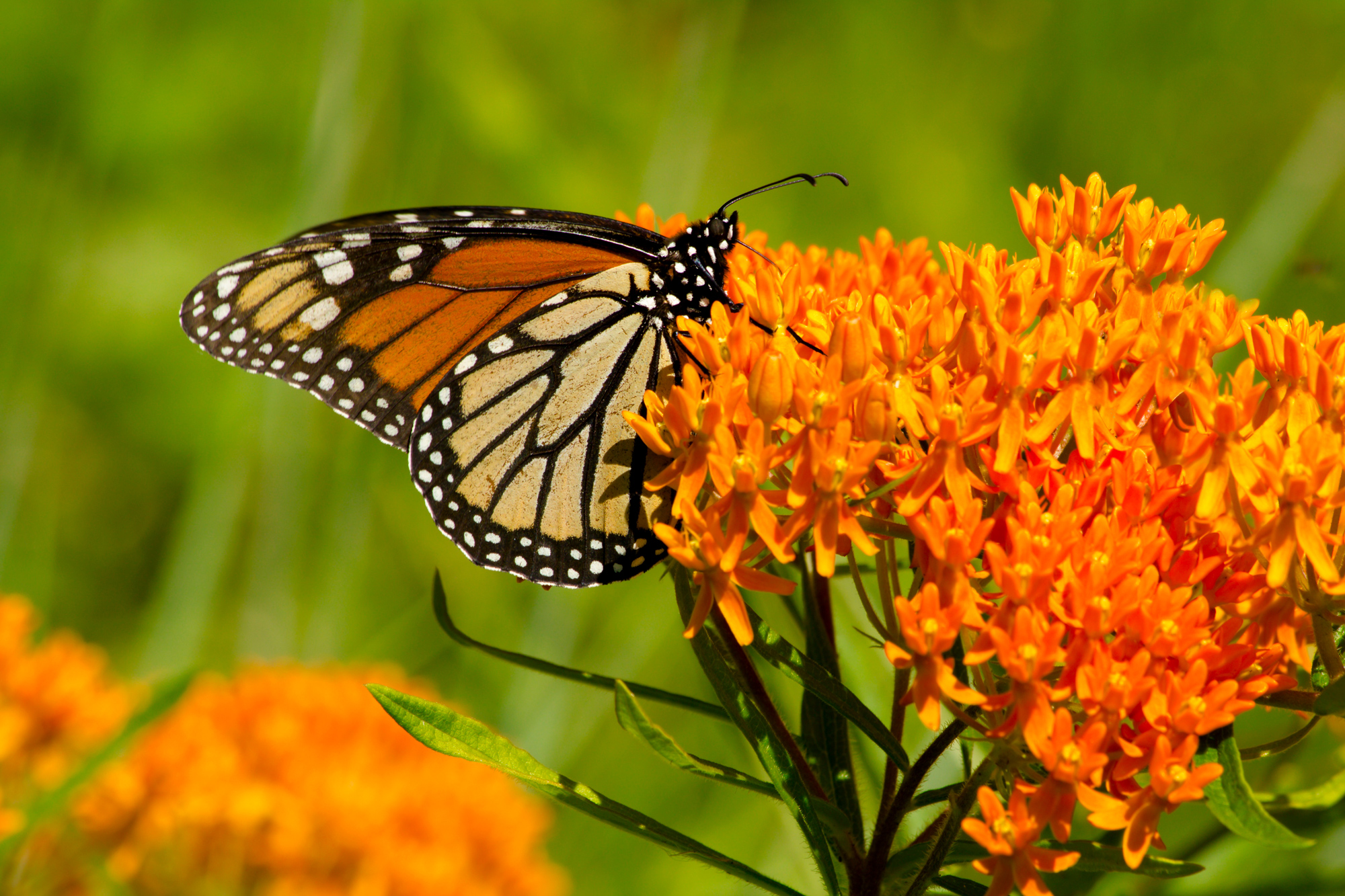
Caterpillars eat the milkweed leaves, store the toxins, carry them into adulthood, and flagrantly advertise their toxicity with conspicuous orange-and-black wings.
Why antelope horns milkweed matters
Antelope horns milkweed is one of the most important host plants in the Southwest for two butterfly species: monarch butterflies (Danaus plexippus) and queen butterflies (Danaus gilippus). Both butterflies only lay eggs on milkweed. Simply put, without milkweed, these butterflies would not exist.
What makes milkweed so special?
For almost all creatures, milkweed is poisonous. Milkweed sap contains cardiac glycosides, which as you might guess from the name, can cause severe heart issues when eaten. Monarchs and queen butterflies have evolved to eat milkweed safely and store its toxicity safely within their bodies. It then becomes a chemical defense against predators.
Milkweed provides lifelong protection for both these butterflies. Caterpillars eat the milkweed leaves, store the toxins, carry them into adulthood, and flagrantly advertise their toxicity with conspicuous orange-and-black wings. The main difference is that monarchs migrate to Mexico and back, using milkweed as a fuel stop and breeding station across a continental route, while queens stay put in the warm Southwest year-round.
The Xerces Society identifies antelope horns as a high-priority milkweed for Southwest gardens because it does the important double-duty of helping both butterflies. Monarchs moving through on spring migration find it in bloom when eastern milkweeds haven’t yet emerged. Queens use it as a year-round breeding spot wherever winter temps stay above freezing. A single plant in bloom in March can be covered in butterfly activity weeks before anything else in a desert yard has woken up.
Where antelope horns milkweed shines in your yard
- Rock gardens and dry slopes. In poor, rocky soil with excellent drainage, antelope horns thrives where most plants shrivel up and fail. It is one of the anchoring plants for a low-water Southwest rock garden.
- Hellstrips and road medians. The badass combination of drought hardiness and low height makes antelope horns an excellent hellstrip plant in the Southwest. It handles reflected heat, compacted soil edges, and zero irrigation once established.
- Xeriscape and naturalistic desert plantings. In a low-water garden designed to evoke the look of the surrounding desert, antelope horns delivers texture, bloom, and wildlife value without requiring the maintenance attention that most ornamental plants demand.
- Monarch and queen waystation gardens. For gardeners specifically trying to support monarch migration, antelope horns blooms at the right time in the right place: early spring in the Southwest, when northbound monarchs cross Texas and New Mexico before other milkweeds have emerged.
- Native plant meadow edges. As a low-growing spreader, antelope horns works well at the front or edge of a prairie or meadow planting, where its sprawling form provides a natural transition to open ground without blocking taller plants behind it.
Antelope horns milkweed through the year
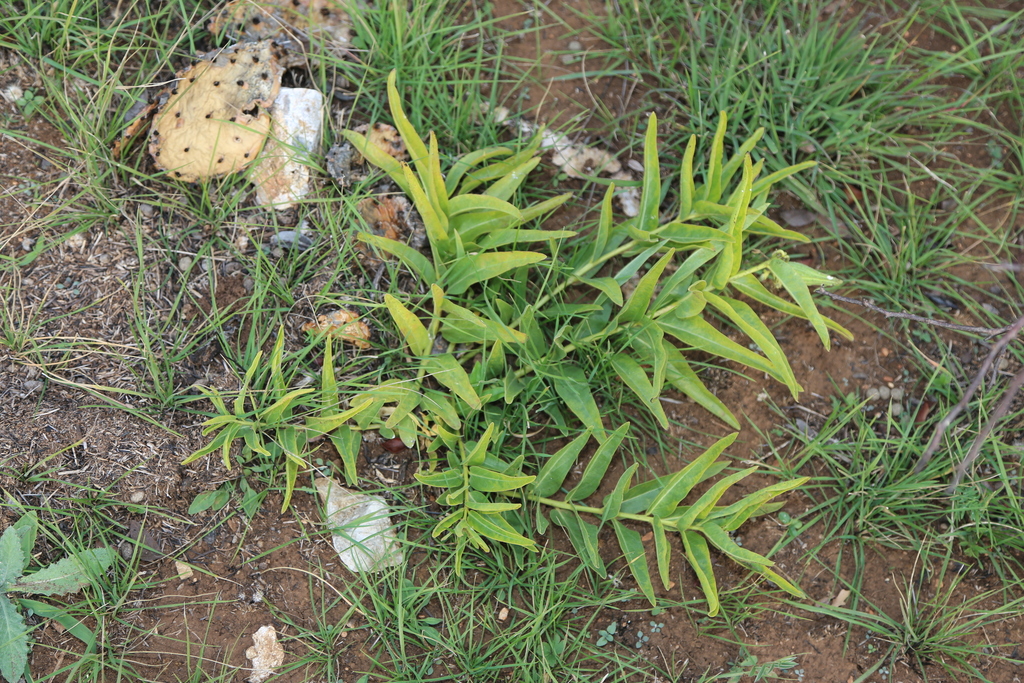
Winter into Spring
Reid Hardin · iNaturalist · CC BY · cropped
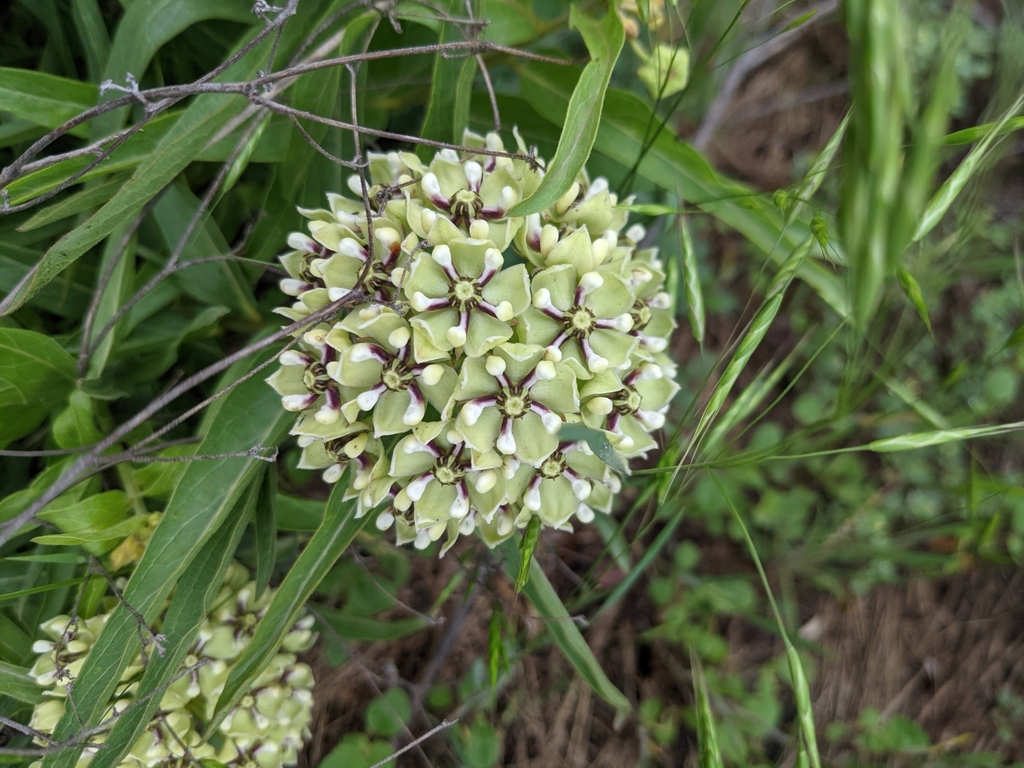
Spring into Early Summer
Cleveland Powell · iNaturalist · CC BY · cropped
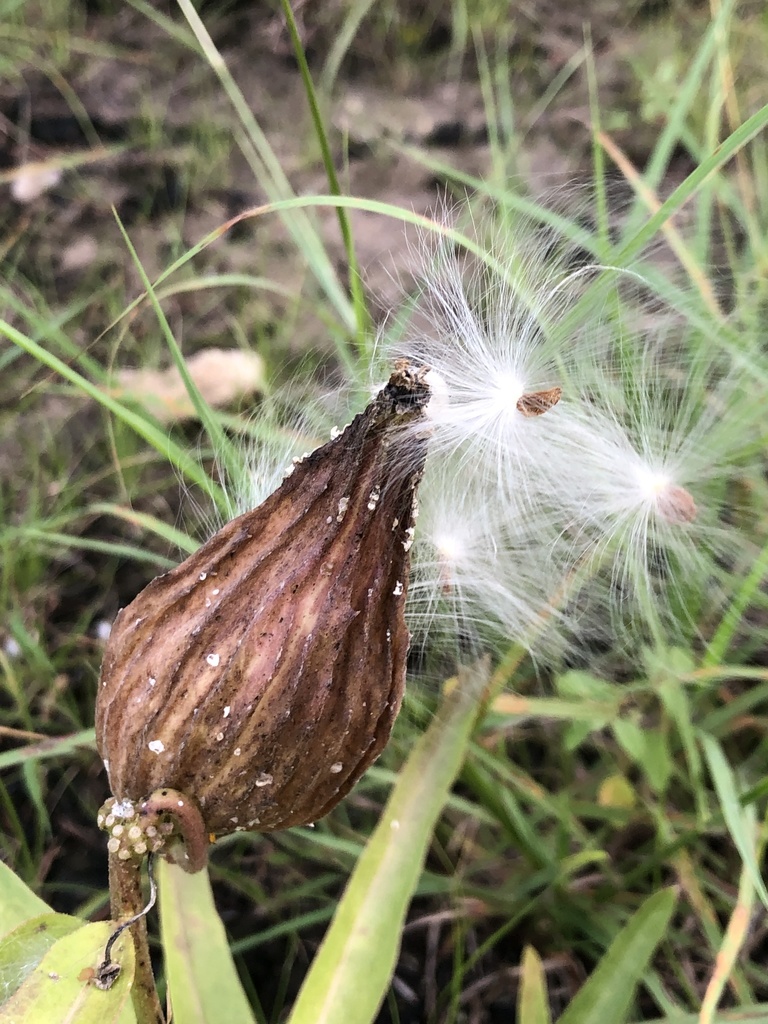
Summer
Sophia K · iNaturalist · CC BY · cropped
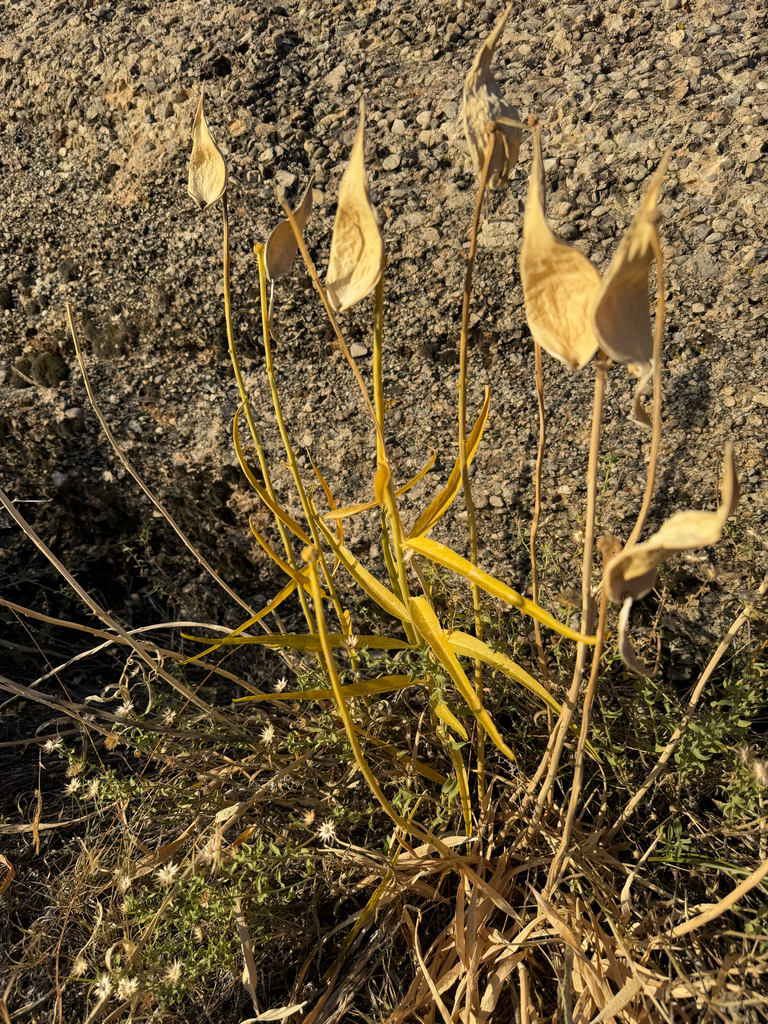
Fall into Winter
Zach Earl · iNaturalist · CC BY · cropped
How to grow antelope horns milkweed
Where to plant
Full sun, all day. A south- or west-facing exposure is ideal.
The soil must drain quickly: antelope horns will not survive in clay, caliche hardpan, or any spot that holds water after rain. Rocky, sandy, or gravelly soil is genuinely ideal. If you have a dry slope, a gravel garden, or a hellstrip with poor soil and no irrigation infrastructure, this is a plant that belongs there. It will find the conditions inhospitable in all the ways it prefers.
When to plant
Fall planting is ideal across most of the Southwest, allowing the taproot to establish through the mild winter before facing the first hot season. In areas with hard freezes, spring planting after frost risk has passed also works well. Avoid planting in peak summer heat; even drought-hardy plants need a settling-in period and summer heat stresses transplants before they’ve rooted out.
Planting and spacing
If you’re buying plants, try to find the smallest container available, ideally a 4-inch or a max 1-gallon pot. Antelope horns develops its taproot quickly, and a plant that has been in a container too long may have a root that’s already coiling at the bottom.
Plant at the soil line or slightly above to keep the crown dry. Space plants 18-24 inches apart; the sprawling habit fills in over time.
Mind the taproot
Choose your location carefully: the taproot makes this plant effectively impossible to move after its first season without significant damage.
Watering
Water once at planting, then water every week or two during the first season while the taproot is establishing.
After the first full growing season, antelope horns needs essentially no supplemental water within its native range with normal rainfall. Extra irrigation beyond this point can push the plant toward root rot. This is a situation where neglect is more likely to produce a healthy plant than fussing over it.
Planting card
Asclepias asperula
Fertilizer
Nope. Not needed. Antelope horns milkweed evolved in poor soil and performs best in poor soil. Fertilizer encourages soft, fast growth that can make the plant more vulnerable to pest and disease pressure.
Deadheading and cutting back
Do not deadhead if you want those awesome antelope horn seed pods! The pods are one of this plant’s highlights and support seed dispersal into the surrounding area to help move from one or two plants towards a patch.
Cut the plant back to a few inches in late winter before new growth emerges. If the plant goes semi-dormant in summer, resist the urge to cut it back. The stems may still be providing some photosynthetic function, and the plant will rebound when conditions improve.
Beginner tip
Some milkweeds—like common milkweed—can get a bad reputation for spreading. This is one of the non-spreading milkweeds: it grows from a taproot as an individual plant and does not send out underground runners or take over surrounding areas. This makes it well-behaved in a small garden space but also means you’ll need to intentionally plant multiple plants if you want a substantial patch. Plan on 3-5 plants spaced 18-24 inches apart for a meaningful landscaping moment.
What pairs well with antelope horns milkweed?
Pair this southwestern gem with other natives that thrive in the same full sun, must-have-drainage environment. Some stellar pairings include:


Where can I buy antelope horns milkweed?
This one might require a bit of sleuthing to source. But the search is worth it! Use these four sources for native plants to find some antelope horns milkweed for your yard:
FAQs
My antelope horns milkweed looks dead in August. Is it?
Almost certainly not. Semi-dormancy in summer heat is normal behavior for this species, especially in the driest and hottest months before monsoon rains arrive.
Here’s how to make sure yours is just taking a summer nap:
Scratch the stem near the base. If the tissue underneath is green, the plant is alive. If the stem is dry and brown through, check for root moisture before concluding anything. A completely healthy plant can look alarming in July and be perfectly fine by September.
It looks so strange. Will monarchs actually use it?
Yes, particularly during spring migration. Antelope horns is one of the milkweeds monarch butterflies find naturally as they move northward from their overwintering grounds in Mexico, crossing Texas and New Mexico in March and April when this plant is in peak bloom. The Monarch Watch milkweed program specifically includes antelope horns as a recommended Southwest species for waystation gardens along the migration corridor.
Is it toxic to pets or children?
All milkweeds contain cardiac glycosides, which are toxic to mammals in quantity. Antelope horns has particularly concentrated sap. Most dogs and cats will also avoid it due to the bitter taste of the sap, but it should be treated with the same caution as other plants known to be toxic if ingested. The risk from casual contact is low; the risk from chewing stems or eating leaves is higher.
Plant nerd fact
Two butterflies, one plant.
Antelope horns milkweed is one of the primary host plants for both the monarch butterfly (Danaus plexippus) and the queen butterfly (Danaus gilippus) in the Southwest. Both butterfly species belong to the same genus. Both are orange-and-black. Both are toxic to predators from sequestering milkweed cardiac glycosides. From a short distance, a queen and a monarch are easy to confuse.
What’s the difference between monarchs and queens?
Monarchs migrate to Mexico and back. Queens don’t.
The queen butterfly overwinters as an adult in warm areas of the Southwest and breeds year-round wherever the temperature is warm enough. Queens depend on milkweed availability year-round, not just during the breeding window that matters to monarchs. In parts of Texas and Arizona, researchers monitoring milkweed patches find queen caterpillars present more consistently than monarch caterpillars, because queens are resident rather than seasonal visitors. Antelope horns milkweed has been supporting both of them since long before anyone was counting with a clipboard.
Antelope horns milkweed is a plant for gardeners willing to look past the obvious. It won’t stop traffic from the street. It will stop a monarch butterfly in the first warm week of March. It might look concerning in August and like the coolest garden sculpture in September. It will grow in soil other plants find insulting and ask you for almost nothing in return.
If you’re building a Southwest native plant garden and you want to do something genuinely useful for monarch and queen butterfly populations in the region, start with antelope horns milkweed. Pair it with desert marigold (Baileya multiradiata) to keep the bloom going through summer, and blackfoot daisy (Melampodium leucanthum) to fill the low foreground. This beautiful flower is one of 100 different species of milkweed; read our Beginner’s Guide to Milkweed to meet others, or explore our other milkweed guides below. Happy planting!
Explore native milkweeds


Sources
- Lady Bird Johnson Wildflower Center. “Asclepias asperula (Antelope Horns).” University of Texas at Austin. https://www.wildflower.org/plants/result.php?id_plant=ASAS. Accessed April 12, 2026.
- Lady Bird Johnson Wildflower Center. “Asclepias subulata (Desert Milkweed).” University of Texas at Austin. https://www.wildflower.org/plants/result.php?id_plant=ASSU. Accessed April 12, 2026.
- Lady Bird Johnson Wildflower Center. “Asclepias viridis (Spider Milkweed).” University of Texas at Austin. https://www.wildflower.org/plants/result.php?id_plant=ASVI. Accessed April 12, 2026.
- Lady Bird Johnson Wildflower Center. “Native Plant Nursery Finder.” University of Texas at Austin. https://www.wildflower.org/suppliers/. Accessed April 12, 2026.
- Monarch Watch. “Milkweed Species and Restoration.” University of Kansas. https://monarchwatch.org/milkweed/. Accessed April 12, 2026.
- Pyle, Robert Michael. Gardening for Butterflies. Portland, OR: Xerces Society / Timber Press, 2016.
- USDA PLANTS Database. “Asclepias asperula (Spider Milkweed).” U.S. Department of Agriculture, Natural Resources Conservation Service. https://plants.usda.gov/home/plantProfile?symbol=ASAS. Accessed April 12, 2026.
- Xerces Society for Invertebrate Conservation. “Milkweeds: A Conservation Practitioner’s Guide.” Portland, OR: Xerces Society, 2011. https://xerces.org/publications/guidelines/milkweeds-conservation-practitioners-guide. (PDF). Accessed April 12, 2026.
Similar plants
-
 Butterfly Weed
-
 Firewheel
-
 Pink Evening Primrose
-
 Black-Eyed Susans
-
 Coreopsis (Tickseed)
-
 Asters
-
 Red Twig Dogwood
-
 Blue Vervain
-
 Golden Alexander

Updated Find more: White Flower Summer Full Sun Dry Drought-Tolerant
The ads on this site help pay real native plant nerds to research and write these guides.
Garden notes
Notes from people who’ve grown it
Tips, wins, and the occasional disaster. If you’ve grown antelope horns milkweed, share the advice you’d give to a neighbor.
No notes yet. Yours could be the first.
Grown antelope horns milkweed? Tell the next person what you wish someone had told you.
Tap anywhere to close


