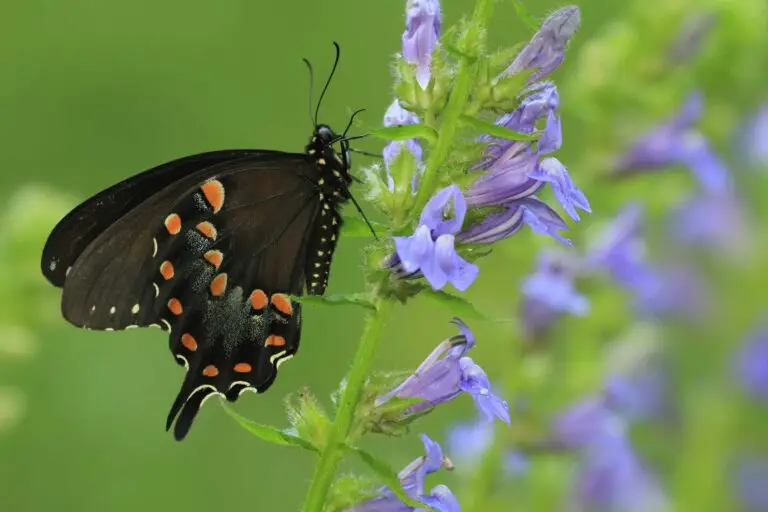

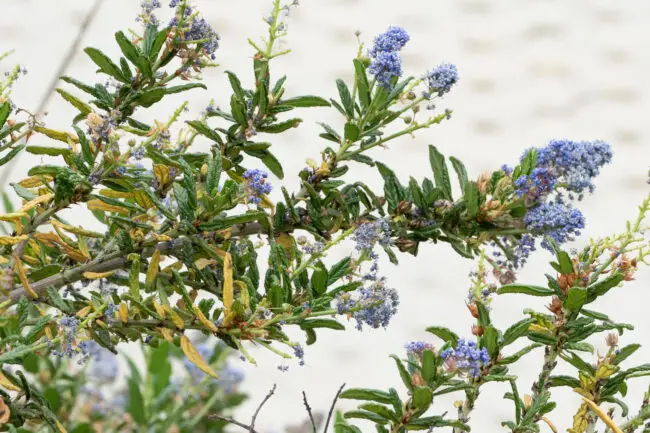
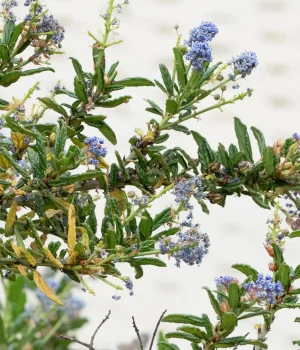
The Ceanothus genus is California’s spectacular gardening gift to itself. Sixty-plus species, most of them found nowhere else on earth, blooming in shades from white through pale sky blue to a blue so deep it approaches violet. For a month or two each spring, a flowering Ceanothus in a California garden looks less like a plant than a cloud: the entire mass turns a single color, and every bee shows up to celebrate.
The downside of 60-plus species is that nobody can explain what a “ceanothus” or “California lilac” is. It can mean a ground cover spreading 10 feet across a rocky coastal headland and a 20-foot screening tree in a chaparral canyon. We’re not here to pick sides. Instead, use this guide to find your own favorites.
What all California lilacs share
Despite the variation in size, flower color, and leaf texture, every Ceanothus in California has these things in common:
- No need for summer water once established. California’s Ceanothus genus evolved in the Mediterranean climate of the west coast: wet winters, dry summers. Summer irrigation, especially overhead irrigation, invites root rot and fungal disease. Water a new plant through its first dry season; after that, step back.
- They need drainage. Heavy clay that holds water through winter is the most reliable way to kill California lilac. Sandy loam, decomposed granite, rocky slopes, and gravelly soils are ideal. If you have clay, plant on a raised berm or build a mounded planting bed.
- They bloom in late winter and spring. Most California lilacs bloom from February through April or May. The bloom window is short and spectacular. Plan the garden around it.
- They don’t live forever. Many Ceanothus species, particularly the fast-growing chaparral types, live 5 to 15 years in the garden before declining. This is not a failure; it’s the plant’s biology. Plan for succession, and consider a longer-lived species if you want a 20-year plant.
And two more reasons California lilacs are worth planting:
“
This makes California lilacs a soil improver as well as a gorgeous garden plant. You can skip fertilizer—California lilacs make their own and share.
”
All Ceanothus are generous plants, fixing nitrogen for themselves and their neighbors.
Like legumes (beans), California lilac has root nodules containing nitrogen-fixing bacteria (Frankia species), which convert atmospheric nitrogen into a form the plant and its neighbors can use.
When I first heard this, I was confused.
Can’t all plants grab the nitrogen they need?
Weirdly, no. Nitrogen makes up the largest part of our atmosphere: a whopping 78%. (Oxygen is only 21%.) But very few plants can take nitrogen from the air and convert it into a form usable by plants. It’s similar to humans and oceans: all that water, in a form we cannot use.
Plants like California lilac have a symbiotic relationship with bacteria in their roots, which convert atmospheric nitrogen into a form plants can use. (Other native plants that have this generous ability include lupines and false blue indigo.) This makes California lilacs a soil improver as well as a gorgeous garden plant. You can skip fertilizer—California lilacs make their own and share.
Finally, California lilacs matter enormously for native bees. The Ceanothus genus supports specialist bees that depend almost exclusively on its pollen. During bloom, a flowering California lilac is one of the loudest, busiest places in the garden.
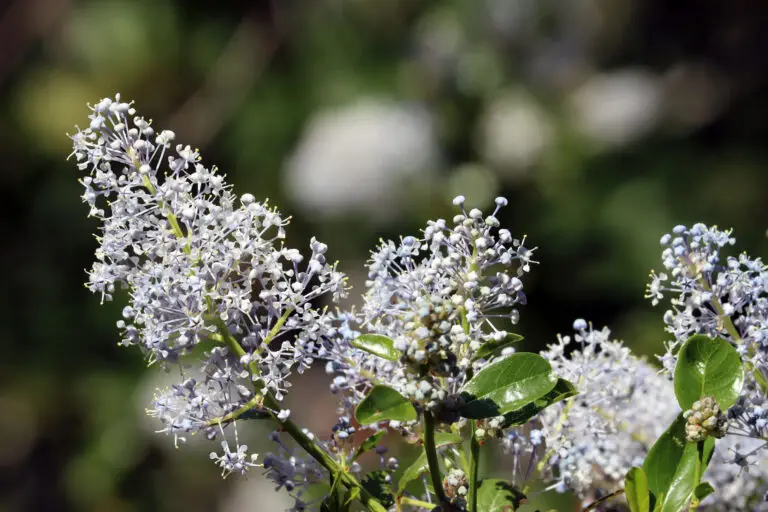
Native California lilacs, organized by height and use
This guide is organized by what you’re trying to do in the garden. Start with the size and function you need, find the right category, and then narrow from there using your site conditions. The comparison table at the end is your quick reference. And if you want a single reliable recommendation for each category, each section has one.
Ground cover and low-spreading California lilacs (under 3 feet)
Low-growing Ceanothus species are among the most useful plants in the California native plant garden: they cover ground quickly, suppress competing plants, and deliver the genus’s full flower spectacle at ankle height. They’re the answer to the slope you can’t mow, the hellstrip that kills everything, and the dry sunny area where grass has given up.
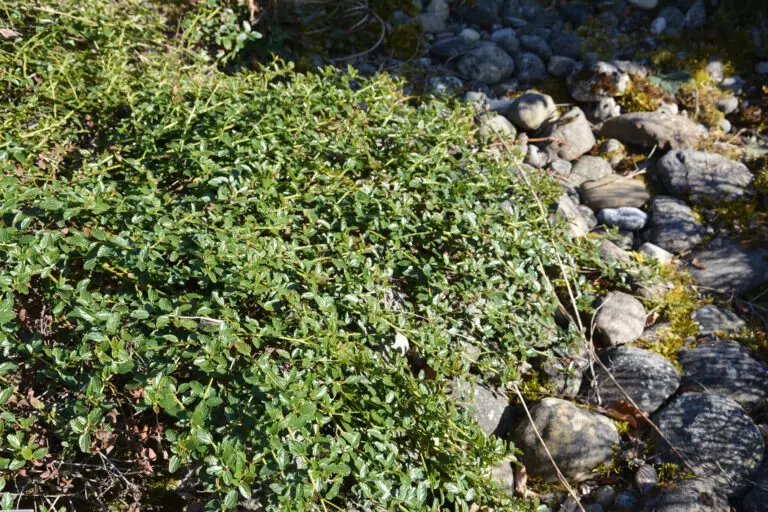
Carmel Creeper
Ceanothus griseus var. horizontalis
Carmel creeper is the workhorse of California lilac native ground covers. The cultivar ‘Yankee Point‘ is one of the most widely planted native ground covers in the state. It spreads steadily without being aggressive, stays evergreen through dry summers, and delivers a wave of bright blue blooms in late winter that makes the entire plant disappear under color for several weeks. It grows in full sun on fast-draining soil and, once established, wants no summer water at all. Extremely deer resistant. This might be the one.
Garden-friendly shrubs (3 to 8 feet)
The 3-to-8-foot range is where most California lilac gardening happens. These are the plants you’re seeing at Theodore Payne, at the California Botanic Garden, and in the native plant gardens you’ve driven past and thought: I want that.
They’re big enough to anchor a planting, small enough to fit in most yards, and they bloom with a density that has no equivalent in non-native shrubs.
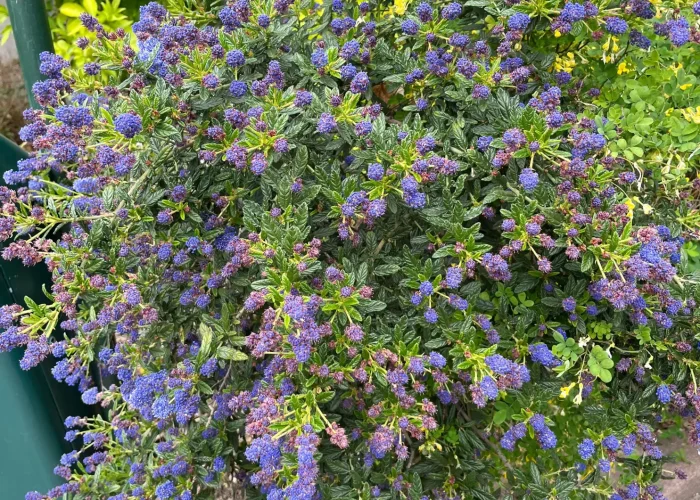
Santa Barbara Ceanothus
Ceanothus impressus
Santa Barbara ceanothus has the darkest flower color of any California lilac in this size range: a deep cobalt blue that reads as almost gothic against the small, deeply creased leaves. The leaves themselves are distinctive, heavily veined and folded lengthwise in a way that gives the plant a textured look through the months it isn’t blooming. It blooms early in the season, typically February into March, and the bloom is smothering (in a good way).
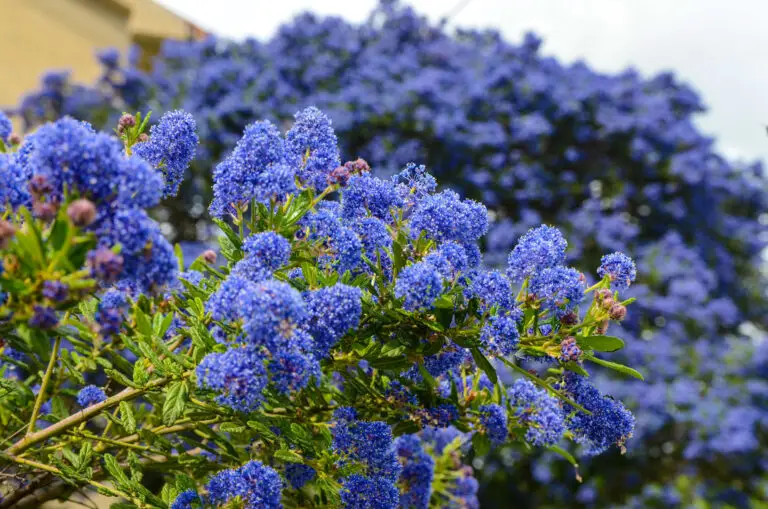
‘Dark Star’ Ceanothus
Ceanothus ‘Dark Star’
This is a hybrid between C. impressus x C. papillosus var. roweanus. Its parents delivered an icon: bold blooms, dense flower clusters, and adaptability to inland heat. In full bloom, this plant looks like it was sprayed with a can of cobalt spray paint. Widely available at California native nurseries.
Large shrubs and small trees (8 to 20 feet)
The large-format California lilacs look like they came with their own agenda—stand back and admire them with the respect they deserve. A 15-foot blue blossom-covered California lilac in March is a statement.
These are also the most useful Ceanothus for screening, for creating height variation in a planting, and for gardeners who have the room and want a plant that does something genuinely dramatic.
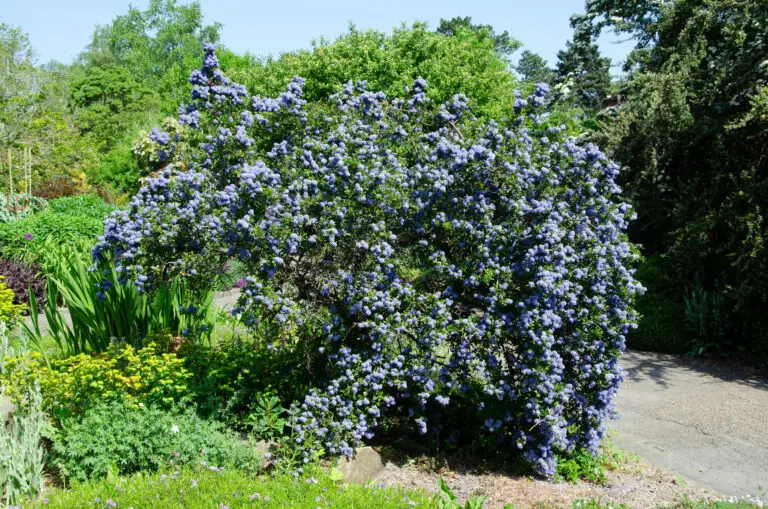
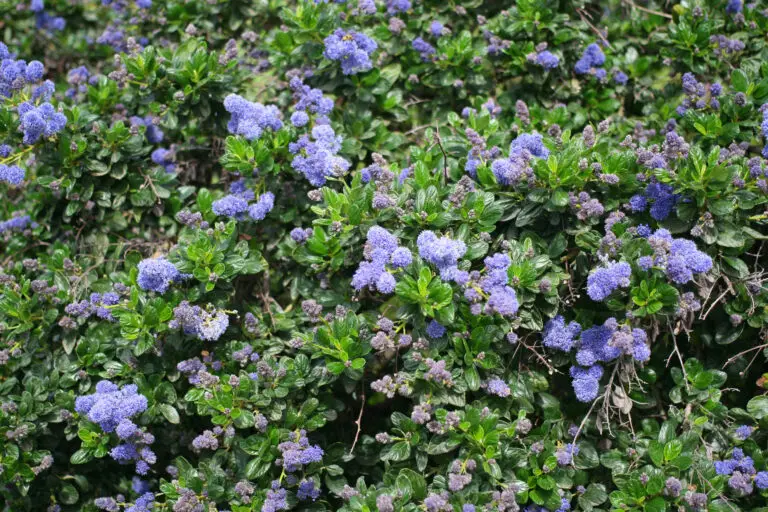
Blue Blossom
Ceanothus thyrsiflorus
Blue blossom is the most widely distributed large California lilacs in cultivation and the most forgiving. It grows from near sea level to 2,000 feet in the Coast Ranges, handles more shade than other Ceanothus species, and in the right conditions grows so fast it can reach 10 feet in three years.
The flower color is lighter than the mid-size cultivars, a clear sky blue rather than cobalt, but the sheer volume of bloom on a large established plant is hard to match. For Bay Area and North Coast gardens, it’s the default large Ceanothus because it’s native to those regions and performs accordingly.
Too big? The cultivar ‘Skylark’ is recommended for smaller gardens: it stays 3 feet tall with heavy blooms and more compact growth.
Dry interior and chaparral species
Live in the central valley? You have other stellar options. For gardeners in the Central Valley, inland Southern California, the foothills, and dry interior valleys where summers are hot and winters cold, the coastal California lilac species are often the wrong choice.These interior and chaparral species are adapted to exactly those conditions.
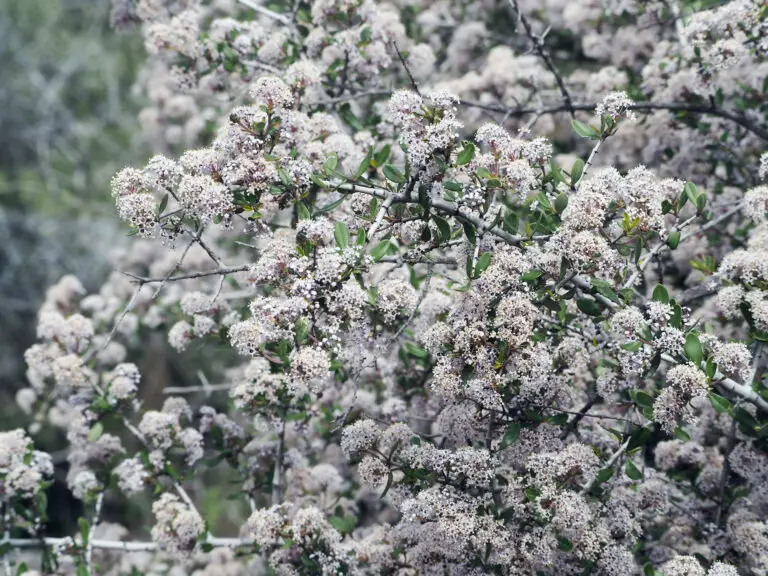
Buckbrush
Ceanothus cuneatus
Buckbrush is the California lilac that grew up in genuinely hard conditions and never forgot it. White to very pale blue flowers in spring, rigid thorny branching, and a tolerance for the kind of heat and cold that would damage most coastal species of Ceanothus. It’s native across a huge swath of interior California from the Sierra Nevada foothills to the Coast Ranges, which means there are local populations adapted to a wide range of interior conditions.
For a dry interior garden, it’s often the most appropriate California lilac to plant, and it’s genuinely beautiful in bloom even if the white flowers are subtler than the cobalt-blue cultivars.
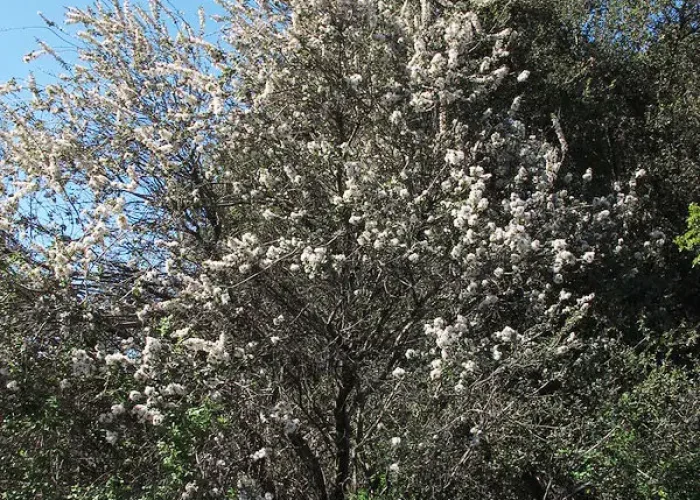
Big-Pod Ceanothus
Ceanothus megacarpus
Big-pod ceanothus blooms earlier than almost any other California lilac, often in January, covering the entire plant in white before the wet season has finished.
The common name refers to the large three-lobed seed capsules that follow bloom and are distinctive on the plant throughout summer. It’s native to the coastal chaparral of Southern California, where it’s a foundational shrub, and it’s the right choice for Southern California gardens that want an early-blooming large native shrub with the full chaparral character.
Let’s do a quick wrap-up…
That was a lot of California lilacs. And we just scratched the surface of the 60+ species available. Here are the plants we mentioned:
| Name | Latin Name | Best Region | Highlights |
|---|---|---|---|
| Carmel Creeper | C. griseus* var. horizontalis | Coastal CA, Bay Area | ‘Yankee Point’ is the go-to cultivar |
| Point Reyes Ceanothus | C. gloriosus | Coastal, fog-influenced | Holly-like leaves; slowest of the ground covers |
| Santa Barbara Ceanothus | C. impressus ‘Puget Blue’ | Southern CA | Earliest mid-size bloom; richest color |
| Dark Star Ceanothus | Ceanothus ‘Dark Star’ | Southern + Central CA | Best all-around mid-size; widely recommended |
| Blue Blossom | C. thyrsiflorus | North Coast, Bay Area | Most shade-adaptable; widely distributed |
| Greenbark Ceanothus | C. spinosus | Southern CA | Long-lived; green bark in winter; tree form |
| Buckbrush | C. cuneatus | Interior CA, foothills | Most drought-hardy; handles hot summers |
| Big-Pod Ceanothus | C. megacarpus | Southern CA coastal | Earliest bloom (January); classic chaparral |
How to grow California lilacs
No matter the species, these rules to all of them.
The one non-negotiable: drainage
Drainage matters more than sun exposure, more than soil nutrition, more than anything else. California lilac in poorly drained, water-logged soil will decline slowly through root rot, regardless of how beautiful the plant looks the first year. If your soil holds water after rain, gets water from irrigation, or drains slowly, either build a raised bed, select a species known to handle heavier soils (blue blossom, Carmel creeper), or choose a different plant for that spot.
Planting
Plant in fall, ideally October through December, so the root system has the full wet season to establish before the first dry summer. Dig a hole slightly wider than the container but no deeper; California lilac planted too deep rots at the crown. (You’ve picked up the theme by now: everything you do is to stop root rot.)
Do not add any compost or fussy chemical fertilizers when you plant. Instead, add in the native soil. Water well at planting and then leave it alone through the wet season.
Beginner Tip
Which California lilac should you plant? No need to decide alone. Visit a native nursery in your region to find species that are best suited for your yard. Independent native nurseries are always your best spot to find healthy plants and meet your people.
The summer water rule
Through the first dry season, water your ceanothus every two to three weeks, deeply, to help the root system develop. After the first full year in the ground, stop watering in summer entirely, or reduce to once a month at most in extreme heat. Most ceanothus deaths in gardens happen from overwatering in summer, not from drought. If your irrigation system hits your California lilac in summer, move the plant or move the irrigation.
Pruning
Prune immediately after bloom, before the plant sets next year’s growth buds. Light shaping is fine; removing dead wood or reducing overall size by 20 to 30 percent after bloom is also fine.
Cutting California lilacs back hard into old wood is not fine: unlike many native shrubs, Ceanothus does not reliably resprout from old wood. Keep cuts within the green growth zone.
Fertilizer
Don’t. We already celebrated how California lilac fixes its own nitrogen through root nodules and shares this bounty with its neighbors. Extra fertilizing pushes fast, soft growth that is more vulnerable to pests and disease, and shortens the plant’s life. Skip it.
FAQs
How long do California lilacs live?
It depends on the species.
- Ground cover types like Carmel creeper typically live 10 to 15 years in a garden setting.
- Mid-size cultivars like ‘Dark Star’ and ‘Julia Phelps’ often live 10 to 20 years.
- Larger species like greenbark California lilac and blue blossom can live 20 to 40 years or longer in the right conditions.
The fast-growing cultivars tend to have shorter lives than the slower-growing species plants. Plan for succession: when a California lilac starts declining, have a replacement ready.
Why is my California lilac dying?
The most common answer is water. Either too much water in summer (root rot from irrigation or wet soil) or a site with poor drainage that holds water through winter.
Check the root zone: if it smells musty or the roots are dark and soft, root rot is the problem. The other common cause is planting too deep; the crown should be at or slightly above soil level.
Can I grow California lilacs outside of California?
Probably not, but we have an East Coast suggestion.
The California species require a Mediterranean-like climate: mild, wet winters and dry, warm summers. Pacific Northwest gardeners in the Willamette Valley or Puget Sound can sometimes grow blue blossom (C. thyrsiflorus) and Carmel creeper in well-drained sites, but they’re outside their native range.
For the eastern US, plant New Jersey tea (Ceanothus americanus), which is a completely different species but a Ceanothus native to the eastern side of North America. It’s not a California lilac dupe per se, but it offers stunning blooms and the potential to make tea from your yard.
When should I plant California lilac?
Fall, specifically October through December. Ceanothus planted in fall has the entire wet season to develop its root system before facing its first dry summer.
Spring planting is possible but requires more careful attention to watering through the first summer. Summer planting is not recommended.
These seeds are deep sleepers. Fire wakes them up.
Ceanothus seeds are tough in a way that rivals most Marvel heroes. The seed coat is so hard that water can’t penetrate it, and the seed lies dormant in the soil for decades, sometimes longer, waiting for the right conditions. What are they holding out for?
In the chaparral, the right conditions are fire. Heat from a wildfire cracks the seed coat, and smoke contains compounds (karrikins) that signal the seed to germinate.
Within weeks of a chaparral fire, bare burned ground begins showing Ceanothus seedlings by the thousands, the soil seed bank finally releasing what it’s been holding, sometimes for 50 years or more.
This is why California lilacs are so foundational in the post-fire chaparral recovery: they are designed to be one of the first things back, and its nitrogen fixation begins rebuilding soil fertility almost immediately.
Where can I find California lilacs for my yard?
Skip the big box stores. Head straight to a nursery that specializes in native plants. We have three strong recommendations:
- Las Pilitas Nursery in Santa Margarita (ships to both San Francisco and LA)
- Theodore Payne Foundation in Sun Valley
- California Botanic Garden’s Grow Native Nursery in Claremont
They are the G.O.A.T.s when it comes to California lilacs (and California native plants in general). I happily bow to their expertise—and love buying their plants and merch. Besides these gems, here are four ways to find California lilacs for your yard, from reputable sources:
Where can I find seeds and plants?
Finding native plants can be challenging (we partly blame King Louis XVI.) To make it easier, we’ve assembled four sourcing ideas.
625+ native nurseries make finding one a breeze
Explore 100+ native-friendly eCommerce sites
Every state and province has a native plant society; find yours
Online Communities
Local Facebook groups are a great plant source
What pairs well with California lilacs?
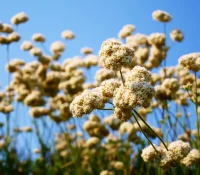
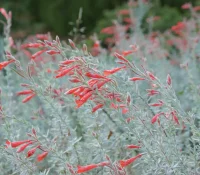
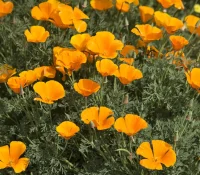
California lilacs in your garden want the same companions it has in the wild: California native plants adapted to similar dry, sunny, well-drained conditions. Here are some favorites:
Pairs well with
The Ceanothus genus may be California’s most spectacular argument for native plant gardening, and the hardest part of working with it is the first decision: which one? Start with your size requirement and your drainage situation, use CalSCAPE to confirm what’s native to your zip code, and then let the bloom color be the final tiebreaker. Or plant a few and pick over the years. There is no wrong answer as long as you have sun and good drainage.
For more on building a California native plant garden, see our full guide: The best native plants for California and Nevada. Happy planting!
Sources
- California Botanic Garden. calbg.org. Accessed April 12, 2026.
- California Native Plant Society. “Ceanothus.” CalSCAPE. https://calscape.org/genus-ceanothus. Accessed April 12, 2026.
- Florida Museum of Natural History. “Plants That Pull Nitrogen from Thin Air Thrive in Arid Environments.” University of Florida. https://www.floridamuseum.ufl.edu/science/plants-that-pull-nitrogen-from-thin-air-thrive-in-arid-environments/. Accessed April 26, 2026.
- Lady Bird Johnson Wildflower Center. “Ceanothus gloriosus (Point Reyes Ceanothus).” University of Texas at Austin. https://www.wildflower.org/plants/result.php?id_plant=CEGL2. Accessed April 12, 2026.
- Lady Bird Johnson Wildflower Center. “Ceanothus thyrsiflorus (Blue Blossom).” University of Texas at Austin. https://www.wildflower.org/plants/result.php?id_plant=CETH. Accessed April 12, 2026.
- Las Pilitas Nursery. “Ceanothus Species Guide.” https://www.laspilitas.com/garden/howto/ceanothus/ceanothus.htm. Accessed April 12, 2026.
- National Oceanic and Atmospheric Administration. “The Atmosphere.” JetStream — An Online School for Weather. https://www.noaa.gov/jetstream/atmosphere. Accessed April 26, 2026.
- Theodore Payne Foundation for Wild Flowers and Native Plants. theodorepayne.org. Accessed April 12, 2026.
- USDA Natural Resources Conservation Service. “Ceanothus L.” PLANTS Database. https://plants.usda.gov/home/search?plantName=Ceanothus. Accessed April 12, 2026.
- Xerces Society for Invertebrate Conservation. “Native Bees of California.” https://www.xerces.org. Accessed April 12, 2026.
Other full sun, western natives


Written by
Emily Lessard
Founder & Editor, The Plant Native
Emily Lessard is the founder and editor of The Plant Native, the site that helps homeowners across North America get started with native plants. She holds a Sustainable Landscapes certificate through the Pennsylvania Landscape & Nursery Association, is finishing a Native Perennial Garden Design Certificate at Temple University, and is the author of Plant Native: A Practical Guide to Over 100 Native Plants of North America (Quarto, February 2027). She gardens outside Philadelphia in the 8.3 Southeastern Plains ecoregion.