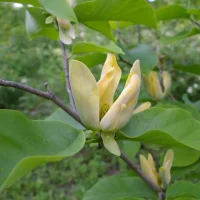
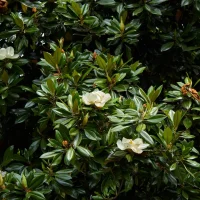
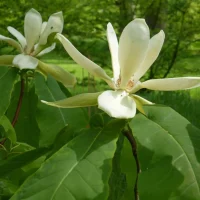
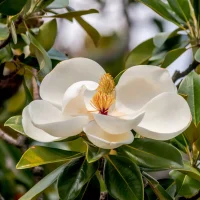
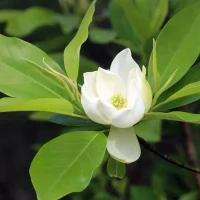
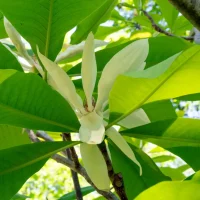
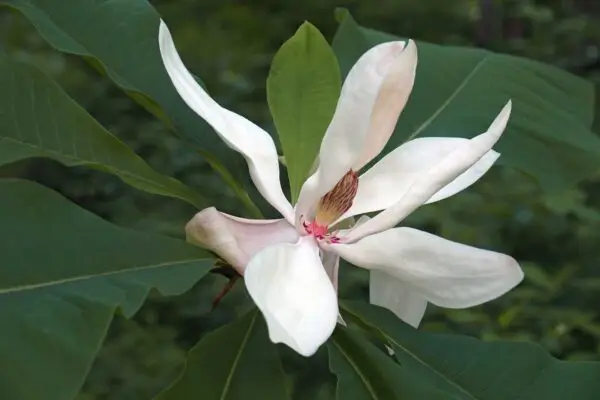
The bigleaf magnolia is a breathtaking beauty, boasting the largest leaves and flowers of any tree native to North America. In a yard, it looks like something tropical. Magnolias are beloved plants; many species have a long history of cultivation. In China, certain species of magnolias have been cultivated for centuries. In Europe, the magnolia became symbolic of the aristocracy. However, it was the North American specimens that gave these plants their name.
Head to the complete guide for planting basics, species comparisons, and beginner-friendly tips.
Is bigleaf magnolia right for my yard?
Plant it if…
You have a big, open space. If you have no idea what to do with a boring patch of land, this plant can help you.
You have fertile soil. Former farmland, lots of compost: these things will make your plant very happy.
You have a sheltered spot in your garden. Already have other trees? Great! They can help protect these large leaves.
You appreciate fragrant flowers. Magnolias are traditionally pollinated by beetles, so their flowers are strongly scented.
You have acidic soil. The bigleaf magnolia can grow in more neutral soils, but it prefers acidic conditions.
You like magnolias, but want something more rare and unique.
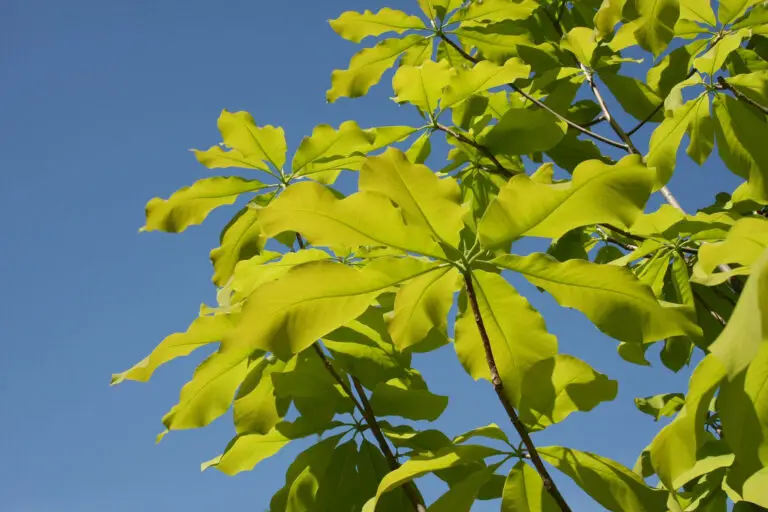
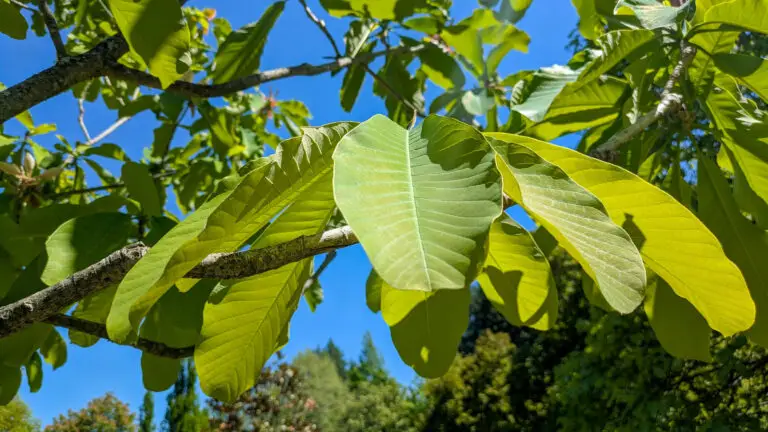
The leaves of bigleaf magnolia look tropical
Skip it if…
You live in an urban area. The bigleaf magnolia is highly sensitive to pollutants, which are all too abundant in the big city.
The winters are long where you live. Magnolias in general are very sensitive to frost, and the bigleaf magnolia is no exception. Untimely frost can leave your beautiful flowers brown and droopy.
Your yard is small. This magnolia needs room to grow, so you may want to try a more compact species. In that case, the umbrella magnolia (Magnolia tripetala) might be your friend: it has a shrub-like habit that is easier to fit in a tiny space.
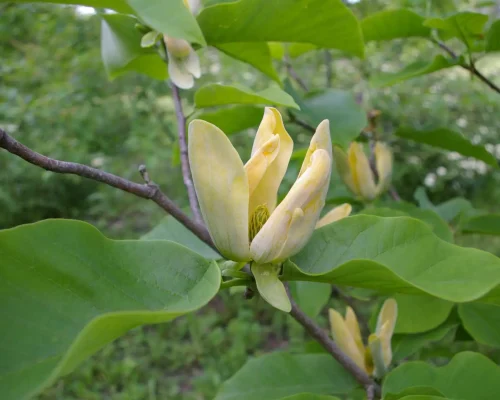
Cucumber magnolias are native into Canada
If you’re worried about the cold…
Cucumber magnolias are better for cold winters
If you live in the Northeast or Midwest and want to plant a magnolia, consider a cucumber magnolia. It has a similar look, but can handle colder winters.
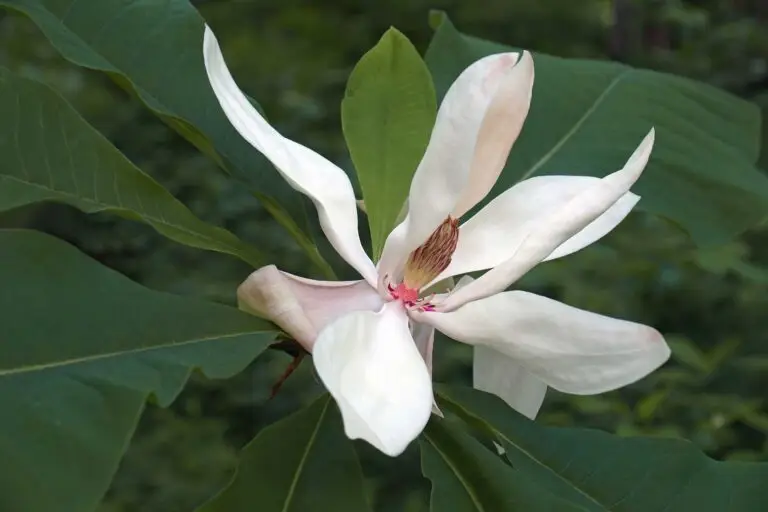
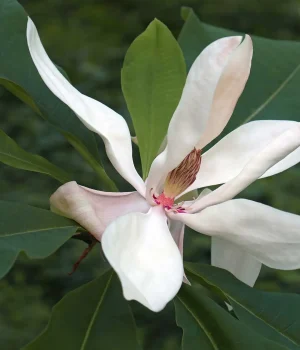
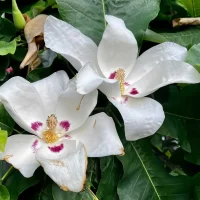
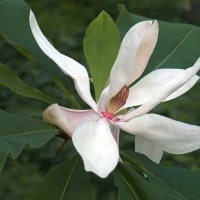
Bigleaf magnolia's flowers are enormous—sometimes over a foot across
“
The flowers are 8–14 inches wide, making them similar in size to your head. The leaves are also a sight to behold, measuring 3 feet long and 1 foot wide.
”
Why bigleaf magnolia matters
Given the sheer size of its leaves and flowers, we’re a little surprised this plant isn’t more well-known. If there was a record for biggest flowers of any tree in North America, the bigleaf magnolia would be a record holder. The flowers are 8–14 inches wide, about the size of your head. The leaves are also a sight to behold, measuring 3 feet long and 1 foot wide. It may not have the same cultural spotlight as the southern magnolia (Magnolia grandiflora), but its size makes it the hidden queen of the forest. Like a queen, it provides for its subjects. Butterflies and hummingbirds enjoy the nectar, while birds and small mammals snack on the seeds.
This is a rare plant
The bigleaf magnolia is quite rare, growing in lowland forests in the southeast United States. They are often found in ravines and valleys, resulting in a fairly scattered distribution. The IUCN Red List classifies it as least concern. However, it was last evaluated in 2007 and likely does not account for the separation of the bigleaf magnolia into different species. Both Ohio and Arkansas have labeled them as endangered.
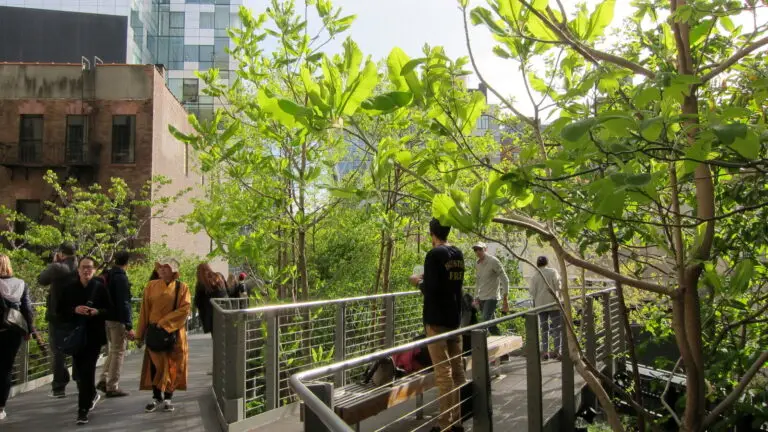
Bigleaf shines on The High Line in NYC. Image by K M.
How to grow bigleaf magnolia
Where to plant
Full sun or somewhere a little shady will do just fine. All you need is space for it to grow into its best self. The soil is what you’ll really need to worry about. The bigleaf magnolia doesn’t like extremes, so make sure the spot you plant it is moist, but not wet.
Spacing
Leave about 25 feet of space for this magnolia to grow. It is slow growing, so you don’t have to worry about it being overcrowded right away.
Watering
Water thoroughly while the roots are establishing, using a few gallons two to three times per week. After that, as long as the soil stays moist, you don’t have to worry.
Garden Recipe™
Bigleaf Magnolia
Magnolia macrophylla
Sun to part sun
Sun
Some work
Effort
Medium Tree (30-60') tall 30-40 ft wide
Size
Spring - Early summer
Blooms
What it needs
Sunlight
Full to partial sun, 4+ hoursThe more sun the better, but it can handle some shade
Water
Likes it moistPick a low spot, or plan to water often
Directions
Spacing
24 ftThink of each one as its own tree
Watering
Weekly for the first seasonAfter that, rain is usually enough
Notes
Comes back?
Yes, every yearGoes dormant in winter, that's normal. New growth each spring.
Hummingbird magnet. Hummingbirds love this one. Plant a few and you've basically hung a neon 'OPEN' sign for them.
Deciduous magnolias, which drop their leaves in winter, are best planted when they are still dormant. This way, they can concentrate on growing out a strong root system. The Magnolia Society recommends planting in “late fall or winter in warmer climates and early spring in cold climates.” You can follow this advice when planting the bigleaf magnolia, taking extra care to water thoroughly if you’re planting in the spring.
Beginner Tip
Skip the fertilizer. Your magnolia could benefit, but you don’t really need it. Instead, add some compost to your soil. The bigleaf magnolia naturally grows in areas with rich soil, so the compost will help it thrive.
Potential challenges with bigleaf magnolia
Finding bigleaf magnolia
Given its rarity, the bigleaf magnolia can be difficult to find in nurseries. Steve Pettis from the NC Cooperative Extension wrote, “Whatever you do, protect natural plant populations by avoiding collecting plants in the wild. Collecting seed is ok. Bigleaf magnolia seeds should be stratified for 3 months at 35-45 degrees.”
If that sounds too complicated for you, don’t worry. There are a few online nurseries that sell the bigleaf magnolia, which are listed here:
Why are we including the states alongside the sellers? It’s a secret gardening tip that picking plants grown in your area gives you a leg-up when it comes to survival. Here’s why:
Plants and seeds grown close to home are tuned to your soil, weather, and pollinators. Stay within 500 miles—or about a day’s drive—to help your garden thrive naturally.
While the leaves are a major draw of the bigleaf magnolia, they can also make landscaping with this plant a challenge. This is a plant that requires personal space, and the large leaves may seem like a hassle when they drop in the fall. According to the IFAS Extension, the leaves decompose more slowly.
Thankfully, this isn’t a problem without its solutions. If leaf litter worries you, you can cut up the leaves with a mower, or by hand, to help them decay more quickly.
Large leaves also risk wind damage
When planted out in the open, strong winds can cause the leaves of this plant to tear. This can make it look ragged and messy, as well as potentially harming the tree. To combat this, place it in an area that’s shielded from the wind. Other trees, as well as your house, can give it the shelter it needs.
The leaves are the focal point, and if they look too messy when they drop, cut the leaves to help them compost quickly
Where bigleaf magnolia shines in your yard
Naturalized areas: If you want something low maintenance, leave it in a natural spot with moist soil and lots of leaf litter.
Shade tree: The large leaves of this plant can provide some cooling shade during the summer.
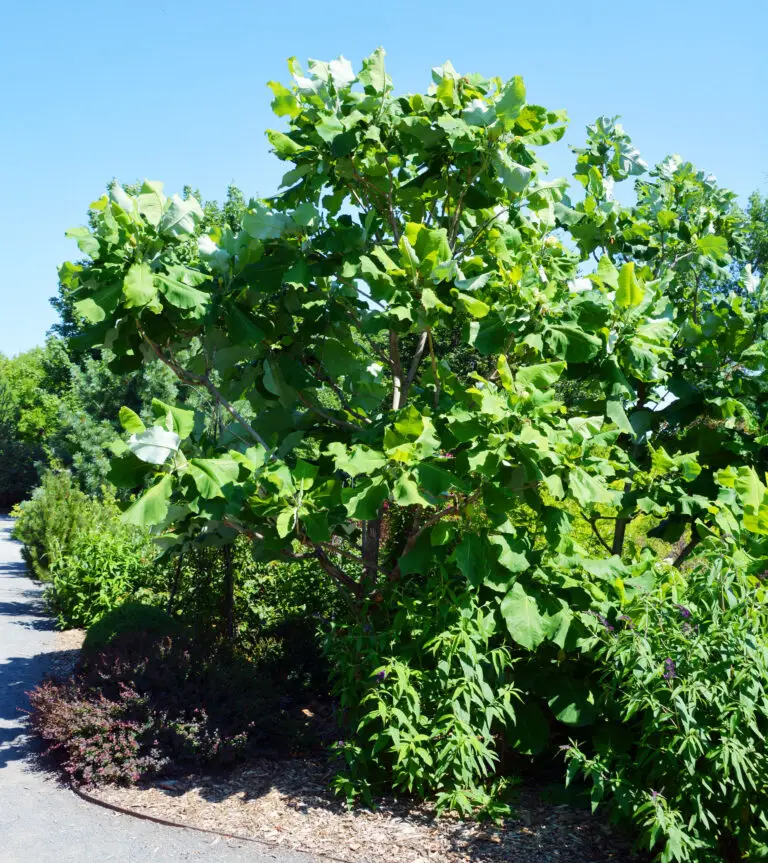
Specimen tree: Plant this tree in your lawn somewhere it can dazzle with its giant flowers and leaves.
Woodland gardens: This tree is already used to the part shade of a woodland canopy, so why not plant it in an area that will feel like home?
Shade garden: Pair it with some shade-loving natives for a lovely shade garden.
Bigleaf magnolias provide a clear focal point; plant them alongside native shrubs, grasses, and flowers
Bigleaf magnolia cultivars
When it comes to cultivars, other magnolias tend to be more popular. For example, the saucer magnolia (Magnolia × soulangeana) has hundreds of cultivars. The long history of magnolia cultivation has also resulted in a variety of nonnative magnolias. However, there are a few cultivars that give the bigleaf magnolia some love:
‘Julian Hill’: It looks fairly similar to the straight species, but it is considered hardier.
‘Mississippi Clone’: It has slightly larger leaves, but the pure white flowers are the true draw of this cultivar.
‘Palmberg’: The flowers are larger than the straight species.
‘Purple Spotted’: This cultivar is distinct for its purple markings in the center of the flower.
Cultivar is short for CULTIvated VARieties. Cultivars are plants selected for traits like color, size, or disease resistance. Useful and sometimes stunning...but some lose the scent, shape, or timing wildlife depends on. Plant straight species when possible.
The bigleaf magnolia is not the only magnolia species with impressive leaves. There used to be two varieties of the bigleaf magnolia that have since been reclassified as their own species. If that wasn’t confusing enough, there are also other species that can resemble it at first glance. Here are a few related magnolia species:
Ashe magnolia (Magnolia ashei): Previously considered a subspecies or variety of the bigleaf magnolia. It’s shorter and more shrub-like than the bigleaf magnolia, with smaller leaves and flowers, and is native only to Florida.
Cloudforest magnolia (Magnolia dealbata): Another former variety of the bigleaf magnolia, native to Mexico. The common name comes from the habitat they live in; a rare type of forest found in the mountains and perpetually shrouded in mist.
Cucumber magnolia (Magnolia acuminata): A smaller-leaved, but taller magnolia species. It has the widest native range, stretching from Canada to the southeast United States. Some indigenous tribes used wood from this plant to make canoes.
Umbrella magnolia (Magnolia tripetala): A shorter species of magnolia typically found beneath the thick forest canopies of the Appalachian Mountains. As a result, it is a true shade-lover.
FAQs
Are magnolias high maintenance?
Yes and no.
Magnolias are definitely fussy, requiring particular soil and moisture conditions. However, if their conditions are met, they’re otherwise low maintenance. No measuring fertilizer, no pruning, and no serious pests or diseases.
What are the best fertilizers for magnolias?
Magnolias may benefit from a controlled-release fertilizer, which acts slowly over time to add nutrients to the soil. However, the best addition you can make to your soil is compost. Detritus may not be everyone’s cup of tea, but the bigleaf magnolia loves it.
How many years does it take for a magnolia to bloom?
For the bigleaf magnolia, it can take a long time to bloom. It can take 12 years or more to see flowers, but the end result is absolutely worth it.
What month is best to plant a magnolia tree?
That depends on your climate.
For cool climates, you can get away with planting deciduous magnolias in the early spring, but late fall planting is better for warmer climates. As such, late March or early November may be best.
Do magnolias do well in pots?
While it is less common to see magnolias in pots today, there is some historical precedent for it.
In China, magnolias were kept in the Imperial Palace and forced (the process of making plants bloom out of season) so the emperor would have blossoms all year. However, Chinese magnolias like the yulan magnolia (Magnolia denudata) or mulan magnolia (Magnolia liliiflora) have smaller leaves and flowers, making them easier to prune into a compact shape. On the other hand, trying to squeeze a bigleaf magnolia into a pot is like trying to cook a family meal in a saucepan.
In short, if you want a potted magnolia, this one may not be right for you.
Plant Nerd Fact
There was a festival specifically dedicated to the bigleaf magnolia.
In May 2019, the University of North Carolina put on a festival at the UNC Charlotte Botanical Garden called the “Bigleaf Magnolia Art and Garden Festival.” The event honored the plant’s connection to the region. Specimens of the bigleaf magnolia (Magnolia macrophylla) and Ashe magnolia (Magnolia ashei) in the university’s gardens were celebrated, and the festival had a wide range of activities. Contests in photography and garden totem art were held, and festival-goers could participate in a variety of activities blending nature and art!
What pairs well with bigleaf magnolia?
The large leaves of the bigleaf magnolia will cast shade on any plants it is paired with. Additionally, the fall leaf litter could be a challenge for smaller groundcovers. As such, the best companions for it are shade-loving perennials and shrubs.
Magnolias were once seen as a symbol of the aristocracy. European nobility brought in Chinese magnolias for their estates, and southern magnolias (Magnolia grandiflora) were planted at plantations in the South. However, they all passed over the queen of magnolias: the bigleaf magnolia. It has huge, fragrant flowers and sprawling fan-like leaves that provide for all the animals of the forest. If you’re looking for something unique and beautiful, then this plant might just be for you.
Kershner, Bruce, Craig Tufts, Daniel Mathews, Gil Nelson, and Richard Spellenberg. Field Guide to Trees of North America. New York: Sterling Pub. Co, 2008.
Kimel, Leslie. “Native Plant Spotlight: Bigleaf Magnolia.” gwf.org, June 3, 2025. https://gwf.org/bigleafmagnolia/. Accessed May 27, 2026.
Lobdell, Matthew S. “Register of Magnolia Cultivars.” HortScience 56, no. 12 (2021): 1614–1675. https://doi.org/10.21273/HORTSCI16054-21. Accessed May 26, 2026.
Oozeerally, Barbara, James Milton Gardiner, and Stephen A. Spongberg. Magnolias in Art & Cultivation. Richmond, Surrey, UK: Kew Publishing, Royal Botanic Gardens, Kew, in association with the Royal Horticultural Society, 2014.
Ramírez-bamonde, Es, Lr Sánchez-velásquez, and A. Andrade-torres. 2005. “Seedling Survival and Growth of Three Species of Mountain Cloud Forest in Mexico, Under Different Canopy Treatments.” New Forests 30 (1): 95–101. https://doi.org/10.1007/s11056-004-5397-5. Accessed May 27, 2026.
Kat (or Liam) is a native Ohioan transplanted to Philadelphia for school. Their interest in native plants began with a fascination with floral symbolism. They discovered their love of horticulture in high school, and are now studying it at Temple University after a two year vocational program. Their favorite flower is any species of magnolia.