

Highlights
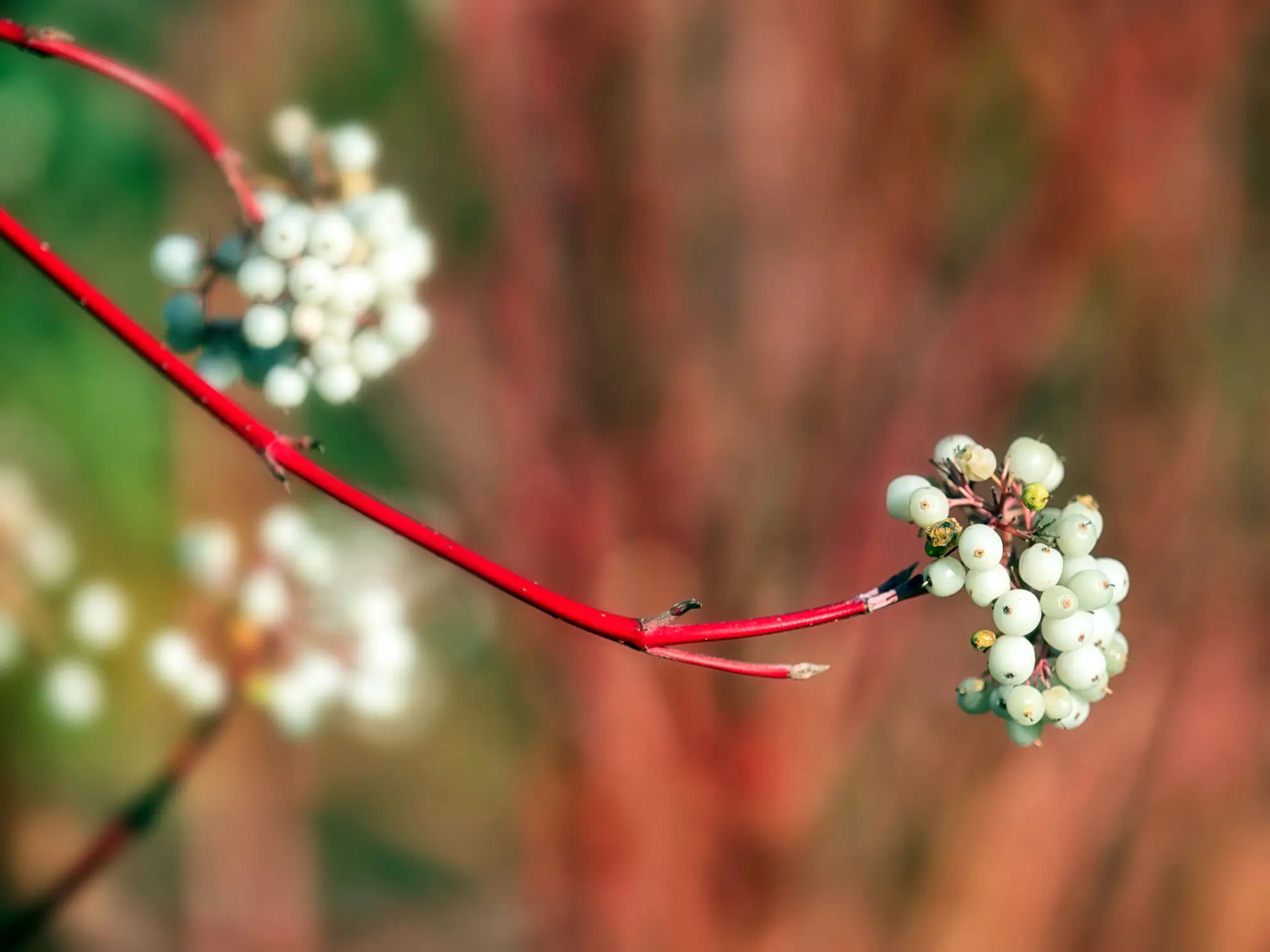
Red twig dogwood (Cornus sericea), also known as red osier dogwood, is the shrub equivalent of a great winter coat: it looks best when everything else looks worst. From late fall through spring, its bare stems glow a saturated, almost electric red against snow, brown mulch, and gray sky. But red twig dogwood is not just a winter showpiece. In spring, flat-topped clusters of creamy white flowers draw pollinators. By late summer, white berries appear, and more than 47 bird species eat them. If you have a wet corner, a clay nightmare, or a shady edge that nothing else will touch, this is your plant.
Is red twig dogwood right for my yard?
Plant it if…
- You have a wet spot, a clay problem, or a low corner where water pools after rain. Red twig dogwood does not just survive there. It thrives.
- You want winter color that does not come from a plastic pot of pansies or a string of lights. Those red stems are the real thing, and they last from November through March.
- You want to feed birds. The white berries are eaten by cedar waxwings, robins, thrushes, bluebirds, and dozens more. It is a berry buffet.
- You need a fast-growing screen or hedge along a property line, a fence, or a wet drainage area.
- You are willing to do a little annual pruning to keep the stems at their reddest. (More on that below. It is easy, and it is worth it.)
Skip it if…
- Your yard is bone-dry and well-drained. Red twig dogwood evolved along streams and in wet meadows. It wants moisture, and a dry, sandy hilltop will disappoint both of you.
- You want a tidy, non-spreading shrub that stays exactly where you put it. This plant sends out underground runners (stolons) and will form a thicket over time. That is a feature if you want a hedge; it is a headache if you want a single specimen in a formal bed.
- You never want to prune anything. The reddest color is on new growth, so you need to cut the oldest stems to the ground each year to keep the color vivid. Skip the pruning, and the stems fade to a dull grayish-brown.
- You have a tiny yard and need something compact. At 6 to 9 feet tall and wide, plus suckering, this is not a small plant. (But see the cultivar section for dwarf options.)
Where is red twig dogwood native?
Native to 36 US states, Washington, D.C., and 13 Canadian provinces (Alberta, British Columbia, Manitoba, New Brunswick, Newfoundland and Labrador, Nova Scotia, Northwest Territories, Nunavut, Ontario, Prince Edward Island, Quebec, Saskatchewan, Yukon)
Sources: NatureServe, Royal Botanic Gardens, Kew (World Checklist of Vascular Plants) and the USDA PLANTS Database, compiled by The Plant Native. How we map native ranges
Red twig dogwood is native across most of North America, one of the most widely distributed shrubs on the continent. It grows naturally in riparian zones, wet meadows, stream edges, and the moist margins of forests.
If you live anywhere in the northern two-thirds of the U.S. or anywhere in Canada, red twig dogwood is almost certainly native to your area. In the Deep South and the driest parts of the Southwest, it drops out of the range, but for the vast majority of North American gardeners, this shrub is a local.
It is a workhorse that happens to look like a showpiece.
Why red twig dogwood matters
Think of red twig dogwood as a wildlife apartment complex. The dense, suckering thickets provide nesting cover for songbirds, including yellow warblers, gray catbirds, and American goldfinches, all of which prefer to nest in shrubby tangles rather than out in the open.
Then there are berries
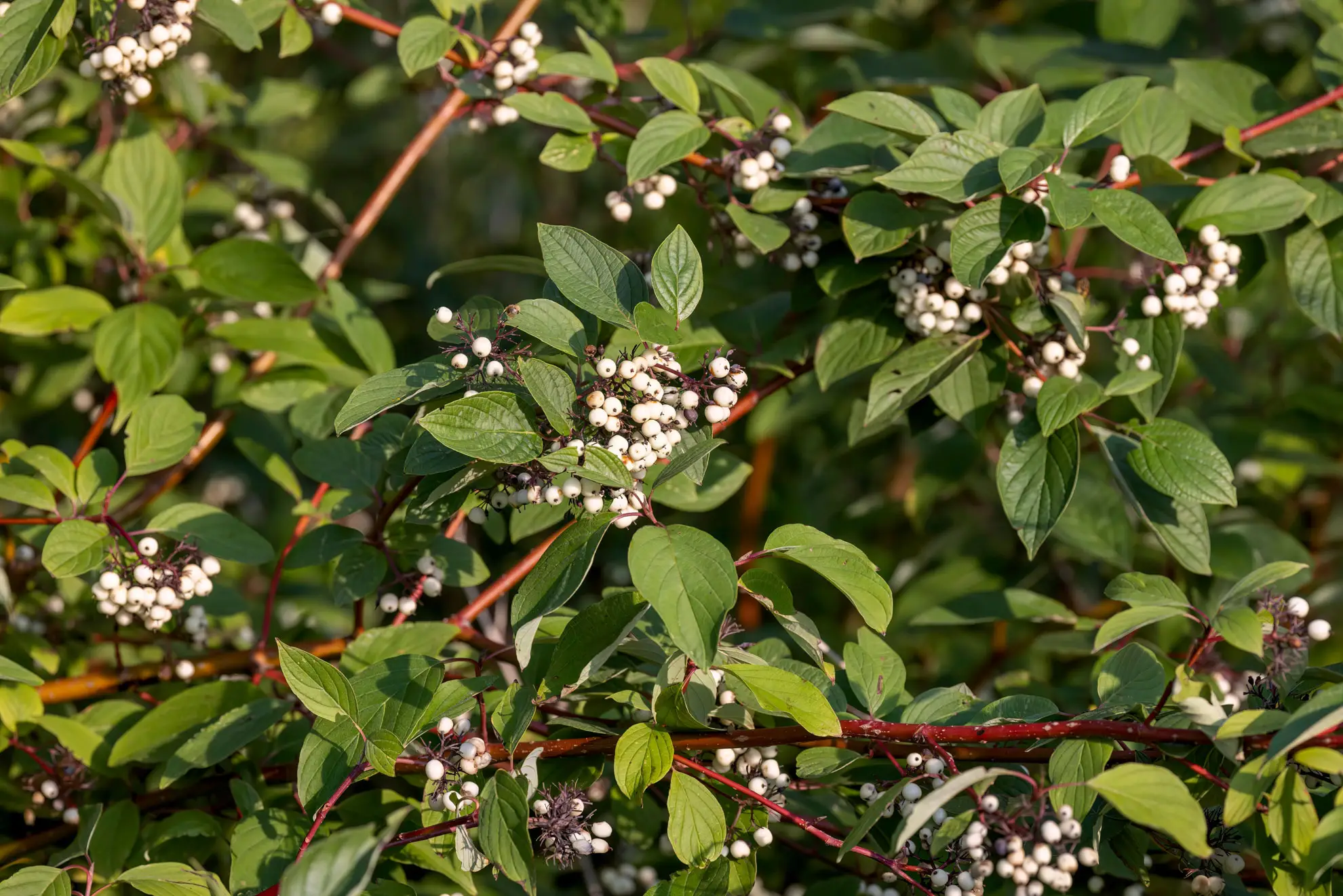
The white berries ripen in late summer and hang on into fall, feeding more than 47 bird species according to the Lady Bird Johnson Wildflower Center. Cedar waxwings, in particular, descend on the berry clusters like a well-dressed dinner party arriving all at once.
It also helps with erosion
And along streams and riverbanks, the dense root systems of red twig dogwood hold soil in place and prevent erosion, which is why conservation agencies have been planting it along waterways for decades. It is a workhorse that happens to look like a showpiece.
It’s also a host plant
Red twig dogwood is also a host plant for the spring azure butterfly (Celastrina ladon), one of the first butterflies you see each year, a tiny blue flash in April that looks like a piece of sky broke loose.
Research found that native plants like dogwoods support dramatically higher numbers of Lepidoptera species than non-native alternatives. That matters because caterpillars are the primary protein source for baby birds. A Carolina chickadee nest needs 6,000 to 9,000 caterpillars to raise one clutch. This same research found that yards dominated by non-native plants reduce bird populations because there simply are not enough caterpillars. Every native shrub you plant, red twig dogwood included, tips the balance back toward “enough.”
Red twig dogwood through the seasons
Red twig dogwood offers interest during all seasons. Here is a quick overview on what to expect, starting in the spring:
Spring
Red twig dogwood leafs out in mid-spring with bright green, oval leaves that have a slightly quilted texture, like tiny throw pillows. The leaves emerge along those still-red stems, and for a few weeks you get the best of both worlds: fresh green against fading crimson.
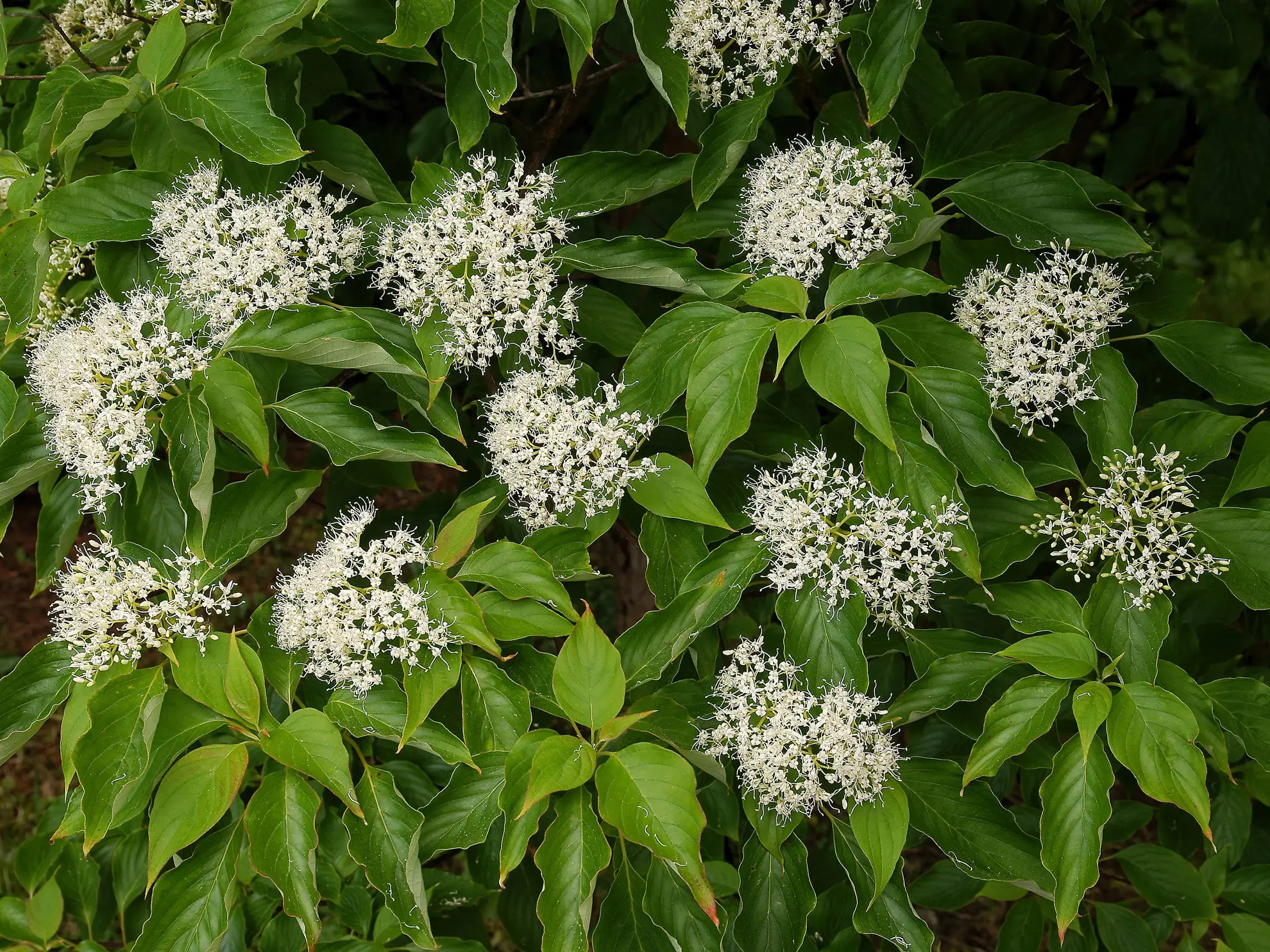
By late May or early June, flat-topped clusters of small flowers open at the branch tips. Small pollinators love them.
Summer
By midsummer, the flowers have given way to clusters of small white berries, each about the size of a pea. The berries start out pale green and ripen to porcelain white, sometimes with a faint bluish tint. Birds begin picking at them before they are fully ripe.
The shrub is fully leafed out now, dense and green, forming a solid mass of coverage that nesting birds love. The stems are green in summer, not red. That color trick happens only when the leaves drop and cold weather triggers the anthocyanin pigments in the bark.
Fall
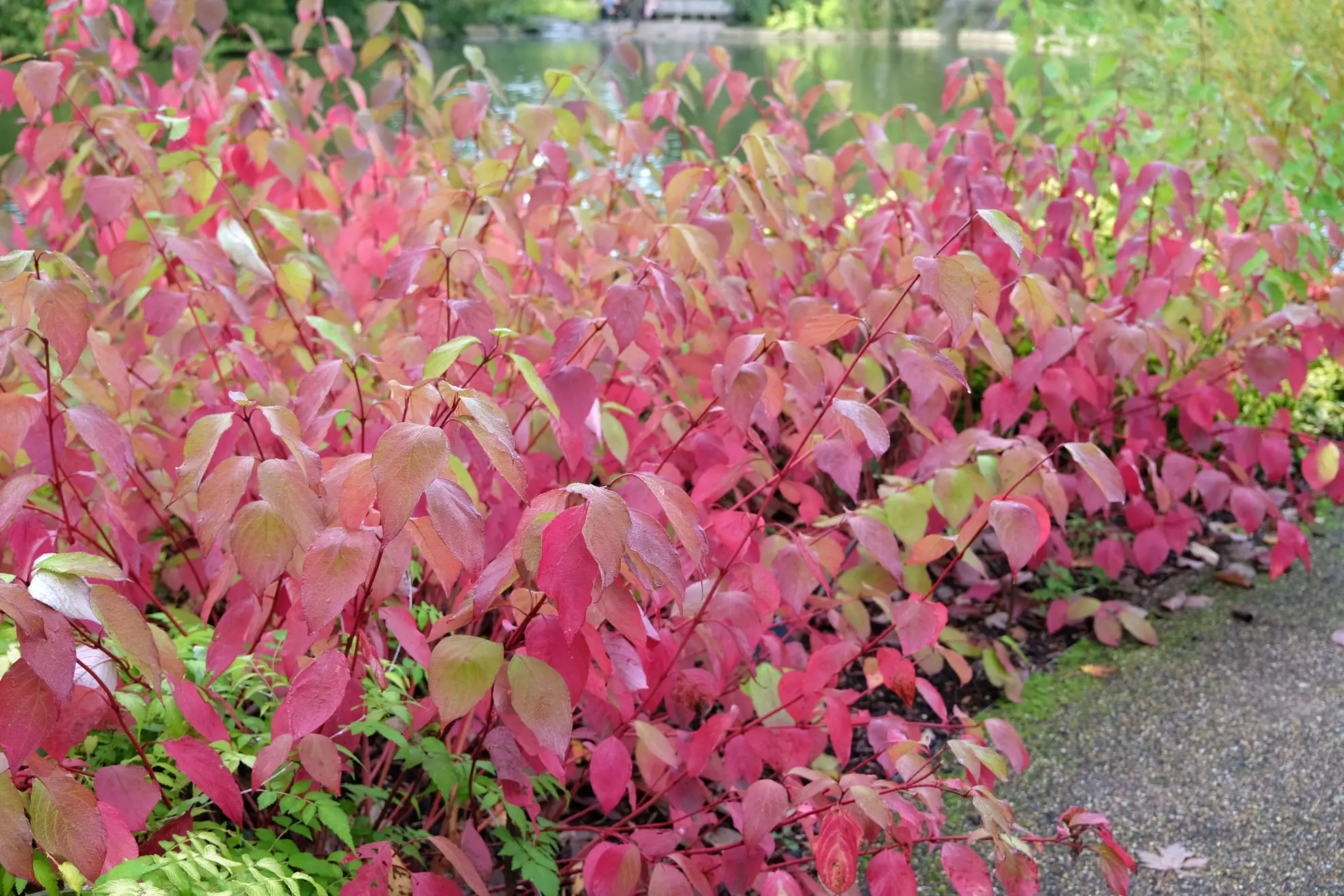
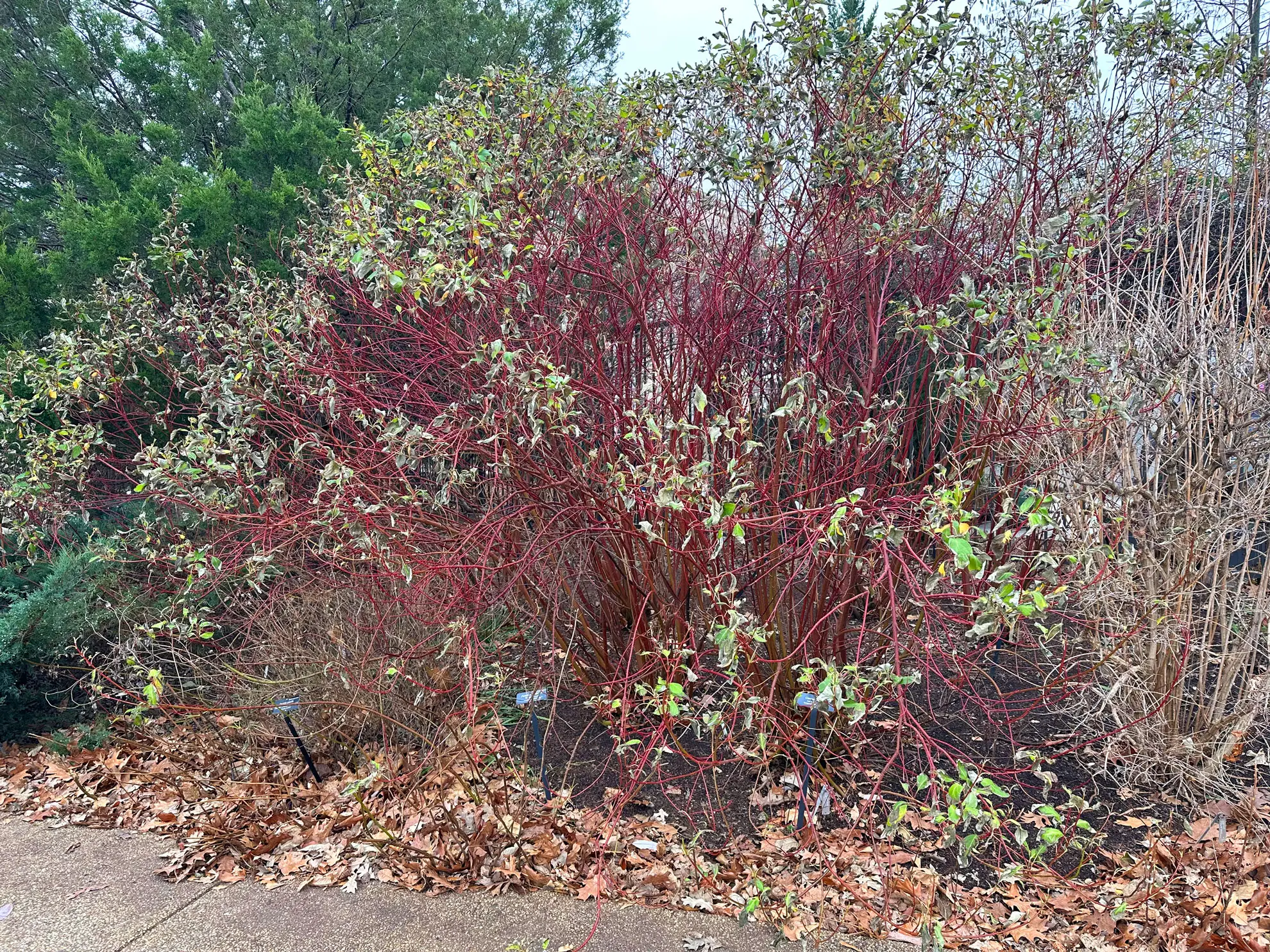
The leaves turn a reddish-purple in fall, not the most dramatic autumn color on the block, but respectable. As the leaves drop, the real show begins. The stems, which spent summer hidden under all that green, are suddenly bare and visible, and the red is already deepening.
The youngest stems, the ones that grew this year, are the most vivid: a saturated, almost candy-apple red. Older stems are duller, leaning toward grayish-brown, which is why annual pruning matters. Berry clusters are mostly gone by now, cleaned out by the birds.
Winter
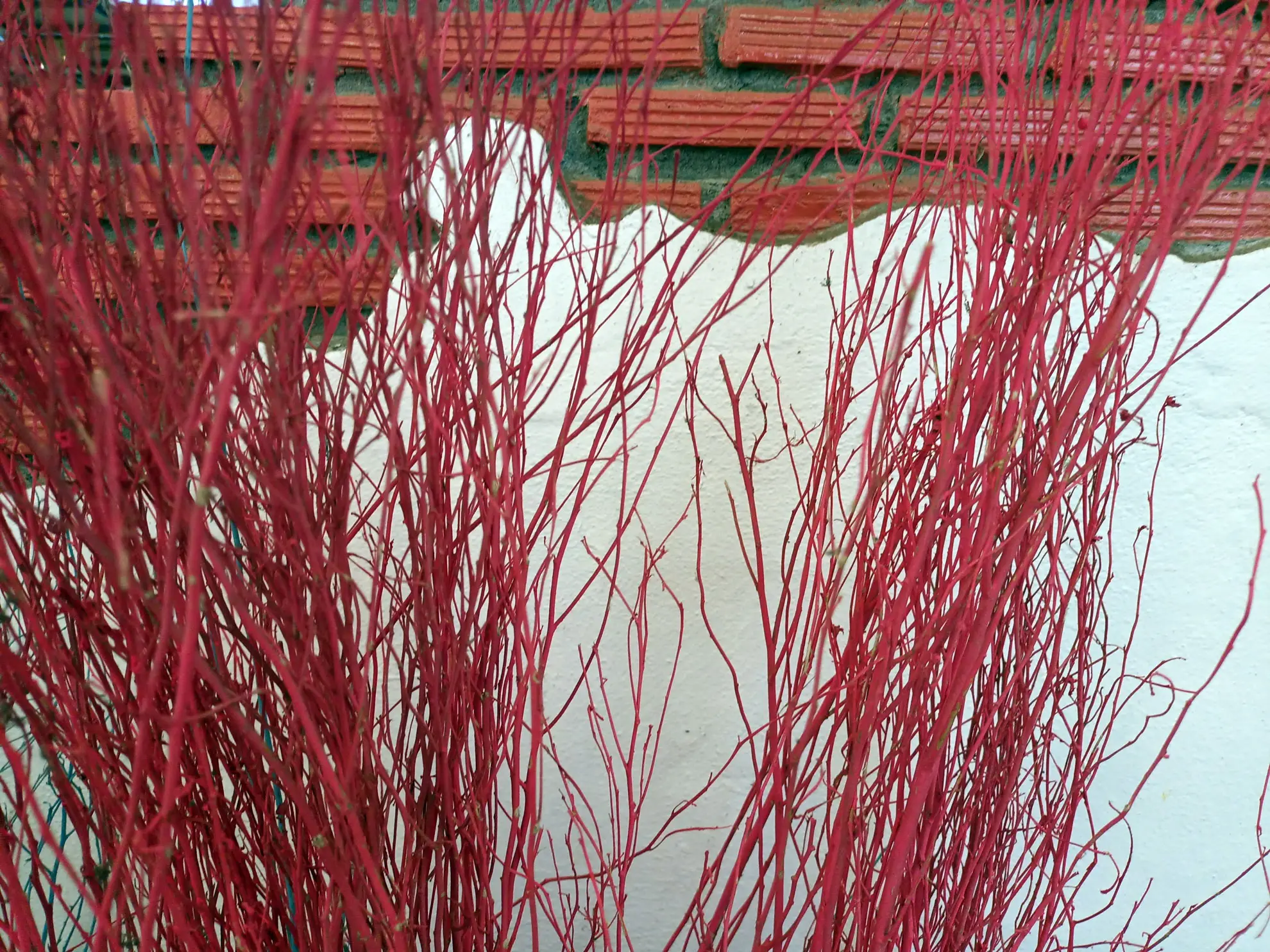
This is it. This is the season red twig dogwood was built for. Against snow, the stems look like someone painted them with a fine-tipped brush dipped in cadmium red. Against a gray sky, they glow. Against a backdrop of dark evergreens, they practically vibrate.
The color comes from anthocyanins, the same compounds that make cranberries and red cabbage red, and they intensify with cold temperatures and UV exposure. The colder and sunnier the winter, the brighter the stems. A mass planting of red twig dogwood in January is one of the most visually arresting things in the winter landscape, and it costs you nothing in effort.
Where red twig dogwood shines in your yard
- Rain gardens and wet swales. That soggy depression in your yard that kills everything you plant? Red twig dogwood was made for it. Plant three in a cluster and stop apologizing for the drainage.
- Winter gardens. Pair red twig dogwood with the white bark of paper birch or the golden stems of yellow twig dogwood, and your January yard becomes a painting nobody believes is unplanned.
- Property-line hedges. The suckering habit that annoys some gardeners is exactly what you want in a hedge. It fills in fast, grows dense, and creates a living wall that doubles as bird habitat.
- Stream banks and pond edges. The dense root system holds soil like rebar holds concrete. Conservation agencies plant red twig dogwood for erosion control, and it looks beautiful doing it.
- Foundation plantings on the north side. That shady, damp side of the house where azaleas sulk? Red twig dogwood actually likes it there. And in winter, those red stems against a white or gray wall are spectacular.
- Mixed native hedgerows. Combine with winterberry holly, American elderberry, and ninebark for a four-season wildlife corridor along your property edge.
- Backdrop for perennial beds. A mass of red twig dogwood behind a summer perennial garden fades into green background during the growing season, then becomes the star once the perennials go dormant.
How to grow red twig dogwood
Where to plant
Red twig dogwood wants moisture. Plant it in a spot that stays consistently damp: the edge of a rain garden, a low-lying area, along a downspout, or beside a pond or stream. It also handles clay soil like a champ, which makes it a gift for anyone with that sticky, poorly drained stuff that kills most other shrubs.
Full sun gives you the most intense winter stem color. Part shade is fine, but the red will be less electric. According to the Missouri Botanical Garden, red twig dogwood performs well in wet, poorly drained soils where many other shrubs fail.
Spacing
For a hedge or screen, space plants 4 to 6 feet apart. They will fill in and merge into a continuous mass within two to three years. For a single specimen (if that is your thing), give it at least 8 feet of clearance on all sides, knowing that it will send up suckers and slowly expand its footprint.
Watering
Red twig dogwood is one of the few shrubs you are more likely to underwater than overwater. It wants moist to wet soil and will happily grow with its feet damp. During the first growing season, water deeply once a week if rain does not cooperate. Once established, it is remarkably self-sufficient in any spot that stays reasonably moist.
Planting card
Cornus sericea
When to plant
Plant red twig dogwood in early spring or fall when the soil is cool and moist. Spring planting gives it a full season to send roots into the surrounding soil before winter. Fall planting works too, as long as you get it in the ground at least six weeks before the first hard frost.
First-year growth is vivid, saturated red. Second-year stems are still pretty good. By year three and beyond, stems fade to a dull grayish-brown.
Prune for color
This is the single most important thing to know about red twig dogwood: the reddest stems are the newest stems. First-year growth is vivid, saturated red. Second-year stems are still pretty good. By year three and beyond, stems fade to a dull grayish-brown.
To keep the color blazing, cut about one-third of the oldest, fattest stems to the ground each year in late winter or early spring, before new growth starts. The plant responds by sending up vigorous new shoots that will be brilliant red by next winter. Think of it like cycling through spice jars: oldest out, newest in, always fresh.
Beginner tip
Do not be afraid to cut hard. Red twig dogwood is incredibly resilient. Even if you cut every stem to 6 inches from the ground, it will regrow a full set of intensely red new stems in a single season. Some people prune the entire shrub every two to three years instead of doing the one-third rotation. Either method works. The point is: new wood = red wood.
What pairs well with red twig dogwood?
Red twig dogwood grows naturally alongside moisture-loving plants of stream edges and wet meadows. These companions share its preference for damp soil and look like they belong together, because they actually do.


Where can I buy red twig dogwood?
Most big-box garden centers don’t carry true natives, but red twig dogwood is easier to find than you might think. Your best bets are a native plant nursery near you, a native plant society sale, or a trusted online grower that ships to your region.
Potential challenges with red twig dogwood
Spreading habit
Let us be honest: red twig dogwood spreads. It sends out stolons (underground runners) and will gradually colonize adjacent ground, popping up new stems several feet from the original plant. In the right spot, a wet area, a hedge line, a stream bank, this is exactly what you want. In a formal garden bed next to your driveway, it is a problem.
Manage it by cutting unwanted suckers at ground level, or install a root barrier if you need a hard boundary. Or just give it room and let it do its thing.
Fading stem color on old wood
The number one complaint about red twig dogwood is: “My red twig dogwood is not red.” This almost always means the shrub has not been pruned in years, and the oldest stems have faded to gray-brown.
The fix is simple. Cut the oldest one-third of stems to the ground every late winter. New growth comes back red. If the whole shrub looks dull, coppice the entire thing to 6 inches and start fresh. You will lose one season of height, but you will gain a shrub that actually looks like its name again.
Leaf spot and twig blight
In humid summers, red twig dogwood can develop fungal leaf spots or twig blight, which causes individual branches to brown and die back. Neither is usually fatal. Good air circulation (do not crowd it against a wall or fence) and removing affected branches promptly will keep problems in check.
Avoid overhead watering if possible. The plant is tough enough that most fungal issues are cosmetic, not existential.
Deer browsing
Sorry if this is a bummer, but deer like red twig dogwood. They browse the stems, especially in winter when other food is scarce, and can nip back new growth that you were counting on for next year’s red show. In areas with heavy deer pressure, protect young plants with temporary fencing or netting until they are well established.
Mature thickets can usually absorb some deer browsing without losing their shape, but if your deer herd treats your yard like an all-you-can-eat salad bar, factor that into your expectations.
FAQs
Is red twig dogwood the same as red osier dogwood?
Yes. Red twig dogwood and red osier dogwood are the same plant: Cornus sericea. You may also see it listed under its older botanical name, Cornus stolonifera. All three names refer to the same species. “Red osier” comes from the French word osier, meaning willow-like, a reference to the plant’s flexible stems.
Why are my red twig dogwood stems not red?
Almost certainly because the plant has not been pruned. The reddest color is on first-year stems. As stems age past two or three years, they fade to grayish-brown. Cut the oldest third of the stems to the ground each late winter, and new, brilliantly red growth will replace them by the following winter.
How fast does red twig dogwood grow?
Fast. Expect 1 to 2 feet of new growth per year once established, and new suckers will pop up from the root system each spring. You can go from a single container plant to a noticeable thicket in three to four years. If you coppice the entire shrub, it can regrow 4 to 6 feet of new stems in one season.
Will red twig dogwood grow in standing water?
It can handle seasonally wet soil and brief flooding, but it does not want to sit in permanent standing water year-round. Think “wet meadow,” not “pond bottom.” Occasional flooding is fine. A spot where water pools after rain and then slowly drains is ideal.
Can I keep red twig dogwood small?
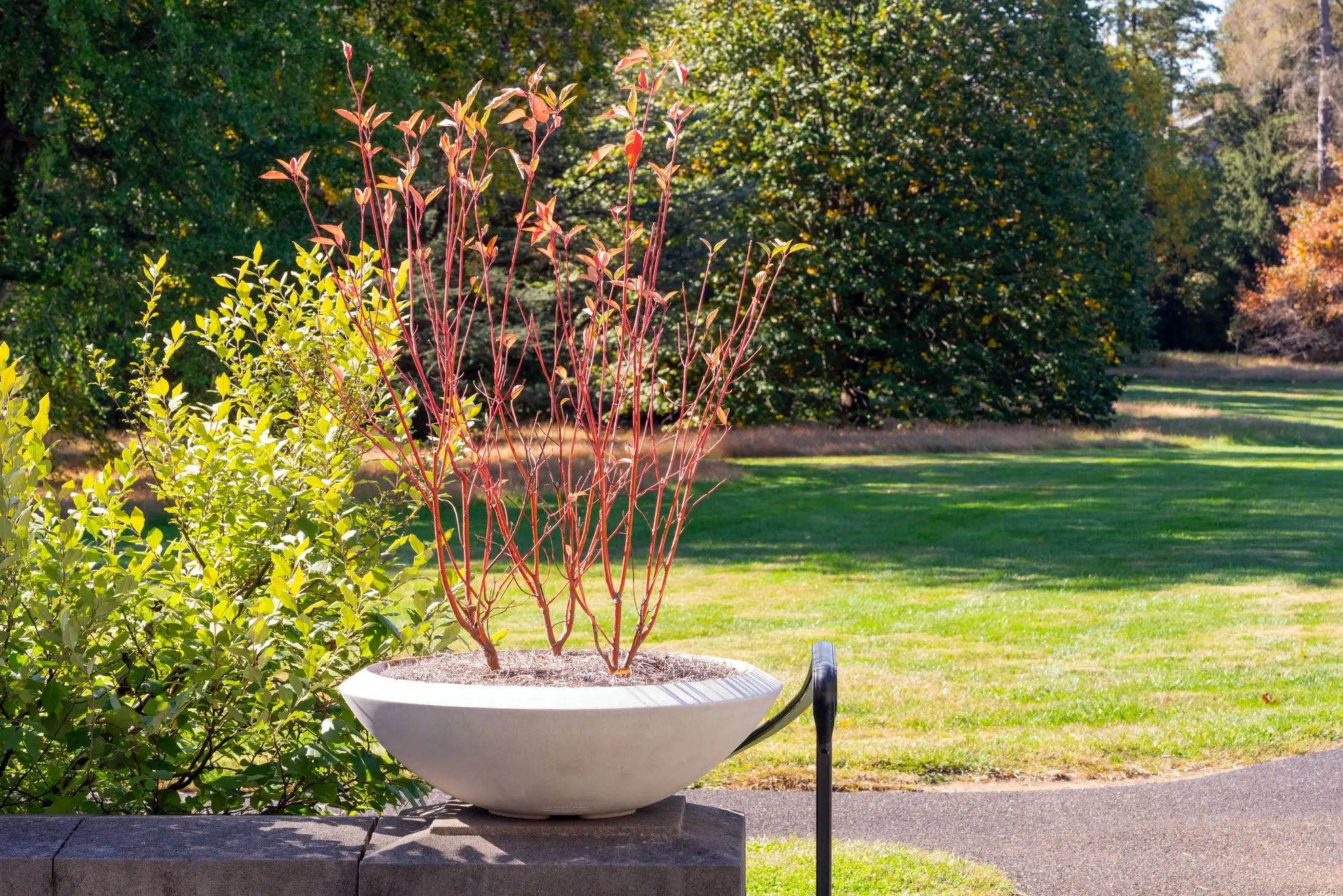
Yes. Regular coppicing (cutting all stems to 6 inches every two to three years) keeps the plant compact and intensely red. You can also grow the compact cultivar ‘Arctic Fire,’ which stays 3 to 4 feet tall naturally. Or simply prune out the tallest stems each year and let the shorter, younger growth fill in.
Is red twig dogwood invasive?
No. Red twig dogwood is native across most of North America. It does spread by stolons and can form thickets, which some people mistake for invasive behavior, but it is simply doing what it evolved to do. It is not displacing other native species. If it spreads further than you want in your yard, cut the unwanted suckers. It is vigorous, not invasive.
Does red twig dogwood need a pollinator to set fruit?
Red twig dogwood benefits from cross-pollination, so planting two or more shrubs (or having a neighbor with one) will improve berry set. That said, a single plant will still produce some berries on its own, just not as many. Given that it suckers freely, you will probably end up with a multi-stemmed colony anyway.
Plant nerd fact
The unexpected source of the red twigs.
The crimson color of red twig dogwood stems is not a pigment that is “always there.” It is manufactured on demand.
The red comes from anthocyanins, water-soluble pigments that the plant builds up in its bark as temperatures drop and days shorten in fall. Cold and UV light together trigger the highest concentrations, which is why stems in full sun are redder than stems in shade, and why the coldest winters often give the most intense color.
The anthocyanins act as a kind of sunscreen for the bark, absorbing excess UV radiation during winter when the leafless stems are fully exposed. When spring arrives and new leaves emerge, the stems stop investing in anthocyanins and turn green again. The entire cycle resets every year.
Red twig dogwood is the rare plant that peaks when everything else has quit for the season. It feeds birds, hosts butterflies, holds stream banks together, and turns your January yard into something you actually want to look at through the kitchen window. It handles clay, wet soil, cold, and shade. It asks for one thing in return: a yearly haircut to keep those stems blazing.
Pair it with blue flag iris, cardinal flower, or Joe Pye weed and you have got a planting that works in every season. Happy planting!

Sources
- Lady Bird Johnson Wildflower Center. /Cornus sericea (Red Osier Dogwood)./ University of Texas at Austin. https://www.wildflower.org/ plants/result.php?id_plant=cose16. Accessed April 25, 2026.
- Missouri Botanical Garden. /Cornus sericea./ Missouri Botanical Garden. https://www.missouribotanicalgarden.org/PlantFinder/PlantFinderDetails.aspx? taxonid=279363. Accessed April 25, 2026.
- Narango, D. L., D. W. Tallamy, and P. P. Marra. /Nonnative Plants Reduce Population Growth of an Insectivorous Bird./ PNAS 115, no. 45 (2018): 11549–11554. https://www.pnas.org/doi/10.1073/ pnas.1809259115. Accessed April 25, 2026.
- North Carolina State Extension. /Cornus sericea (Red Twig Dogwood)./ NC State University. https://plants.ces.ncsu.edu/plants/ cornus-sericea/. Accessed April 25, 2026.
- Tallamy, D. W., and K. J. Shropshire. /Ranking Lepidopteran Use of Native Versus Introduced Plants./ Conservation Biology 23, no. 4 (2009): 941–947. https://doi.org/10.1111/ j.1523-1739.2009.01202.x. Accessed April 25, 2026.
- USDA Forest Service. /Cornus sericea./ Plant of the Week. https://www.fs.usda.gov/wildflowers/ plant-of-the-week/cornus_sericea.shtml. Accessed April 25, 2026.
- USDA NRCS. /Plant Guide: Cornus sericea./ United States Department of Agriculture. https://plants.sc.egov.usda.gov/ DocumentLibrary/plantguide/pdf/cs_cose16.pdf. Accessed April 25, 2026.
- USDA PLANTS Database. /Cornus sericea./ United States Department of Agriculture. https://plants.usda.gov/home/ plantProfile?symbol=COSE16. Accessed April 25, 2026.
Explore host plants
-
 Coneflowers
-
 American Elderberry
-
 Joe Pye Weed
-
 Arrowwood Viburnum
-
 Blue Vervain
-
 Lupines
-
 Goldenrods
-
 Black-Eyed Susans
-
 Winterberry
Updated Find more: White Flower Flowering Shrub Shrub Spring Summer Full Sun Part Sun Wet Moist
The ads on this site help pay real native plant nerds to research and write these guides.
Garden notes
Notes from people who’ve grown it
Tips, wins, and the occasional disaster. If you’ve grown red twig dogwood, share the advice you’d give to a neighbor.
No notes yet. Yours could be the first.
Grown red twig dogwood? Tell the next person what you wish someone had told you.
Tap anywhere to close


