
Highlights
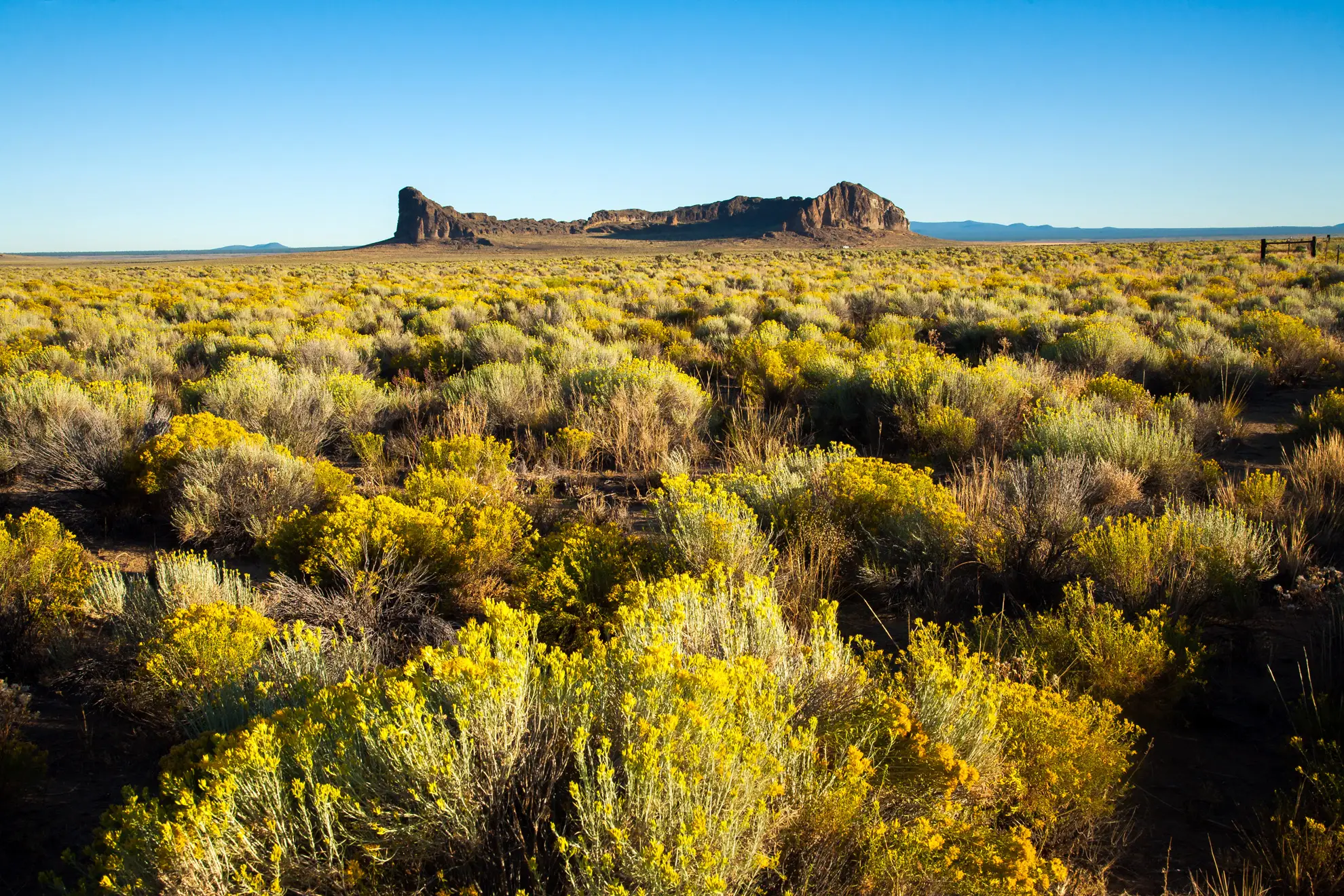
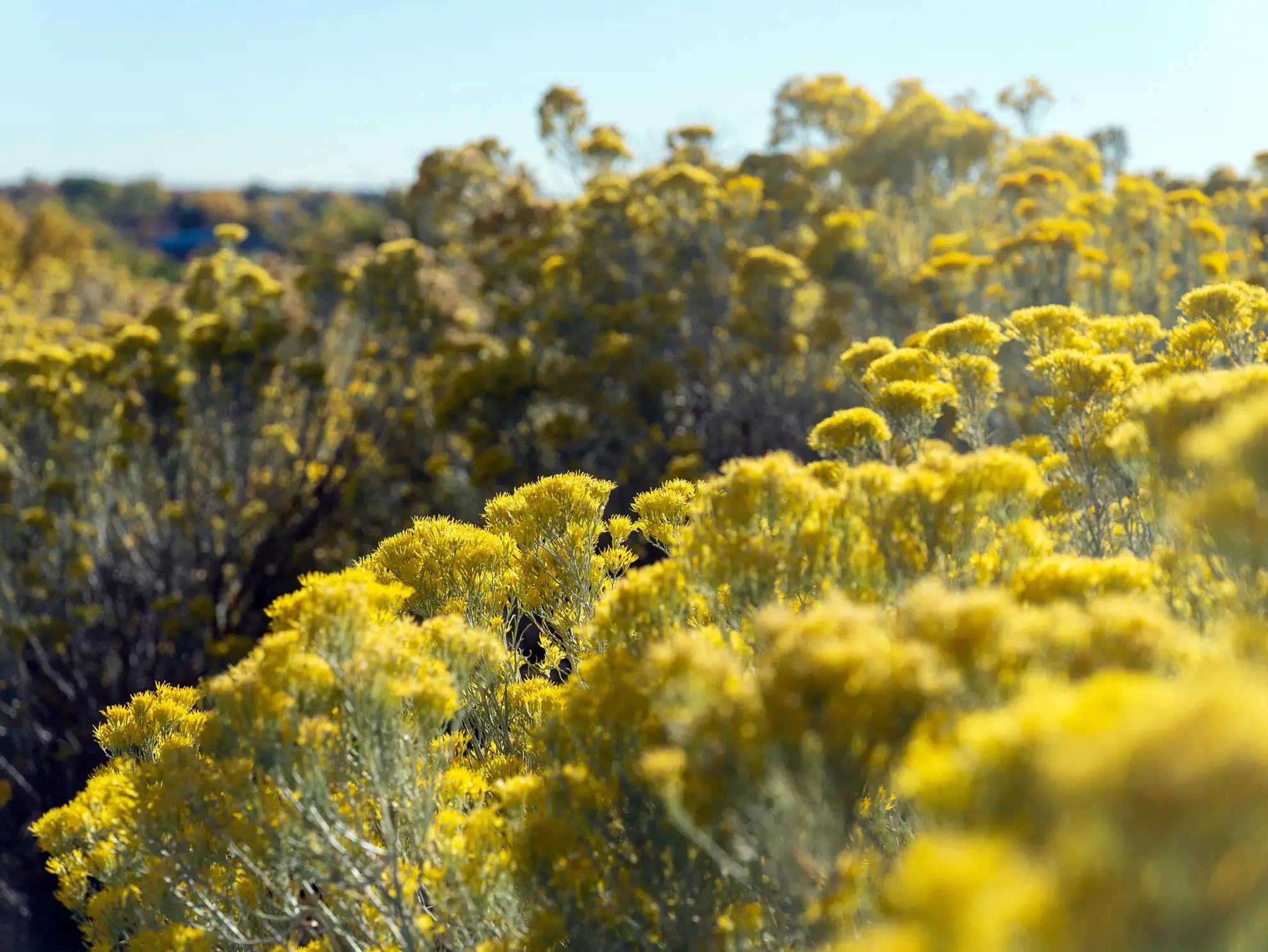
Ignore the funny name. Rubber rabbitbrush is one of the most useful, wildlife-friendly shrubs you can plant in the western US. It grows 3 to 5 feet tall with silvery-gray leaves, then erupts in clouds of golden-yellow flowers in late summer and fall, right when everything else is winding down. Those blooms are a lifeline for monarch butterflies, native bees, and dozens of other pollinators. It is also a host plant for at least 20 species of caterpillars. Drought-hardy, happy in poor soil, and zero maintenance once established.
Is rubber rabbitbrush right for my yard?
Plant it if…
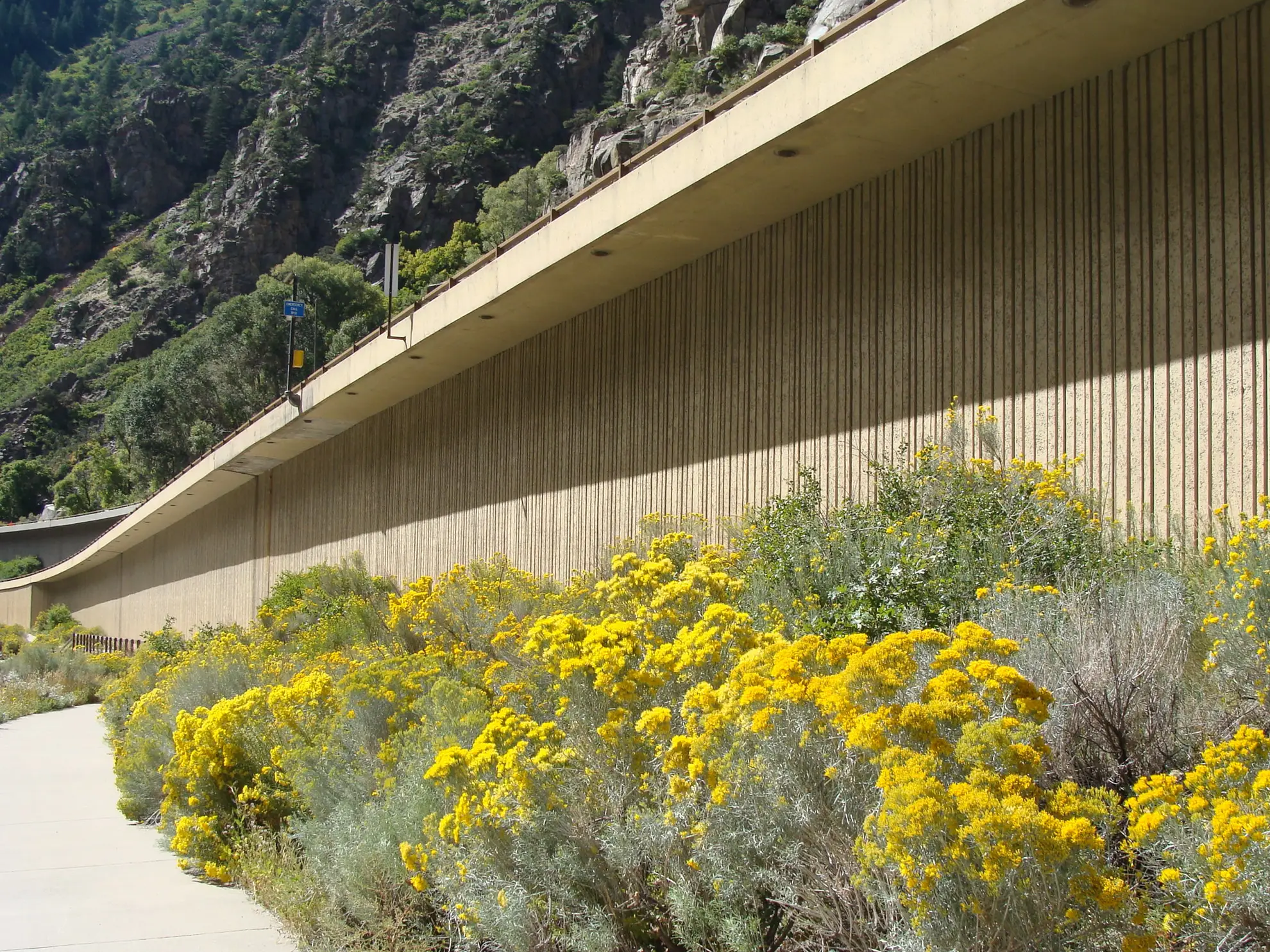
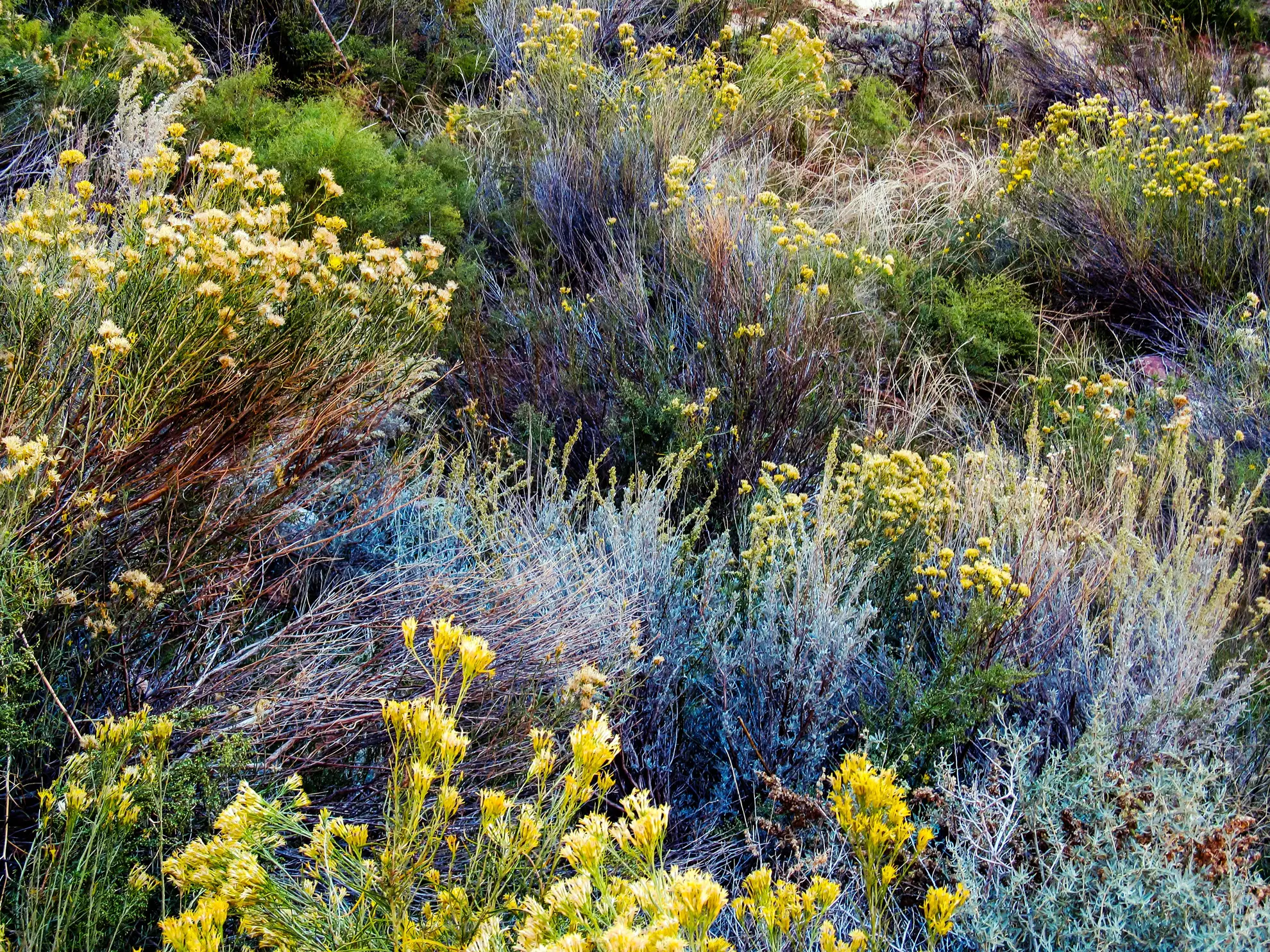
- You want late-season color. Rubber rabbitbrush blooms in August through October, covering itself in golden yellow right when most other plants are done for the year.
- You want to support pollinators and butterflies. This is a host plant for at least 20 caterpillar species and a critical nectar source for monarchs, native bees, and other pollinators during fall migration.
- You are tired of watering. Once established, rubber rabbitbrush survives on rainfall alone, even in places that get less than 10 inches of rain a year.
- You have terrible soil. Rocky, sandy, clay, compacted, alkaline, nutrient-poor. Rubber rabbitbrush does not care. It grows in places that defeat other plants.
- You need erosion control. Deep roots and fast growth make this shrub excellent for slopes, hillsides, and disturbed ground.
Skip it if…
- You are east of the Great Plains. Rubber rabbitbrush is native to the western US. If you are in the East or Southeast, this is not your plant. Check the USDA range map to make sure it is native to your state before planting.
- You want a tidy, compact shrub. Rubber rabbitbrush has a loose, rounded shape that can look wild. It can be pruned in early spring, but it will never look like a clipped boxwood.
- Your soil stays wet. Standing water and soggy soil will kill it. This is a dry-ground plant through and through.
- You have shade. It needs full sun. Anything less and it gets leggy and does not bloom well.
Why’s it called rubber rabbitbrush?
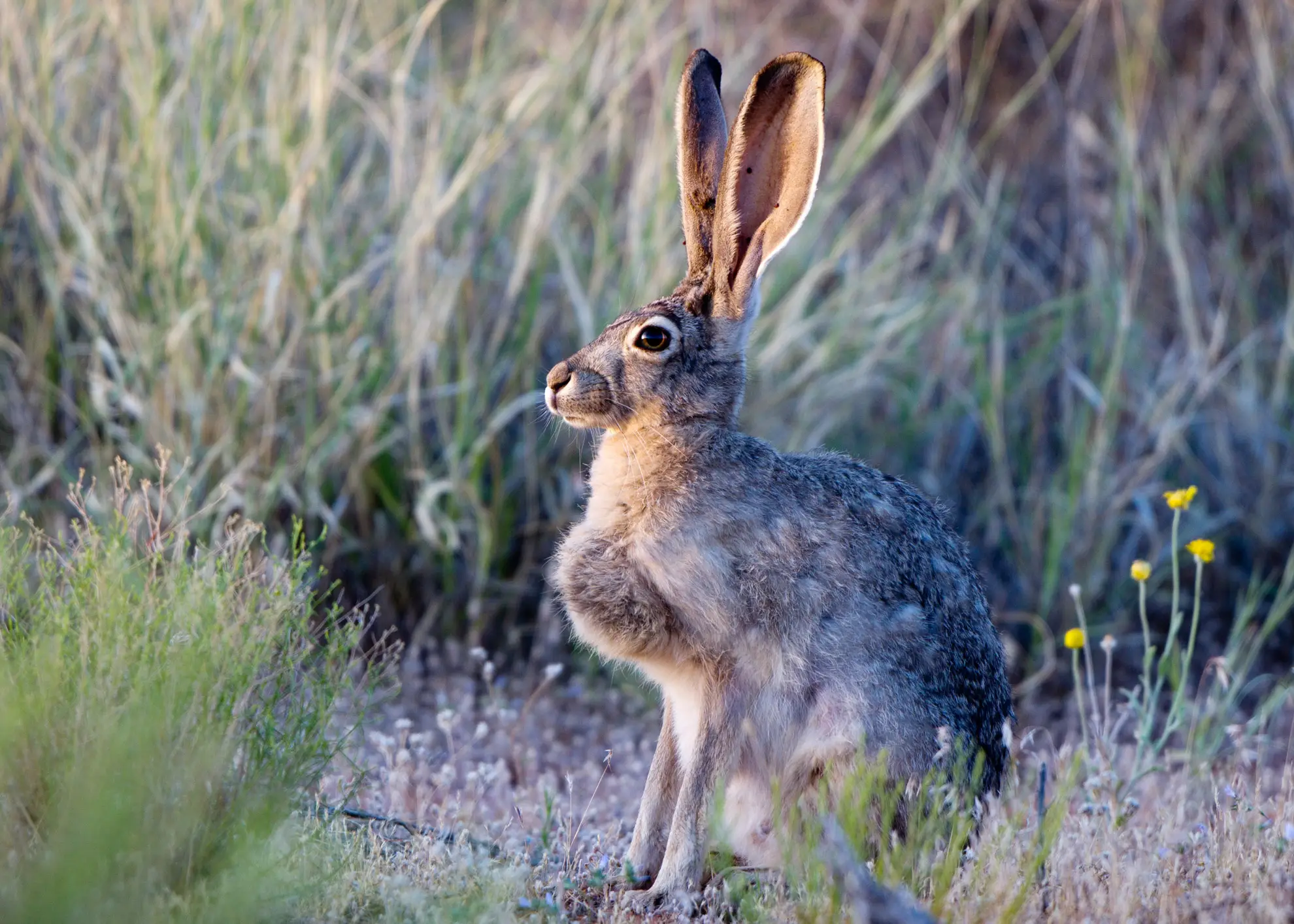
Jackrabbits love to shelter in this plant (though they don’t actually eat it). The “rubber” part refers to the sap, which does contain natural rubber. According to the USDA, this plant is also being evaluated as a source of natural bug repellents and even as an anti-malarial.
Why rubber rabbitbrush matters
Wildlife, wildlife, wildlife.
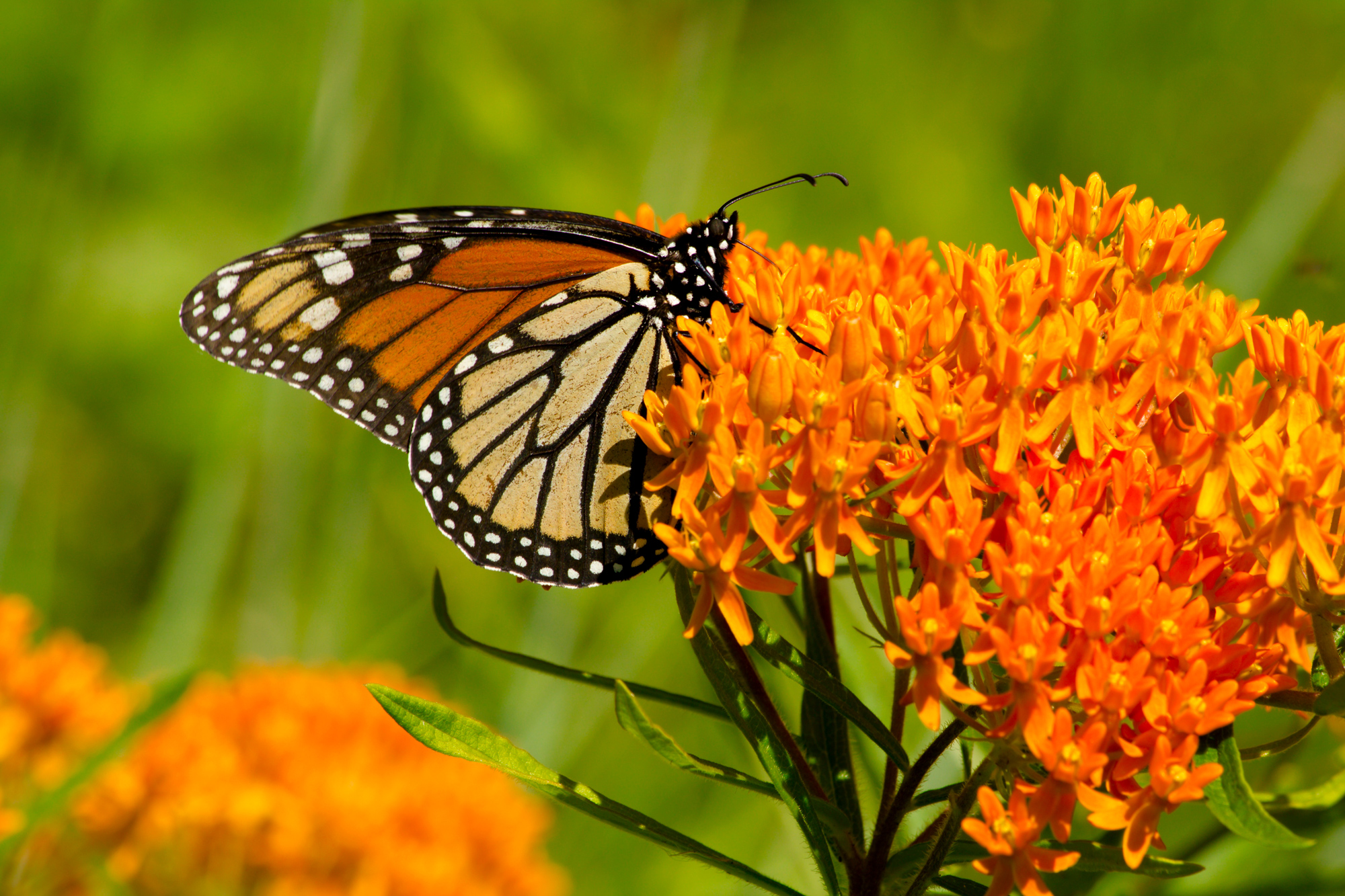
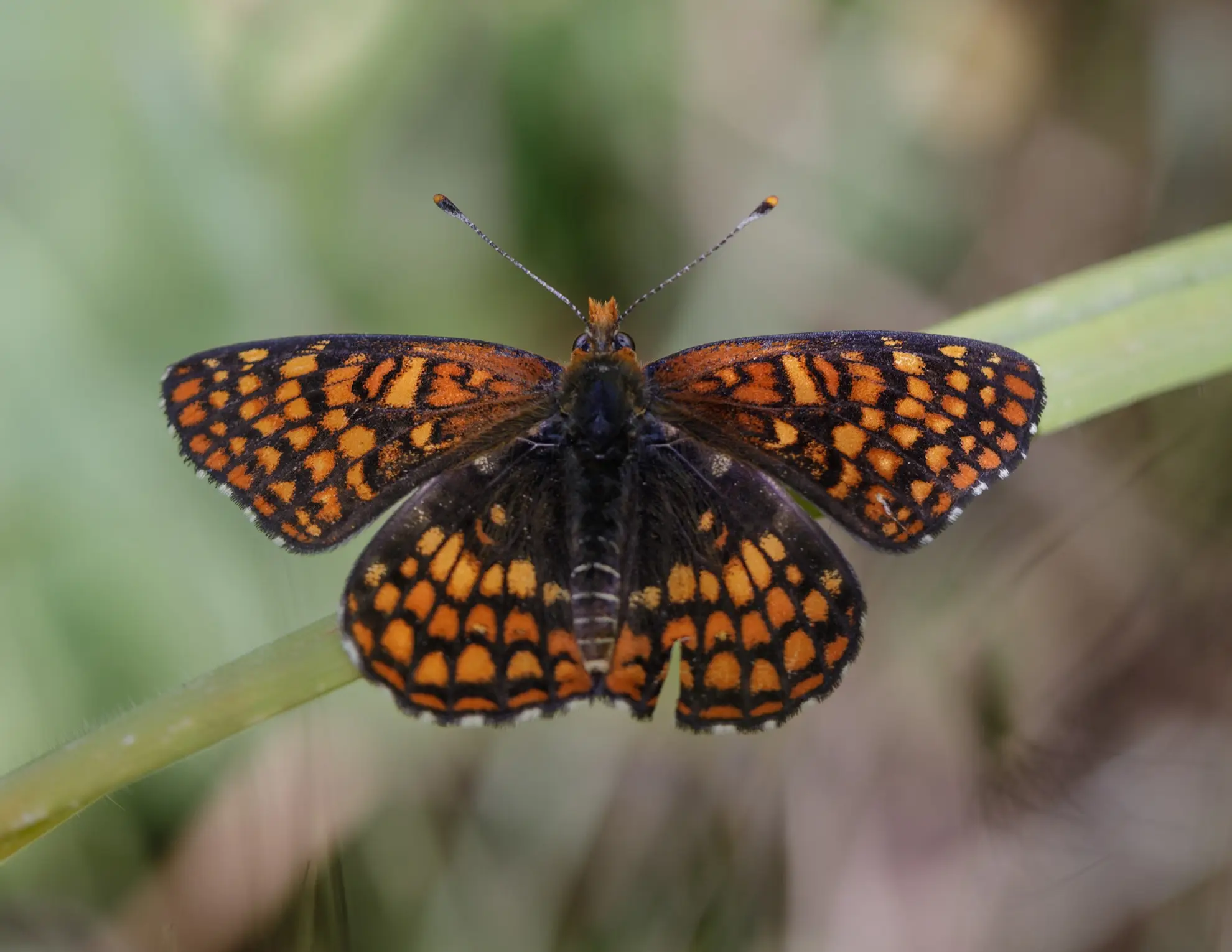
Rubber rabbitbrush is one of the most important wildlife shrubs in the western US, and it all comes down to timing. While most garden plants are winding down in late summer and fall, rubber rabbitbrush is just getting started. According to the US Forest Service, its late-season flowers provide a critical nectar source for monarch butterflies during their southward migration, as well as for dozens of species of native bees, wasps, beetles, and flies. In landscapes where fall-blooming plants are scarce, rubber rabbitbrush can be one of the only fueling stations left.
In a home garden, that toughness translates to a plant that will not die on you, no matter how poor your soil is or how often you forget to water.
It’s a keystone plant.
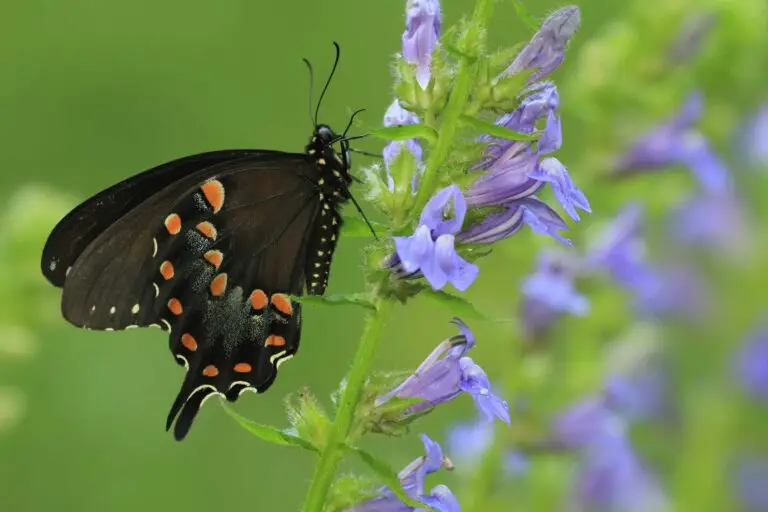
It is also a powerhouse host plant. According to the National Wildlife Federation, rubber rabbitbrush supports at least 20 species of caterpillars (butterflies and moths that lay their eggs on it and whose caterpillars feed on the leaves). That makes it what ecologists call a keystone plant: one that supports a disproportionate number of other species. Birds like quail, sage sparrows, and other shrubland species use it for nesting cover, and jackrabbits shelter beneath it.
It grows in tough places.
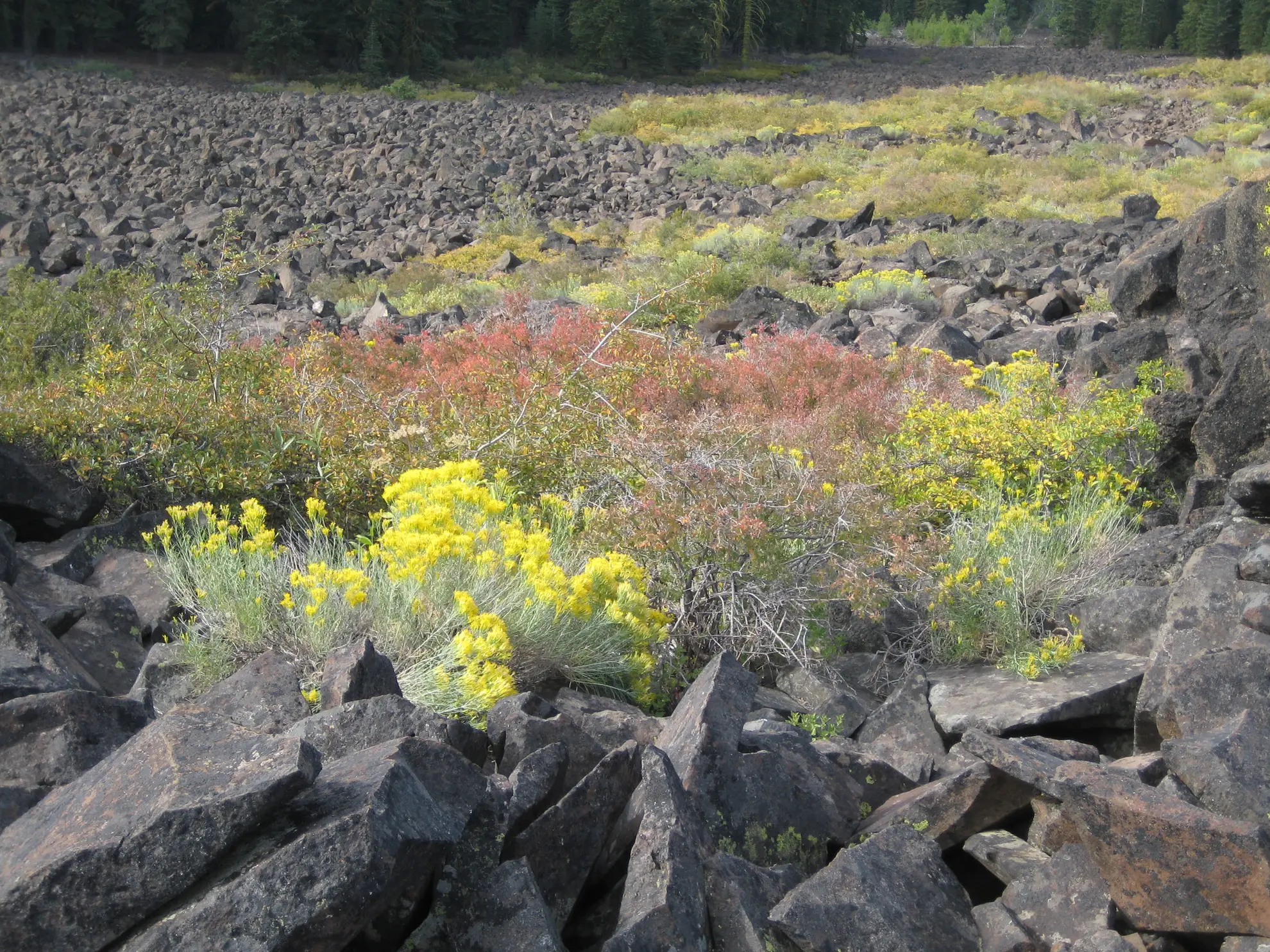
Beyond wildlife, rubber rabbitbrush matters because it grows where almost nothing else will. Disturbed roadsides, abandoned mine sites, overgrazed range, drought-baked hillsides. It is often the first shrub to reclaim damaged land, stabilizing soil with its deep root system and creating habitat for other species to follow. In a home garden, that toughness translates to a plant that will not die on you, no matter how poor your soil is or how often you forget to water.
Where is rubber rabbitbrush native?
Native to 17 US states and 3 Canadian provinces (Alberta, British Columbia, Saskatchewan)
Sources: NatureServe, Royal Botanic Gardens, Kew (World Checklist of Vascular Plants) and the USDA PLANTS Database, compiled by The Plant Native. How we map native ranges
Where rubber rabbitbrush shines in your yard
- Xeriscape or water-wise garden: This is one of the top shrubs for dry gardens. It survives on almost no water and looks great doing it.
- Pollinator garden: Critical late-season nectar for monarchs, native bees, and other fall pollinators. A must-plant if you want to support migration.
- Informal hedge or screen: Plant a row 3 feet apart for a silvery hedge that lights up gold in fall.
- Slope or hillside: Deep roots and fast growth make it excellent for erosion control on dry, exposed slopes.
- Rock garden: Its silvery color and desert origins make it a natural fit for rock gardens and gravel beds.
- “Nothing else grows here” spot: That baked, gravelly strip by the driveway. The dry slope behind the house. The abandoned corner of the yard. Rubber rabbitbrush will grow there.
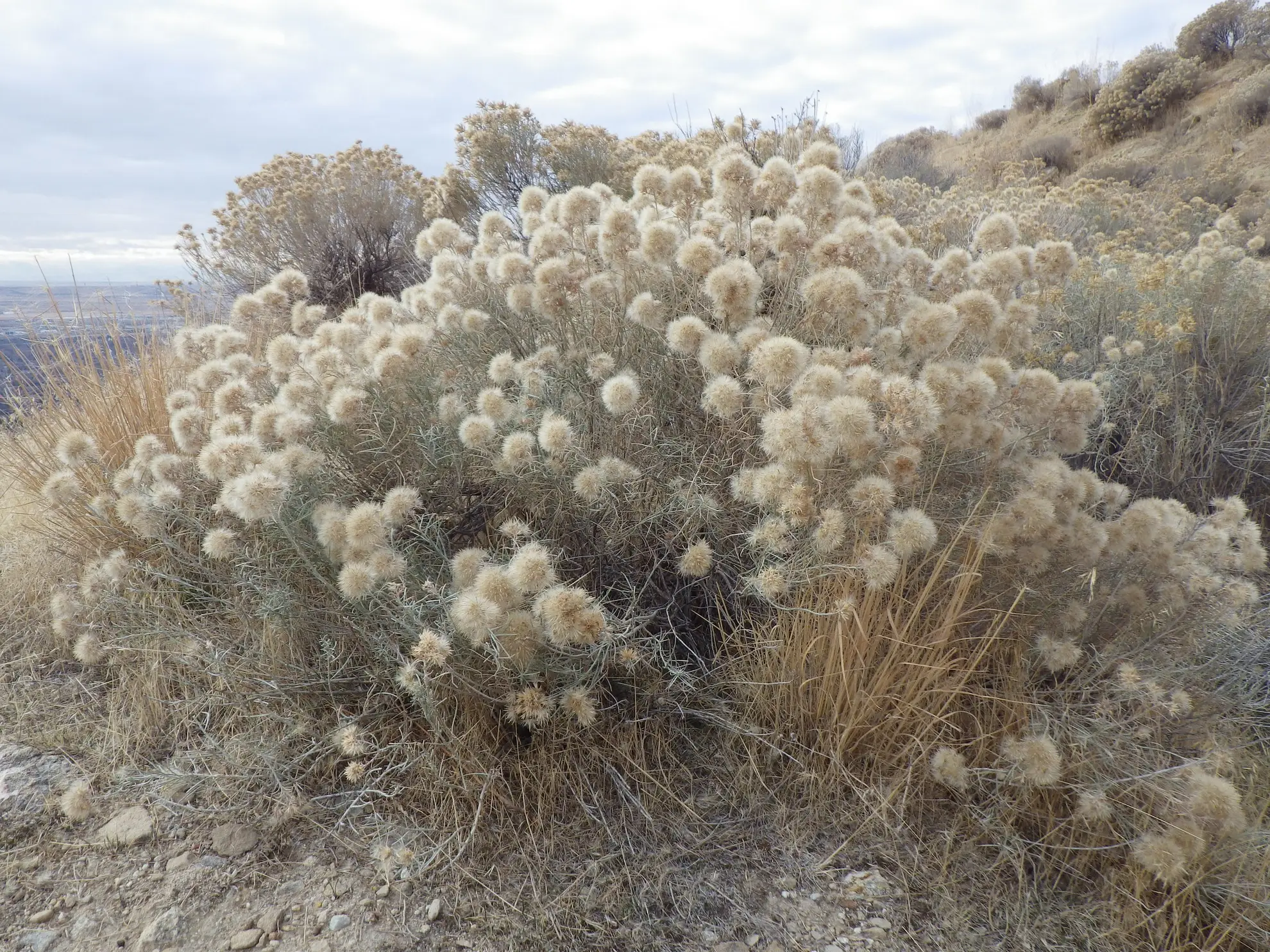
- Winter interest: The fluffy white seed heads persist into winter and look beautiful against a cold sky or dusted with snow.
How to grow rubber rabbitbrush
Where to plant
Full sun. This is non-negotiable. According to the Missouri Botanical Garden, rubber rabbitbrush needs full sun and excellent drainage. Any soil type is fine as long as it is not wet: sandy, rocky, clay, alkaline, nutrient-poor, gravelly. This is one of those rare plants that actually performs worse in rich soil (it gets floppy and leggy).
When to plant
Spring or fall. Transplants establish best when planted in cooler weather with some rainfall. In very hot, dry climates, fall planting gives the roots a head start before the following summer’s heat.
Planting card
Ericameria nauseosa
Watering
Water a few times during the first growing season to help roots get established. After that, rubber rabbitbrush is essentially self-sufficient on rainfall. The USDA fact sheet notes that it thrives in areas receiving as little as 6 to 10 inches of annual precipitation. Do not overwater. Wet soil is the fastest way to kill this plant.
Fertilizer
None. Ever. Rubber rabbitbrush is adapted to nutrient-poor soil. Fertilizing it will make it grow lanky and weak. Leave it alone and it will be happier.
Pruning
This is the one maintenance task rubber rabbitbrush benefits from. In late winter (February or March), cut the entire plant back to about 8 to 12 inches above the ground. This keeps it compact, prevents it from getting woody and bare at the base, and encourages dense, fresh growth with more flower buds. If you skip pruning, it will still grow fine, but it may get tall, open, and leggy over time.
What should I plant with rubber rabbitbrush?
Pair it with desert penstemon, purple asters, agastaches, or claret cup cactus for an eye-catching color combination.


Where can I buy rubber rabbitbush?
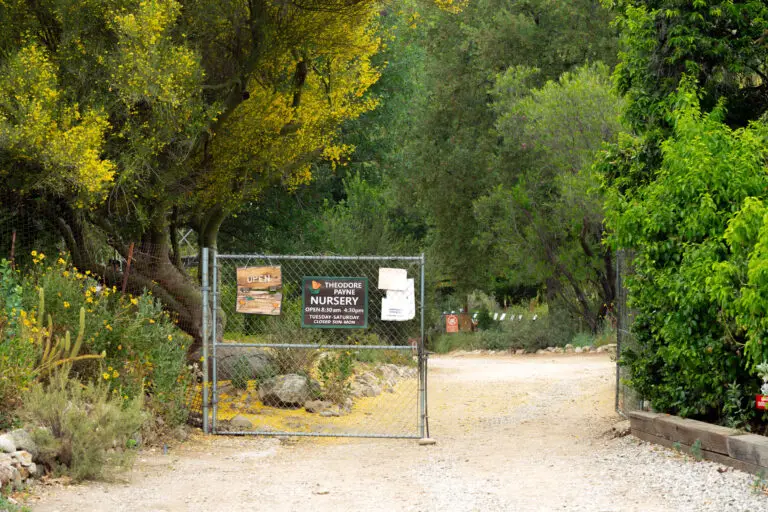
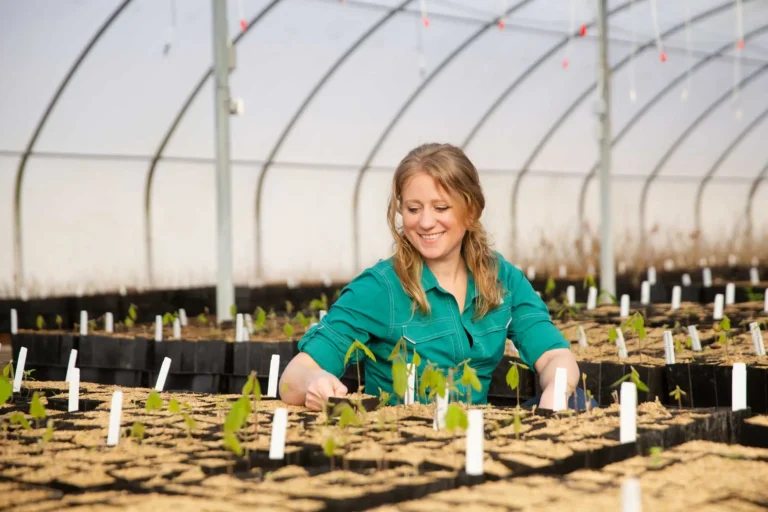
We are not going to lie and say that finding this stunning native shrub is going to be as simple as driving to your closest plant nursery. It might take a little extra energy to find this native gem, but it is worth it! Here are some recommendations for sourcing rubber rabbitbush:
Rubber rabbitbrush is one of those plants that makes native gardening easy. It asks for almost nothing: full sun, dry soil, no fertilizer, no fussing. In return, it gives you silvery leaves all year, a blaze of golden flowers in fall, and a front-row seat to the most impressive pollinator show of the season. Monarchs, native bees, beetles, butterflies. All fueling up at your rabbitbrush while the rest of the garden is going to sleep for winter. Pair it with desert penstemon, purple asters, sages, and native grasses for a water-wise western garden that looks incredible and supports the wildlife that needs it most.
Next, read about more drought-tolerant native plants in our guide to native grasses, or to make your garden a full pollinator’s paradise, check out more host plants for butterflies. Happy planting!
Sources
- Calscape. “Rubber Rabbitbrush (Ericameria nauseosa).” California Native Plant Society. https://calscape.org/Ericameria-nauseosa-(Rubber-Rabbitbrush). Accessed March 22, 2026.
- Duke, James A. “Chrysothamnus nauseosus.” Purdue University Center for New Crops. https://hort.purdue.edu/newcrop/duke_energy/Chrysothamnus_nauseosus.html. Accessed March 22, 2026.
- Hell, Tanja, Maciej Dobrzyński, Fabian Gröflin, Jakob K. Reinhardt, Lara Dürr, Olivier Pertz, Matthias Hamburger, and Eliane Garo. “Flavonoids from Ericameria nauseosa Inhibiting PI3K/AKT Pathway in Human Melanoma Cells.” Biomedicine & Pharmacotherapy 156 (2022): 113754. https://doi.org/10.1016/j.biopha.2022.113754. Accessed March 22, 2026.
- Lady Bird Johnson Wildflower Center. “Ericameria nauseosa (Rubber Rabbitbrush).” University of Texas at Austin. https://www.wildflower.org/plants/result.php?id_plant=ERNA10. Accessed March 22, 2026.
- Missouri Botanical Garden. “Ericameria nauseosa.” https://www.missouribotanicalgarden.org/PlantFinder/PlantFinderDetails.aspx?taxonid=441949. Accessed March 22, 2026.
- National Wildlife Federation. “Keystone Native Plants: North American Deserts.” https://www.nwf.org/-/media/Documents/PDFs/Garden-for-Wildlife/Keystone-Plants/NWF-GFW-keystone-plant-list-ecoregion-10-north-american-deserts.pdf. Accessed March 22, 2026.
- National Wildlife Federation. “Native Plant Finder.” https://www.nwf.org/NativePlantFinder/. Accessed March 22, 2026.
- Oregon State University. “Ericameria nauseosa.” Landscape Plants Database. https://landscapeplants.oregonstate.edu/plants/ericameria-nauseosa. Accessed March 22, 2026.
- Robinson Lab, Department of Biology, Utah State University. “Native Caterpillars.” https://robinson-lab.com/native-caterpillars. Accessed March 22, 2026.
- Scheinost, P.L., J. Scianna, and D.G. Ogle. “Plant Guide for Rubber Rabbitbrush (Ericameria nauseosa).” USDA Natural Resources Conservation Service, Pullman Plant Materials Center, 2010. https://plants.usda.gov/DocumentLibrary/plantguide/pdf/pg_erna10.pdf. Accessed March 22, 2026.
- USDA Forest Service. “Ericameria nauseosa.” Fire Effects Information System. https://www.fs.usda.gov/database/feis/plants/shrub/erinau/all.html. Accessed March 22, 2026.
- USDA Forest Service. “Ericameria nauseosa (Rubber Rabbitbrush): Plant of the Week.” https://www.fs.usda.gov/wildflowers/plant-of-the-week/ericameria_nauseosa.shtml. Accessed March 22, 2026.
- USDA NRCS. “Fact Sheet: Rubber Rabbitbrush (Ericameria nauseosa).” https://plants.usda.gov/DocumentLibrary/factsheet/pdf/fs_erna10.pdf. Accessed March 22, 2026.
- USDA PLANTS Database. “Ericameria nauseosa (Pall. ex Pursh) G.L. Nesom & Baird.” https://plants.usda.gov/plant-profile/ERNA10. Accessed March 22, 2026.
- Utah Department of Agriculture and Food. “Whitestem Rubber Rabbitbrush (Chrysothamnus nauseosus ssp. hololeucus).” https://ag.utah.gov/wp-content/uploads/2022/07/Chyrsothamnus-nauseosus-hololeucus.pdf. Accessed March 22, 2026.
- Utah State University Extension. “Gray Rabbitbrush.” Range Plants of Utah. https://extension.usu.edu/rangeplants/shrubs-and-trees/gray-rabbitbrush. Accessed March 22, 2026.
- Weaber, Marcia. “Ode to Rabbitbrush, the Late Season Jewel of the Garden.” CO-Horts, Colorado State University Extension. https://csuhort.blogspot.com/2014/10/ode-to-rabbitbrush-late-season-jewel-of.html. Accessed March 22, 2026.
Similar plants
-
 Red Twig Dogwood
-
 Roses
Roses
-
 Golden Currant
-
 Buckwheat
-
 Manzanitas
-
 Buttonbush
-
 American Plum
-
California Buckwheat
-
 Viburnums
Updated Find more: Yellow Flowering Shrub Shrub Summer Full Sun Drought-Tolerant Host Plant
The ads on this site help pay real native plant nerds to research and write these guides.
Garden notes
Notes from people who’ve grown it
Tips, wins, and the occasional disaster. If you’ve grown rubber rabbitbrush, share the advice you’d give to a neighbor.
No notes yet. Yours could be the first.
Grown rubber rabbitbrush? Tell the next person what you wish someone had told you.
Tap anywhere to close


