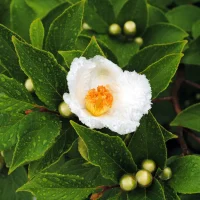
It’s a little weird to say this, but it’s true: your soil has a personality. If it’s on the acidic side, you’re sitting on a gold mine: some of the most gorgeous, least needy native plants in North America actually prefer it that way. Here’s how to figure out what you’ve got, what to plant in it, and what to do if your dirt needs a little convincing.
Why some plants need acidic soil (and what that even means)
Ever planted something that just sits there looking miserable, even though you watered it and gave it sun? The problem might be pH, and no, that’s not some obscure chemistry thing you need a degree to understand.
What is pH, really?
pH stands for potential of Hydrogen. It’s a measure of how acidic or alkaline your soil is, on a scale from 0 to 14.
Think of it like comparing lemon juice (acidic, below 7) to milk (alkaline, above 7)—we’re not actually tasting dirt here, just giving you a mental picture. Neutral is 7, right in the middle.
Most plants are fine anywhere from 6.0 to 7.0. But some native plants don’t just tolerate acidic soil, they’re built for it. Put them in neutral soil and they’ll sulk. Give them acidic soil and they thrive.
“
It's like having a fully stocked fridge with a jammed door: the food’s right there, but nobody’s eating tonight. Match the pH to the plant, and the door swings open.
”
Why pH matters
pH controls which nutrients your plant can actually eat. In acidic soil, nutrients like iron and manganese stay dissolved in water and roots can grab them. In neutral or alkaline soil, those same nutrients clump together into forms the plant can’t use, even though they’re still sitting there in the dirt.
Plants that evolved in acidic conditions need those nutrients in dissolved form. It’s like having a fully stocked fridge with a jammed door: the food’s right there, but nobody’s eating tonight. Match the pH to the plant, and the door swings open.
Three ways to test your soil’s pH
You don’t need a chemistry degree. You need about 15 minutes and maybe $10.
The kitchen science test (free)
This is like a middle school science fair volcano, but useful.
- Grab soil from your yard, split it into two jars.
- Add water to both jars and mix until it’s milkshake consistency.
- Dump baking soda into one; if it fizzes, you’re acidic.
- Pour vinegar into the other, if that one fizzes, you’re alkaline.
- Neither? Neutral.
If you try this and the results are not clear enough, time to move on to these other options:
The garden center test ($5–15)
These are fun color-change kits with mini plastic containers for your soil that look like tic-tac boxes. Follow the instructions, match the color, done. Accurate enough to decide what to plant.
The lab test ($15–50)
Send a sample to your local cooperative extension office for precise numbers. Satisfying if you like data, overkill if you just want to plant some ferns.
Beginner Tip
Skip the test entirely if blueberries, azaleas, or rhododendrons are already thriving in your yard. They’re basically live pH meters. If they’re happy, your soil is acidic. If your hydrangeas bloom blue instead of pink? Same deal.
“
Wetter regions tend toward acidic soil; drier regions tend toward alkaline. Your zip code tells you a lot before you ever touch a test kit.
”
Does your region help or hurt?
Here’s the shortcut: rain makes soil acidic over time. Decades of rainfall wash alkaline minerals out of the ground, leaving behind more acidic conditions. Wetter regions tend toward acidic soil; drier regions tend toward alkaline. Your zip code tells you a lot before you ever touch a test kit.
If you live in the Southeast, Northeast, or Pacific Northwest, you probably already have acidic soil. Centuries of rain did the work for you. Mountain laurels and ferns grow wild in your woods. Blueberries thrive in backyards. You’re set. Plant the list below and watch them go.
If you live in the Midwest, Great Plains, or Southwest, your soil is probably neutral to alkaline, sitting on limestone or clay that doesn’t get washed out. Growing acid-loving plants here takes effort. You can amend your soil (more on that below), or grow them in containers with acidic potting mix and skip the dirt surgery entirely.
10 native plants that love acidic soil
All beginner-friendly, all beautiful, all findable at native plant nurseries. We’ve split them into shrubs/trees and flowers so you can build layers.
Shrubs + Trees
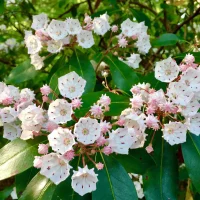
Mountain Laurel
Kalmia latifolia
Shade to part sun
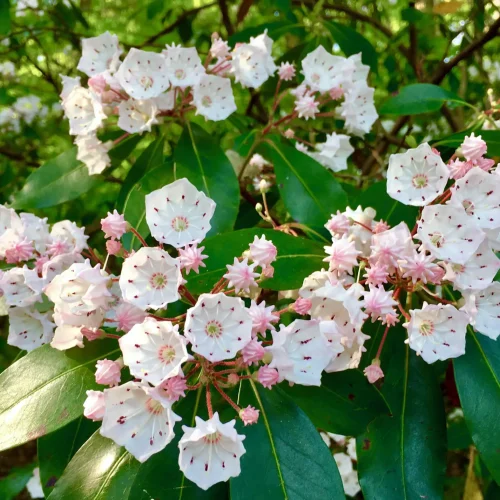
Look closely at a mountain laurel flower and you’ll see something wild: each pink-and-white bloom has ten tiny spring-loaded catapults built into its petals. When a bee lands, the catapults fire pollen onto its body. It’s a botanical mousetrap disguised as an ornamental shrub. Glossy evergreen leaves, blooms for weeks in late spring, handles deep shade, and basically ignores you once established. State flower of both Connecticut and Pennsylvania. Wants pH 4.5–5.5.
Read our guide to planting mountain laurels
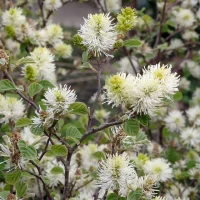
Fothergilla
Fothergilla gardenii
Sun to part sun
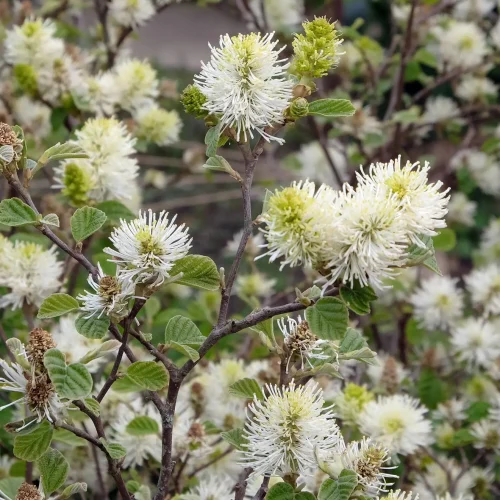
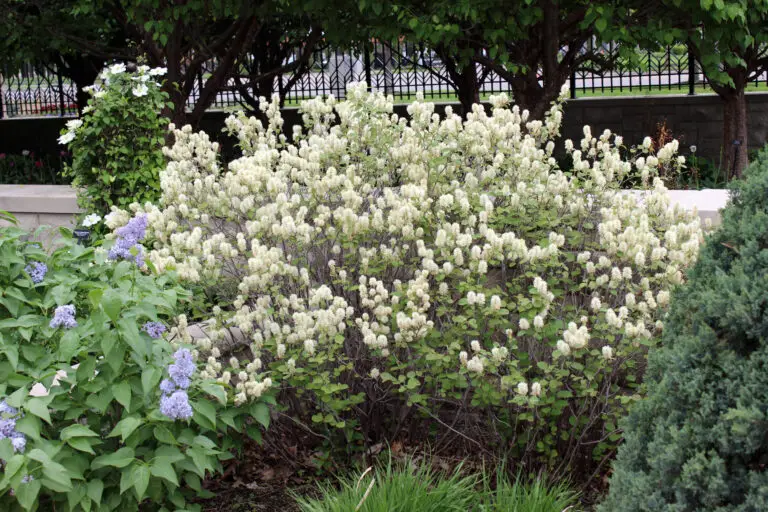
Fothergilla is the shrub that peaks twice. In spring, bottlebrush-shaped white flower clusters appear before the leaves; they’re honey-scented and look like tiny fireworks frozen mid-burst. Then in fall, the leaves turn every color at once: orange, red, yellow, and purple, sometimes on the same leaf. It stays compact at 2–3 feet, doesn’t need pruning, and deer leave it alone. It’s native to the Southeast but grows happily in Zones 5–8 if you give it the acidic soil it wants. pH 5.0–6.5. Read our guide to planting fothergilla.
Read our guide to planting fothergilla.
Arrowwood Viburnum
Viburnum dentatum
Sun to part sun
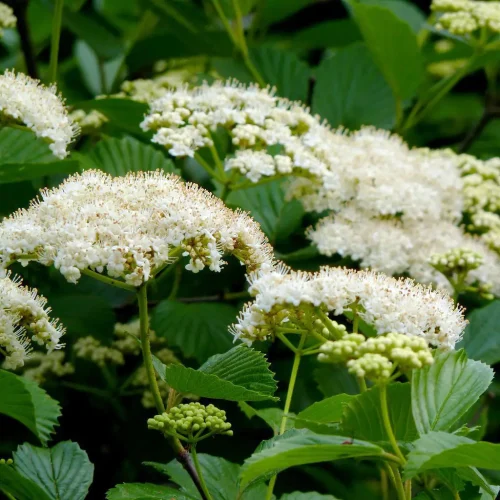
Named “arrowwood” because Indigenous peoples used the straight stems to make arrow shafts (the wood grows so uniformly that it barely needs shaping). White flower clusters in spring, metallic blue berries that birds go absolutely nuts for in summer, and red-purple fall color. Handles wet spots, dry spots, sun, shade; this is the utility player of native shrubs. If your yard had a designated workhorse, this is it. Prefers pH below 6.5.
Read our guide to planting arrowwood viburnum.
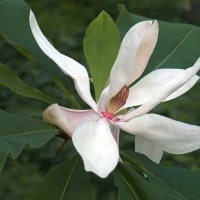
Sweetbay Magnolia
Magnolia virginiana
Sun to part sun
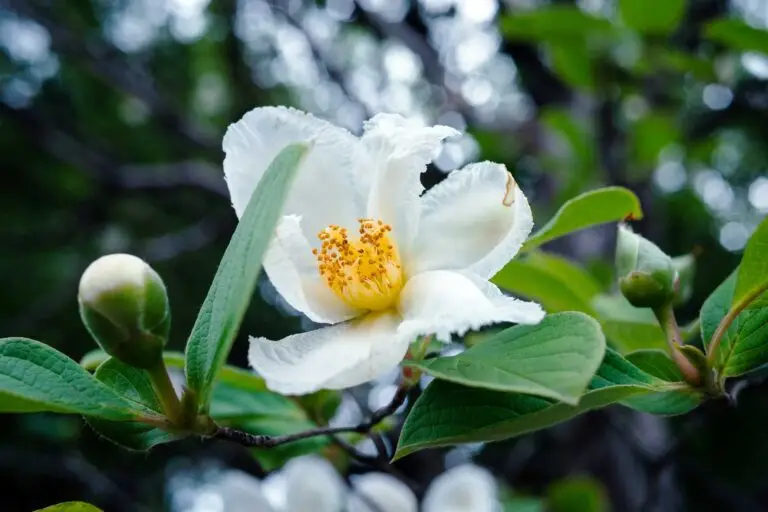
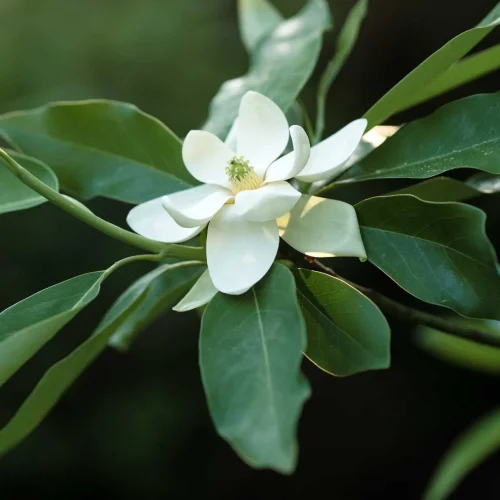
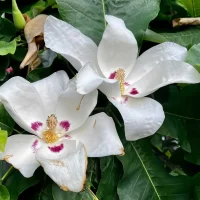
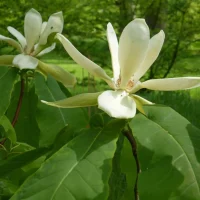
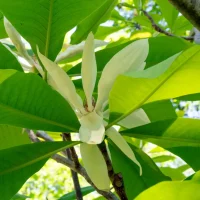
Creamy white flowers that smell like a vanilla candle, blooming on and off all summer long, which is unusual for any magnolia. But here’s the detail that sells it: flip a leaf over and the underside is bright silver. In a breeze, the whole tree shimmers like it’s wearing sequins. Most magnolias put on a two-week show and call it a year. Sweetbay keeps going. Wants pH 4.5–6.0.
Read our guide to planting sweetbay magnolia.
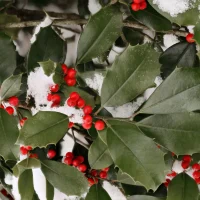
Inkberry Holly
Ilex glabra
Sun to part sun
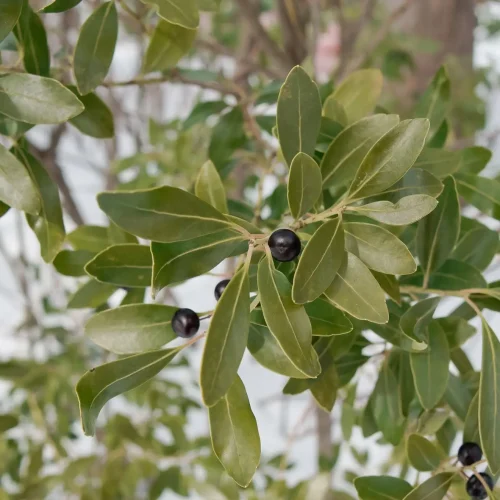
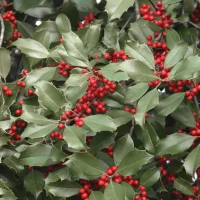
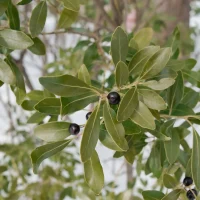
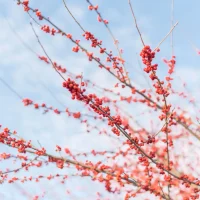
Inkberry is the plant you stop noticing because it never causes problems, which is the whole point. Evergreen, tidy, small glossy leaves that stay dark green all winter when everything else looks skeletal. Female plants grow small black berries that birds adore. It handles super-acidic soil (pH 4.5–6.0) and basically runs on neglect. The reliable friend who always shows up on time and never needs rescuing.
Read our guide to planting inkberry holly.
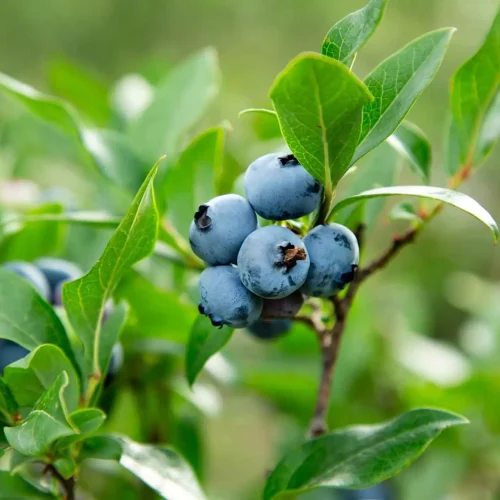
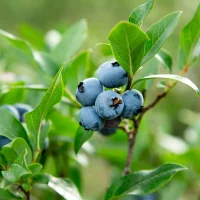
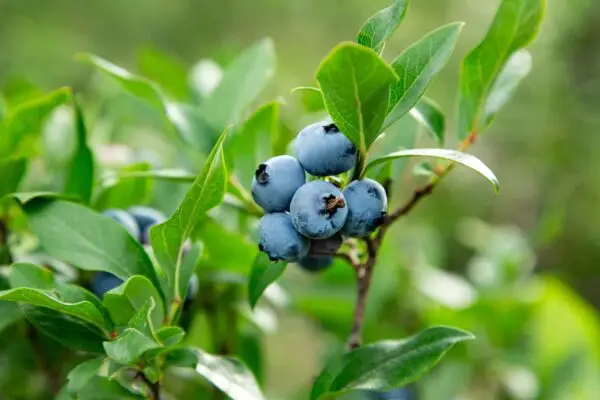
Blueberries
Vaccinium species
Sun to part sun
Before they were a grocery store staple, blueberries were one of the most important wild foods across Indigenous North America. The Wabanaki, Narragansett, and many other nations gathered wild blueberries for thousands of years, eating them fresh, drying them into cakes, and mixing them with dried meat. Today, native species of Vaccinium still grow wild across most of the continent. Tiny bell-shaped spring flowers, the berries (obviously), and fall color that goes electric red and orange. They’re also the pickiest eaters on this list: pH 4.0 to 5.5, absolutely no wiggle room. If your blueberries are happy, your soil is definitely acidic. Plant two or more for better berry set.
Read our guide to planting blueberries
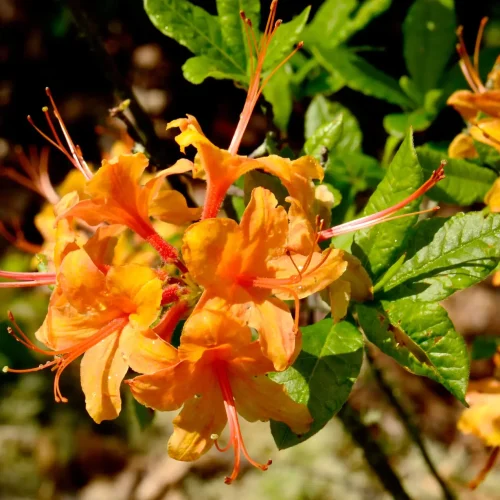
Flame Azalea
Rhododendron calendulaceum
Part sun
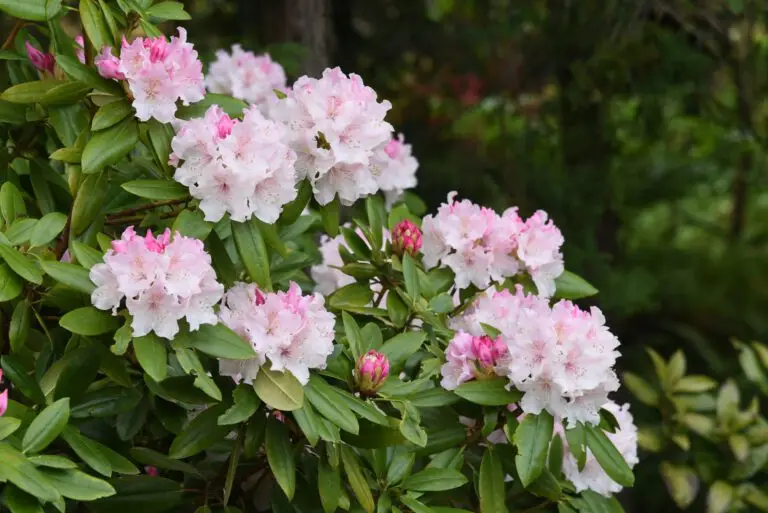
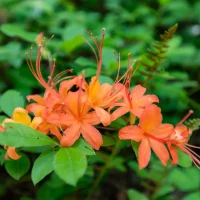
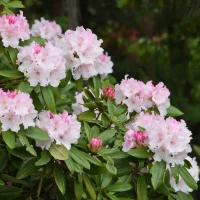
Flame azalea earned its name honestly. The flower clusters are a bonfire of orange, yellow, and red that light up Appalachian mountainsides every May and June, and no two plants bloom exactly the same color. It grows 4–8 feet tall with an open, airy habit, and it’s deciduous, which means you get spectacular fall color on top of the spring show. Unlike the evergreen rhododendrons, flame azalea wants some breathing room and dappled light, not deep shade. One of the showiest native shrubs in North America, full stop. Wants pH 4.3–5.8.
Read our guide to planting native azaleas.
Flowers + low-growers that love acidic soil
Here are some native options that thrive alongside these shrubs and trees
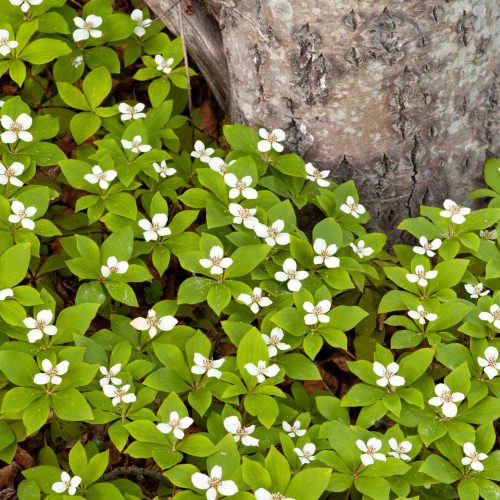
Bunchberry
Cornus canadensis
Shade to part sun
A dogwood that forgot to become a tree. Bunchberry stays about six inches tall and spreads into a low mat of whorled leaves topped with tiny white flowers that look exactly like miniature dogwood blooms…because they are. Bright red berry clusters follow in late summer, and the fall color is a deep burgundy. It’s a woodland groundcover that wants cool, moist, acidic soil and will reward you with a carpet that looks like someone shrunk a forest. Wants pH 3.0–6.0.
Read our guide to planting native dogwoods (including bunchberry).
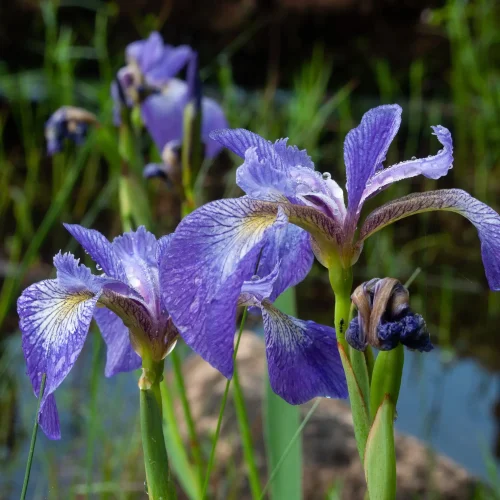
Blue Flag Iris
Iris versicolor
Shade to part sun
If you have a wet, acidic spot in your yard that nothing else will touch, blue flag iris has been waiting for you. Elegant violet-blue flowers with yellow-and-white signal patches bloom in late spring on sword-like leaves that rise 2–4 feet out of boggy soil. It’s native to marshes, stream edges, and wet meadows across eastern North America, and it handles standing water like it’s a feature, not a problem. Pollinators love it. Deer don’t. Wants pH 5.0–6.8.
Read our guide to planting native irises.
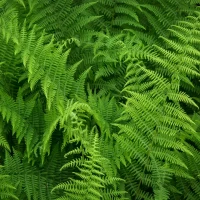
Native Ferns
Dozens of species
Shade to part sun
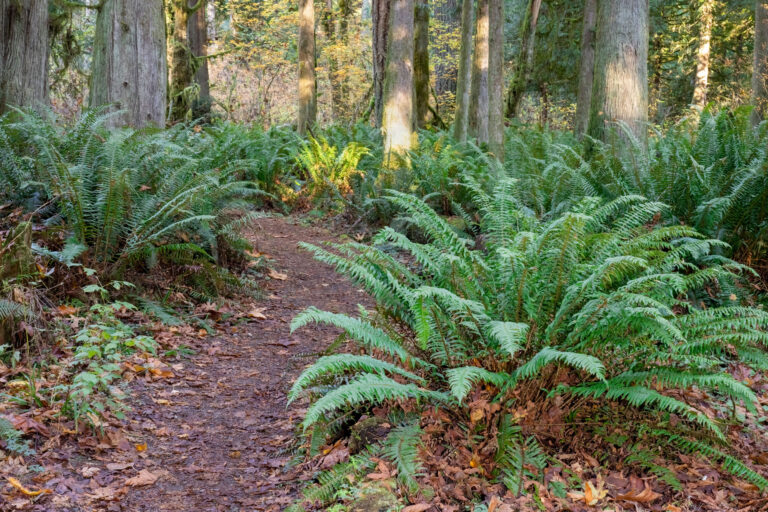
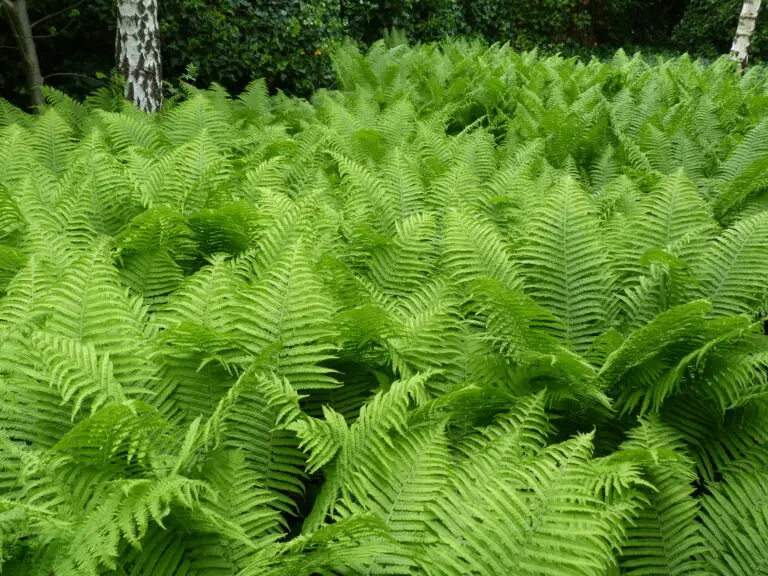
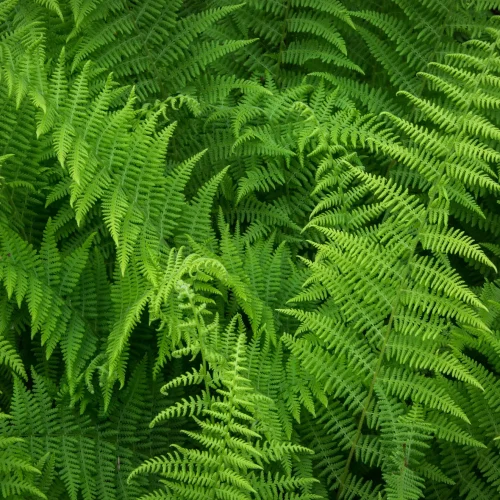
Feathery fronds that make any shady corner look like you just walked into a forest; that cool, green, slightly magical feeling that no flowering plant can replicate. Ferns are some of the oldest plants on earth (over 350 million years old, older than dinosaurs), and they’ve had plenty of time to figure out how to thrive in shade and acidic soil. Long-lived, pest-free, completely unbothered by anything you do or don’t do. Most want pH 4.5–6.0.
Read our guide to planting native ferns.
Can I see all the plants that are acidic-friendly on The Plant Native?
Sure! Here are all the native plant profiles we’ve written (so far) that thrive in acidic soil:
What if my soil isn’t acidic enough?
If you’re on limestone in the Midwest or baked clay in the Southwest, don’t panic. You’ve got options. Some work great, some are fine, and two you should skip entirely.
Elemental sulfur: the slow cooker method
This is the one that actually works, and it’s easier than it sounds. Buy a bag of elemental sulfur at any garden center ($10–20), dig it into your soil 6–12 inches deep, and wait. Soil bacteria convert the sulfur into sulfuric acid over time, which lowers the pH. It takes about six months to kick in, but the effects can last one to two years. Not instant, but the results are real. Retest each year.
Need to improve soil structure too? Mix sulfur with compost.
What about aluminum sulfate or iron sulfate?
You’ll see these recommended. They work faster than elemental sulfur (weeks instead of months), but you need 5–6 times more material, they cost more, and heavy application can cause aluminum or iron toxicity in plants. For most home gardeners, elemental sulfur is the better choice.
What to skip
Peat moss: Yes, it’s acidic (pH 3.0–4.5) and it works. But peat bogs are critically threatened ecosystems that store massive amounts of carbon and take thousands of years to form. Harvesting peat destroys them. Use elemental sulfur instead: it’s cheaper, longer-lasting, and doesn’t strip-mine an ancient wetland.
Coffee grounds: Used coffee grounds are fine to compost; they add nitrogen and help soil texture. But they will not meaningfully acidify your soil. The acidity stays in the cup, not the grounds. If your pH strategy is “drink more coffee,” you’re going to be disappointed. Well-caffeinated, but disappointed.
Pine needle mulch: helpful but overhyped
Pine needles are mildly acidic when fresh, but they won’t meaningfully change your soil’s pH once they hit the ground. The University of New Hampshire Extension sums it up succinctly: “Pine needles themselves are acidic but do not have the capacity to appreciably lower the soil pH.”
What pine needles will do: break down slowly, keep moisture consistent, and look great. Use 2–3 inches as mulch. (And now you can rest assured it’s fine to use them liberally as mulch, throughout your garden.) Think of it as a nice bonus, not a solution.
Beginner Tip
You can also take the container shortcut: If you’re in a naturally alkaline area and just want a couple of acid-loving plants, skip the soil project entirely. Grow them in big containers with acidic potting mix. Same plants, zero digging, way less swearing at your dirt.
Where can I find native acidic-loving plants?
We have hundreds of ideas to share with you. Below, you’ll find four resources for native nurseries, native plant societies, and online sellers.
“
Don't let the words “pH” or “acidic” scare you off. We all lived through a global pandemic and feel fine with way scarier words like macchiato and non-comedogenic.
”
As we wrap up this guide to acidic native plants, we have three words of advice:
Don’t overthink this.
Don’t let the words “pH” or “acidic” scare you off. We all lived through a global pandemic and feel fine with way scarier words like macchiato and non-comedogenic. You got this.
You can test your soil with what you have in your kitchen, use a $10 kit, or just look at what’s already growing. You can also use your region to make a highly educated guess: if you’re in the Southeast, Northeast, or Pacific Northwest, you’re probably already set. Pick three to five plants from the list above that match your sun and shade. If your pH needs adjusting, elemental sulfur is the real method, and it needs about six months, so plan a season ahead.
Then mulch. Pine needles, shredded leaves, bark—two to three inches. It holds moisture, keeps roots happy, and nudges things in the right direction over time.
That’s it. Once you match acid-loving plants to the right soil, they practically run themselves. These are some of the most beautiful, least fussy plants on the continent; they just need the right foundation. To meet acidic plant families, check out our Beginner’s Guide to Native Azaleas. For individual plant profiles, check out our Native Plant Profiles. Happy planting!