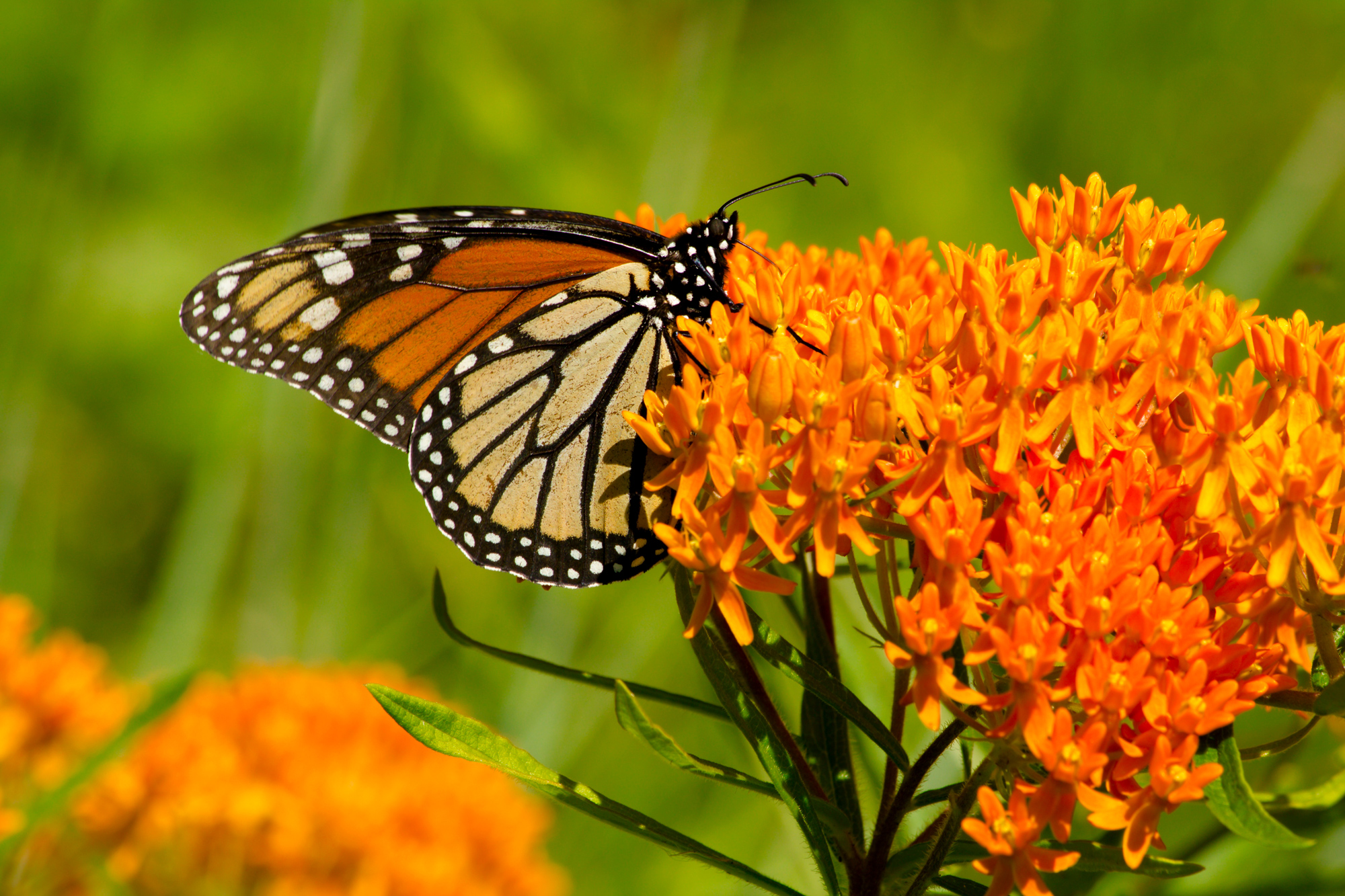
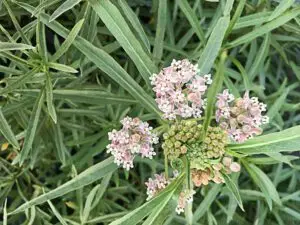
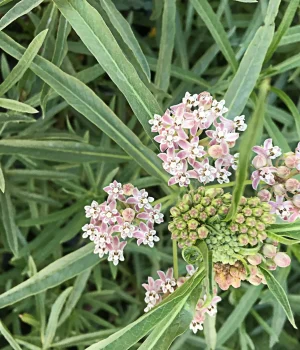
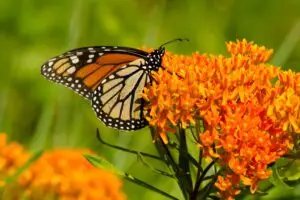
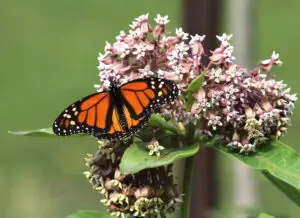
Narrowleaf milkweed is the milkweed western gardeners have been looking for. It’s the primary host plant for the western monarch butterfly population, which overwinters along the California coast and breeds inland across the western states. The narrow, whorled leaves give it a delicate, grass-like look unlike any other milkweed. It handles dry, lean conditions that would kill most flowers. And it goes dormant naturally in late summer, which turns out to be one of the most important things a milkweed can do for monarch health. If you’re gardening west of the Rockies and want to support monarchs, this is the plant to start with.
Head to the complete guide for planting basics, species comparisons, and beginner-friendly tips.
Is narrowleaf milkweed right for my yard?
Plant it if…
You’re gardening in California, Oregon, Washington, Nevada, Utah, or other western states where it’s native.
You want to support western monarchs specifically. Narrowleaf milkweed is the plant they evolved alongside.
Your soil is dry, lean, or fast-draining. This is one of the most drought-hardy milkweeds available.
You want something that looks genuinely different from common milkweed. The whorled, needle-like leaves are distinctive.
You have a sunny slope, hellstrip, or low-water area that needs a high-value plant.
You want a longer bloom window: narrowleaf milkweed flowers from June into September.
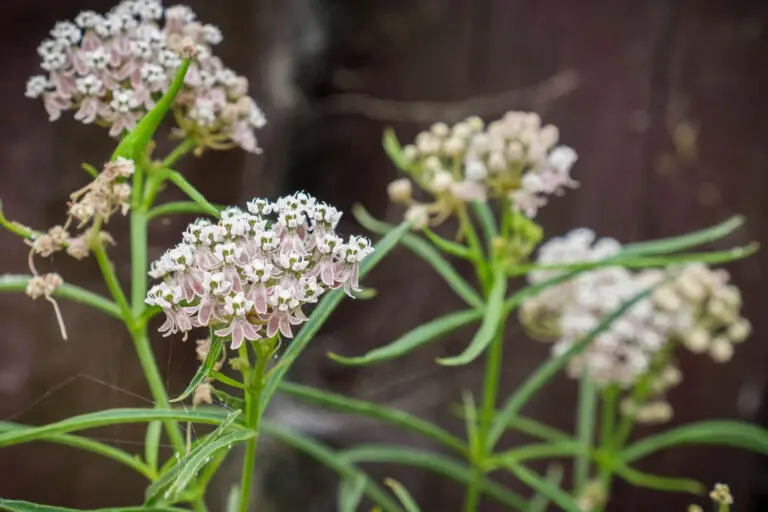
Narrowleaf milkweed's flowers are delicate, iconic, and well worth the portrait setting on your phone.
Skip it if…
You’re in the eastern or midwestern United States.Common milkweed, butterfly weed, and swamp milkweed are the right choices for eastern monarchs, and narrowleaf milkweed is not native east of the Rockies.
Your soil stays consistently wet or you have poor drainage. Narrowleaf milkweed needs to dry out between waterings once established.
You want large, showy blooms. The flowers are small and pale compared to other milkweed species. The wildlife value is very high; the flower drama is not.
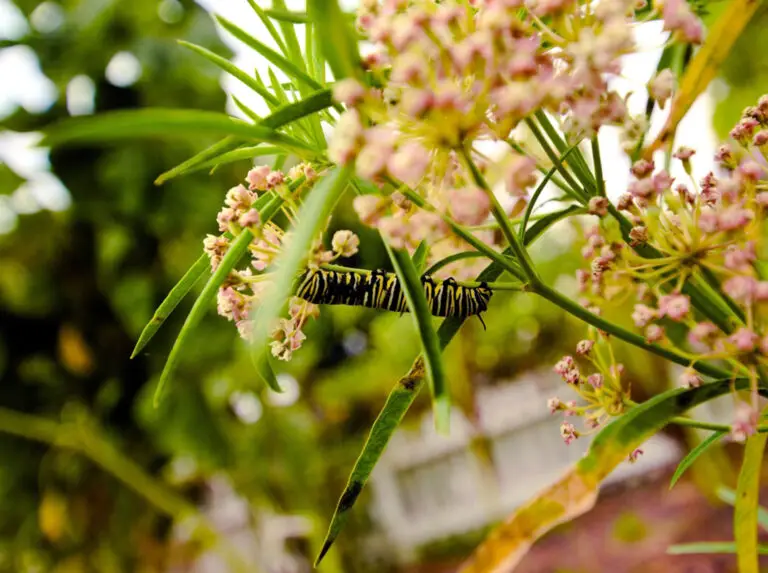
Chow time! A western monarch caterpillar eats narrowleaf milkweed.
“
At their peak, millions of western monarchs made this migration. By the early 2020s, population counts had dropped by an estimated 99% from 1980s levels.
”
Why narrowleaf milkweed matters
Western monarch butterflies are in crisis.
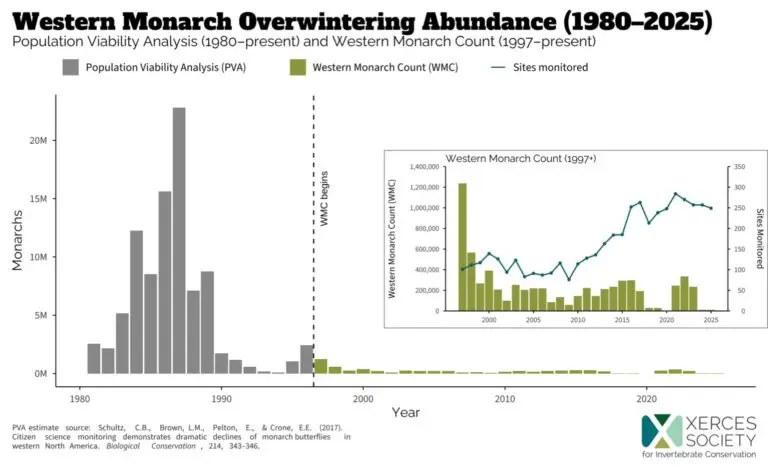
The western monarch population is genetically and behaviorally distinct from the eastern population. Eastern monarchs overwinter in central Mexico. Western monarchs overwinter along the California coast, clustering in eucalyptus and Monterey pine groves from Marin County down through San Diego. At their peak, millions of western monarchs made this migration. By the early 2020s, population counts had dropped by an estimated 99% from 1980s levels.
This next paragraph is really bad news.
In the 2025-2026 western monarch count, around 12,260 butterflies were counted. According to Cheryl Schultz, an associate professor at Washington State University Vancouver (and an author on several journal articles we’ll mention here), “While we don’t know the exact threshold [Schultz] suggests that at least 30,000 butterflies is the minimum population needed to ensure the western migration survives.”
Graph of western monarch overwintering abundance, 1980-2025. Image credit: Xerces Society
There are lots of milkweeds west of the Rockies. Narrowleaf milkweed might be the best choice.
Recent research makes the case for narrowleaf pretty clearly. A 2025 field study published in the Journal of Insect Conservation compared caterpillar survival, development time, and adult size on narrowleaf milkweed and showy milkweed (Asclepias speciosa) at a western monarch monitoring site. Caterpillars raised on narrowleaf milkweed had higher survival rates to adulthood, grew faster, and emerged as larger adults.
Every narrowleaf milkweed in a western garden is a direct contribution to a population that needs all the help it can get.
The 99% drop in western monarchs has lots of reasons—pesticide use, loss of habitat (development), loss of host plants (i.e., milkweeds)—and an invisible one that might surprise you: a parasite.
The parasite problem, and why dormancy is a feature
This starts off with a quick nerdy paragraph that’s worth a read (and then back to planting tips):
There’s a protozoan parasite called Ophryocystis elektroscirrha, usually shortened to OE, that infects monarch butterflies. Infected monarchs can’t fly properly and rarely survive migration. OE spores accumulate on milkweed leaves, and caterpillars ingest them as they eat.
Fight OE and skip tropical milkweed
Plants that stay green year-round, especially tropical milkweed planted in mild climates, allow OE spores to build up on leaves across multiple seasons and monarch generations. Native milkweeds like narrowleaf milkweed die back naturally in late summer and fall, which resets the plant and eliminates the surface accumulation of spores. The dormancy isn’t a flaw in the plant. It’s one of the healthiest things it does for the monarchs that depend on it.
In California especially, where the mild climate allows non-native tropical milkweed to persist year-round, planting narrowleaf milkweed instead is one of the most meaningful choices a western gardener can make.
More good news:
Narrowleaf Milkweed is deer-resistant
Deer do NOT normally eat Narrowleaf Milkweed. If you’re worried about deer nibbling your garden, planting Narrowleaf Milkweed is a good native gardening choice.
Full sun is non-negotiable. Narrowleaf milkweed gets floppy and blooms poorly in shade. Dry to well-drained soil is ideal: it’s one of the most drought-hardy milkweeds and actively dislikes having wet feet. It’s good for hellstrips, dry slopes, unirrigated parkways, and other spots that see minimal supplemental water.
When to plant
Spring is best for transplants, fall is best for seed. If you’re seeding, fall direct-sowing in California works well with winter rains providing natural cold stratification. For spring seeding, cold-stratify seeds in the refrigerator for 30 days before planting, or ensure you’re buying from a reputable seed seller who has done this work for you.
Provenance matters
For narrowleaf milkweed more than almost any other milkweed, sourcing seeds and plants close to home matters. Regional populations have adapted over thousands of years to local climate, soils, and the specific monarch population in your area. Buy from a local native plant nursery or seed source within 500 miles of where you garden when you can.
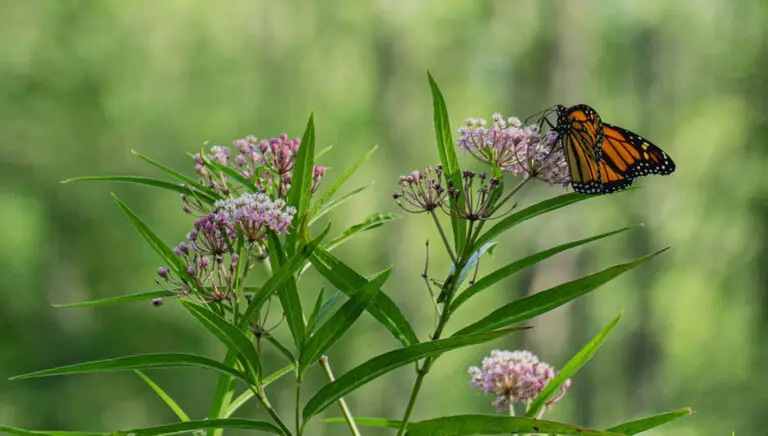
Not only does a monarch use narrowleaf for their egg laying—the flowers provide nectar, too.
Watering
Water weekly the first season to establish roots. After that, in most California and Pacific Coast climates, supplemental irrigation is minimal to none.
In hotter inland areas, a deep watering once or twice a month through summer drought keeps it going. Do not overwater: good drainage is more important for this plant than moisture.
Garden Recipe™
Narrowleaf Milkweed
Asclepias fascicularis
Full sun
Sun
Easy
Effort
Medium (3-5') tall 2–3.5 feet wide
Size
Summer - Late summer
Blooms
What it needs
Sunlight
Full sun, 6+ hoursSouth- or west-facing is ideal
Water
Likes it dryPick a spot that doesn't stay soggy after rain
Directions
Watering
Weekly for the first seasonAfter that, rain is usually enough
Notes
Comes back?
Yes, every yearGoes dormant in winter, that's normal. New growth each spring.
Butterfly host plant. Certain butterflies depend on this plant to reproduce. It's one of the specific species their caterpillars need to survive.
When your narrowleaf milkweed starts to yellow and die back in late summer, do not pull it out. That change is normal and healthy. Mark the spot, let the plant go dormant, and it will return in spring.
Where narrowleaf milkweed shines in your yard
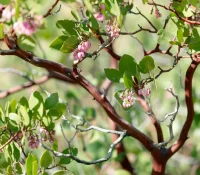
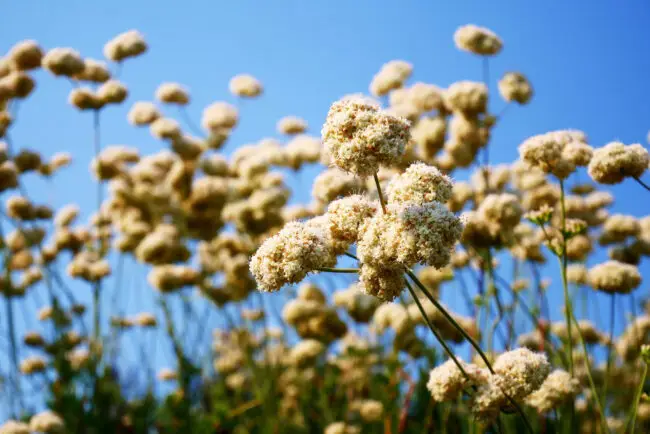
California native plant gardens: At home among manzanita, buckwheats, and California poppies. Part of the native plant community these gardens are trying to recreate.
Dry gardens and hellstrips: A monarch host plant that genuinely handles a hot, dry, minimally irrigated strip.
Low-water pollinator gardens: In a drought-conscious western garden, it delivers full monarch and pollinator value with minimal water input.
Slopes and areas with poor soil: It was built for this. The leaner the soil, the more at home this plant tends to be.
Monarch waystations: If you’re designating part of your yard as a monarch habitat, narrowleaf milkweed is the anchor plant for any western garden.
FAQs
Is narrowleaf milkweed only for California?
No, though California is its stronghold. It’s native across much of the western US: Oregon, Washington, Nevada, Utah, Idaho, Montana, Arizona, and New Mexico. If you’re west of the Rockies and it’s in your native range, it’s a strong choice for your monarch garden.
Why is my narrowleaf milkweed dying in the summer?
It isn’t dying. Narrowleaf milkweed goes naturally dormant in late summer as heat peaks and soil dries. The above-ground plant yellows, seeds disperse, and the stems collapse. The crown is alive underground. Mark the spot with a stake and leave it alone. It will come back in spring.
Does narrowleaf milkweed spread aggressively?
Nope. It spreads slowly by clump and occasional self-seeding, but nothing like common milkweed‘s rhizome expansion. A planting of five plants stays roughly where you put it from year to year.
When does it bloom?
June through September, making it one of the longer-blooming milkweeds. The extended season means it’s available to monarchs from their early summer arrival through the late-season generation that migrates to the California coast.
How many narrowleaf milkweed should I plant?
Five or more. Monarchs find milkweed visually, and a cluster is easier to locate than a single plant. For a dedicated monarch waystation, ten or more plants in a sunny area gives the best results.
Plant Nerd Fact
Narrowleaf milkweed knows how to fight back against OE.
We mentioned before that Ophryocystis elektroscirrha (OE) is a parasite that lives on monarchs. It sounds obscure until you understand what it does: heavily infected monarchs have crumpled wings, can’t fly long distances, and rarely survive migration.
OE is not new. Native milkweeds evolved alongside this parasite and the monarchs that carry it. To fight OE, native milkweeds go dormant. The surface of the plant resets. The spore accumulation that builds up on leaves over a season disappears when the plant dies back. And then the native milkweed regenerates fresh leaves in the spring.
A monarch laying eggs in spring on fresh native milkweed is giving her caterpillars a cleaner start than the same monarch could offer on a plant that never went to sleep. Narrowleaf milkweed’s dormancy is not a gap in its schedule. It’s an evolutionary superpower.
What pairs well with narrowleaf milkweed?
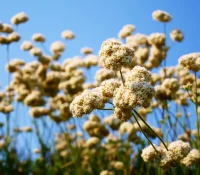
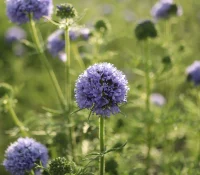
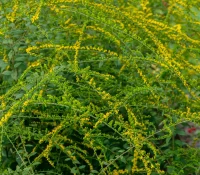
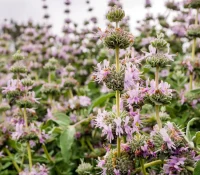
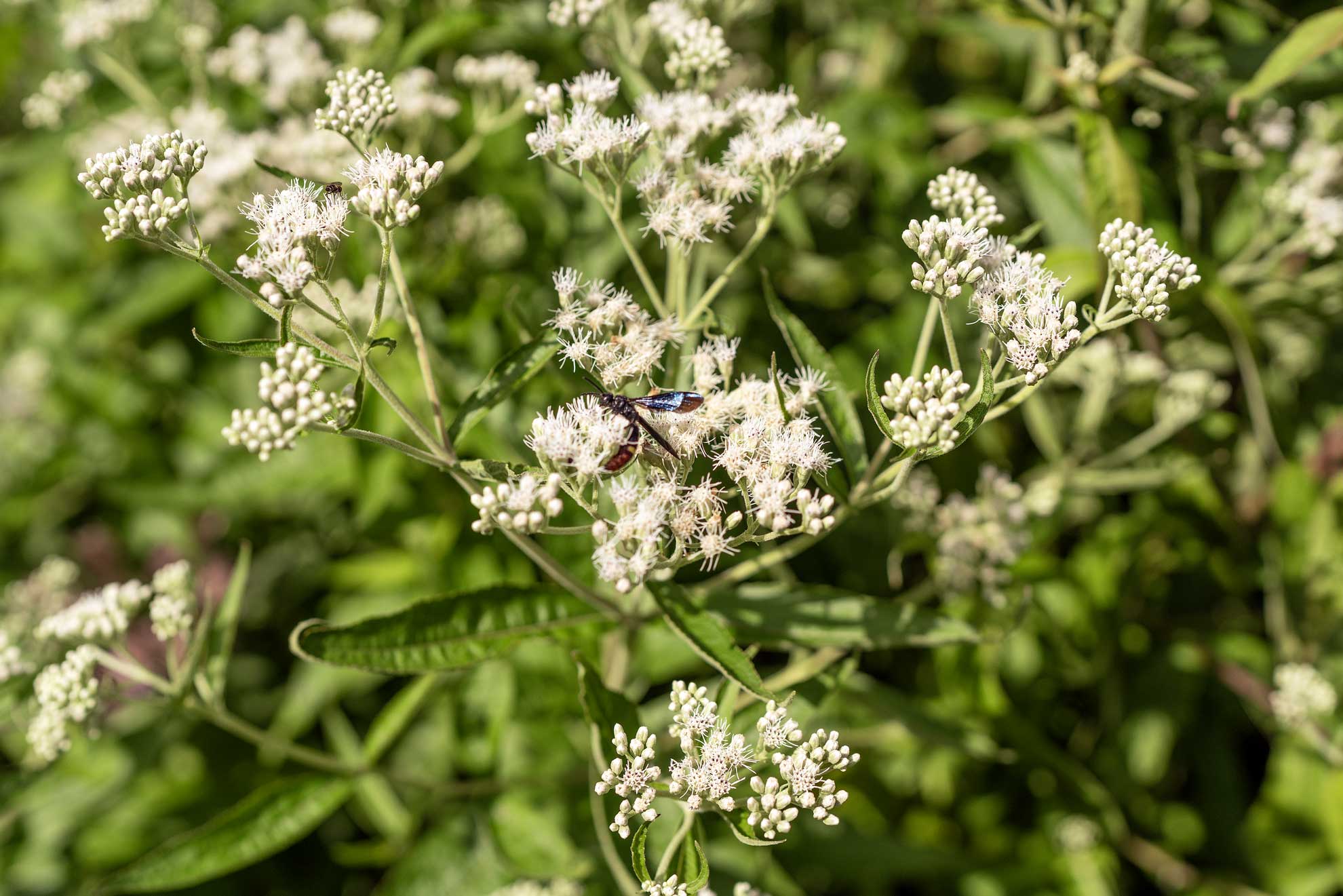
Narrowleaf milkweed’s natural community is the dry California grassland and chaparral edge. Its best companions share the same preference for sun, dry soil, and low summer water.
Narrowleaf milkweed is the right plant for a western garden that takes monarchs seriously. It’s the species western monarchs evolved with, it handles the dry conditions that define most California and interior West gardens, and its natural dormancy does something no amount of good intentions with tropical milkweed can replicate. Plant five or more in the sunniest, driest spot you have. Let it go dormant in late summer without panicking. And come back in spring to find it again.
Written by Emily Lessard. Emily is the founder and editor of The Plant Native. She is a Sustainable Landscapes-certified gardener through the Pennsylvania Landscape & Nursery Association, is finishing a Native Plant Landscaping certificate at Temple University, and is the author of The World of Native Plants (Quarto, February 2027).
Sources
James, David G., Liz Seymour, Gretchen Lauby, and Kelly Buckley. “Beneficial Insect Attraction to Milkweeds (Asclepias speciosa, Asclepias fascicularis) in Washington State, USA.” Insects 7, no. 3 (2016): article 30. https://doi.org/10.3390/insects7030030. Accessed April 4, 2026.
Li, Yiwen, Amanda A. Pierce, and Jacobus C. de Roode. “Variation in Forewing Size Linked to Migratory Status in Monarch Butterflies.” Animal Migration 3, no. 1 (2016): 27–34. https://doi.org/10.1515/ami-2016-0003. Accessed April 4, 2026.
Pelton, Emma M., Cheryl B. Schultz, Sarina J. Jepsen, Scott Hoffman Black, and Elizabeth E. Crone. “Western Monarch Population Plummets: Status, Probable Causes, and Recommended Conservation Actions.” Frontiers in Ecology and Evolution 7 (2019): article 258. https://doi.org/10.3389/fevo.2019.00258. Accessed April 4, 2026.
Project Monarch Health. “What Is OE?” monarchparasites.org. University of Georgia. https://www.monarchparasites.org/oe. Accessed April 4, 2026.
Schultz, Cheryl B., and colleagues. “Late Summer Western Monarch Survival Is Affected by Shade Environment and Milkweed Species.” Journal of Insect Conservation 29 (2025): article 72. https://doi.org/10.1007/s10841-025-00712-5. Accessed April 4, 2026.
Yang, L.H., Swan, K., Bastin, E., Aguilar, J., Cenzer, M., et al. “Different Factors Limit Early- and Late-Season Windows of Opportunity for Monarch Development.” Ecology and Evolution 12, no. 7 (2022): article e9039. https://doi.org/10.1002/ece3.9039. Accessed April 4, 2026.