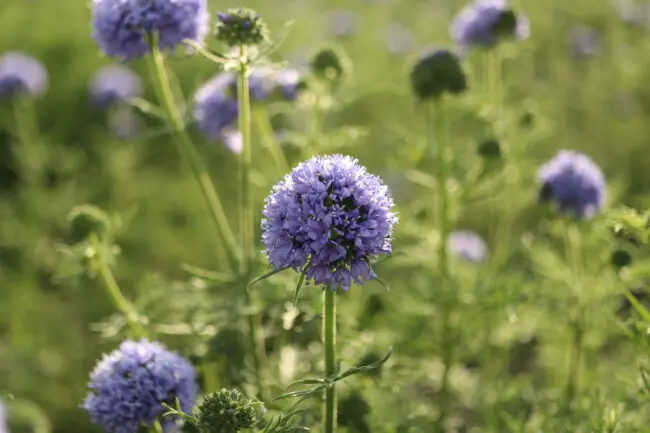
Globe gilia is a slender annual with finely cut, lacy leaves and perfectly round clusters of tiny blue flowers perched on stems like lollipops. The look is airy, a little Dr. Seuss, and surprisingly modern for a native plant. It’s also easy: direct sow, give it sun, and don’t overwater. In the right spot, it blooms from spring through summer, effortlessly providing bright garden color and pollinator support.
Is globe gilia a good choice for my yard?
Yes, if…
You want a fast payoff in a sunny spot without planting a whole shrub border.
You’re okay with an annual (it’s here for a season, then it hands you seeds for next year).
You have well-drained soil or you can give it a slope/raised edge.
You’re trying to bring more bees into your yard with a plant that’s simple to grow.
You like the look of soft, airy stems instead of tight, clipped perfection.
Skip it, if…
You want something that looks identical from May through October (annuals have a beginning, middle, and end).
Your soil stays wet or compacted, and you can’t improve drainage.
You hate reseeding plants on principle (globe gilia can reseed itself when it’s happy; otherwise, you have to sprinkle the seeds yourself).
New to native?
Before lawns and landscaping, native plants were here. They’ve fed birds, bees, and butterflies for thousands of years—and they’ll do the same in your yard. The best part? They’re easier to grow than you think.
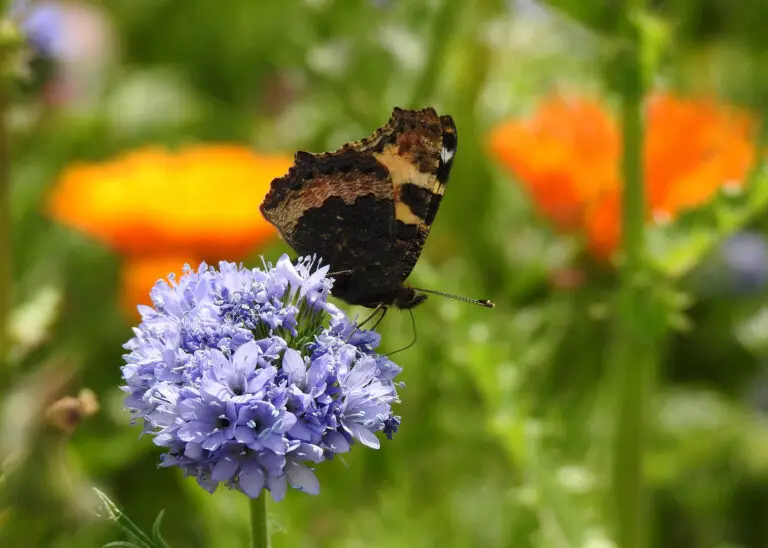
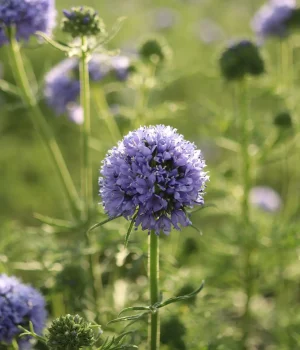
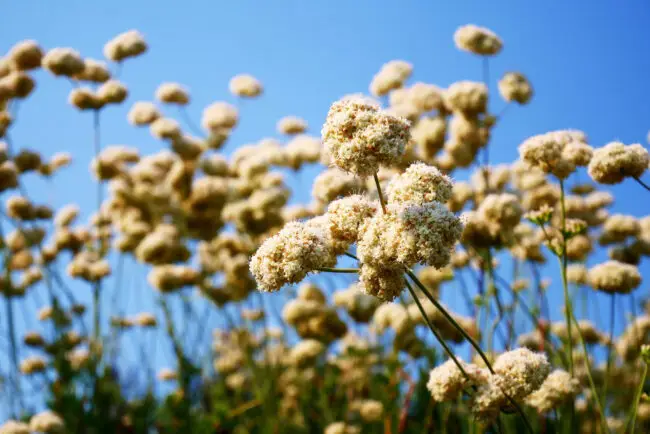
Globe gilia's round shape makes it a perfect butterfly landing pad
Why globe gilia matters
Globe gilia is one of those plants that makes pollinator support feel easy. Its flower heads are made up of dozens of tiny blooms, which means a lot of nectar stops in one tight cluster. You get high “flower density” without the plant taking over your whole garden.
In practice, it’s a simple way to create a busy, living yard in spring and early summer, especially in dry, sunny spaces where other plants can be slower to get going.
Where is globe gilia native?
Native to 9 US states and 1 Canadian province (British Columbia)
Light: Full sun (light shade can also work, especially in hotter inland spots)
Soil: Well-drained; sandy/rocky is great. Clay is fine if drainage is good
Water: Water to germinate and establish, then keep it on the dry side. Overwatering makes it floppy and short-lived
Maintenance: Minimal. Let it bloom, then either let it go to seed or deadhead to stretch bloom a bit
Type: Annual (often reseeds in the right conditions)
Globe gilia is happiest when you direct sow it and leave the roots alone. Many growers sow in late fall or very early spring; cool weather can help with germination, and bloom timing can shift depending on when you sow.
Garden Recipe™
Globe Gilia
Gilia capitata
Full sun
Sun
Pretty easy
Effort
Short (under 3') tall 0.5-1 ft wide
Size
Summer - Spring
Blooms
What it needs
Sunlight
Full sun, 6+ hoursSouth- or west-facing is ideal
Water
Likes it dryPick a spot that doesn't stay soggy after rain
Directions
Spacing
6-12 inTuck them in close for a full look
Watering
Weekly for the first seasonAfter that, rain is usually enough
Notes
Comes back?
No, just one seasonYou'll replant each year, but it's worth it.
Native plant. This is a native plant, which means local wildlife already knows what to do with it. Just by planting it, you're giving your little corner of the ecosystem a boost.
Beginner Tip
If you want more weeks of blooms, sow seeds in two rounds, a couple of weeks apart. You’ll get staggered flowering instead of one big burst.
Where globe gilia shines in your yard
Front border filler: tuck it between slower perennials so the space looks intentional early in the season.
Sunny edges and slopes: it likes drainage and doesn’t need rich soil.
New garden or “I just want to try something small” situations: it’s great when you’re still figuring out what your yard wants.
Cut stems (small-scale): a few flower heads in a jar look like tiny fireworks.
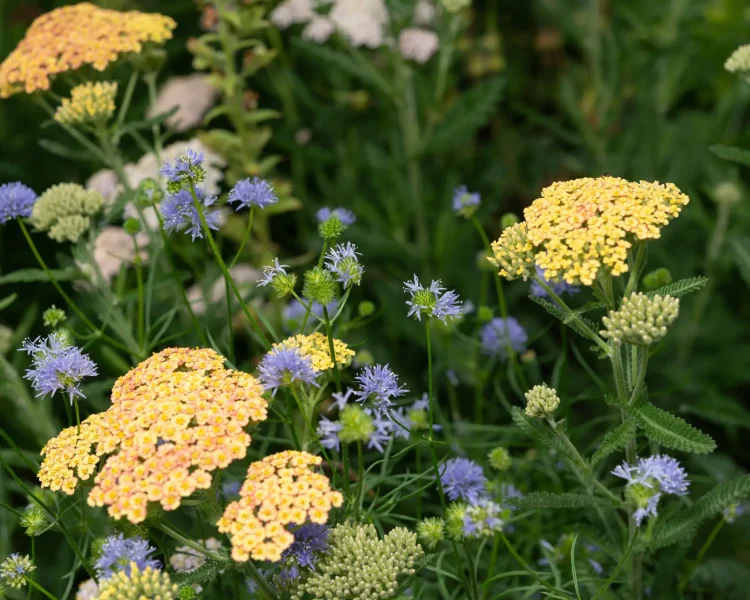
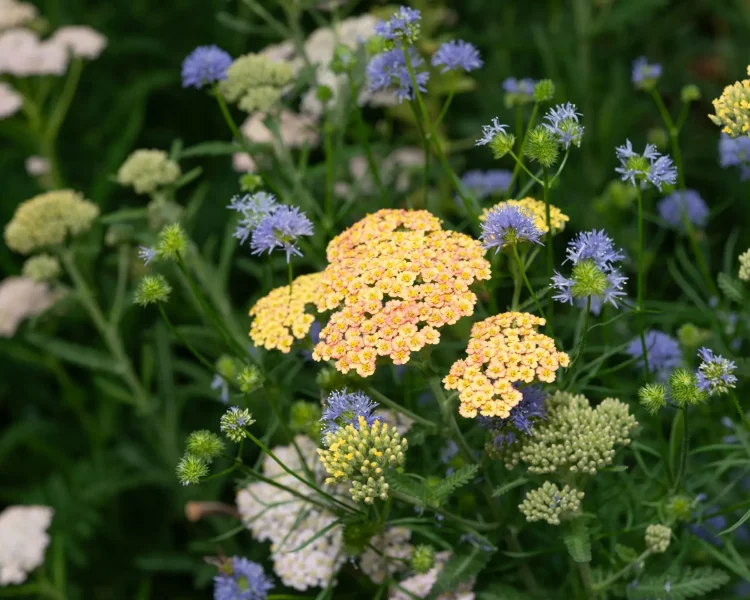
Globe gilia + yarrow are iconic western garden pairs
Yarrow and globe gilia are drought-tolerant beauties
When should I plant globe gilia seeds?
Often late fall or very early spring. Cool conditions can support germination, and sow date can shift bloom timing.
Will it reseed?
It can. If you let plants dry down and drop seed, you may get volunteers the next season. If you’d like to limit their reseeding, cut the flower heads after the flowers fade.
Plant Nerd Fact
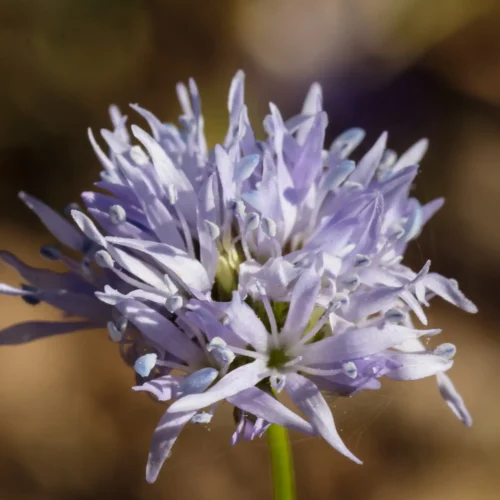
Each round ‘flower’ is actually dozens of flowers
Those perfect blue “flowers” are not one flower. They’re a whole crowd. A single globe gilia flower head can hold 50-100 tiny flowers packed into one round cluster. That design makes pollinators efficient: one landing spot, lots of little blooms to work through. It’s basically a tiny spherical buffet.
Many other plants have single “flowers” that are actually dozens of tiny flowers when you get up close, including native asters and sunflowers.
Up close, you can see the dozens of tiny flowers that make up a single globe gilia "flower"
Where can I get globe gilias?
Native plants like globe gilia can sometimes be found at a native-friendly nursery or ordered from an online native seller. If you live in California, the Theodore Payne Foundation sells seeds well-suited to Southern California gardens. For those who live elsewhere, here are some recommendations to find some for your yard:
Globe Gilia
Where can I find seeds and plants?
Finding native plants can be challenging (we partly blame King Louis XVI.) To make it easier, we’ve assembled four sourcing ideas.
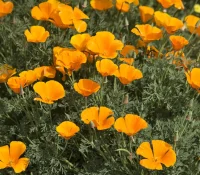
If you’re in the West and you want a fast, low-effort way to make a sunny spot feel alive, globe gilia is a no-brainer. Direct sow it, give it decent drainage, and let it do what it’s built to do: pop up, bloom in perfect powder-blue spheres, and pull in bees like clockwork. Treat it as a seasonal win that can fill gaps, soften edges, and make your garden look intentional before your longer-term plants hit their stride. Here to next? How about our Beginner’s Guide to California Poppies or our Beginner’s Guide to California Fuchsia? Happy planting!
Sources
CalScape. “Bluehead Gilia (Gilia capitata).” Accessed January 23, 2026.
Lady Bird Johnson Wildflower Center. “Bluehead Gilia (Gilia capitata).” Native Plant Information Network, The University of Texas at Austin. Accessed January 23, 2026.
OregonFlora. “Gilia capitata.” Oregon State University. Accessed January 23, 2026.
Emily Lessard is the founder and editor of The Plant Native, the site that helps homeowners across North America get started with native plants. She holds a Sustainable Landscapes certificate through the Pennsylvania Landscape & Nursery Association, is finishing a Native Perennial Garden Design Certificate at Temple University, and is the author of Plant Native:A Practical Guide to Over 100 Native Plants of North America (Quarto, February 2027). She gardens outside Philadelphia in the 8.3 Southeastern Plains ecoregion.