Plant Profile • Part Sun

Indian Pink

Spigelia marilandica

Showstopper fireworks...for the shade.

Where to find one ↓
Highlights

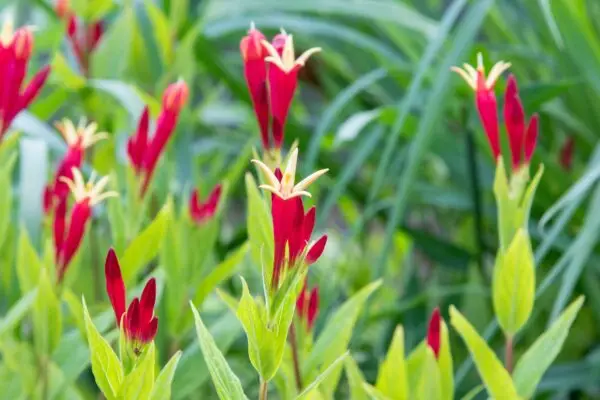
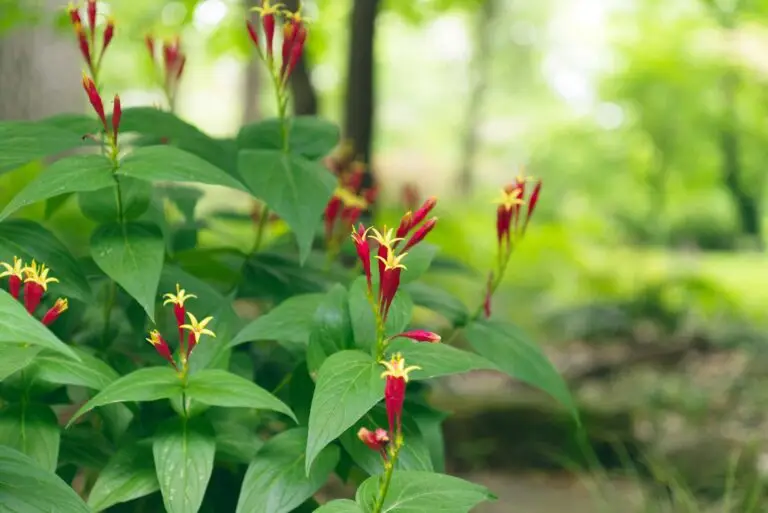
What an absolutely stunning native flower. Small bright-red blossoms open to reveal a yellow star center. It looks like it was perfectly cut out of construction paper. Oh, and the flowers are hummingbird favorites! Indian Pink has many common names—Pinkroot, Woodland Pinkroot—but no matter what you call it, it’s a must for shade and part-shade gardens. Scroll on for planting tips.

In nature, Indian Pinks are woodland flowers, found amidst native trees and shrubs

Indian pinks are a hummingbird favorite

Indian pink’s number one pollinator is the ruby-throated hummingbird. This long-beaked, long-tongued bird is why Indian pink’s flower is so long and narrow. (For other hummingbird favorites, check out our Guide to Planting Hummingbird Gardens.)

These beautiful native flowers open right after spring ephemerals (like trout lilies) die back, in the early spring. Our Beginner’s Guide to Native Ephemerals gives you more ephemeral inspo.

Where is indian pink native?

Native to 17 US states

Native range
Not native

Source: USDA PLANTS Database

#image_title
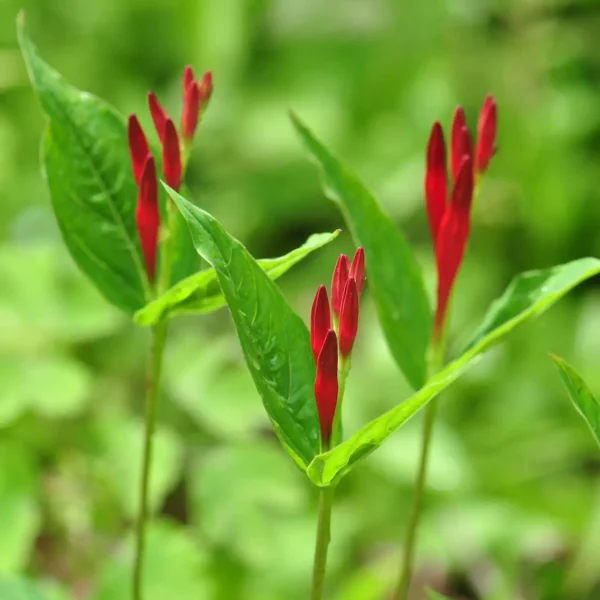
Just before the flowers open, you'll see red elongated flowers

When does Indian pink bloom?

Indian pink blooms in the spring through to early summer. In the south, this is normally around March-June. In the Midwest and Mid-Atlantic, you’ll see flowers from April to early July. Indian Pink is known for its long bloom time—few native flowers stay out as long.

After the flowers bloom, the dark green leaves remain until the plant dies back in the fall. New growth will emerge the following spring.

Garden Recipe™
Indian Pink
Spigelia marilandica
Part sun
Sun
Pretty easy
Effort
Short (under 3') tall
1-1.5 ft wide
Size
Summer
Blooms
What it needs
Sunlight
Partial sun, 3-6 hours Morning sun with afternoon shade works well
Water
Likes it moist Pick a low spot, or plan to water often
Directions
Spacing
12-15 in About one forearm apart
Watering
Weekly for the first season After that, rain is usually enough
Notes
Comes back?
Yes, every year Goes dormant in winter, that's normal. New growth each spring.
Native plant. This is a native plant, which means local wildlife already knows what to do with it. Just by planting it, you're giving your little corner of the ecosystem a boost.

Where can I find Indian pink seeds or plants for my garden?

Finding a specific native flower can sometimes be challenging—most conventional nurseries do not stock lots of native plants outside of black-eyed Susans and purple coneflowers.

To help make finding Indian pinks easier, here are four sourcing ideas to try:

Indian Pink

Where can I find seeds and plants?

Finding native plants can be challenging (we partly blame King Louis XVI.) To make it easier, we’ve assembled four sourcing ideas.

Native Nursery List

300+ native nurseries make finding one a breeze

Online Native Nurseries

Explore 100+ native-friendly eCommerce sites

Find your Native Plant Society

Every state and province has a native plant society; find yours

Online Communities

Local Facebook groups are a great plant source

What are good pairings for Indian pink?

Pair Indian pinks with other native plants that like shade or part shade and thrive in Midwest, Mid-Atlantic, and Southern gardens. Favorites include:

Indian pink is an absolutely stunning native flower that thrives in shade or part-shade gardens. Its stunning flowers are hummingbird favorites and they stay open and beautiful for a long bloom time: from spring to early summer. Plant them with other native flowers found in Mid-Atlantic, Midwest, or Southern gardens for a fuss-free, gorgeous landscape (especially compared to lawns or non-native plants.) Check out our Guide to Hummingbird Gardens for more hummingbird landscaping inspiration. Happy planting!

Explore native plants by region

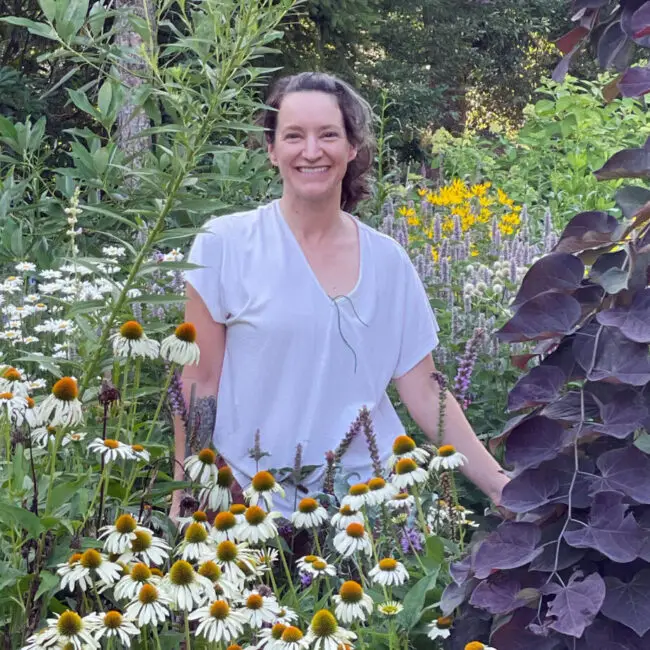
Woman smiling in a light blue blouse standing among white coneflowers in a lush garden.

Written by

Emily Lessard

Founder & Editor, The Plant Native

Emily Lessard is the founder and editor of The Plant Native, the site that helps homeowners across North America get started with native plants. She holds a Sustainable Landscapes certificate through the Pennsylvania Landscape & Nursery Association, is finishing a Native Perennial Garden Design Certificate at Temple University, and is the author of World of Native Plants (Quarto, February 2027). She gardens outside Philadelphia in the 8.3 Southeastern Plains ecoregion.

Meet Emily

UPDATED —
06/19/2026
In This Guide