

Highlights
Purple coneflower (Echinacea purpurea) is one of the easiest, brightest, and most rewarding native flowers you can plant. Those hot-pink petals (technically more pink than purple, but we didn’t name it) surround a spiky, reddish-orange cone that’s packed with pollen in summer and loaded with seeds in fall. It blooms for up to two months, attracts butterflies, bees, and hummingbirds while it’s flowering, then transforms into a natural bird feeder when the seeds set. This is the plant that gets people hooked on native planting.
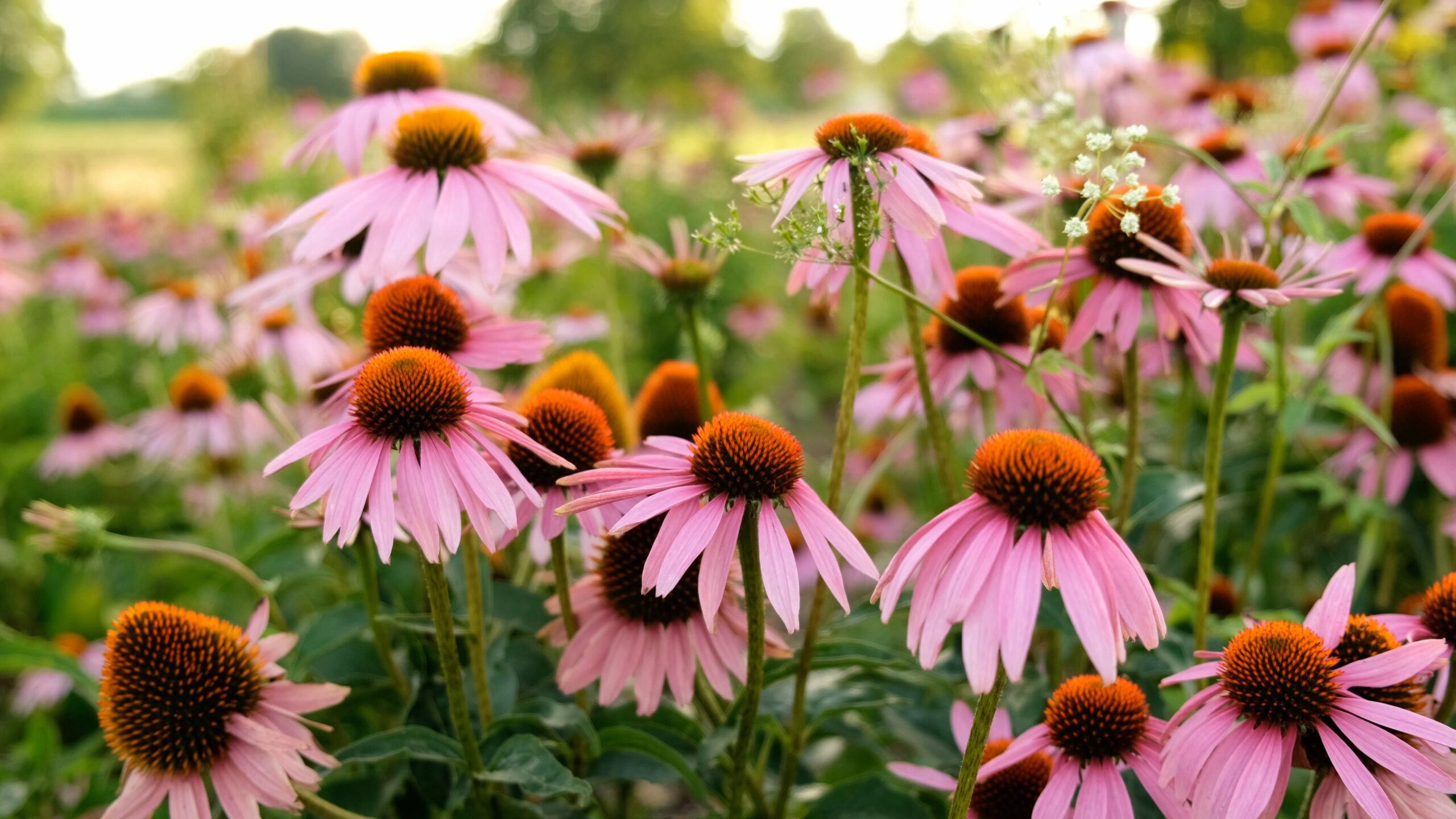
Purple coneflowers are technicolor pollinator buffets
Is purple coneflower right for my yard?
Plant it if…
- You’re a beginner. Seriously, this is one of the most forgiving native plants you can start with.
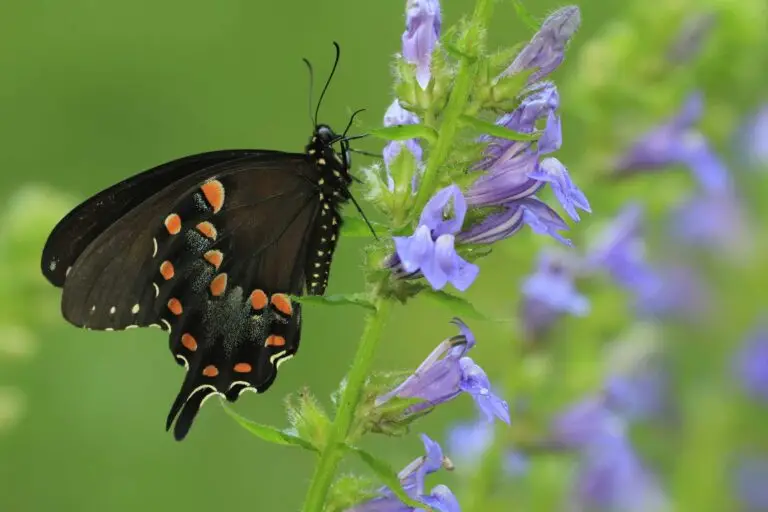
- You want pollinators. Butterflies (including monarchs and swallowtails), bumble bees, native bees, and even hummingbirds visit the blooms.
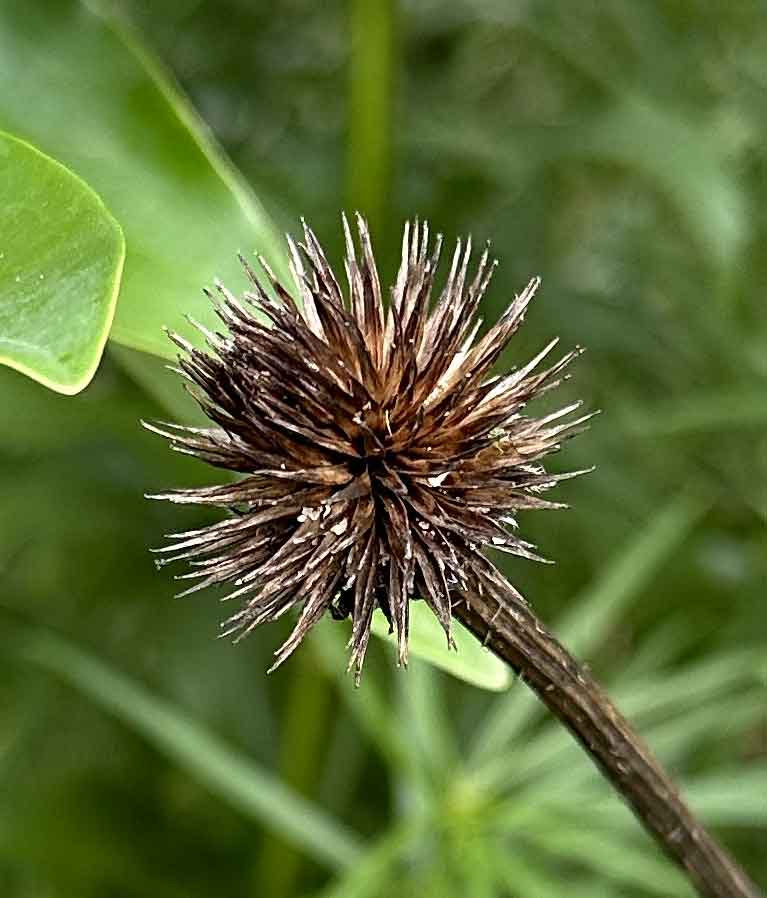
- You want fall and winter bird activity. Leave the seed heads up and watch goldfinches, chickadees, and sparrows snack through the cold months.
- You have a sunny spot with decent drainage. Full sun is ideal, but part shade works too.
- Deer or rabbits are a problem. They generally leave purple coneflower alone.
Skip it if…
- Your soil stays wet or soggy. Purple coneflower needs good drainage and can develop root rot in consistently wet ground.
- You’re in deep shade. Part shade is fine, but purple coneflower needs at least a few hours of direct sun to bloom well.
One plant, three seasons of wildlife value.
Why purple coneflower matters
Some flowers like daffodils and tulips (non-native) look great for a few weeks and then fade away. Not the case for purple coneflowers. These native flowers return multiple seasons of beauty and wildlife support.
It’s a summertime icon
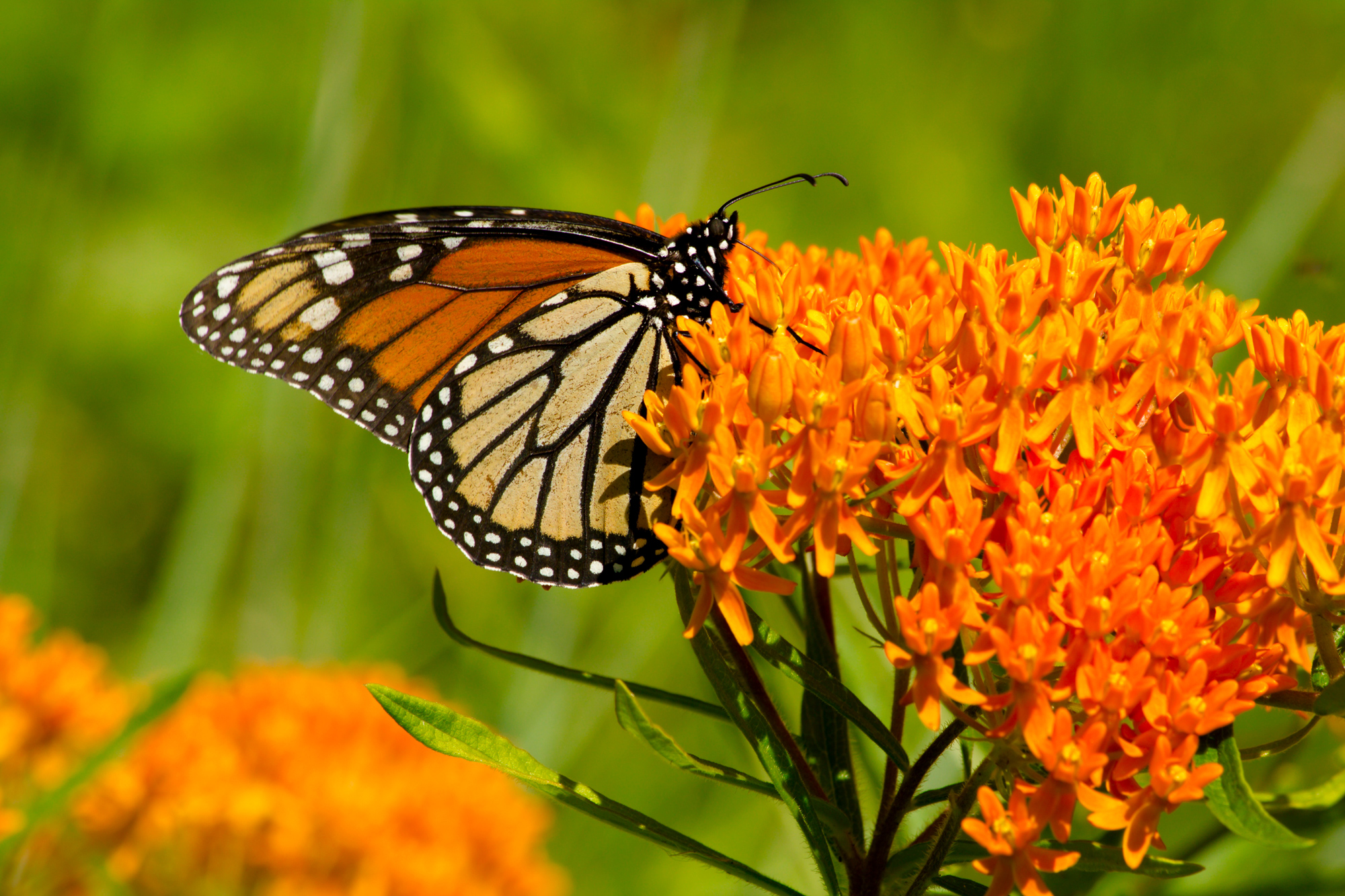
Purple coneflower is a pollinator magnet. During its long bloom window (June through August, sometimes into September), it serves as a nectar buffet for dozens of butterfly species, multiple types of native bees, bumble bees, and even ruby-throated hummingbirds. It’s one of those plants where you can stand next to it and watch the pollinator traffic.
It’s a fall + winter bird feeder
Then comes the second act. Once the flowers fade and the seed heads dry, birds move in. American goldfinches are the stars here. They’ll perch right on the cone and pick seeds out one by one. Chickadees, sparrows, and nuthatches join in too.

It’s a winter bee hotel
If you leave the stems standing through winter (and you should), the hollow, dried stems also become nesting habitat for native bees that overwinter inside them. As North Carolina State Extension puts it, “Native bees nest in the dead, hollow stems, so gardeners are encouraged to cut back dead stems to 12 to 24 inches and allow them to remain standing until they disintegrate on their own.” One plant, three seasons of wildlife value.
Where is purple coneflower native?
Native to 20 US states
Sources: NatureServe, Royal Botanic Gardens, Kew (World Checklist of Vascular Plants) and the USDA PLANTS Database, compiled by The Plant Native. How we map native ranges
Where purple coneflower shines in your yard
- Pollinator garden: This is the anchor plant. Build around it.
- Front yard native border: A row of purple coneflower along a walkway or fence line looks sharp and blooms for weeks.
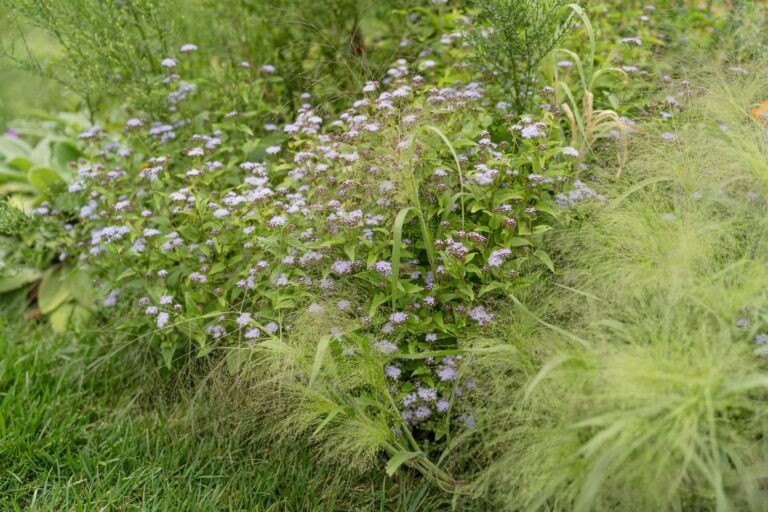
- Mixed native garden: Pair it with grasses and other native perennials for a layered, low-maintenance look.
- Container garden: It works in pots on patios, balconies, and rooftops. Make sure the container drains well.
- Hellstrip or median: That tough strip between the sidewalk and street? Purple coneflower handles the heat and drought.
- Cut flower garden: The blooms last well in a vase. Cut them in the morning when they’re freshest.

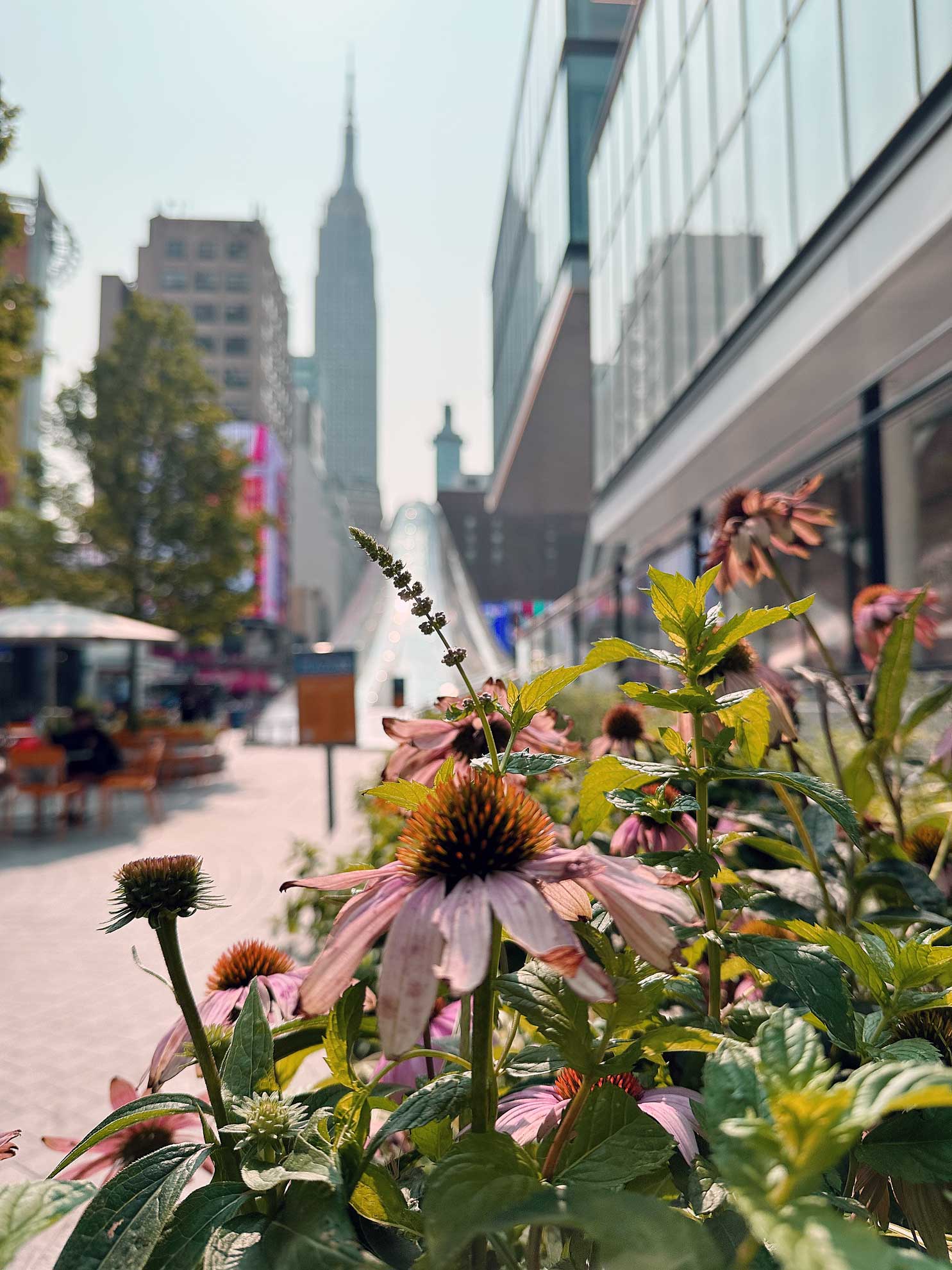


Have you seen purple coneflowers in other colors, with names like ‘Giddy Pink’ or ‘White Swan’? Those are purple coneflower cultivars.
How to grow purple coneflower
Where to plant
Full sun (6+ hours) is best. Part sun works too, especially if it gets morning sun and afternoon shade. Soil should drain well. Purple coneflower is happy in average to poor soil and doesn’t need rich conditions. Clay, loam, sandy? All fine, as long as water doesn’t sit.
When to plant
New plants go in spring or fall. Seeds can be sown directly outdoors in fall (winter cold naturally breaks their dormancy) or started indoors in late winter. More on seed growing in a few scrolls.
Spacing
Give each plant about 1.5 to 2 feet of room. Good airflow helps give them space to grow.
Planting card
Echinacea purpurea
Watering
Water regularly for the first season while roots get established. After that, purple coneflower is very drought-tolerant and only needs extra water during long, hot dry spells. Don’t overwater. Wet feet are this plant’s biggest enemy.
Fertilizer
Skip it. Purple coneflower doesn’t need fertilizer and actually performs better in average to lean conditions. Rich soil can make it floppy.
Deadheading
This is a choose-your-own-adventure situation. Deadhead fading blooms to encourage more flowers and prevent self-seeding. Or leave the seed heads for birds. You can also split the difference and deadhead the first flush, and then leave the later ones for goldfinches.
Beginner tip
If you’re planting from seed, don’t expect flowers the first year. Coneflower seeds spend year one building roots and year two blooming. That’s normal. If you want flowers this summer, start with transplants from a native plant nursery.
Online purple coneflower seed sellers
Seeds are the cheapest way to grow a garden filled with purple coneflowers. Here are some native-friendly online seed sellers that sell purple coneflower seeds:
- Baker Creek Heirloom Rare Seeds (Mansfield, Missouri)
- Eden Brothers (Arden, North Carolina)
- Johnny’s Seeds (Winslow, Maine)
- Native American Seeds (New Braunfels, Texas)
- Ohio Prairie Nursery Seeds (Hiram, Ohio)
- Prairie Nursery (Westfield, Wisconsin)
- Select Seeds (Union, Connecticut)
- Vermont Wildflower Farm (Vermont)
Why are we including the locations of these online sellers? Here’s why:
That said, you’re also going to see purple coneflower seeds at big-box stores.
If you want to get purple coneflower seeds from big-box stores…
Sometimes you just want to go to a nearby store and make planting a garden easy. We get it. Let’s remind ourselves that this moment is fraught enough! Planting our gardens should be a joyful experience, not a botany exam.
Flip the seed packets over to see the location of the seed company (you’ll find it in teeny-tiny lettering on the back). Pick the company that’s closest to you.

Plant nerd fact
Grow some tiny hedgehogs
The name Echinacea comes from the Greek word echinos, meaning hedgehog. Touch that spiky center cone and you’ll get it immediately. (And wear some gardening gloves!)
What are good pairings for purple coneflowers?
Dozens of native flowers pair beautifully with purple coneflowers and thrive in the same full-sun, well-drained environment. Some recommendations include:


Where can I buy purple coneflower?
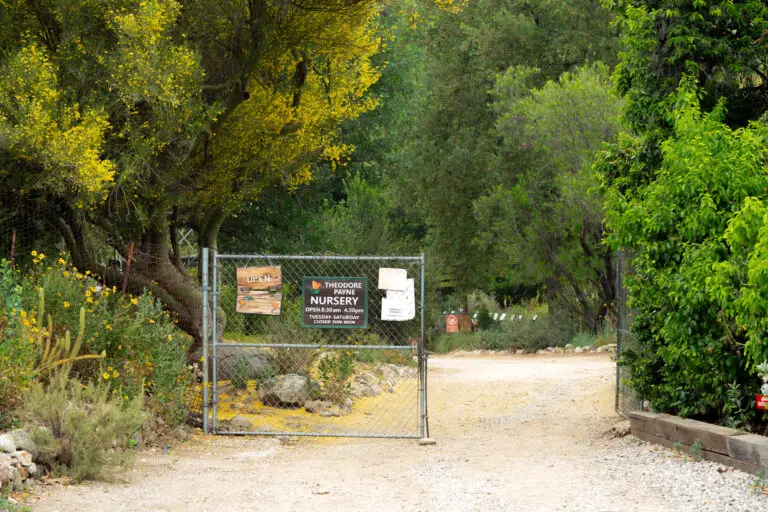
Most big-box garden centers don’t carry true natives, but purple coneflower is easier to find than you might think. Your best bets are a native plant nursery near you, a native plant society sale, or a trusted online grower that ships to your region.
A note on purple coneflower cultivars
There are over 100 purple coneflower cultivars out there. Most are fine. Some are fantastic. A few undermine the whole point. Here’s the rundown:
- ‘Magnus’: The classic cultivar. Rose-pink petals that hold more horizontally than the species (less droopy). Won the Perennial Plant of the Year in 1998. Reliable, easy to find, great for wildlife.
- ‘PowWow Wild Berry’: Deep rose-purple flowers on sturdy, well-branched stems. Shorter than the species (1 to 2 feet) with more flowers per plant. An excellent garden performer.
- ‘Kim’s Knee High’: A compact cultivar at just 12 to 18 inches. Perfect for containers, small gardens, or the front of a border.
- ‘White Swan’: Creamy white petals with a golden-green cone. A nice color variation. Slightly less vigorous than the pink forms but still a solid pick.
(You can always tell it’s a cultivar when you see a cheeky marketing name in ‘single quotes.’)

Layers of petals = problems
Skip the double-flowered cultivars like ‘Razzmatazz’ and other pom-pom types. To achieve those layers of petals, they’ve removed the pollen- and nectar-making parts of the flower. It looks like a juicy pollinator buffet, but it’s far removed from its evolutionary status as a pollinator restaurant.
If you’re planting for the double win of beauty and wildlife, double flowers defeat the purpose. Trials from the trusted native plant experts at Mt. Cuba Center confirmed that single-flowered coneflowers attract significantly more pollinators than double-flowered cultivars.
FAQs
When does purple coneflower bloom?
June through August is the main show, with the heaviest flowering in June and July. If you deadhead, you can get sporadic rebloom into September or even October.
Is this the same thing as the echinacea in herbal tea?
Same genus, yes. Echinacea purpurea is one of several echinacea species used in herbal supplements and teas.
Echnicaea’s healing powers were not discovered recently. Native Americans used the roots for centuries to treat wounds, toothaches, and sore throats. Today, it’s commercially harvested for immune-support products. But in your yard, it’s even more valuable as a living plant feeding pollinators and birds.
Can I grow it in a pot?
Absolutely. Choose a container at least 12 inches deep with good drainage. Compact cultivars like ‘Kim’s Knee High’ are especially well-suited to containers.
Purple coneflower is the plant that turns beginners into gardeners. It’s forgiving, it’s beautiful, and it pulls more weight for wildlife than almost any other perennial you can grow. Plant it in a sunny spot, leave it alone in fall and winter, and watch goldfinches perch on the seed heads while butterflies work the summer blooms.
Want to meet the rest of the family? Check out our Beginner’s Guide to Native Coneflowers to learn about all nine coneflowers native to North America. And if you’re building a pollinator garden, our native plant guide for pollinators has more ideas. Happy planting!
Similar plants
-
 Blazing Star
-
 Milkweeds
-
 Black-Eyed Susans
-
 Coreopsis (Tickseed)
-
 Butterfly Weed
-
 Firewheel
-
 Winecup
-
 Nodding Onion
-
 Ironweeds
Sources
- Breed, Martin F., et al. “Priority Actions to Improve Provenance Decision-Making.” BioScience, vol. 68, no. 7, July 2018, pp. 510–516. doi.org.
- Harstad, Carolyn. Go Native! Gardening with Native Plants and Wildflowers in the Lower Midwest. Bloomington: Indiana University Press, 1999, 209–210.
- Lady Bird Johnson Wildflower Center. “Echinacea purpurea (Eastern Purple Coneflower).” University of Texas at Austin. wildflower.org. Accessed March 21, 2026.
- Missouri Botanical Garden. “Echinacea purpurea.” missouribotanicalgarden.org. Accessed March 21, 2026.
- Mt. Cuba Center. “Echinacea Trial.” mtcubacenter.org. Accessed March 21, 2026.
- Nelson, Gil. Best Native Plants for Southern Gardens: A Handbook for Gardeners, Homeowners, and Professionals. Gainesville: University Press of Florida, 2010.
- North Carolina State Extension. “Echinacea purpurea.” NC State University. plants.ces.ncsu.edu. Accessed March 21, 2026.
- Prairie Moon Nursery. “Echinacea purpurea (Purple Coneflower).” prairiemoon.com. Accessed March 21, 2026.
- Tallamy, Douglas W. Bringing Nature Home: How You Can Sustain Wildlife with Native Plants. Portland, OR: Timber Press, 2007.
- USDA PLANTS Database. “Echinacea purpurea (Eastern Purple Coneflower).” plants.usda.gov. Accessed March 21, 2026.
- Xerces Society for Invertebrate Conservation. “Pollinator Conservation.” xerces.org. Accessed March 21, 2026.
Updated Find more: Pink Purple Flower Summer Full Sun Part Sun Drought-Tolerant
The ads on this site help pay real native plant nerds to research and write these guides.
Garden notes
Notes from people who’ve grown it
Tips, wins, and the occasional disaster. If you’ve grown purple coneflower, share the advice you’d give to a neighbor.
No notes yet. Yours could be the first.
Grown purple coneflower? Tell the next person what you wish someone had told you.
Tap anywhere to close


