
Highlights
The Ashe magnolia is an extremely rare plant, native only to Florida. It is a shrubby tree with large leaves and flowers, found in a unique type of wetland known as a bayhead. This unique habitat thrives in the wetter corners of your garden, where other trees struggle to survive. The massive flowers emit a citrus-and-jasmine fragrance to attract their main pollinators: beetles.
Is Ashe magnolia right for my yard?
Plant it if…
- You live in Florida. Ashe magnolia is native specifically to your state, so it is perfectly suited to the climate.
- You have acidic soil. The natural soil conditions for Ashe magnolia can be highly acidic, so it can handle your garden without issue.
- You have a sheltered spot in your garden. Your house and any large trees nearby can act as a windbreak to protect Ashe magnolia’s large leaves.
- You want fragrant flowers. Ashe magnolia is pollinated by beetles, so it produces a strong, pleasant scent.
- Your climate includes high humidity. Ashe magnolia is native to a subtropical climate, so it handles humidity well.
- You want a beautiful, rare magnolia species.
Skip it if…
- Your area is prone to drought. While Ashe magnolia is less fussy about wet feet than other magnolia species, it hates drought and dryness.
- You live in the northern part of the United States. Ashe magnolia is native to Florida, so it cannot handle harsh winters.
- You live near the sea or below sea level. Ashe magnolia is sensitive to salt spray and salty winds.
Where is Ashe magnolia native?
Native to 1 US state
Sources: NatureServe, Royal Botanic Gardens, Kew (World Checklist of Vascular Plants) and the USDA PLANTS Database, compiled by The Plant Native. How we map native ranges
Ashe magnolia is extremely rare, being native exclusively to Florida. Not only that, but they occur in very specific habitats known as bayheads. Bayheads are a specific type of wetland, characterized as a shallow valley or swale with a few inches of standing water. These habitats were named for the abundance of the sweetbay magnolia (Magnolia virginiana) within them. However, they also make a suitable habitat for the Ashe magnolia.
Without bees to act as pollinators, magnolias turned to beetles instead. The beetles feed on pollen, so the flower developed to resist damage from their mandibles.
Why Ashe magnolia matters
With flowers that can reach 10 inches in diameter, it’s no wonder that the Garden Club of America chose Ashe magnolia as the 2017 Plant of the Year. It is a rare beauty, found only in specific habitats within a single state.
In terms of garden value, the flowers of Ashe magnolia are certainly the star of the show. Their size and white color make them eye-catching, but that’s not all. They are also very fragrant; the smell described as that of citrus or jasmine. This fragrance is actually due to a unique pollinator relationship, as magnolias evolved before bees did. Without bees to act as pollinators, magnolias turned to beetles instead. The beetles feed on pollen, so the flower developed to resist damage from their mandibles. In other words, you can thank beetles for that beautiful smell magnolias are known for.
The fruit of Ashe magnolia is also very showy. The reddish, pinkish, or even purple fruit is known as an aggregate. Aggregates are formed when a plant produces multiple fruit from the same flower, which fuse together into a single structure. Within the aggregate, there are fruit known as follicles. These follicles eventually split open to reveal bright red seeds that feed the local wildlife. The floral display might end after June, but the interest Ashe magnolia provides won’t. These fruit and seeds will continue to provide a pop of color to your landscape for months to come.
Where Ashe magnolia shines in your yard
- Near stream banks and pond edges: Ashe magnolia is native to certain types of wetlands, so planting it near water will mimic its natural habitat.
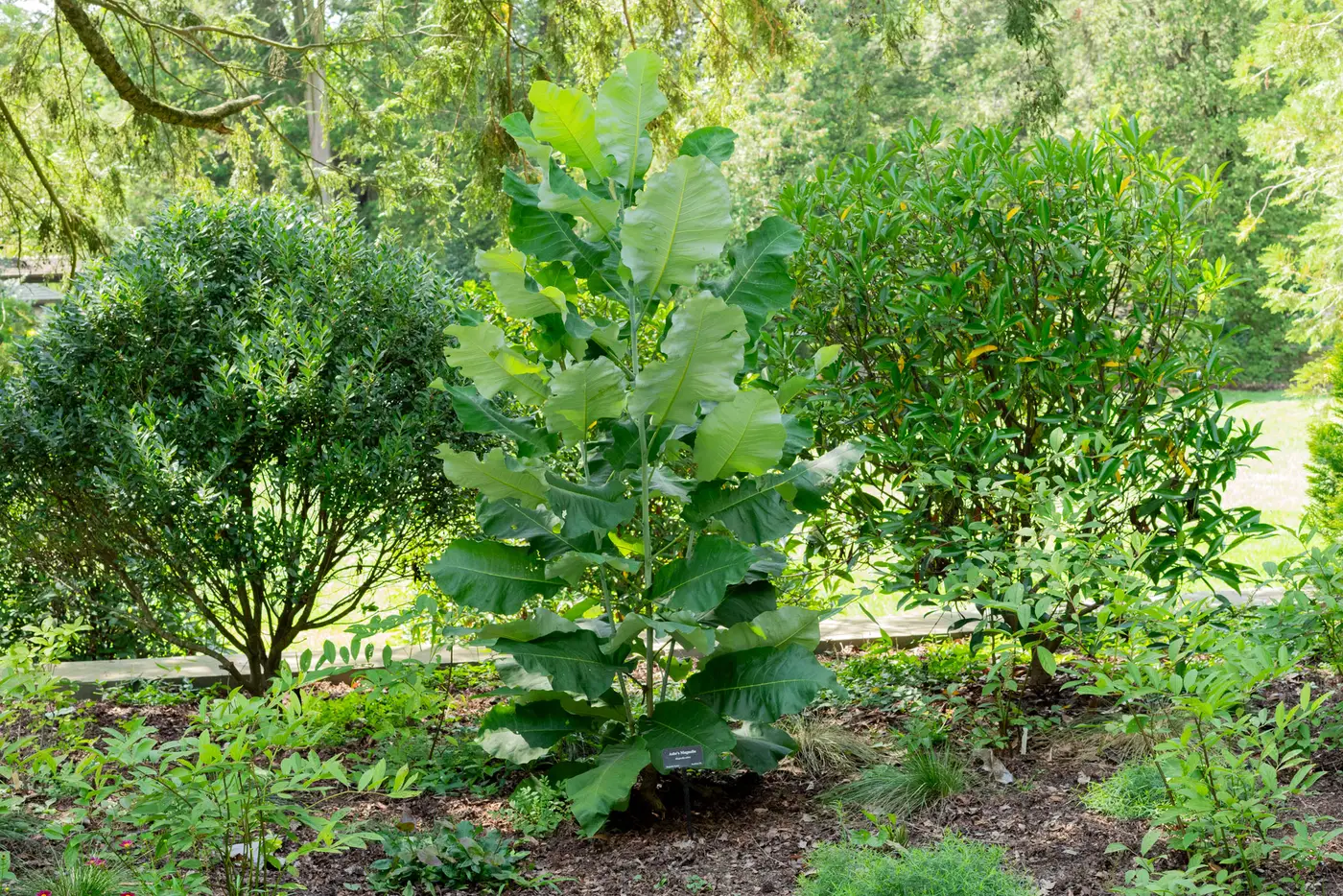
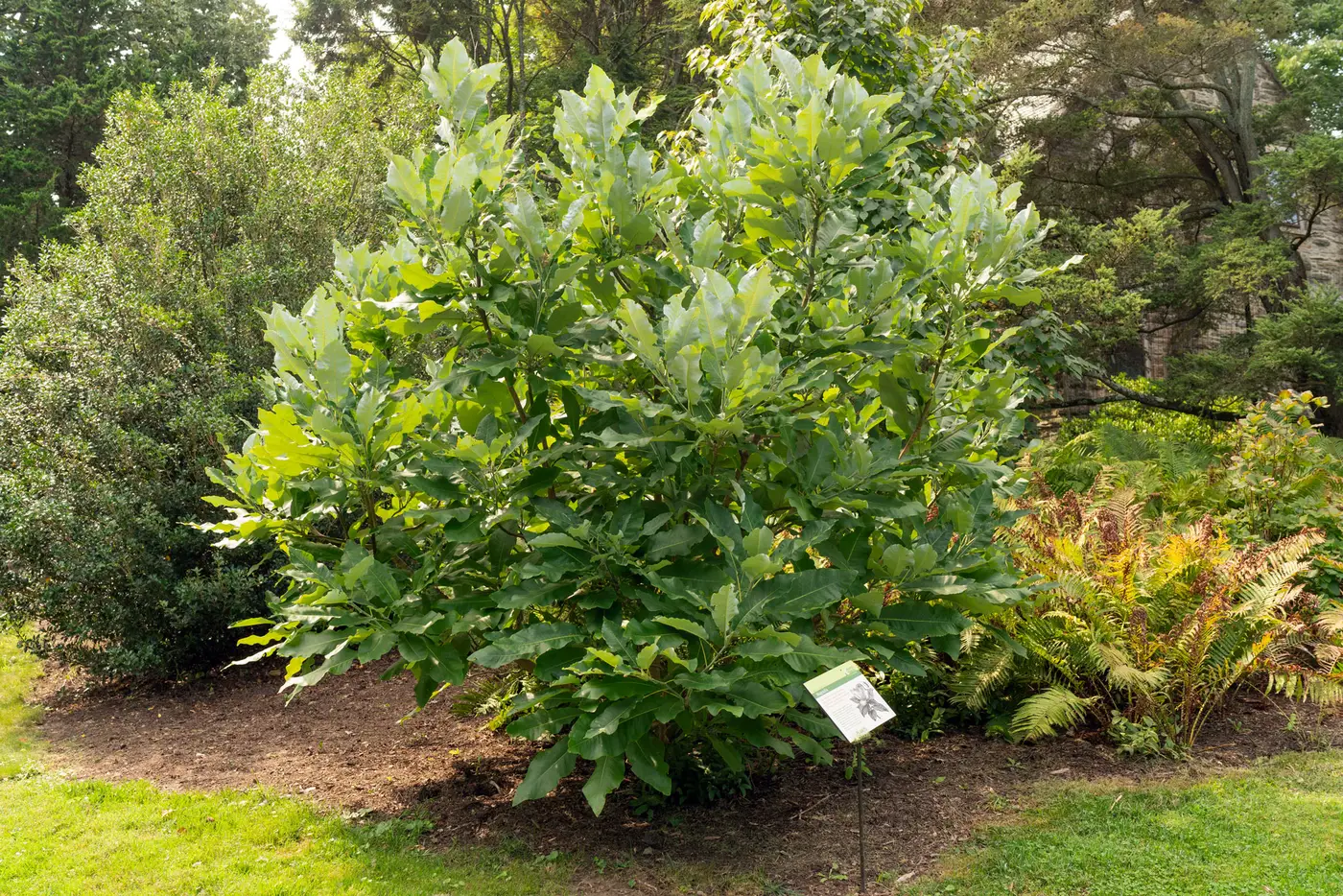
- Specimen tree: Plant Ashe magnolia somewhere the huge leaves and flowers can impress. The smaller stature makes the flowers more visible, making it perfect for showing off to your neighbors.
- Shade tree: While far from the tallest magnolia, the large leaves of Ashe magnolia can still provide some cooling shade during the summer.
- Shade gardens: Ashe magnolia has large leaves that cast heavy shade, so it acts as a centerpiece for a shade garden.
- Scent or sensory gardens: Pair it with other plants that engage the senses for a pleasant garden experience.
Related species
Ashe magnolia was originally considered a subspecies of bigleaf magnolia (Magnolia macrophylla), along with another species. However, they were later reclassified as their own species. The most major differences are native range, though there are some variations in appearance as well.
- Bigleaf magnolia (Magnolia macrophylla): A much larger species than Ashe magnolia, boasting the largest leaves and flowers of any tree in North America. It has a wider native range as well, including the Mid-Atlantic and Midwest regions.
- Cloudforest magnolia (Magnolia dealbata): The other former subspecies of bigleaf magnolia. It is native to Mexico, occurring high up in mountains that are constantly shrouded in fog. This is where the common name comes from.
How to grow Ashe magnolia
Where to plant
While full sun is ideal for growth, a little bit of afternoon shade will prevent scorched leaves under the hot summer sun. Good drainage is also essential, so sandy soil is preferable. Additionally, if you can situate it in a spot that is sheltered from the wind, that will help protect it from damage to the leaves.
Spacing
Leave about 24 feet of space for Ashe magnolia. It may be a short tree, but the large leaves will need space to spread out.
Watering
Ashe magnolia may require regular watering until it is established. After that, it should thrive as long as the soil stays moist. It can tolerate brief dry periods, but pay extra attention to it to prevent wilting.
When to plant
Late fall is the best time to plant Ashe magnolia, as it goes dormant during winter. By planting it during dormancy, the roots are given time to establish before the flowering season begins. Early spring is also a possibility, but the summer heat could be an issue.
Planting card
Magnolia ashei
What pairs well with Ashe magnolia?
The leaves of the Ashe magnolia will cast a deep shade on nearby plants, so shade-loving groundcovers and perennials make ideal companions. Additionally, tall or dense trees planted nearby can act as a windbreak.
Beginner tip
Ashe magnolia has large leaves that decompose slowly. If you want to reduce this leaf litter, tearing up the leaves can make them decompose faster. However, those leaves also provide shelter for the critters in your yard, so we recommend leaving them be. Each leaf is like a little house for animals during the fall.


Where can I buy Ashe magnolia?
Ashe magnolia is a very rare plant, so it can be hard to obtain. The Florida Department of Agriculture and Consumer Services (FDACS) lists Ashe magnolia as an endangered species. While it is not considered a commercially exploited plant, its harvest and sale is still regulated. The Florida Native Plant Society recommends ensuring the nursery you buy Ashe magnolia from has proper permits. These permits are important to maintain sustainability in the harvest of endangered species. Here is a list of places to seek out an Ashe magnolia for your yard:
Potential challenges with Ashe magnolia
The leaves
While the leaves of Ashe magnolia are one of its most attractive characteristics, it also presents certain challenges. The leaves can be high maintenance, being prone to wind damage and decomposing slowly in the fall when they drop. These are easily fixed, however. To protect the leaves, you can plant Ashe magnolia in an area that is protected by trees or other structures. Even your house can be a shield from the wind. As for the leaf drop, planting tall groundcovers that are not easily buried will prevent the mess. The leaves will fall beneath, where they can decompose out of sight.
Weak wood
Ashe magnolia has weak wood and branches that are easily damaged, which can create vulnerability to rot and other diseases. To prevent this, plant it away from walkways or areas that are frequently mowed. This way, lawn equipment or human activity won’t damage the bark. Pruning dead or damaged branches can also protect the health of your tree.
FAQs
Are Ashe magnolia roots invasive?
No. Ashe magnolia has a shallow root system that can spread far, but it isn’t especially aggressive.
How many years does it take for Ashe magnolia to bloom?
Compared to most other native magnolias, Ashe magnolia flowers fairly early. It takes about 3 to 4 years for it to flower.
How long does Ashe magnolia take to grow?
According to the Boone County Arboretum, Ashe magnolia lives between 20 and 50 years. There is minimal information regarding the mature age of Ashe magnolia, but its growth rate is described as rapid, and it can flower as early as 3 years after germination.
Do squirrels like Ashe magnolia?
Yes. Small mammals, especially rodents, are among the creatures responsible for dispersing magnolia seeds. However, compared to other magnolias, such as the southern magnolia (Magnolia grandiflora), Ashe magnolia may not be as popular for a snack.
What USDA zone is Ashe magnolia in?
Ashe magnolia is hardy between zones 6 and 9.
What is the common name for Magnolia ashei?
Magnolia ashei is commonly known as Ashe or Ashe’s magnolia. However, it is also called the dwarf bigleaf magnolia because it was once considered a subspecies of bigleaf magnolia.
Plant nerd fact
Ashe magnolia was named Plant of the Year in 2017.
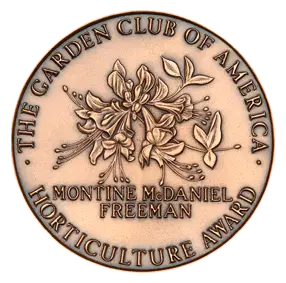
Each year, the Garden Club of America chooses a plant to be nominated for Plant of the Year. This award is given to underrated plants, chosen for their ornamental or ecological value, in hopes of encouraging more plantings in the future. Plant of the Year winners are also awarded the Freeman Horticulture Medal, and in 2017, this honor went to the Ashe magnolia. Ashe magnolia was selected for its beautiful white flowers and glossy green leaves, as well as its value for pollinators. The Garden Club of America considered this plant an “ideal specimen” for small gardens, praising both its beauty and resilience.
Where it once sat in its big sister’s shadow, Ashe magnolia steps into the light as a species of its own. It may be smaller than the bigleaf magnolia, but it is no less stunning. Ashe magnolia has flowers that fall just short of a foot wide, with brightly colored fruit following a fragrant floral display. But it brings more than just ornamental value to the table: both fruit and flower provide food for local wildlife. If you want an underrated southern beauty in your garden, Ashe magnolia may be for you.
If you want to learn about other magnolias, check out our Beginner’s Guide to Native Magnolias. Interested in other native trees? Head over to The Best Native Trees For Front Yards. Happy planting!
Sources
- Boone County Arboretum. “Magnolia ashei.” bcarboretum.org. https://bcarboretum.org/plants/genus/Magnolia/species/ashei. Accessed June 18, 2026.
- Florida Native Plant Society. “Magnolia macrophylla var. ashei.” fnps.org. https://www.fnps.org/plant/magnolia-macrophylla-var-ashei#gsc.tab=0. Accessed June 17, 2026.
- Garden Club of America. “Magnolia ashei Ashe magnolia.” gcamerica.org. 2017. https://www.gcamerica.org/plantoftheyear/magnolia-ashei-ashe-magnolia. Accessed June 19, 2026.
- IUCN Red List. “The IUCN Red List of Threatened Species: Ashe’s Magnolia.” www.iucnredlist.org, 2014. https://www.iucnredlist.org/species/39001/10160188. Accessed June 17, 2026.
- Kershner, Bruce, Craig Tufts, Daniel Mathews, Gil Nelson, and Richard Spellenberg. Field Guide to Trees of North America. New York: Sterling Pub. Co, 2008.
- Lady Bird Johnson Wildflower Center. “Magnolia ashei (Ashe’s Magnolia).” wildflower.org. Accessed June 16, 2026. https://www.wildflower.org/plants/result.php?id_plant=MAAS.
- Latimer, Shane David. 1994. “Magnolia ashei Weatherby (Magnoliaceae): Biology and Conservation of an Endangered Species.” Order No. 9535281, Tulane University. http://libproxy.temple.edu/login?url=https://www.proquest.com/dissertations-theses/magnolia-ashei-weatherby-magnoliaceae-biology/docview/304135108/se-2. Accessed June 17, 2026.
- Legal Information Institute. “Fla.. admin. code Ann. R. 5B-40.0055 – regulated plant index.” law.cornell.edu. Accessed June 17, 2026. https://www.law.cornell.edu/regulations/florida/Fla-Admin-Code-Ann-R-5B-40-0055.
- Magnolia Society International. “Getting Started with Magnolias.” magnoliasociety.org. Accessed June 17, 2026. https://www.magnoliasociety.org/Magnoliaresources.
- Melchior, Caleb. “Ashe’s Magnolia.” Horticulture 115, no. 2 (2018): 12. http://libproxy.temple.edu/login?url=https://www.proquest.com/magazines/ashes-magnolia/docview/2047319582/se-2. Accessed June 17, 2026.
- North Carolina State Extension. “Magnolia ashei.” plants.ces.ncsu.edu. Accessed June 16, 2026. https://plants.ces.ncsu.edu/plants/magnolia-ashei/.
- North Carolina State Extension. “Magnolia macrophylla.” plants.ces.ncsu.edu. Accessed June 16, 2026. https://plants.ces.ncsu.edu/plants/magnolia-macrophylla/.
- Oozeerally, Barbara, James Milton Gardiner, and Stephen A. Spongberg. Magnolias in Art & Cultivation. Richmond, Surrey, UK: Kew Publishing, Royal Botanic Gardens, Kew, in association with the Royal Horticultural Society, 2014.
- Ramírez-bamonde, Es, Lr Sánchez-velásquez, and A. Andrade-torres. 2005. “Seedling Survival and Growth of Three Species of Mountain Cloud Forest in Mexico, Under Different Canopy Treatments,” New Forests 30 (1): 95-101. https://doi.org/10.1007/s11056-004-5397-5. Accessed June 19, 2026.
- USDA PLANTS Database. “Magnolia ashei Weath. Ashe’s Magnolia.” plants.usda.gov. https://plants.sc.egov.usda.gov/plant-profile/MAAS. Accessed June 16, 2026.
- Weatherby, Charles Alfred (1926). “A new Magnolia from West Florida”. Rhodora. 28. New England Botanical Club [etc.]: 35–36. https://www.biodiversitylibrary.org/page/587881#page/40/mode/1up. Accessed June 16, 2026.
Explore more native magnolia profiles
-
-
-

-
-
-
-
-


Updated Find more: White Acidic Tree Spring Summer Full Sun Part Sun Moist
The ads on this site help pay real native plant nerds to research and write these guides.
Garden notes
Notes from people who’ve grown it
Tips, wins, and the occasional disaster. If you’ve grown Ashe magnolia, share the advice you’d give to a neighbor.
No notes yet. Yours could be the first.
Grown Ashe magnolia? Tell the next person what you wish someone had told you.
Tap anywhere to close


