

Highlights
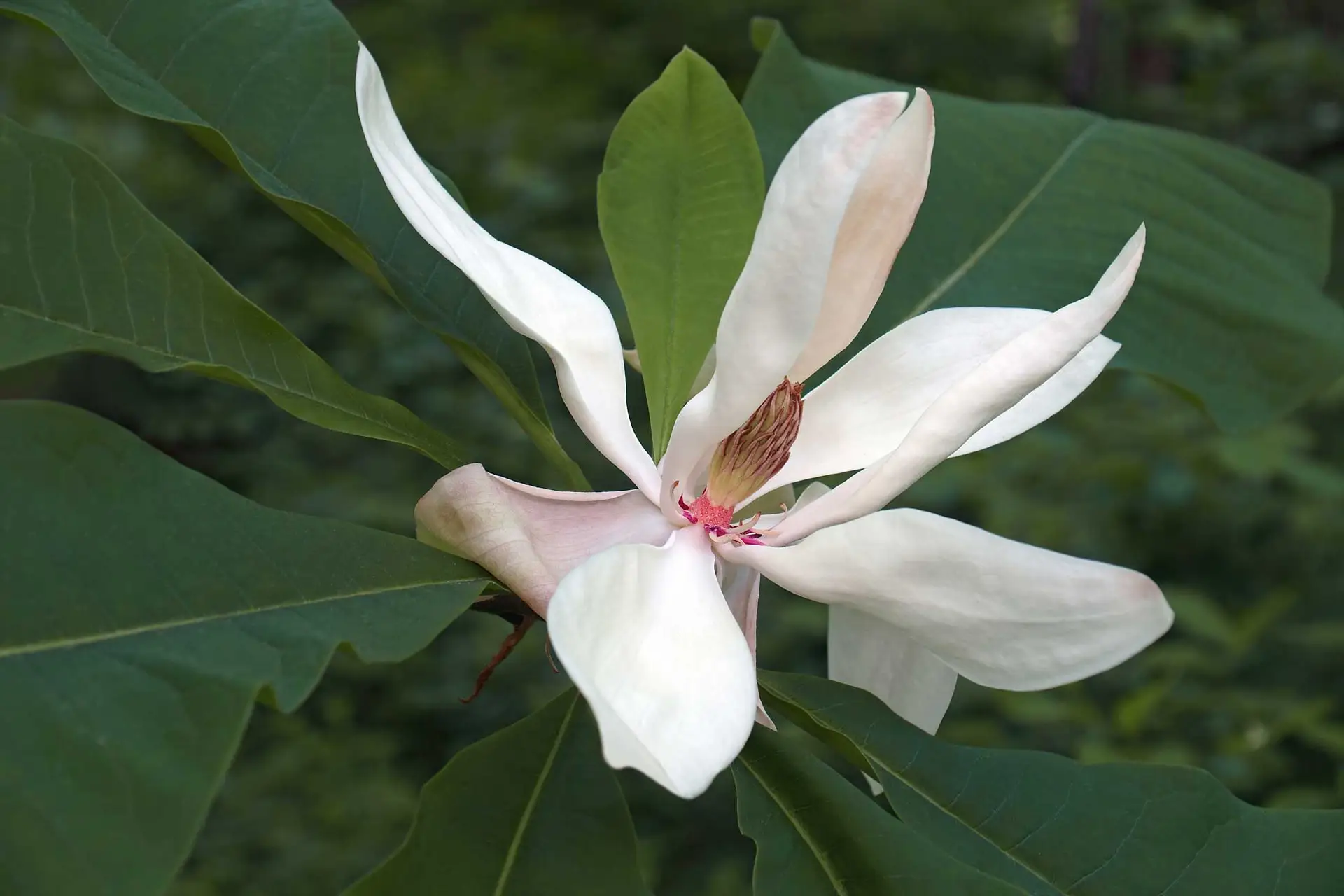
Mountain magnolia or Fraser magnolia is an early-blooming species of magnolia found high up in the mountains. You may have seen them while hiking in the Great Smoky Mountains, vacationing on the Cashiers-Highlands Plateau, or even while driving on Blue Ridge Parkway, and never noticed. The large flowers and uniquely-shaped leaves distinguish it from the plants that surround it, making it an uncommon, but beautiful choice for your garden.
Is mountain magnolia right for my yard?
Plant it if…
- You have an empty lawn. Mountain magnolia can grow fairly tall, so it can provide interest to an otherwise flat expanse of green.
- You want a plant that blooms in the shade. This tree is no stranger to shade, so partial shade won’t stop the springtime flower show.
- Your yard has a lot of compost. Mountain magnolia loves rich soil, so any compost you can provide will make it very happy.
- You want to attract songbirds. The seeds of mountain magnolia are eaten by birds, so you can expect a chorus of feathered friends in the summer when the fruit display begins.
- You like fragrant flowers. Mountain magnolia, like many others of its genus, emits a pleasant scent when in bloom.
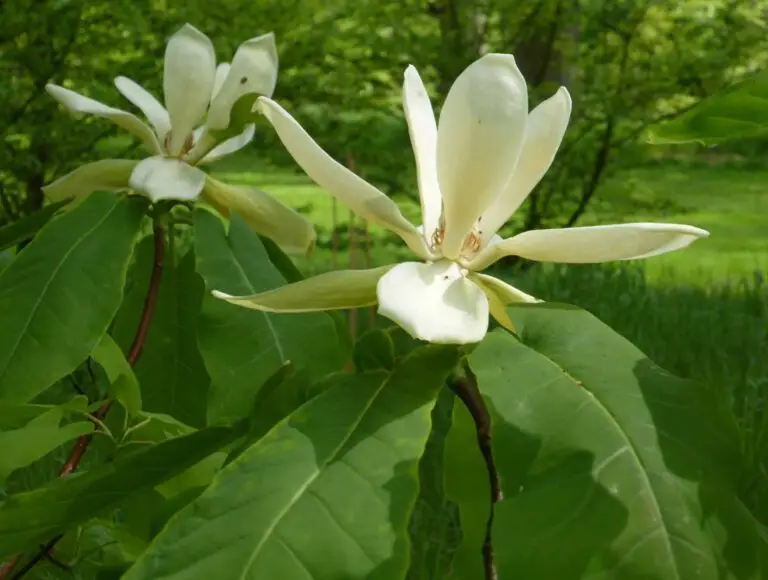
- You want a showy floral display. The flowers are quite large, growing up to 12 inches, and are white in color.
Skip it if…
- Your area is prone to drought. Mountain magnolia can handle excess water better than other species, but it does not like dryness.
- You live in the city. Big city life isn’t for everyone, and mountain magnolia is sensitive to pollutants and road salts.
- You have harsh winters. While magnolias are generally sensitive to frost, mountain magnolia is even less hardy than other species.
- You need something compact. In this case, pyramid magnolia, which we discuss below, may be a better option for you.
Where is mountain magnolia native?
Native to 9 US states
Sources: NatureServe, Royal Botanic Gardens, Kew (World Checklist of Vascular Plants) and the USDA PLANTS Database, compiled by The Plant Native. How we map native ranges
Mountain magnolia is native to the Southeast, occurring at higher elevations in the Appalachian Mountains. It is particularly common in the Great Smoky Mountains and can be found in the national park. However, it often occurs as individuals rather than in groves, which makes it somewhat uncommon. You can find the full range map at the USDA PLANTS Database.
While those may be ideal conditions, our native mountain magnolia is a fighter. If it can grow on rocky slopes close to a lake, it’ll probably be just fine in your garden.
Why mountain magnolia matters
As Linda Martinson, a certified member of the Blue Ridge Naturalist Network, described it, mountain magnolia is a botanical relic. We couldn’t agree more with this description.
Mountain magnolias have large flowers that can grow up to a foot wide. The petals are pale in color, with a thick and waxy texture. This is due to their unique pollination strategy. When we think of pollinators, we often default to bees. However, these flowers actually developed before bees existed. Magnolia flowers are so old, they predate the most common pollinator. Instead, they are pollinated by beetles. The thick flower petals are designed to resist chewing from their less delicate pollinator companions.
Not only are the flowers cleverly designed, the fruit are, too. Mountain magnolia fruit is high in fat when ripe, seeds “suspended in the air by almost invisible, elongating threads” instead of falling to the ground. This is designed to benefit the birds, as the high fat content helps them prepare for migration. The suspension of the bright red seeds also helps attract birds, as they can better spot the seeds when they are dangling, as opposed to the ground.
Magnolias are often described as ‘primitive,’ and while accurate, it does not make them less effective at what they do. They are surprisingly innovative, paving the way for other adaptations and unique specializations. By planting mountain magnolia, you can watch relationships from millions of years ago play out right in your garden.
Additionally, mountain magnolias are not as difficult to grow as you may have been led to believe. Most sources that discuss growing magnolias will say that it requires specific soil conditions: not too wet, not too dry, and soil rich in “organic matter” is a necessity. However, in June of 2026, I had the experience of travelling to the Cashiers-Highlands plateau, which is located in the Nantahala National Forest in North Carolina. Mountain magnolia grows wild there, as well as umbrella magnolia (Magnolia tripetala) and cucumber magnolia (Magnolia acuminata), and nature is not as forgiving as a carefully cultivated arboretum.
The Cashiers-Highlands Plateau
The Cashiers-Highlands Plateau is a temperate rainforest, one of two found in the United States. The other is the coastal redwood forest. This is one of the two major factors that make this area, referred to as simply “The Plateau” by locals, incredibly special. The ‘temperate’ part of temperate rainforest refers to the fact that the area experiences all four seasons, and a rainforest is defined by receiving a certain amount of rainfall. Due to its location, the Cashiers-Highlands Plateau experiences evening showers, as weather fronts lack the updrafts necessary to come up onto the plateau earlier in the day. The height of the area also means the water in the area is also clear and free from most pollutants.
The land is a rippling ocean of slopes and valleys, covered by densely-packed trees and colossal rhododendrons. The soil consists of sandy loams and can be fairly rocky in places. It is also full of minerals, the ground glittering with specks of flaky mica everywhere you step. You might recognize that name if you are familiar with mica powder, a pigment used in cosmetics, paints, and inks.
The other thing that makes the Cashiers-Highlands Plateau special is its biodiversity. The Plateau is one of the most biodiverse places on Earth. But what does this mean? It’s easiest to see in the tree cover. There are no stands or groves dominated by a single species. Each tree you see in an area will be different, and no two trees of the same species will be found growing right next to each other. The forests are a patchwork of different sizes and leaf shapes, each belonging to a different kind of tree.
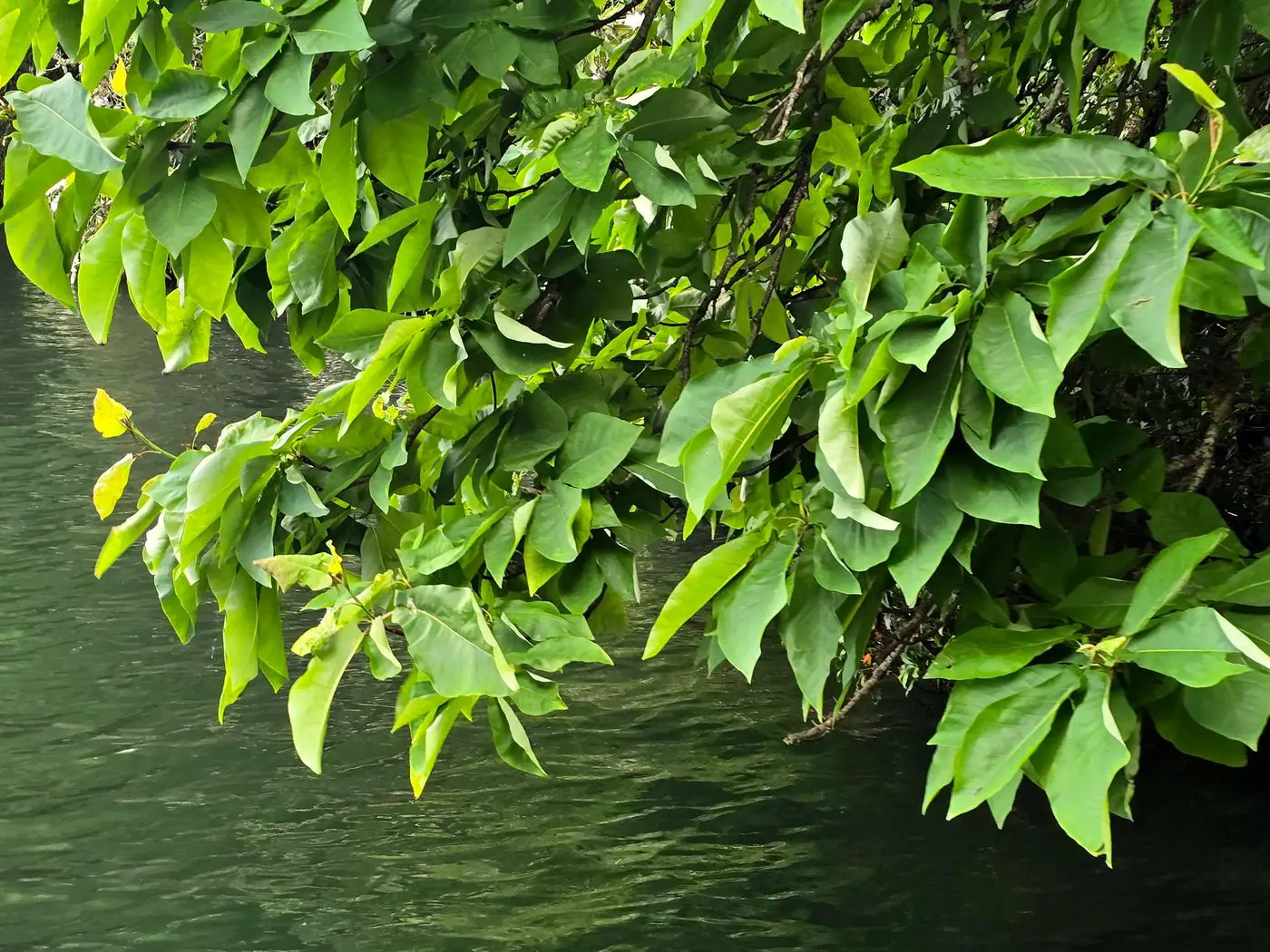
Here, mountain magnolias are not only wild, but abundant: growing care-free on the slopes of a literal rainforest. If I had reached out the window as we drove down route 64, my fingertips might have grazed their leaves I saw by the roadside. When I went to Lake Glenville, they grew so close to the shore that branches hung down over the clear water. Though I had missed the floral display, the fruit was already starting to grow, with some even beginning to turn their characteristic red.
Nature does not provide perfect conditions, yet the mountain magnolia thrives anyway. The lesson I took from my trip to Highlands was not to be intimidated by the gardening guides that portray magnolias as fussy plants with particular tastes. While those may be ideal conditions, our native mountain magnolia is a fighter. If it can grow on rocky slopes close to a lake, it’ll probably be just fine in your garden.
What’s the difference between cucumber magnolia and yellow cucumber magnolia?
Pyramid magnolia is a variety of mountain magnolia (Magnolia fraseri), although some authorities list it as its own species, Magnolia pyramidata. These two plants are very similar, though there are some differences between them:
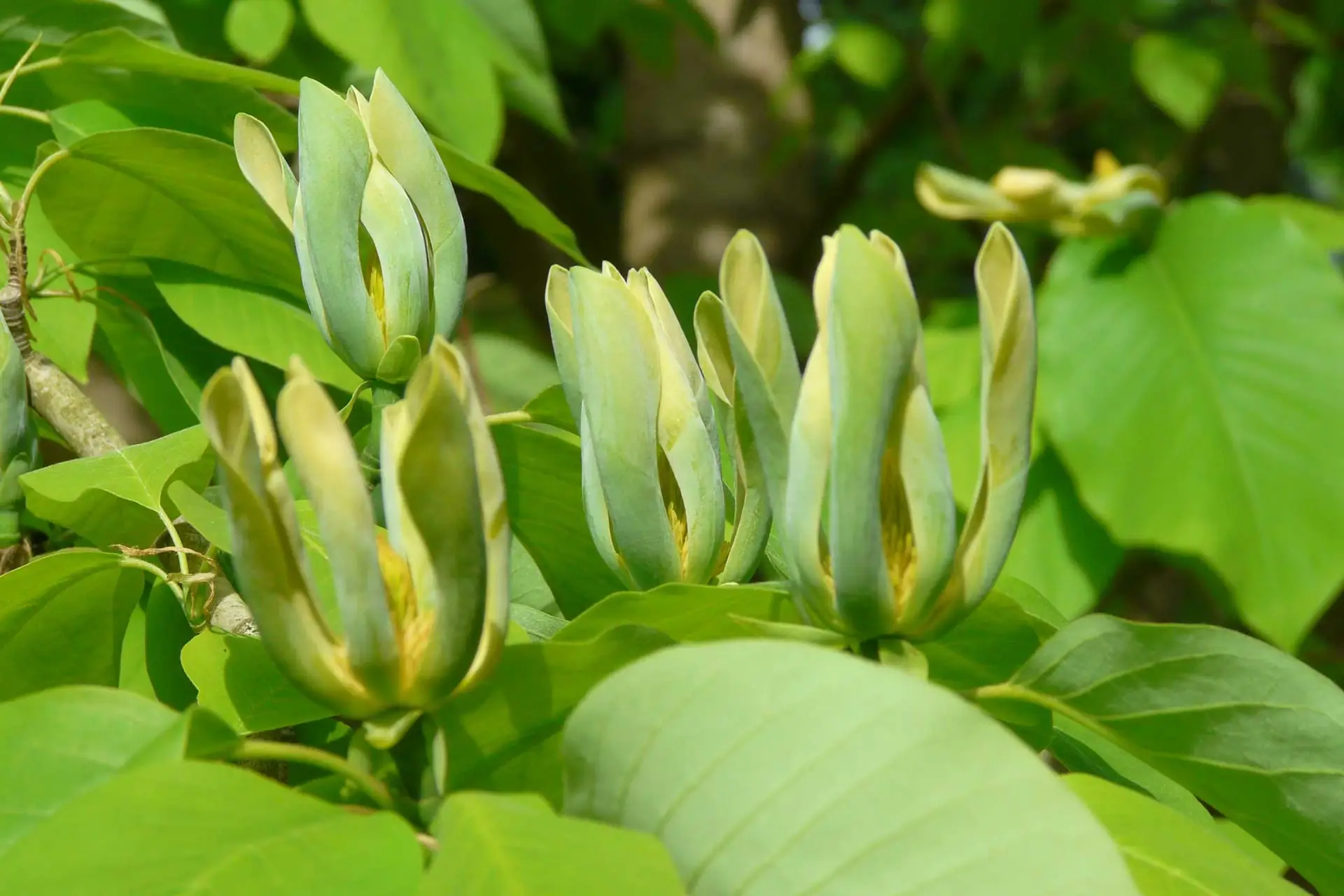
Mountain Magnolia
Magnolia fraseri
- High elevation: mountain magnolia is found between 2000 and 4000 feet
- Flowers can reach 1 foot wide
- Tall tree: grows between 50 and 100 feet
- Native to the Southeast and Mid-Atlantic regions
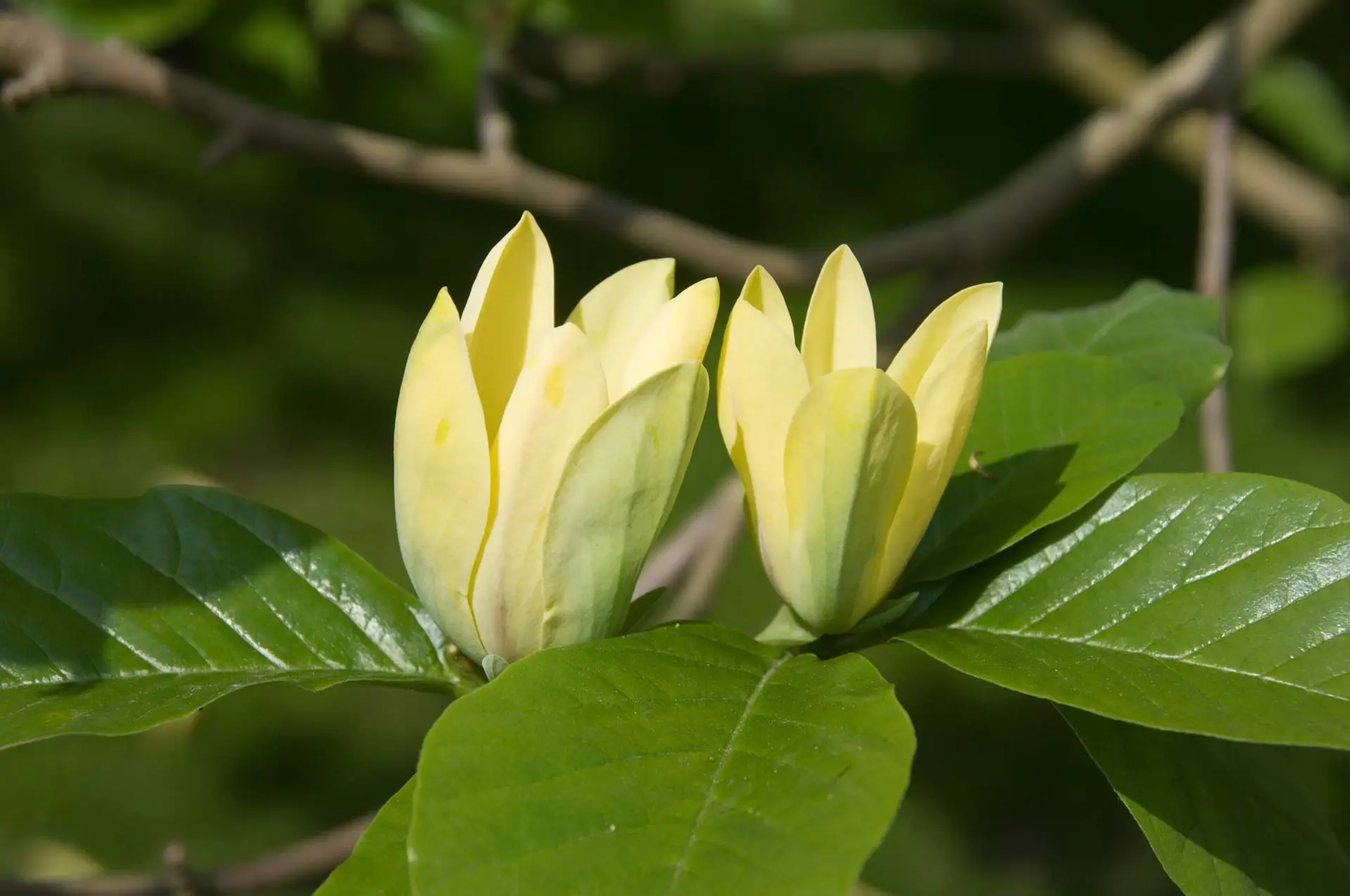
Pyramid Magnolia
Magnolia fraseri var. pyramidata or Magnolia pyramidata
- Occurs in lowland forests near the Gulf Coast
- Smaller flowers: Up to 5 inches
- Petite tree: May reach 35 feet tall, but usually stays shorter
- Native to the southern United States
An overview of pyramid magnolia
While this page is about the mountain magnolia, the pyramid magnolia shares many similarities. As such, we want to offer a bit more information on this plant. For planting advice, you can refer to the other sections of this page, as the same advice applies:
Pyramid magnolia is native along the southeastern coast of the United States, occurring between South Carolina and Texas. It was named for its distinct growth habit: the crown grows in a shape resembling a pyramid. Overall, it is much smaller than mountain magnolia, with a shorter stature and smaller flowers. It has a slightly longer bloom time as well, and the flowers have a scent like turpentine.
Its smaller size offers it an advantage over mountain magnolia when it comes to cultivation. While mountain magnolia is a large tree, pyramid magnolia is more compact, allowing it to be planted in smaller spaces. If your yard is too small for a mountain magnolia, pyramid magnolia may be a better option. However, its southern distribution makes it less hardy than mountain magnolia, so take that into consideration as well.
Where mountain magnolia shines in your yard
- Shade tree: Mountain magnolia can grow to be quite tall, so its large leaves can provide a shady respite in the summertime.
- Specimen tree: Plant mountain magnolia in a spot that shows off the large flowers and uniquely-shaped leaves.
- Hills and slopes: Mountain magnolia naturally occurs on the slopes of mountains, so it is adapted to anchor itself. Planting it on a slope will also help with drainage.
- Near stream banks and pond edges: Compared to other native magnolias, mountain magnolias can handle occasionally wet soil. Planting it near a body of water may help keep it hydrated during drought.
- Naturalized areas: For a low-effort planting, plant your mountain magnolia in a spot with ample moisture and natural compost.
- Scent or sensory gardens: Plant with other pleasant-smelling plants to create a garden that engages more than the eyes.
How to grow mountain magnolia
Where to plant
As long as your site is not heavily shaded, it should be at an acceptable light level for mountain magnolia. Mountain magnolia’s ideal conditions include rich, moist soil that leans acidic in pH. If your yard was historically farmland, or has an abundance of compost, that should be perfect. Sandy soil also works best. However, if you have finely textured soil or frequent rainfall, you might want to consider planting mountain magnolia on a slope. This will prevent water from pooling around the roots.
Beginner tip
With a good supply of compost, you won’t need any fertilizer. Mountain magnolia naturally grows in areas with rich soil, so the compost will help it thrive. While your magnolia could benefit from a controlled release fertilizer, it is unnecessary and potentially damaging to the soil. So skip the fertilizer.
Spacing
Once it reaches maturity, mountain magnolia is a tall tree with a widely spreading crown. As such, giving it a space of at least 25 feet is best.
Watering
Once established, mountain magnolia should be happy subsisting on rainfall. In the wild, it can be found growing close to lakes and streams, so it can handle a little extra water. While we don’t recommend watering it super frequently, this means you don’t have to be scared of accidentally overwatering your magnolia. Just pay attention to it during dry periods and you’ll be just fine.
Planting card
Magnolia fraseri
When to plant
Like many deciduous magnolias, mountain magnolia is best planted when dormant. Given its frequency in the Southeast, a late fall planting is best. The winters are mild, so the roots can establish without worry of frost damage. However, if you are planting further north, early spring is a safer bet.
What pairs well with mountain magnolia?
Mountain magnolia has large leaves, so companion plants that can handle shade are ideal. Other woodland natives, pleasant scents, and host plants can create a lively garden.


Where can I buy mountain magnolia?
Most big-box garden centers don’t carry true natives, but mountain magnolia is easier to find than you might think. Your best bets are a native plant nursery near you, a native plant society sale, or a trusted online grower that ships to your region.
Potential challenges with mountain magnolia
Frost damage
In general, magnolias are quite sensitive to frost. An untimely frost can ruin the beautiful floral display of native and non-native magnolias alike. However, when compared to other native magnolia species, mountain magnolia is considered less hardy. If you live in an area where the winters are mild, this shouldn’t be a problem. Further north, you may want to plant mountain magnolia in a more protected space, or you may consider a different species.
Salt spray
Not only is mountain magnolia sensitive to the cold, it is also vulnerable to road salt. When the level of salts in the soil gets too high, it can prevent plants from properly harnessing the nutrients in the soil. It can also burn the root hairs, which prevents the tree from uptaking nutrients at all. Mountain magnolia is especially sensitive to this, so plant it away from streets or walkways that may be salted.
Easily damaged
The bark of mountain magnolia is thin, making it easy to damage. This can end up causing wood rot if the tree is unable to heal. To prevent this, plant mountain magnolia away from walkways or areas that are frequently mowed. This way, lawn equipment or human activity won’t damage the bark.
FAQs
How do you identify a Fraser magnolia tree?
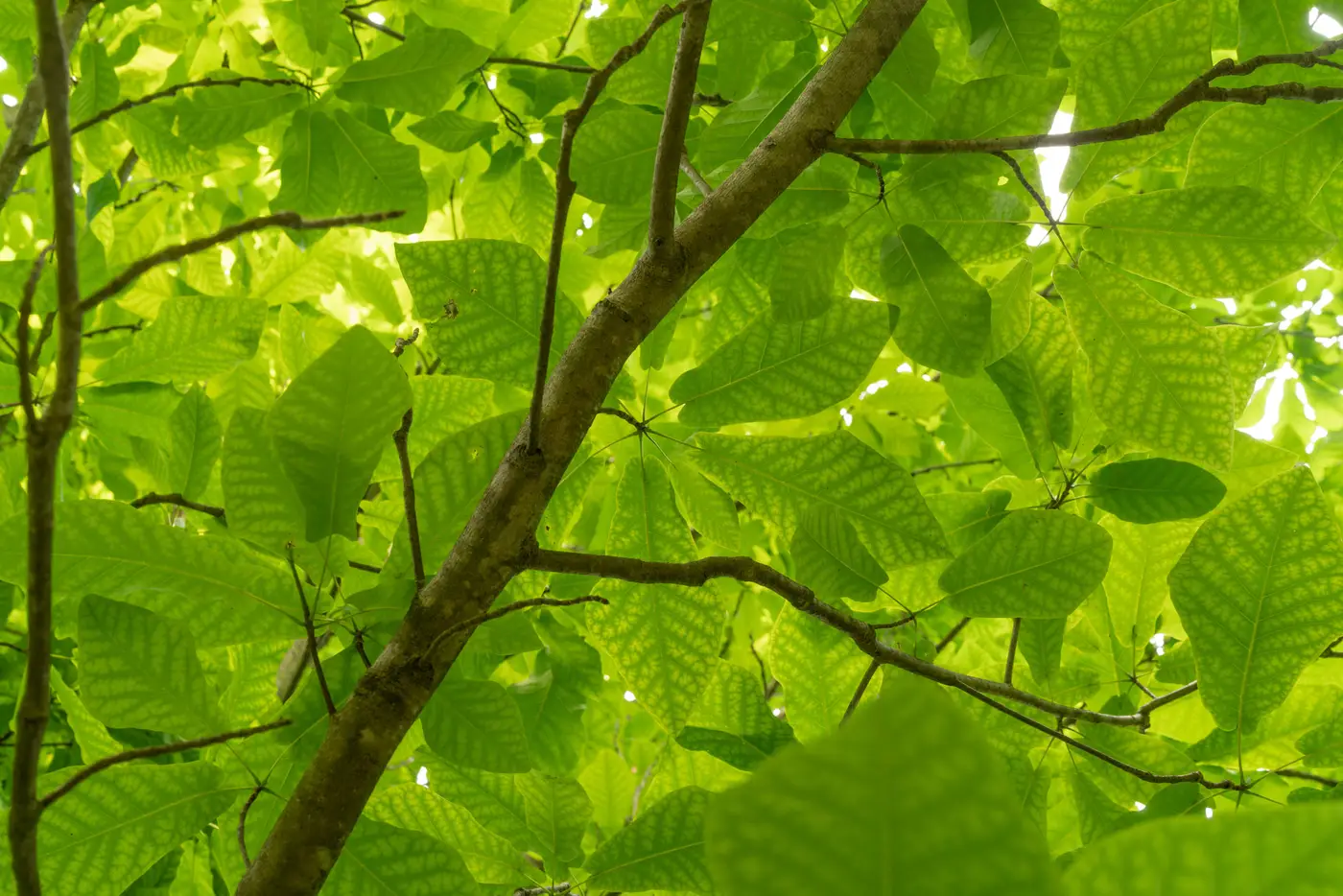
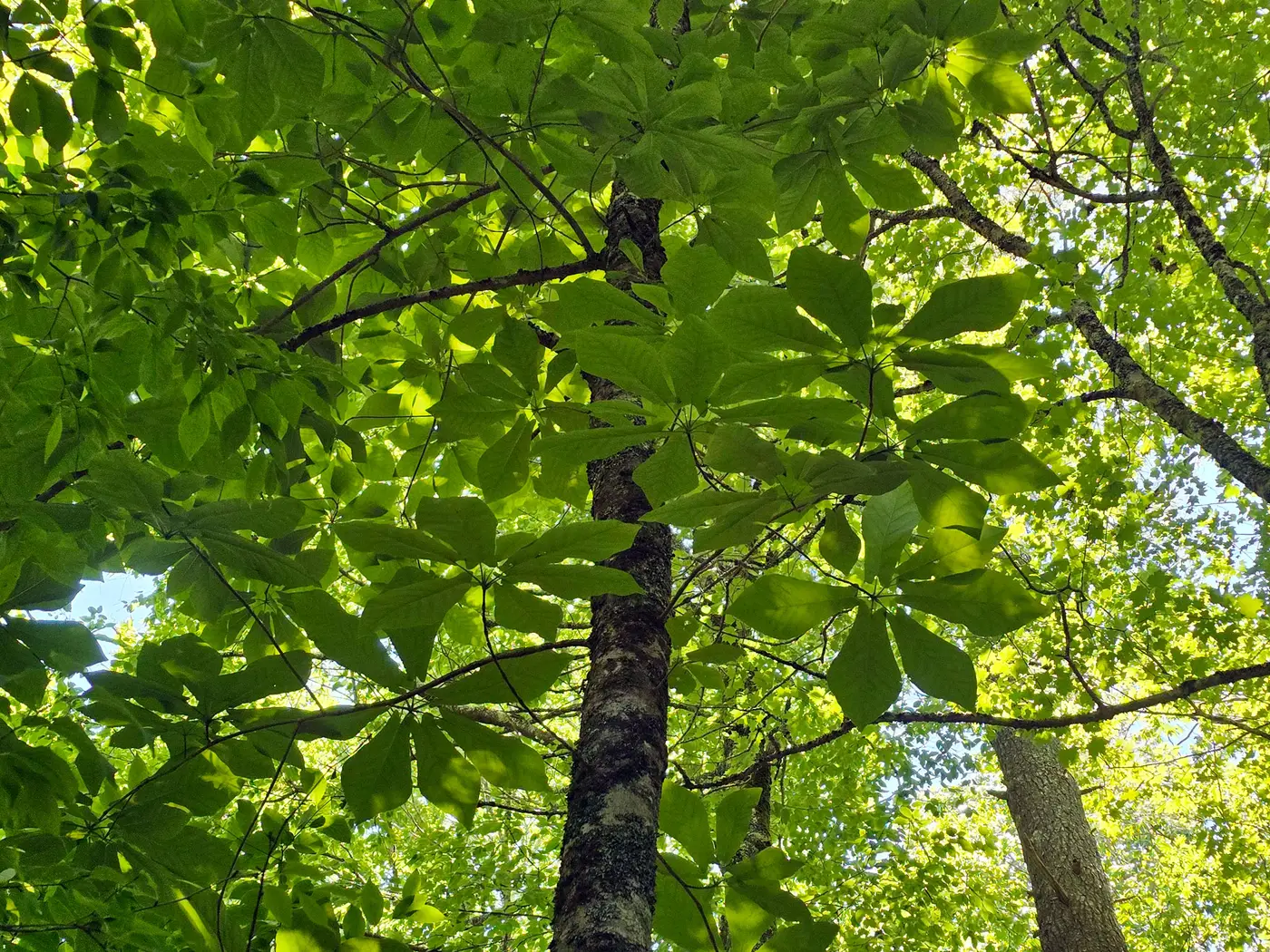
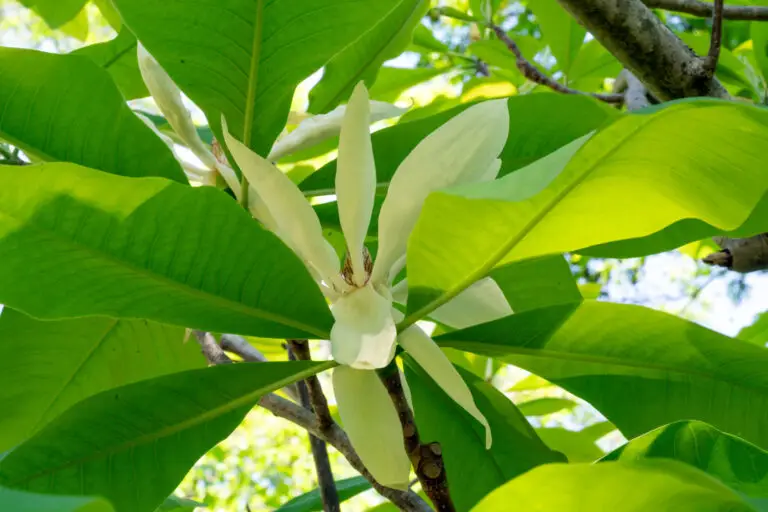
Fraser magnolia, or mountain magnolia, can be identified by the smooth, simple leaves clustered in whorls near the ends of branches. To distinguish it from other magnolias, you can use its bloom time, as well as the base of the leaves. Mountain magnolia blooms much earlier than most other native magnolias, beginning in March. At the base of the leaves, there is a distinctive heart shape where it connects to the petiole, or leaf stalk. The leaves are also reminiscent of the diamond suit you find on playing cards.
What is the difference between a Fraser magnolia and a cucumber magnolia tree?
The differentiating characteristics between Fraser magnolia (Magnolia fraseri) and cucumber magnolia (Magnolia acuminata) include native range and leaf shape. The cucumber magnolia has a much larger native range than Fraser magnolia. If you encounter a magnolia outside of the Appalachian Mountains, it is likely not the Fraser magnolia.
As for the leaves and flowers, the Fraser magnolia has slightly larger leaves than the cucumber magnolia. It also has a heart-shaped leaf base, while the cucumber magnolia is more triangular or circular toward the base. Additionally, the cucumber magnolia’s leaves look like an oval, while the Fraser magnolia’s are more diamond-shaped.
What is the Fraser magnolia tree used for?
Aside from ornamental use, Fraser magnolia is also used in the lumber trade, though infrequently. It has little value for firewood or construction, as it is light and weak, but it can be used for pulpwood. Pulpwood is ground into a pulp in order to make paper and other fiber products.
What is the common name for Magnolia fraseri?
Magnolia fraseri is commonly referred to as either mountain magnolia or Fraser magnolia, but it has a few other names. It may also be known as mountain-oread or fishtail magnolia, as well as variations of earleaf magnolia, cucumbertree, or umbrellatree.
Is Fraser magnolia evergreen?
No, Fraser magnolia is not evergreen. It loses its leaves in the winter, making it deciduous. There are two native magnolias that are evergreen, which you can learn about in our Beginner’s Guide to Native Magnolias.
Plant nerd fact
Mountain magnolia hosts an unexpected critter.
The Virginia northern flying squirrel (Glaucomys sabrinus fuscus) is a subspecies of northern flying squirrel that lives in the mountains at high elevation. They are small, between 11 and 12 inches, and brown in color with big, black eyes. The subspecies is quite rare, considered endangered for a period of time until the population recovered enough to be delisted. They live near streams and rivers in the holes of hardwood trees, typically conifers, eating seeds and nuts.
What does this have to do with mountain magnolia? Well, a study conducted in 2004 assessed the types of trees Virginia northern flying squirrels preferred to nest in. In their findings, the squirrels most commonly nested in Norway spruces (Picea abies), an invasive European conifer. However, after the Norway spruce, the most popular nest tree for Virginia northern flying squirrels is the mountain magnolia.
If you ever see a mountain magnolia in the forest, look for flying squirrels. You might just catch a glimpse of a rare North American rodent.
Mountain magnolia is a rare, but fascinating species of magnolia. It has a showy flower display and fruit that will bring all the birds to the yard. It can be used in fragrance or woodland gardens, or planted where it can show off for your neighbors. As well as providing food for pollinators and birds, it also serves as a home for the Virginia northern flying squirrel in the wild. If mountain magnolia is too large for you, pyramid magnolia is a more compact variety that grows along the coast.
If you want to learn about other magnolias, check out our Beginner’s Guide to Native Magnolias. Interested in other native trees? Head over to The Best Native Trees For Front Yards. Happy planting!
Sources
- Kershner, Bruce, Craig Tufts, Daniel Mathews, Gil Nelson, and Richard Spellenberg. Field Guide to Trees of North America. New York: Sterling Pub. Co, 2008.
- Lady Bird Johnson Wildflower Center. “Magnolia fraseri (Mountain Magnolia).” wildflower.org. Accessed June 11, 2026. https://www.wildflower.org/plants/result.php?id_plant=MAFR.
- Lady Bird Johnson Wildflower Center. “Magnolia pyramidata (Pyramid Magnolia).” wildflower.org. Accessed June 11, 2026. https://www.wildflower.org/plants/result.php?id_plant=MAPY.
- Lino, Della-Bianca. 1990. “Magnolia fraseri Walt.” In: Silvics of North America: Volume 2. Hardwoods, [Online]. United States Department of Agriculture (USDA), Forest Service, Agriculture Handbook 654. https://www.srs.fs.usda.gov/pubs/misc/ag_654/volume_2/magnolia/fraseri.htm. Accessed June 11, 2026.
- Magnolia Society International. “Getting Started with Magnolias.” magnoliasociety.org. Accessed May 28, 2026. https://www.magnoliasociety.org/Magnoliaresources.
- Martinson, Linda. “Fraser Magnolia Trees: Ancient Botanical Relics.” brnnetwork.org, July 8, 2019. https://www.brnnetwork.org/2019/07/08/fraser-magnolia-trees-ancient-botanical-relics/. Accessed June 12, 2026.
- Menzel, Jennifer M., W. Mark Ford, John W. Edwards, and Michael A. Menzel. “Nest Tree Use by the Endangered Virginia Northern Flying Squirrel in the Central Appalachian Mountains.” The American Midland Naturalist 151, no. 2 (2004): 355–68. http://www.jstor.org.libproxy.temple.edu/stable/3566752. Accessed June 11, 2026.
- North Carolina State Extension. “Magnolia acuminata.” plants.ces.ncsu.edu. Accessed June 4, 2026. https://plants.ces.ncsu.edu/plants/magnolia-acuminata/.
- North Carolina State Extension. “Magnolia fraseri.” plants.ces.ncsu.edu. Accessed June 11, 2026. https://plants.ces.ncsu.edu/plants/magnolia-fraseri/.
- Oozeerally, Barbara, James Milton Gardiner, and Stephen A. Spongberg. Magnolias in Art & Cultivation. Richmond, Surrey, UK: Kew Publishing, Royal Botanic Gardens, Kew, in association with the Royal Horticultural Society, 2014.
- Plants of the World Online. “Magnolia fraseri var. pyramidata (W.Bartram) Pamp.” powo.science.kew.org. Accessed June 11, 2026. https://powo.science.kew.org/taxon/urn:lsid:ipni.org:names:77188640-1.
- USDA PLANTS Database. “Magnolia fraseri Walter Mountain Magnolia.” plants.usda.gov. https://plants.sc.egov.usda.gov/plant-profile/MAFR. Accessed June 11, 2026.
- USDA PLANTS Database. “Magnolia pyramidata W. Bartram Pyramid Magnolia.” plants.usda.gov. https://plants.sc.egov.usda.gov/plant-profile/MAPY. Accessed June 11, 2026.
- Web Soil Survey. websoilsurvey.nrcs.usda.gov. https://websoilsurvey.nrcs.usda.gov/app/WebSoilSurvey.aspx. Accessed July 3, 2026.
Explore more native magnolia profiles
-
-
-

-
-
-
-
-


Updated Find more: White Yellow Acidic Flower Tree Spring Full Sun Part Sun Moist
The ads on this site help pay real native plant nerds to research and write these guides.
Garden notes
Notes from people who’ve grown it
Tips, wins, and the occasional disaster. If you’ve grown mountain magnolia, share the advice you’d give to a neighbor.
No notes yet. Yours could be the first.
Grown mountain magnolia? Tell the next person what you wish someone had told you.
Tap anywhere to close


