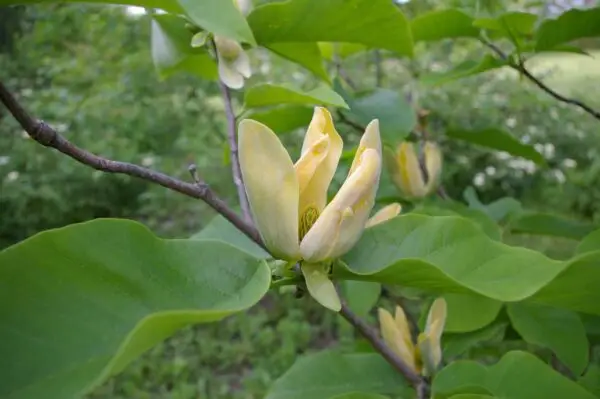
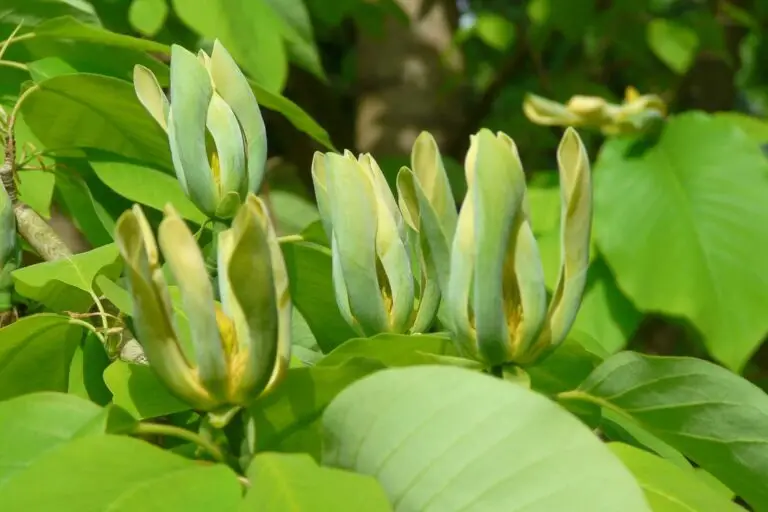
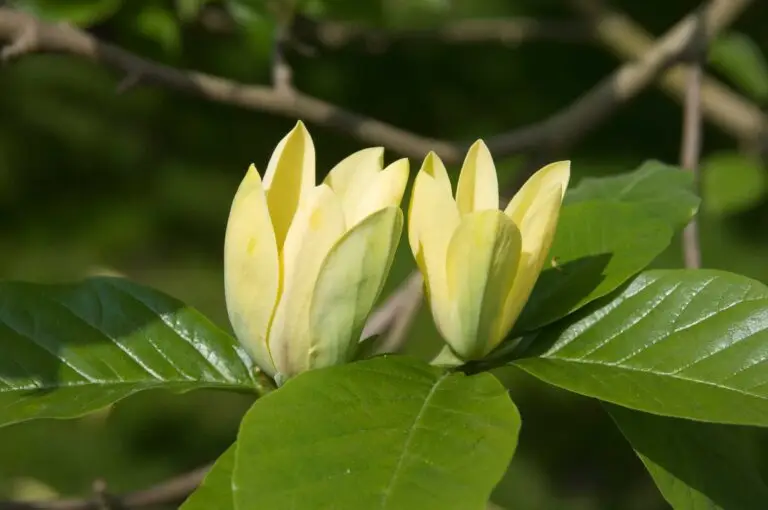
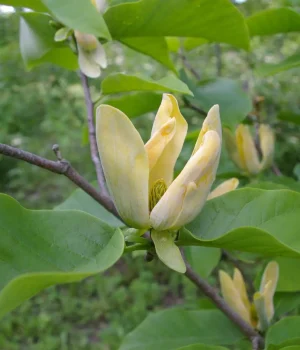
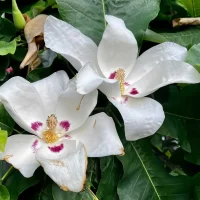
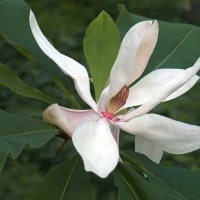
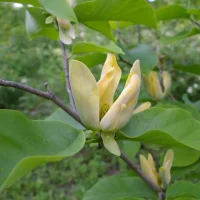
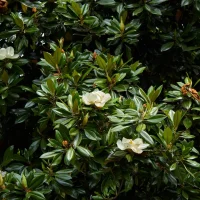
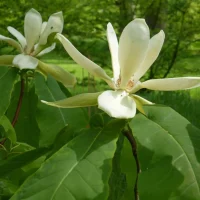
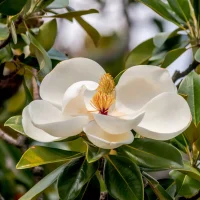
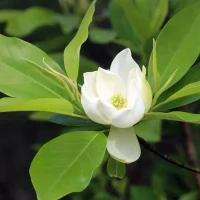
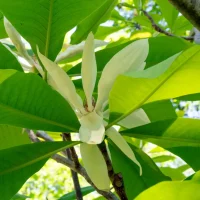
Cucumber magnolia (Magnolia acuminata) and yellow cucumber magnolia (Magnolia acuminata subsp. subcordata) are two native magnolia trees that are known for their sweet-smelling yellow flowers and cucumber-shaped fruit. Cucumber magnolias can grow in cold climates as far north as Canada and are the tallest of the native magnolias. Yellow cucumber magnolias are a subspecies of cucumber magnolias, but they are native to warmer areas (PA to FL). Because these trees are native, they thrive with regular rainfall after being established. Scroll on to meet them both.
Head to the complete guide for planting basics, species comparisons, and beginner-friendly tips.
What’s the difference between cucumber magnolia and yellow cucumber magnolia?
You would think that it would only be color, but they have more differences than that. Each cucumber magnolia handles cold temperatures differently (a plant’s ability to handle frost and snow is called its hardiness.) Here’s how they’re different:
Cucumber Magnolia
MAGNOLIA ACUMINATA
Super cold hardy: can be grown from Canada to FL (the only magnolia native to Canada)
Yellow-green flowers
Tallest of the native magnolias: grows up to 100 feet
Most widespread native magnolia
Yellow Cucumber Magnolia
Magnolia Acuminata SUBSP. Subcordata
Doesn’t like cold: grows from PA to FL
Yellow flowers
Petite tree: tops out around 30 feet tall
Native to a smaller area than the cucumber
Is cucumber magnolia right for my yard?
Plant it if…
You have an open yard. Tired of an empty lawn, but not sure what to add? The cucumber magnolia provides an elegant solution to a flat area, as well as a shady nook to read beneath.
You have acidic soil. Cucumber magnolia has a preference for acidic soil, though it can handle a more neutral pH as well.
You have a shady spot in your garden. While it draws the line at total shade, cucumber magnolia can handle the less sunny spots of your yard.
Your yard has lots of leaf litter. Magnolias like rich soil, and leaf litter makes for low effort compost.
You want a magnolia with fall foliage. According to the North Carolina Extension Gardener, “unlike most magnolias, this one has a respectable yellow fall color.”
Skip it if…
The weather in your area is unpredictable. This magnolia is cold hardy, but the flowers are still sensitive to frost. If the temperature in your area can’t make up its mind in springtime, those flowers will turn brown and sad.
Your soil is rocky. The cucumber magnolia wants deep soil, and it doesn’t form a taproot. If the soil is full of rocks, it may hurt the growth of a healthy root system.
Your area is prone to drought. Cucumber magnolia requires moist soil, so it is sensitive to dryness.
You live in an urban area. Not only can this tree be very large, it is also sensitive to pollutants.
Where is cucumber magnolia native?
Cucumber magnolia (Magnolia acuminata) has the widest native range out of any North American magnolia. It is native from as far north as Ontario to down south in Florida, and it is the only magnolia native to Canada. See the full range map at the USDA PLANTS Database.
Where is cucumber magnolia native?
Native to 23 US states and 1 Canadian province (Ontario)
By planting a magnolia tree, you are helping keep thisunique plant-pollinator dynamic alive.
”
Why cucumber magnolia matters
Magnolias have a long history, both with nature and with humanity. They were one of the first flowering plants to evolve, going all the way back to the Cretaceous period. This actually predates the evolution of bees, so you might ask: what pollinated magnolia trees?
The answer is beetles. Beetles were the first pollinators, long before the first bee ever took flight. And this ancient relationship between magnolias and beetles is still happening, perhaps even in your own backyard. By planting a magnolia tree, you are helping keep thisunique plant-pollinator dynamic alive.
Cucumber magnolia isn’t just for pollinators
Magnolias also hold incredible significance to humans, and this is especially true for the cucumber magnolia. Given its wide distribution, cucumber magnolias were an important plant for the native peoples of North America. The flowers provided a minor food source, and various parts of the tree were used as medicine by tribes like the Iroquois and Cherokee. The lumber was also useful, as it could be fashioned into furniture or even canoes.
However, while cucumber magnolias have the widest habitat distribution of any North American magnolia, this does not mean they are common. They often occur as individuals, rather than in groves, and require particular conditions in order to grow. They are also the only magnolia native to Canada, listed under the Species at Risk Act.
How to grow cucumber magnolias
Where to plant
Cucumber magnolias like wetter areas. In nature, they are often found in or near swamps and bogs. If you’re planting in a non-wet area, be sure to give them water during dry periods, particularly during the first year when they are getting established.
Cucumber magnolias also like full sun to part sun. The only thing they don’t like is full shade. The more sun they get, the more leaves and flowers they will be able to produce.
Spacing
This magnolia likes space, so roughly 25 to 35 feet will do. However, it can grow bigger, so if you have extra space, your plant will be happier.
Watering
Water thoroughly while the roots are establishing. After that, they should do well as long as the soil remains moist. Make sure to water them during dry spells.
Garden Recipe™
Cucumber Magnolia
Magnolia acuminata
Sun to part sun
Sun
Some work
Effort
Height depends on species tall 25-35 ft wide
Size
Summer
Blooms
What it needs
Sunlight
Full to partial sun, 4+ hoursThe more sun the better, but it can handle some shade
Water
Likes it moistPick a low spot, or plan to water often
Directions
Spacing
25-35 ftThink of each one as its own tree
Watering
Weekly for the first seasonAfter that, rain is usually enough
Notes
Comes back?
Yes, every yearGoes dormant in winter, that's normal. New growth each spring.
Butterfly host plant. Certain butterflies depend on this plant to reproduce. It's one of the specific species their caterpillars need to survive.
This depends on your climate. In general, deciduous magnolias are best planted when they are still dormant. This allows them to focus on putting out roots while they establish. The Magnolia Society recommends planting “late fall or winter in warmer climates and early spring in cold climates.” If you are doing a spring planting, take extra care to water your new magnolia to prepare it for the coming summer.
Beginner Tip
Skip the fertilizer. Your magnolia could benefit, but you don’t really need it. Instead, add some compost to your soil. The bigleaf magnolia naturally grows in areas with rich soil, so the compost will help it thrive.
Potential challenges with cucumber magnolia
Frost damage
If there is one thing magnolias hate, it would be frost. The cucumber magnolia is more cold hardy than most, but the flowers are still sensitive to an unexpected freeze. We wish we had a fix for this, but we can’t change the weather.
Fortunately, there are other things to look forward to about this plant. Even if the flowers may not show, the leaves are still quite the specimens of their own. Not only are they large, but they provide a pop of color in the fall when compared to most other magnolias.
If you’re still disappointed about the flowers, there is another fix for that. If you know a freeze is coming, you can go out with a pair of pruners and snip off some of the flowers. If the buds are still tight, they will survive the freeze. But if they are starting to open, trim them off and put them in a vase. They may not dazzle your neighbors this way, but you’ll have a floral display just for you.
Sensitivity to drought
Like most magnolias, cucumber magnolia is picky about its moisture. It dislikes extremes: too wet or too dry can make it shrivel up like a raisin. If your area is prone to periods of little rainfall, this means bad news. During dry periods, pay special attention to the cucumber magnolia and give it a bit of extra water. The sky may not always provide for it, but you might still be able to.
Deer browse
Unfortunately, this magnolia is one deer like to eat. It may not be their favorite, but they nibble both twigs and buds, which can spoil the coming year’s floral display. However, once the tree is tall enough, deer won’t be able to reach anymore. Until then, you may want to consider a cage or other forms of protection.
Where cucumber magnolia shines in your yard
Shade tree: Cucumber magnolias cast deep shade beneath their canopy, which is perfect for cooling off on a hot summer day.
Naturalized areas: Have a spot you just want to be low maintenance? As long as the area is moist, you can just plant cucumber magnolia and leave it there. The leaf litter is even a benefit.
Specimen tree: Place this plant front and center where it can show off its large leaves and yellow fall foliage.
Near stream banks and pond edges: While cucumber magnolias do not want to be planted in standing water, being planted near water is a good way to keep the soil moist and your magnolia happy.
FAQs
Can you eat cucumber tree fruit?
No. The immature fruit of cucumber magnolia is said to have been used in whiskey, but the fruit themselves are not particularly appetizing. Leave those for the birds.
The flowers, however, are a different story. Cucumber magnolia flowers and buds are edible, and may have provided food for indigenous peoples and early settlers. Many magnolias have edible flowers, in fact. In China, some magnolias have even been used in recipes.
Why is it called a cucumber tree?
The immature seed pods are said to look like a cucumber.
While the mature seed pods turn a bright red or pink, the young pods bear a resemblance to the garden vegetable. According to Holden Forests & Gardens, “The green immature fruit is [also] cylindrical, hence the name cucumbertree.”
What is the lifespan of a cucumber tree?
The lifespan of a cucumber magnolia is usually no more than 150 years, and they reach maturity between 80 and 120 years.
Do coffee grounds help magnolia trees?
That depends on what you mean by “helping.” Coffee grounds make a good addition to compost, providing important nutrients such as nitrogen. However, the idea that coffee grounds lower soil pH is a myth.
How do you propagate cucumber magnolia?
Both seeding and grafting are considered effective methods to propagate cucumber magnolias. Grafting is the process of attaching branches of one tree to the trunk of another.
In order for cucumber magnolia seeds to be successful, they must be stratified.Seed stratification refers to the process of breaking a seed’s dormancy period through temperature changes. For cucumber magnolia, the seeds should be stored in a cold, moist place for several months. Setting them on a moistened paper towel and sticking them in your fridge is likely enough, but check on them to prevent the seeds from drying out.
Plant Nerd Fact
Cucumber whiskey, anyone?
Cucumber magnolias were used by indigenous cultures for a variety of things. The wood, light but sturdy, was used for canoes and wooden bowls. The bark was used medicinally, and the flowers provided a minor food source for native peoples and settlers alike. However, there is one use of cucumber magnolia that gave it another name: Indian bitter.
The plant was first named by François André Michaux, who visited the Appalachian Mountains in 1802. In his later publication of his travels, he described the use of cucumber magnolia as an infusion in whiskey. He spoke of how people “pick the cones when green to infuse in whisky, which gives it a pleasant bitter. This bitter is very much esteemed in the country as a preventative against intermittent fevers.”
What pairs well with cucumber magnolias?
There are so many great native plant options to plant with cucumber magnolias! Some great pairings include:
Finding specific native plants like cucumber magnolias can be challenging, especially when visiting conventional plant nurseries. To make the search easier, we’ve put together four resources for native plants:
Cucumber Magnolia
Where can I find seeds and plants?
Finding native plants can be challenging (we partly blame King Louis XVI.) To make it easier, we’ve assembled four sourcing ideas.
That concludes our love letter to cucumber magnolias! These beautiful native trees should be better known and found more easily in our gardens. No matter if you live in a warm climate in Florida or a snowy winter wonderland in Canada: there is a cucumber magnolia for you. Don’t forget to visit our Guide to Native Magnolias to meet the other magnolias of North America. Happy planting!
Emily Lessard is the founder and editor of The Plant Native, the site that helps homeowners across North America get started with native plants. She holds a Sustainable Landscapes certificate through the Pennsylvania Landscape & Nursery Association, is finishing a Native Perennial Garden Design Certificate at Temple University, and is the author of Plant Native:A Practical Guide to Over 100 Native Plants of North America (Quarto, February 2027). She gardens outside Philadelphia in the 8.3 Southeastern Plains ecoregion.