Without milkweed, there would be no monarch butterflies. That’s not an exaggeration. It’s the whole story.
There are 100+ species of milkweed native to North America, offering different types for every region. Native milkweeds like sun or part sun, and different species offer flowers from pink to orange and various heights. Here is everything you need to find the right one for your yard.
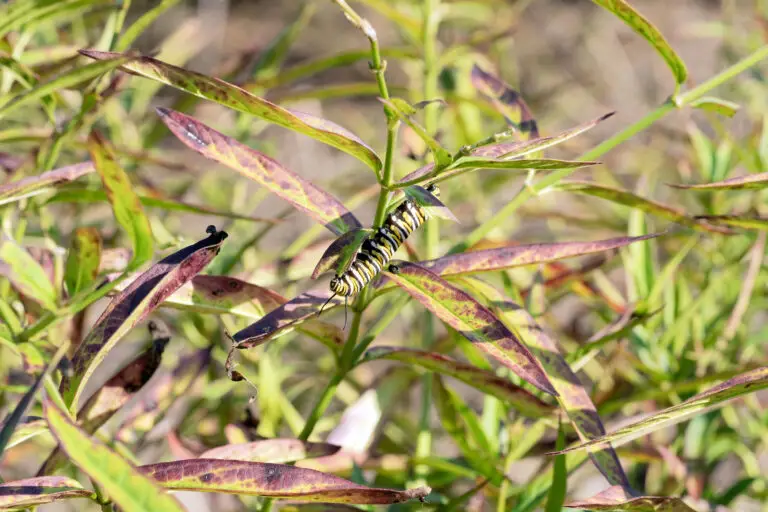
Monarch *caterpillars* ONLY eat milkweed
The monarch and milkweed are a package deal
Monarch butterfly moms are not flexible about where they lay their eggs. They will lay them on milkweed, and only milkweed. The caterpillars that hatch will eat milkweed leaves, and only milkweed leaves. If milkweed isn’t there, monarchs don’t reproduce. No milkweed, no monarchs. The math is that simple.
Plants with this incredible, intricately linked relationship with wildlife populations are called host plants.
Some bad monarch news
Since the 1980s, the eastern monarch population has dropped by 80%, and the western population has dropped by more than 95%. The Center for Biological Diversity says it starkly: “A federal assessment of the monarch’s status found that in the next 60 years eastern monarchs have up to a 74% chance of going extinct and western monarchs have up to a 99% chance of being lost.”
“
In the next 60 years eastern monarchs have up to a 74% chance of going extinct and western monarchs have up to a 99% chance of being lost.
”
What happened? Milkweed disappeared. (And pesticides.)
The Center for Biological Diversity estimates that monarchs have lost more than 165 million acres of breeding habitat, an area about the size of Texas. The main reason: milkweed disappeared from the American landscape. Farms got bigger. Pesticides got sprayed. Roadsides got mowed tighter. Subdivisions went up where milkweed meadows used to be. And suburban landscaping doubled down on boxwoods, yews, and blue-orbed hydrangeas instead of native plants.
You can’t replace 165 million acres of milkweed overnight (especially with the current federal administration). But you can plant five milkweed plants in your yard, and so can your neighbors, and so can their neighbors, and that math starts to work in the monarch’s favor. This hopeful yard-math is not The Plant Native’s equation. It comes from the incredible work of Doug Tallamy and Homegrown National Park.
We’ve talked about how important milkweed is for monarchs. But why milkweed? What makes this plant so special?
Milkweed gives monarchs special powers
Here’s where milkweed gets genuinely strange. Milkweed is toxic to almost all creatures except the monarch:
- The plant’s sap contains cardiac glycosides, compounds toxic to most animals.
- Eating milkweed can cause an animal or bug to vomit, become paralyzed, or even die.
- Monarch caterpillars have evolved to eat milkweed and be fine.
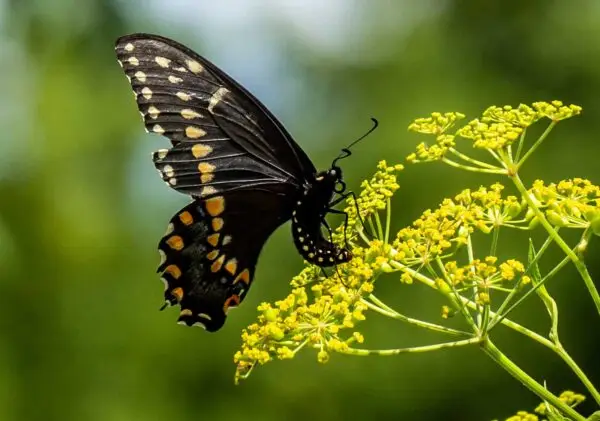
Eating milkweed gives monarchs a leg up throughout life because they hold onto the toxicity in their bodies. A bird that eats a monarch gets a mouthful of something that tastes terrible and makes it feel sick. It doesn’t make that mistake twice. Adult monarchs are toxic too, which is why they get to fly slowly and conspicuously without being eaten. Potential predators know how to spot their iconic coloring and leave them alone.
Milkweed is a nursery, a cafeteria, and a chemical weapons factory all in one plant.
I think I can hear what you’re asking next:
If milkweed is so important, why do I see monarch butterflies on so many flowers?
Monarch butterflies are not picky
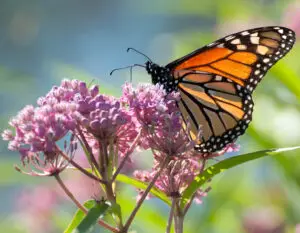
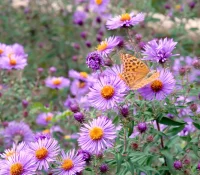
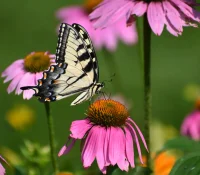
Once the caterpillar becomes a butterfly, the strict milkweed diet is over. Adult monarchs sip nectar from a wide range of flowers: coneflowers, goldenrod, asters, and plenty of plants that have nothing to do with milkweed. This is why monarch butterflies show up in all kinds of gardens. But you’ll only ever find monarch caterpillars on milkweed. Host plant relationships are non-negotiable.
Monarch *butterflies* eat lots of flowers
Types of native milkweed
There are 100+ native milkweed species in North America. Here are the ones you’re most likely to find at native plant nurseries, organized by where they grow. You’ll always know it’s milkweed when you see the Latin name Asclepias.
Milkweed for most of the continental US
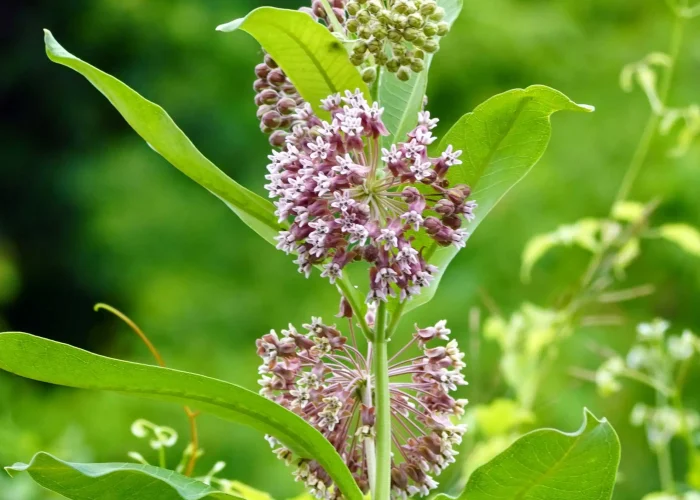
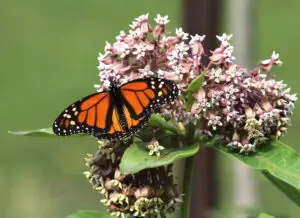
Common Milkweed
Asclepias syriaca
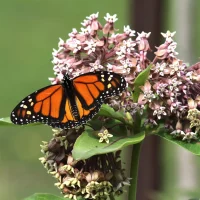
75% of the US can plant common milkweed. Common milkweed is a tall perennial (3-5 feet!) with clusters of pink or purple flowers. Common milkweed likes dry, sunny areas.
Read our Common Milkweed Profile.
Milkweed for the Eastern and Midwestern US
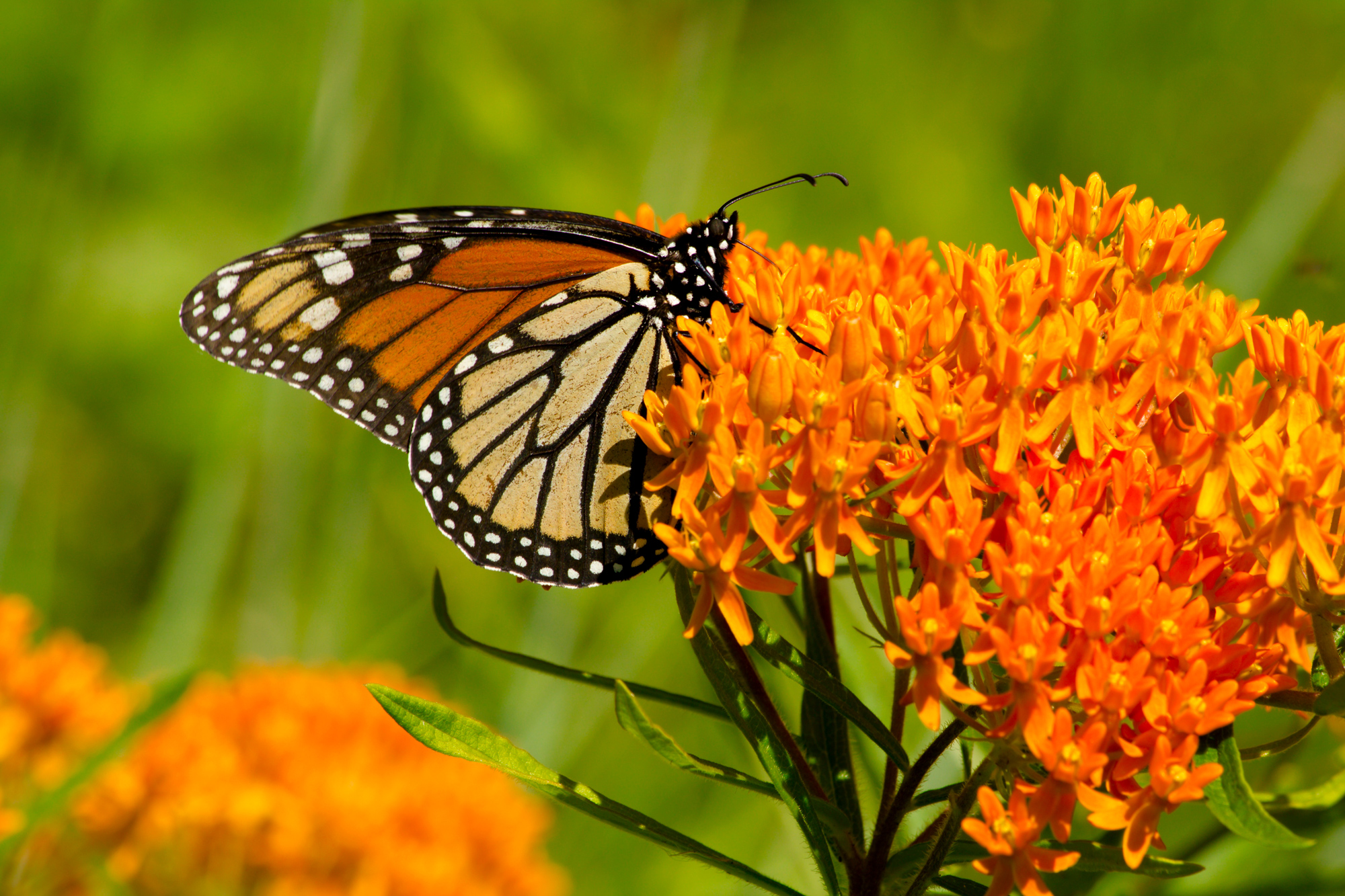
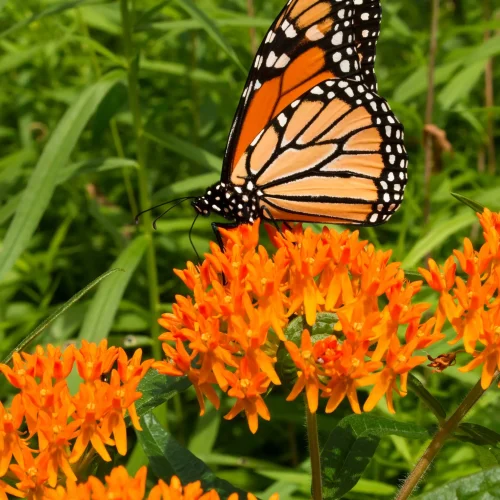
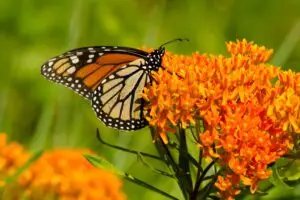
Butterfly Weed
Asclepias tuberosa
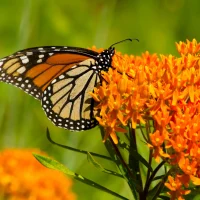
Butterfly weed is a shorter milkweed (1-2 feet) with clusters of bright orange flowers. Because butterfly weed is short, it’s useful for borders. Butterfly weed grows from Maine to South Dakota, and south to Florida. Butterfly weed has a long taproot (like a carrot) making it difficult to move once it’s planted but very drought tolerant. Butterfly weed is very easy to plant by seed; seeds planted in the spring will flower later that summer.
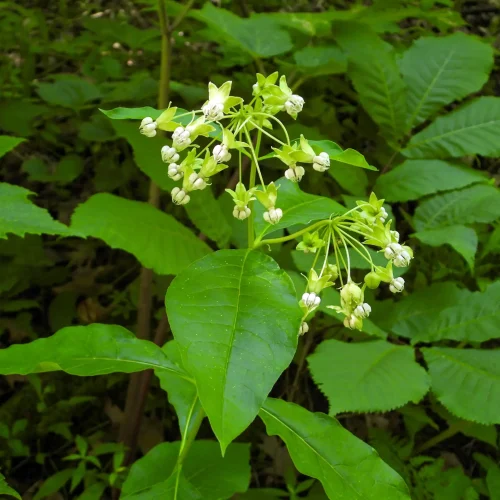
Poke Milkweed
The shade milkweed. Most milkweeds demand full sun; poke milkweed is comfortable at woodland edges and in part shade. Tall (3-5 feet), with delicate white-to-pale-pink drooping flowers. If your yard has tree cover and you’ve given up on milkweed, try this one. Native to the eastern US.
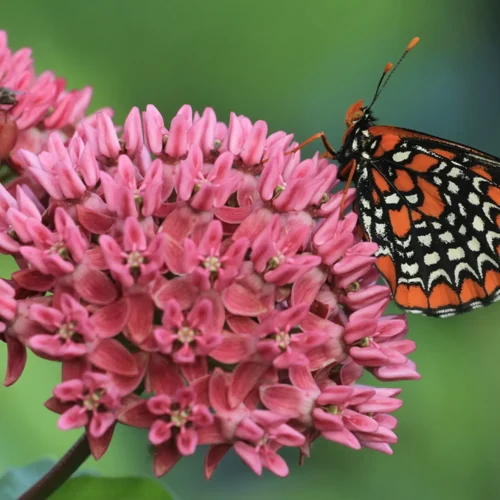
Purple Milkweed
The most intensely colored eastern milkweed: deep maroon-purple flower clusters that stop people in their tracks. Similar in size to common milkweed (2-4 feet) but notably better-behaved about spreading. Native to the eastern and central US. Harder to find at nurseries, but worth hunting for.
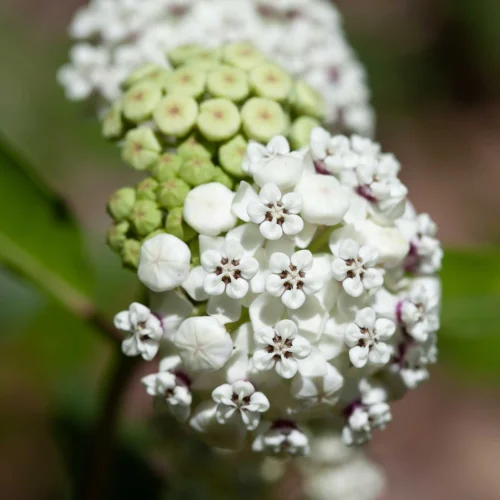
Red-ring Milkweed
Native all the way from New York state to Texas, this gorgeous milkweed stays relatively short (1-3′) with bright white fistfuls of flowers. Get up close, and you’ll see a delicate reddish-purple ring of color in the center of the flowers. Stunning.
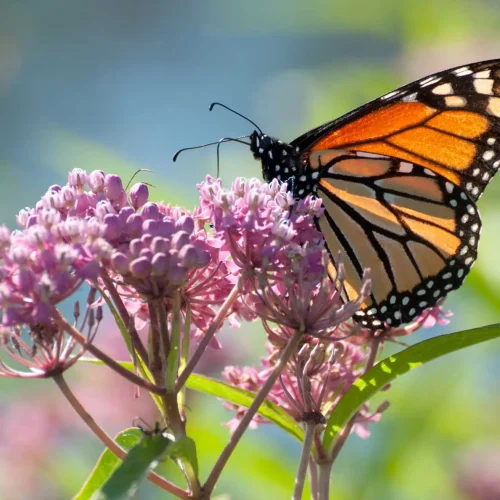
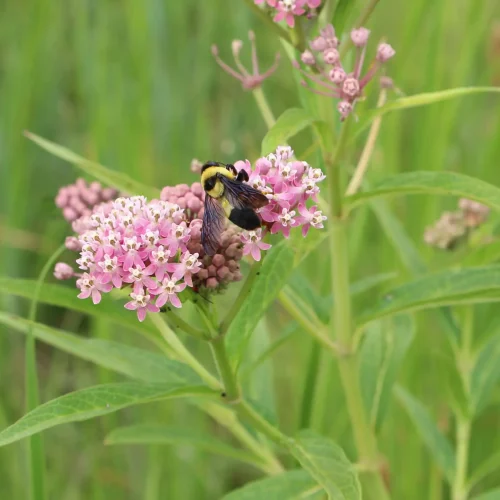
Swamp Milkweed
Asclepias incarnata
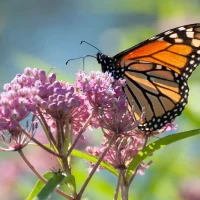
Swamp milkweed is tall (3-4 feet) with bright pink flowers that smell amazing. (Only a few milkweed flowers have a smell.) The name can be misleading: swamp milkweed grows in a wide range of water—from average to wet areas. Their range also makes them good choices for rain gardens. Swamp milkweed grows in Eastern Canada and in every state in the United States except Arizona, Mississippi, and states with a Pacific coastline.
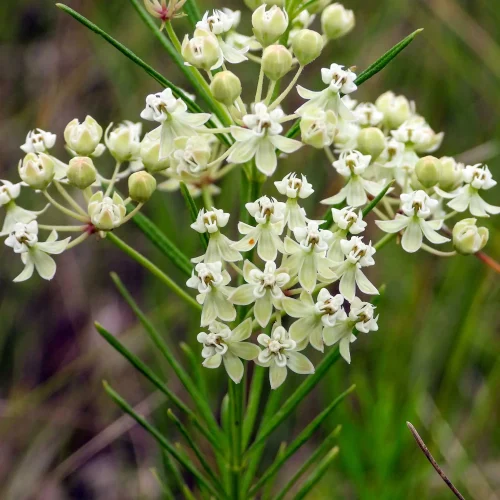
Whorled Milkweed
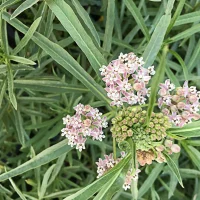
One of the most delicate milkweeds, whorled milkweed has needle-like leaves and ivory-white flowers. It is native from Massachusetts all the way west to North Dakota and south to New Mexico. It’s tiny, too! Just 1-2′ tall. Whorled milkweed likes dry, rocky soils.
Milkweed for the Midwest
Prairie Milkweed
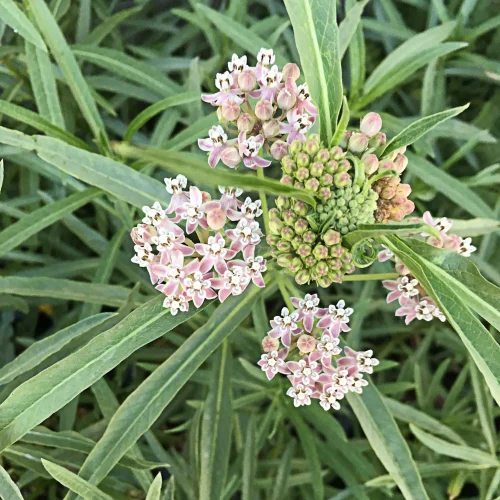
A midwestern dupe of common milkweed (that also looks a little like swamp milkweed), thanks to its orbs of dusty pink flowers. Made for the sun-laden grasslands found on what was the prairie. (Did you know that 1/3 of the United States used to be grasslands?!)
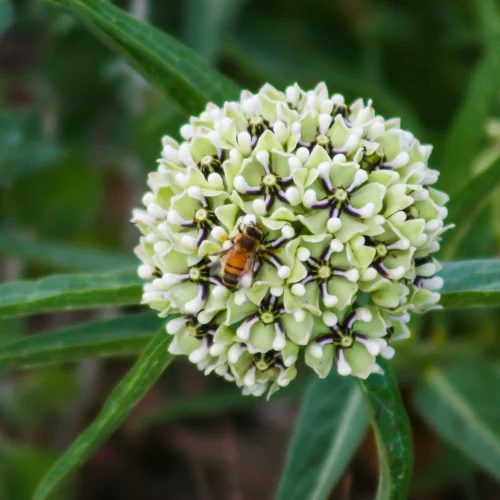
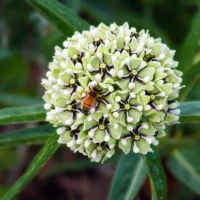
Green Milkweed
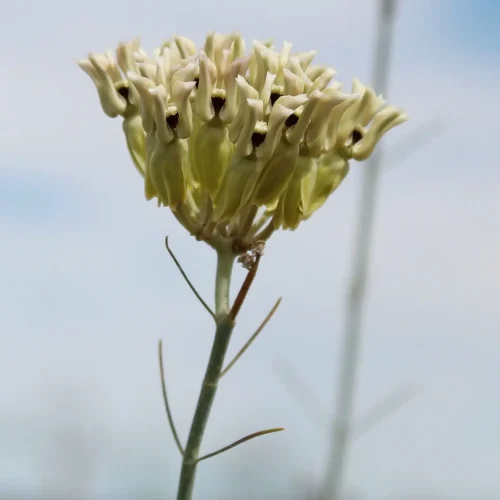
Unusual-looking in the best way: green-and-white flower clusters that look like something from a tropical coral reef. Short (1.5-3 feet), drought-hardy, native to the south-central US from Kansas to Texas and east to Georgia.
Milkweed for the Southwest
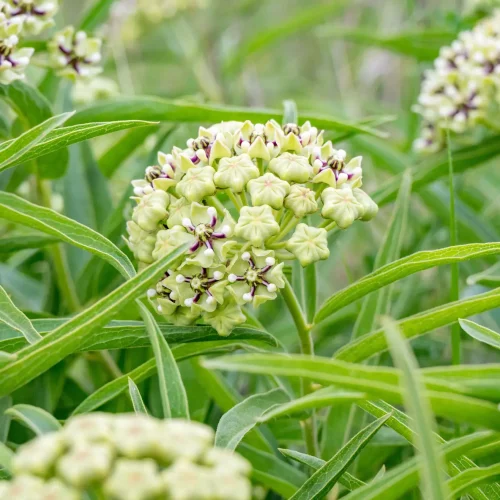
Antelope Horns Milkweed
Asclepias asperula
Antelope horns milkweed is an absolutely stunning native milkweed that is a must-plant for anyone living in the Southwest (see its range here). This milkweed loves the dry, arid climate of the Southwest.
Desert Milkweed
A genuinely unusual plant: leafless pale-green stems with small white flowers, built for the extreme dry heat of the Sonoran and Mojave deserts. If you’re in southern Arizona or the California desert, this one belongs in your yard. Sometimes also called skeleton milkweed.
Milkweed for the Pacific West and California
Narrowleaf Milkweed
Asclepias fascicularis
Narrowleaf milkweed is the milkweed to plant in California. This plant is highly drought-tolerant and is the main food source for western monarch butterflies. Find a California nursery near you that stocks this plant!
And there are more native milkweed species—dozens more. We’ll continue to add to this list regularly, but to give you an example of how many milkweeds are present within a region, the Mid-Atlantic region alone has twelve milkweeds (although a few are rare and unavailable commercially).
One species is sometimes sold at plant nurseries to steer clear of.
Do NOT plant tropical milkweed
Asclepias curassavica
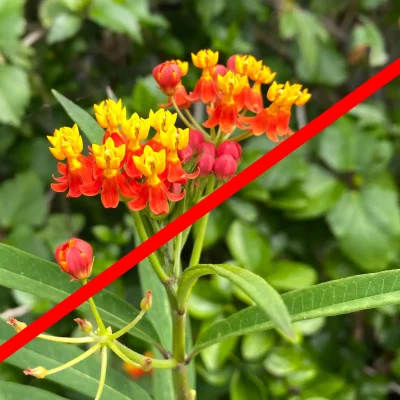
Tropical milkweed is native to South America, and sadly can host a parasite that kills monarchs. It also confuses monarchs: “When grown in northern areas, where it can grow later in the year than native species, the presence of tropical milkweed may confuse monarchs into breeding at a time when they should be migrating. In California, where this milkweed is widely planted, it can be growing near overwintering sites along the coast and may spur monarchs to breed when they should be overwintering.” (Xerces Society)
Which milkweed is native to your area?
Xerces Society offers milkweed guides organized by region or state that list the milkweed varieties that are native. It’s a great resource to see the varieties that are native to your area. They also offer a way to search for places to buy milkweed seed in their Milkweed Seed Finder.
Another easy way to find which milkweed is native to your area is to visit native plant nurseries nearby and ask. Local nurseries know your region, soil, and growing conditions. Stop by and speak with a nursery specialist to learn which milkweeds are available and will work well in your area.
Hummingbirds love milkweed, too!
How to grow milkweed
Sun
Full sun for almost all species. Poke milkweed is the exception; it handles part shade and woodland edges. Milkweed in deep shade gets floppy and won’t flower well.
Soil
Match the species to your conditions. Butterfly weed and whorled milkweed are drought-hardy and like dry, well-drained soil. Swamp milkweed handles wet conditions. Common milkweed is comfortable in average to dry soil.
Water
Water to establish in the first season. After that, most milkweeds are largely self-sufficient.
“
Aim for at least five plants. Monarch moms need to find the milkweed, and a cluster is far easier to spot than a single plant.
”
Pesticides
None near milkweed, ever. In fact, let’s just say goodbye forever to pesticides. Pesticides kill caterpillars. Herbicide drift can kill milkweed. If you have to use it when treating nearby plants, keep a buffer.
Plant in groups of 5+
Aim for at least five plants. Monarch moms need to find the milkweed, and a cluster is far easier to spot than a single plant.
Late emergence
The following year after you plant milkweed, you might think you messed up, because it doesn’t pop up when other plants have emerged. Don’t worry. Butterfly weed and common milkweed come up very late in spring, sometimes not until late May or June. Don’t assume it’s dead, or that you have a “black thumb.” It’s just slow.
What about butterfly bushes?
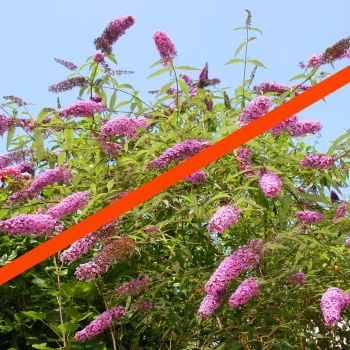
“Butterfly bushes” are a true testament to the power of naming and marketing. Butterfly bushes are native to Asia. While the flowers do provide some nectar for butterflies when in bloom, butterfly bushes are not host plants for any North American butterflies. Think of butterfly bushes like soda for butterflies—they are a sweet treat for adults, but don’t offer the food or habitat of a host plant.
Replace all butterfly bushes with milkweed.
We’ve used the word ‘milkweed’ roughly 60,000 times in this article. You may now be wondering—
Why is it called milkweed?
Milkweed’s toxic sap is also what gives it its name: its sap is milky white. (Except in butterfly weed. Although this plant is a milkweed, its sap is clear.)
Where can I find milkweed for my garden?
Milkweed is getting more attention and slowly becoming more available at plant nurseries. To help you find a wide range of options for your yard, here are four recommendations for sourcing milkweed:
What to plant with milkweed
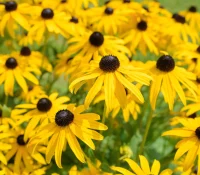
Milkweed blooms mid-season (June through August for most species), so pair it with early and late bloomers to keep the garden going all season. Milkweed has bright clusters of flowers, so it looks great against many other flowers and grasses. Asters, bee balms, black-eyed susans, blazing star, coneflowers, and native salvias (AKA sages) are all fantastic pairings for milkweed with many options for North American gardens.
In conclusion: plant milkweed today. And tomorrow, too.
Milkweed is the only food for monarch butterfly caterpillars. It is the only plant that monarch moms will lay eggs on. Milkweeds are exceptionally easy to plant, and there is a native variety that will thrive in any space (from dry to wet) in every single place in the continental US. They are also beautiful flowers! Visit your local native plant nursery, order seeds online, or look on local plant message boards to find some milkweed for your garden. You now know more about milkweed than 99% of people who’ve ever bought a garden plant. Go find five and put them in the ground.
Where to next? How about visiting our What is a Host Plant? article, or explore our guides to planting for hummingbirds. Or visit our individual milkweed profiles, below. Happy planting!