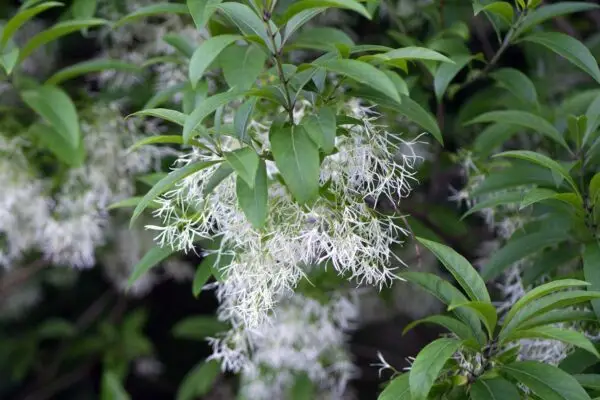
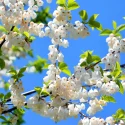
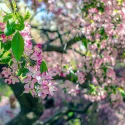
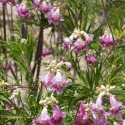
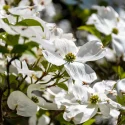
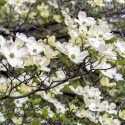
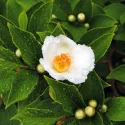
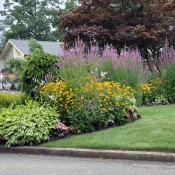
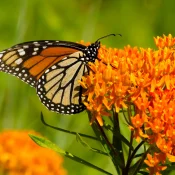
It’s hard to believe this is magical, out-of-this-world plant is a natural, native tree. Fringe Trees bloom with white, long-petaled, ethereal flowers in the spring which also smell lovely. After they bloom, their green leaves offer shade until the fall. These are smaller trees, topping out at around 30 feet tall. Almost half of America can plant a Fringe Tree. They are found as north as New York, as south as central Florida, and as west as Texas. Plant in a place to be admired. Scroll on for planting tips and lots of pictures.
The Fringe Tree is a stop-you-in-your-tracks flowering native tree. Fringe Trees have been used in landscaping since America’s early days—it is said George Washington planted them at Mount Vernon.
New to native?
Before lawns and landscaping, native plants were here. They’ve fed birds, bees, and butterflies for thousands of years—and they’ll do the same in your yard. The best part? They’re easier to grow than you think.
You may have heard this plant called another name—maybe even ‘Grancy Graybeard’! Here’s why:
Fringe Trees have many funny, common names
Common names for plants are the names generations before us created. Common names for Fringe Trees are hilarious in their range and playfulness and include flowering ash, old-man’s-beard, granddaddy graybeard, and grancy gray-beard.
On The Plant Native, we’ll stick to Fringe Tree (although it is very tempting to go with ‘Grancy Graybeard!’)
Fringe Trees’ Latin name is Chionanthus virginicus.
There is no need to say this out loud—you just need to find it on a plant tag!—but if you wanted to impress someone, it sounds like this: Key-O-nan-thus VIR-gin-eh-cusss.
Interestingly, even its Latin name has whimsy: ‘Chionanthus‘ means “snow flower” in Greek.
What do fringe trees look like throughout the seasons?
Fringe trees change throughout the seasons, but always look amazing. Their show-stopping looks make them highly prized for front yard statement trees in particular. Here’s how the fringe tree changes throughout the seasons:
Spring
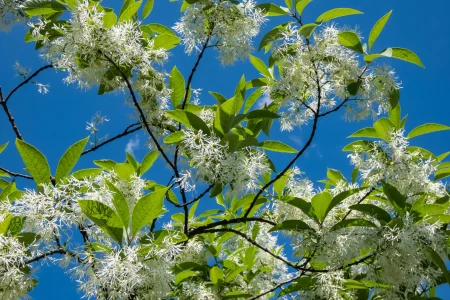
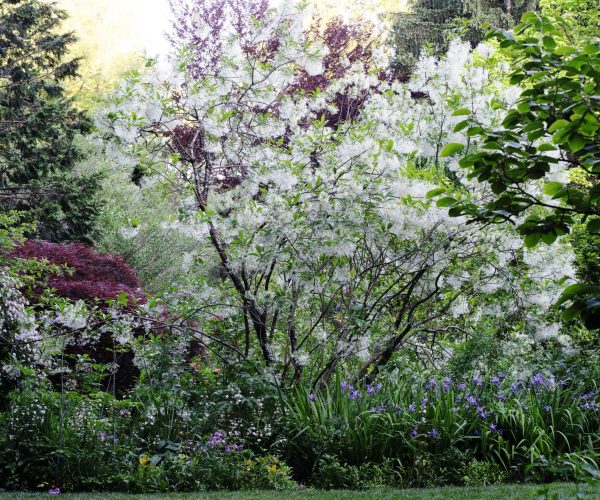
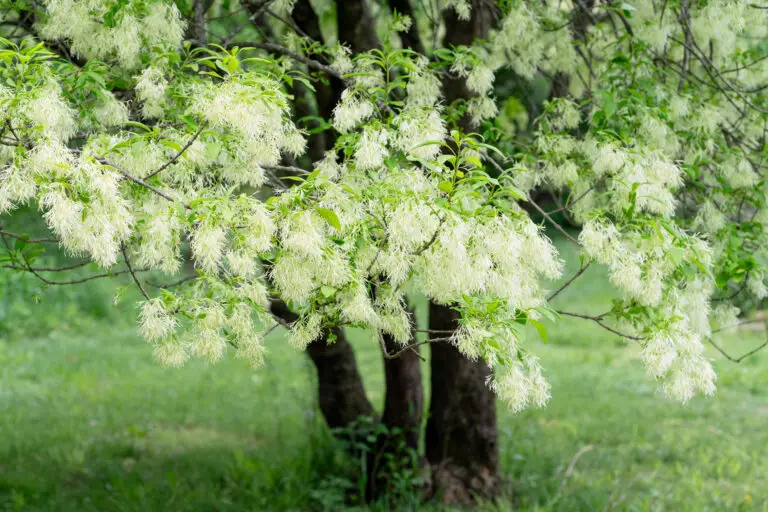
In the late spring, the tree bursts with a profusion of delicate, snow-white blossoms that gracefully drape its branches. The flowers have a sweet floral smell that attracts pollinators.
Image by F. D. Richards
Summer
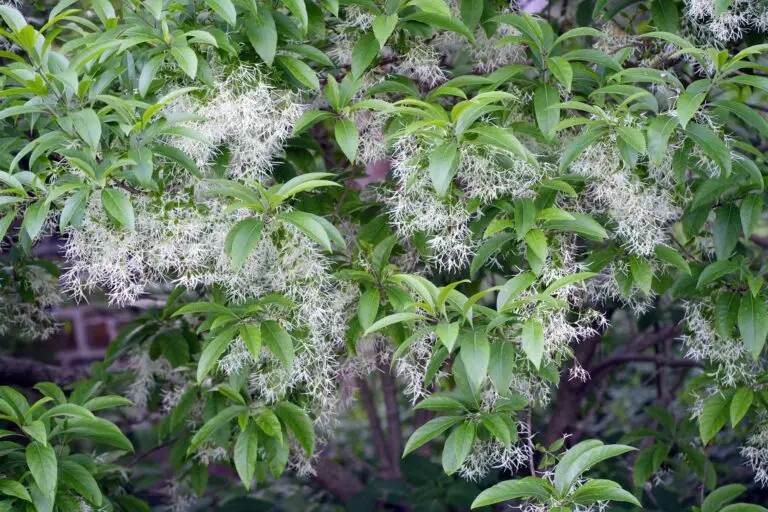
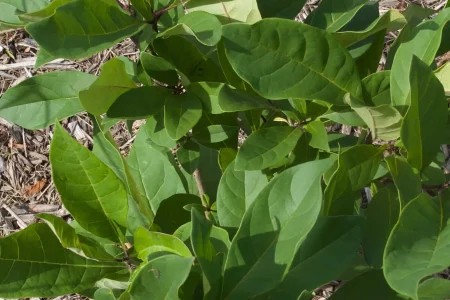
In the summer the tree is covered in glossy green leaves, providing shade and homes for songbirds as the tree gets taller.
Late summer / fall
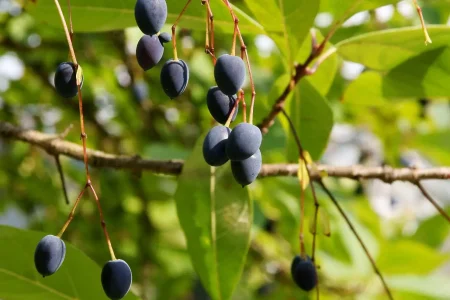
In the late summer, if you plant two fringe trees (one male and one female) a magical thing happens: the flowers turn into tiny plum-like fruits. (Only the female tree fruits.)
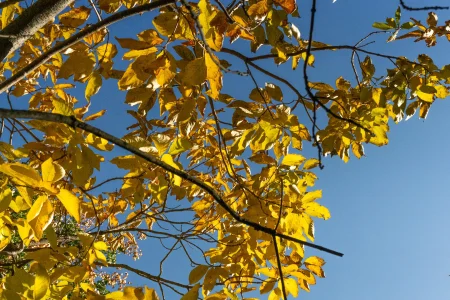
Fringe tree’s leaves turn buttery shades of yellow in the fall, before dropping and then starting the show again in the spring.
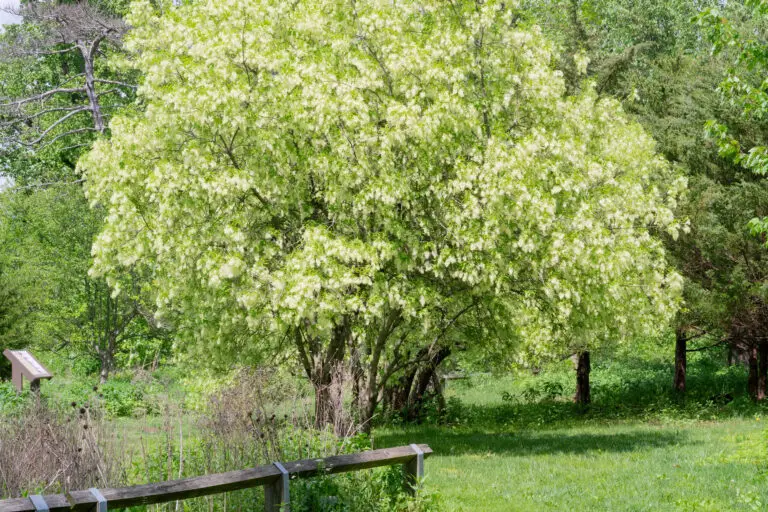
Here’s a spring vs. summer comparison to help show why this plant is such a stunner:
A fringe tree in the spring...
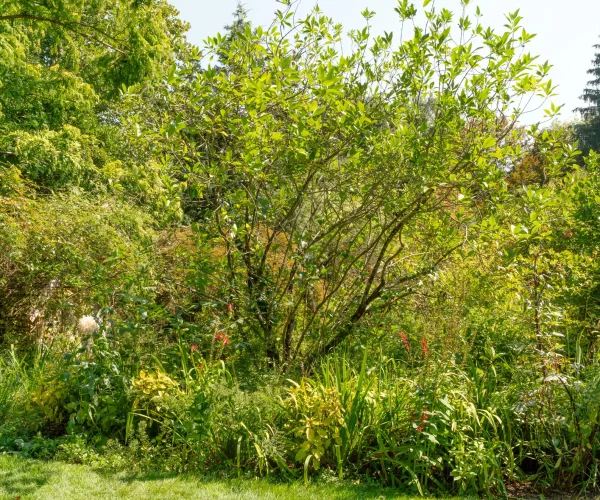
...also looks beautiful in the summer
Where should you plant a fringe tree?
Fringe trees are perfect for front yards and statement trees. They won’t get too tall and offer four seasons of beauty. According to Uli Lorimer, Executive Director of the Native Plant Trust, they are “perfect for smaller gardens, courtyards, or foundational plantings.”
Fringe trees love the sun—the sunnier the spot, the better the fringe-y bloom.
These trees need consistent water
Fringe trees also like soil that has consistent moisture. In nature, they are often found in wet areas alongside streams, lakes, and rivers. In our yards, they are happy in moist areas.
Fringe trees stay small but grow slowly
Native fringe trees are considered medium-sized trees and can grow up to 30 feet. However, Fringe Trees are slow growers: 6-10 inches of growth a year is their standard.
The University of Maryland has a great 3-minute overview of the Fringe Tree in bloom, hosted by an energetic master gardener:
Garden Recipe™
Fringe Tree
Chionanthus virginicus
Sun to part sun
Sun
Pretty easy
Effort
Small Tree (15-30') tall 15-20 ft wide
Size
Spring
Blooms
What it needs
Sunlight
Full to partial sun, 4+ hoursThe more sun the better, but it can handle some shade
Water
Likes it moistPick a low spot, or plan to water often
Directions
Spacing
15-20 ftThis one needs real breathing room
Watering
Weekly for the first seasonAfter that, rain is usually enough
Notes
Comes back?
Yes, every yearGoes dormant in winter, that's normal. New growth each spring.
Native plant. This is a native plant, which means local wildlife already knows what to do with it. Just by planting it, you're giving your little corner of the ecosystem a boost.
Fringe tree cultivars and one non-native to be careful of
A cultivar is a plant that has been curated or edited by humans to look or behave a certain way (here is a quick cultivar overview.) Whenever possible, try to plant true native species.
There are several fringe tree cultivars that have been cultivated to be shorter, have different colored flowers, or withstand drought better than the native species. These cultivars include:
Fringe tree ‘Emerald Knight’: This cultivar completely covers itself in flowers, followed by glossy dark green leaves—and it does not fruit. A good choice if you’re worried about fruit issues.
Fringe tree ‘Prodigy’: Is a shorter cultivar (10′-15′ tree) with lots of fringey blossoms. Perfect for smaller spaces.
Fringe tree ‘Spring Fleecing’: This cultivar also doesn’t make fruit, but still delivers lots of flowers and a light fragrance. Its leaves are a little brighter green than ‘Emerald Knight.’
Cultivar is short for CULTIvated VARieties. Cultivars are plants selected for traits like color, size, or disease resistance. Useful and sometimes stunning...but some lose the scent, shape, or timing wildlife depends on. Plant straight species when possible.
Be careful NOT to buy a non-native Chinese fringe tree (Chionanthus retusus) if you’re planting native. Non-native plants are plants that are native to other places on the globe—in this case, Asia. Non-native plants do not offer the nutrution for wildlife or resilience for the soil and weather that native plants provide.
How can I be sure I’m planting native?
Look at the Latin name. North American fringe trees’ Latin name is Chionanthus virginicus. If the nursery doesn’t have the Latin name on the tag, be a little wary and find a reputable one that does.
(Don’t be scared of Latin names. We use words like ‘frappuccino’ and ‘non-comedogenic’ and we all lived through a global pandemic. You got this.)
And now you’re probably asking…
Where can you find or buy a native fringe tree?
Finding specific native plants can be challenging, especially at conventional nurseries or big box stores. Here are four ideas for finding a fringe tree for your yard:
Fringe Tree
Where can I find seeds and plants?
Finding native plants can be challenging (we partly blame King Louis XVI.) To make it easier, we’ve assembled four sourcing ideas.
In conclusion, fringe trees are a stunning native tree that looks fantastic in high-profile places as a statement tree. While they might be slow growers, they will return year after year, and depending on how many you plant, may also provide food for songbirds. You might want to see if you can add a nametag to your garden when you plant one because people will definitely stop and ask for the name of this plant! (Maybe try telling introducing it as ‘Grancy Graybeard?’) Looking to dig deeper? Stop by our Best Plants for Birds or the Best Native Trees for Front Yards. Happy planting!
Emily Lessard is the founder and editor of The Plant Native, the site that helps homeowners across North America get started with native plants. She holds a Sustainable Landscapes certificate through the Pennsylvania Landscape & Nursery Association, is finishing a Native Perennial Garden Design Certificate at Temple University, and is the author of World of Native Plants (Quarto, February 2027). She gardens outside Philadelphia in the 8.3 Southeastern Plains ecoregion.