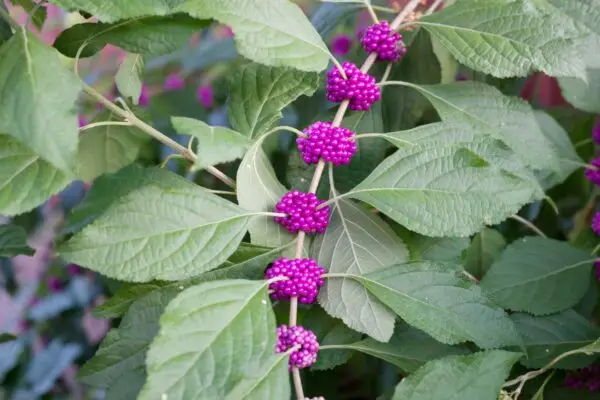
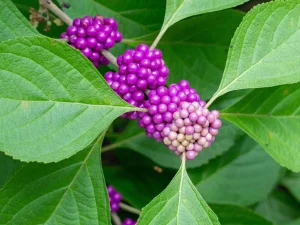
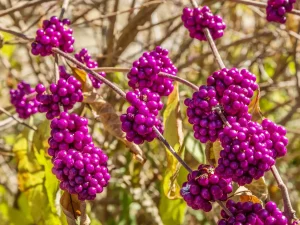
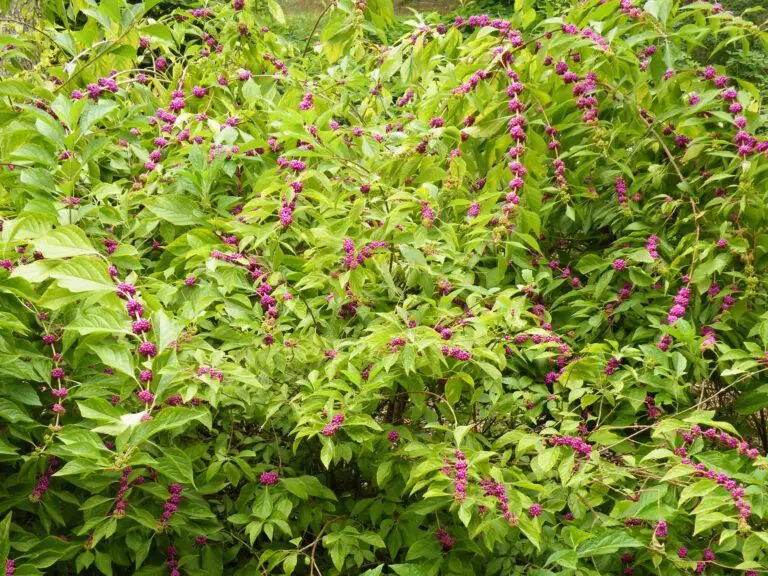
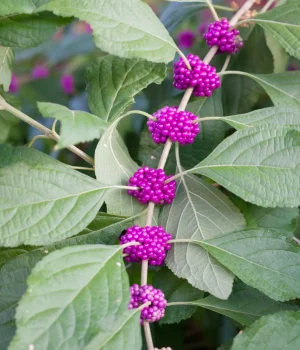
American beautyberry is a gorgeous shrub native to the southeastern United States known for its electric purple berries that appear in the late summer/early fall. The berries look like candy for birds and can last on the branches through the winter. They are fast growers, like sun to part sun, and can get 4-6 feet tall. This was once one of the most common shrubs in the south—let’s bring it back! Discover planting tips and varieties below.
Electric purple berries!
Is American beautyberry a good choice for my yard?
Yes—if you’re looking for something both beautiful and forgiving. American beautyberry thrives in full sun to part shade and tolerates a range of soils, from clay to sandy loam. It’s happiest in spots with consistent moisture but good drainage.
This shrub looks spectacular as:
Stand-alone accent (especially near patios or entryways),
If you want a plant that earns its keep through every season—and helps wildlife while doing it—American beautyberry is a perfect fit.
New to native?
Before lawns and landscaping, native plants were here. They’ve fed birds, bees, and butterflies for thousands of years—and they’ll do the same in your yard. The best part? They’re easier to grow than you think.
American beautyberry does more than brighten your yard—it helps birds, pollinators, and the planet right outside your door. Native plants like this one make gardening easier and more meaningful.
A feast for wildlife. The bright purple berries are a fall and winter lifeline for songbirds, while summer flowers draw in pollinators.
Easy and low-maintenance. Once established, American beautyberry needs little more than rain—no fertilizer, no stress.
Seasonal drama. Pale green spring leaves, soft summer blooms, and vivid fall berries give your yard year-round color and texture.
Good for your ecosystem. Every native plant rebuilds local habitat, turning your yard into part of the solution.
No matter the season, American beautyberries look gorgeous.
Spring
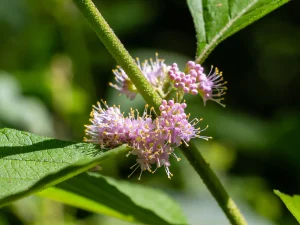
In the spring, American beautyberries send out bright green leaves and cover their stalks with tiny fairy-like purple flowers.
Early Summer
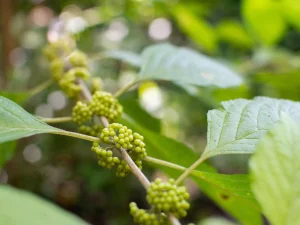
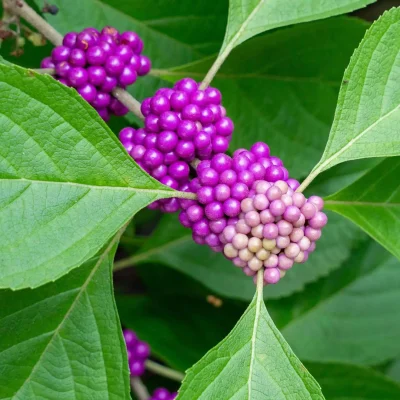
In the early summer, American beautyberry flowers give way to green berries, which then change to purple in a gorgeous gradient.
Late Summer into Fall
In the summer and early fall, the berries turn on their neon purple show alongside green leaves.
Winter
In the fall in northern climates, the leaves change to a warm yellow before they fall. In more southern locations like Florida, the leaves remain evergreen. The electric purple berries remain on beautyberry's stem, making it easy for songbirds to find a snack.
And then back to the beautiful fairy-like flowers all over again in the spring.
NC State Extension shared a great overview video of the plant throughout the seasons, including its fairy-like spring blossoms.
Stay away from non-native beautyberries
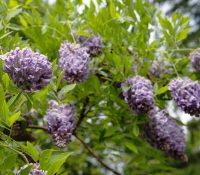
Many plants have native and non-native species; azaleas, lilies, rhododendrons, and wisteria are examples of plants with family trees spread across North America, Europe, or Asia. Four species of beautyberry are often sold in nurseries, and only one species is native to North America.
American beautyberry (Callicarpa americana) is the North American native species
Japanese beautyberry (Callicarpa japonica), no surprise, is native to Japan
Chinese beautyberry (Callicarpa dichotoma) — many cultivars in nurseries come from this plant
Bodinier’s beautyberry (Callicarpa bodinieri) is also native to China
How can I make sure I’m planting a native American beautyberry?
Look at the tag—Latin names were invented precisely for this purpose. Every plant has only one Latin name. The native beautyberry plant you’ll want to buy is named:
Callicarpa americana
If it doesn’t include this Latin name, be wary.
How else can I tell if the beautyberry is native?
There is one other way to check the native vs. non-native: look at the berry stems. (Sincere thanks to Cassandra from Kentucky for sharing this tip!)
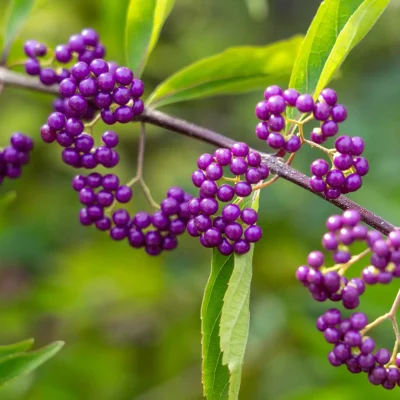
Non-native beautyberry
Do the berries hang off stems? That is the telltale sign of one of the Asian species.
Native beautyberry
Do the berries hug the stem in beautiful round orbs? That's a North American Callicarpa americana.
Finally, to be sure you’re planting native, visit a native nursery. Visit our list of 625+ native nurseries across America.
Plant them underneath trees on the edges of your property or in the center of gardens with shorter plants in front
Garden Recipe™
American Beautyberry
Callicarpa americana
Sun to part sun
Sun
Pretty easy
Effort
Medium Shrub (6-10') tall 4-6 ft wide
Size
Summer
Blooms
What it needs
Sunlight
Full to partial sun, 4+ hoursThe more sun the better, but it can handle some shade
Directions
Spacing
4-6 ftGive it room to fill out
Watering
Weekly for the first seasonAfter that, rain is usually enough
Notes
Comes back?
Yes, every yearGoes dormant in winter, that's normal. New growth each spring.
Native plant. This is a native plant, which means local wildlife already knows what to do with it. Just by planting it, you're giving your little corner of the ecosystem a boost.
Plant a few, together!
American beautyberries look especially awe-inspiring when planted in multiples. Plant a few if there is a sunny or part-sun area along your driveway or at the edge of your yard.
Bird-watching bonus: If you plant them near a window view, you can watch the birds eat the berries throughout the fall and winter.
No pesticides or herbicides
Avoid using pesticides or herbicides near American beautyberry plants, as they can harm the birds and pollinators that visit the plant.
FAQs
Can I grow American beautyberry by seed?
If you’re patient, you can grow American beautyberry by seed. It will take a few years for the plant to reach bushy size. To plant by seed:
Take some of the bright purple berries in the fall
Plant them directly in the garden, 1/2″ deep
Wait 3-5 months
Shoots will emerge in the spring
Can I grow American beautyberry by cuttings?
Yes! You can grow American beautyberry by cuttings in the spring. To grow from a cutting:
Wait until the spring
Cut 4-6-inch stems from a healthy plant
Dip the bottom tip of the cutting into rooting hormone before planting (if needed, you can remove the leaves on the bottom to help place them in the dirt)
Place the cuttings in small pots with an all-purpose soil mix (nothing fancy is needed)
Keep your cutting in a warm place indoors in bright, indirect light
The cutting should begin to grow 2-3 weeks after planting
It will be ready to plant in your garden 2 months later!
Plant Nerd Fact
100 years ago, these shrubs were everywhere
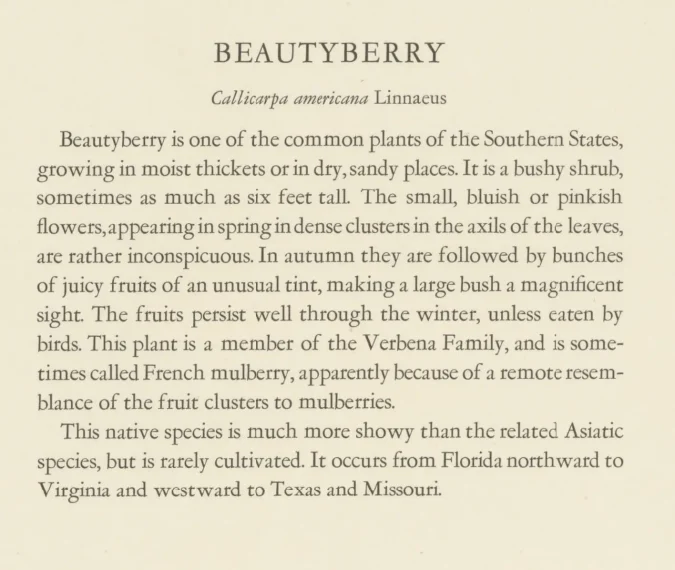
According to the 1925 edition of North American Wildflowers, the American beautyberry (Callicarpa americana)“is one of the most common plants of the Southern States.” Imagine that: entire Southeastern landscapes shimmering with electric-purple berries in the fall.
The same book noted that this native was “much more showy than the related Asiatic species, but rarely cultivated.” A century later, that still tracks—though we’re finally catching up. Once found from Florida to Virginia and west to Texas and Missouri, American beautyberries thrive farther north, due to climate change and a new generation of gardeners who appreciate bold, low-maintenance color.
This isn’t a comeback story—it’s a homecoming.
Where can I find American beautyberry plants?
As you look for American beautyberry, we have a tip:
Plants and seeds grown close to home are tuned to your soil, weather, and pollinators. Stay within 500 miles—or about a day’s drive—to help your garden thrive naturally.
We hope you’re inspired to add a splash of electric purple to your landscape with American beautyberry. Not only is this native shrub stunning to look at, but it’s also a great way to support local ecosystems. By following our growing and care tips, you can easily incorporate this hardy and beautiful plant into your garden or park. Where to next? How about keeping the birds happy with our Guide to the Best Native Plants for Birds. Or, zhoosh up your yard with our Best Native Trees for Front Yards. Looking for fall beauty? Skip the mums and head to our Beginner’s Guide to Native Asters. Happy planting!
Emily Lessard is the founder and editor of The Plant Native, the site that helps homeowners across North America get started with native plants. She holds a Sustainable Landscapes certificate through the Pennsylvania Landscape & Nursery Association, is finishing a Native Perennial Garden Design Certificate at Temple University, and is the author of Plant Native:A Practical Guide to Over 100 Native Plants of North America (Quarto, February 2027). She gardens outside Philadelphia in the 8.3 Southeastern Plains ecoregion.