Two cousins, one irresistible idea: a small desert shrub with flowers that look like someone blended a fireworks show with a pom-pom. One blooms red, nearly all year. One blooms pink, and can handle a real winter. Between them, they cover most of the Southwest.
Meet the fairydusters
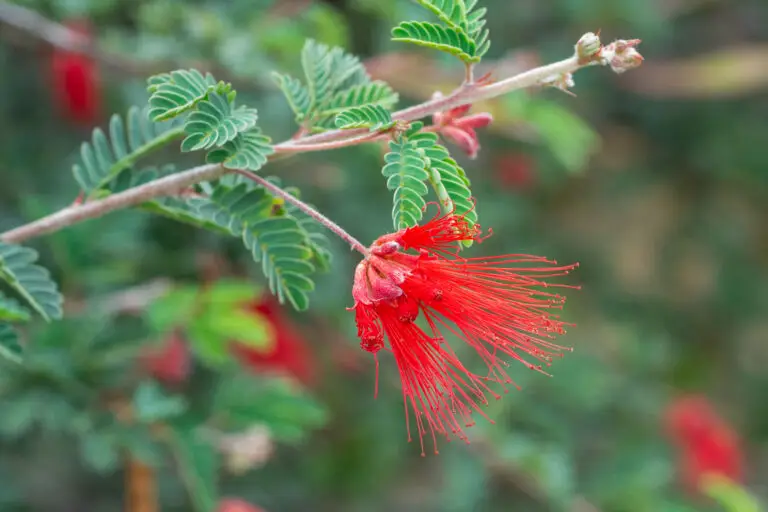
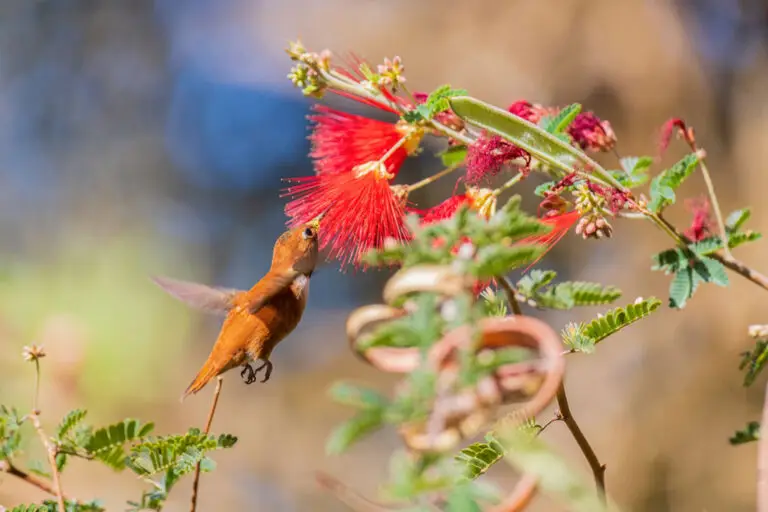
You’re looking at two plants that solve the same problem in slightly different ways. Both stay small. Both throw out flowers that look like silk pom-poms, California fairyduster in deep crimson, fairyduster in soft pink. Both treat heat, sun, and rocky ground like ideal conditions instead of obstacles. And both turn into hummingbird headquarters within about a week of planting.
What sets California fairyduster apart
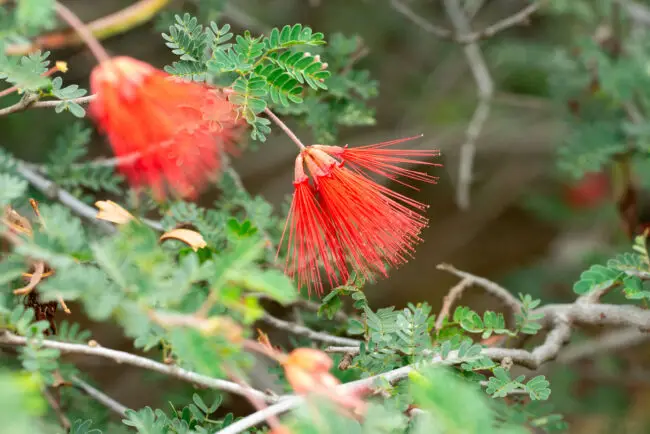
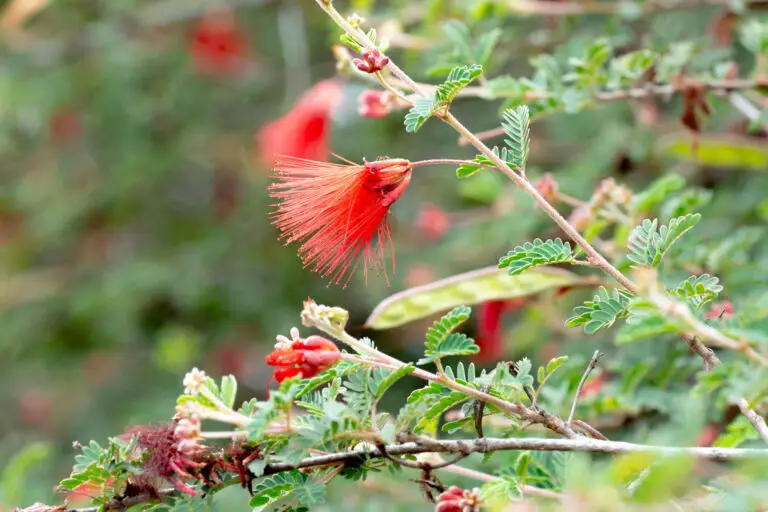
California fairyduster is the flashier of the two.
It grows 3 to 5 feet tall and wide
Blooms in waves from spring through fall
In frost-free gardens, it keeps a scattering of flowers going through the winter, too
Native to Baja California
Loves the reflected heat of a sunny stucco wall or a hot west-facing border
Blooms heavily in spring with a second flush in fall
Handles cold down to zone 7
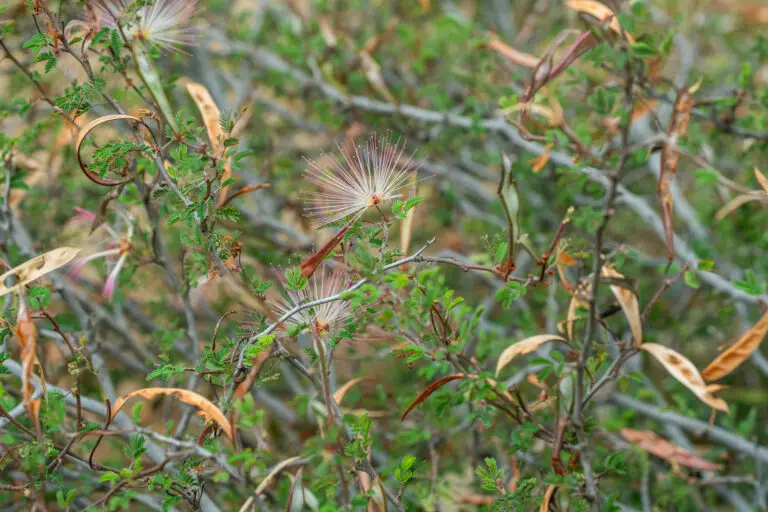
Native to Arizona, New Mexico, and Texas
In its natural habitat, you’ll find it growing on rocky hillsides and desert slopes where summer rain is the main event and frost is counted on. For gardeners in those regions, fairyduster is the native-range choice.
What they both share
Both are genuinely low-maintenance. Plant them in well-drained, sunny spots, water them while they get established, then mostly leave them alone. They will take it from there.
Calliandra species are among the premier hummingbird-attracting shrubs in the Sonoran and Chihuahuan desert regions, with bloom times that specifically fill the gap when other flowering shrubs are resting.
”
Why fairydusters matter
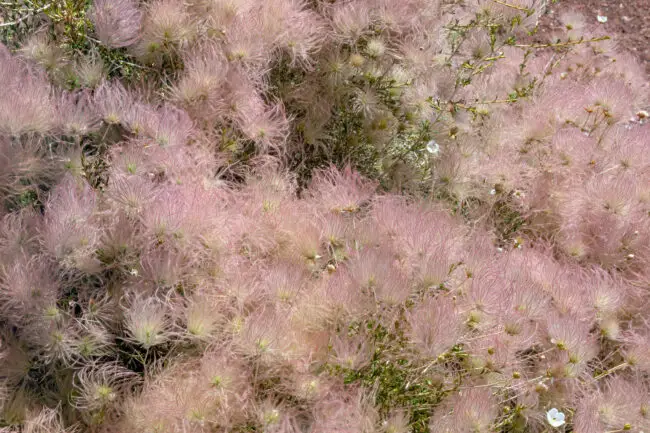
The flowers of both species are, biologically speaking, almost entirely one piece of a “normal” flower, called a stamen. Stamens are structures where you’ll find pollen. On other flowers—ike lilies—the stamens are tiny yellow filaments in the center of a bloom. Fairydusters have evolved to elongate their stamens into long, silky threads. (There are petals, but they are tiny and tucked away.)
What you and the hummingbirds see are dozens of long, silky reproductive threads arranged in a perfect sphere. That design is not accidental. According to the Lady Bird Johnson Wildflower Center, Calliandra species are among the premier hummingbird-attracting shrubs in the Sonoran and Chihuahuan desert regions, with bloom times that specifically fill the gap when other flowering shrubs are resting.
Garden Recipe™
Fairydusters
Calliandra genus
Full sun
Sun
Easy
Effort
Small Shrub (3-5') tall 3–5 feet wide wide
Size
Spring - Winter
Blooms
What it needs
Sunlight
Full sun, 6+ hoursSouth- or west-facing is ideal
Water
Likes it dryPick a spot that doesn't stay soggy after rain
Directions
Watering
Weekly for the first seasonAfter that, rain is usually enough
Notes
Comes back?
Yes, every yearGoes dormant in winter, that's normal. New growth each spring.
Hummingbird magnet. Hummingbirds love this one. Plant a few and you've basically hung a neon 'OPEN' sign for them.
Both species want full sun, all day if possible. California fairyduster especially benefits from a hot south- or west-facing exposure; the reflected heat from a wall or stone helps it thrive and provides some frost protection in zone 9b. Fairyduster is a bit more flexible about siting but still wants maximum sun and absolutely needs excellent drainage.
When to plant
Fall planting is ideal for both, giving roots time to establish before the first hot summer. In colder parts of fairyduster’s range (zones 7–8), early spring planting works well too. Avoid planting during peak summer heat if you can help it.
Definitely plant your fairyduster where you can watch the hummingbirds
Watering
Water regularly for the first one to two growing seasons while roots establish. After that, both species are genuinely drought-hardy and need minimal supplemental irrigation in their native climate zones. California fairyduster appreciates occasional deep watering during extended dry spells in summer to maintain bloom; fairyduster in Arizona and New Mexico typically gets by on monsoon rain alone once established.
The one rule for both: do not water on a schedule. Let the soil dry out completely between waterings. Wet feet are the enemy.
Fertilizer
Skip it. Both are legumes that fix their own nitrogen. Fertilizer pushes leafy growth at the expense of flowers. The best thing you can do is leave the soil alone.
Pruning
Light shaping after the spring bloom flush keeps both plants tidy. Neither requires heavy pruning to look good. For california fairyduster, a light trim encourages a more compact shape and a quicker next flush. For fairyduster, some gardeners cut it back by one-third after the spring bloom; others never touch it. The natural form of both shrubs is graceful. Do not shear them into boxes.
Beginner Tip
If you are gardening in Arizona, New Mexico, or Texas, fairyduster (Calliandra eriophylla) is the species native to your region. California fairyduster (Calliandra californica) is a wonderful garden plant in the Southwest, but its primary native territory is Baja California. Choose the species that matches where you live.
Where fairydusters shine in your yard
Hot, dry hell strips and medians. Both species handle reflected pavement heat and zero supplemental irrigation once established. Few plants do both.
Against a south- or west-facing wall. Especially for California fairyduster in zone 9b: the radiated heat extends the bloom season and offers frost protection.
Hummingbird and pollinator gardens. Plant either species as the centerpiece of a pollinator bed. Both will be in constant use from spring through fall.
Front-of-border accent. Fairyduster’s compact size (1 to 3 feet) makes it an ideal front-of-border plant that flowers heavily and does not need dividing or fussing.
Low hedge or informal screen. Three to five plants of California fairyduster spaced 4 feet apart create a soft, floriferous hedge that looks nothing like a clipped suburban row.
Slope or bank planting. Both species handle slopes and disturbed, rocky soils well. Their root systems are good at holding loose or gravelly ground.
Container planting on a hot patio. California fairyduster especially thrives in a large container (15 gallons or more) on a sunny patio in zones 9b and above.
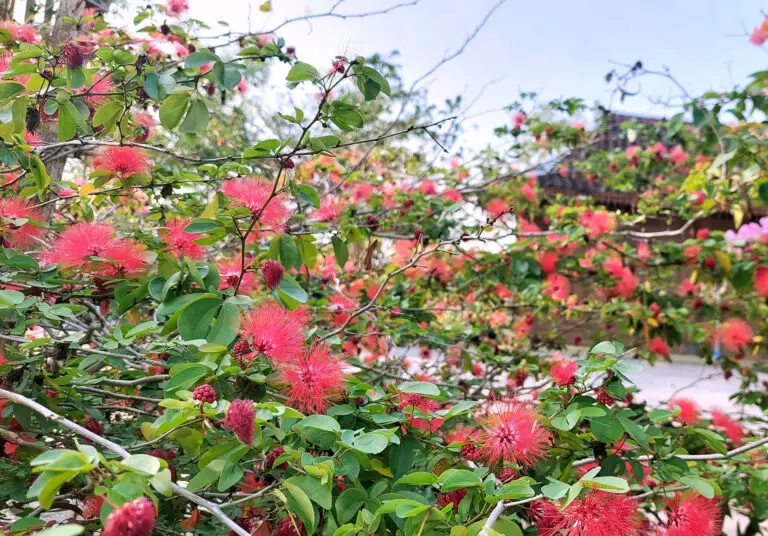
California fairyduster shines in a California garden
FAQs
How fast do they grow?
California fairyduster: fast, 12 to 24 inches per year under good conditions. It can reach mature size in 2 to 3 years.
Fairyduster: moderate, typically 8 to 12 inches per year, reaching its compact mature size in 3 to 4 years.
Can I grow fairydusters in a container?
California fairyduster does well in a large container (15 gallons or more) on a sunny, hot patio. This is also the strategy for gardeners in zone 9 or colder who want to grow California fairyduster and can move it to a frost-free space in winter. Fairyduster is more compact but also does well in containers with excellent drainage.
When do fairydusters bloom?
California fairyduster: heaviest blooms in spring and fall, with lighter scattered flowers through summer and (in mild climates) winter.
Fairyduster: concentrated blooms in late winter through spring, then again in fall after the monsoon rains.
I see a similar plant at big-box nurseries. Is that the same plant?
Probably not. The more common plant at nurseries is likely Calliandra haematocephala, a tropical species from Bolivia with red or pink flowers. It is commonly sold in warm-climate nurseries and is often much larger than either native fairyduster. Beautiful plant, not native to North America. The botanical name on the tag will tell you which one you have.
Plant Nerd Fact
The leaves go to bed at night.
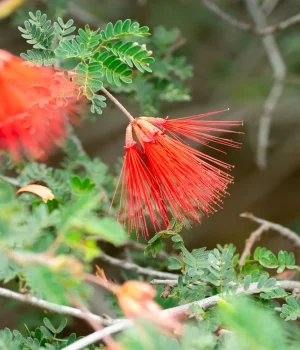
Fairyduster’s tiny, ferny leaflets fold up tight against the stem at dusk and unfurl again at dawn. Botanists call this nyctinasty, or sleep movement, and the whole legume family is full of plants that do it.
Walk past a fairyduster at twilight and you can catch it mid-tuck. By full dark, the leaves are folded away. By breakfast, wide open again, ready for the next round of hummingbirds.
What pairs well with fairydusters?
The best companions for both fairydusters are other heat- and drought-hardy Southwest natives that carry the garden through the full season. Think of building a palette where something is always in bloom
Here is what these plants turn into if you give them the right corner. A scrubby gravel strip beside a driveway, the kind of spot most plants give up on in July, becomes a place where hummingbirds line up. A south-facing wall that used to bake unhappily turns into something soft and pink (or red) from March through October. The neighbors notice without quite knowing why. Eventually somebody walks over and asks what that shrub is. You answer fairyduster. You watch them write it down.
So: if you’re in Arizona, New Mexico, or west Texas, plant fairyduster (Calliandra eriophylla). It’s the cold-hardy, native-range option, and it earns its spot at the front of a sunny border without ever asking for much. If you’re in Southern California or the low desert and you want the longest possible show, plant california fairyduster (Calliandra californica). If you have a hot, dry spot you’ve been avoiding and you can’t decide, plant both. They get along. The hummingbirds will thank you in a language you’ll learn to recognize: a small, fast, satisfied hum, somewhere just over your shoulder, every time you step into the yard. Where to next? How about our Best Native Plants for Southwestern Gardens? Happy planting!
Emily Lessard is the founder and editor of The Plant Native, the site that helps homeowners across North America get started with native plants. She holds a Sustainable Landscapes certificate through the Pennsylvania Landscape & Nursery Association, is finishing a Native Perennial Garden Design Certificate at Temple University, and is the author of Plant Native:A Practical Guide to Over 100 Native Plants of North America (Quarto, February 2027). She gardens outside Philadelphia in the 8.3 Southeastern Plains ecoregion.