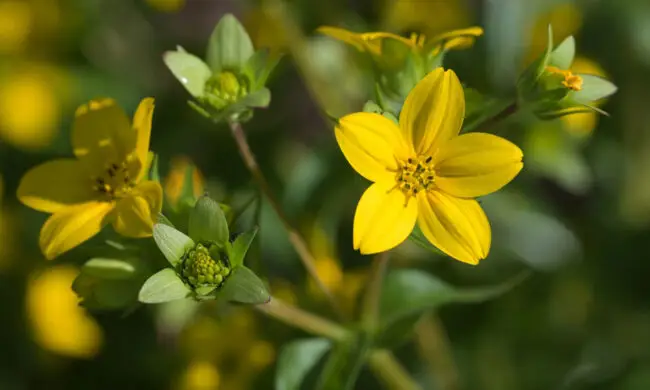
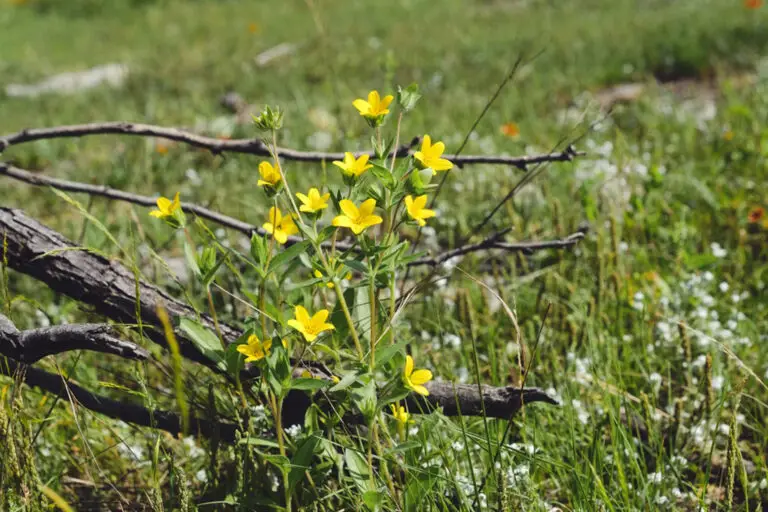
Texas yellow star is one of those plants that makes you wonder why anyone plants pansies. It blooms when almost nothing else is flowering—late winter through spring—covering the ground in bright golden stars that actually match the points on the Texas flag (five petals, five points). This winter annual pops up from seed in fall, grows slowly through winter, then explodes with color from February through May. Best part? It reseeds itself reliably, so you plant it once and it comes back every year without any work from you.
Is Texas yellow star a good choice for my yard?
Yes, if:
- You want early spring color (it blooms when almost nothing else does)
- You live in Texas, Oklahoma, Arkansas, or Louisiana
- You have well-draining soil
- You want a plant that reseeds itself and comes back every year
- You’re tired of replanting annuals every spring
- You need something deer won’t eat
Skip it, if:
- You live outside its native range (it won’t reseed reliably)
- Your soil stays wet or waterlogged
- You want summer or fall blooms (it’s done by June)
- You need a plant taller than 2 feet
Why Texas yellow star matters
Texas yellow star is a winter annual, which means it has a life cycle most garden plants don’t follow. Seeds germinate in fall, form a low rosette of leaves that grows slowly through winter, then shoot up and bloom like crazy from late winter through spring. By June, the plant dies back and drops seeds for next year’s show.
Here’s why that matters:
It fills the early-season nectar gap.
In late winter and early spring, pollinators are waking up hungry. Most plants haven’t started blooming yet. Texas yellow star is out there feeding bees and butterflies when they need it most.
It reseeds itself without being a pest.
Unlike some self-seeders that take over your yard, Texas yellow star stays where you put it. Seeds drop near the parent plant, germinate in fall, and the cycle repeats. You plant it once and it keeps coming back—no replanting, no spreading into places you don’t want it.
It’s genuinely easy.
No deadheading, no fertilizing, no watering once established. It grows, blooms, sets seed, and dies back on its own schedule. Your only job is to not kill it.
It’s as Texas as it gets.
This plant is found naturally only in Texas (and a bit into Oklahoma, Arkansas, and Louisiana). If you’re in Texas and you want to plant something that’s truly from Texas, this is it.
How to grow Texas yellow star
Where to plant it
Texas yellow star needs full sun and well-draining soil. It handles sand, loam, clay, or limestone soils as long as water doesn’t sit. Plant it in areas that get at least 6 hours of direct sun.
When to plant
Fall is the best time to sow seeds (September-October). You can also plant in early spring, but fall-planted seeds will bloom earlier and more reliably.
Planting from seed: Scatter seeds on bare soil and lightly press them in (they need light contact with soil but shouldn’t be buried deep—about 1/4 inch). Water to help them germinate. Seeds will sprout within a week or two if the soil stays moist.
“
Maintenance: None. Seriously.
”
Watering
Water regularly until seedlings are established (first few weeks). After that, they’re drought-tolerant and only need water during extreme dry spells. Overwatering is more likely to kill them than underwatering.
Maintenance
None. Seriously. Let them bloom, set seed, and die back naturally. Don’t deadhead unless you want to prevent reseeding (and why would you?).
Beginner Tip
If your Texas yellow stars don't come back the second year, check your soil drainage. They won't reseed in soggy spots. Also, make sure you're not mulching too heavily in fall, because seeds need to touch bare soil to germinate.
Where is the best place to plant Texas yellow star?
Texas yellow star works in spots where you want low-maintenance early spring color:
- Front yard borders: Plant along sidewalks or driveways for a cheerful spring welcome
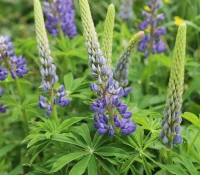
- Wildflower meadows: Mix with bluebonnets, Indian paintbrush, and other Texas spring bloomers
- Rock gardens: The well-draining soil is perfect
- Hellstrips: That narrow strip between sidewalk and street? Texas yellow star thrives there
- Under deciduous trees: They get spring sun before trees leaf out, then go dormant when shade increases
- Edges of native plant beds: Use as a front-border plant that fills in gaps in early spring
Don’t plant it where you need year-round greenery because it dies back completely in summer.
What is a Lindheimera? Why is it Texan?
This plant’s Latin name—Lindheimera texana—is named after Ferdinand Jacob Lindheimer, a German immigrant who documented over fifteen hundred Texas plant species in the 1840s.
Latin naming is a strange system, especially when you consider Indigenous peoples in Texas intimately knew this plant and called it by their own names for thousands of years before European colonists showed up. When European botanists created the formal scientific naming system in the 1700s, they often picked plant names that represented themselves and the people they admired. The scientific naming of North American plants is a record of who had power, not who had knowledge.
This is how a plant that’s been growing wild in Texas since before written history got a German surname. Same with black-eyed Susans (Rudbeckia, named for a Swedish botanist) and magnolias (Magnolia, named for a French botanist).
Where can I get Texas yellow star?
Texas yellow stars are easy to find when you visit a native plant nursery. The seeds are also available at some online seed sellers. We strongly recommend considering buying your Texas yellow star seed from Native American Seed, a wonderful seed seller with a deep history in Texas.
Here are some recommendations to source these native gems:
What are good pairings for Texas yellow star?
Pair Texas yellow star with other spring bloomers and plants that take over when it goes dormant. Some recommendations include:
Texas yellow star is proof that the best plants are the ones that do their thing without asking for help. Plant it once, let it reseed, and enjoy waves of yellow every spring while the rest of the neighborhood is still planting boring pansies. Pair it with Texas bluebonnets, Indian paintbrush, and black-eyed Susans for a spring-to-summer native flower show. And if you’re ready to fill your yard with low-maintenance natives that actually belong there, start with our Native Plant Profiles. Happy planting!