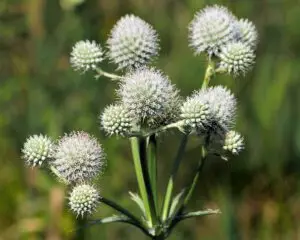
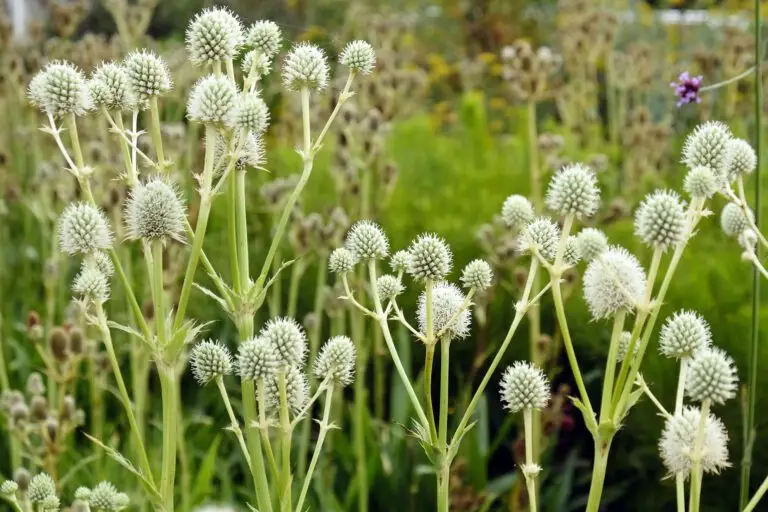
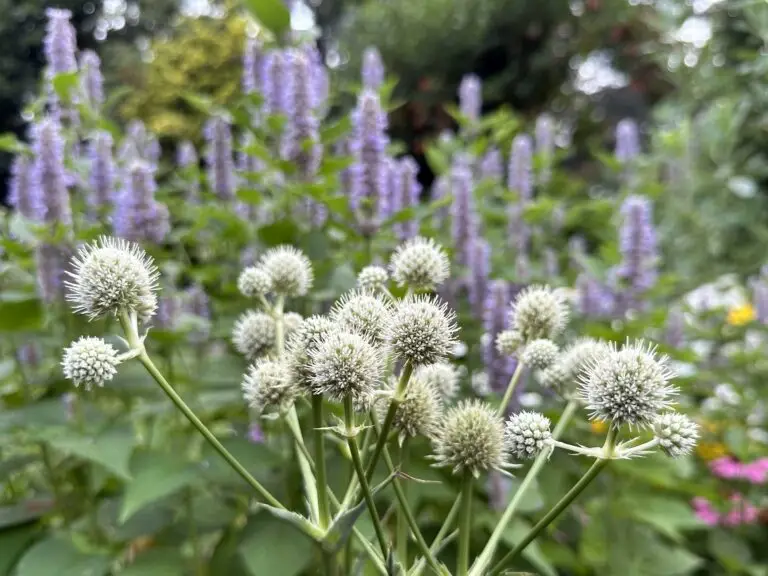
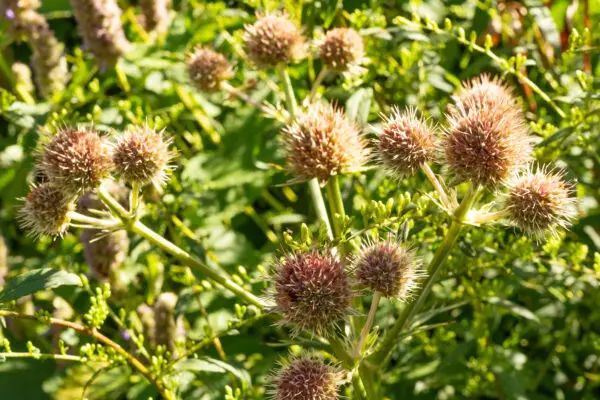
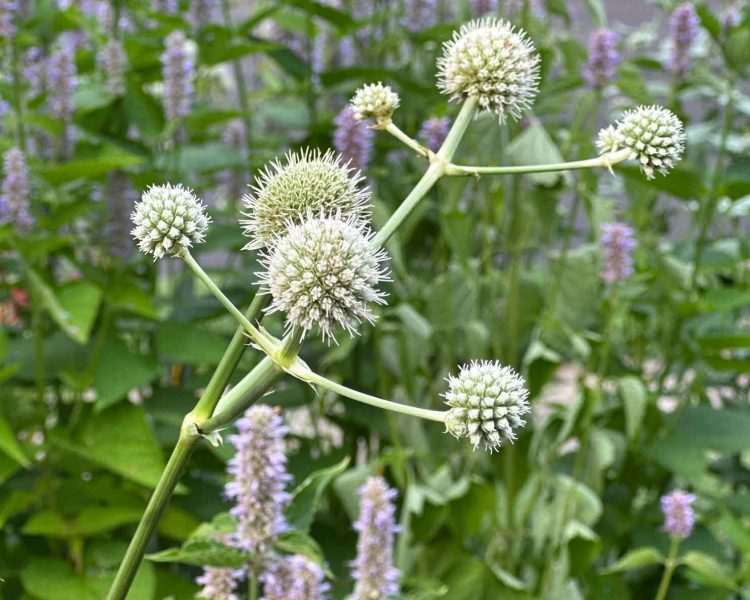
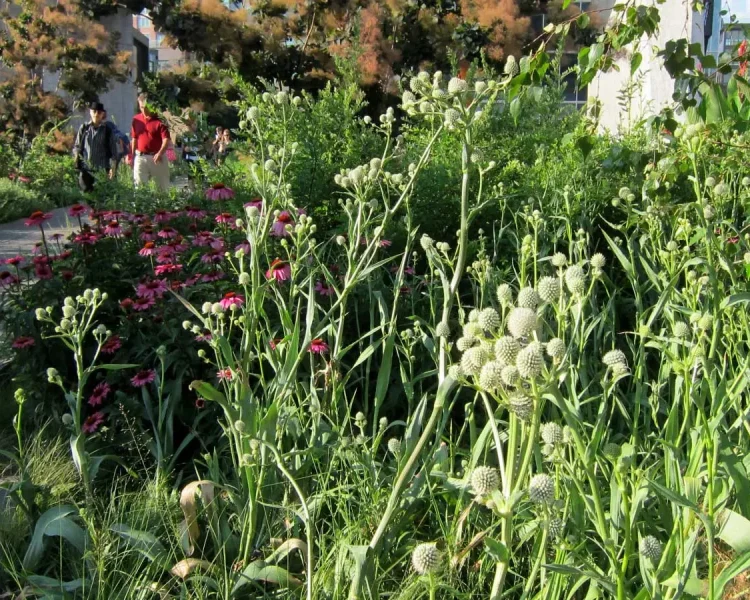
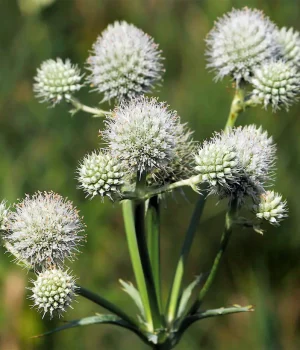
Rattlesnake master is an amazing native plant with a badass common name. The plant looks like it belongs in the desert, with tall spikey white flower balls at the top of rigid stalks. After it blooms, its round seed pods look like modernist sculptures throughout the fall and winter. It’s a show-stopper in sunny Mid-Atlantic, Midwest, and Southern gardens. It’s very drought-tolerant but difficult to move once planted. Make sure to add a nametag in your garden when you plant.
Is rattlesnake master right for my yard?
Plant it if…
- You want a conversation starter. No plant in your garden will get more questions than this one, especially with a garden nametag.
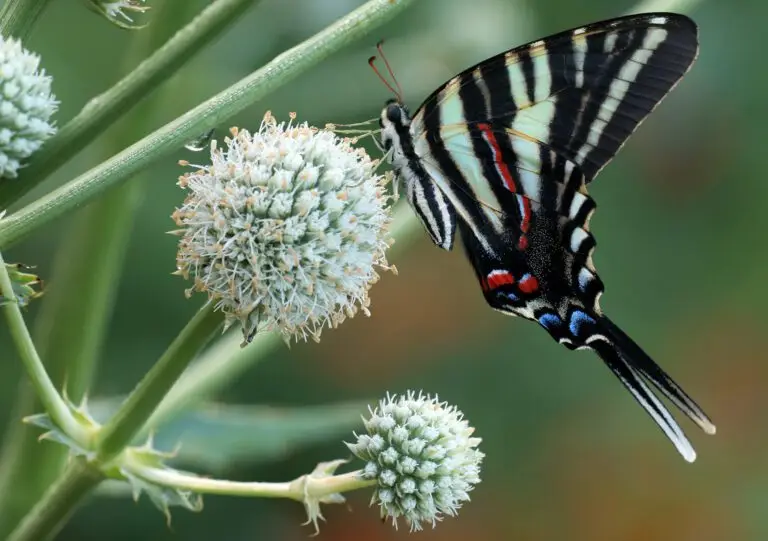
- You want to support pollinators. Rattlesnake master attracts an extraordinary range of bees, wasps, butterflies, beetles, and flies. Few plants pull in this kind of diversity.
- You have a hot, dry, sunny spot. That deep taproot handles drought with ease.
- You want winter interest. The dried flower heads look like natural sculptures standing through fall and winter.
- Deer are a problem. They leave rattlesnake master completely alone.
Skip it if…
- Your soil stays wet. Rattlesnake master needs good drainage. Consistently wet soil will rot the roots.
- You want something that looks traditional. This plant looks wild and a little alien. If you prefer a tidy cottage-garden aesthetic, it might not fit.
- You are in deep shade. Full sun is essential. It will not bloom well without it.
- You like to rearrange your garden. That deep taproot means rattlesnake master does not transplant well once established. Pick your spot and commit.
Why rattlesnake master matters
It throws a pollinator party
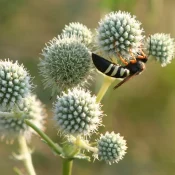
Stand next to a blooming rattlesnake master for five minutes and you will see more insect activity than most gardens generate all season. According to the Xerces Society, rattlesnake master attracts an incredible diversity of floral visitors: bees, bumble bees, wasps, flies, butterflies (including monarchs), beetles, and more. The wasp diversity alone is remarkable. Heather Holm’s Pollinators of Native Plants documents at least 11 types of wasps visiting the flowers, from great golden digger wasps to paper wasps to grass-carrying wasps.
It’s a host plant
But it is not just pollinators. Rattlesnake master is the only host plant for the rattlesnake-master borer moth (Papaipema eryngii), a rare moth whose caterpillars feed exclusively on this plant. That moth’s survival depends entirely on healthy populations of rattlesnake master, and as prairies have disappeared, so has the moth. Planting rattlesnake master in your garden does not just look good; it is one more patch of habitat for an insect that has fewer and fewer places to live.
Enjoy winter garden sculptures
After the blooms fade, the dried seed heads feed birds through fall and winter. Goldfinches, sparrows, and other seed-eaters pick through the spherical heads for seeds. And those dried heads, standing on stiff stems through snow, turn your winter garden into something worth looking at.
We can’t discuss planting tips until we address the “snake in the room.”
Where did the name rattlesnake master come from?
Native Americans used this plant for many uses—sandals, baskets, and even perhaps snakebites. According to the US Forest Service:
“The Mesquakies used it in their ceremonial rattlesnake dance and used the roots to treat rattlesnake bites. The bristly flower heads are arranged like a pitchfork, suggesting a possible use as a snake stick to pin down the head of a rattlesnake. There is no evidence for the efficacy of this plant in prevention or treatment of any medical condition. Native Americans would use the fibrous leaves of this perennial plant for weaving purposes, like making sandals and baskets.”
To say it plainly: although its name says otherwise, rattlesnake master does not help or prevent snakebite or any other medical condition. It does however, make your garden look badass.
Interested in planting medicinally interesting plants? There are actually quite a few native plants that have common names given for their perceived medical value. Other plants named for their alleged healing powers include culver’s root, boneset, and Joe Pye weed.
“
To say it plainly: although its name says otherwise, rattlesnake master does not help or prevent snakebite or any other medical condition. It does however, make your garden look badass.
”
Where rattlesnake master shines in your yard
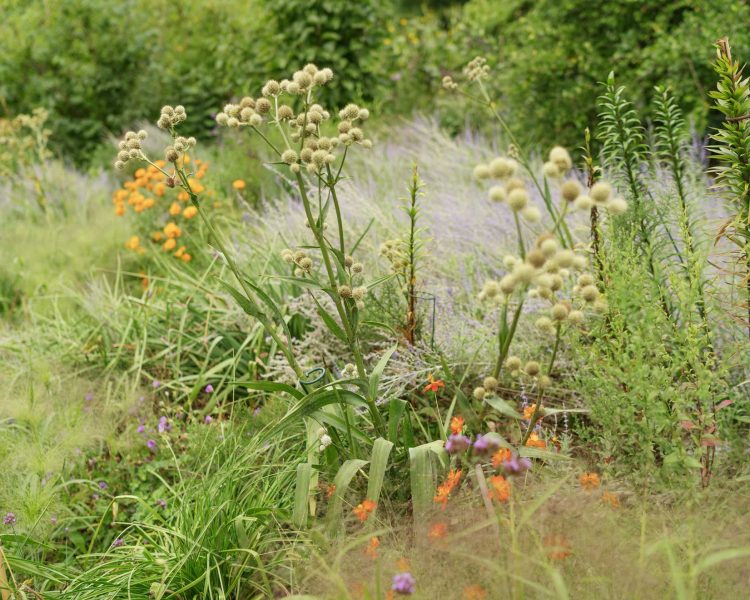
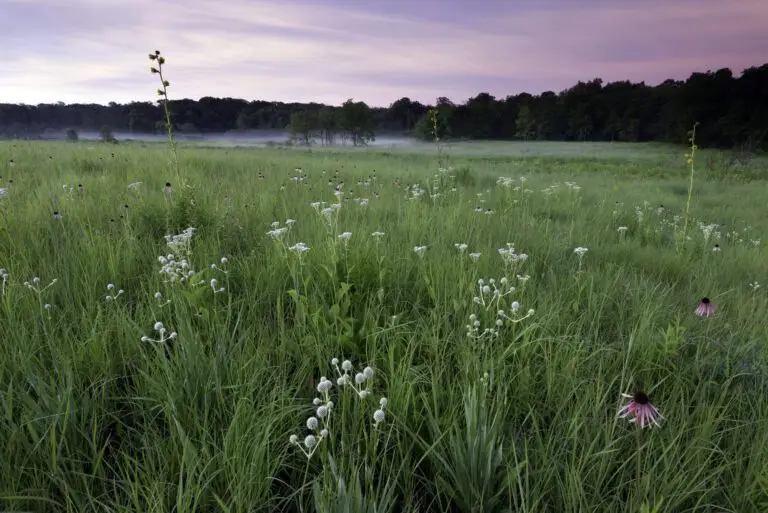
- Prairie or meadow garden: This is where it evolved and where it looks most at home. Plant it in drifts with grasses and other tall natives.
- Pollinator garden: Few plants attract this much pollinator diversity. It is the anchor species for any serious pollinator planting.
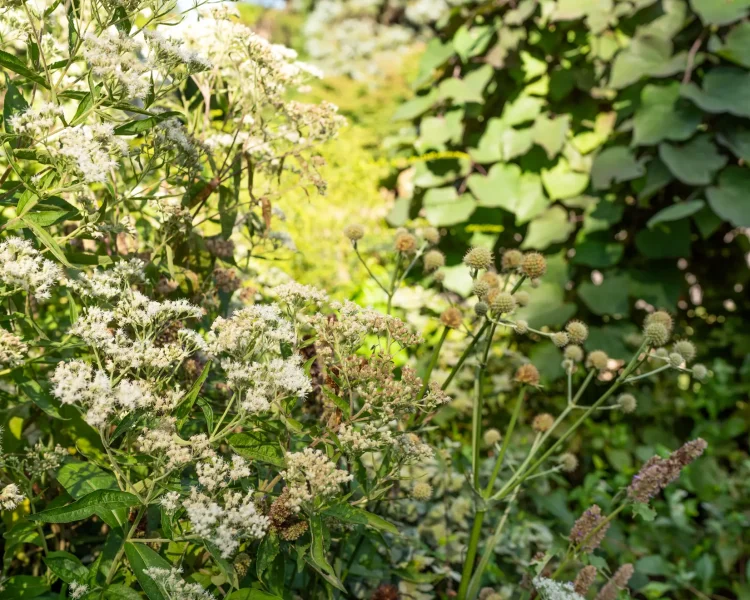
- Mixed native border: Plant behind shorter flowers like bee balm or black-eyed Susans. The height contrast looks fantastic.
- Dry, hot strip along a driveway or fence: Handles heat and drought without complaining.
- Winter interest garden: Those dried spherical heads are some of the most architecturally interesting seed heads in the native plant world.
- Cut flower arrangement: The fresh flower heads are striking in a vase, and the dried heads work in winter arrangements too.
How to grow rattlesnake master
Where to plant
Full sun is essential (6+ hours of direct sun). According to the Missouri Botanical Garden, rattlesnake master is easily grown in average, dry to medium, well-drained soil. It is happy in clay, loam, sand, or rocky ground. The one thing it cannot handle is standing water or consistently soggy soil.
When to plant
Transplants go in spring or fall. Seeds can be sown directly outdoors in fall, which lets winter cold naturally break their dormancy (cold stratification). Starting indoors is trickier and requires 60 days of cold, moist stratification.
Watering
Water regularly during the first growing season while the taproot gets established. After year one, rattlesnake master is extremely drought-hardy and will not need supplemental watering except during the most severe dry spells. Do not overwater. Wet feet are worse for this plant than dry ones.
Fertilizer
None. Rattlesnake master actually prefers lean soil. Fertilizer can make the stems floppy and reduce the plant’s natural toughness.
Transplanting
Here is the big caveat: do not try to move rattlesnake master once it is established. That deep taproot does not recover well from being dug up. Pick your spot carefully before planting. If you need to start over, it is easier to grow a new plant from seed than to relocate an existing one.
Beginner Tip
Plants from a native plant nursery will usually flower the first year. Seeds are rewarding but slow: expect a small rosette of leaves in year one, maybe year two, and flowers in year two or three. If you want the instant “what IS that?” moment in your garden, start with transplants.
Buy rattlesnake master seeds online
There are lots of places to buy seeds online for rattlesnake masters, including:
Why are we including the location? Here’s why:
Where can I find rattlesnake master plants?
Skip visiting big box stores when it comes to this plant. Head straight to native-focused nurseries to find some for your garden. Here are four sourcing ideas to help you find your rattlesnake-y flowers:
What pairs well with rattlesnake masters?
A good rule of thumb when picking garden pairings is to choose plants that bloom throughout the growing season, so you and the pollinators always have flowers.
So, this is a yucca, right?
Don’t be fooled by the Latin. Rattlesnake master’s Latin name (Eryngium yuccifolium) includes “yucc,” inspired by its yucca-like appearance. But it’s not part of the yucca family: it’s actually related to carrots. Rubbing a leaf between your fingers will release its carroty smell. Its long root (called a taproot) also looks very carrot-like.
Rattlesnake master is in the same plant family (Apiaceae) as Queen Anne’s lace, carrots, parsley, and dill. It does not look like any of its relatives, which is part of what makes it so much fun to grow. It’s like so many families: many of us have a beloved, idiosyncratic relative who stands alone.
Rattlesnake master is the kind of plant that changes how you think about gardens. It does not look like anything else in the nursery. It pulls in more pollinators than plants three times its price. It stands through winter like a natural sculpture. And it has a name that makes everyone smile. Give it sun, give it drainage, and then stand back and watch the show. Don’t forget to add a garden nametag.
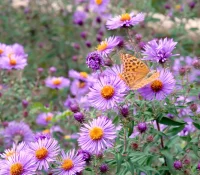
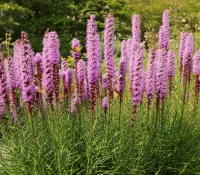
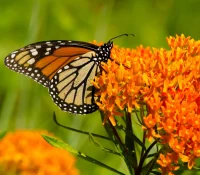
For more plants that love the same sunny, well-drained conditions, check out our profiles on blazing star, purple coneflower, and butterfly milkweed. Or plan a whole garden around butterflies and moths and visit our Best Native Host Plants. Happy planting!