

Highlights
If you want to see pollinators in action, plant native mountain mints. These tall perennials burst into white and green blooms for over a month in summer, and when they’re flowering, they’re absolutely covered in bees, butterflies, and even the occasional hummingbird. Brush against the leaves, and you’ll catch a whiff of minty freshness. Easy to grow, deer-resistant, and at home in sun or part sun, mountain mints are one of the most rewarding natives you can add to your garden. Scroll on to meet some native species.
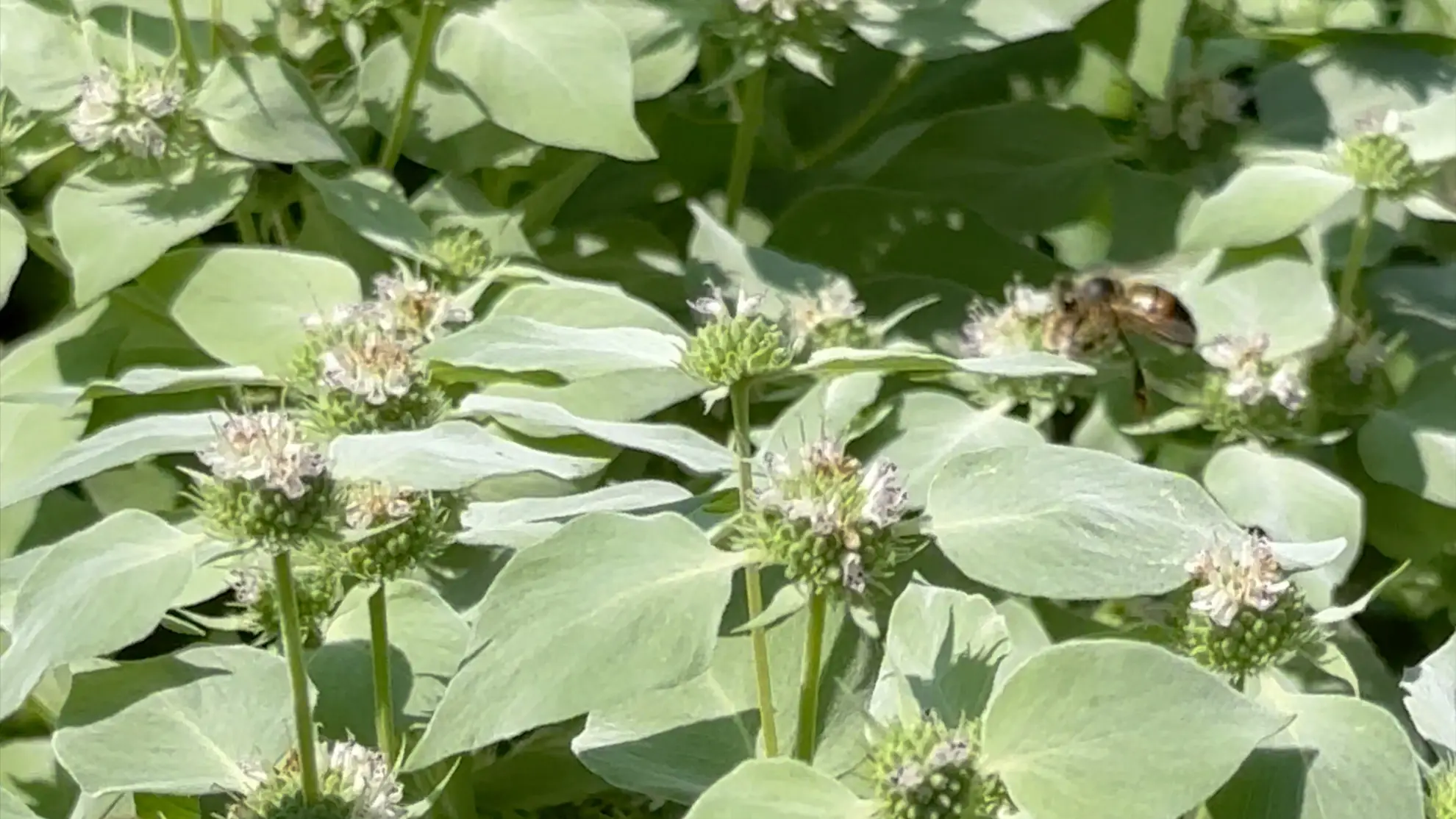
Is mountain mint a good choice for my yard?
Yes, if…
- You want to see pollinators swarming your garden.
- You’d like a tall perennial that thrives in sun to part sun.
- You want a fragrant, deer-resistant plant.
- You’re looking for a low-maintenance pollinator lifeline that comes back every year.
Why mountain mint matters
- Pollinator powerhouse: All species of mountain mint are among the top native plants for bees and butterflies.
- Long bloom time: Flowers for a month or more in mid to late summer.
- Deer-resistant: Strongly scented leaves keep deer away.
- Easy care: Thrives with little fuss, just rainfall once established.
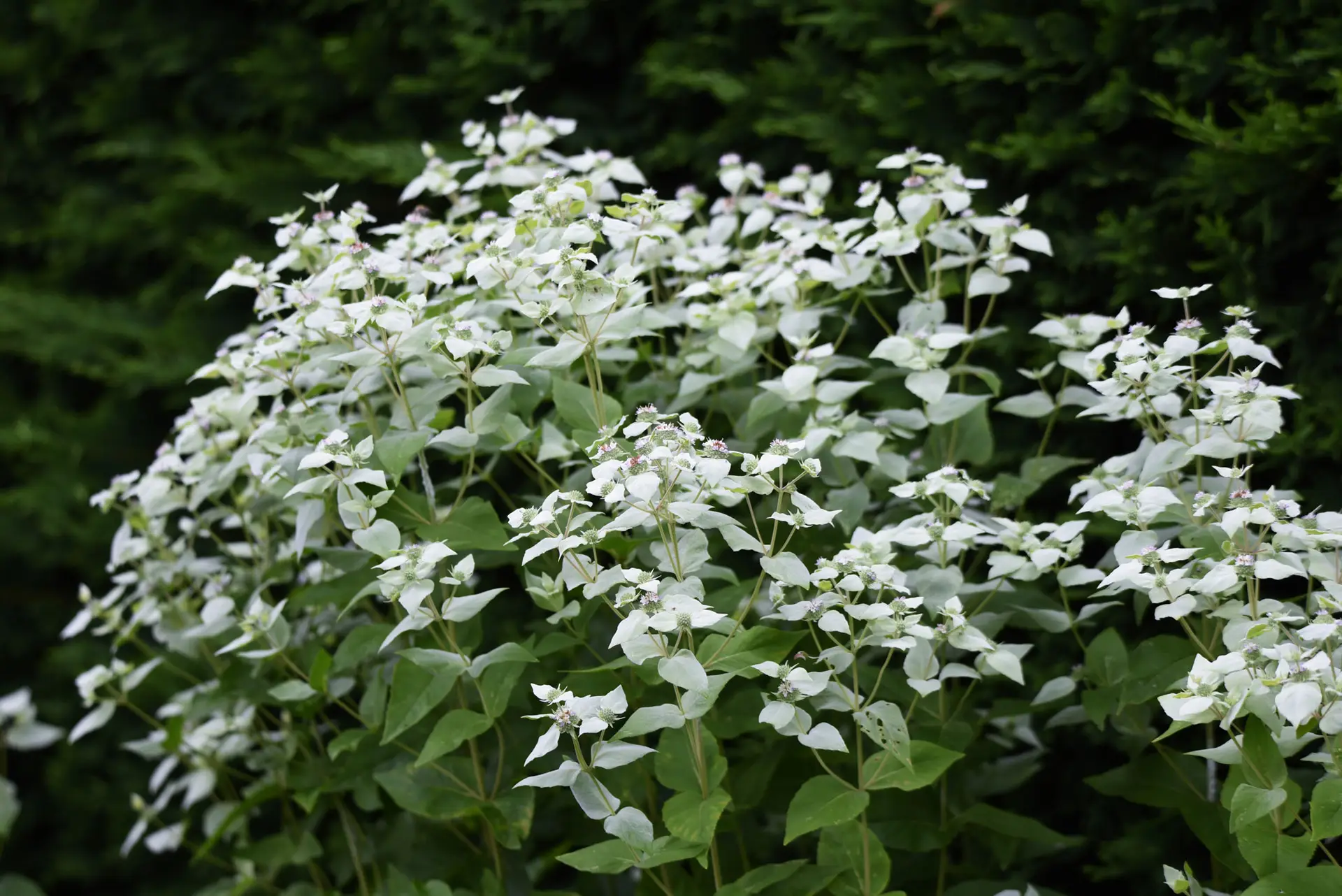
Types of native mountain mint
There are about 8–10 mountain mint species native to North America. All share the minty fragrance and pollinator appeal, but here are a few common ones you might find:
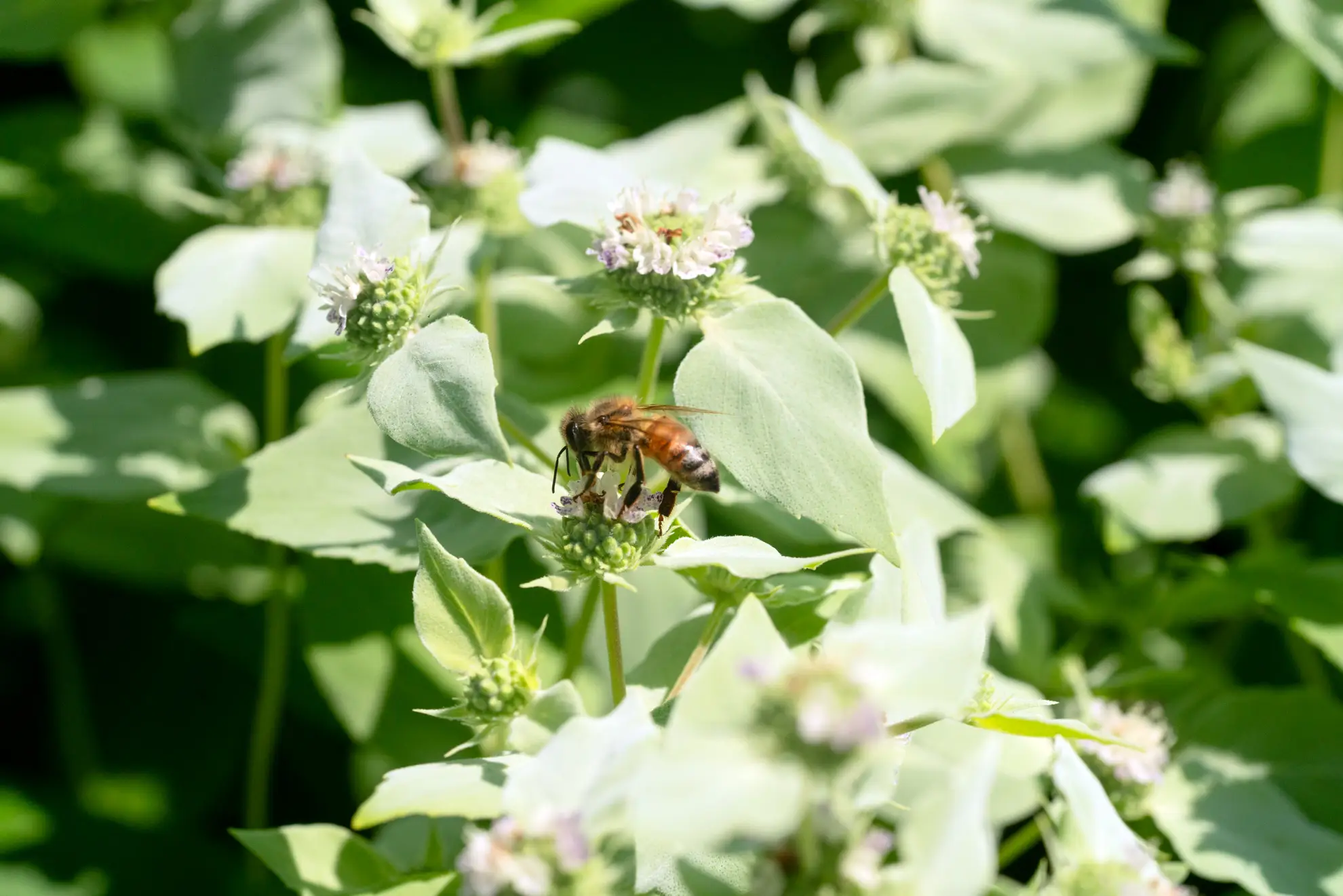
Clustered mountain mint
Pycnanthemum muticum
- Super long bloomtime: 6+ weeks!
- Delicate white flowers with tiny pink edges
- Native to 60% of the United States, from Maine to Florida
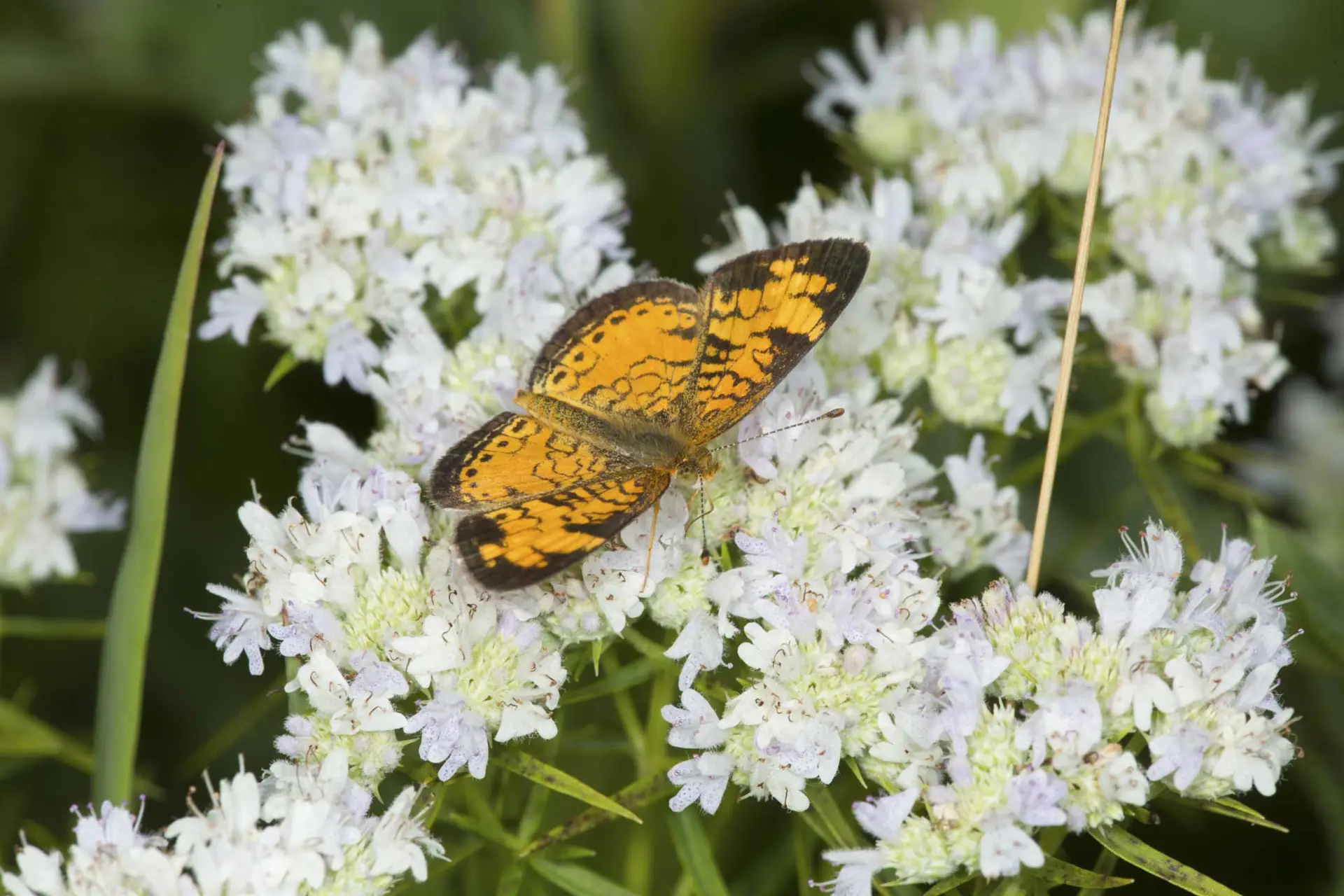
Narrow-leaved mountain mint
Pycnanthemum tenuifolium
- Needle-like leaves and white flowers
- 2-3 feet tall
- Native to the eastern United States and Canada
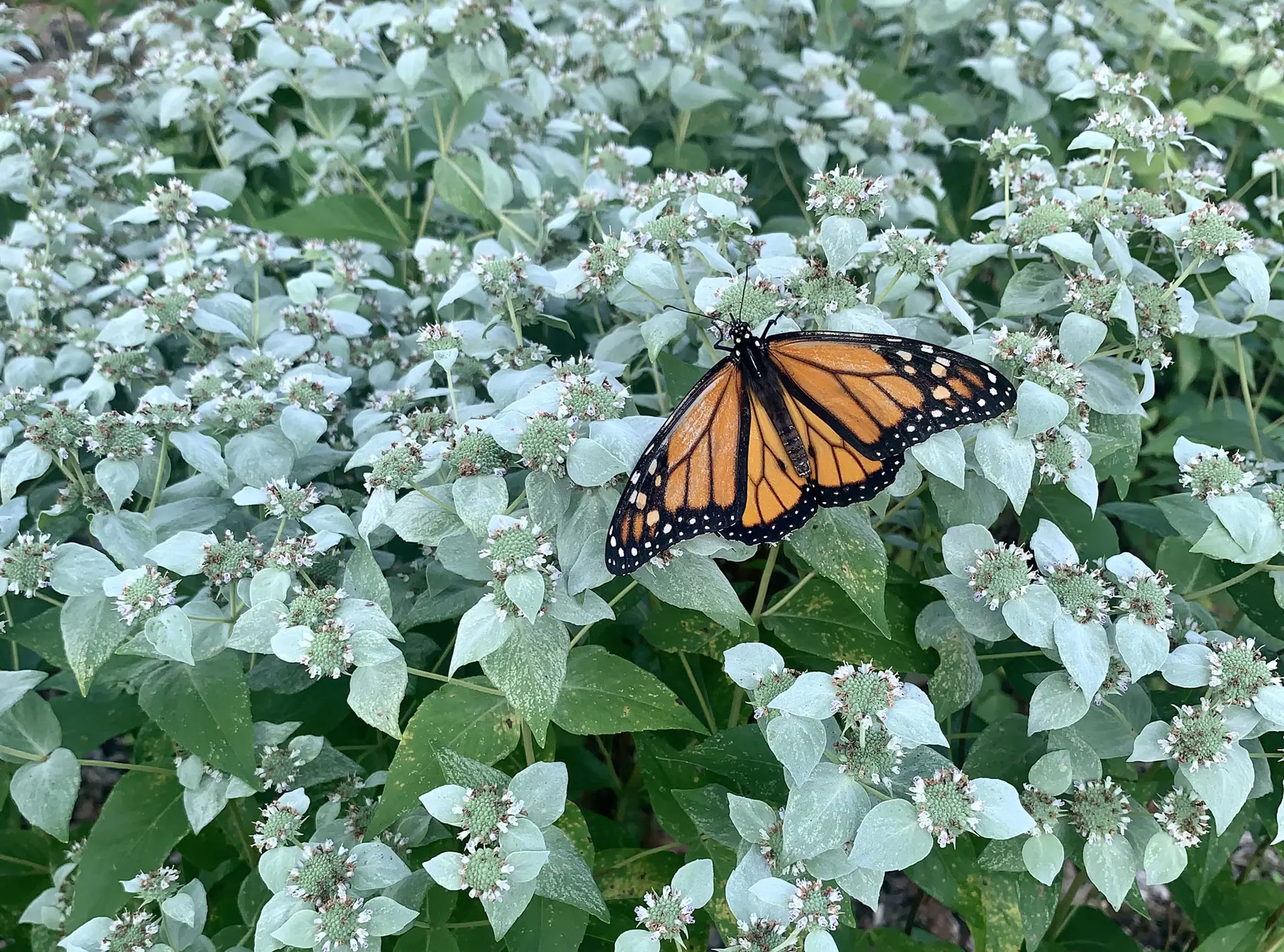
Silverleaf mountain mint
Pycnanthemum incanum
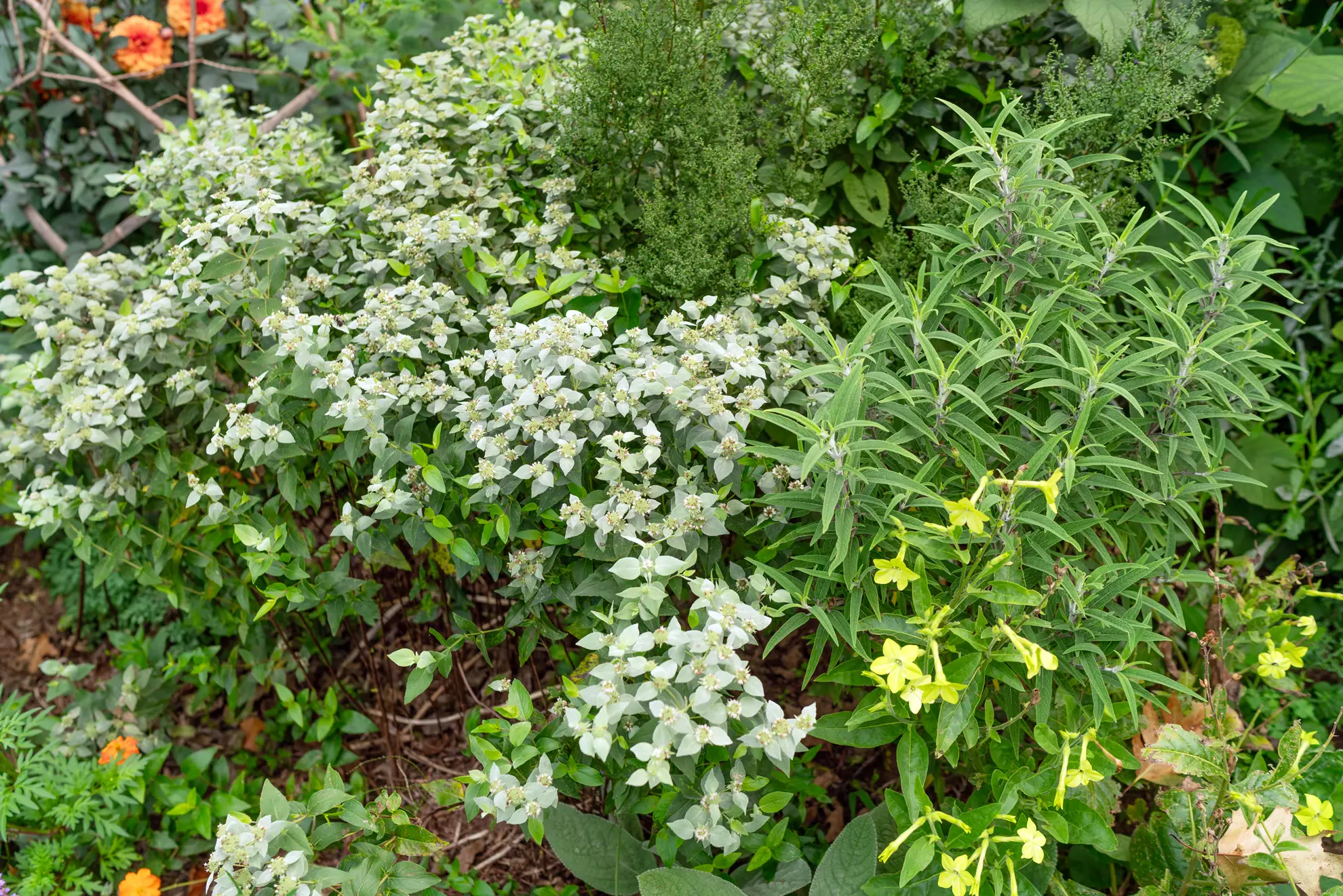
- Silvery tear-shaped leaves
- Looks similar to Clustered mountain mint, but leaves are more silvery
- 2-6 feet tall
- Native to the eastern US and Ontario
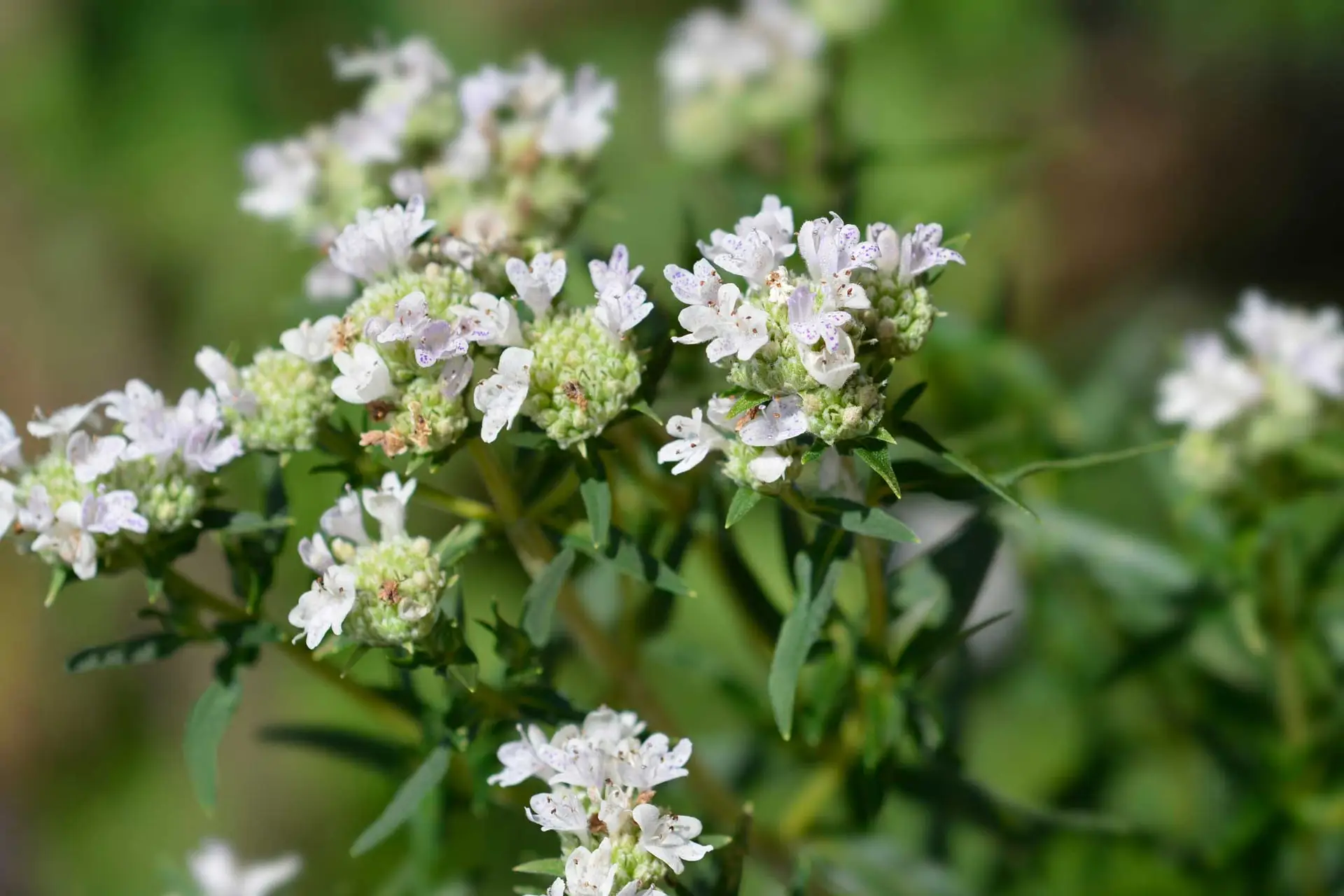
Virginia mountain mint
Pycnanthemum virginianum
- Needle-like leaves and white flowers that are sometimes tinged with pink or purple
- 2-3 feet tall
- Native to the eastern United States and Canada
Some other species include:
- Whorled mountain mint (P. verticillatum), native from Maine to Arkansas.
No matter which one you choose, you’ll have a pollinator magnet. Look for Pycnanthemum on the tag to be sure you’ve got a mountain mint.
How do you say Pycnanthemum? There is a nan and a mum hidden in that pile of letters, so say it while celebrating the matriarchs in your life! Here’s how to say it:
pick-nan-THE-mum
Mountain mint is one of those native plants that makes you look like a pro, even if you’re new to gardening.
Where mountain mint shines in your yard
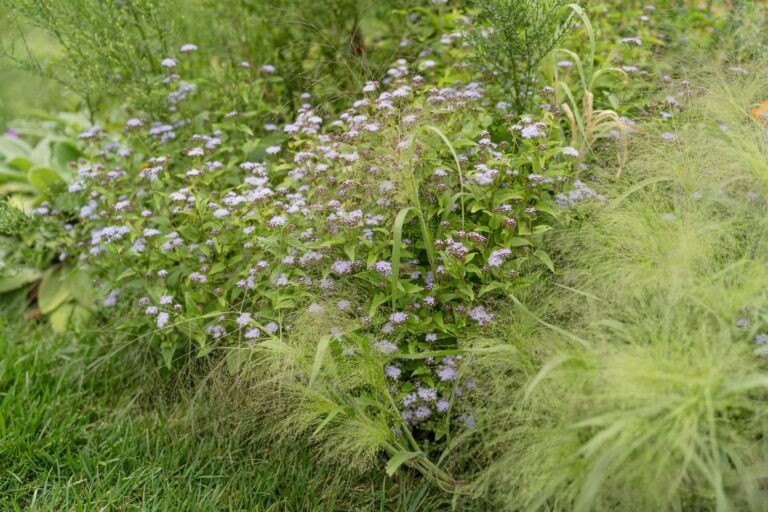
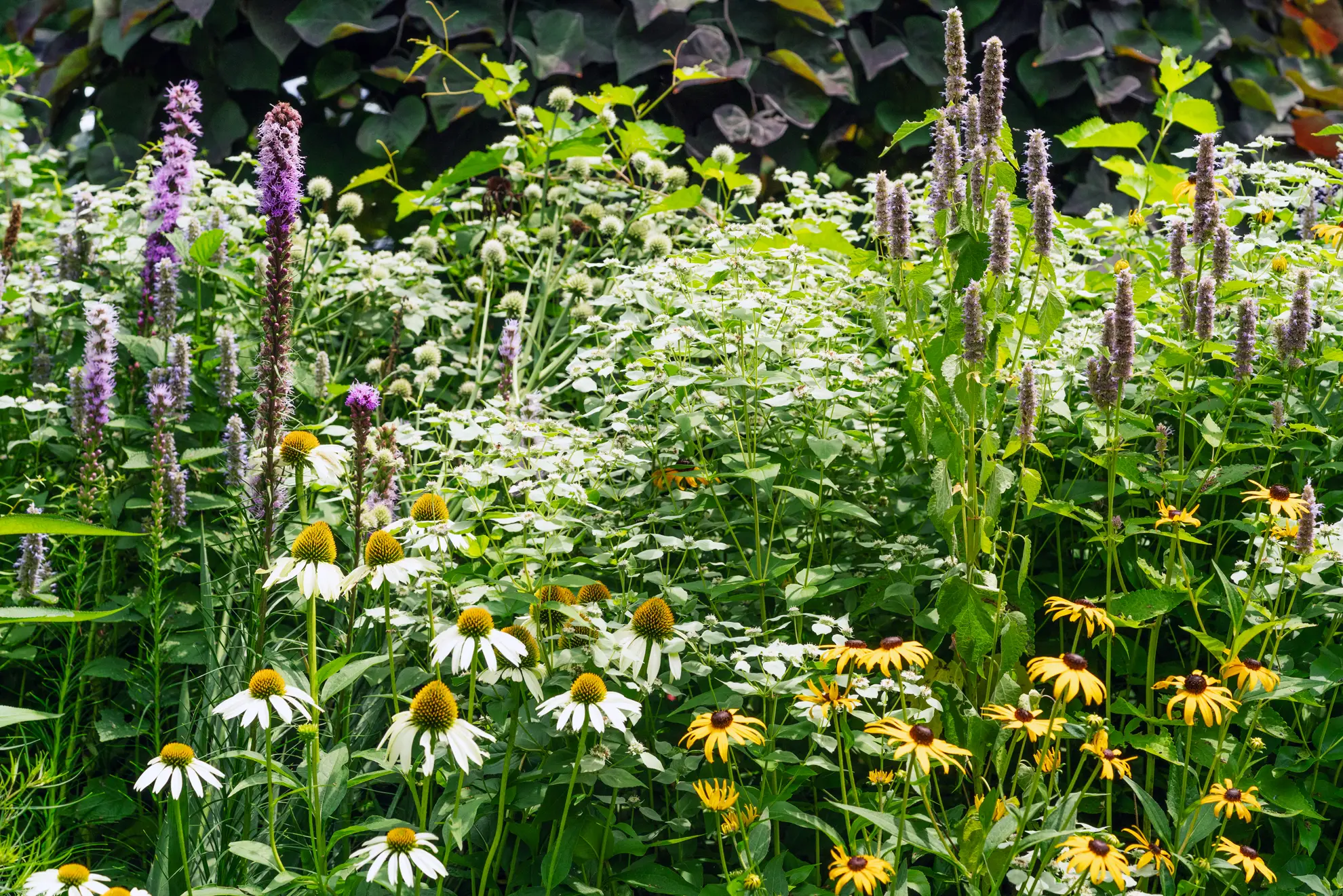
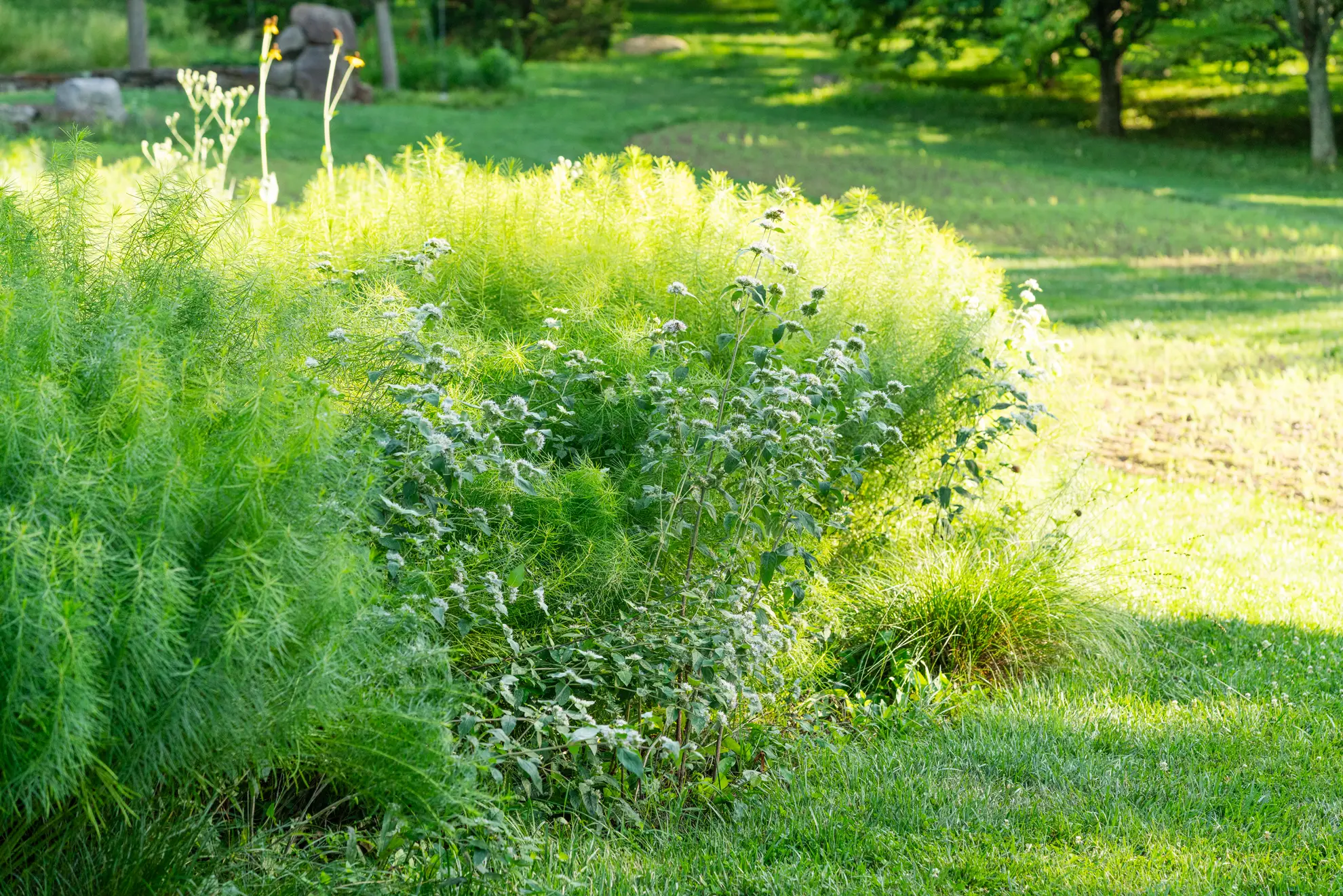
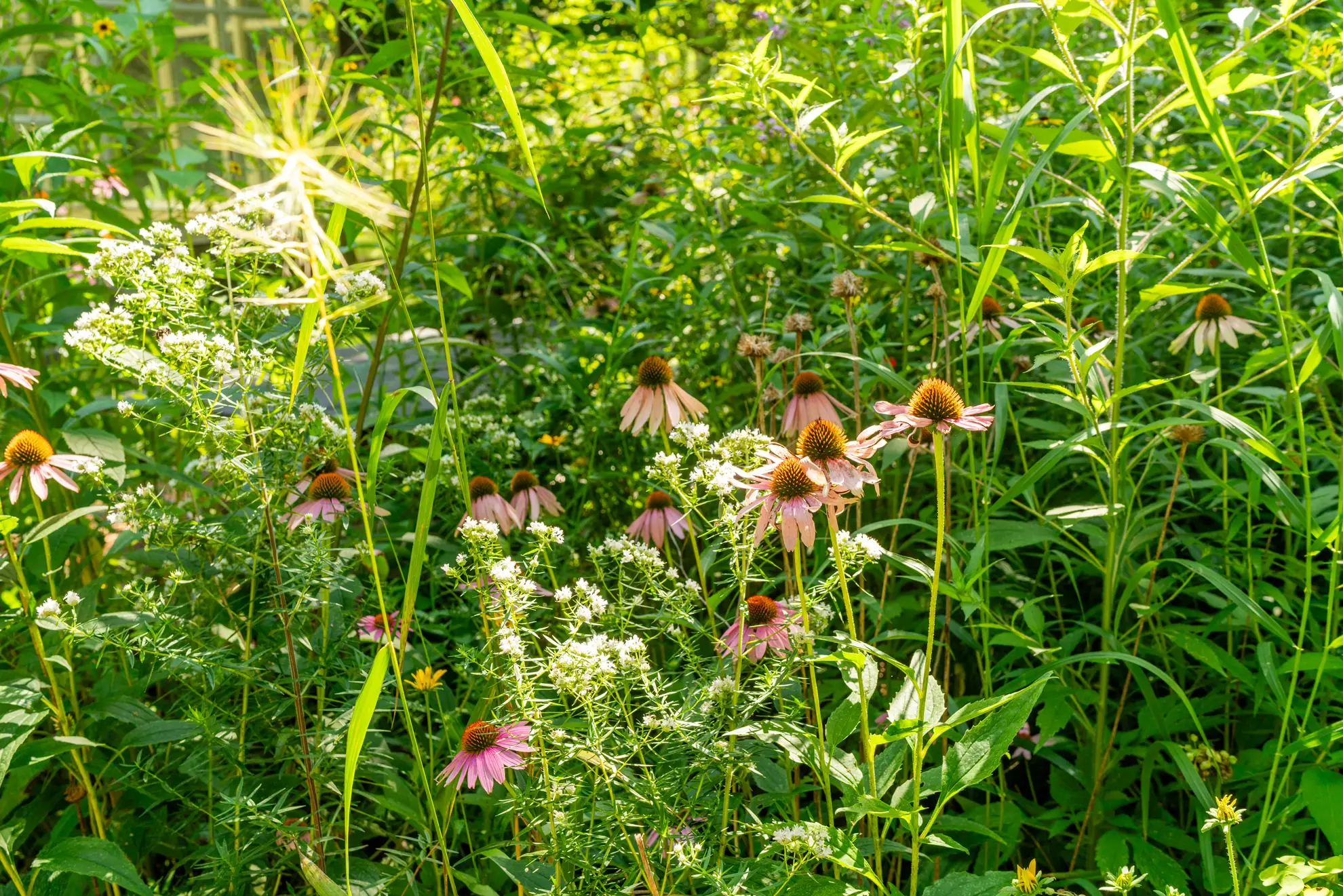
Mountain mint looks best when planted in clusters, where its foliage and white flowers can create a soft backdrop for brighter natives like coneflowers or blazing stars. Use it in pollinator gardens, meadow plantings, or mixed borders — anywhere you want movement, height, and a constant buzz of pollinators.
FAQs
Is mountain mint aggressive?
Mountain mint can grow quickly and take over a garden—this is called being ‘aggressive’—if given its preferred rich soil AND allowed to spread unchecked. Here are two ways to keep mountain mint in check:
- Pull up the edges of its rhizome roots so they don’t spread. (In my front yard garden, pulling up rhizome roots that spread too far in the spring can take 15 minutes.)
- Grab a shovel and dig up a clump in the spring. Plant this clump elsewhere, or give it away! (I’ve had success halving it every year after its third growing year.)
Aggressive plants are not always “bad.” If you have a large area to cover, picking plants that spread quickly helps fill out an area much faster than slower-growing plants. At the same time, if you have a smaller garden, aggressive plants like mountain mint will need spring-time vigilance, especially after their third year.
How to grow mountain mint
Mountain mint is one of those native plants that makes you look like a pro, even if you’re new to gardening. Plant it in full to part sun and give it average soil—nothing fancy needed. Once established, it can handle dry spells but does best with consistent moisture.
Most mountain mint species grow between 3 and 5 feet tall, making them perfect for the middle or back of a garden bed. In the fall, you can cut the stems back or leave them standing for winter interest and extra wildlife cover. Either way, mountain mint will come back strong each spring—no special care required.
Here’s a quick growing overview from NC State Extension:
Plant nerd fact
Want to support pollinators? This is your plant.
Mountain mint might just be the heavyweight champion of native plants for pollinators.
In a three-year Penn State study tracking which native flowers attracted the most pollinator visits, clustered mountain mint (Pycnanthemum muticum) came out on top—every single year.
As the researchers put it:
“The plant that was most attractive to pollinators was Pycnanthemun muticum [clustered mountain mint]…When it was in flower the plant seemed alive with activity. “
Native plants to pair with mountain mints
These native plants all thrive in the same full sun to part sun as mountain mint. Plant them together and enjoy flowers and pollinators throughout the growing season.


Where can I buy mountain mint?
First, the bad news: sourcing a specific native plant can sometimes be a challenge. To make your mountain mint sourcing easier, here are four ideas that are tried-and-true for finding native plants:
Mountain mints are among the easiest, most rewarding natives you can grow. With its minty scent, long bloom time, and nonstop pollinator action, it proves that gardening with natives can be both effortless and spectacular. Plant a patch, and you’ll never garden without it again. Save yourself time, money, and water and fill your phone with butterfly pictures: plant some mountain mint. Looking for other good-smelling natives? Visit our Beginner’s Guide to Bee Balm or our Beginner’s Guide to Culver’s Root. Happy planting!
Sources
- Johnson, Lorraine and Colla, Sheila. A Northerner’s Guide to Native Plants and Pollinators. (2023), 128-129.
- Holcomb, E. Jay, and Connie Schmotzer. “Bees, Bugs, and Blooms – A Pollinator Trial (Research).” Penn State College of Agricultural Sciences, 2015. https://agsci.psu.edu/research/centers-facilities/extension/landisville/bees-bugs-and-blooms-research-project/bees-bugs-and-blooms-a-pollinator-trial.
- Lady Bird Johnson Wildflower Center, Hoary Mountain Mint
- Lady Bird Johnson Wildflower Center, Narrowleaf Mountain Mint
- Lady Bird Johnson Wildflower Center, Virginia Mountain Mint
Similar plants


Updated Find more: White Beginner Guide Deer Resistant Flower Summer Fall Full Sun Part Sun
The ads on this site help pay real native plant nerds to research and write these guides.
Garden notes
Notes from people who’ve grown it
Tips, wins, and the occasional disaster. If you’ve grown mountain mints, share the advice you’d give to a neighbor.
No notes yet. Yours could be the first.
Grown mountain mints? Tell the next person what you wish someone had told you.
Tap anywhere to close


