The Northwest is not one landscape. It’s more like a world you encounter in fantasy series. The Northwest Pacific coast gets 80 to 200 inches of rain a year, powering lush temperate rainforests filled with fog and evergreens. Cross the Cascades and the world flips. The valleys in Idaho, Montana, and Wyoming are cold, dry, and shaped by elements straight from a Tolkien book: fire, wind, and altitude. Head northward and you’ll find a growing season so fleeting it makes Montana look tropical. And then you’ve got Wyoming’s sagebrush basins, which look like you’ve wandered to Nevada.
What connects all of this is some main characters. You’ll find serviceberries in Puget Sound gardens and hillsides in the Rockies. Oregon grape flourishes in Seattle and the canyons in Wyoming. And there are a few dozen penstemons to pick from. Scroll on to meet some Northwestern native gems ready for your garden.
“
A gardener in Portland, Oregon, and a gardener in Bozeman, Montana, are separated by fewer than 700 miles, but from a garden’s POV it looks like different planets.
”
Start here: which side of the mountains are you on?
An easy, clarifying question for Northwest gardening is which side of the Cascades or Rockies you live on. A gardener in Portland, Oregon, and a gardener in Bozeman, Montana, are separated by fewer than 700 miles, but from a garden’s POV it looks like different planets. Portland gets mild, drenched winters and dry summers. Bozeman gets 20-below winters, 18 inches of annual rainfall, and wind that would rip an unprotected shrub out of the ground by February.
This guide is organized around this mountain split. Here’s what we’ll cover:
- Native favorites that grow across most of the region. These natives have the widest range and show up across the Northwest.
- Pacific Northwest (western OR and WA), or west of the mountains. These plants are made for rainy winters and dry summers.
- Mountain and Inland West (ID, MT, WY, and eastern OR/WA) covers plants that can handle dryness and wind.
- Alaska gets its own section, because well—it’s Alaska. You know why.
Northwest native favorites: plants that work across the region
A handful of Northwest natives show up in nearly every state in the region. These are the starting lineup, the plants recommended if you live in Bend or Boise or Billings without needing follow-up questions about microclimate.
Oregon Grape
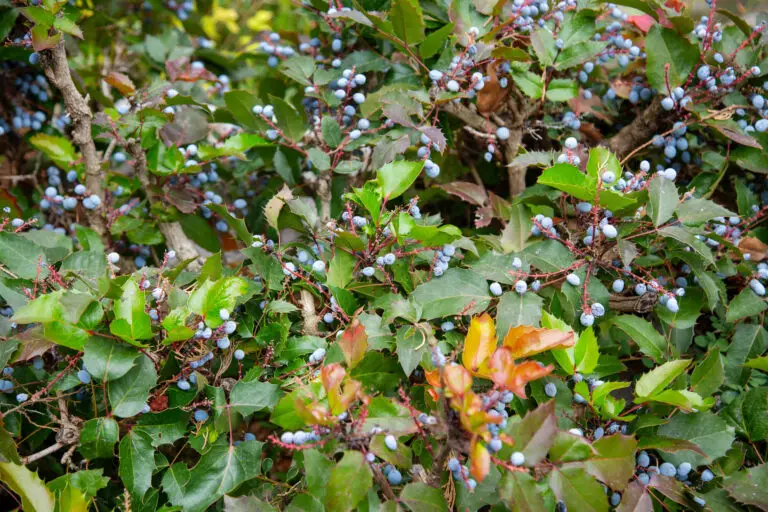
If you have room for one native shrub, Oregon grape (Mahonia aquifolium) might be it. The leaves look like a holly crossed with a Hollywood diva: glossy, spined, evergreen, and turning a moody bronze-purple by December. Bright yellow flowers show up in early spring, followed by dusty blue berries that birds devour.
Oregon grape grows in sun or shade, wet winters or dry summers, clay or rocky gravel, making it perfect for beginner gardeners. It grows across Washington, Oregon, northern Idaho, and western Montana. In the drier interior, including Wyoming, its low, creeping cousin (Mahonia repens) is a native stand-out, and a shade-loving relative, Cascade Oregon grape (Mahonia nervosa), stays under two feet and carpets the ground beneath evergreens. The whole family is a stunner.
All three of these are evergreen, deer-resistant, and about as easy as a native shrub gets.
“
It is a mystery why we have cherry blossom festivals when we have serviceberries.
”
Saskatoon Serviceberry
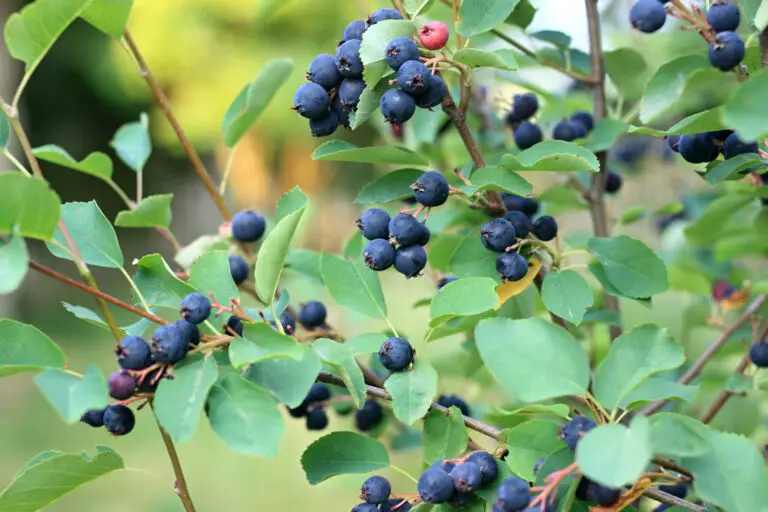
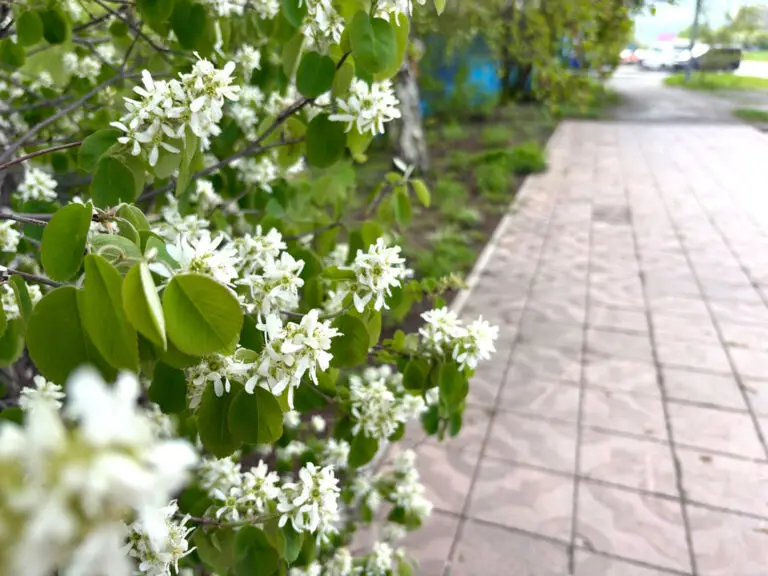
It is a mystery why we have cherry festivals when we have serviceberries. Saskatoon serviceberry (Amelanchier alnifolia) grows as a multi-stemmed shrub or small tree, eight to fifteen feet, covered in white flowers just as the woods are shaking off winter.
Then you get berries in June: sweet, blue-purple, tasting like a blueberry that ran away with an almond. Birds love them. People have loved them across the Northern Rockies and the Pacific coast for thousands of years.
It’s even nice in the fall, when the leaves turn warm yellow and orange. This serviceberry species is one of a few native to North America, and it grows in every Northwest state, in full sun to part sun.
Plant it for the gardening trifecta: beauty, deliciousness, and ease.
Read our Serviceberry Plant Profile for more.
Red Osier Dogwood
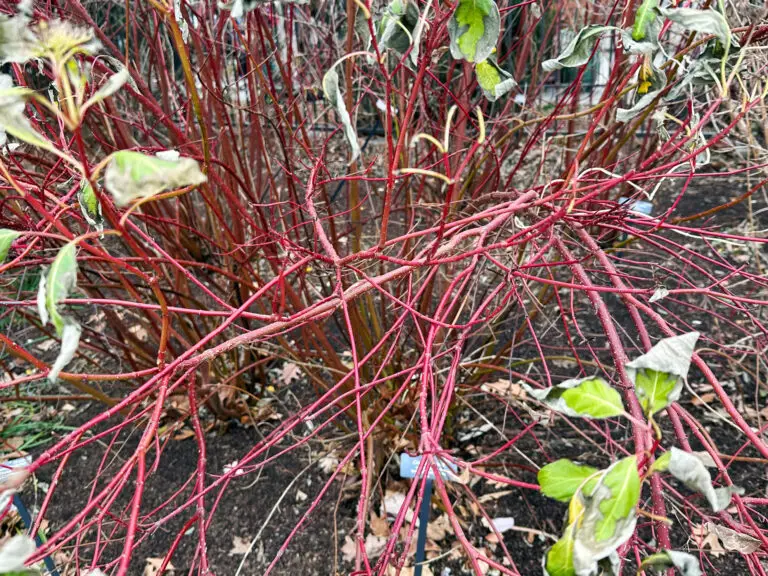
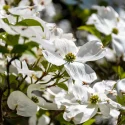
Most shrubs look meh in the winter. Red osier dogwood (Cornus sericea) waits for it. As the leaves drop, the bare stems turn a lacquered red and stay that way through the coldest months, glowing against snow like a modernist sculpture. In summer, it is a leafy six-to-ten-foot thicket with flat white flower clusters and pale berries that more than forty bird species snack on.
It is happiest in the wet, difficult corners, think: soggy ground, hard winters, part shade. It grows in all six Northwest states. Cut the oldest stems to the ground every few years and the winter red comes back brighter.
Read our Red Osier Dogwood Plant Profile for more.
Kinnikinnick
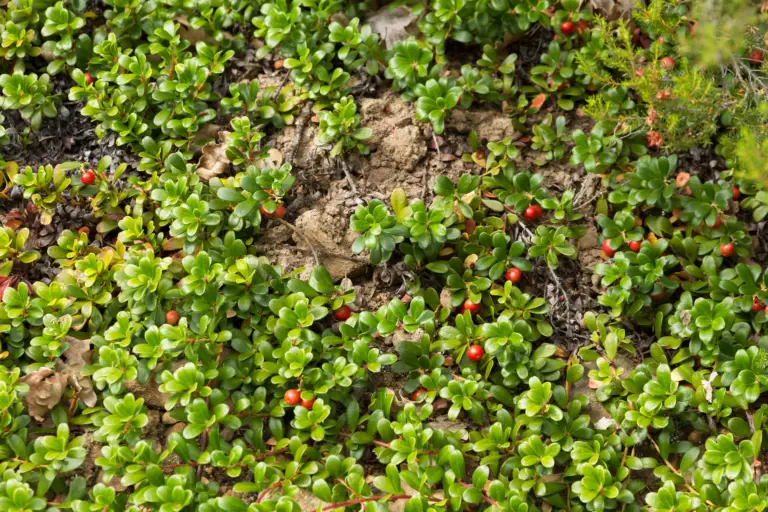
Kinnikinnick (Arctostaphylos uva-ursi) is the answer to a frequent gardening Q: what do I plant under trees? This is the answer.
Kinnikinnick (sometimes also called bear berry) runs across the ground in a tight evergreen mat, rarely more than six inches tall, dotted with tiny pink urn-shaped flowers in spring and hard red berries in fall.
Sandy soil, bare rock, blazing sun, deep cold—totally fine with all of the above. It grows from the coast of Alaska to Wyoming. Use it under evergreens, on a slope you are tired of fighting, or over the patch of lawn you are done mowing in the shade. The tongue-twister name comes from an Algonquin word for a traditional smoking blend that used its dried leaves.
Now, let’s take a closer look at either side of the Cascades and meet some natives with Northwestern-specific DNA.
“
The wet side of the Cascades is a world of evergreens, ferns, and understory shrubs so lush that a first-time visitor from the Midwest might mistake it for a tropical forest.
”
Pacific Northwest: Western Oregon and Washington
The wet side of the Cascades is a world of evergreens, ferns, and understory shrubs so lush that a first-time visitor from the Midwest might mistake it for a tropical forest. The native plant palette here is dominated by shade-loving evergreens and woodland perennials adapted to wet winters, dry summers, and the dappled light beneath towering trees. These are the plants that make Pacific Northwest gardens look at home.
Salal
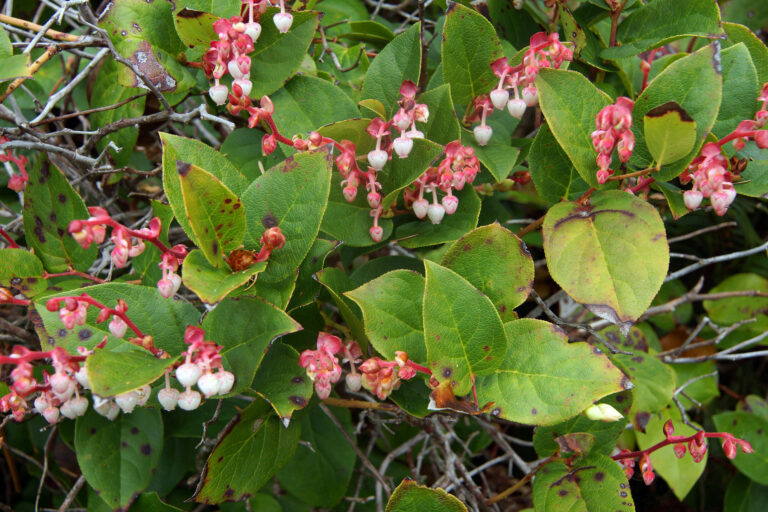
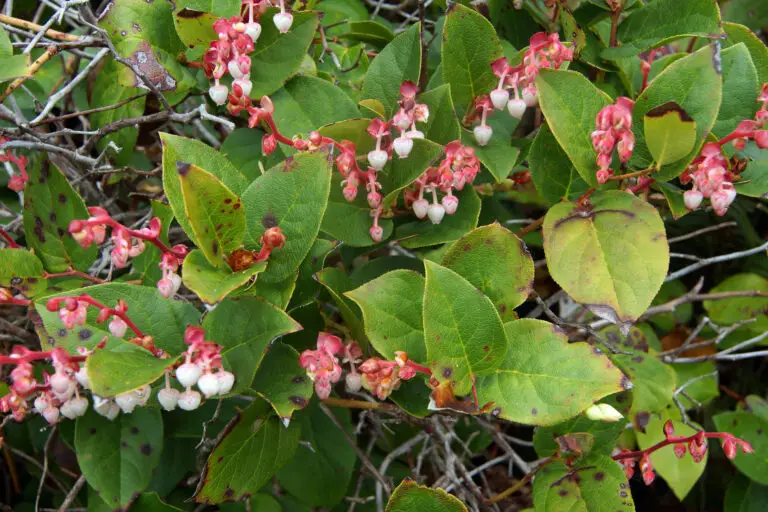
Salal (Gaultheria shallon) gives a Northwest forest its own shade of green. It’s low, dense, and glossy enough to look almost wet. It stays a reasonable two to five feet, with leathery leaves so handsome that florists sell them as filler in bouquets.
Late spring brings dangling pink-and-white flowers shaped like little urns, then dark purple berries that are sweet, edible, and were a staple food for Coast Salish peoples. Best of all, it thrives where most plants cannot: deep shade, dry-ish soil, and the tangle of evergreen roots that defeats much else. For the dark strip under the eaves or the shady side of the house, salal is the answer.
Western Sword Fern
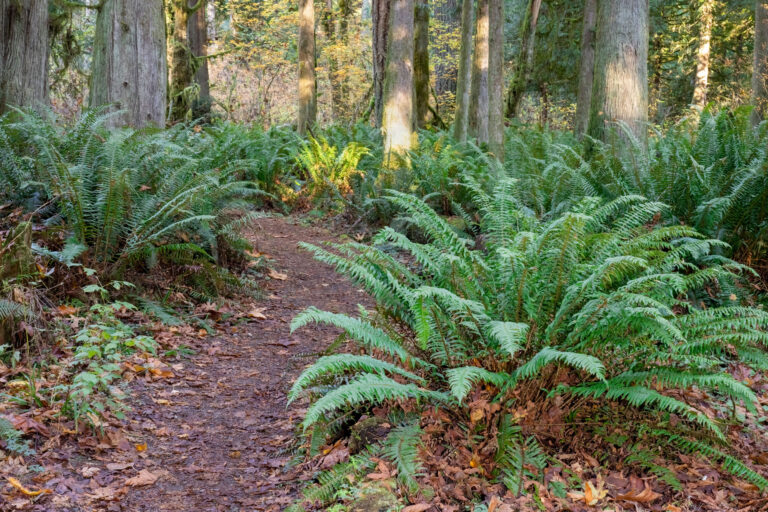
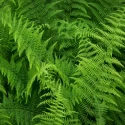
Western sword fern (Polystichum munitum) is what covers the forest floor west of the Cascades. In your garden, it’s a calm, arching evergreen that makes a shady corner feel like the woods. The fronds reach two to four feet, dark and leathery, and they hold their greenery through the wettest winter.
It may be the least demanding native you can plant. Give it shade and soil that is not bone dry, then leave it alone. No dividing, almost no watering once it is settled, and deer walk right past. A patch of sword fern under tall trees is one of the easiest beautiful things a Northwest gardener can do.
Oceanspray
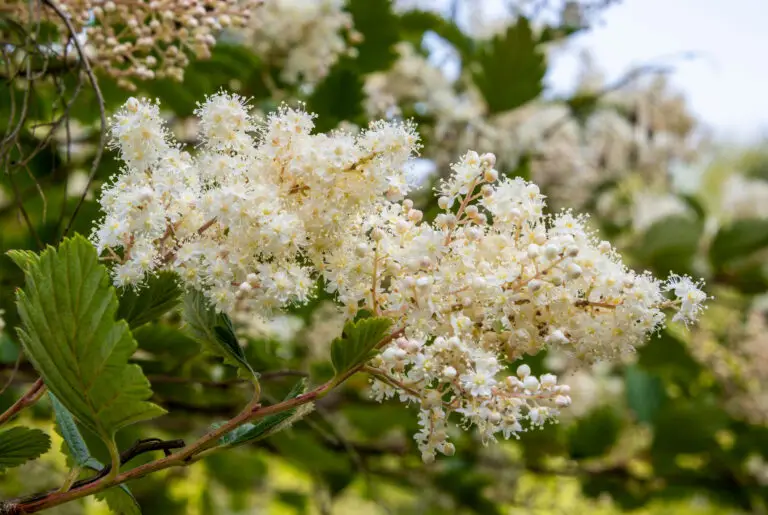
In June and July, oceanspray (Holodiscus discolor) looks like it is throwing confetti. Cascades of tiny cream-white flowers, in plumes six inches to a foot long, cover the branch tips until the whole shrub seems to foam from a distance. Up close, they smell faintly of honey.
It grows eight to twelve feet in an arching shape, in full sun to part sun, and once it is established it needs no summer water in western Oregon and Washington.
Mountain and Inland West: Idaho, Montana, Wyoming
Cross the Cascades and the landscape changes completely. The Inland West is colder, drier, and more exposed than the Pacific coast. Winters here are measured in feet of snow and weeks below zero.
The native plant palette in the regions reflects all of this. You’ll find tough, drought-adapted species with deep roots that are unfazed by conditions that would crush a rhododendron. These are plants built for wind, cold, and patience.
Rocky Mountain Juniper
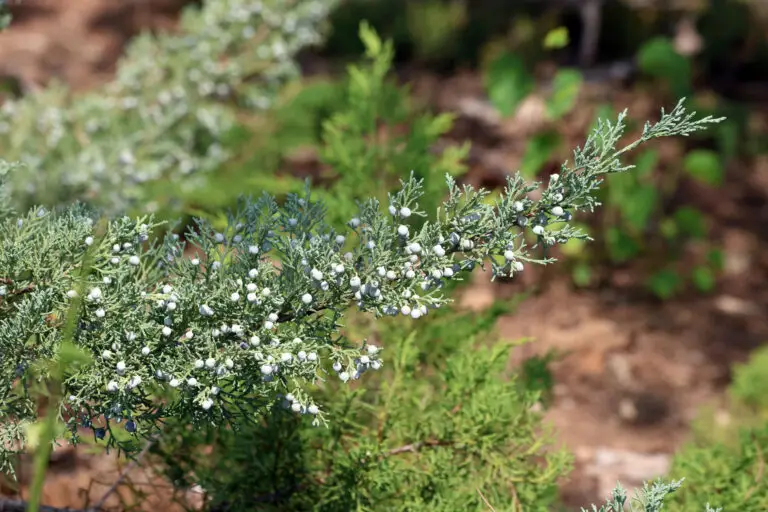
Rocky Mountain juniper (Juniperus scopulorum) is the evergreen that anchors a Mountain West yard year-round. It grows as a narrow tree, fifteen to thirty feet, in dense blue-green to silver needles, with reddish bark and an upright, tidy shape. The frosty blue berries take two full years to ripen, and cedar waxwings descend on them like a new restaurant opened up.
Bitter cold, wind, alkaline soil, drought: all totally fine. It is native to Idaho, Montana, and Wyoming, and it is one of the few native evergreen trees that doesn’t dwarf an ordinary yard-sized landscape.
Lewis’s Mock Orange
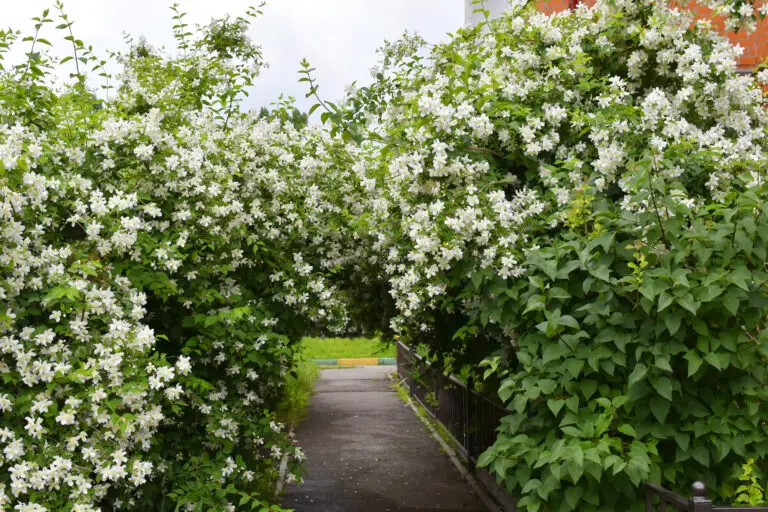
Lewis’s mock orange (Philadelphus lewisii) is Idaho’s state flower, and once you see it, you totally get why. The flowers are white, four-petaled, about an inch across, with a scent somewhere between orange blossom and jasmine.
They open in June in clusters thick enough that a shrub in full bloom will stop people on the sidewalk to take flower-filled selfies. It grows four to ten feet in a loose, fountain-shaped arch, in full sun to part sun, and once it is rooted in it wants no extra water across most of the inland Northwest. It is native to Oregon, Washington, Idaho, and Montana. Meriwether Lewis collected it near Idaho’s Clearwater River in 1806, which is where the species name lewisii comes from.
Read our Mock Orange Plant Profile for more.
Shrubby Penstemon
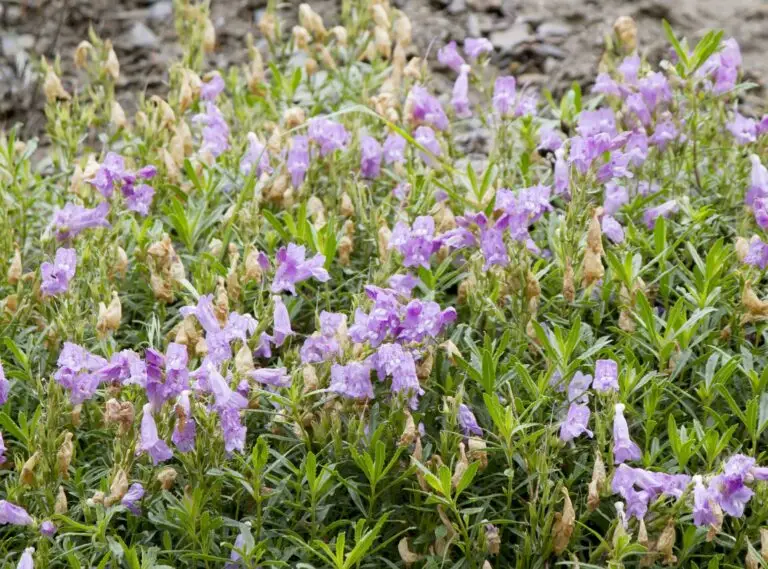
Shrubby penstemon (Penstemon fruticosus) is the low, mounding penstemon that makes a Mountain West garden look expertly designed. In late spring and early summer, large lavender to purple-violet trumpets smother a semi-woody cushion barely a foot tall, and the hummingbirds arrive within days.
The leaves are leathery and stay green into winter, so looks good all year. It grows in full sun, dry rocky ground, and in brutal winters, and it is one of the longest-lived penstemons you can grow. Best of all, it is native to Oregon, Washington, Idaho, Montana, and Wyoming: the one penstemon that covers the whole region, coast to high plains. Give it drainage, resist the urge to overwater, and it will pay you back for years.
Read our Penstemon Plant Profile for more.
Blanket flower
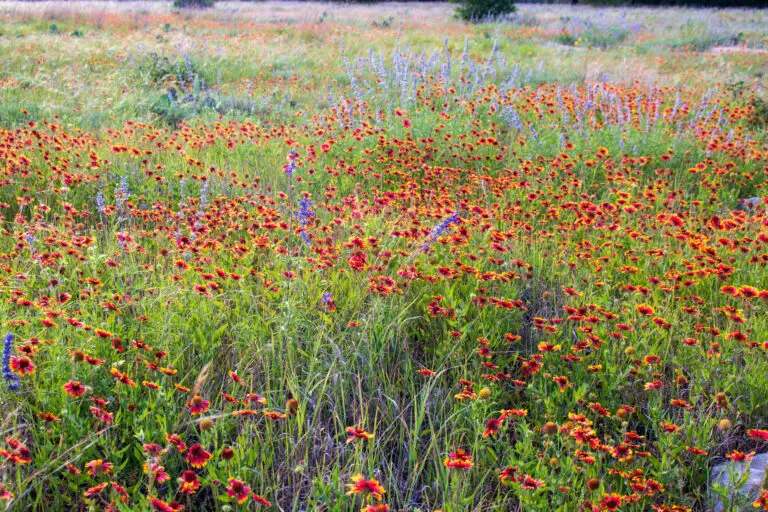
Blanket flower (Gaillardia aristata) does not know the meaning of quit. Red-and-yellow daisies, two or three inches across, keep coming from June into September on foot-tall stems without any deadheading on your part.
Full sun, poor soil, drought, wind: the exact conditions that flatten fancier perennials are the ones it was built for, which makes it a natural for exposed Idaho, Montana, and Wyoming yards. Butterflies and native bees will visit all summer. It reseeds itself politely, filling gaps in gravel beds and borders rather than taking over. If you have watched showy perennials fail on you by August, this is one is for you.
Beginner Tip
Buy or source plants from your region—when possible. The closer the plant's DNA comes from, the better it tends to grow. Use this regional-proximity trick to your advantage and visit local native nurseries. Here's a list of 400+ native nurseries, organized by state, to find one close by.
Alaska: gardening at the edge
Alaska’s growing season is short, its winters are extreme, and its summer light is endless. The native plant palette here is adapted to conditions that would be fatal to garden plants in the lower 48: permafrost, 18-hour summer days, and winter temperatures that make Montana look mild. But the plants that thrive here are stunning in their own compressed, urgent way, blooming fast and hard during the long days of June and July.
Fireweed
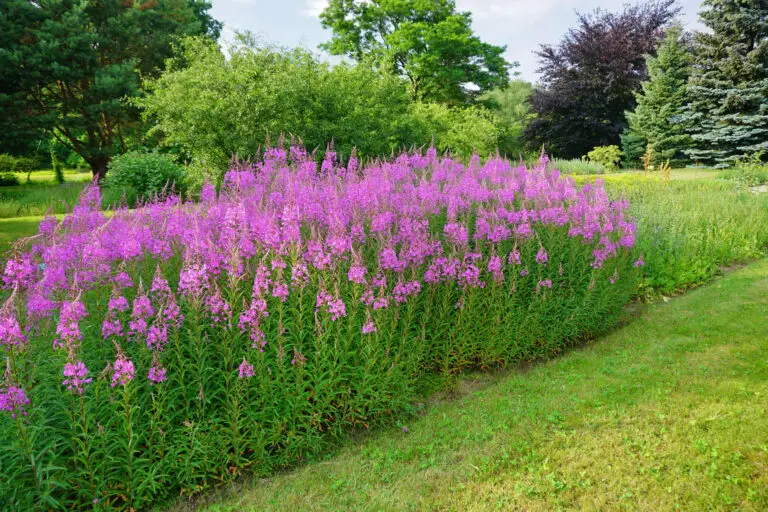
Fireweed (Chamerion angustifolium): the name tells you what it’s up to. It is the first thing up after a wildfire, a clear-cut, or a fresh road cut, throwing up three-to-five-foot spikes of magenta-pink flowers that bloom from the bottom of the stalk upward through July and August. While the top buds are still opening, the lowest flowers are already losing their seeds on tufts of white fluff that drift everywhere.
Alaskans turn its nectar into a prized honey, and you can read the stalk like a calendar: when the bloom reaches the tip, summer is nearly done. It grows across the whole Northwest, but it belongs to Alaska, where a field of it is the iconic summer-in-Alaska image.
Wow, inspired yet? And congrats on scrolling through that epic Northwestern journey with me.
Some might think the Northwest garden is evergreen and ferns-only, but now you know otherwise. A PNW coastal garden can be lush and evergreen with salal, sword fern, and Oregon grape. A Mountain West garden can be tough and beautiful with blanket flower, wax currant, and Rocky Mountain juniper. An Alaskan garden can be dramatic and tasty with fireweed, columbine, and wild blueberries. What unites them all: they’ve been here for thousands of years, waiting for the chance to thrive in your yard.
If you’re feeling overwhelmed, start with one plant from your side of the mountains, give it extra care that first year to get it established, and then repeat the following year. Nobody arrives at a yard full of native plants all at once, and you know that cliched saying: the journey is the…well, you get it. Pick a native plant, grab a shovel, and get out there. Happy Northwestern planting!