





Highlights
All native blazing stars send up a tall stalk in summer and cover it with dozens of tiny purple flowers that open from the top down. The effect is like a living firework display, buzzing with butterflies and bees. Leave the stalks standing through fall and winter, and they transform into natural bird feeders. Plant once, and these drought-tolerant perennials will return for years, adding height and drama to any sunny garden. Scroll on to meet some native blazing star species.
Is blazing star a good choice for my yard?
Yes, if…
- You want a tall, spiky vertical element in your garden. Blazing stars add height and drama to perennial beds, especially when mixed with rounded or mounding plants.
- You have dry, well-drained soil. Most blazing stars evolved on prairies and rocky slopes and are drought-friendly once established.
- You want low-maintenance perennials that come back reliably. Blazing stars grow from corms, re-emerge every spring, and rarely need dividing or fussing.
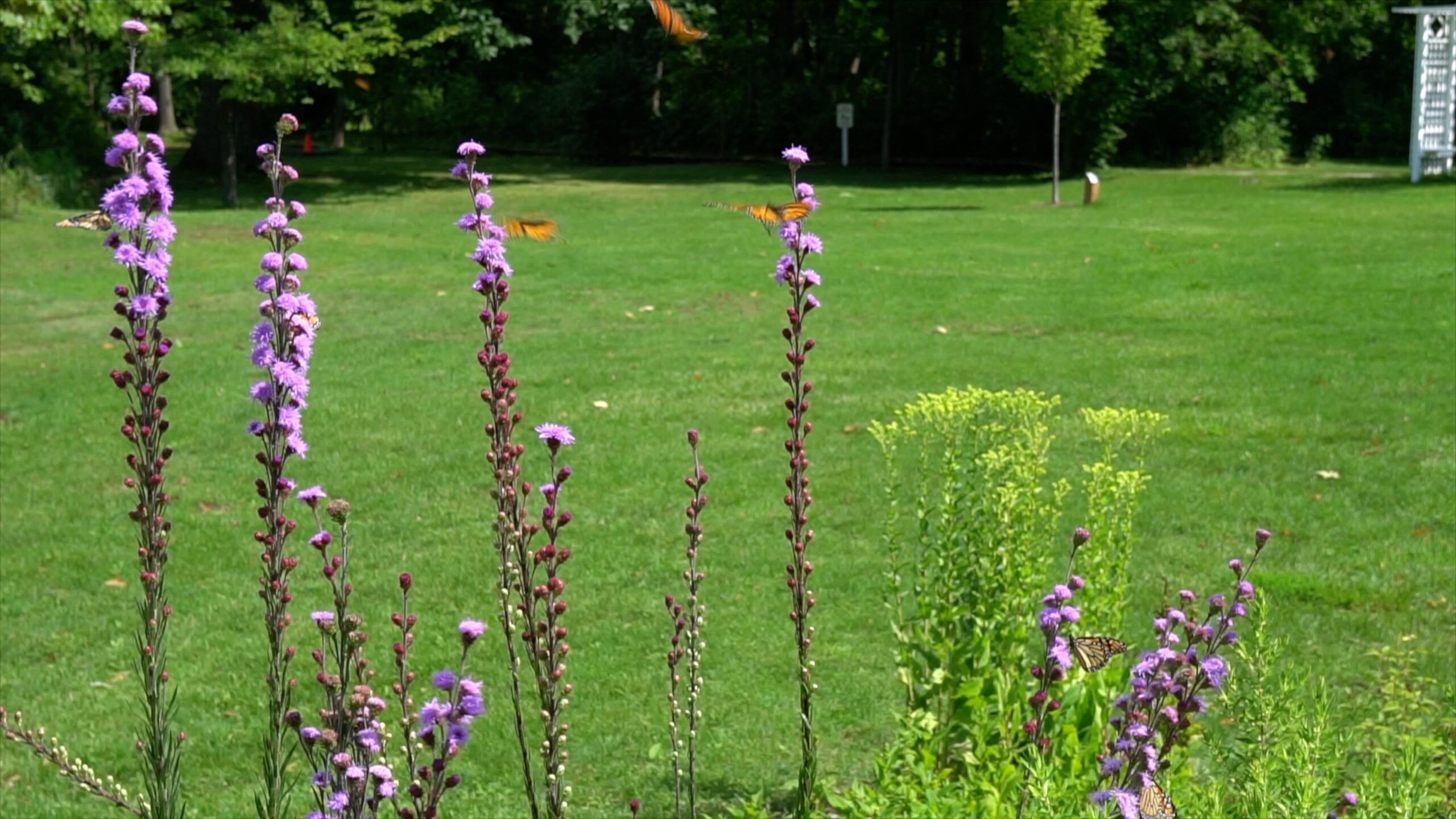
- You want to feed monarchs. Many blazing stars bloom in August, right when monarchs are fueling up for their southbound migration.
Skip it if…
- Your soil stays wet year-round. Most blazing stars need good drainage or the corms will rot. The exceptions are dense blazing star and prairie blazing star, which handle moist conditions.
- You want something that blooms in spring. Blazing stars are summer-to-fall bloomers. They won’t fill a spring gap.
- You have deep shade. Most species need full sun to bloom well.
Why blazing stars matter
Late-season fuel stops for butterflies
Most blazing stars bloom from July through October, a window when many other flowering perennials have already quit.
That timing matters. A three-year survey across North Dakota identified blazing stars, native thistles, and milkweeds as the three most important nectar sources for monarchs and regal fritillaries. The researchers tracked floral resources across 954 site visits and found that each plant group peaked at a different time, meaning the loss of any one of them would leave a gap in the food supply. For monarchs heading south in August, blazing stars are filling that gap when little else is open.
For monarchs heading south in August, blazing stars are filling that gap when little else is open.
Blazing stars have deep prairie roots
The tallgrass prairie that once ran from Ohio to the Dakotas is 99 percent gone. Blazing stars were a part of it, mixed in with big bluestem and Indian grass and coneflowers in deep-soil grasslands. All of these plants have millennia of evolutionary tricks to help them withstand sun and drought.
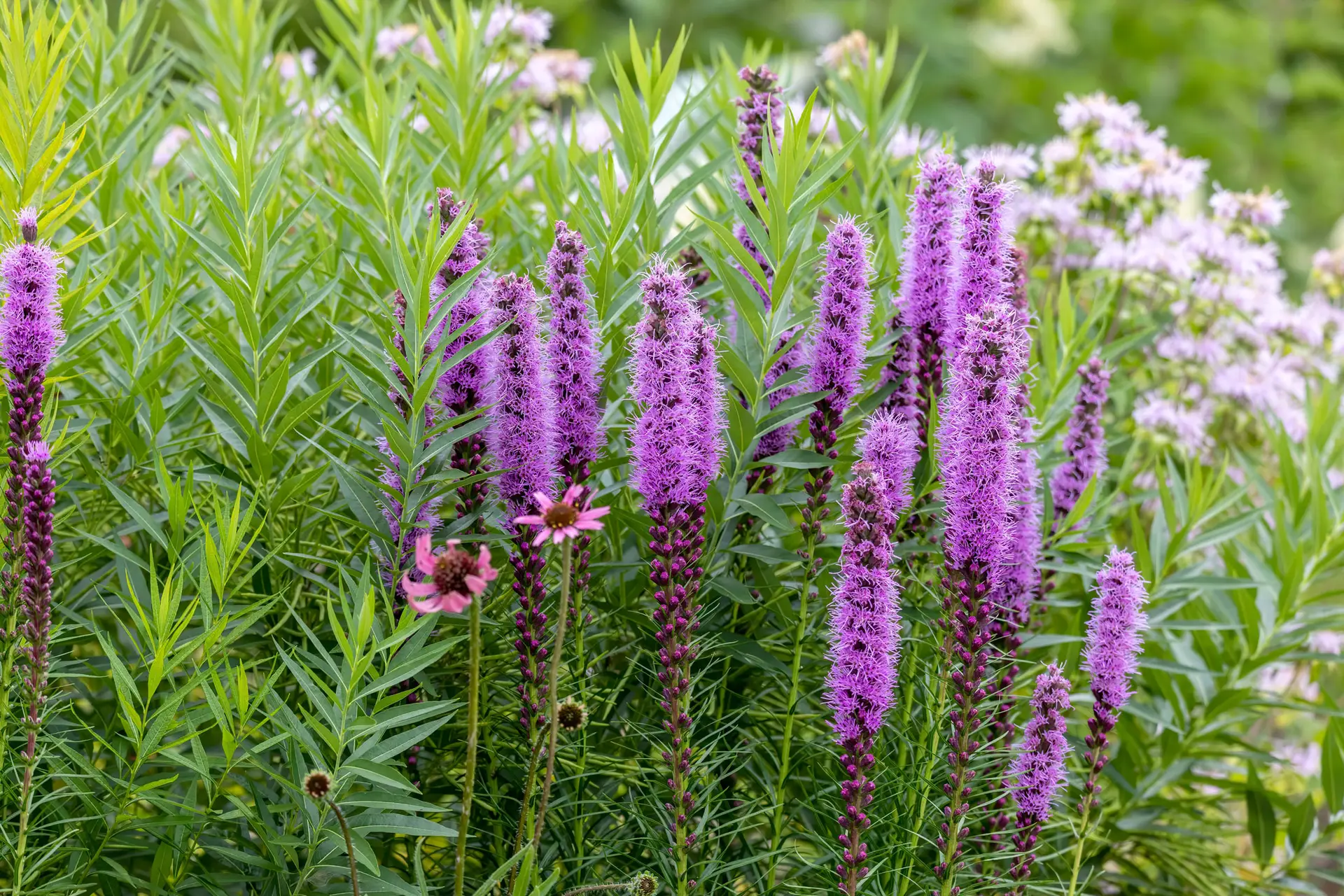
You can borrow this sunny meadow landscaping for your own sunny suburban garden. The Wisconsin Horticulture Extension calls Liatris species “among the showiest native prairie plants.” When you see a sunny garden sprinkled (or packed) with blazing stars, you immediately get it.

They are drought-tough and long-lived
Every blazing star grows from a corm, a dense little root that sits a few inches underground and stores everything the plant needs to ride out winter and dry patches. That is why these plants are so tough. A late frost, a rough mowing, a rabbit nibbling the tops: the corm rides it out below the soil line and sends up fresh growth when conditions improve.
These plants can also live for a very long time. In his landmark study Prairie Plants and Their Environment, botanist J. E. Weaver documented a dotted blazing star whose root crown ring count put its age at 35 years. One corm after three and a half decades was still sending up flowers. For those of us lazy gardeners (myself included!), this means blazing stars are some of the most reliable perennials you can plant. Put them in the right spot (sun, good drainage) and they will keep showing up for years.
Five blazing stars to know
There are about 40 species of Liatris (blazing star) native to North America. Here are a few you’re most likely to find at nurseries:
Appalachian blazing star
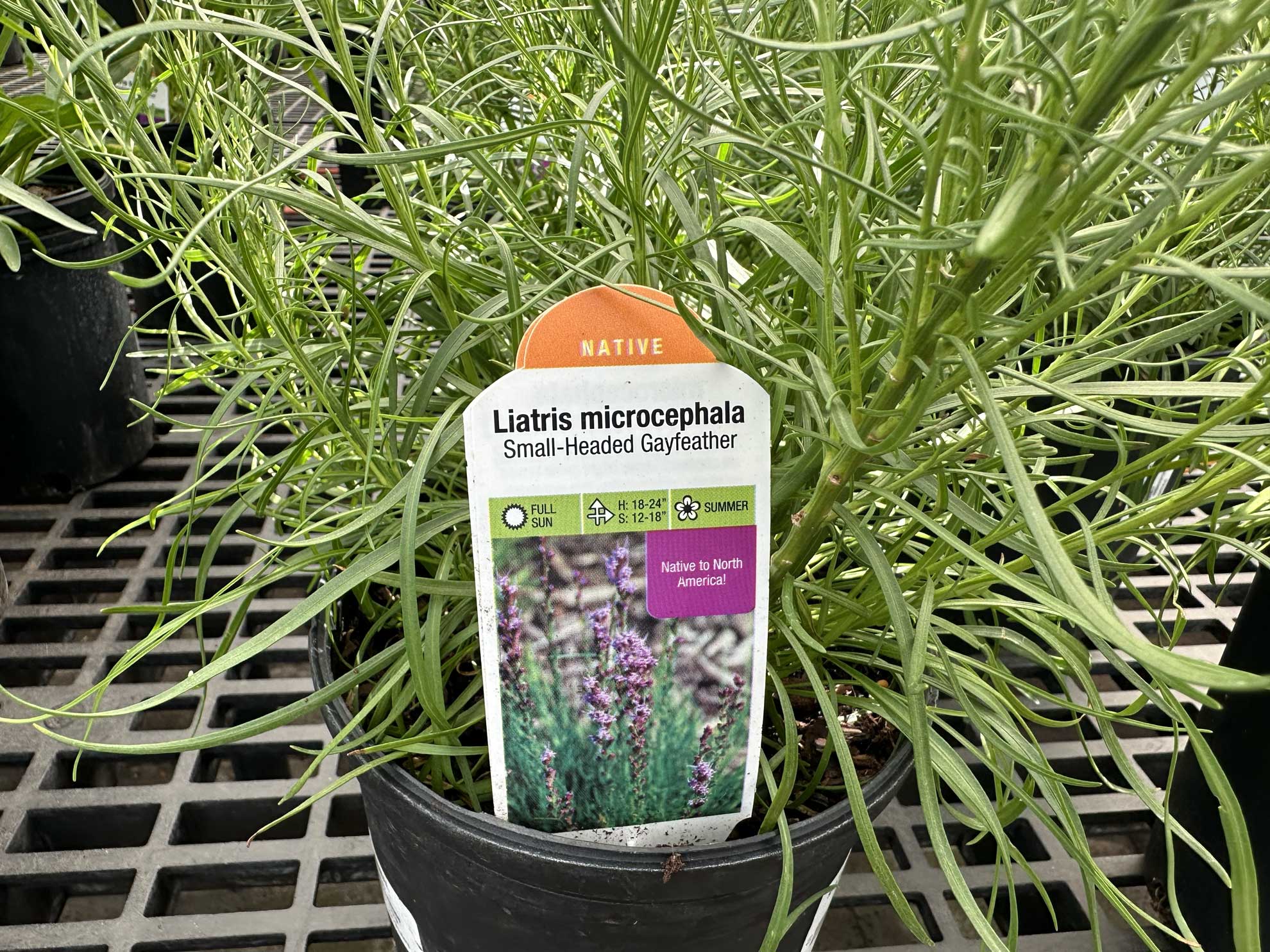
Liatris microcephala
- Size and color: 1½ to 2 feet tall, with small delicate flower spikes that range from dark pinkish purple to sometimes white
- Bloom time: July through October
- Lifespan and sun: Perennial that wants full sun
- Native regions: Southeastern U.S., including the southern Appalachians (Alabama, Georgia, Kentucky, North Carolina, South Carolina, and Tennessee)
Cylindrical blazing star
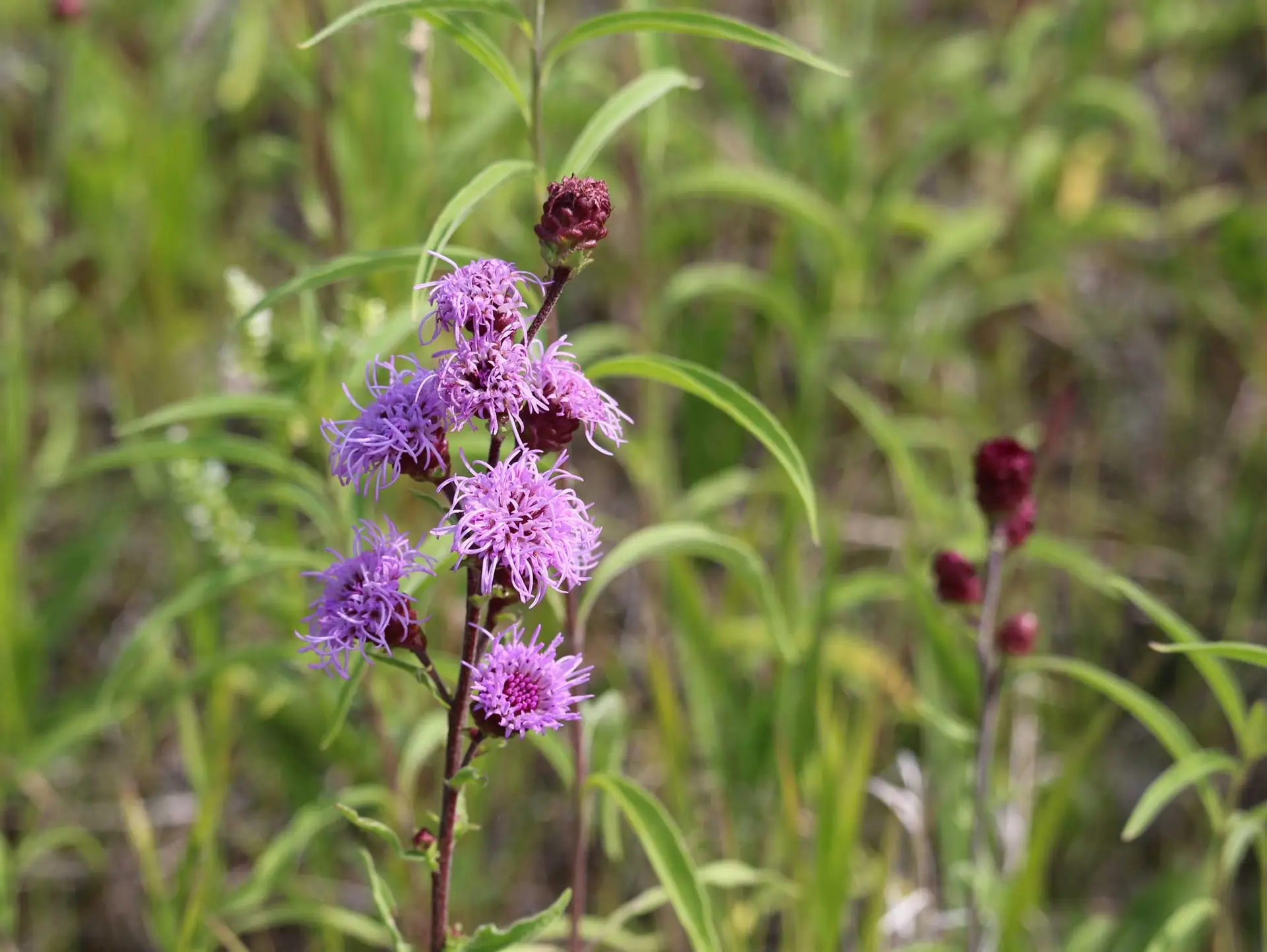
Liatris cylindracea
- Size and color: 8 to 24 inches tall, with magenta-purple button-like flowers
- Bloom time: August
- Lifespan and sun: Perennial that wants full sun
- Native regions: Western New York and Ohio west to southeastern Minnesota, and south to Alabama and Arkansas
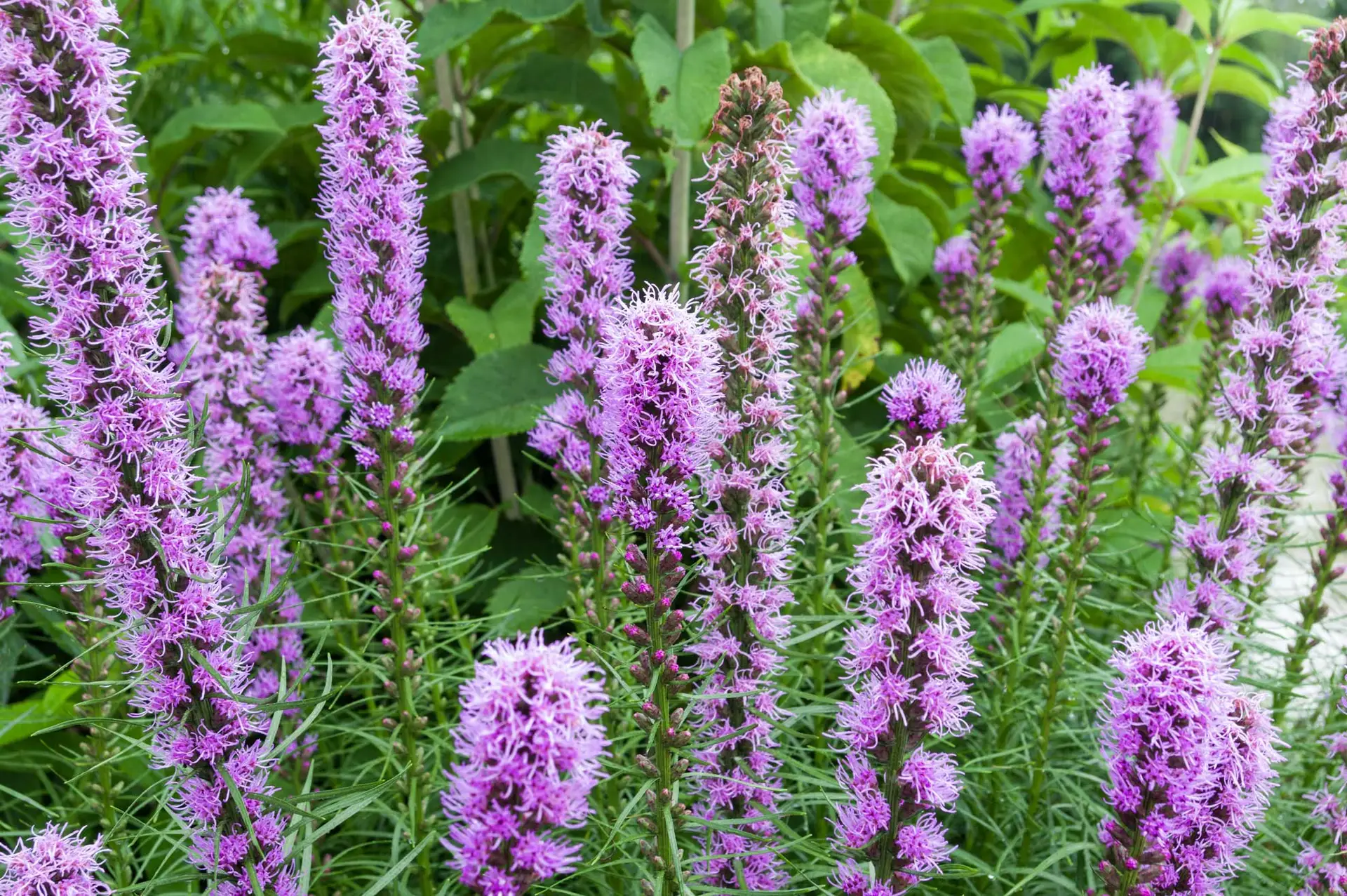
Dense blazing star
Liatris spicata
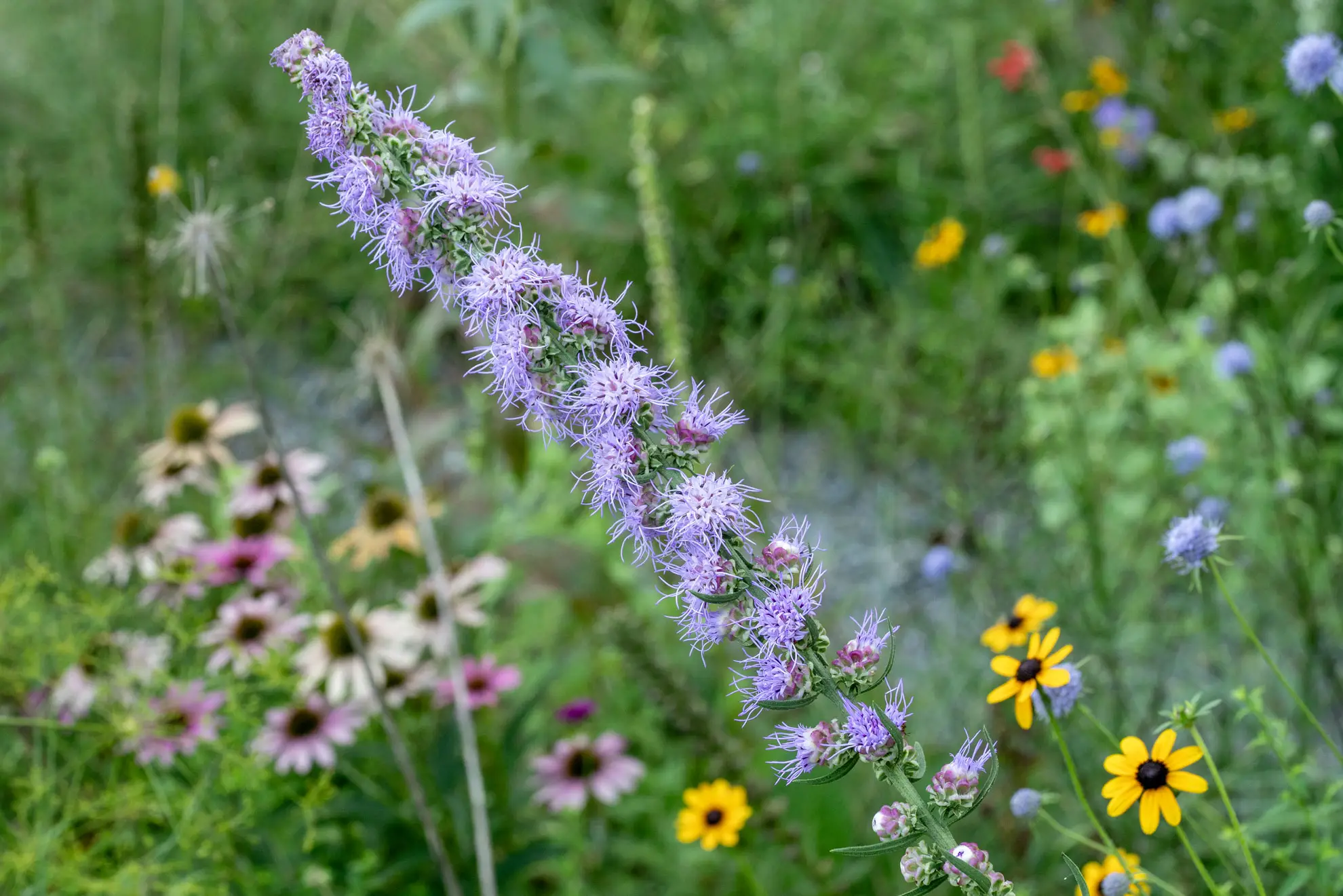
- Size and color: 2 to 6 feet tall, with purple (sometimes white) spikes like bottle brushes and tightly packed flowers
- Bloom time: July through September
- Lifespan and sun: Perennial that wants full sun
- Native regions: Eastern U.S., from New Jersey to Michigan and Illinois, and south to Florida and Louisiana
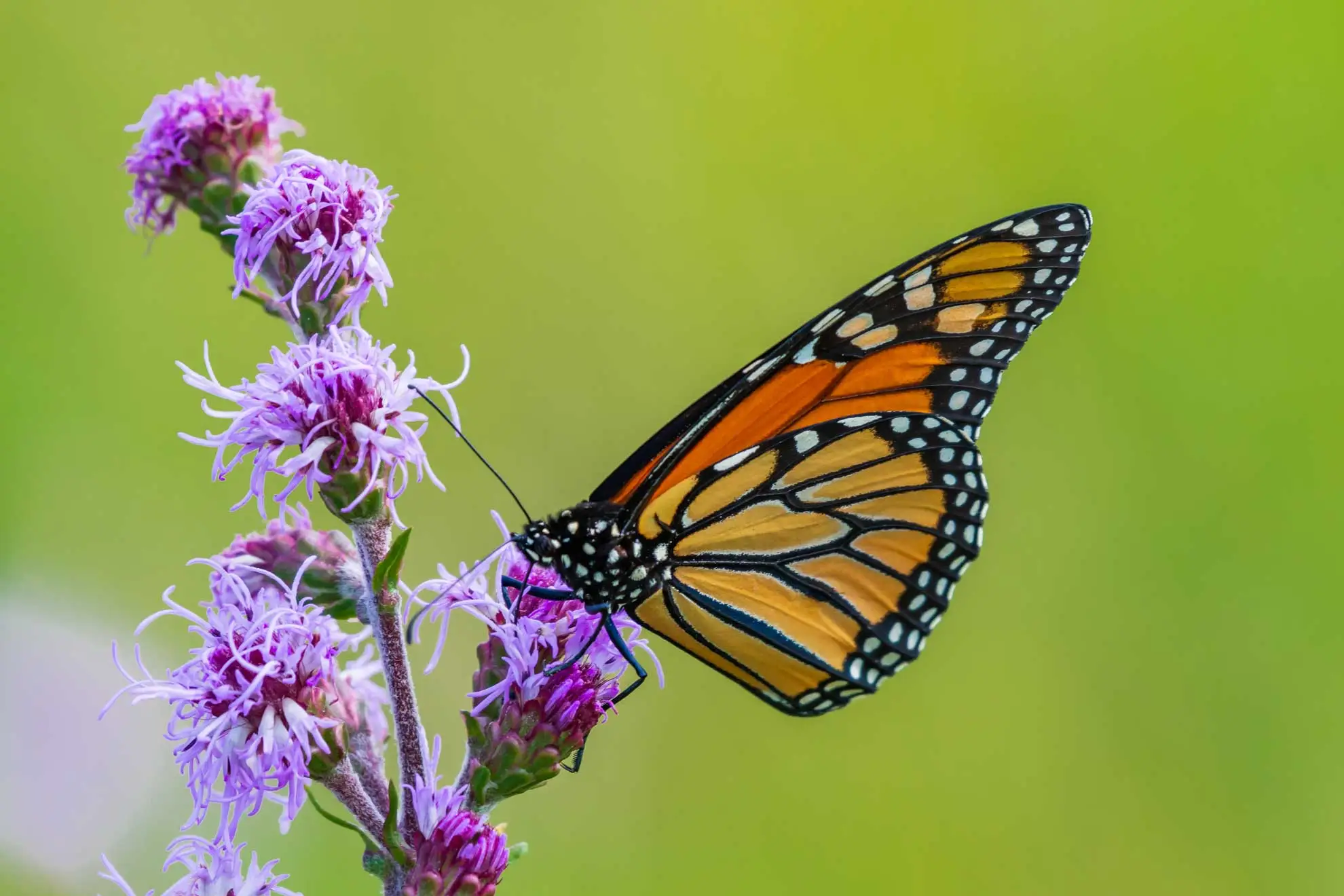
Rocky Mountain blazing star
Liatris ligulistylis
- Size and color: Up to 3 feet tall, with pink or purple pom-pom spikes
- Bloom time: July through October
- Lifespan and sun: Perennial that wants full sun
- Native regions: The northern Plains, upper Midwest, and Rocky Mountain states (including Colorado, Montana, Minnesota, and Wisconsin), plus southern Canada
- Note: Rocky mountain and rough blazing stars (below) look very similar, with one notable difference: rocky mountain prefers wetter soils, while rough prefers drier sites.
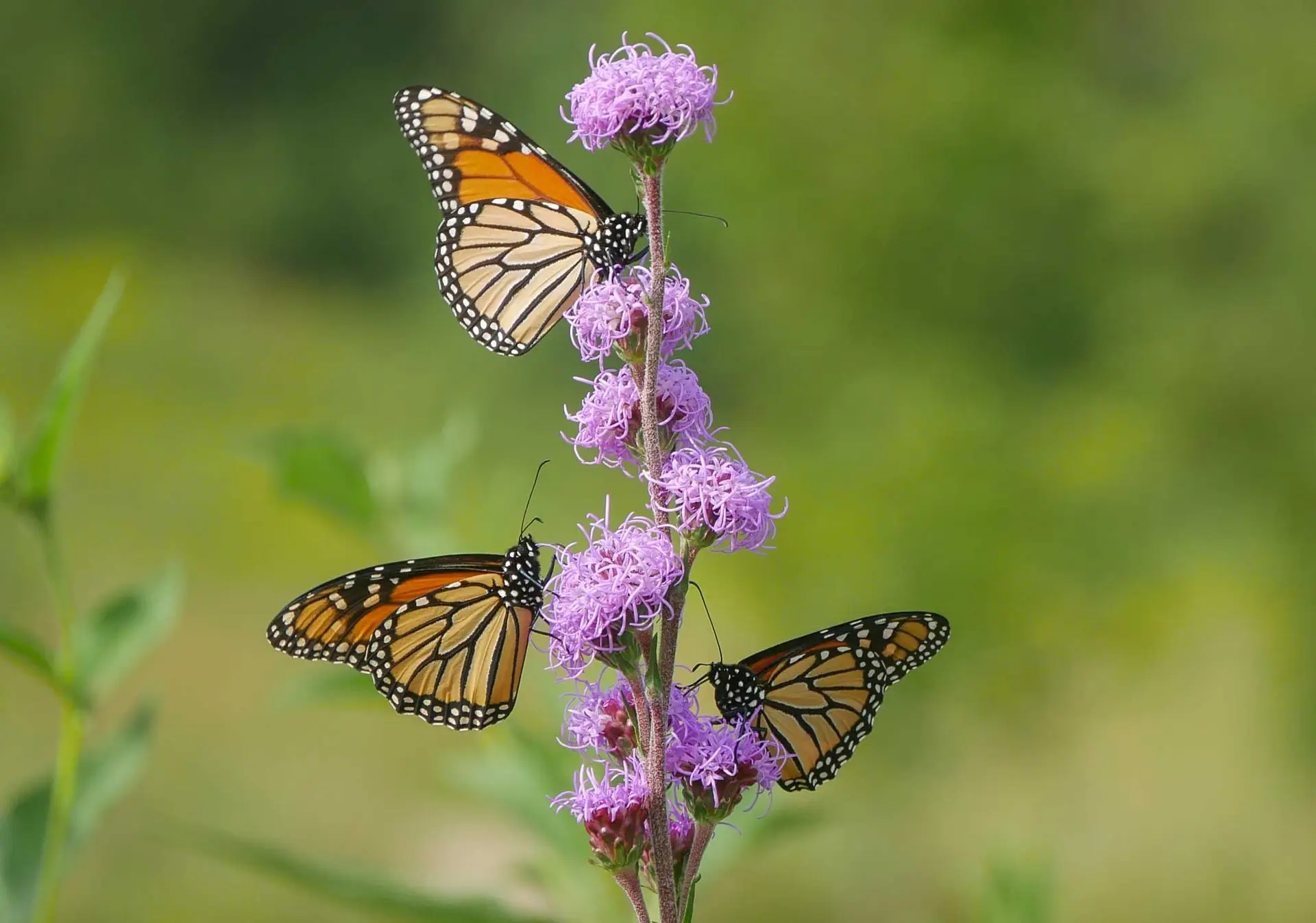
Rough blazing star
Liatris aspera
- Size and color: Up to 6 feet tall (!), with pinkish-lavender fuzzy-looking flowers
- Bloom time: August and September
- Lifespan and sun: Perennial that wants full sun
- Native regions: Eastern and central U.S., from the East Coast west to Texas and the Dakotas, and north to southern OntarioTall: 2-5 feet!
- Prefers well drained areas
Where blazing star shines in your yard
- Prairie and meadow plantings: Blazing stars are the vertical accent in any prairie or meadow garden. Mix them with coneflowers, black-eyed Susans, and native grasses for a look that’s full and intentional.
- Pollinator gardens: The late-season nectar is critical when other flowers have finished. Plant a mix of native species for the longest possible bloom window.
- Rock gardens and dry slopes: Dotted blazing star, cylindrical blazing star, and Appalachian blazing star are compact, drought-friendly, and happy in rocky, fast-draining spots.
- Cut flower gardens: Dense blazing star is a favorite with florists. The spikes last well in a vase and the top-down bloom pattern means the flowers keep opening after cutting.
- Containers: Compact species like cylindrical blazing star and the cultivar dense blazing star ‘Kobold’ work well in large pots on patios and decks.
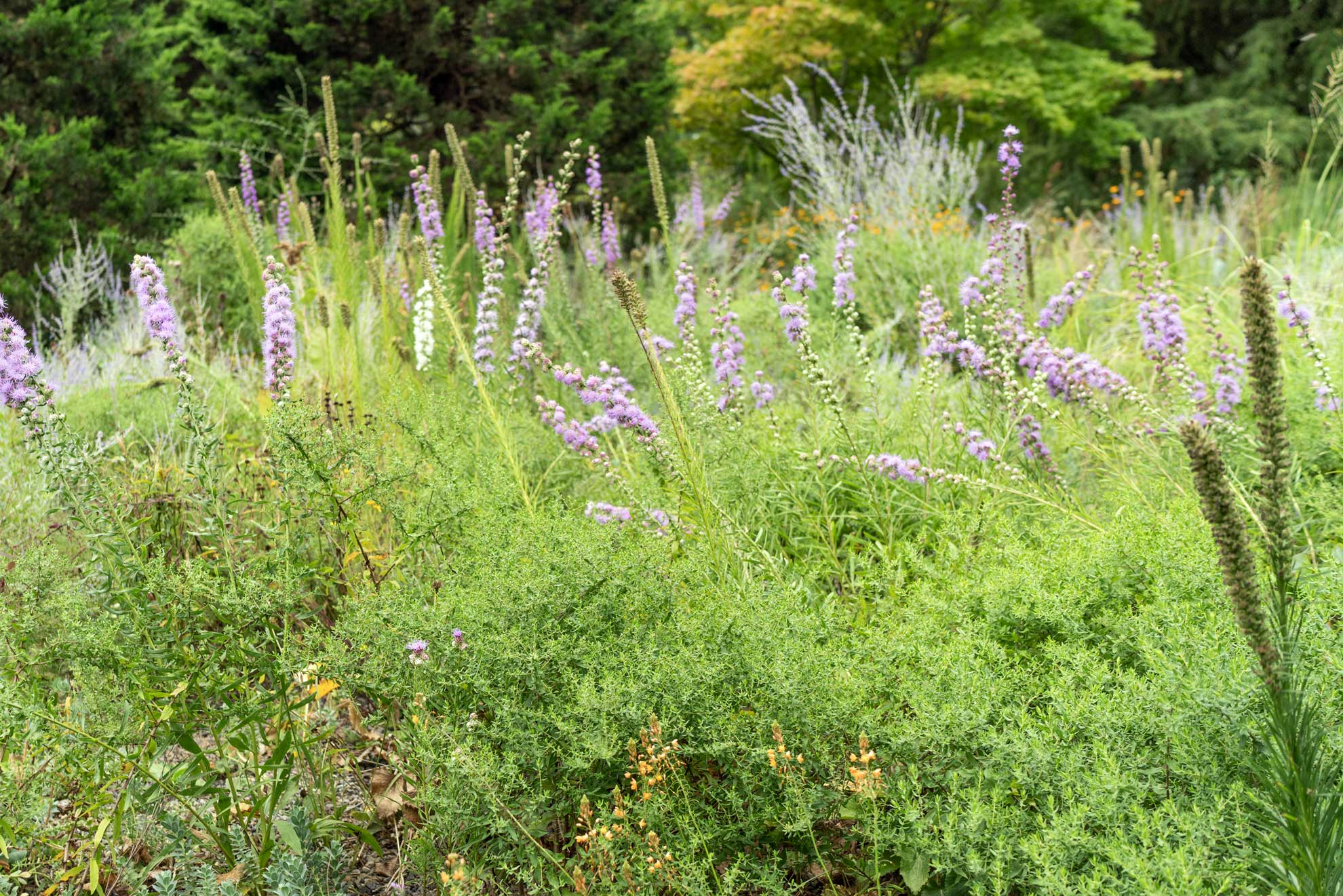
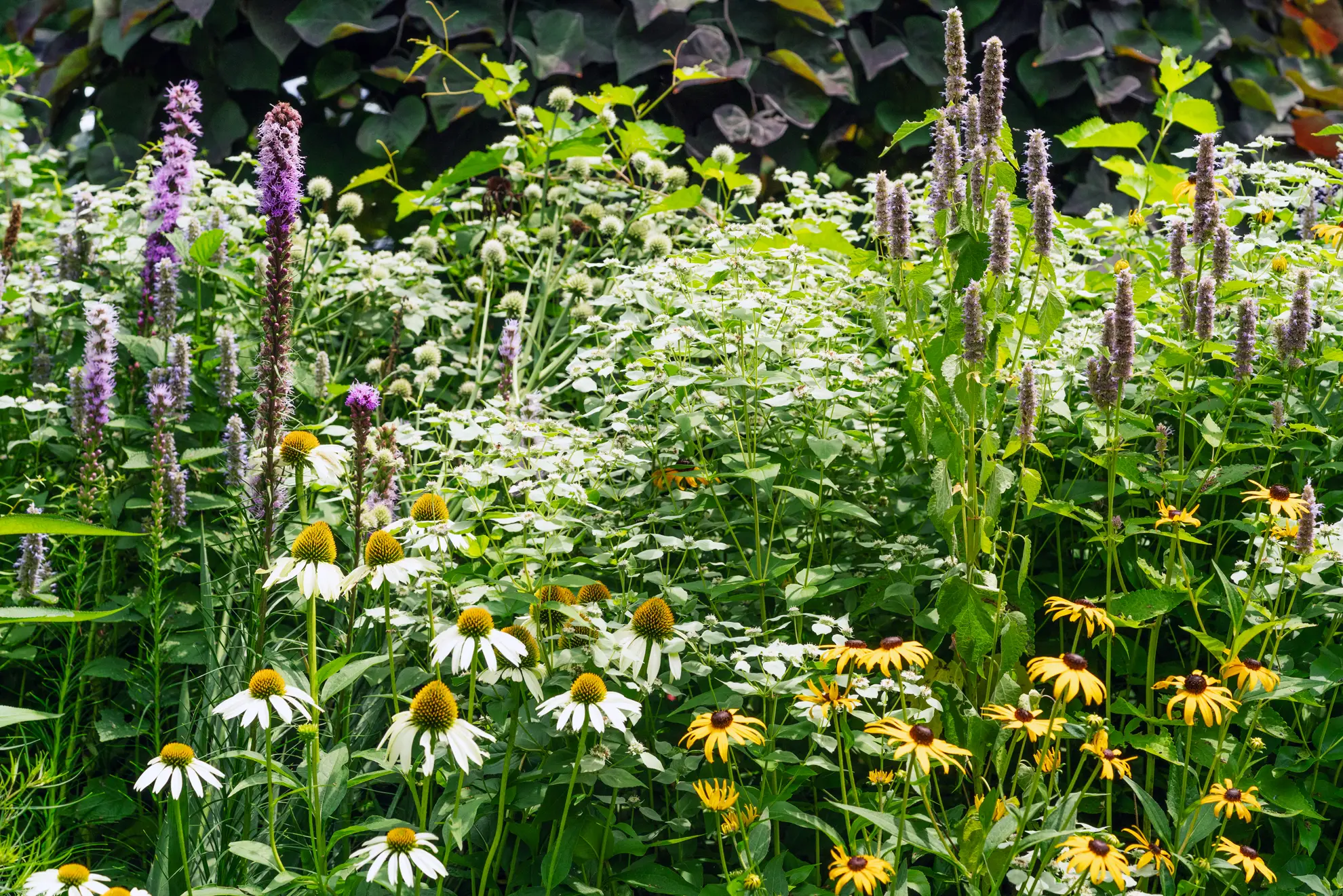
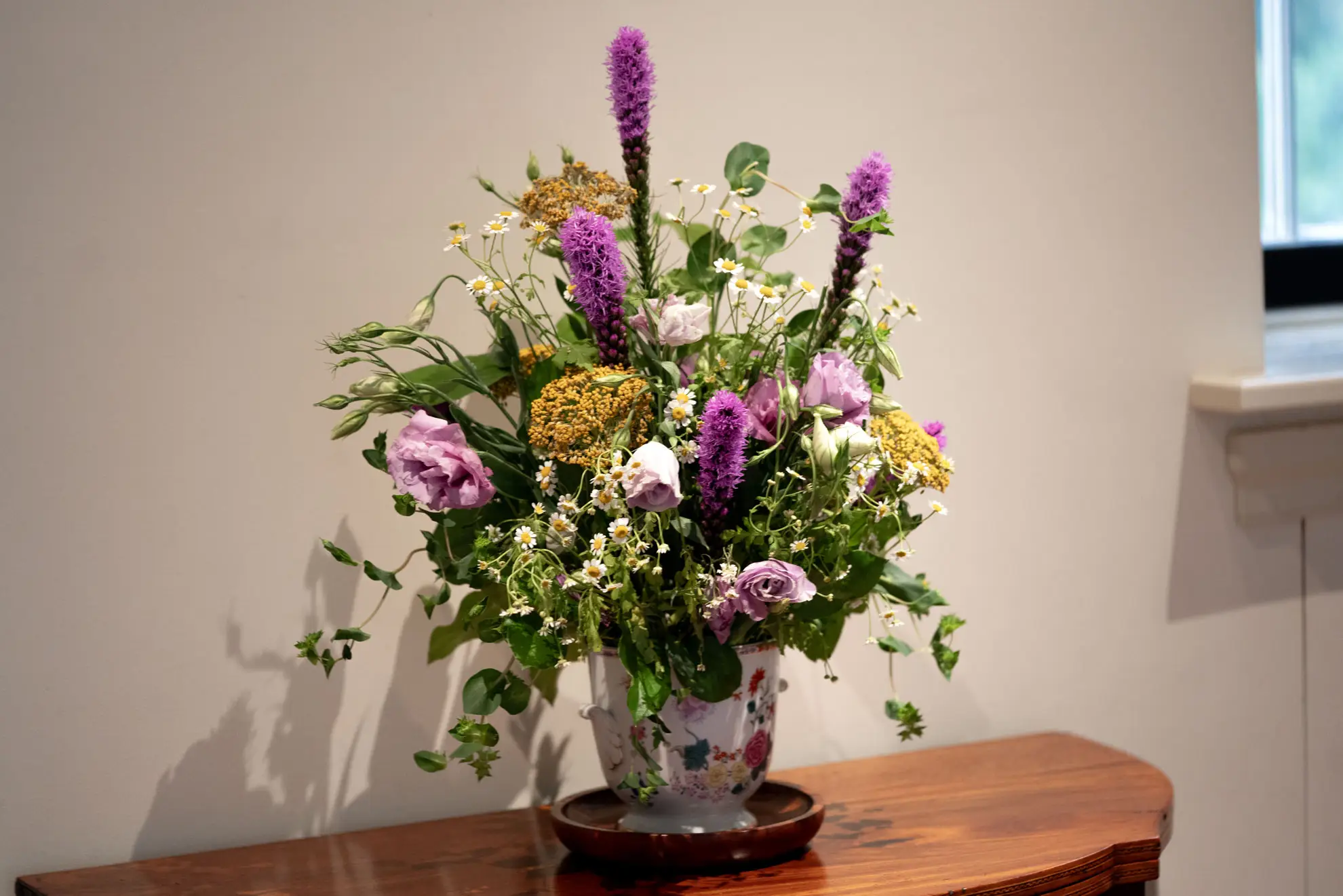
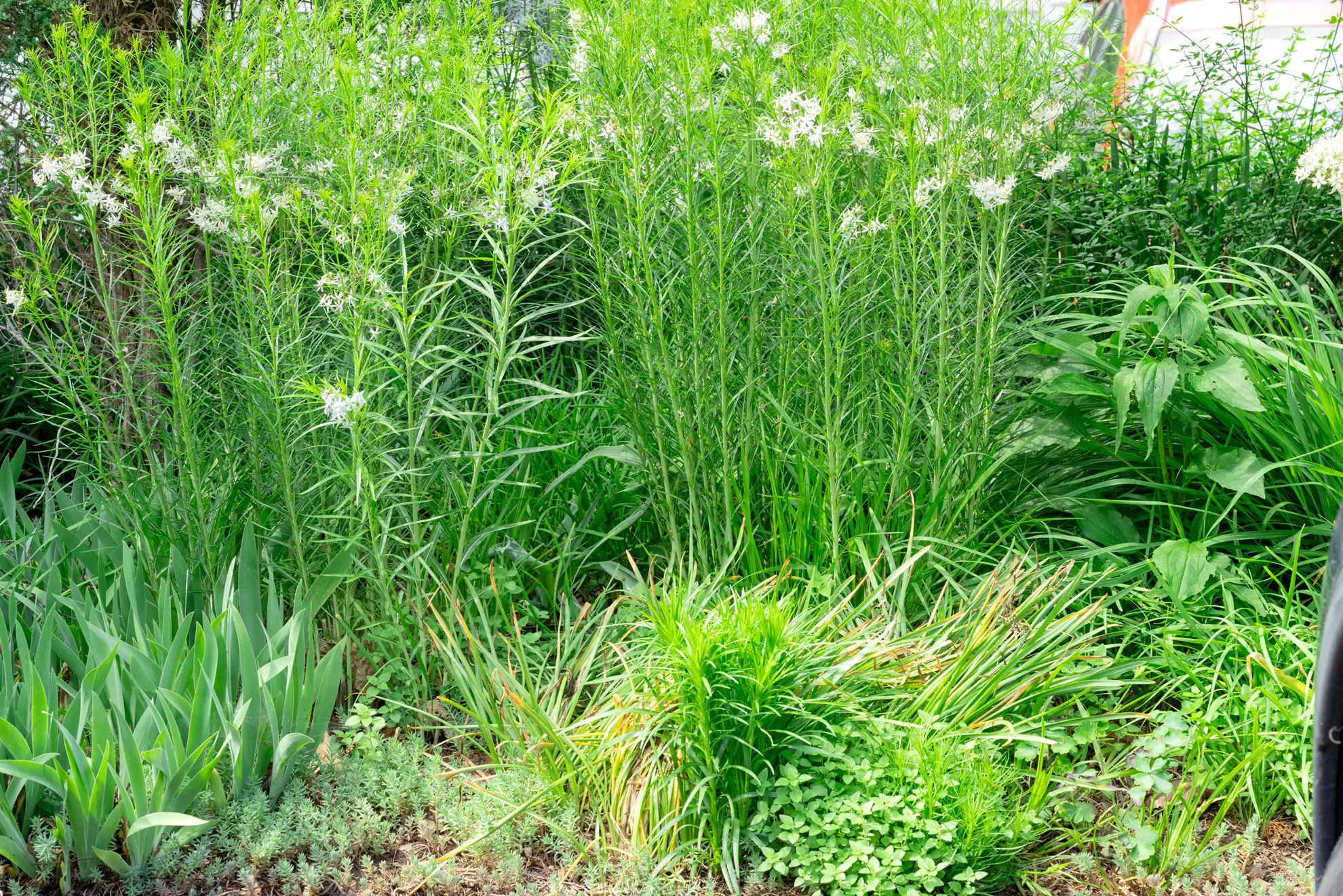
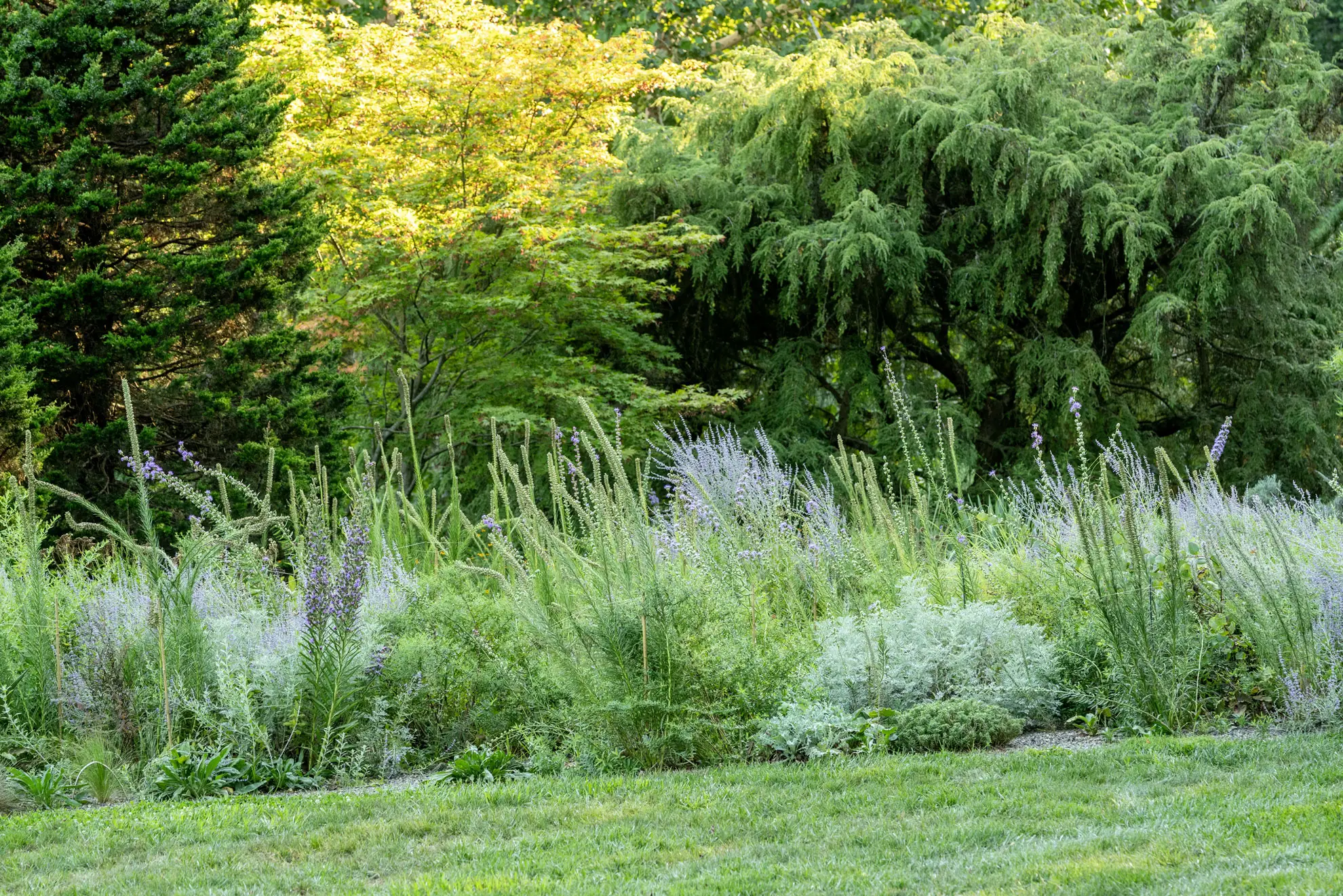
Plant blazing star in groups for maximum garden drama
Blazing stars look best when planted in groups of 5 plants or more. Seeing such an ornate, showy display makes everyone look twice. It also helps pollinators and birds find food easily.
No pesticides or herbicides
Avoid using pesticides or herbicides near blazing star plants, as they can harm the butterflies and pollinators that visit the plant.
How to grow blazing star
Soil
Most blazing stars want well-drained soil. This is the single most important factor. Wet, heavy soil will rot the corms. Sandy, rocky, gravelly, or average garden soil all work. The two exceptions: dense blazing star (L. spicata) and prairie blazing star (L. pycnostachya), which handle moist to wet conditions.
Sun
Full sun for almost every species. Blazing stars evolved on open prairies and need at least 6 hours of direct sun. In too much shade, they get floppy and bloom poorly.
Water
Water new plantings through the first growing season. After that, most species are drought-friendly and rarely need supplemental water. Overwatering established plants is worse than underwatering.
Spacing
Plant corms or transplants 12 to 18 inches apart. In a mass planting, the spikes grow through and support each other, reducing the need for staking and flopping.
Beginner tip
Planting blazing stars in groups of five or more helps with landscaping drama and less staking. The groups naturally support each other and limit flopping over. Even plants need friends to lean on. (Sorry if that sounded too saccharine, I had to say it!)
Grow blazing star from plants
Blazing star plants normally flower the first year they are planted and return in subsequent years with bigger blooms. But plants can get expensive, especially when you’re gardening on a budget. A single blazing star plant can run between $10-20, which can be roughly 3 times as expensive as planting from seeds.
Grow blazing star from seeds
Growing blazing star from seeds is cheaper but takes some patience: plants from seed will usually not flower until the second or third year. This is because blazing stars take those early years focusing on building their awesome roots. Here are some online nurseries that sell blazing star seeds:
- Everwilde Nursery sells many species of blazing star
- Hudson River Seed Company sells dense blazing star seeds in beautiful seed packets
Grow blazing star from corms
Sometimes—especially in the spring—you’ll find corms to buy for your garden. Planting from corms requires a little bit of patience, too: it might take a year for your blazing star to reach its maximum light-saber flowering.
Plant nerd fact
A corm is blazing star’s built-in water bottle
Instead of a network of thin, fibrous roots, native blazing stars grow from a corm—a swollen underground stem that stores water and nutrients. Think of it as the plant’s built-in water tank.
Corms let blazing star shrug off droughts and come back strong year after year. Many species evolved on open prairies, where storing water underground was the secret to survival. This is also why planting blazing star from seed takes some patience. They spend the first couple of years growing their corms before heading into decades of flowers.
What to plant with blazing stars
Blazing stars pair naturally with other prairie and meadow natives. Planting plants that have been growing happily together for thousands of years is a foolproof way to grow a fuss-free garden. These combinations share similar growing conditions and prairie histories:


Where can I buy blazing star?
FAQs
When should I plant blazing star seeds?
Sow blazing star seeds outdoors in late fall, after giving each seed a light nick to help it sprout. Winter cold does the rest, so scatter them on the soil surface and leave them alone until spring. If you miss fall, nick the seeds, chill them in the fridge for about three months, and sow them in spring.
I found some corms to buy. When should I plant them?
Spring is the best time, after the last hard frost. Plant corms 2 to 4 inches deep with the flat side down and the pointed or slightly indented side up. Water weekly unless it rains for the first year.
Can I grow blazing star in a container?
Yes, if you choose a compact species. Cylindrical blazing star and ‘Kobold’ dense blazing star both work well in large pots. Use well-draining potting mix and make sure the container has drainage holes. As mentioned, blazing star does not like to sit in water.
Why is my blazing star flopping over?
Too much shade, too-rich soil, or not enough neighboring plants for support. Blazing stars evolved on open prairies where the soil was lean. In a garden bed with compost-enriched soil, they sometimes grow taller and floppier than they would in the wild. Full sun, leaner soil, and mass planting all help.
If it’s still flopping, a few stakes and some non-rigid ties (think old t-shirts, twine, etc) will help.
Does blazing star spread?
Yes, blazing star spreads, both by dropping seed and by growing new corms underground. Dense blazing star (Liatris spicata) mostly sends out seed, though its corms work like tiny underground pantries and can start new colonies too. Cylindrical blazing star (L. cylindracea) can drop a whole crowd of seedlings, so pull the extras or hand them to a neighbor.
If it’s still flopping, a few stakes and some non-rigid ties (think old t-shirts, twine, etc) will help.
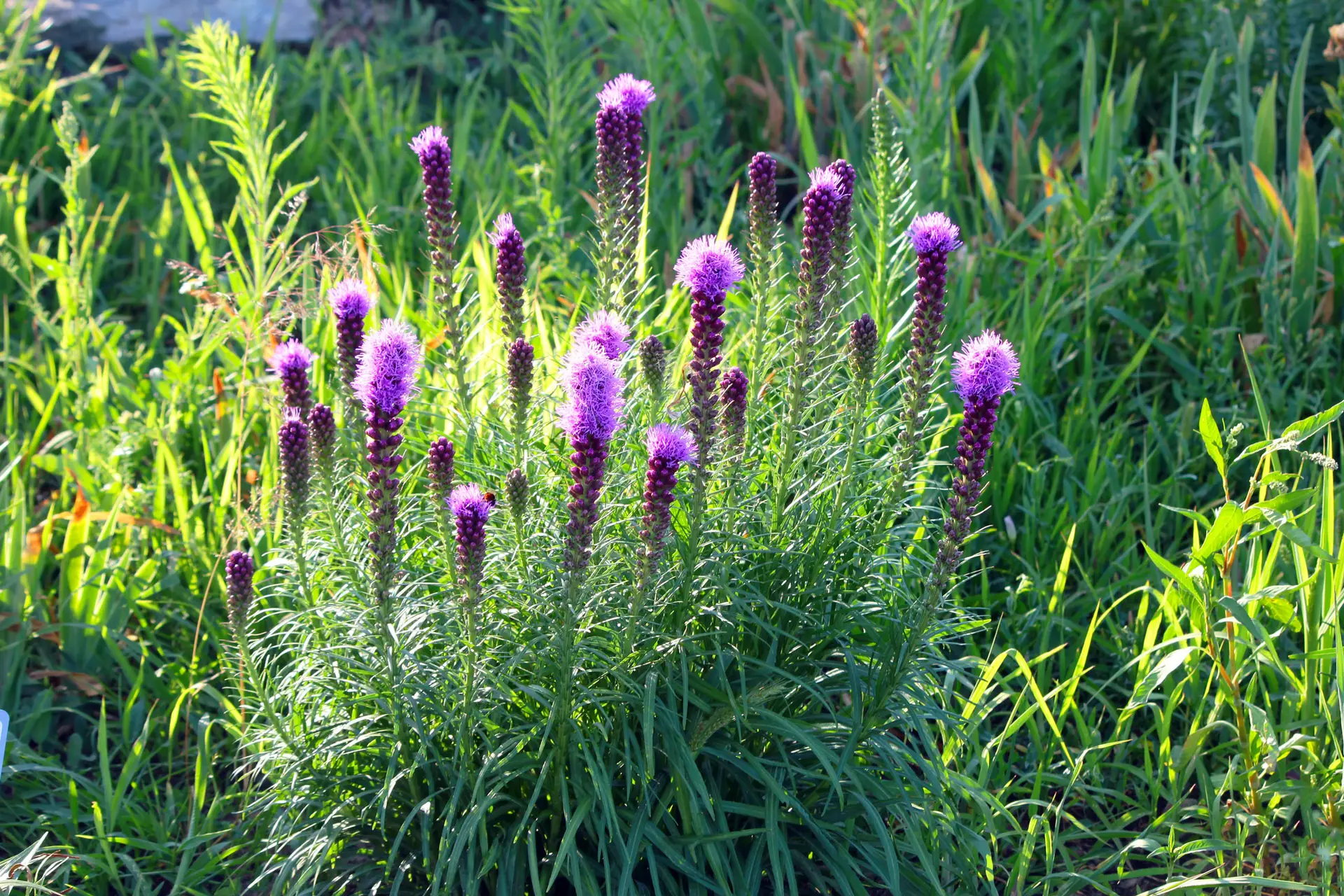

Native blazing stars are one of the easiest ways to add vertical drama, sculptural color, and serious wildlife value to your garden. They’re tough, they’re beautiful, and they come back year after year from those little underground corms without asking for much in return. Please tell your friends and neighbors how the plant looks stunning above ground, but also has its secret underground drought-reserve corm holding it down, too.
Do you have two more minutes to look at more pictures of flowers? We highly recommend our Beginner’s Guide to Native Coneflowers or our Beginner’s Guide to Asters. If you’re jumpstarting your yard with natives, we also recommend the Best Native Trees for Front Yards. Happy planting!
Sources
- Britannica, T. Editors of Encyclopaedia. “Liatris.” Encyclopedia Britannica, May 13, 2009. https://www.britannica.com/plant/Liatris. Accessed March 21, 2026.
- Fisher, Kelsey E., and Steven P. Bradbury. “Estimating Perceptual Range of Female Monarch Butterflies (Danaus plexippus) to Potted Vegetative Common Milkweed (Asclepias syriaca) and Blooming Nectar Resources.” Environmental Entomology 50, no. 5 (2021): 1028–1036. https://doi.org/10.1093/ee/nvab058. Accessed April 19, 2026.
- Harstad, Carolyn. Go Native! Gardening with Native Plants and Wildflowers in the Lower Midwest. Bloomington: Indiana University Press, 1999, 209–210.
- Kaul, Adam D., and Luke A. Meyerson. “Intra-annual Spatiotemporal Dynamics of the Monarch Butterfly (Lepidoptera: Danaidae), Regal Fritillary (Lepidoptera: Heliconiinae), and Their Floral Resources in North Dakota, United States.” Annals of the Entomological Society of America 114, no. 6 (2021): 727–737. https://academic.oup.com/aesa/article/114/6/727/6225391. Accessed April 19, 2026.
- Lady Bird Johnson Wildflower Center. “Liatris ligulistylis (Meadow Blazing Star).” University of Texas at Austin. https://www.wildflower.org/plants/result.php?id_plant=LILI. Accessed March 21, 2026.
- Missouri Botanical Garden. “Liatris spicata.” https://www.missouribotanicalgarden.org/PlantFinder/PlantFinderDetails.aspx?taxonid=277564. Accessed March 21, 2026.
- Monarchbutterflygarden.net. “Liatris ligulistylis: The Ultimate Monarch Magnet.” https://monarchbutterflygarden.net/liatris-ligulistylis-monarch-magnet/. Accessed March 21, 2026.
- NC State Extension Gardener Plant Toolbox. “Liatris spicata.” NC State University. https://plants.ces.ncsu.edu/plants/liatris-spicata/. Accessed March 21, 2026.
- Nelson, Gil. Best Native Plants for Southern Gardens: A Handbook for Gardeners, Homeowners, and Professionals. Gainesville: University Press of Florida, 2010.
- New Moon Nursery. “Liatris ligulistylis.” https://www.newmoonnursery.com/plant/Liatris-ligulistylis. Accessed March 21, 2026.
- Prairie Moon Nursery. “Native Liatris Growing Guide.” https://www.prairiemoon.com/. Accessed March 21, 2026.
- Tallamy, Douglas W. Nature’s Best Hope: A New Approach to Conservation That Starts in Your Yard. Portland, OR: Timber Press, 2019.
- USDA NRCS. “Liatris pycnostachya Plant Guide.” https://plants.usda.gov/DocumentLibrary/plantguide/doc/pg_lipy.pdf. Accessed March 21, 2026.
Similar plants
-
 Hummingbird Mint
-
 Bee Balm
-
 Lilies
-
 Penstemons
-
 Butterfly Weed
-
 Swamp Milkweed
-
 Phloxes
-
 Columbines
-
 Obedient Plant

Updated Find more: Purple Flower Hummingbird Favorite Summer Full Sun Part Sun Drought-Tolerant
The ads on this site help pay real native plant nerds to research and write these guides.
Garden notes
Notes from people who’ve grown it
Tips, wins, and the occasional disaster. If you’ve grown blazing star, share the advice you’d give to a neighbor.
No notes yet. Yours could be the first.
Grown blazing star? Tell the next person what you wish someone had told you.
Tap anywhere to close


