





Highlights
Native wildflowers tend to hog the spotlight. But native grasses are not only just as important as flowers for bees, butterflies, and wildlife—they also look stunning in your garden, too. As a bonus, they’re extremely easy to take care of. If you’re ready to do less watering, fertilizing, and fussing, read on to learn why, how, and which gorgeous native grasses deserve a spot in your garden.

Why plant native grasses?
Native grasses deserve not just one spot in your garden, but many. Why? Three huge reasons:
Grasses are incredibly important for wildlife and the environment.
Humans tend to gravitate towards flowers, but grasses play absolutely crucial roles in ecosystems. Much of the U.S. was originally grasslands—especially in the Great Plains and Midwest, but also places you might not expect, like Florida and California.
Everywhere they grow, grasses stabilize soil and slopes—scientists have measured the roots of some perennial grasses going down as far as 15 feet below the surface. In fact, it’s been estimated that ⅔ of all plant mass in grasslands is actually underground. These extensive underground root systems enrich the soil, and filter water and regulate its movement through the landscape.
Grasses and sedges are also keystone wildlife species. Their seeds feed birds, their stalks shelter nesting ground birds, and native bees nest inside their hollow stems. Many are host plants to native pollinators.
Grass…or sedge?
Grasses and sedges are two different families of plants. But to the human eye, they look pretty similar, so in this article we’ll use grasses as an umbrella term that includes both.
Grasses also beautify your park, garden, or yard.
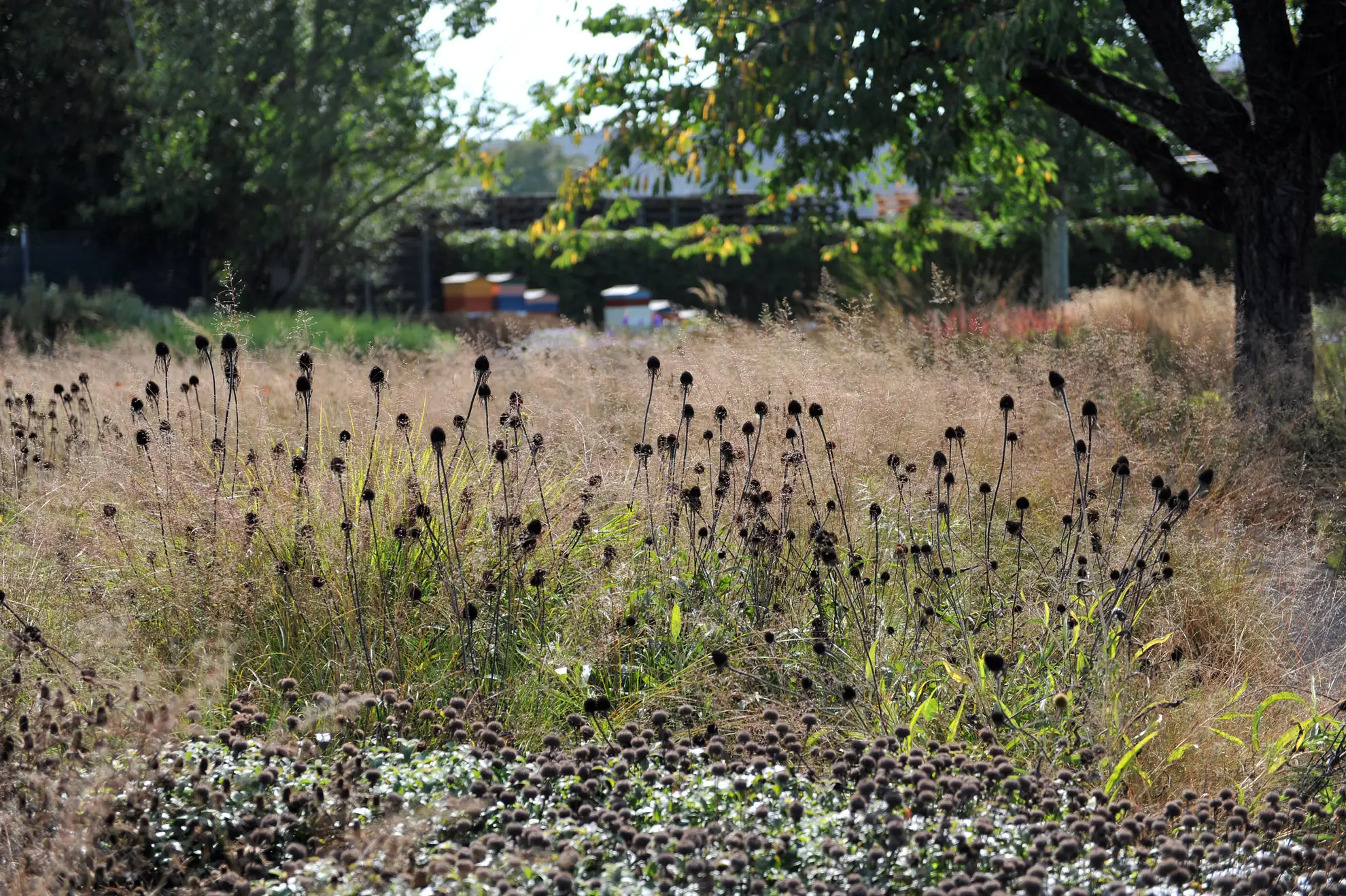
Ask any landscape architect and they will tell you how important grasses are for designing a garden that’s pleasing to the eye. The soft strands of long grasses offer textural contrast and a soothing backdrop to the bright stars of flowers. They are particularly stunning at sunset, when they are backlit. Grasses also give your garden a sense of movement—the soft rustling of grasses in even the slightest breeze brings your yard alive.
Oh, and another bonus: many grasses look nice in the winter, long after the phloxes and bluebells have wilted back to the ground.
Finally, native grasses are easy.
Around the world, grasses usually dominate in areas where it’s too dry for trees, so they are naturally drought tolerant and used to living in poor soils. Grasses will survive on just rain, long after non-native plants like petunias and begonias have wilted, and they don’t need fertilizers, chemicals, or fussing.
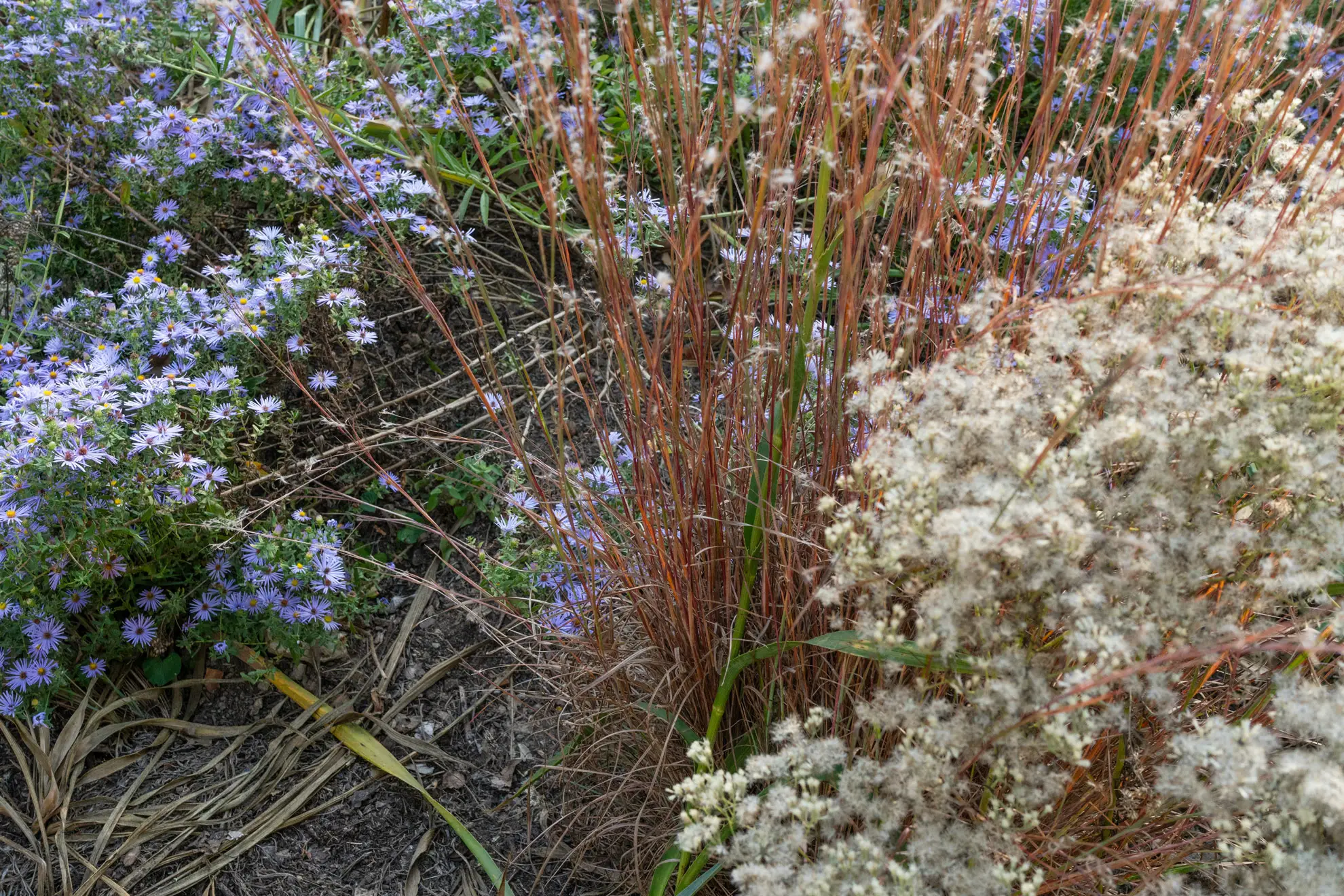
Grasses are very much in the plant-’em-and-forget-’em category.
Where grasses shine in your yard
Here’s a list of ideas:
- Plant them to hide a gas meter, garbage can, compost pile, or anything else you don’t want to look at.
- Intersperse them with flowers that have a tendency to flop over, like asters, peonies, or lilies, to prop them up.
- Use them as a neutral repeating element to tie your garden together and give it a sense of continuity.
- Or go the opposite way and build your garden around a statement grass like purple muhly grass.
- Stabilize a slope by planting long-rooted grasses alongside your other plants.
- Plant grasses near a window so you can watch birds eating the seeds in the fall and winter.
- Plant them under trees or along the edges of a lawn where you rarely walk, to give native wildlife a place to nest and shelter.
- Plant a grass variety that stays up through winter, like switchgrass, to give some textural interest or block a view.
- If you want to start a native parkway garden but your neighbors object to it looking “untidy,” plant native clumping grasses like prairie dropseed that can be mulched around for a manicured look.
How do I grow native grasses?
Grasses are very much in the plant-’em-and-forget-’em category. They need water when first transplanted, but after they’re established, they are very drought-tolerant and don’t need additional watering.
A few other growing tips:
Skip the fertilizer
They don’t need fertilizer, either—most of them prefer lean soils. They don’t need to be staked, pruned, or mowed. All they need is a single haircut in early spring (native insects often nest inside the stems of grasses, so if you can, leave the stalks standing through winter).
Be patient—give them time to create their incredible roots
One note: Many native plants, including grasses, may seem slow to get started. They prioritize building their extensive underground root systems in the first year or two, but don’t worry, they’ll fill out—and they’re extremely long-lived when they do.
Dig them up if they get scraggly
Over time, some grasses may start to form an ‘O’ with a dead spot at the center of the clump; if you don’t like the look of this, you can dig up the plant (preferably in spring or fall), divide it in half, and replant.
What are good native grasses for gardens?
Let’s meet a few important native grasses. We’ll put them loosely in two categories: grasses that are usually grown as individual ornamental plants, and those that are planted to form a mat, like lawns.
Big ornamental grasses
These four native grasses are tall (2′+) showstoppers
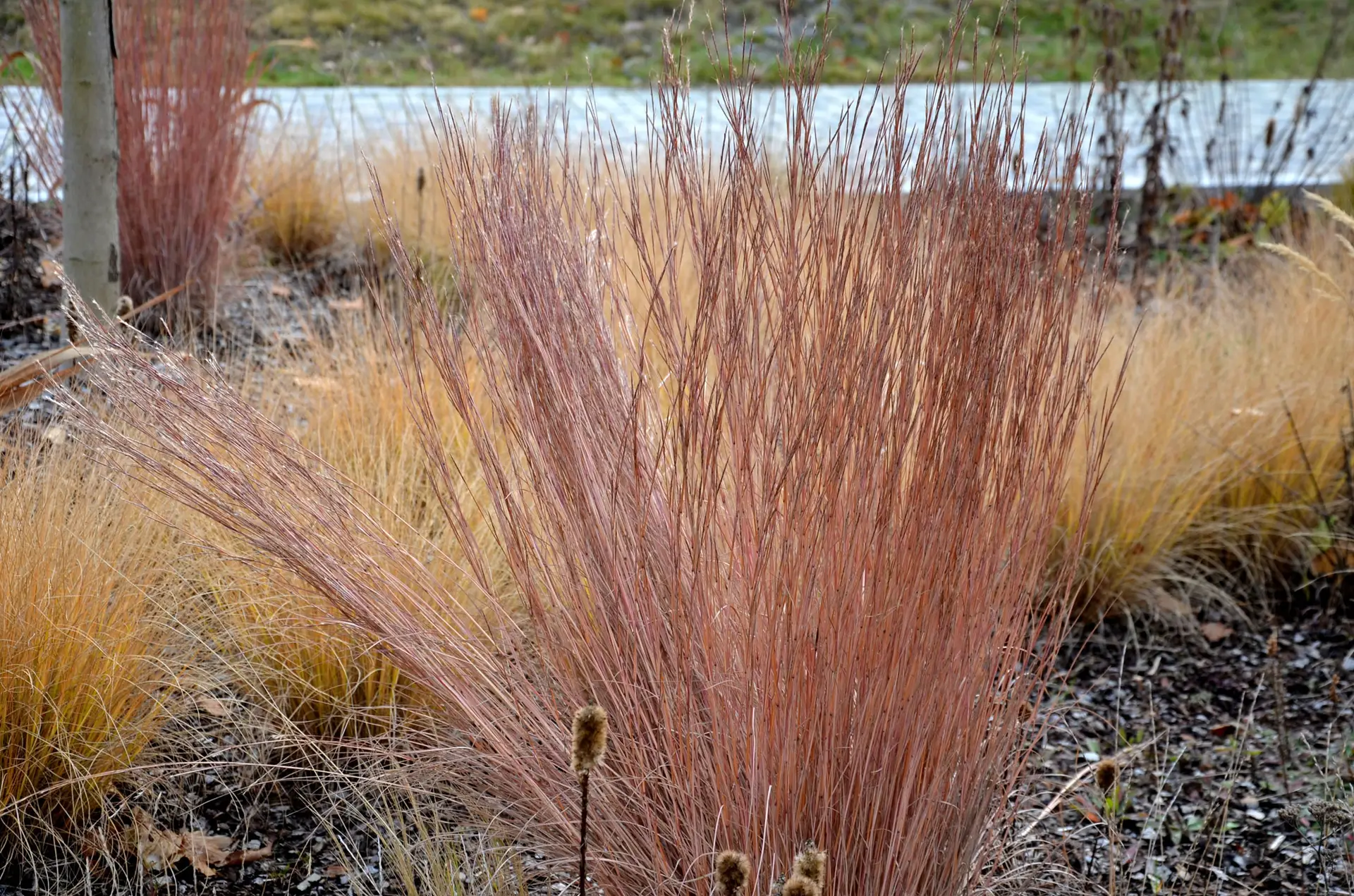
Little bluestem
Little bluestem is one of the prettiest prairie grasses. It changes colors over the seasons, often from blue-green to gold, russet, or even purple. It’s native everywhere in the U.S. except the very westernmost states, is extremely drought-tolerant, and is a host plant for native pollinators.
Overview
- Latin name: Schizachyrium scoparium
- 2-5 feet tall
- Full sun to part shade
- See native range
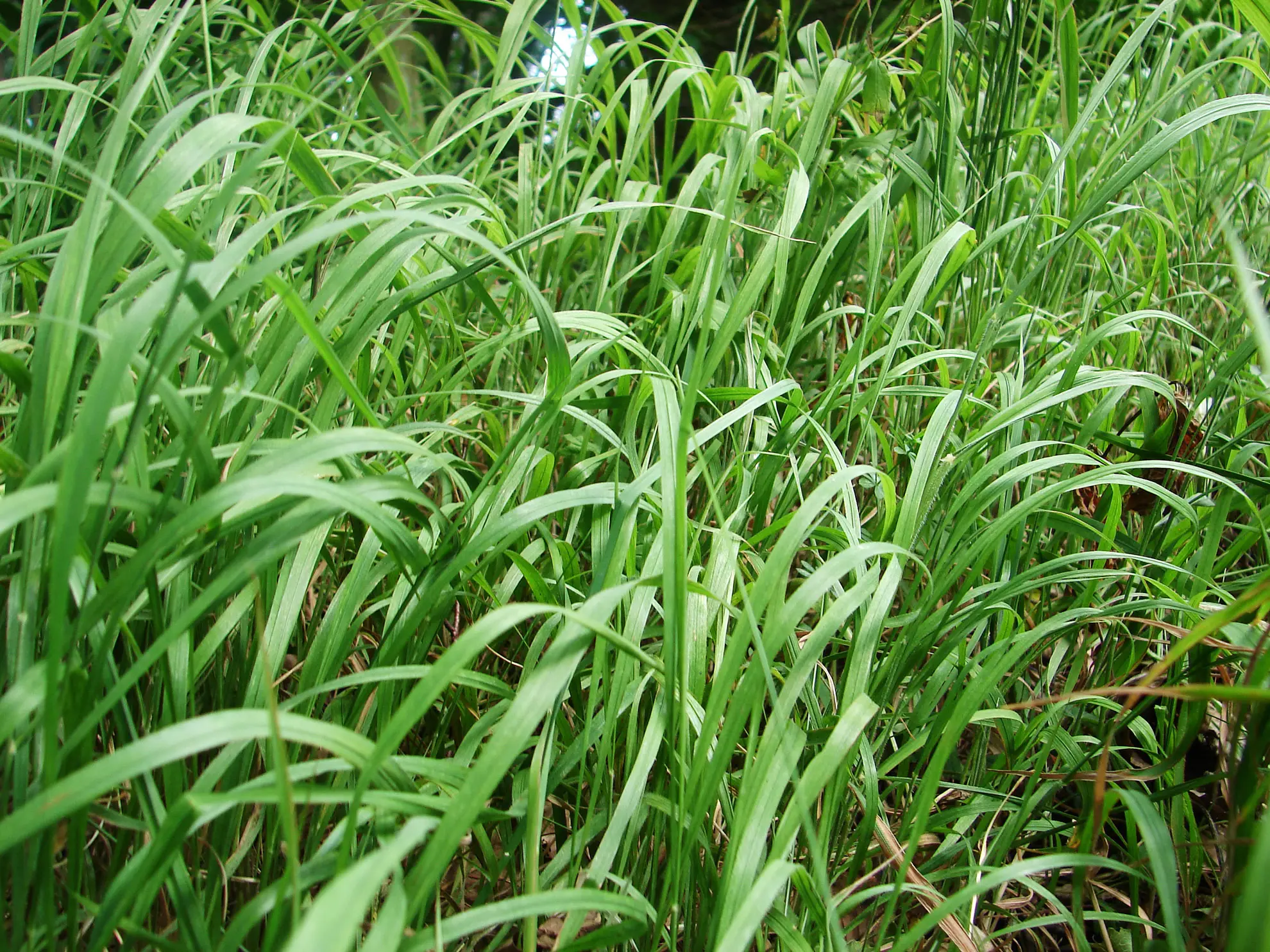
Big bluestem
Little Bluestem’s cousin, big bluestem, was once the dominant plant in the prairie that covered much of the Midwest. It is native everywhere in the continental U.S. except the very westernmost states. Widespread plants like this are often very vigorous and spreading, and that’s definitely big bluestem—it takes a year or two to get established but once happy, it will self-seed and spread. But if you need a plant to block a view year-round, to control erosion, create a prairie, or to serve as an ornamental focus in a lawn island, you won’t find a better native grass.
Big bluestem will grow in just about any type of soil, from sand to clay, and it is extremely easy-care. It’s also wonderful for native wildlife; it is a host plant for multiple butterflies, songbirds eat the seeds, and ground-nesting birds like quail make their homes in its stalks.
Overview
- Latin name: Andropogon gerardii
- 4-8 feet tall
- Full sun to partial shade
- See native range

Purple muhly grass
That’s right, purple muhly grass is not photoshopped, it really looks like that! It looks like a cloud of gold or purple, depending on the season. This is a big, stunning plant that can act either as a focal point in your garden or as a backdrop to smaller plants in the front of your garden bed. Birds eat the seeds, but deer will usually leave it alone.
Like most grasses, purple muhly grass laughs in the face of drought and neglect. It’s also salt tolerant, meaning you can plant it near sidewalks and roads.
Overview
- Latin name: Muhlenbergia capillaris
- Full sun to part sun
- 3-5 feet high
- See native range

Switchgrass
Native to just about every state in the U.S. except for the Pacific Coast, switchgrass is a great tool in a gardener’s box. It can grow from 4-8 feet tall and stands tall throughout winter, making it an excellent option for hiding an unsightly view or just providing a treat for the eye when the garden is otherwise a bit blah. It also grows in just about any type of soil.
This has become one of the more popular grasses for gardens in recent years, so it’s easier to find than many other native plants. There are many different cultivars (i.e., variations with different attributes) for a home garden, whether you want tall or short, a blue tinge or a burgundy one, and so forth.
Overview
- Latin name: Panicum virgatum
- 4-8 feet tall
- Full sun to part shade
- Zones 4-9
- See native range
Do these feel too tall for your garden? Then right this way…
Medium to small ornamental grasses
These native grasses pair perfectly with flowers, in borders, or by themselves.

River oats
This is one pretty grass, with flat seeds that look like little green oats and flutter in the slightest breeze. It’s native to the Midwest, Northeast, and South. It even looks good dried; people will sometimes use it in ornamental arrangements. Like its name suggests, this plant likes moister soils than many of the others on this list. Birds eat the seeds, and it is one of the host plants of the Pepper and Salt skipper.
Note that river oats spreads readily, so it’s a good choice for a parkway or for stabilizing a slope, but you may want to be careful about where you put it in a garden.
Overview
- Latin name: Chasmanthium latifolium
- 3 feet tall
- Full sun to part shade
- See native range
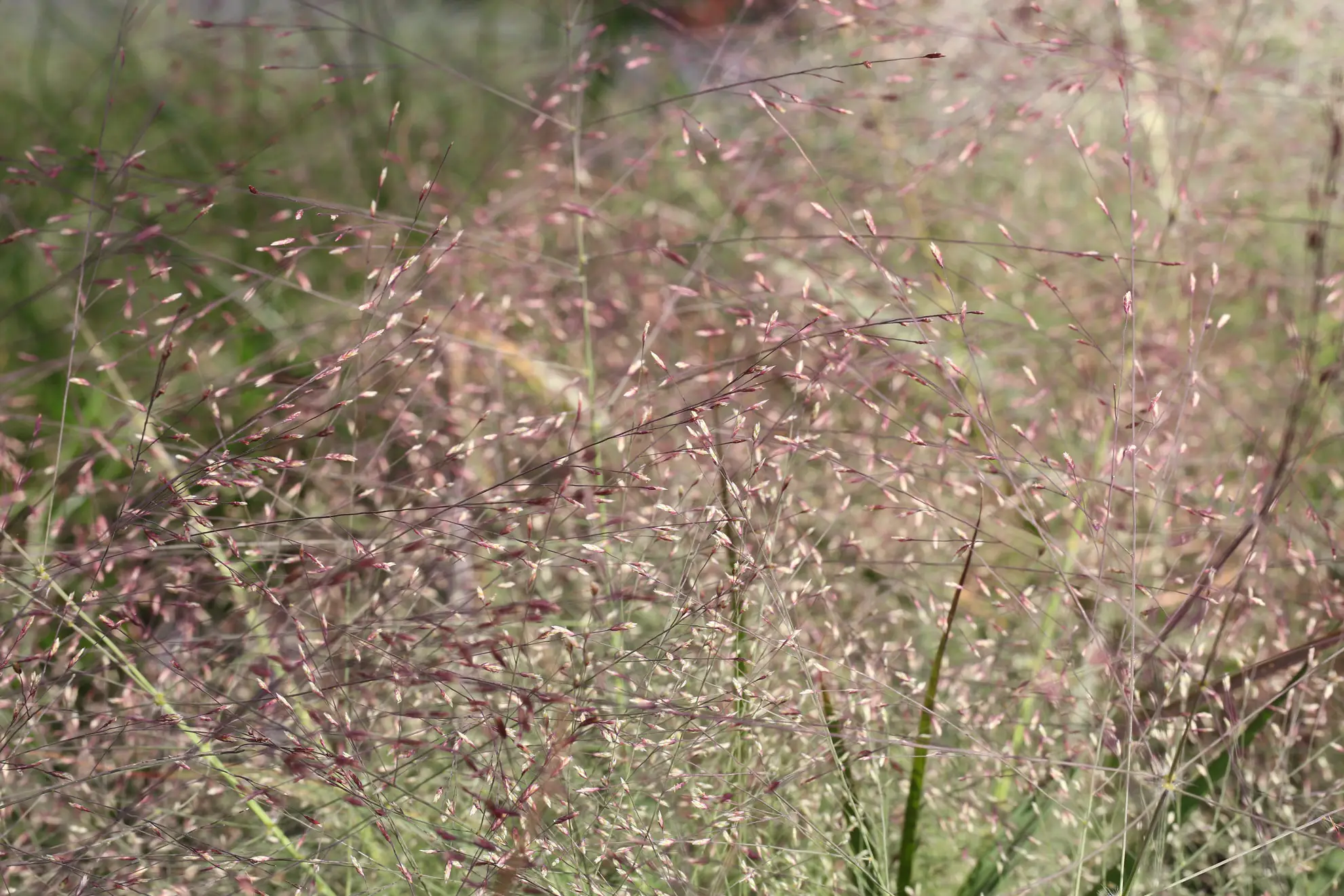
Purple lovegrass
Purple lovegrass is another very widespread plant—it’s native to virtually the entire eastern half of the U.S. It forms an airy cloud of pink seedheads that turns to gold in the fall and winter. Mix it in alongside flowers to complement and highlight the bright stars of flowers. And it’s salt-tolerant, so it doesn’t mind being planted near sidewalks and roads where other plants might struggle. Meet purple lovegrass.
Overview
- Latin name: Eragrostis spectabilis
- 1-2 feet high
- Full sun
- See native range
Prairie dropseed
Prairie dropseed is another native grass that is becoming more and more popular with gardeners and landscapers, and for good reason. It’s one of the more elegant native grasses, forming an attractive, bright green, rounded mound with delicate strands. But make no mistake: it’s tough as nails and will handle drought like a champ. It’s also a host plant for six species of butterflies and skippers, including some rare and endangered ones.
Overview
- Latin name: Sporobolus heterolepis
- 1-2 feet tall
- Full sun
- See native range
Where can I buy native grasses?
The best way to find native grasses is to connect with people who know them best—native plant experts and passionate growers. Here are four great places to start:
For bonus points, look for grasses that were sourced from plants growing wild near you. Those plants will have extra variations that make them suited to your location’s particular climate. But don’t stress if you can’t find them or aren’t sure—any native plant is better than none!
We hope you’ve enjoyed reading about a few of the native grasses out there (though there are many more!) From their drought tolerance and easygoing attitude to their versatility and benefits to wildlife, native grasses are easy to love and a valuable addition to your park, yard, or garden. Plant one to get started and see if you get hooked by how easy they are to take care of.
Next, if you’re curious about how exactly grasses and flowers support pollinators, learn more with What is a host plant? Or meet some strange, crazy and beautiful native plants. Happy planting!
Sources
- Branhagen, Alan. Native Plants of the Midwest: A Comprehensive Guide to the Best 500 Species for the Garden. Timber Press, 2016.
- Easy Lawns: Low Maintenance Native Grasses for Gardeners Everywhere. Brooklyn Botanic Garden series, 1999.
- Dyck Arborteum, “Advantages to Using Ornamental Grasses in the Landscape.”
- National Wildlife Federation, “The Grass Is Greener When You Grow Natives.”
- North Carolina Extension, Muhlenbergia capillaris
- Prairie Nursery, Sideoats Grama.
- Brakie, Melinda. Plant fact sheet: Broomsedge Bluestem, Andropogon Virginicus. U.S. Department of Agriculture Natural Resources Conservation Service.
- North Carolina Extension, Carex pennsylvanica.
- Missouri Botanical Garden, Chasmanthium latifolium.
- Missouri Botanical Garden, Andropogon gerardii.
- Mt. Cuba Center, Carex jamesii (James’ sedge).
- U.S. Department of Agriculture Natural Resources Conservation Service, “Pollinators Need Native Grasses Too!”
Similar plants
Updated Find more: Beginner Guide Deer Resistant Grass Historic Spring Full Sun Drought-Tolerant
The ads on this site help pay real native plant nerds to research and write these guides.
Garden notes
Notes from people who’ve grown it
Tips, wins, and the occasional disaster. If you’ve grown grasses and sedges, share the advice you’d give to a neighbor.
No notes yet. Yours could be the first.
Grown grasses and sedges? Tell the next person what you wish someone had told you.
Tap anywhere to close


